Site overview

The fosse Sabatier, also known as the fosse Maurice Sabatier, was an anthracite coal mine of the Compagnie des mines d'Anzin located at Raismes in the Nord département. Sinking of puits n°1 and n°2 began in July 1910; extraction of anthracite coal commenced in 1913. The fosse was destroyed during the First World War and rebuilt identically to the fosse Agache at Fenain, recommencing extraction on 16 October 1920.

Despite severe water inrushes — notably that of 25 May 1925 — the fosse became highly productive, reaching 409,358 tonnes in 1939. After nationalisation in 1946 it was modernised in 1955, including the transfer of the headframe from the former puits n°1 of the fosse La Clarence at Divion. The fosse ceased extraction in 1980.

Puits were backfilled in 1985 and most structures demolished in 1986, with only the headframe of puits n°2 retained. The commune of Raismes acquired the site in 1994; the former carreau and terrils were transformed into hiking paths and nature space. The headframe was listed as a monument historique on 18 March 2010 and, together with three terrils and associated cités, was inscribed on the UNESCO World Heritage List on 30 June 2012.

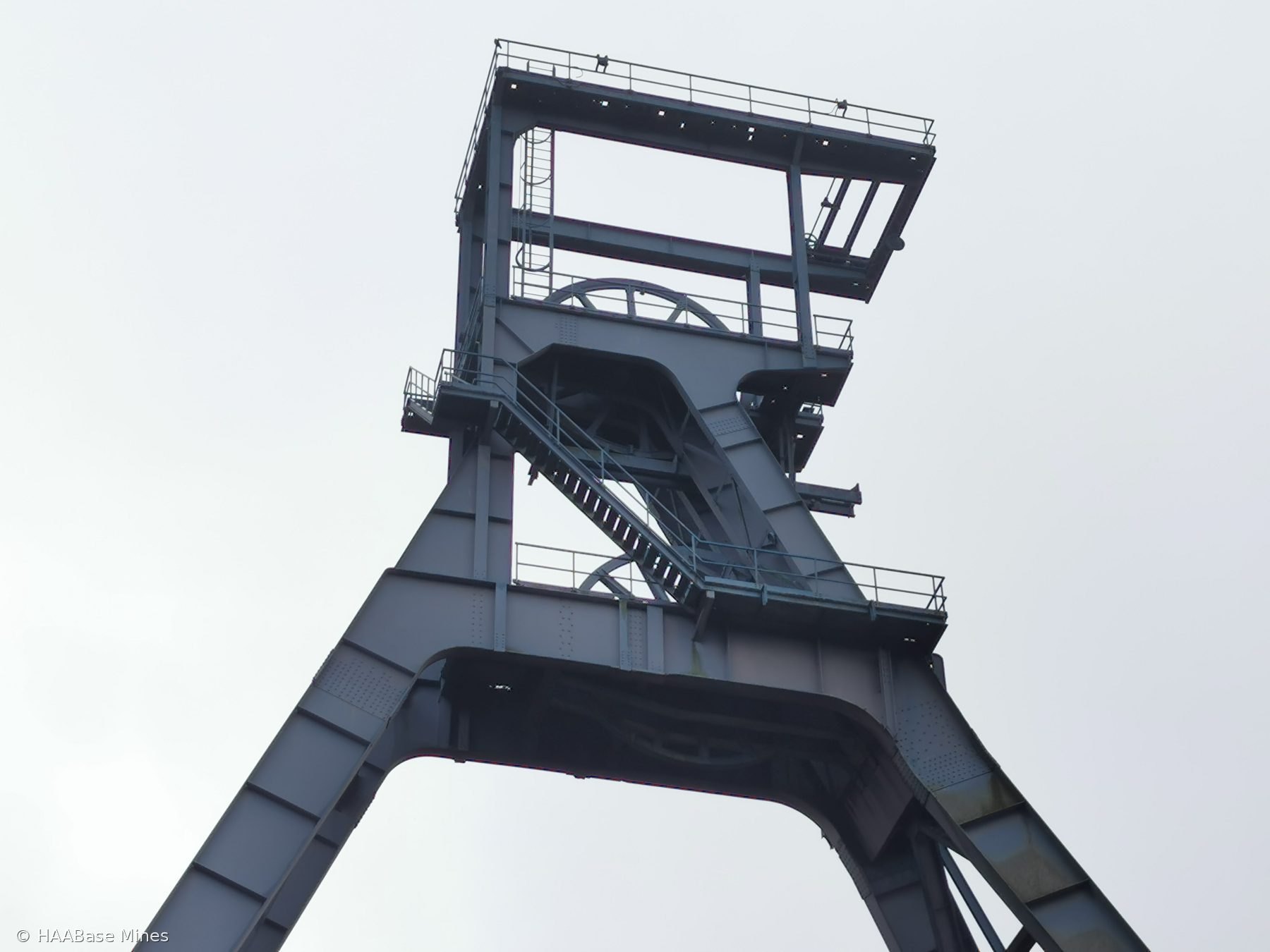
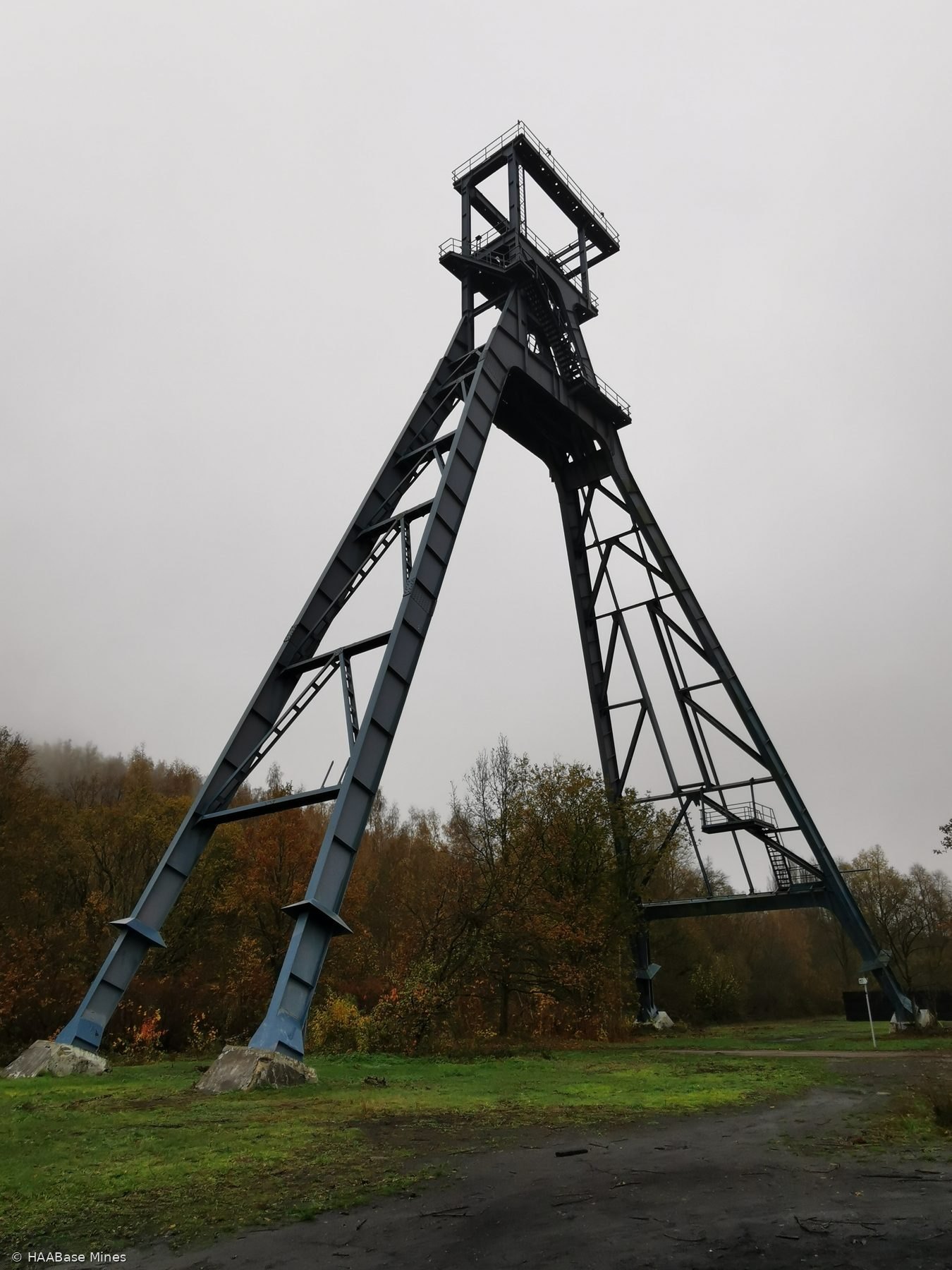
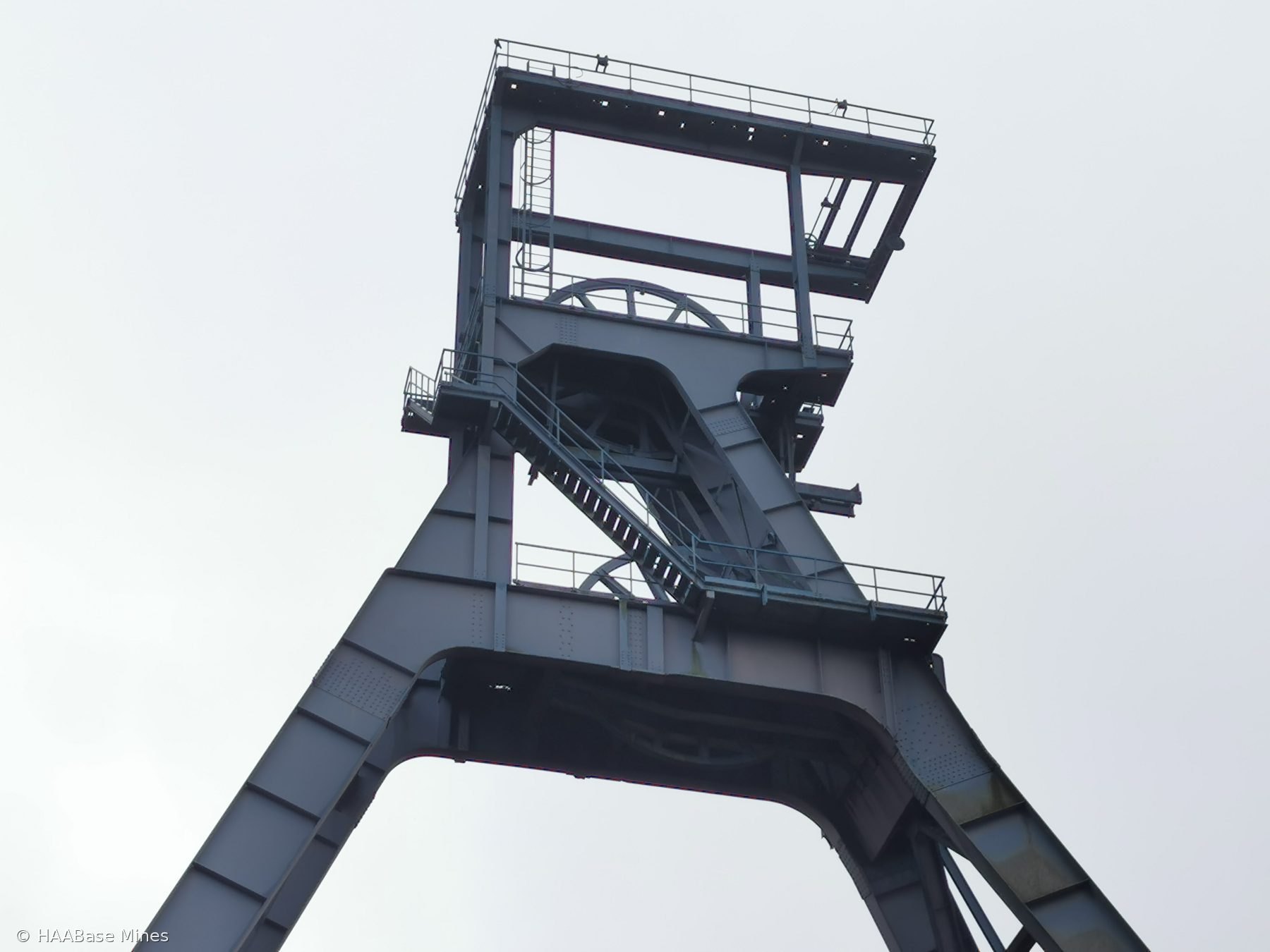
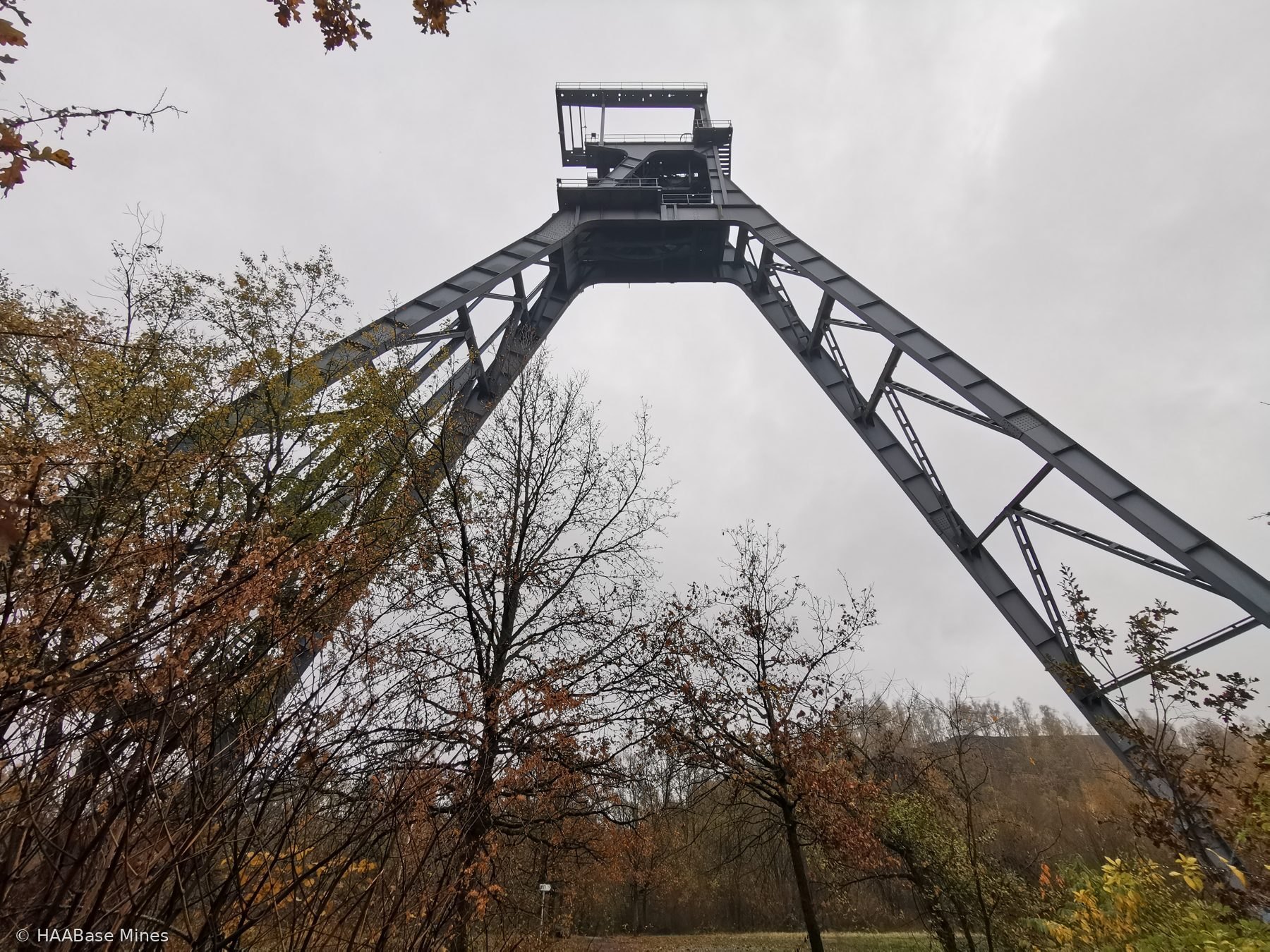
The surviving headframe stands in a wooded post-industrial landscape, where former pit ground and spoil tips have softened into nature space but the mining site still reads clearly.

Map & photo

Fosse Sabatier mine headframe or winding tower site
Photograph taken: 16 November 2025
Map markers and directions links are provided for location reference only and do not indicate public access or permission to enter a site.

History

The fosse Sabatier was named after Maurice Sabatier, an administrator of the Compagnie des mines d'Anzin. Preparatory works for the two shafts began in July 1910 at Raismes, in the northern part of the company's concession close to the forest of Raismes-Saint-Amand-Wallers. Extraction of anthracite began in 1913.

The fosse was destroyed during the First World War. It was subsequently rebuilt in a form identical to the fosse Agache at Fenain, one of a group of interwar fosses of the Compagnie d'Anzin that shared characteristic architectural features. The two chevalements were built by the établissements Malissard Taza at Anzin.

The main chevalement above puits n°1, dedicated to extraction, supported two superimposed sheave wheels of 6 metres diameter with a Koepe pulley system. The smaller chevalement above puits n°2, dedicated to personnel, barely projected above the roof of the recette building. The fosse recommenced extraction on 16 October 1920.

Production was immediately high: 132,975 tonnes in 1923 and 283,763 tonnes three years later. The fosse's productivity was nonetheless significantly hampered by repeated water inrushes. The particularly severe inrush of 25 May 1925 halted extraction in a large proportion of the working faces.

Despite these difficulties, production reached 409,358 tonnes in 1939, the maximum attained by the fosse in the pre-war period. Extensive workers' cités were built near the fosse by the Compagnie des mines d'Anzin: the cité pavillonnaire Sabatier, the cité-jardin du Pinson, and a church, presbytery, cemetery, and schools. Three terrils were created at various dates: the conical terril n°174 (Sabatier Sud, initially 80 metres high, later partially exploited), the conical terril n°175 (Sabatier Nord, which retained its original form, rising 103 metres above the surrounding land and the highest in the Valenciennois), and the flat terril n°175A (Sabatier Nord plat).

The first tipping at terril n°175 began in 1913. Following the nationalisation of the Compagnie des mines d'Anzin in 1946, the fosse was integrated into the Groupe de Valenciennes. The decision was initially made to concentrate production onto the fosse La Grange, but the fosse Sabatier was instead modernised in 1955.

The most visible change was the installation, above the older and much smaller chevalement of puits n°2, of the headframe from puits n°1 of the fosse n°1-1bis de La Clarence at Divion, belonging to the Groupe d'Auchel. This headframe dated from 1951; it was constructed by the établissements Delattre et Frouard, was of portique type, and when installed at Raismes two additional poussards were added and the winding machine was replaced with a more powerful one. In August 1957 the fosse Sabatier, having completed its modernisation, resumed extraction from the fosse n°3 des mines de Vicoigne.

The fosse n°3 de Vicoigne, along with the original puits n°2 of the Sabatier, then served for return air for the Sabatier workings. The fosse La Grange was concentrated onto Sabatier in 1974. The church Sainte-Cécile, whose roof and interior had been destroyed in a fire in 1975, was rebuilt identically.

The fosse Sabatier ceased extraction in 1980; its puits nos 1 and 2 were backfilled five years later in 1985. The original main chevalement above puits n°1 was felled in 1986, and the faux-carré of the chevalement above puits n°2 was dismantled at much the same time; however, the puits n°2 chevalement structure was retained. At the start of the twenty-first century, Charbonnages de France capped the wellheads of both puits and installed firedamp vents at puits n°2.

The commune of Raismes acquired the former site in 1994 and the carreau and terrils were converted into footpaths and nature trails. The conical terril n°174, though partially exploited with its summit removed, was ultimately preserved along with terrils n°175 and n°175A. The former Camus hauts post-nationalisation housing blocks were demolished.

The église Sainte-Cécile and its presbytère were listed as monuments historiques on 1 December 2009; the chevalement of puits n°2 was listed on 18 March 2010. On 30 June 2012 the chevalement, the three terrils, the cités, the church, presbytère, and school were inscribed as part of the Bassin minier Nord-Pas-de-Calais on the UNESCO World Heritage List, forming part of site n°8. The fosse had also served in 1981 as a filming location for the television series Sans famille.
Timeline

1910
Construction

Sinking of puits n°1 and n°2 begins at Raismes

Sinking of puits n°1 and puits n°2 for the fosse Sabatier began in July 1910 for the Compagnie des mines d'Anzin. The fosse was named after Maurice Sabatier, an administrator of the company.
1913
Operation

Extraction of anthracite begins; fosse destroyed during First World War

Extraction of anthracite coal began in 1913. The fosse was subsequently destroyed during the First World War. It was rebuilt in a form identical to the fosse Agache at Fenain. The two chevalements were built by the établissements Malissard Taza at Anzin. The first tipping at terril n°175 began in 1913.
1920
Operation

Extraction resumes after post-war reconstruction

The rebuilt fosse recommenced extraction on 16 October 1920. Production was high from the outset: 132,975 tonnes in 1923 and 283,763 tonnes three years later.
1925
Operation

Severe water inrush halts most working faces

The inrush of 25 May 1925 halted extraction in a large proportion of the working faces. Water inrushes were a recurring problem throughout the fosse's operational life.
1939
Operation

Peak pre-war production: 409,358 tonnes

In 1939 the fosse Sabatier reached its maximum pre-war output of 409,358 tonnes. The puits n°1 were deeper than 700 metres and at peak operation in the 1950s nearly 2,000 miners worked at the site.
1946
Legislation

Nationalisation; fosse integrated into Groupe de Valenciennes

Following the nationalisation of the Compagnie des mines d'Anzin in 1946, the fosse Sabatier was integrated into the Groupe de Valenciennes under the Houillères du Bassin du Nord et du Pas-de-Calais.
1955–1957
Construction

Modernisation; headframe from fosse La Clarence installed over puits n°2

In 1955 the fosse was modernised. The most visible change was the installation above puits n°2 of the headframe from puits n°1 of the fosse n°1-1bis de La Clarence at Divion (built 1951, by Delattre et Frouard). Two additional poussards were added and the winding machine replaced. From August 1957 the fosse concentrated the extraction of the fosse n°3 de Vicoigne.
1974
Operation

Fosse La Grange concentrated onto the Sabatier site

In 1974 the fosse La Grange was concentrated onto the Sabatier site.
1980
Closure

Fosse Sabatier ceases extraction

The fosse Sabatier ceased extraction in 1980.
1985–1986
Closure

Puits backfilled 1985; main chevalement demolished 1986; puits n°2 chevalement retained

Puits n°1 and n°2 were backfilled in 1985. The main chevalement above puits n°1 was felled in 1986. The faux-carré of the puits n°2 chevalement was dismantled; however, the chevalement structure itself was conserved.
1994
Redevelopment

Commune of Raismes acquires the site; converted into natural space and hiking paths

In 1994 the commune of Raismes acquired the former fosse site and the terrils, transforming the area into footpaths and nature trails.
2009
Heritage

Église Sainte-Cécile and presbytère listed as monuments historiques

On 1 December 2009 the église Sainte-Cécile and its presbytère, built as part of the fosse's workers' cité, were listed as monuments historiques.
2010
Heritage

Chevalement of puits n°2 listed as monument historique

The chevalement of puits n°2 of the fosse Sabatier was inscribed as a monument historique by arrêté of 18 March 2010.
2012
Heritage

Chevalement, terrils, cités, church and school inscribed on UNESCO World Heritage List

On 30 June 2012 the chevalement of puits n°2, the terrils n°174, n°175 and n°175A, the cité pavillonnaire Sabatier, the cité-jardin du Pinson ancienne, the cité moderne du Pinson nouvelle, the église Sainte-Cécile, its presbytère and school were inscribed on the UNESCO World Heritage List as part of the Bassin minier Nord-Pas-de-Calais, forming part of site n°8.

Sources and records

French Wikipedia: Fosse Sabatier
Gaillette.fr: Fosse Sabatier
Gaillette.fr: UNESCO Patrimoine Mondial Fosse Maurice Sabatier
Mérimée heritage database (pop.culture.gouv.fr): PA59000168
CAUE du Nord: Puits n°2 de la fosse dite Sabatier
Mineur62.free.fr: chevalements métalliques – chevalement Sabatier
Monumentum.fr: PA59000168
Porte du Hainaut tourism office: Chevalement Sabatier – Raismes
Porte du Hainaut tourism office: Terril Sabatier (175) – Raismes
Bassin minier patrimoine mondial: Le quartier Sabatier PDF
Patrimoine-minier.fr: fosse Sabatier section
Escapades en Hauts-de-France: anciens sites miniers du Hainaut
Liste des biens du bassin minier Nord-Pas-de-Calais inscrits sur la liste du patrimoine mondial (French Wikipedia)
This researched site record is part of the HAABase Mines database. Normal personal research and browsing is welcome. Automated bulk extraction, republication, or harvesting of site text and images is not permitted without written consent.