—
Mine pumping beam engine dismantled
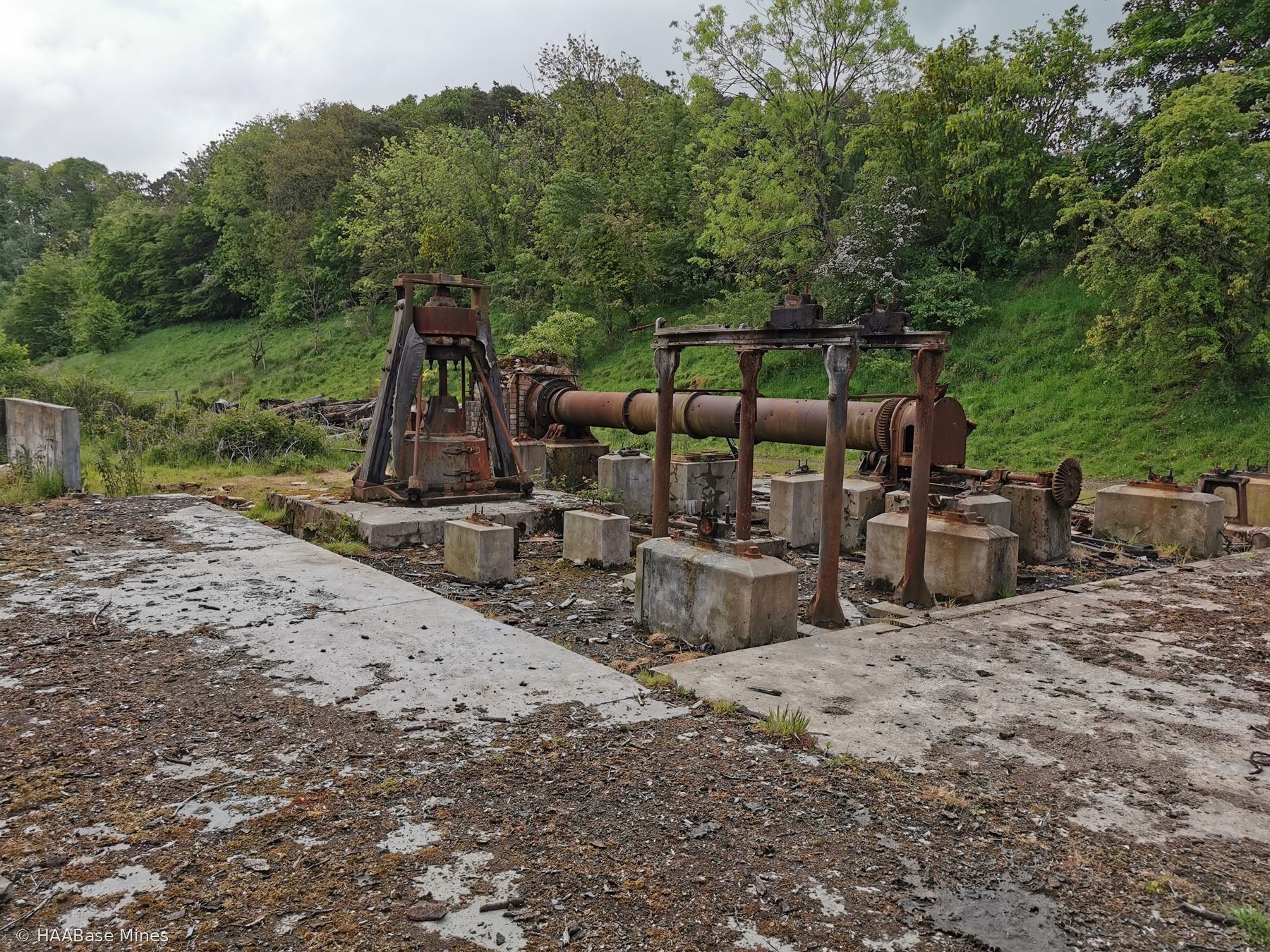
A beam engine with a 20-foot beam used to pump the mine was dismantled in 1938; its associated building had been demolished by 1967.
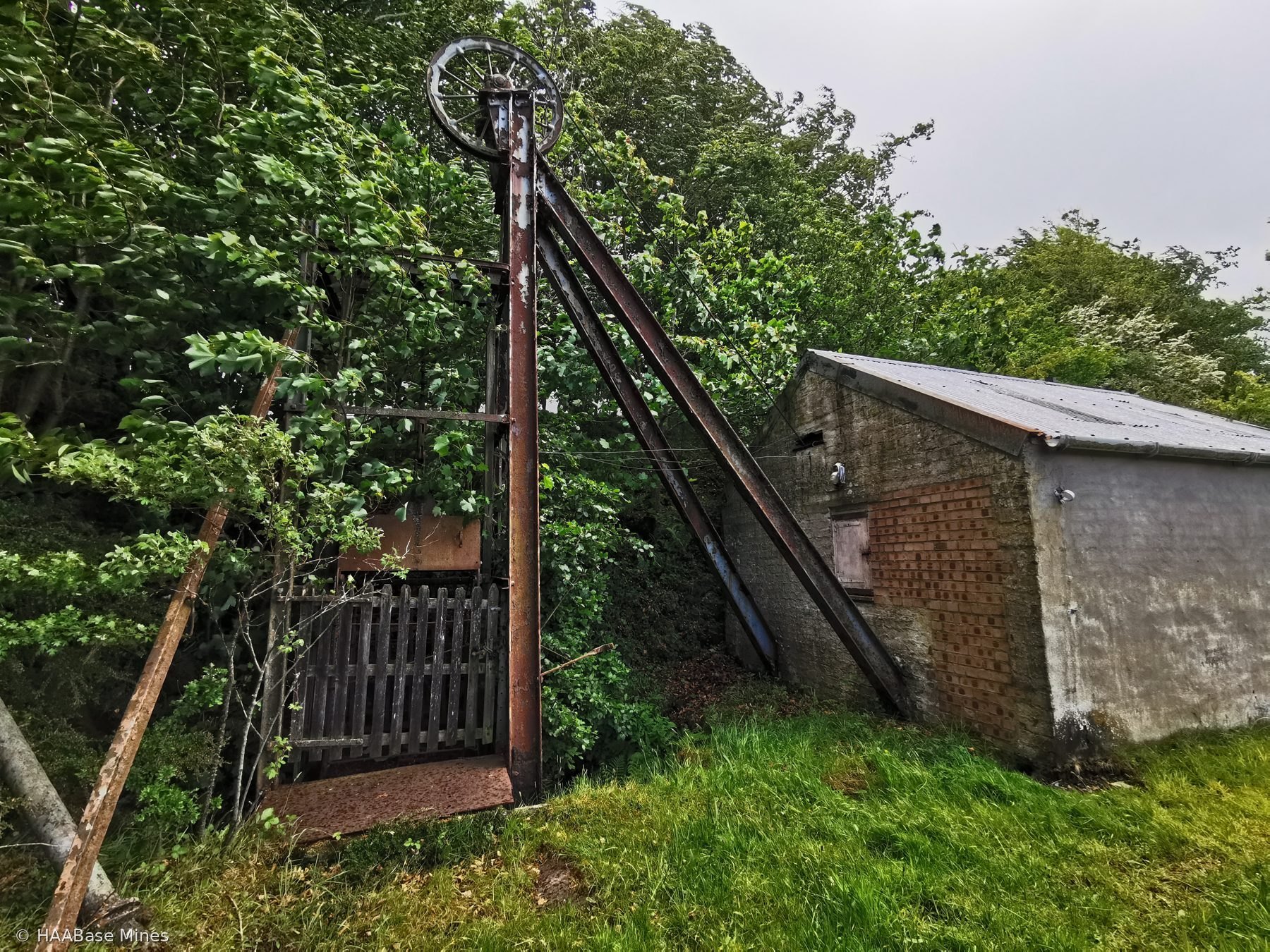
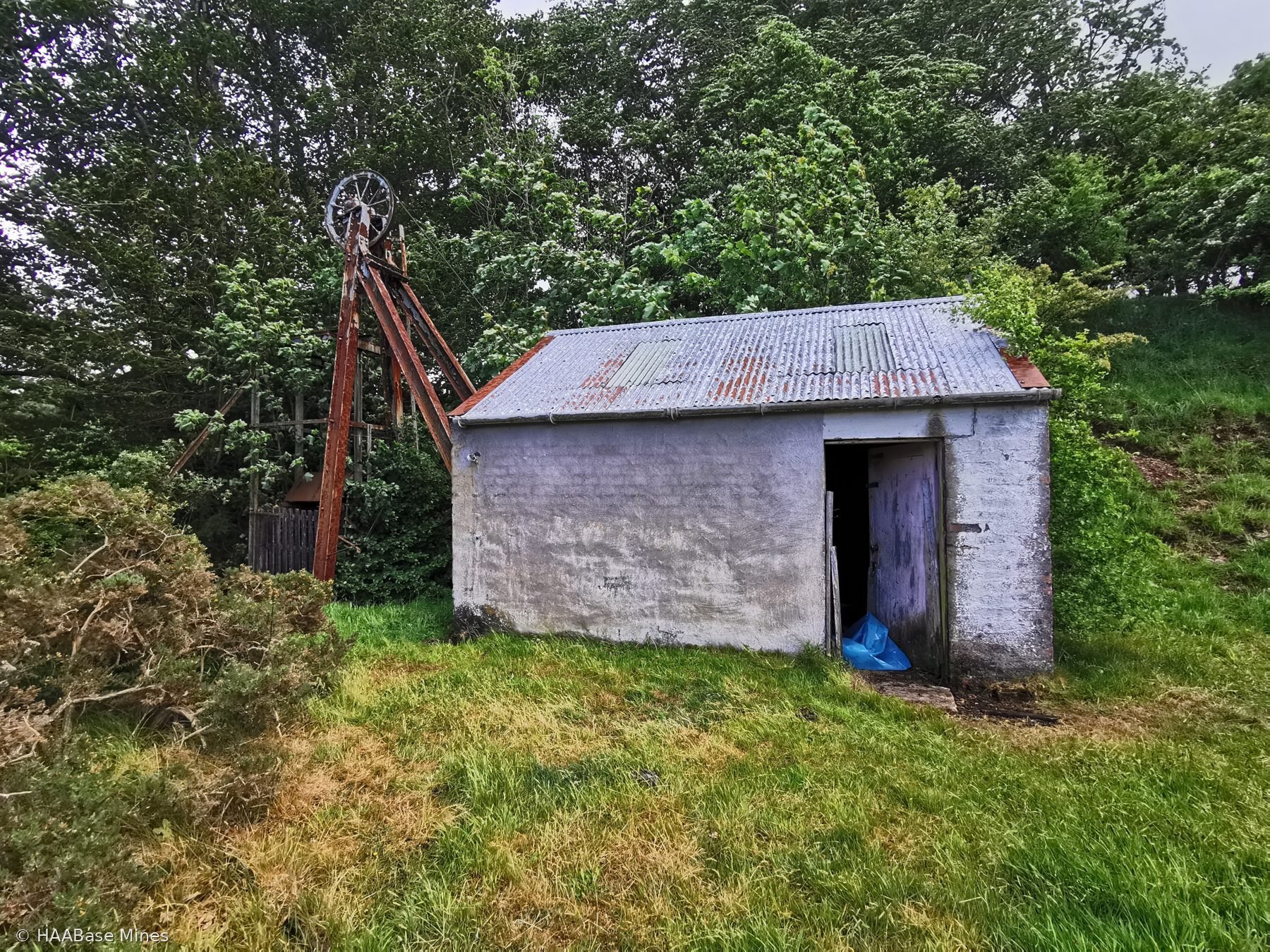
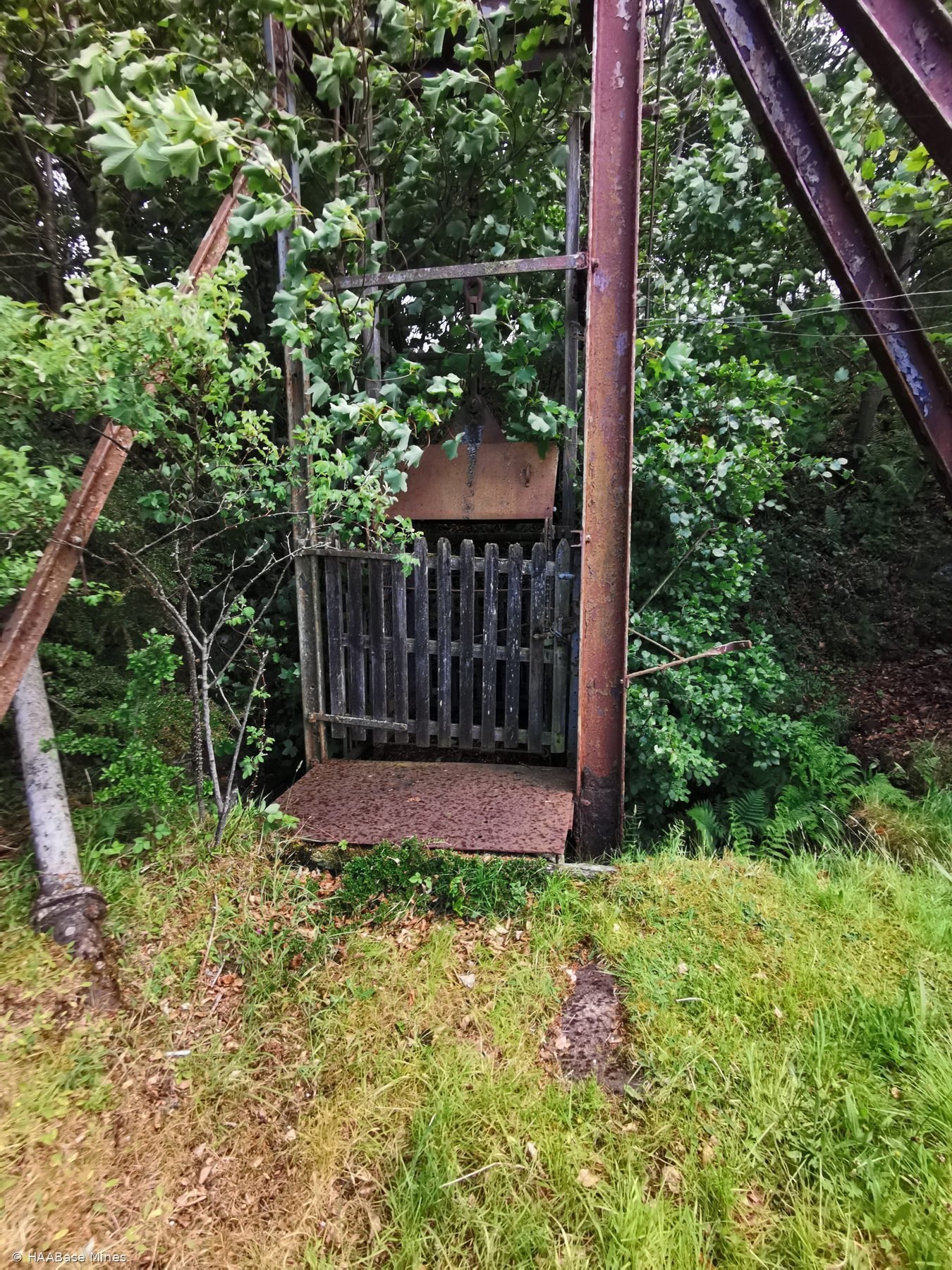
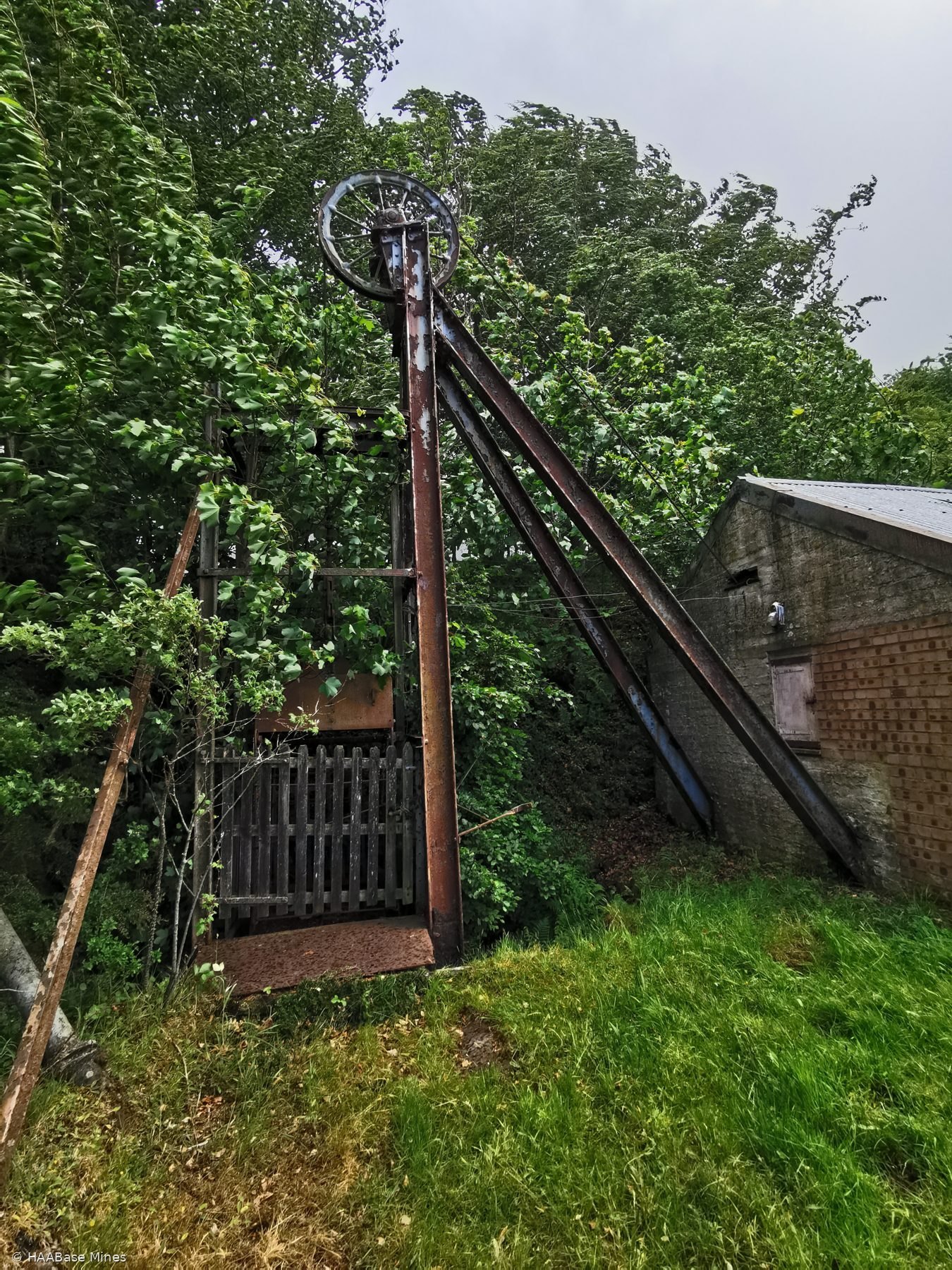
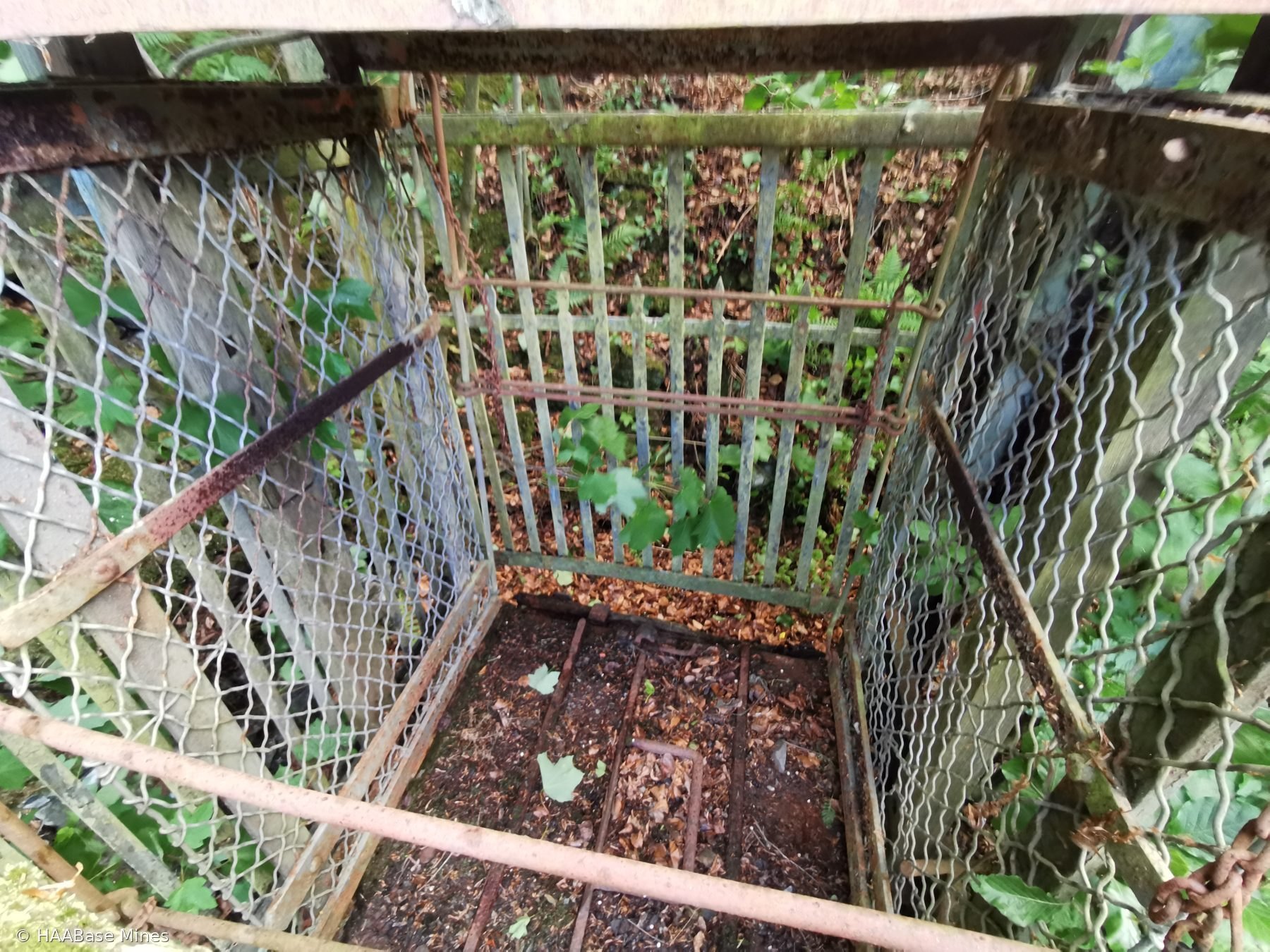
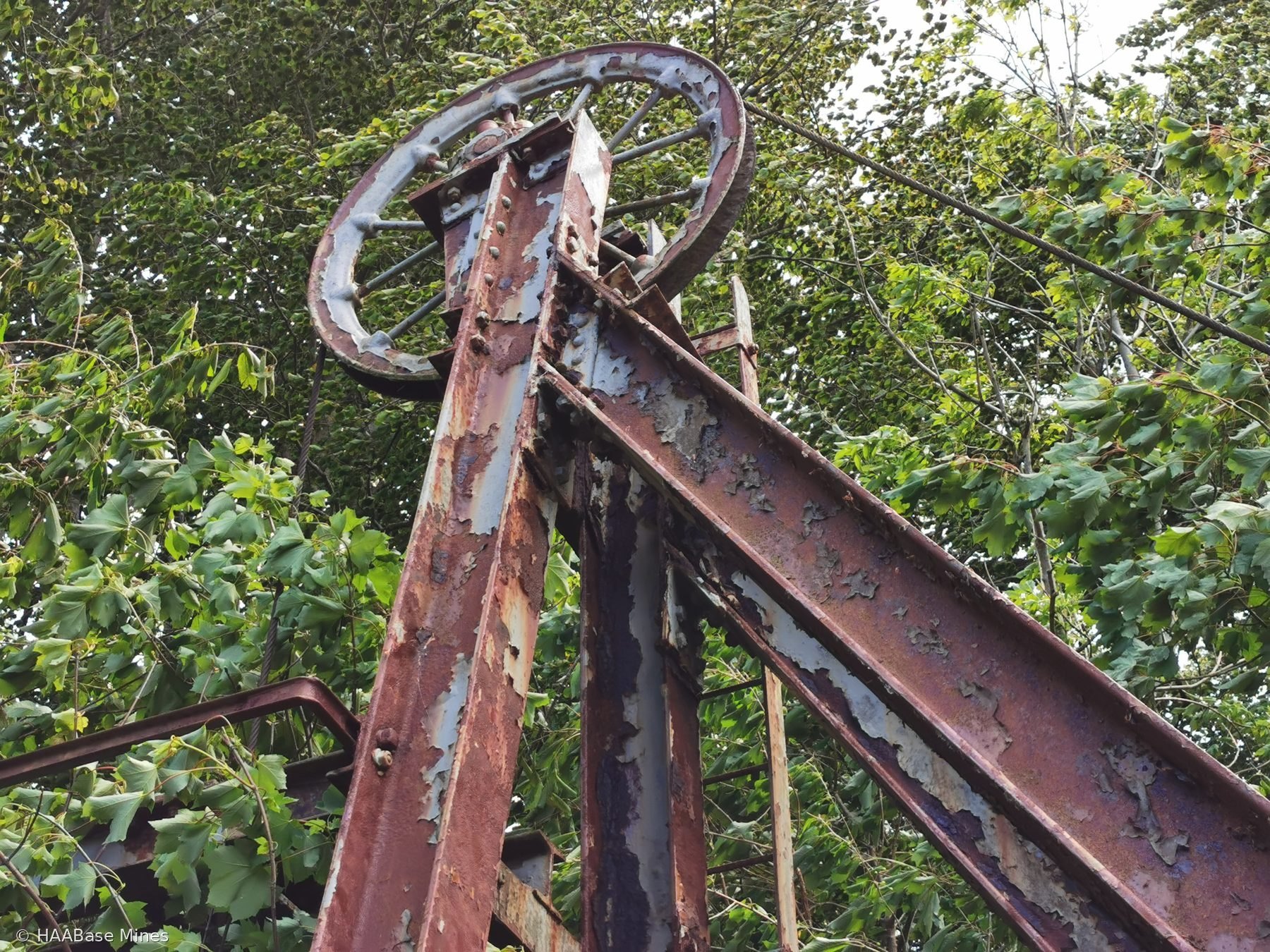
Former Dalmore hone-stone mine at Stair, retaining the northern shaft's compact steel winding gear, cage, small electric winder house and a quarry adit.
This record has completed the HAABase Mines source-by-source fact-checking process.
The history, timeline and surviving-site classification shown here reflect the reviewed account.
The record identifies this site as the northern shaft of Dalmore's hone-stone quarry and mine beside the River Ayr at Stair, not the separate southern shaft later known as Sundrum Mine and not the nearby Meikledale, Enterkine, Milton or graphite workings. The history is supported chiefly by the official Historic Environment Scotland place record, RCAHMS industrial survey reports, Ordnance Survey map and Name Book evidence, dated site photographs and the survey's references to company archives and specialist research. The evidence establishes late-eighteenth-century hone working in the Dalmore area, a securely documented whetstone quarry by 1857, a northern shaft sunk around 1870, tramway connection to Dalmore Mill by 1895, surviving steel winding gear and electric winding machinery, and closure of the mine and quarry by the late 1990s.
It also shows that Dalmore chiefly supplied Tam O'Shanter stone and that Water of Ayr was a wider trade and geological name associated with other local quarries, so the two products cannot simply be assigned to this shaft. Uncertainty remains over the exact 1789 attribution, employment in 1982, several detailed operating practices and the final closure sequence across the separate mine, mill and Milton works. The core site history and surviving-structure account are strongly evidenced; the qualified opening and closure dates have high rather than absolute confidence.
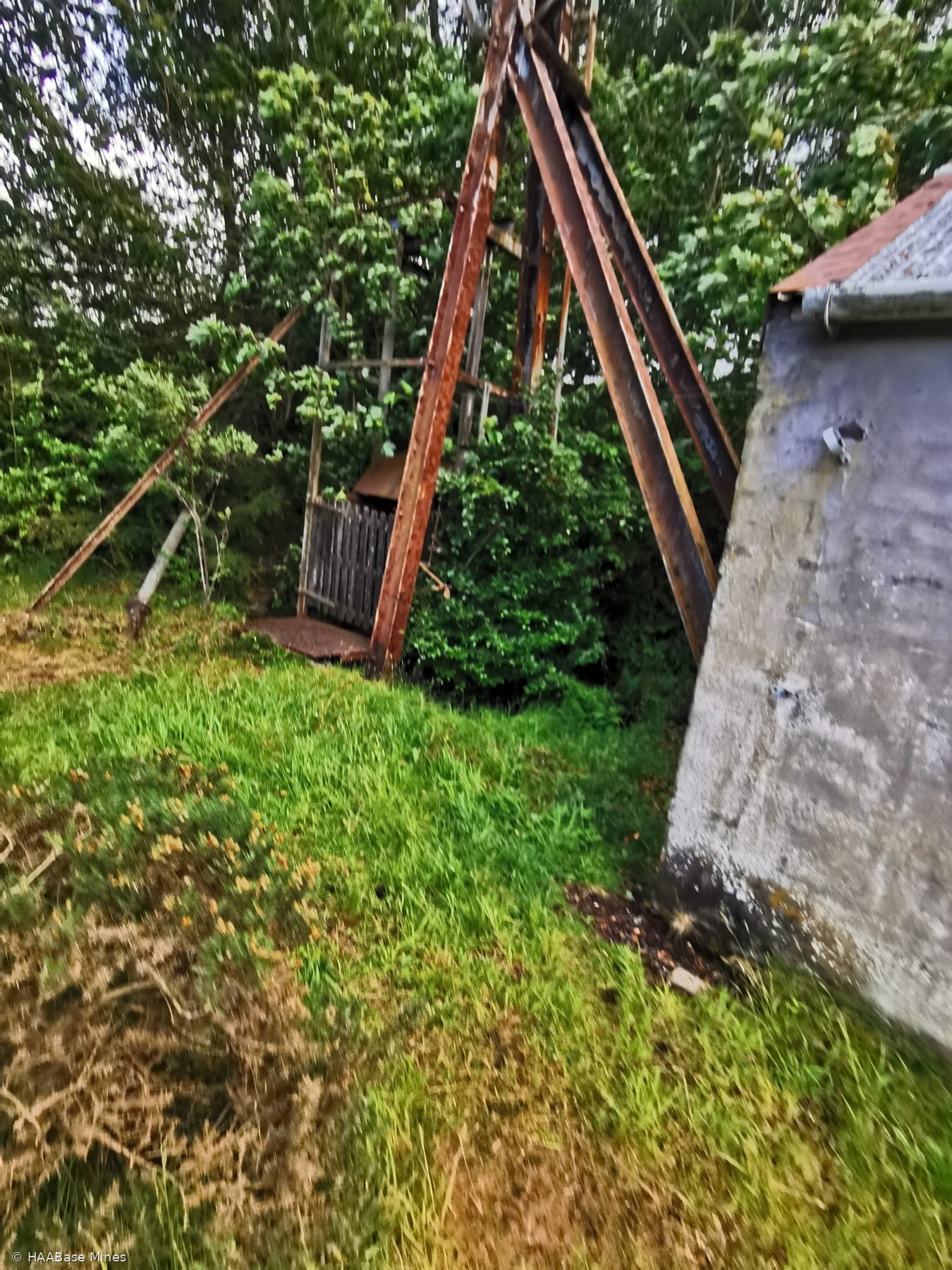
The surviving site comprises the northern mine shaft with original steel winding gear, its cage and a small winding-engine house containing an electric winder adapted from marine equipment, together with the nearby quarry and a surviving adit or drift entrance. It is classified as shafts and buildings and as a Partial mine site - headframe and associated buildings because these elements preserve the core winding installation but not the full historical mine-and-processing complex. The retained mine structures are original, although timber surface buildings visible in 1967 have been lost and the separate southern Sundrum Mine shaft no longer retains its former buildings.
This assessment is supported by the RCAHMS industrial survey, its dated photographs and map analysis. The present condition of every minor tramway trace and quarry feature has not been independently surveyed for this check.
Dalmore Mine at Stair is the surviving northern shaft of a small hone-stone quarrying and mining complex on the south bank of the River Ayr. Dalmore Quarry is recorded by the Ordnance Survey in 1857 as a claystone whetstone quarry owned by William Dunn, with the stone lying beneath about 40 feet of cover and dressed at the nearby mill. The quarry later developed into an underground mine.
A shaft sunk around 1870 gave access to another seam and is the shaft represented by the surviving steel winding gear, cage and small winder house. By 1895 a mineral tramway carried stone from the mine and quarry to Dalmore Mill. A second, southern shaft, later called Sundrum Mine, belonged to the wider operation but must not be confused with the surviving northern installation.
Dalmore Quarry is principally associated with Tam O'Shanter hone stone. Water of Ayr was also a trade name used by the connected company, but finer Water of Ayr stone came from other local workings. The mine and quarry had closed by the late 1990s, while the final closure of the associated processing works is variously placed in the late 1990s or around 2003.
Hone stone was worked on or near the Dalmore estate beside the River Ayr from the late eighteenth century. The operation is conventionally dated to 1789, although the earliest references do not always distinguish clearly between the several estate and district quarries. By the mid-nineteenth century the Dalmore working is securely identified. The Ordnance Survey survey of 1857 described Dalmore Quarry as a whetstone quarry in claystone, with the workable layer about 40 feet below the surface and dipping gently eastward. It belonged to William Dunn, and the stone was taken to the nearby Dalmore Mill for dressing and polishing.
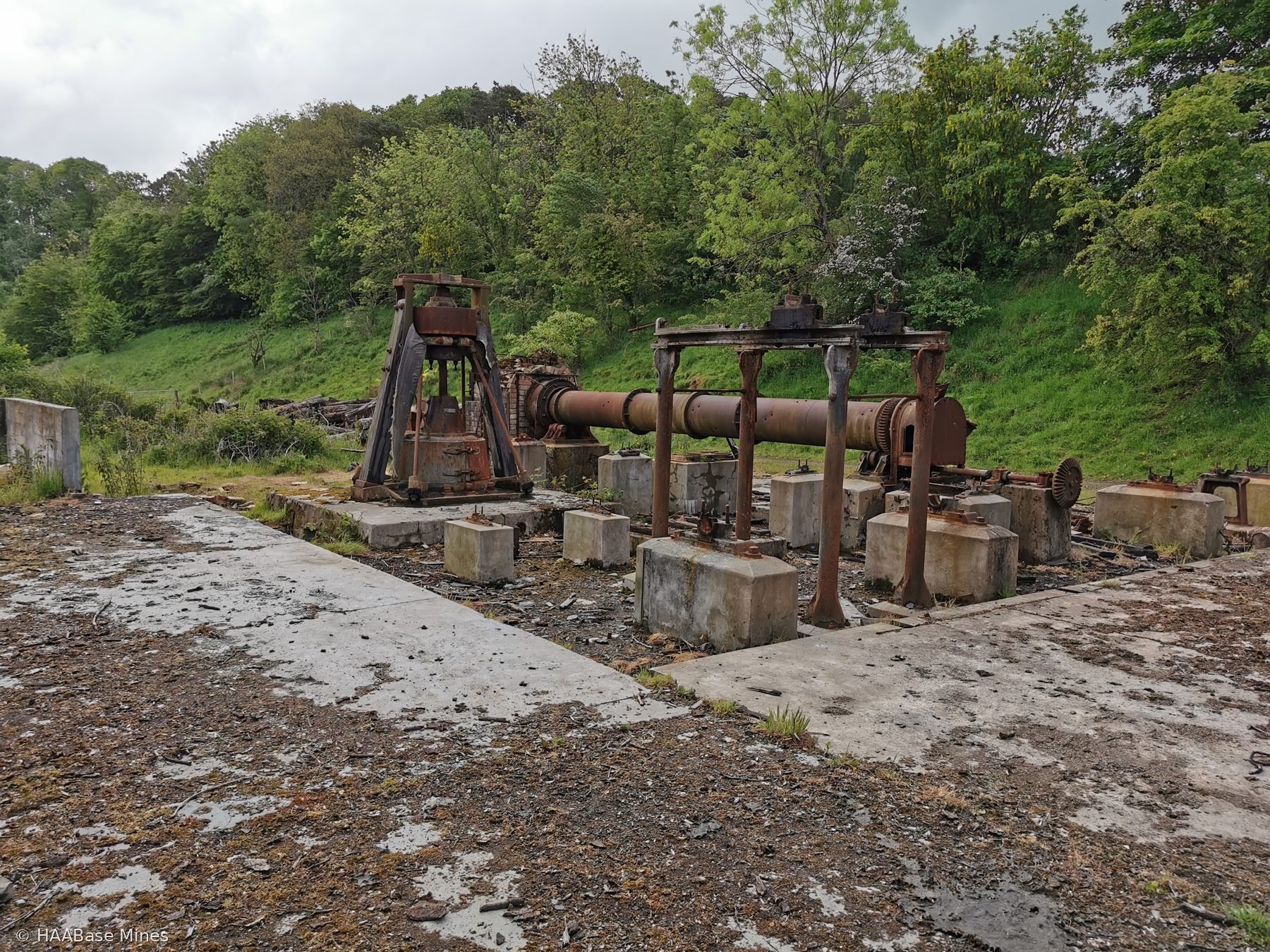
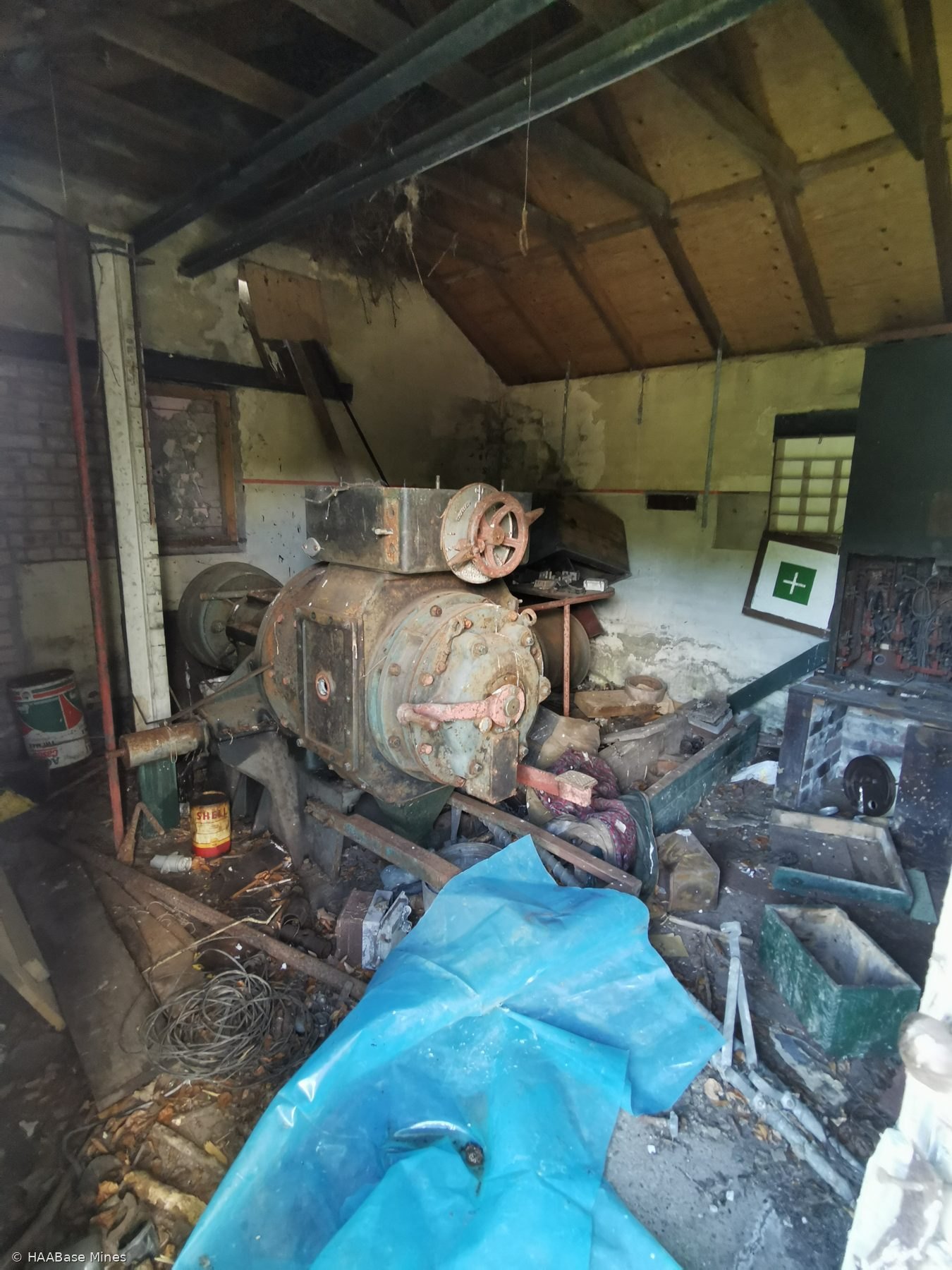
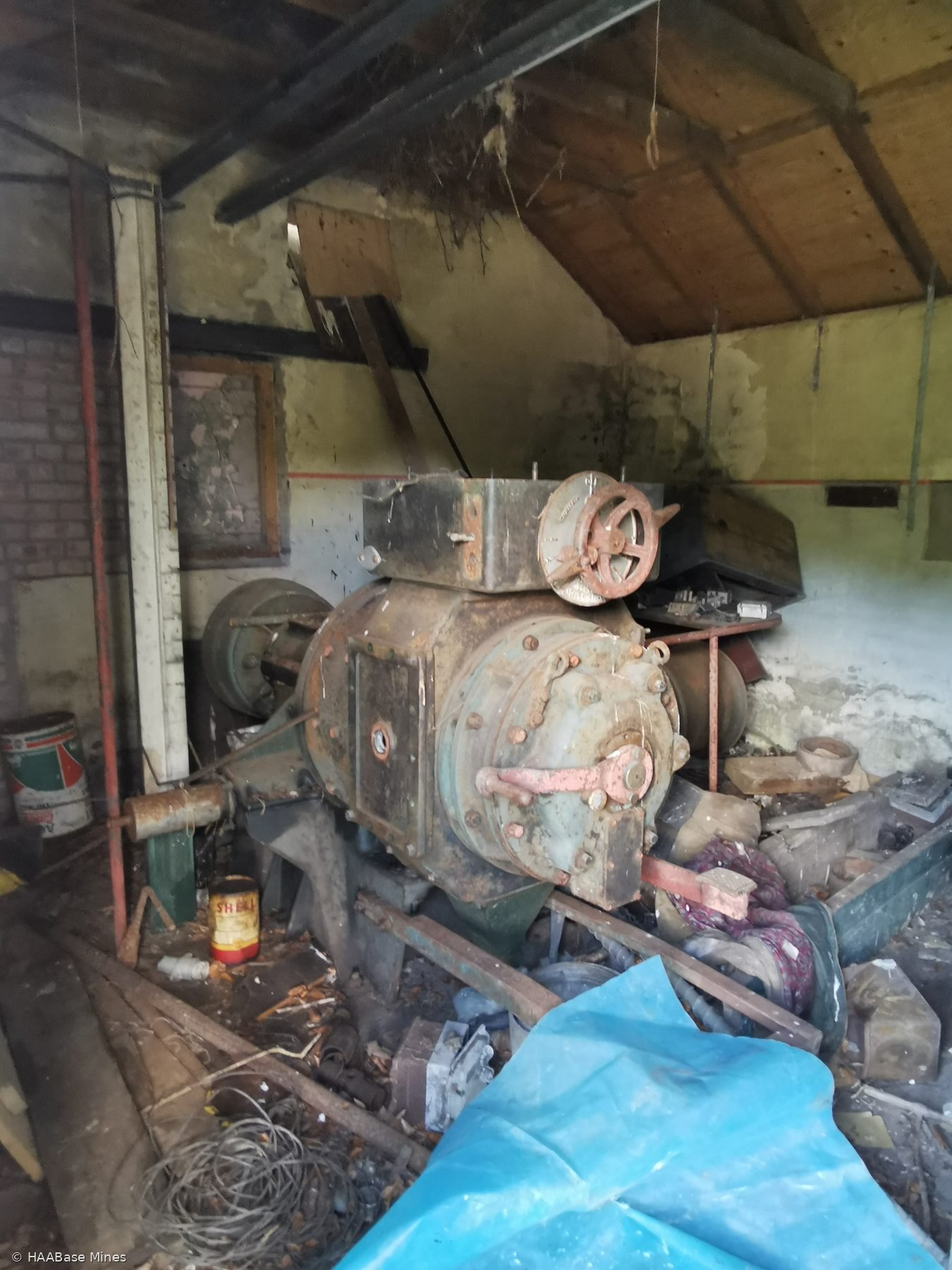
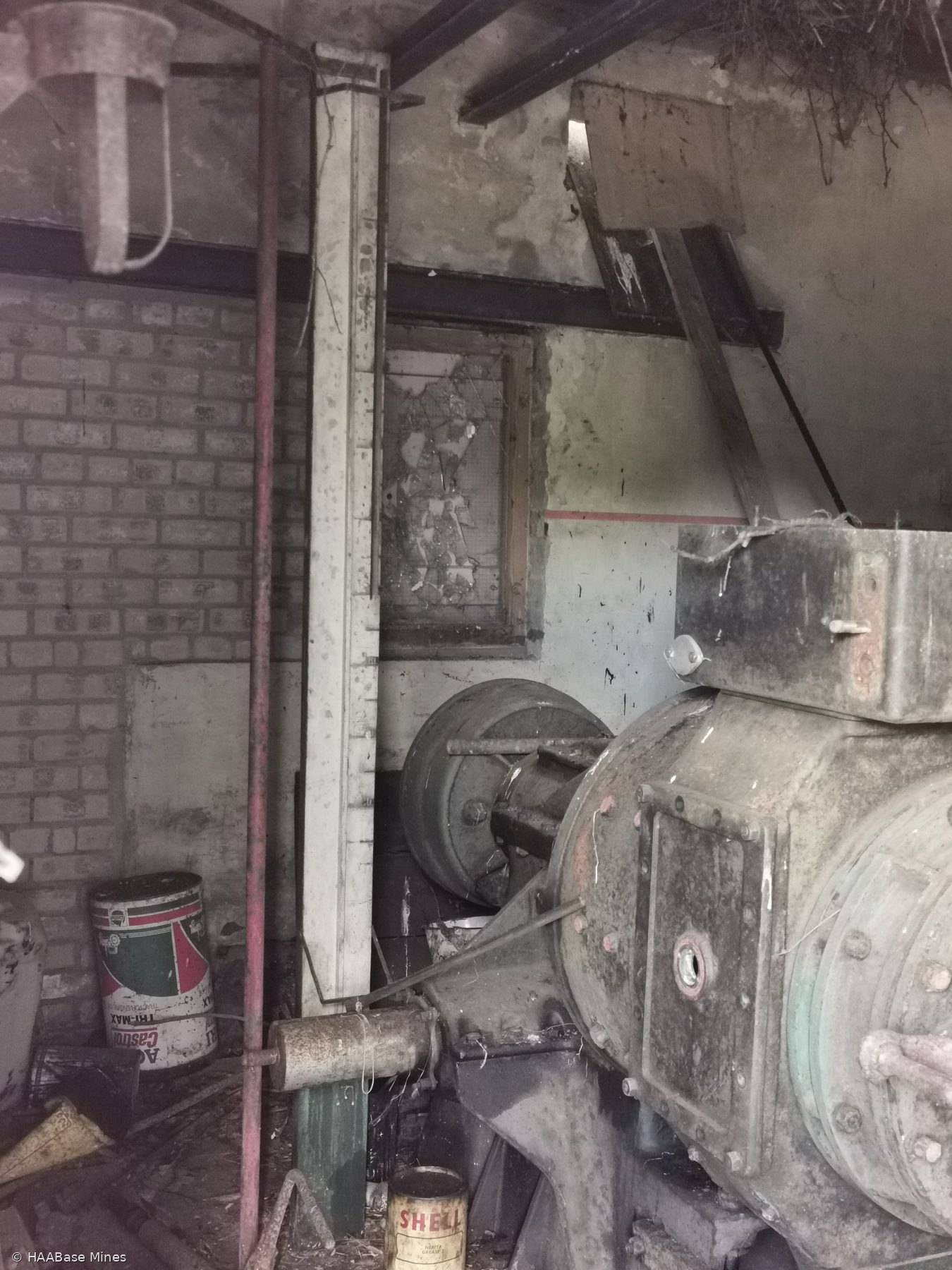
The quarry expanded during the nineteenth century and underground mining followed. RCAHMS map analysis and site survey identify a northern vertical shaft, sunk around 1870 to work another seam of Tam O'Shanter stone. This is the shaft represented by the surviving steel winding gear. It retains a cage and a small engine house with an electric winder adapted from a former marine haulage engine. An adit or drift entrance also survives in the quarry. A 20-foot beam engine formerly pumped the mine; it was dismantled in 1938 and its building had disappeared by 1967.
By 1895 a narrow mineral tramway linked the northern shaft and quarry area to Dalmore Mill. A separate tramway served a second shaft to the south. That southern working was later known as Sundrum Mine and was worked during the mid-twentieth century, but its surface buildings were cleared after 1967. The two shafts formed parts of the same wider enterprise, yet their machinery, dates and surviving remains should be kept distinct.
The Dalmore estate passed into Montgomerie family possession through marriage in 1876. The family developed the hone business and, by the beginning of the twentieth century, the Dalmore and Milton works formed part of the Water of Ayr and Tam O'Shanter Hone Works company. These names were both trade names and descriptions of different local stones. Dalmore Quarry itself is principally associated with Tam O'Shanter stone, while finer dark Water of Ayr stone was obtained from other quarries, including Meikledale. Stone from several workings could therefore pass through the connected mills, and the history of the company is broader than that of this particular shaft.
Dalmore Mill and the associated Milton works cut, shaped and polished hones for customers in Britain and overseas. Natural hones faced increasing competition during the twentieth century from artificial emery and mass-produced silicon-carbide abrasives. Falling orders eventually ended the industry. The Dalmore mine and quarry were closed by the late 1990s, while accounts of the associated processing works place their final closure either in the late 1990s or around 2003. The northern shaft's steel winding gear, cage and small winder house remain as unusually complete evidence of this specialised, small-scale mining industry.
This list includes live sources already held for the record and any additional sources added or confirmed during the published fact-check review.