Site overview

Bergwerk Petersen — formally the Petersenschacht or Schacht II of the Kaliwerk Glückauf Sondershausen — is a former potash shaft at Sondershausen in Thüringen, Germany. Shaft sinking began in May 1907 and the shaft reached a final depth of 792–793.5 metres in 1910. It was named after Staatsminister Hermann Petersen (1844–1917), on whose initiative the second shaft was created.

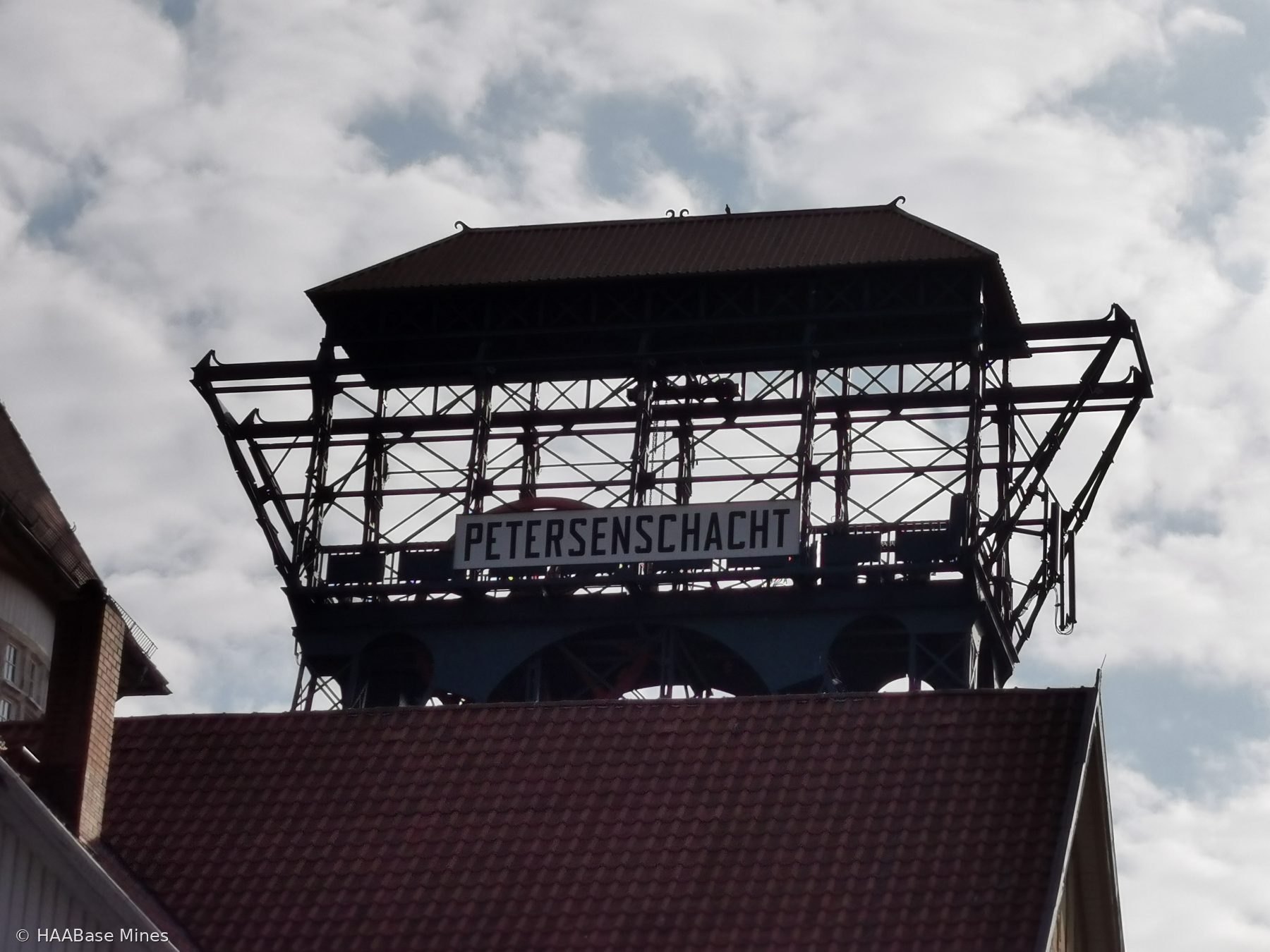
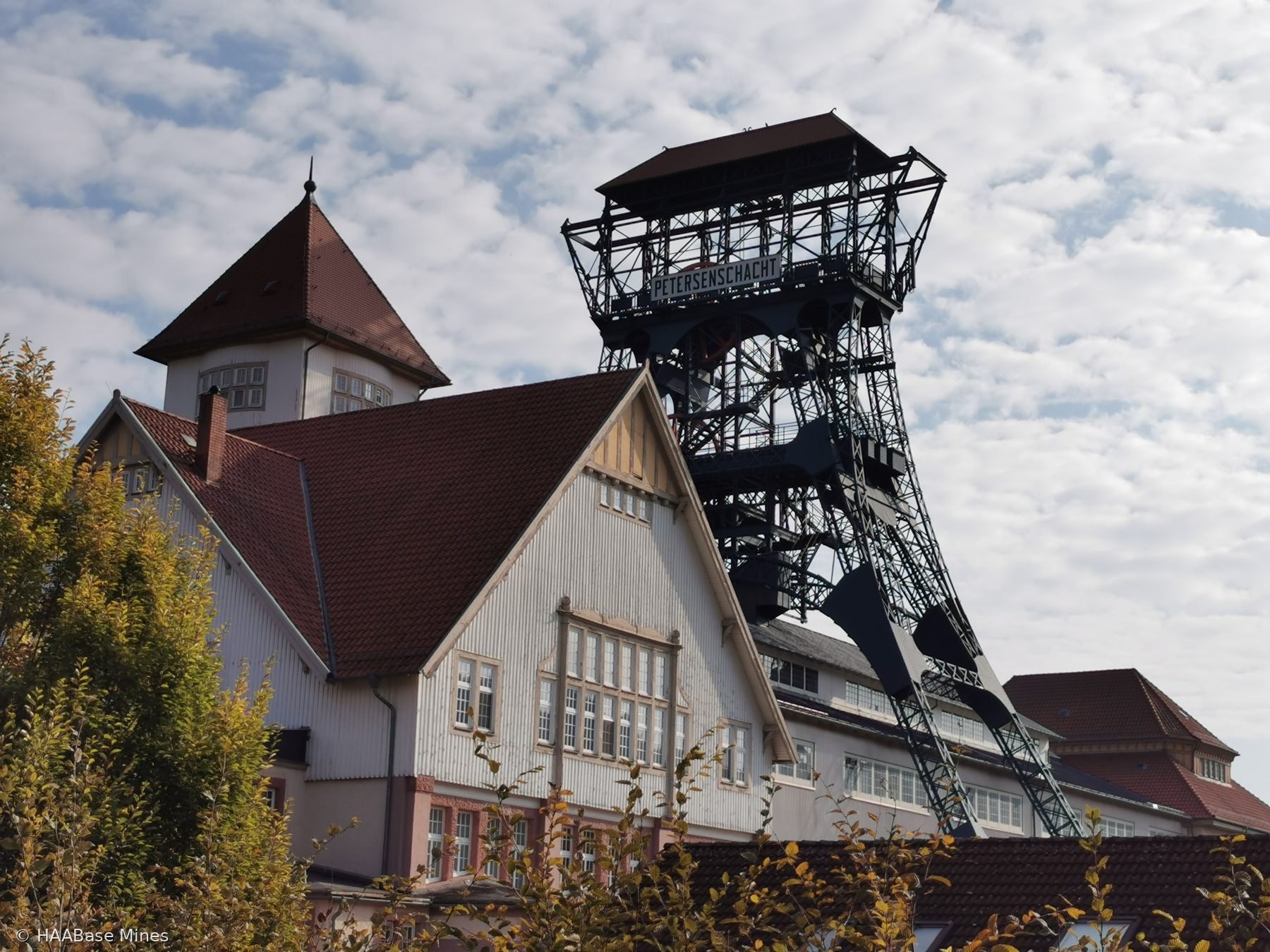
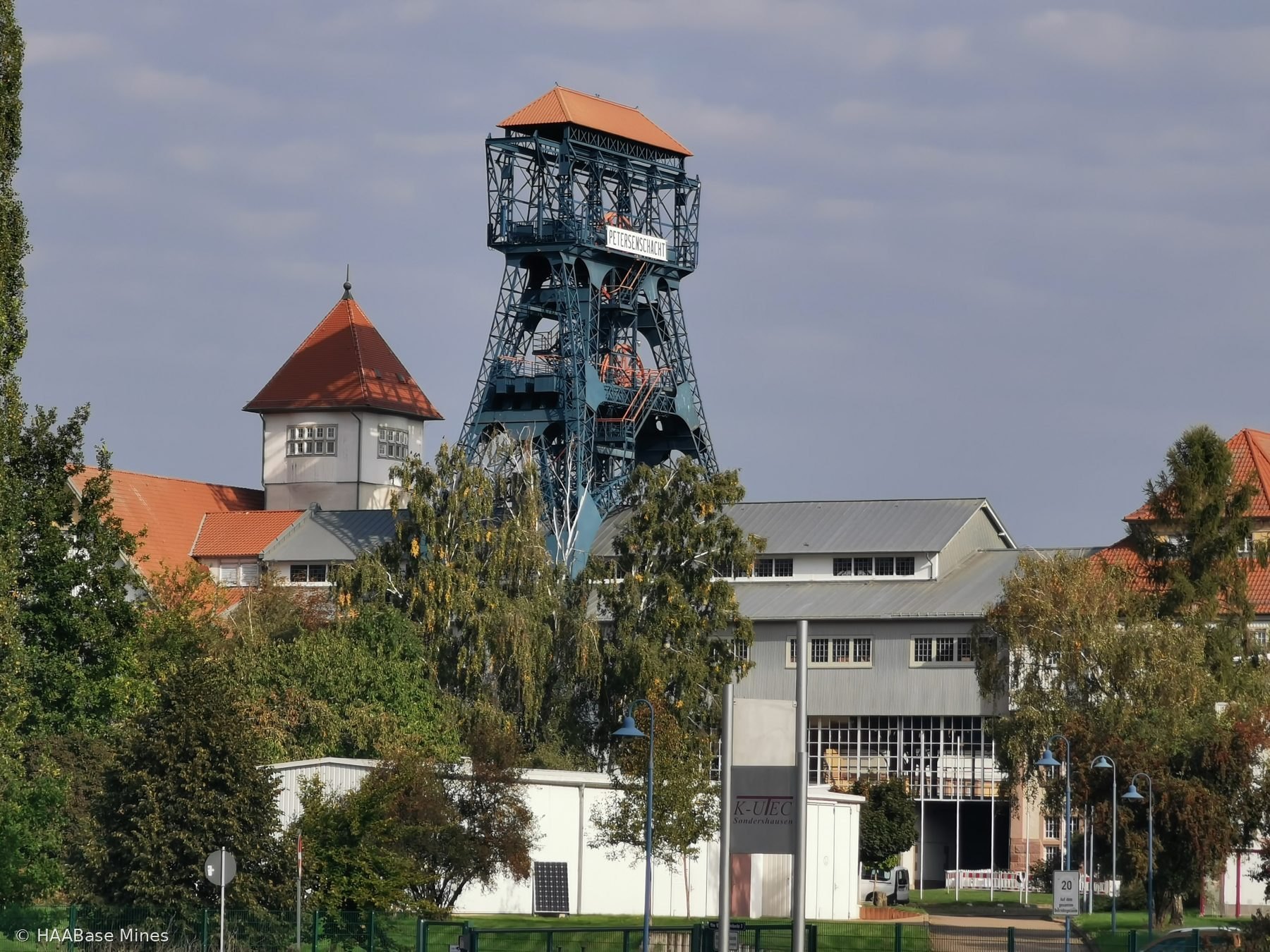
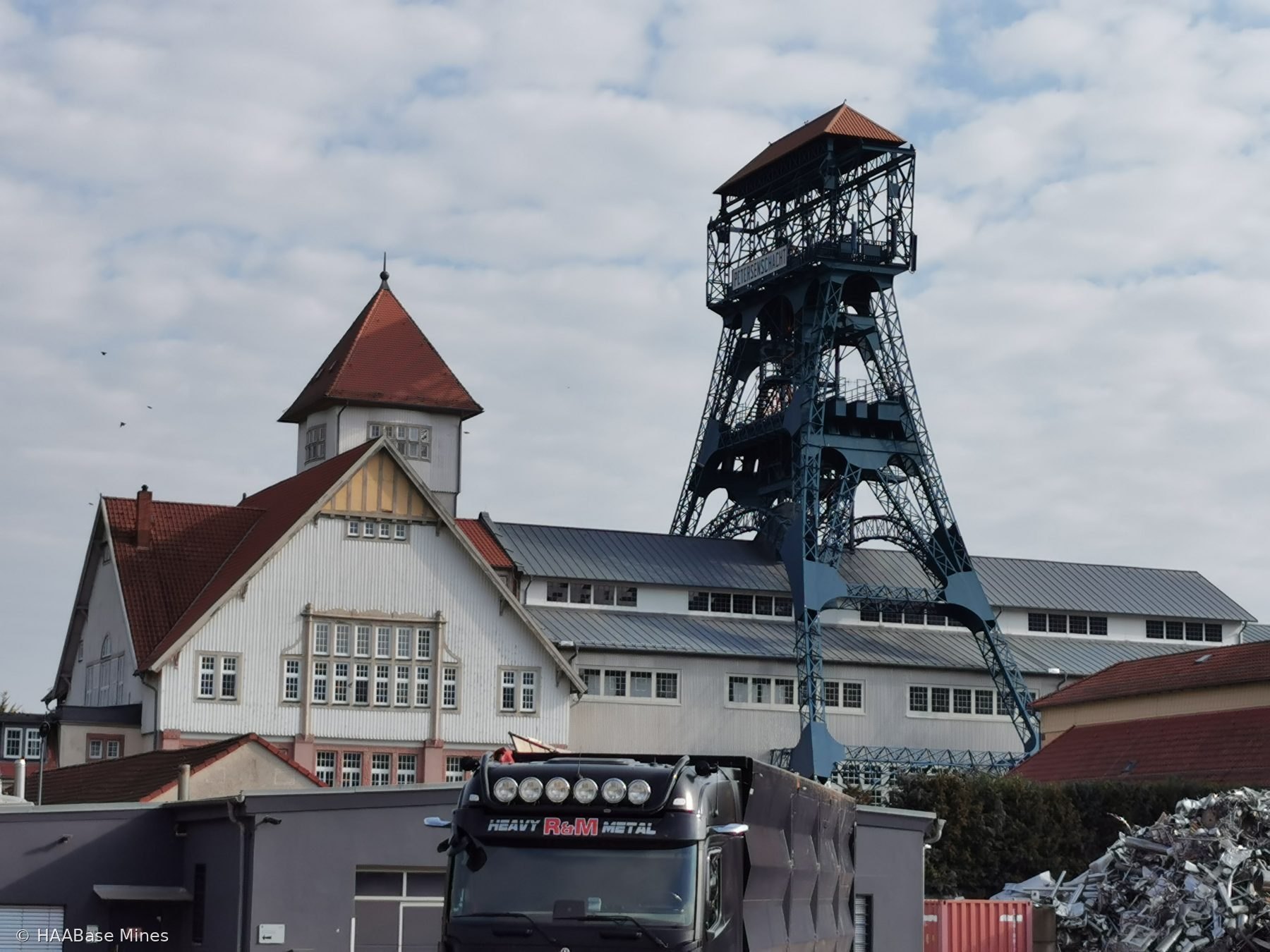
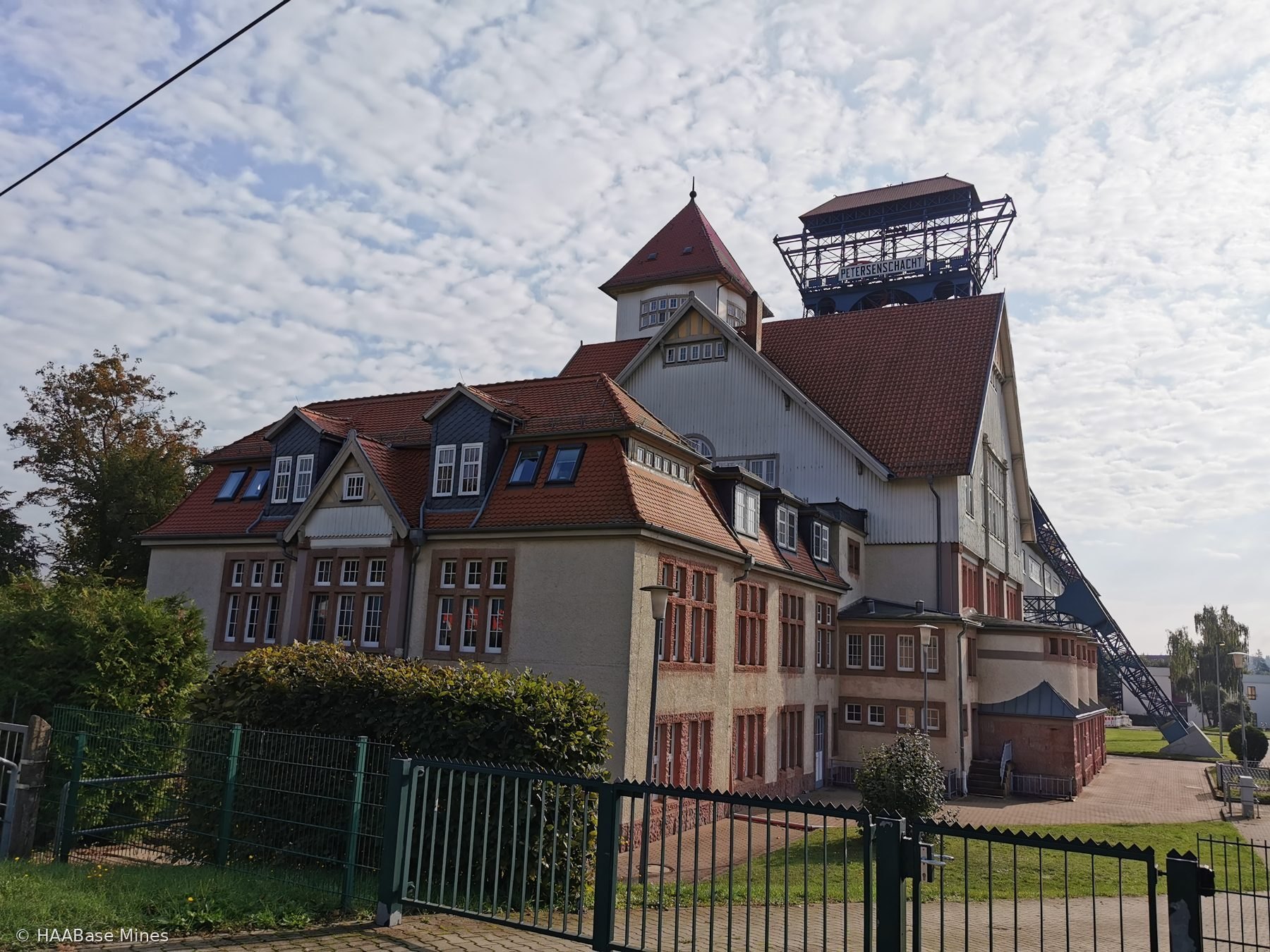
Because the shaft was sited at the entry point to the Residenzstadt, close to the railway station, the Prince of Schwarzburg-Sondershausen ordered an architecturally distinguished installation: the result was a Jugendstil complex whose principal feature is the 44-metre riveted steel headframe, modelled on the form of the Paris Eiffel Tower and supplied by the firm Klönne of Dortmund in 1909. The headframe has been a listed monument since 1969. Active potash extraction through the shaft lasted only until 1914–15; thereafter it served as a ventilation, man-riding and materials shaft.

It was filled in 1994. The buildings now house a mining archive and exhibition.

Set close to the town centre and railway, the surviving headframe and buildings form a compact and visually prominent historic group within settled urban surroundings.

Map & photo

Kaliwerk Glückauf Sondershausen — Petersenschacht mine headframe or winding tower site
Photograph taken: 28 September 2025
Map markers and directions links are provided for location reference only and do not indicate public access or permission to enter a site.

History

The potash deposits at Sondershausen were identified in May 1892 by the entrepreneur Heinrich Brügman from Dortmund, who found Carnallitit in the area. On 13 March 1891 Brügman had already applied for a prospecting licence. The sinking of the first shaft — later named the Brügmanschacht — began on 1 May 1893, approximately 4 kilometres northwest of Sondershausen. At 634 metres a 14-metre potash deposit was encountered. Brügman died on 10 December 1893 before production began. Production from the Brügmanschacht started in 1896 with 32,100 tonnes of potash salt. By 1898, after the completion of a potassium chloride factory, processed chloride concentrate was being despatched as agricultural fertiliser. The Gewerkschaft Glückauf-Sondershausen became a full member of the German potash syndicate on 1 March 1898.

In 1907 a second shaft was planned to increase output capacity and to satisfy mine safety requirements for a second exit from the underground workings. Shaft sinking of the Petersenschacht began on 1 May 1907. The shaft was positioned near the Sondershausen railway station, at the entrance to the princely Residenzstadt. Acting on the wishes of the Prince of Schwarzburg-Sondershausen, the entire shaft installation was given an architecturally distinguished form. The resulting complex combined traditional domestic architectural forms with industrial architecture in a Jugendstil idiom, centred on the 44-metre open-riveted steel headframe with its double symmetrical rope-sheave frame. The headframe was supplied by the firm August Klönne of Dortmund and erected in 1909–10. Its form was modelled on the Paris Eiffel Tower at the Prince's request. The shaft was named Petersenschacht in honour of Staatsminister Hermann Petersen (1844–1917), on whose initiative the new shaft was established. Schacht II was one of the first four second shafts sunk in the German potash industry. The shaft reached the Hartsalz deposit at 762 metres and achieved a final depth of 792–793.5 metres on 29 September 1910. An underground connection with the Brügmanschacht was completed in April 1911; the connecting roadway was 1,700 metres long, with the two shafts 2.2 kilometres apart at surface.

Active potash extraction through the Petersenschacht was limited to the period from 1910 to April 1914, when the decision was taken to concentrate production cost-effectively through the Brügmanschacht alone. From 1 April 1914 the salts were raised exclusively through the Brügmanschacht and the Petersenschacht served only for ventilation, man-riding and materials. In the same year — 1914 — the Glückauf enterprise had grown to encompass Schächte III through VI and stood tenth among the 29 companies producing 82 per cent of German potash output. During the First World War most of the expanded shaft network was suspended and only the Brügmanschacht and Raudeschacht remained intermittently in use.

In 1922 the Glückauf-Sondershausen enterprise was absorbed into the Wintershall-Konzern, and on 20 September 1926 the Sondershäuser Gewerkenversammlung resolved the liquidation of the independent Glückauf company, which was formally wound up after 34 years of existence. Operations continued under Wintershall and its successors. During the DDR period Sondershausen became an important potash operation; by 1989 the mine had 3,000 employees and produced 2,299,400 tonnes in its last year of full operation. The Petersenschacht served throughout this period as a ventilation shaft.

After the end of the DDR the potash extraction phase was wound up; by 1991 active underground potash production had ceased. The Petersenschacht was filled in 1994 and sealed with a concrete slab bearing an inscribed memorial stone recording the shaft's dates. From 1955 the building complex at the Petersenschacht had been used by the Centrale Forschungsstelle für die Kaliindustrie der DDR. The buildings later accommodated the archive for pensions records of the potash industry, and the Bergmannsverein established a presence on the site. The headframe has been a listed monument since 1969. It remains a visible landmark of Sondershausen, standing alongside the Residenzschloss as one of the two principal symbols of the town. Annual Bergmannstag celebrations organised jointly by the mine and the Bergmannsverein are held on the site.
Timeline

1891
Legislation

Prospecting licence application by Heinrich Brügman

Heinrich Leonhard Brügman from Dortmund applied for a prospecting licence at Sondershausen on 13 March 1891. The first potash deposit (Carnallitit) in the area had been identified in May 1892.
1893
Construction

Brügmanschacht (Schacht I) sinking begins

Sinking of the Brügmanschacht began on 1 May 1893, approximately 4 km northwest of Sondershausen. At 634 metres a 14-metre potash deposit was encountered. Brügman died on 10 December 1893 before production began.
1896
Operation

Potash production commences from Brügmanschacht

Production of potash salt from the Brügmanschacht began in 1896 with an initial output of 32,100 tonnes. From 1898 processed potassium chloride concentrate was despatched as agricultural fertiliser.
1907–1910
Construction

Petersenschacht (Schacht II) sunk to 792–793.5 metres

Sinking of the Petersenschacht began on 1 May 1907 near Sondershausen railway station. It reached the Hartsalz deposit at 762 metres and a final depth of 792–793.5 metres on 29 September 1910. It was one of the first four second shafts in the German potash industry.
1909–1910
Construction

Jugendstil headframe erected; inspired by Paris Eiffel Tower

The 44-metre open-riveted steel headframe was supplied by August Klönne of Dortmund and erected in 1909–10. Designed at the request of the Prince of Schwarzburg-Sondershausen, its form was modelled on the Paris Eiffel Tower. The shaft complex was built in a Jugendstil architectural idiom.
1910–1914
Operation

Active potash extraction through Petersenschacht

Active potash production through the Petersenschacht lasted from 1910 until April 1914, when production was concentrated on the Brügmanschacht to reduce costs.
1911
Construction

Underground connection with Brügmanschacht completed

An underground connecting roadway 1,700 metres long between the Petersenschacht and the Brügmanschacht was completed in April 1911.
1914–1994
Operation

Petersenschacht serves as ventilation, man-riding and materials shaft

From 1 April 1914 onwards, following the end of direct potash extraction, the Petersenschacht served exclusively as a ventilation, man-riding and materials shaft for the Kaliwerk Glückauf until its filling in 1994.
1922
Legislation

Gewerkschaft Glückauf-Sondershausen absorbed into Wintershall-Konzern

In 1922 the Glückauf enterprise was absorbed into the Wintershall-Konzern. On 20 September 1926 the Sondershäuser Gewerkenversammlung voted to liquidate the independent Glückauf company after 34 years of existence.
1947
Legislation

Mine becomes property of Land Thüringen in DDR

After the Second World War Sondershausen became part of the DDR. In 1947 the mine became property of the Land Thüringen.
1955
Redevelopment

Petersenschacht buildings occupied by DDR potash research institute

From 1955 the buildings of the Petersenschacht complex were adapted for use by the Centrale Forschungsstelle für die Kaliindustrie der DDR.
1969
Heritage

Headframe designated a protected monument

The steel headframe of the Petersenschacht was placed under heritage protection (Denkmalschutz) in 1969.
1989
Operation

Final year of full potash production: 2,299,400 tonnes

In 1989 the Kaliwerk Glückauf achieved its last year of full production, raising 2,299,400 tonnes of potash salt, with approximately 3,000 employees.
1991
Closure

Active potash extraction ends

Active underground potash production ceased by 1991. Only Schacht V was retained in operation, with backfilling works begun.
1994
Closure

Petersenschacht filled and sealed

The Petersenschacht was filled in 1994 and capped with a concrete slab bearing an inscribed memorial stone recording the shaft's data.
1995
Redevelopment

Mine converted to non-radioactive waste disposal and later to Erlebnisbergwerk

From 1995 the underground workings were used for the disposal of non-radioactive industrial residues. An Erlebnisbergwerk was also established using parts of the underground network, opening to visitors.

Sources and records

Wikipedia article (German): Kaliwerk Glückauf Sondershausen
Kyffhäuser Nachrichten: Schachtgeschichten (8) – Der Petersenschacht (Hans-Jürgen Schmidt, 2008)
LMBV.de: Verwaltungsstandort Sondershausen
Industriedenkmal.de: Bergwerk Glückauf Sondershausen
Lars-Baumgarten.de: Die Kali- und Steinsalzschächte Deutschlands 2.4 Glück auf
ERIH: Erlebnisbergwerk Sondershausen
Sondershausen city Stadtspaziergänge brochure
Flickr/Sondershausen descriptions: Petersenschacht 44 m headframe
This researched site record is part of the HAABase Mines database. Normal personal research and browsing is welcome. Automated bulk extraction, republication, or harvesting of site text and images is not permitted without written consent.