History
The legal groundwork for Zeche Fürst Hardenberg began in 1855 when the first claims were laid for the fields Deusen I and Deusen II northwest of Dortmund. Further claims followed in 1856 for the fields Nette I, Deusen III, Deusen IV and Deusen V, and in 1857 for Nette III. In 1857 the fields Deusen I to Deusen IV were formally granted, followed by Deusen V and Nette I to Nette III in 1858. Additional extensions to the Deusen fields came in 1867 and 1868. The colliery thereby acquired mining rights in the present-day districts of Deusen, Bodelschwingh, Nette and Lindenhorst.
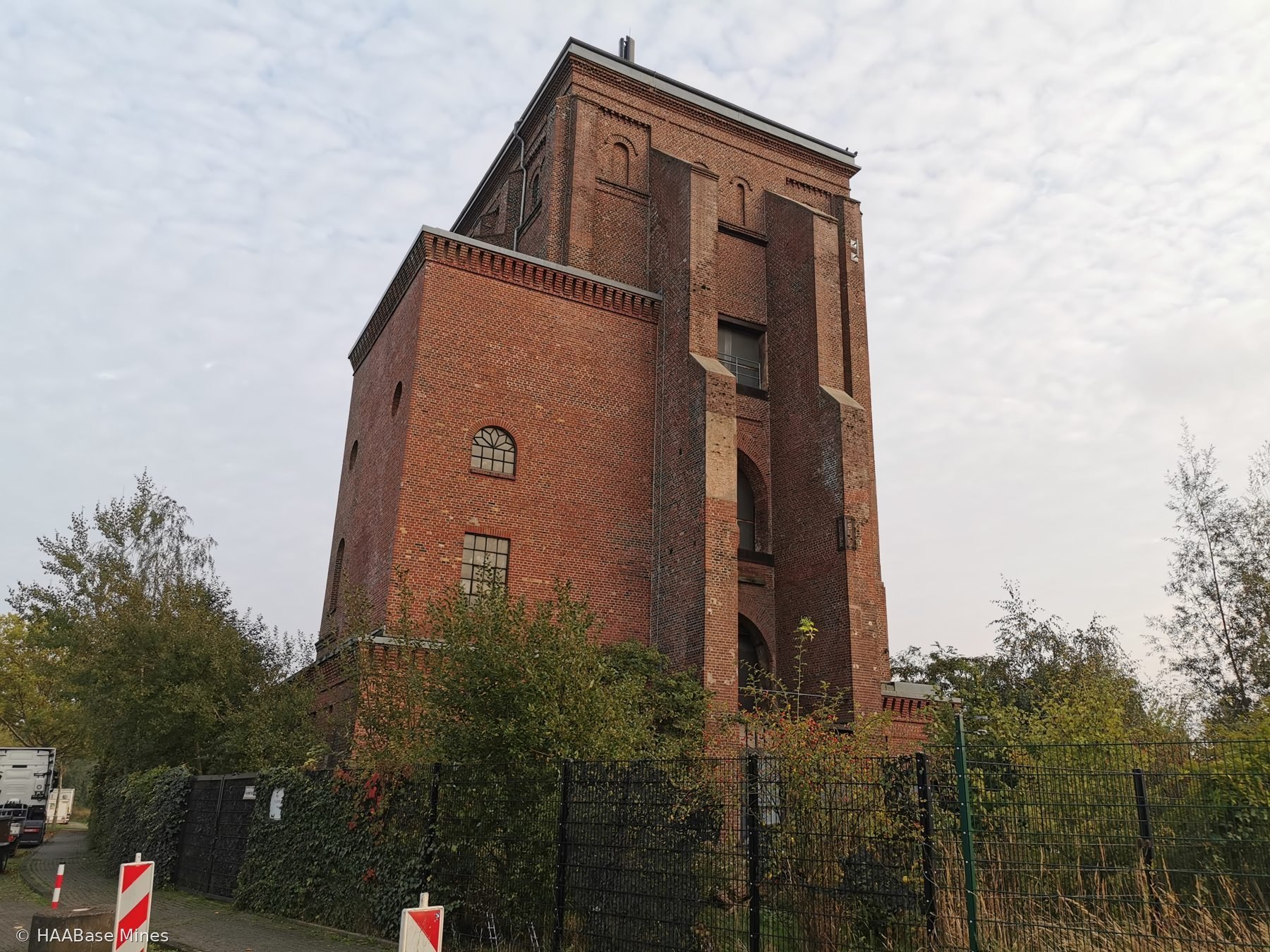
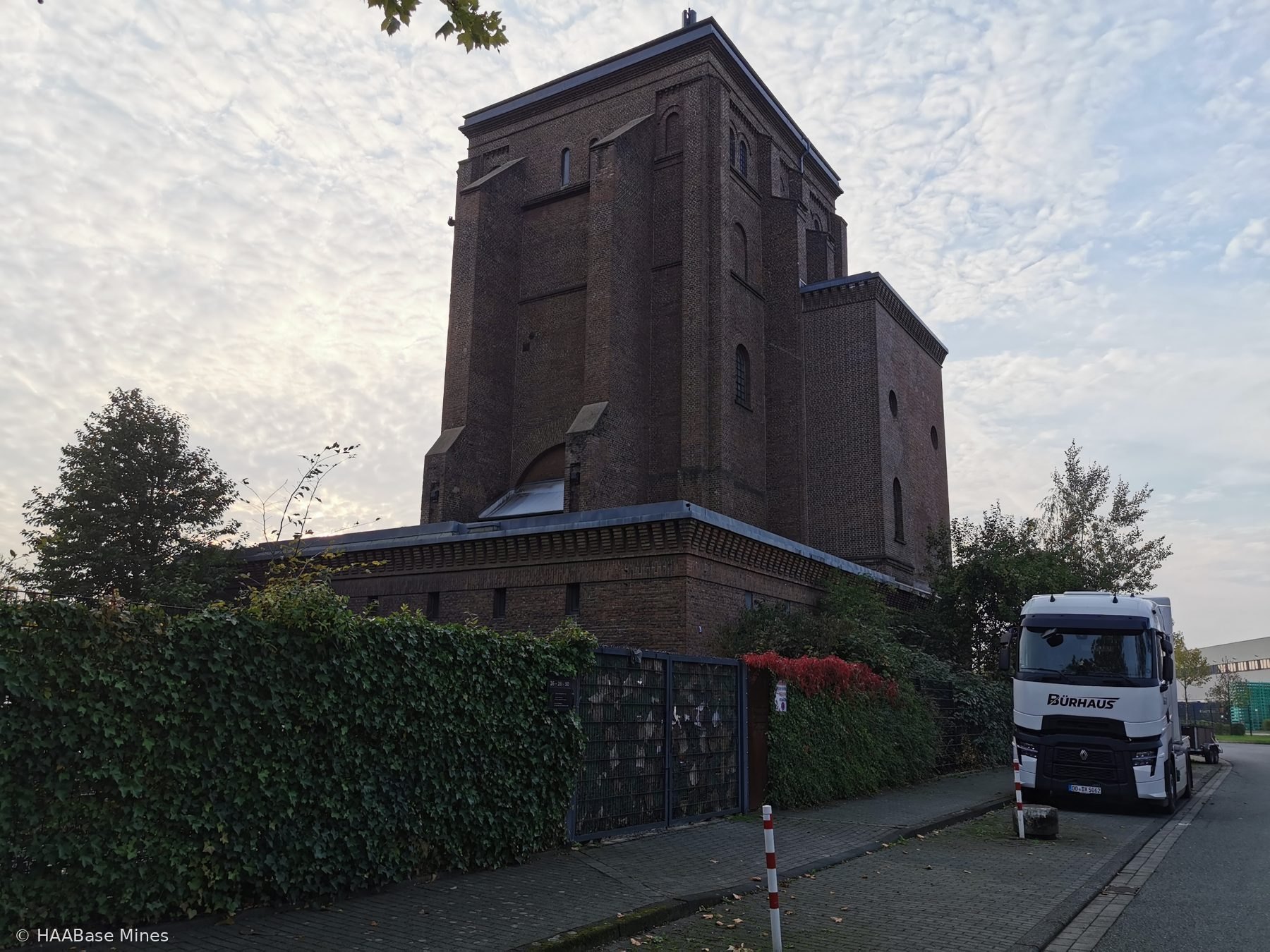
In 1872 the first shaft was sunk and the Gewerkschaft der Steinkohlen- und Eisensteinzeche Fürst Hardenberg was established. A Malakowturm was erected over Schacht 1 between 1872 and 1874. In 1873 the serious collapse of a sinking platform killed eight workers. In 1874 a new Gewerkschaft Fürst Hardenberg was formally constituted, named after Prussian statesman Karl August Fürst von Hardenberg. Coal production from Schacht 1 began in 1876, when 84 workers raised 2,350 tonnes. In the same year the first working level was established at 412 metres and the second at 452 metres. A railway connection was made in 1877, and a ventilation fan was installed in 1879. By 1880, 383 miners were producing over 100,000 tonnes annually.
The economic depression of the early 1880s put financial pressure on the still-incomplete colliery. In 1881 the fields of Zeche Fürst Hardenberg at Lindenhorst were merged with those of the neighbouring Zeche Minister Stein at Eving to form Vereinigte Stein & Hardenberg, with a Gewerkschaft of 1,000 Kuxe. The combined field covered 23 square kilometres. Still in 1881, the Gelsenkirchener Bergwerks-Aktien-Gesellschaft (GBAG) resolved to acquire the Vereinigte Stein und Hardenberg field, completing the purchase of all Kuxe by 1883. From 1884 the mine operated a Soolbad, open to the public. An underground connection to Zeche Minister Stein was completed in 1885. In 1888 the GBAG dissolved the Gewerkschaft Vereinigte Stein und Hardenberg.
From 1897 Schacht 2 was sunk beside Schacht 1. The sinking was carried out quickly and without significant water ingress, reaching 160 metres in the same year. Production from Schacht 1 was discontinued in 1902 and thereafter Schacht 2 took over production and ventilation functions. From 1897 the colliery belonged to the Bergrevier Ost-Dortmund. The construction of the Dortmund-Ems-Kanal, which passed directly beside the colliery, opened new marketing possibilities; the site received its own harbour basin, the Hardenberghafen. In 1938 ventilation shaft 6 (later named Schacht Ernst Brandi after the works director who died in 1937) was sunk, with operations beginning in 1941.
The wartime years brought exceptional output: in 1941, on the combined Vereinigte Stein & Hardenberg operation, approximately 3.7 million tonnes were produced, making it the largest hard coal mine in the Ruhr by output. Of that total, 1.5 million tonnes were attributable to Fürst Hardenberg, with 2,921 workers. During the Second World War the Tagesanlagen were damaged by bombing. In 1945 the combined statistical treatment of Minister Stein and Fürst Hardenberg as a single operation was ended and the two sites were separated again. Fürst Hardenberg supplied electricity to Minister Stein during this period as the Minister Stein power plant had been put out of action.
In 1950 the site's maximum post-war production was achieved: 3,246 workers raised 968,680 tonnes. In 1950 ventilation shaft 6 was transferred to Zeche Minister Stein. In 1953 the fifth working level was further developed. In 1955 the fifth level became the main production level and a breakthrough connection was made with the Königsmühle ventilation shaft of Zeche Hansa. By 1956 the owning company, Dortmunder Bergbau AG, was planning to merge the two collieries Minister Stein and Fürst Hardenberg into a single central shaft installation. In 1957 an underground connection with Zeche Minister Stein was driven through on the fifth level. On 1 January 1960 Zeche Fürst Hardenberg was formally taken over by Zeche Minister Stein. Coal production ceased on 22 August 1960. The coal in the Fürst Hardenberg field was thereafter carried to the central Schacht 7 of Minister Stein by large-capacity wagons. Seilfahrt and goods transport at Schacht 1 ended in 1963.
From 1966 Fürst Hardenberg served as the central maintenance and materials supply depot for the entire combined mine under Ruhrkohle AG management. Schacht 1 was filled in 1983. When Minister Stein was itself closed in 1987, coal extraction from the Fürst Hardenberg working field by large-capacity wagons also came to an end. The site then served as a central workshop under Ruhrkohle AG until 1998.
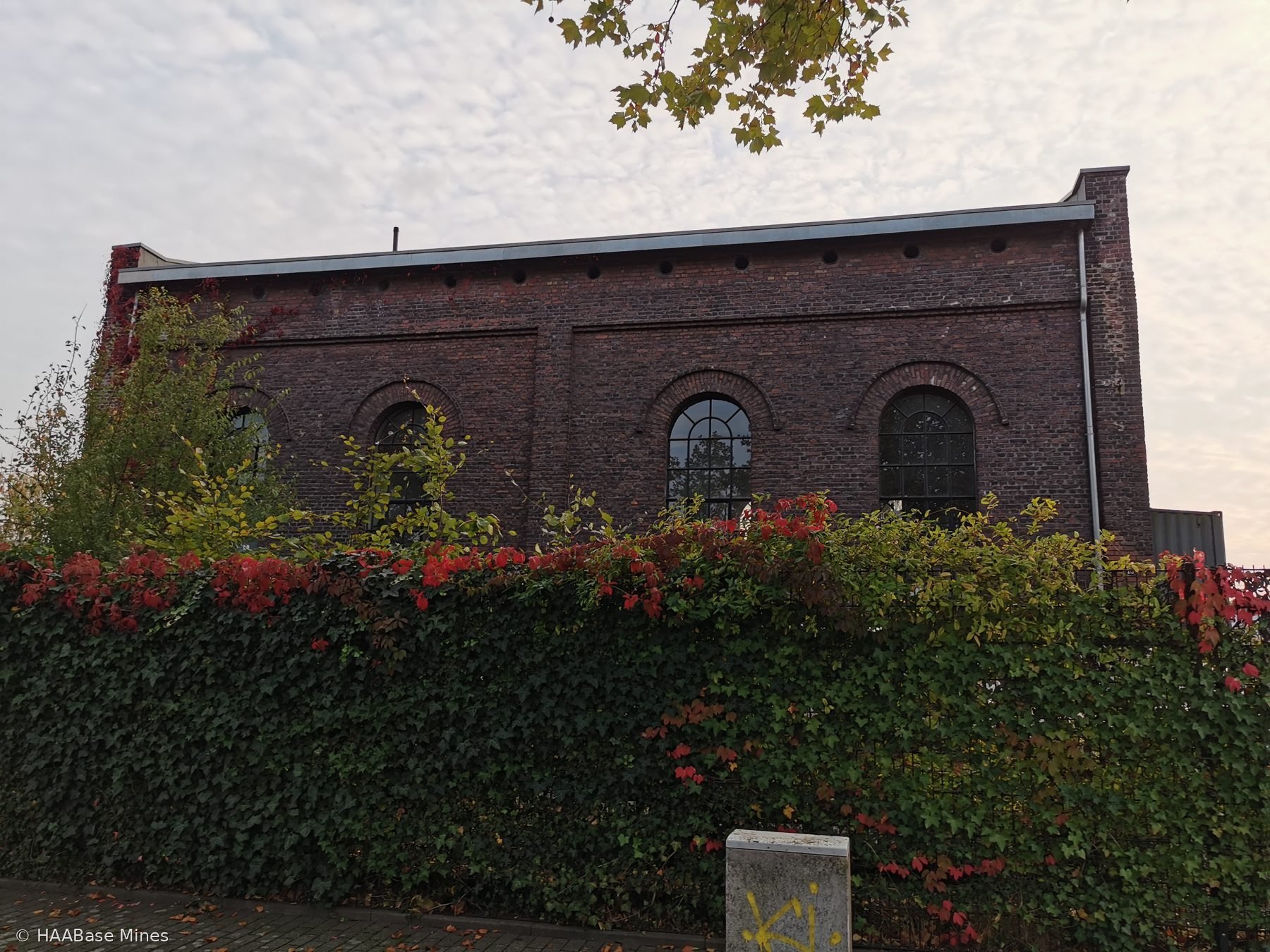
The surviving Malakowturm over Schacht 1 and the machine house were placed under heritage protection in 1990, and the tower is listed as a Baudenkmal in the monument list of the city of Dortmund. In 1997 the Stiftung Industriedenkmalpflege und Geschichtskultur took the structures into its care. A comprehensive roof and fabric restoration of the Malakowturm was carried out between 2006 and 2008. In August 2012 the site was sold to two private owners with plans to convert the machine house to offices and the Malakowturm to an exhibition and gallery space. The tower stands approximately 32 metres tall and is one of only fourteen surviving Malakowturm structures in the Ruhr. The broader former colliery site has been developed as the Logistikpark Fürst Hardenberg.