Site overview

Zeche Erin was a hard coal mine in Castrop-Rauxel in the Ruhr coalfield, Germany. It was founded in 1858 when the Irish entrepreneur William Thomas Mulvany consolidated several coal fields and named them after his homeland, Erin being the Celtic name for Ireland. Shaft sinking began under the financial backing of the Preußische Bergwerks- und Hütten-AG, and coal production started in 1867.

The mine passed through several ownerships, including the Gelsenkirchener Bergwerks-AG from 1887 and the Eschweiler Bergwerks-Verein from 1967. It was the first and last producing colliery in Castrop-Rauxel. The final closure came on 23 December 1983, having produced coal for almost 120 years, and the coking plant was extinguished in 1984.

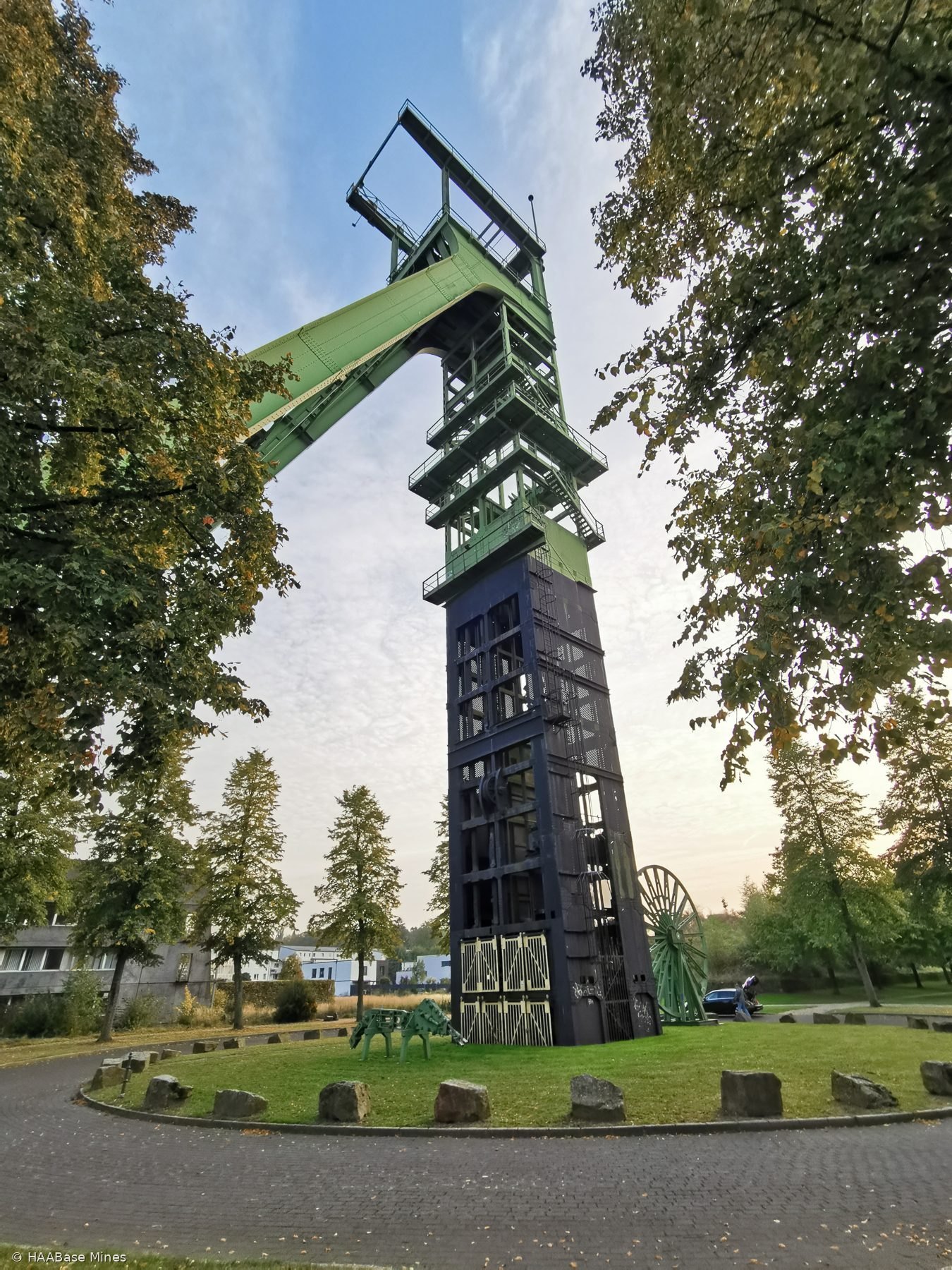
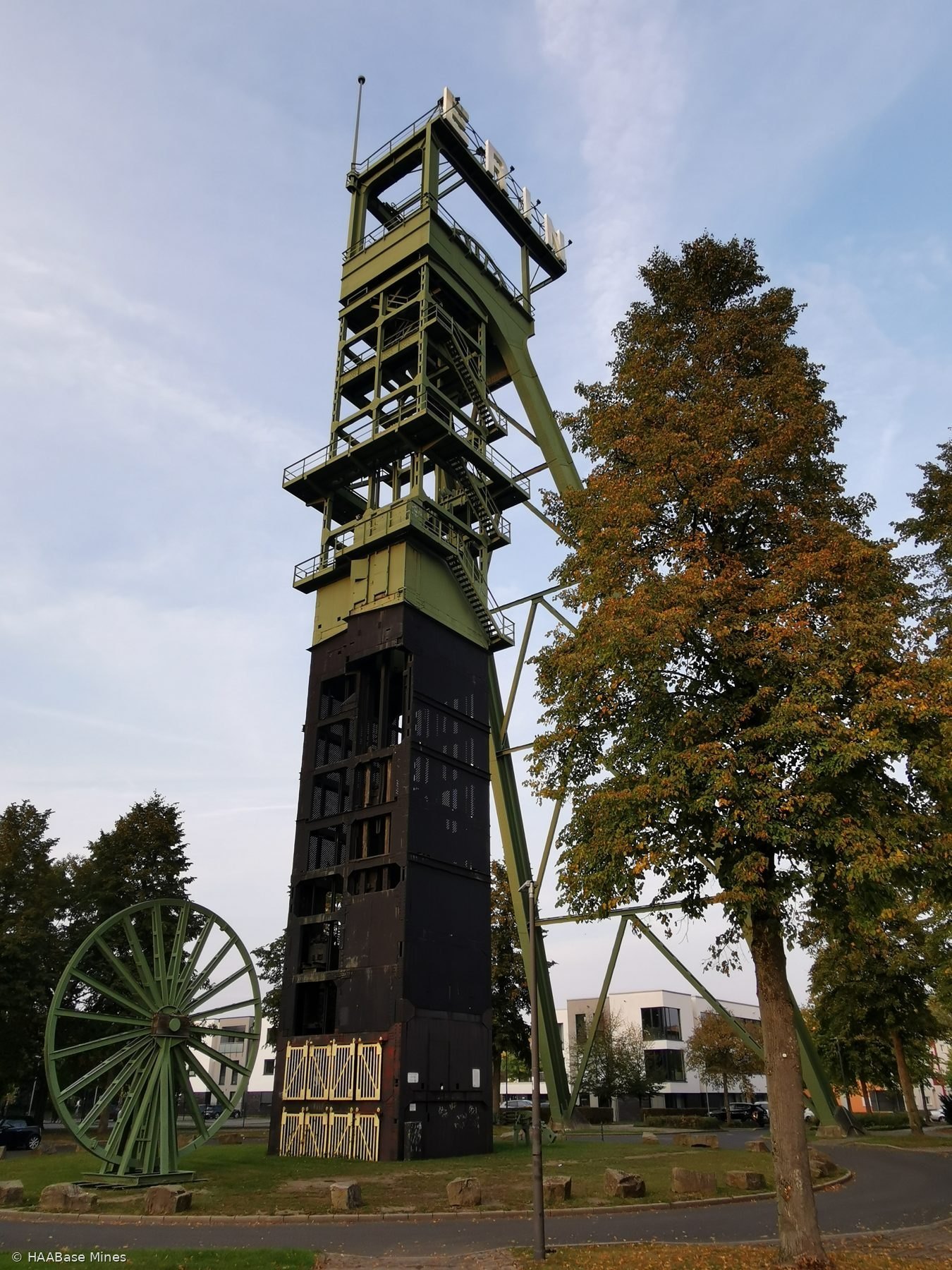
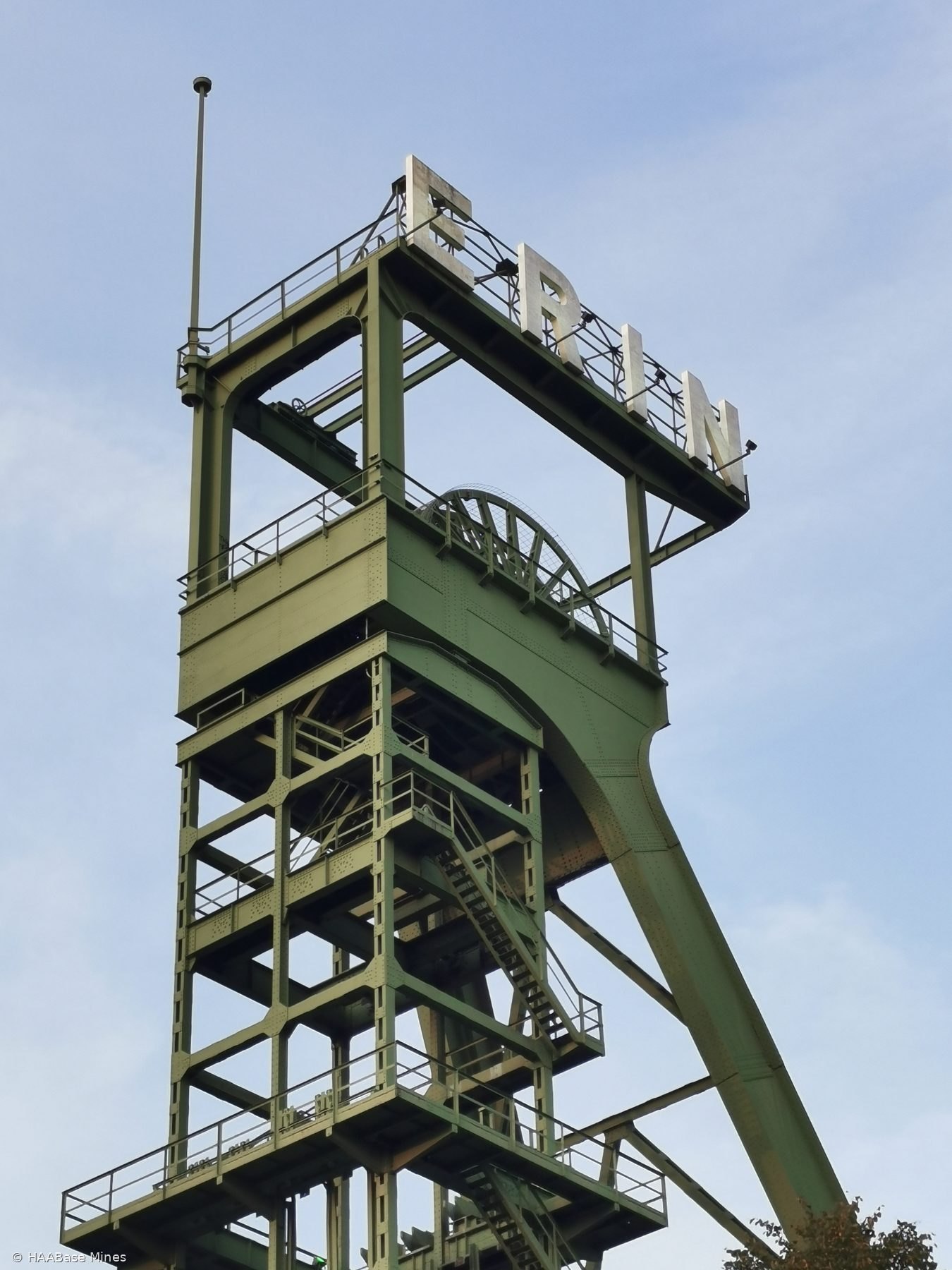
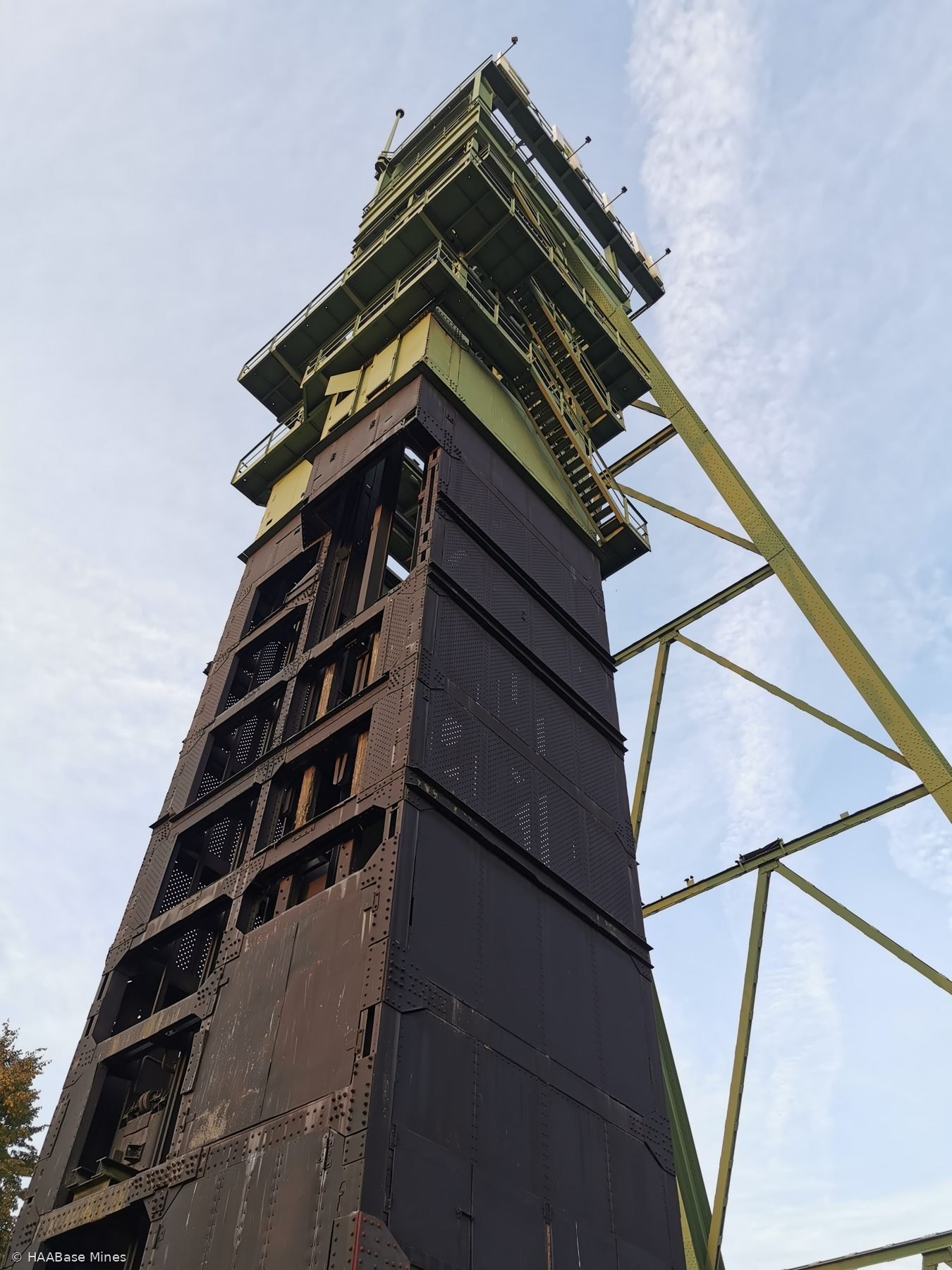
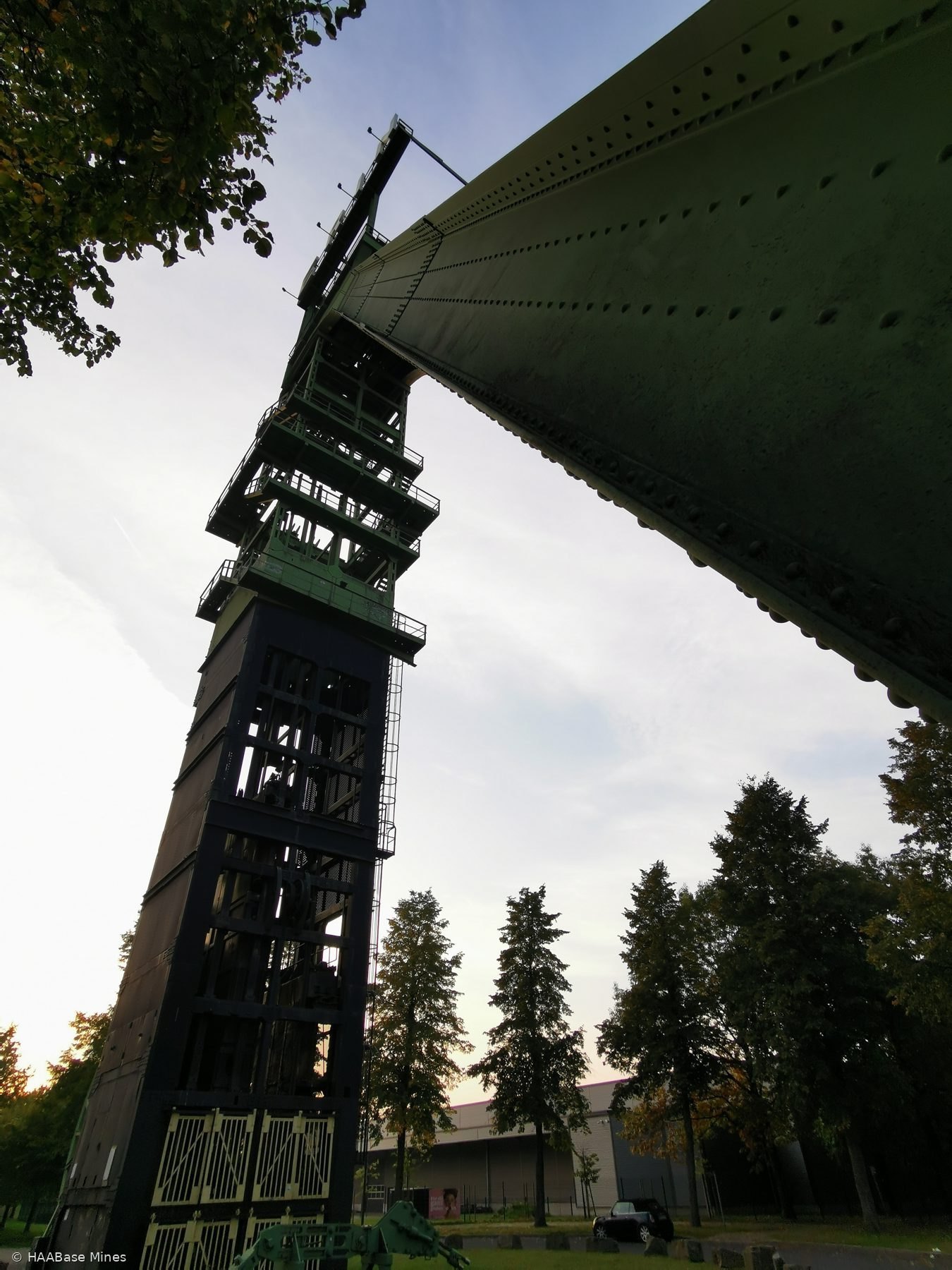
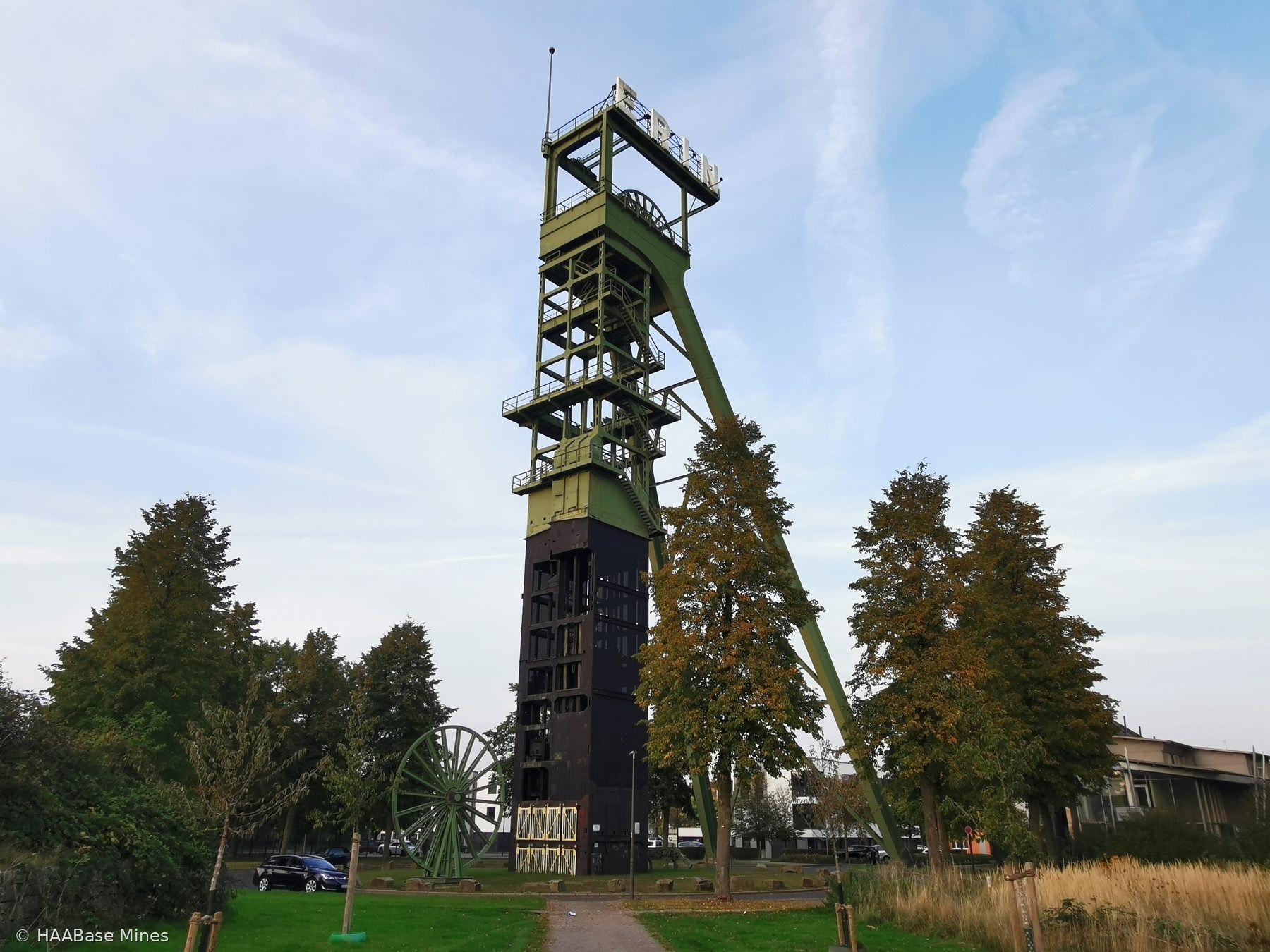
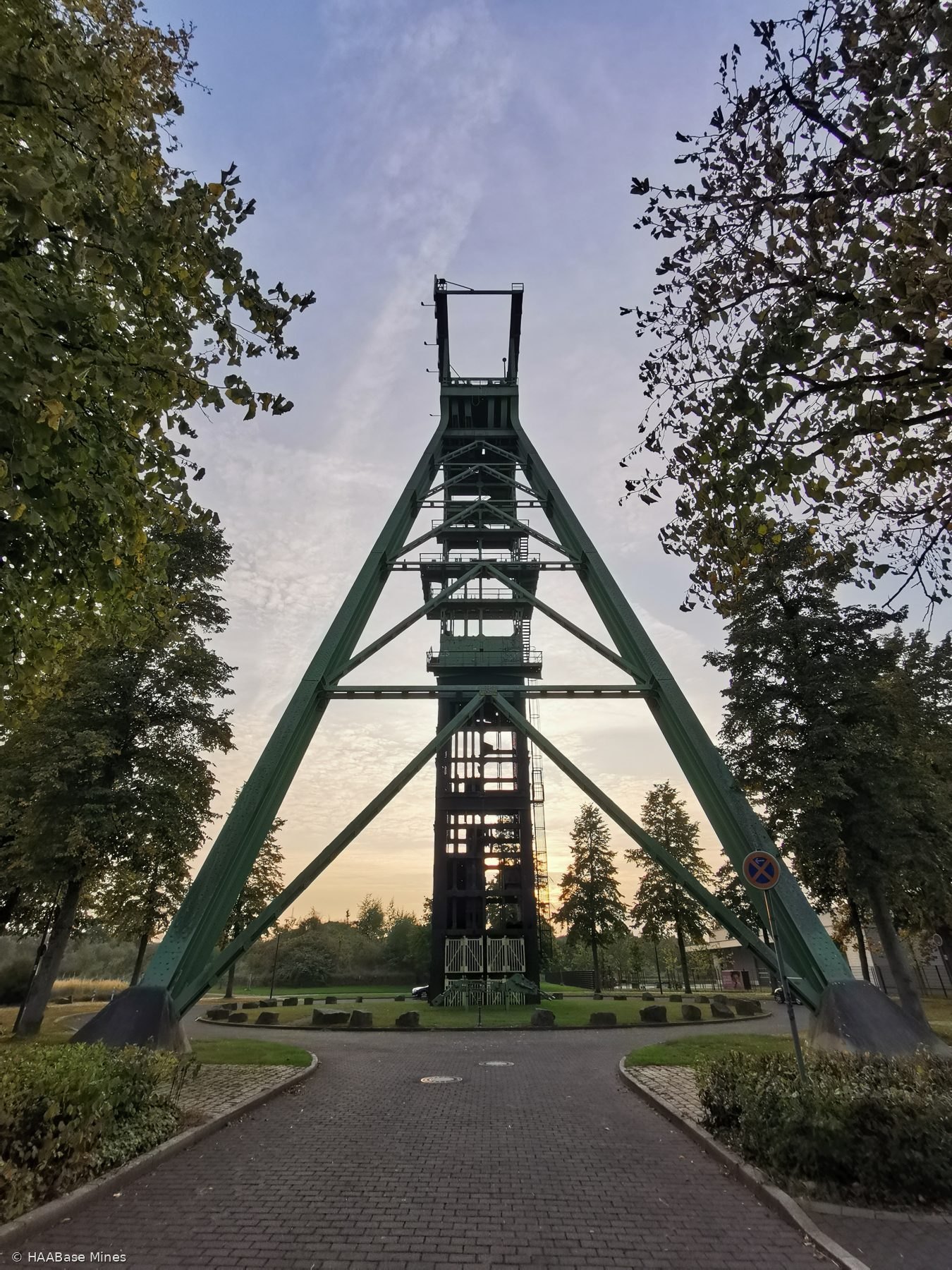
Two headframes survive as listed industrial monuments: the steel lattice tower over Schacht 7 (1953, 68 metres) and the hammerkopf tower over Schacht 3 (installed 1929). The former site has been developed into a technology and commercial park.

Set within a mixed urban and commercial landscape, the surviving headframes stand as prominent remnants of the former mine within a site now largely given over to later development.

Map & photo

Zeche Erin — Schacht 7 mine headframe or winding tower site
Photograph taken: 30 September 2025
Map markers and directions links are provided for location reference only and do not indicate public access or permission to enter a site.

History

The origins of Zeche Erin lie in the consolidation in 1858 of several coal field properties in the Castrop area by the Irish engineer and entrepreneur William Thomas Mulvany. The name Erin derives from the Celtic name for Ireland — Eire — and was chosen by Mulvany as a reference to his homeland. Under the financial backing of the Preußische Bergwerks- und Hütten-AG, Mulvany sank Schächte 1 and 2 at the Karlstraße in Castrop. The two shafts were placed only 20 metres apart, following British practice, and a shared machine house was built between them, with the ropes directed over two projecting arms through the gable walls of the house and down into each shaft. Rather than the masonry Malakowturm headframes then common in the Ruhr, Mulvany erected only wooden headframes as was customary on his other collieries, following English practice. Coal production began in 1867. By 1870 the mine had produced over 87,000 tonnes and, as fat coal could be worked in depths of about 200 metres, the company built the first 20 coke ovens with beehive kilns in 1870.

In the years that followed, several firedamp explosions caused deaths, and repeated severe water ingress repeatedly disrupted operations and drained the capital reserves of the operating company. In 1877 the Preußische Bergwerks- und Hütten-AG declared insolvency. The mine was kept open only provisionally and produced coal solely for its own use. This precarious situation explains why Zeche Erin was not incorporated into the Hibernia AG grouping when Mulvany's other collieries Hibernia and Shamrock were consolidated into that concern. In 1882 the entrepreneur Friedrich Grillo formed a new Gewerkschaft Erin and, investing new capital and deploying heavy pumping machinery, succeeded in dewatering the flooded workings. The wooden headframes had already been replaced by iron ones in 1883.

In 1887 the Gelsenkirchener Bergwerks-AG (GBAG) acquired Zeche Erin, together with its coking plant. The GBAG invested comprehensively and the coking plant was replaced by a new facility in subsequent years. The headframe arrangement over Schächte 1 and 2 was replaced by a distinctive Ruhr construction: two small German streben headframes, connected by a footbridge, erected as so-called siamesische Zwillinge over the two shafts. Between 1889 and 1891 Schacht Erin 3 was sunk to the east of Schächte 1 and 2 as a winding and ventilation shaft, reducing the firedamp risk significantly; an iron headframe was initially erected over it. Between 1890 and 1892 Schacht 4 was sunk alongside Schacht 1/2 as a ventilation shaft. By 1887 production had risen to 361,000 tonnes with a workforce of 1,200. The expanded production placed GBAG at the top rank of German coke-producing companies. In 1902 a mining official's residence was built beside Schacht 3.

From April to July 1923 Zeche Erin was under French occupation during the passive resistance period; production fell to only 188,930 tonnes across the whole year despite 3,272 employees. From 1925 the closed Zeche Teutoburgia in Herne was connected to the Erin 1/2/4 complex; Schacht Teutoburgia 1 continued as a winding shaft and Schacht Teutoburgia 2 served from 1934 as a ventilation shaft. In 1926, with the formation of the Vereinigte Stahlwerke AG, the mining interests around Castrop and Sodingen were reorganised. In 1929 the original streben headframe over Schacht 3 was replaced by a closed hammerkopf steel lattice tower. This structure had originally stood over Schacht 2 of Zeche Vereinigte Westphalia in Dortmund; its relocation to Schacht 3 Erin was one of the rare cases of headframe translocation in the Ruhr. In 1930 the old coking plant was replaced by a modern new installation. In 1937 production at Schacht 3 was suspended as part of plans to develop Schacht 1/2/4 into a central winding installation.

From 1956 the mine was operated by the Dortmunder Bergbau-AG. By 1957 coking production had reached a peak of 832,330 tonnes. Schacht 7, located near the town centre, was sunk in 1953 and brought into service as the main production shaft in 1963; its 68-metre steel lattice headframe, with its prominent Erin lettering, became a landmark of the city. From this point the entire Erin output was brought to surface through Schacht 7. Schächte 1 and 2 were progressively withdrawn from production by 1962 and continued only as ventilation shafts, with the twin headframe replaced by a smaller installation. Rationalisation measures were carried out from 1966. In 1967 the mine was sold to the Eschweiler Bergwerks-Verein (EBV). Under EBV management, Erin received reserve fields from Zeche Lothringen and Zeche Graf Schwerin, and the Schacht Lothringen 6 was taken over as a ventilation shaft. Pioneer work in mechanisation was carried out on Erin: coal planing with a ramming body had been introduced in the mid-1950s, and the first fully automated face in the Ruhr coalfield operated here from 1964. The highest annual output was 1,480,855 tonnes in 1973, in which year the sixth working level at 900 metres depth was also opened, yielding high-quality coking coal.

From 1982 the sharp onset of a sales crisis led the EBV to plan withdrawal from the mining business. Zeche Erin, approaching 120 years of production and lacking sufficient reserve capacity, was scheduled for closure. On 23 December 1983 production was finally halted. The coking plant was extinguished in 1984. Castrop-Rauxel thereby lost both its first and its last producing colliery.

All shafts were filled after closure. The winding tower over Schacht 7 had been freed for scrapping but was saved through the intervention of the local photographer Klaus Michael Lehmann with support from the NRW-Stiftung; it was subsequently restored and stands as a listed industrial monument. The hammerkopf tower over Schacht 3, at 32 metres high, is also preserved as a listed monument on the Schellenberg site; a Celtic tree circle was laid out around it in memory of the Irish founder Mulvany. The former working premises were largely demolished, apart from some administrative buildings. The former site of Erin 1/2/4/7 was redeveloped as a technology and commercial park, known as the Mulvany Center in reference to the founder. The landscape design incorporated the foundations of Schächte 1 and 2 as conical earthworks and included water features, with reference to Irish landscape themes. The former Schacht 4 site is now built over.

Timeline

Heritage

Headframe at Schacht 7 saved and restored as listed monument

The 68-metre headframe over Schacht 7, which had been freed for scrapping, was saved through the intervention of local photographer Klaus Michael Lehmann with support from the NRW-Stiftung. It was restored and is preserved as a listed industrial monument.
Redevelopment

Former site redeveloped as technology and commercial park

The former Zeche Erin 1/2/4/7 site was redeveloped as a technology and commercial park, including the Mulvany Center in reference to the Irish founder. Landscape design incorporated the shaft foundations of Schächte 1 and 2 as earthworks and included Irish landscape references.
Heritage

Celtic tree circle installed around Schacht 3 hammerkopf tower

A Celtic tree circle was installed around the surviving hammerkopf tower over Schacht 3 in memory of Irish founder William Thomas Mulvany. The tower is preserved as a listed industrial monument.
1858
Legislation

Consolidation of Castrop coal fields as Erin; shaft sinking begins

William Thomas Mulvany consolidated several coal field properties in Castrop and named the new field Erin, after the Celtic name for Ireland. Shaft sinking of Schächte 1 and 2 at the Karlstraße began under the financial backing of the Preußische Bergwerks- und Hütten-AG.
1867
Operation

Coal production begins

Coal production at Schächte 1 and 2 commenced in 1867, following British engineering practice including a shared machine house between the two shafts.
1870
Operation

Coking plant with beehive ovens commissioned

In 1870 a coking plant with beehive kilns was established on the site as fat coal could be worked at depth. Production that year exceeded 87,000 tonnes.
1877
Operation

Preußische Bergwerks- und Hütten-AG declares insolvency

Following repeated water ingress and capital depletion, the Preußische Bergwerks- und Hütten-AG declared insolvency in 1877. The mine was kept provisionally open, producing coal only for its own use.
1882
Legislation

Friedrich Grillo forms new Gewerkschaft Erin; mine resurrected

Friedrich Grillo formed a new Gewerkschaft Erin in 1882 and with new capital and heavy pumping machinery successfully dewatered the flooded workings. The original wooden headframes had been replaced by iron ones in 1883.
1887
Legislation

Gelsenkirchener Bergwerks-AG acquires Zeche Erin

The Gelsenkirchener Bergwerks-AG (GBAG) acquired Zeche Erin together with its coking plant in 1887. The GBAG invested comprehensively and rebuilt the coking plant.
1887
Construction

Siamesische Zwillinge twin headframe erected over Schächte 1 and 2

The headframe arrangement over Schächte 1 and 2 was replaced by a unique twin streben headframe construction: two small German headframes connected by a footbridge, known as the siamesische Zwillinge.
1889–1891
Construction

Schacht 3 sunk as ventilation and winding shaft

Schacht Erin 3 was sunk to the east of Schächte 1 and 2 between 1889 and 1891, entering service as a winding and ventilation shaft. An iron headframe was initially erected over it.
1890–1892
Construction

Schacht 4 sunk as ventilation shaft

Schacht 4 was sunk alongside Schacht 1/2 between 1890 and 1892 as a pure ventilation shaft.
1923
Operation

French occupation; production severely reduced

From April to July 1923 Zeche Erin was under French occupation during the Ruhr passive resistance. Annual production fell to only 188,930 tonnes despite 3,272 employees.
1925
Operation

Closed Zeche Teutoburgia connected to Erin complex

The 1925-closed Zeche Teutoburgia in Herne was connected to Erin 1/2/4. Schacht Teutoburgia 1 continued as a winding shaft; Schacht Teutoburgia 2 served from 1934 as a ventilation shaft.
1929
Construction

Hammerkopf winding tower installed over Schacht 3

The original streben headframe over Schacht 3 was replaced in 1929 by a closed hammerkopf steel lattice tower, relocated from Schacht 2 of Zeche Vereinigte Westphalia in Dortmund, one of the rare cases of headframe translocation in the Ruhr.
1930
Construction

Coking plant replaced by modern installation

The old coking plant was replaced by a modern new facility in 1930.
1953
Construction

Schacht 7 sunk; 68-metre steel lattice headframe erected

Schacht 7 was sunk in 1953 near the town centre. A 68-metre steel lattice headframe was erected, becoming a prominent landmark of Castrop-Rauxel. From 1963 the entire Erin output was routed through this shaft.
1956
Legislation

Dortmunder Bergbau-AG takes over operational management

From 1956 the mine was operated by the Dortmunder Bergbau-AG.
1967
Legislation

Zeche Erin sold to Eschweiler Bergwerks-Verein

In 1967 the mine was sold to the Eschweiler Bergwerks-Verein (EBV). Under EBV management, reserve fields from Zeche Lothringen and Zeche Graf Schwerin were assigned to Erin.
1973
Operation

Record annual output of 1,480,855 tonnes; sixth working level opened at 900 metres

The highest annual production was achieved in 1973, with 1,480,855 tonnes. In the same year the sixth working level was opened at a depth of 900 metres, yielding high-quality coking coal.
1983
Closure

Final closure of coal production

On 23 December 1983 the production operation was permanently closed, ending almost 120 years of coal extraction. Zeche Erin was the first and last producing colliery in Castrop-Rauxel. All shafts were subsequently filled.
1984
Closure

Coking plant extinguished

The coking plant was definitively closed in 1984.
1984
Closure

Surface buildings demolished

Demolition of the colliery surface installations was carried out from 1984 onwards. The washed was demolished in 1985.

Sources and records

Wikipedia article (German): Zeche Erin
Ruhrzechenaus.de: Zeche Erin in Castrop-Rauxel
Rheinruhronline.de: Zeche Erin Castrop-Rauxel
KuLaDig heritage record: Ehemalige Zeche Erin 1/2/4/7
Ruhrnachrichten.de: Vor 40 Jahren begann die letzte Schicht – Zeche Erin
Entdecke.dein-nrw.de: Zeche Erin feature article
Erin-Foerder-Turm-Verein.de: Erin Schacht 7
This researched site record is part of the HAABase Mines database. Normal personal research and browsing is welcome. Automated bulk extraction, republication, or harvesting of site text and images is not permitted without written consent.