Site overview

Bergwerk Göttelborn was a hard coal colliery in the Saarland, located in the municipality of Quierschied approximately twelve kilometres north of Saarbrücken. Documentary evidence of coal extraction in the Göttelborn field dates from 1446, and a private coal pit is confirmed from 1771. The mine was formally constituted as a state colliery in 1887.

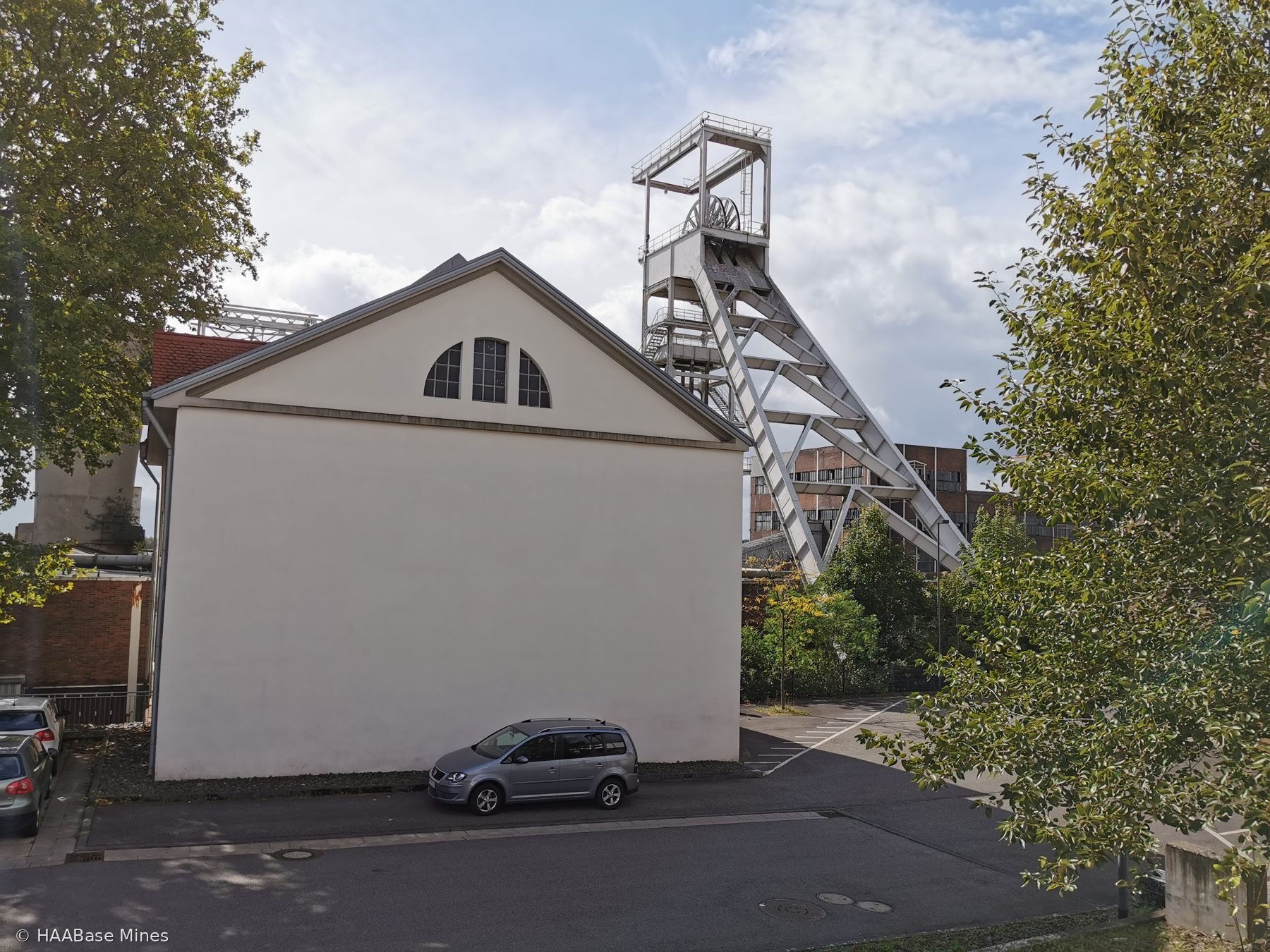
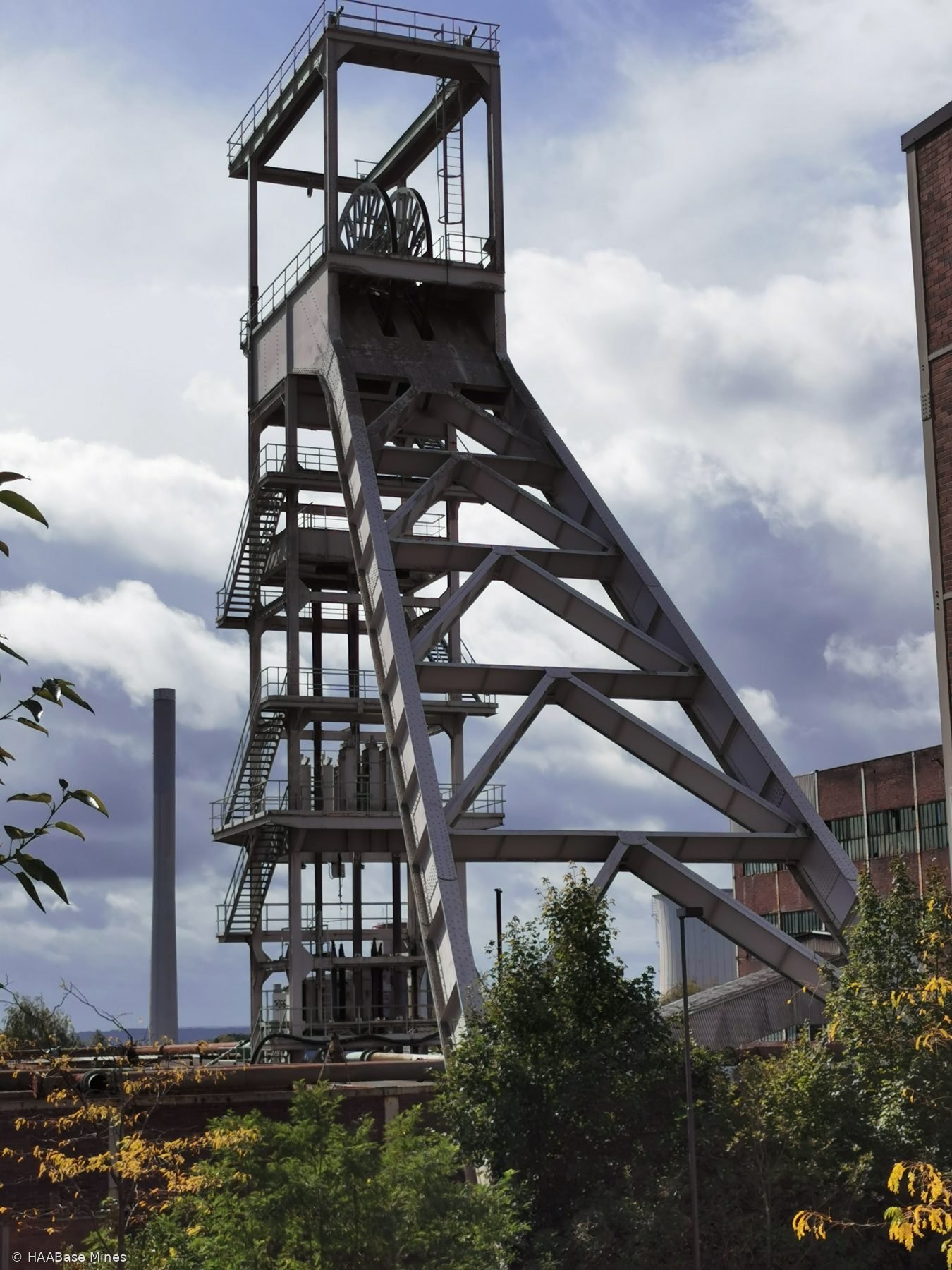
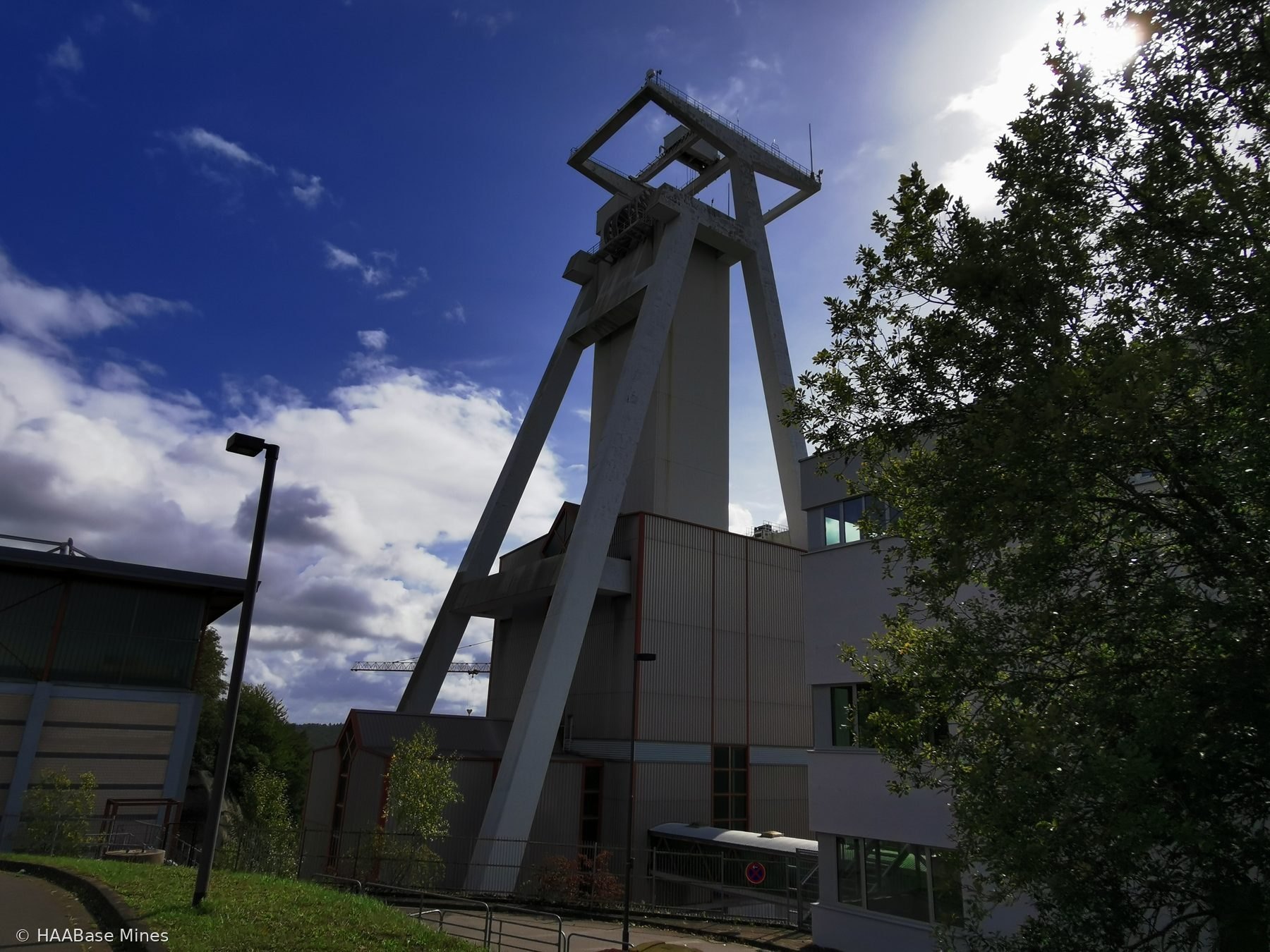
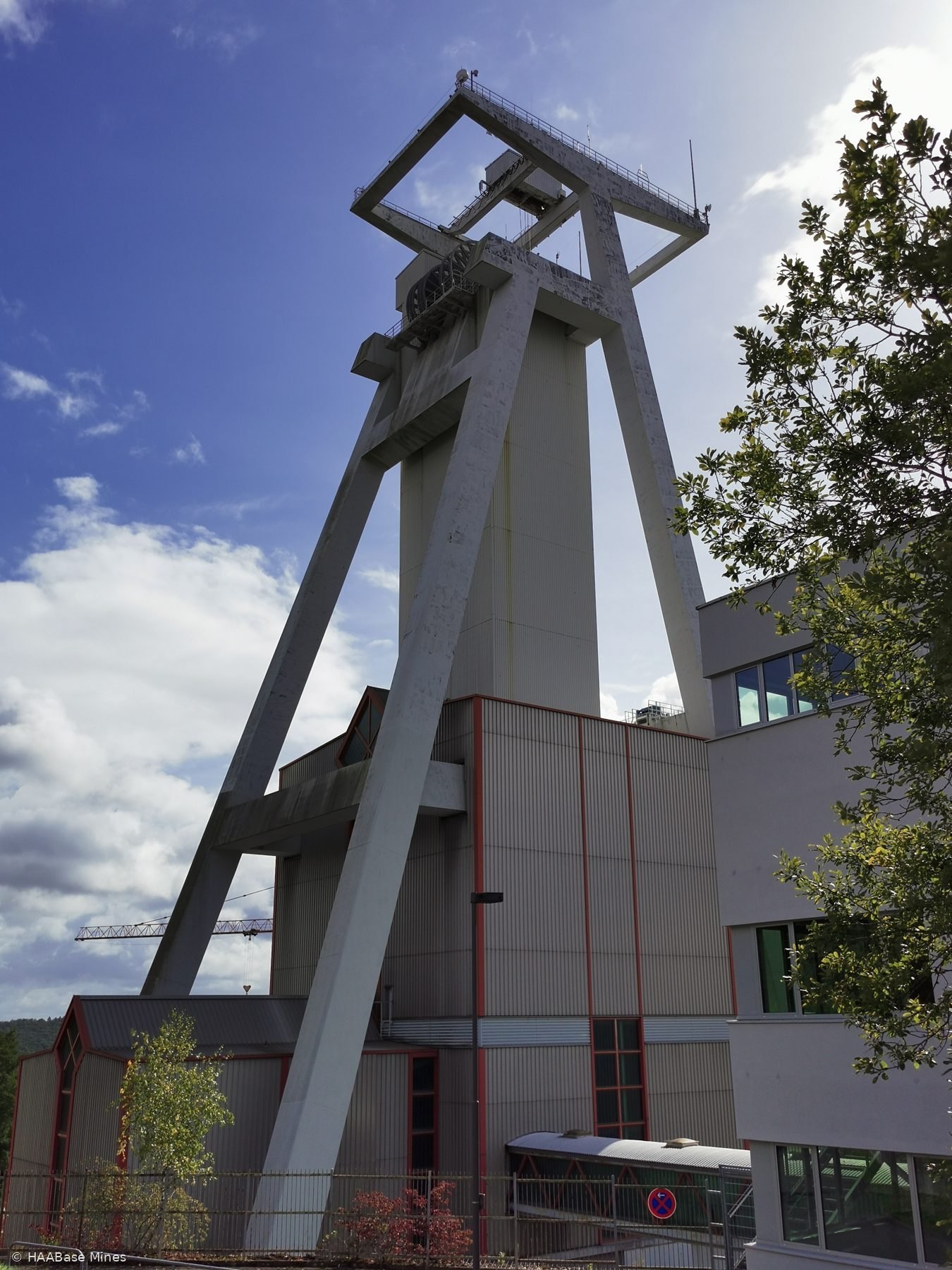
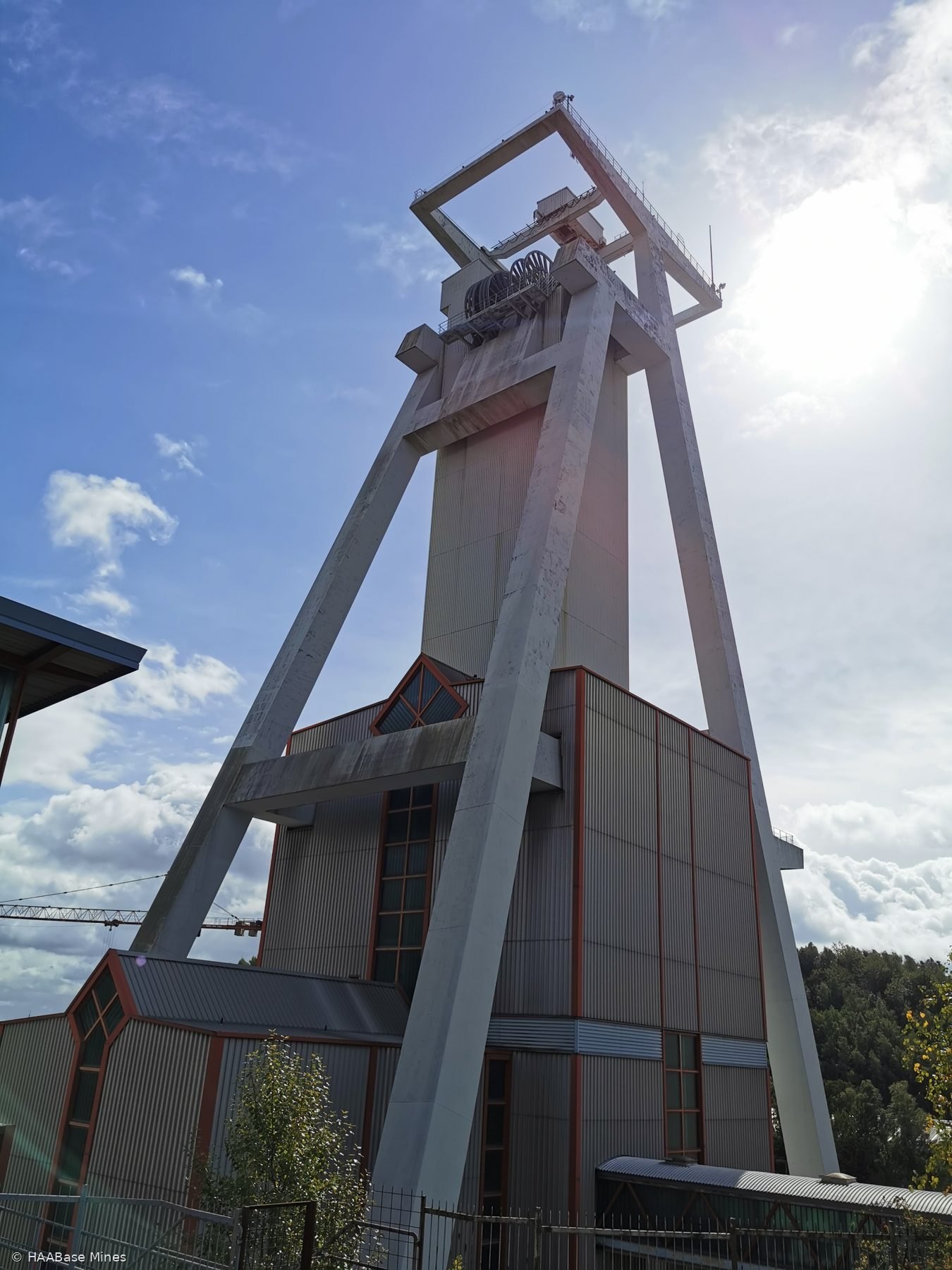
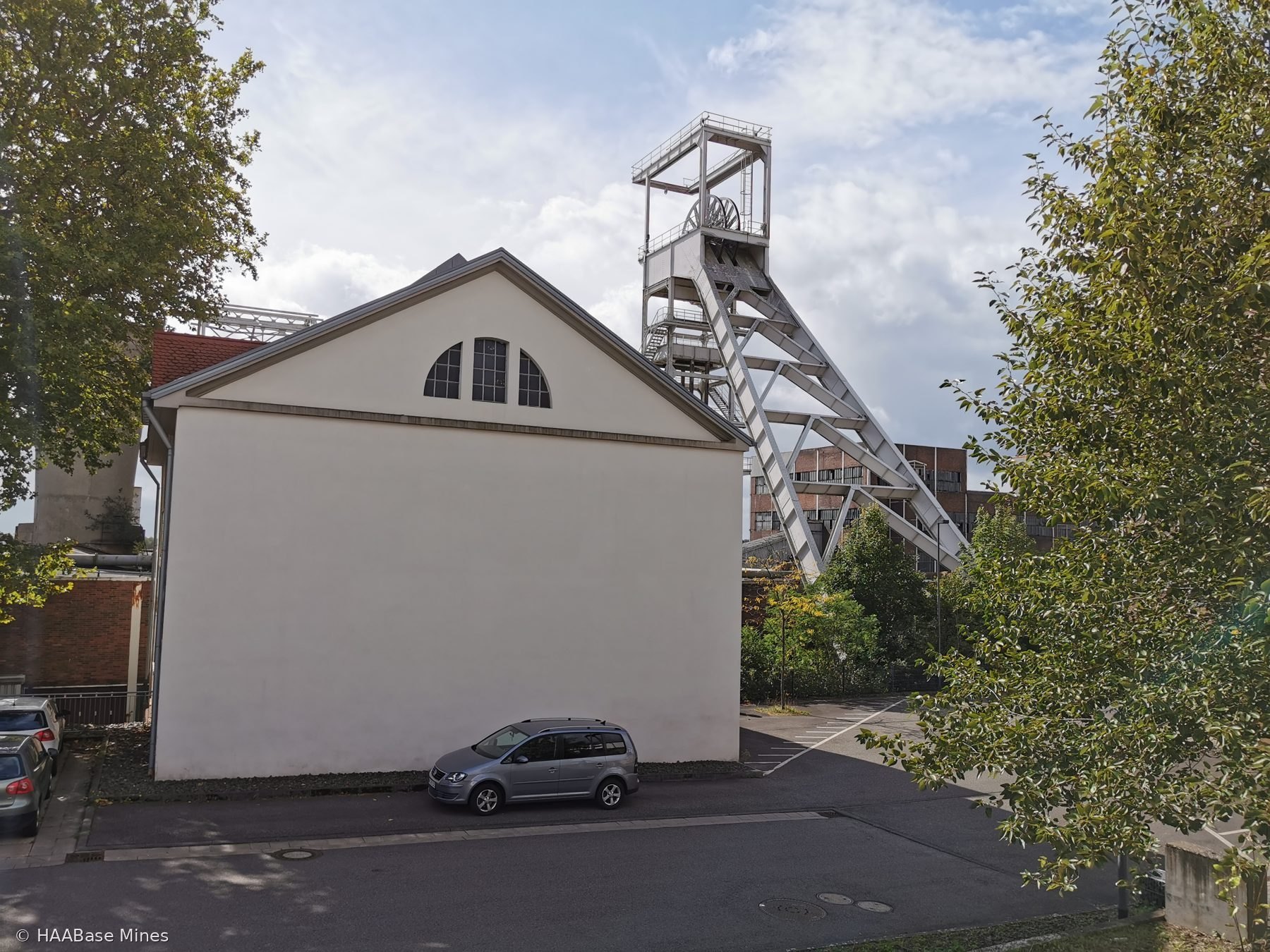
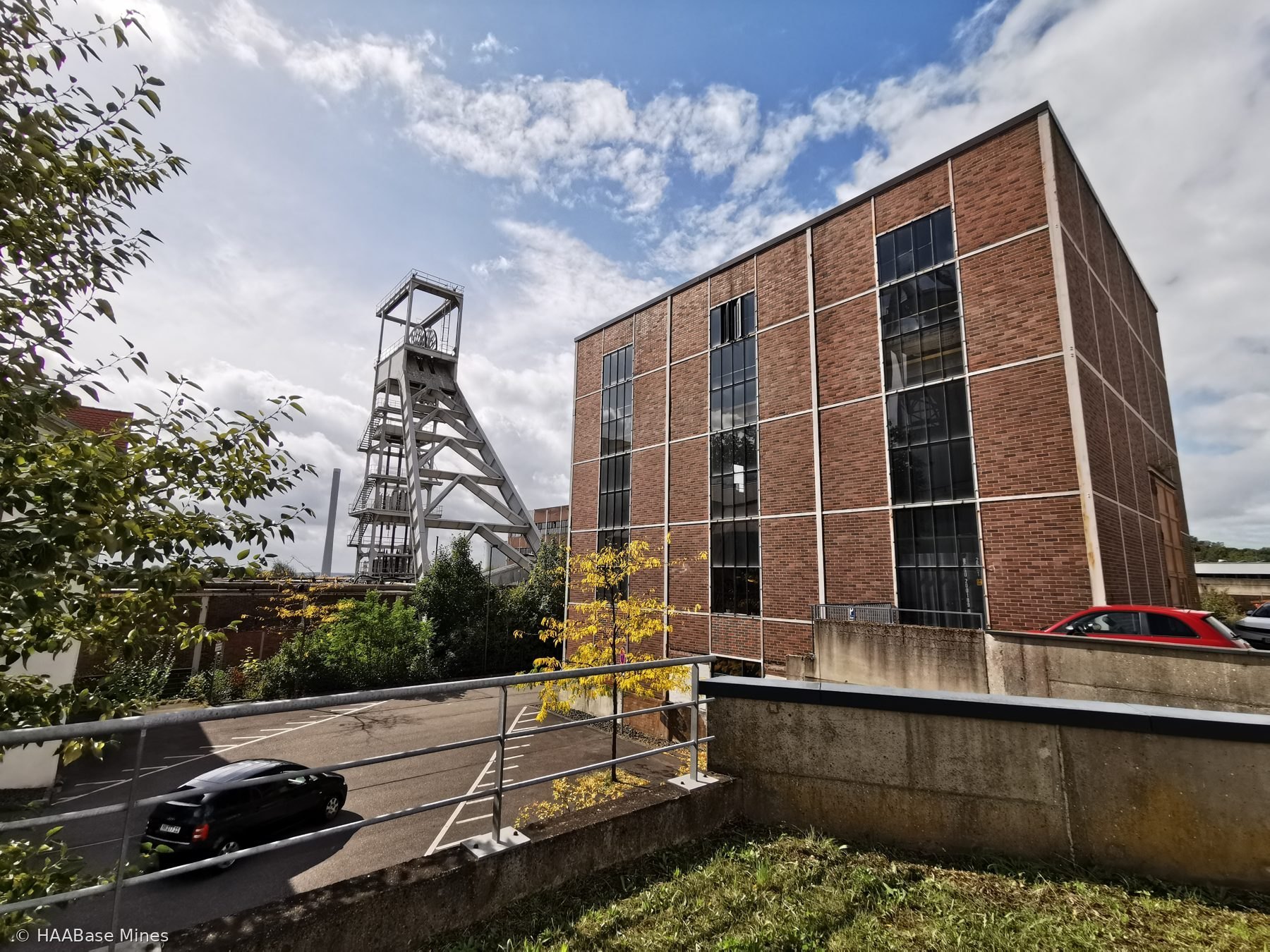
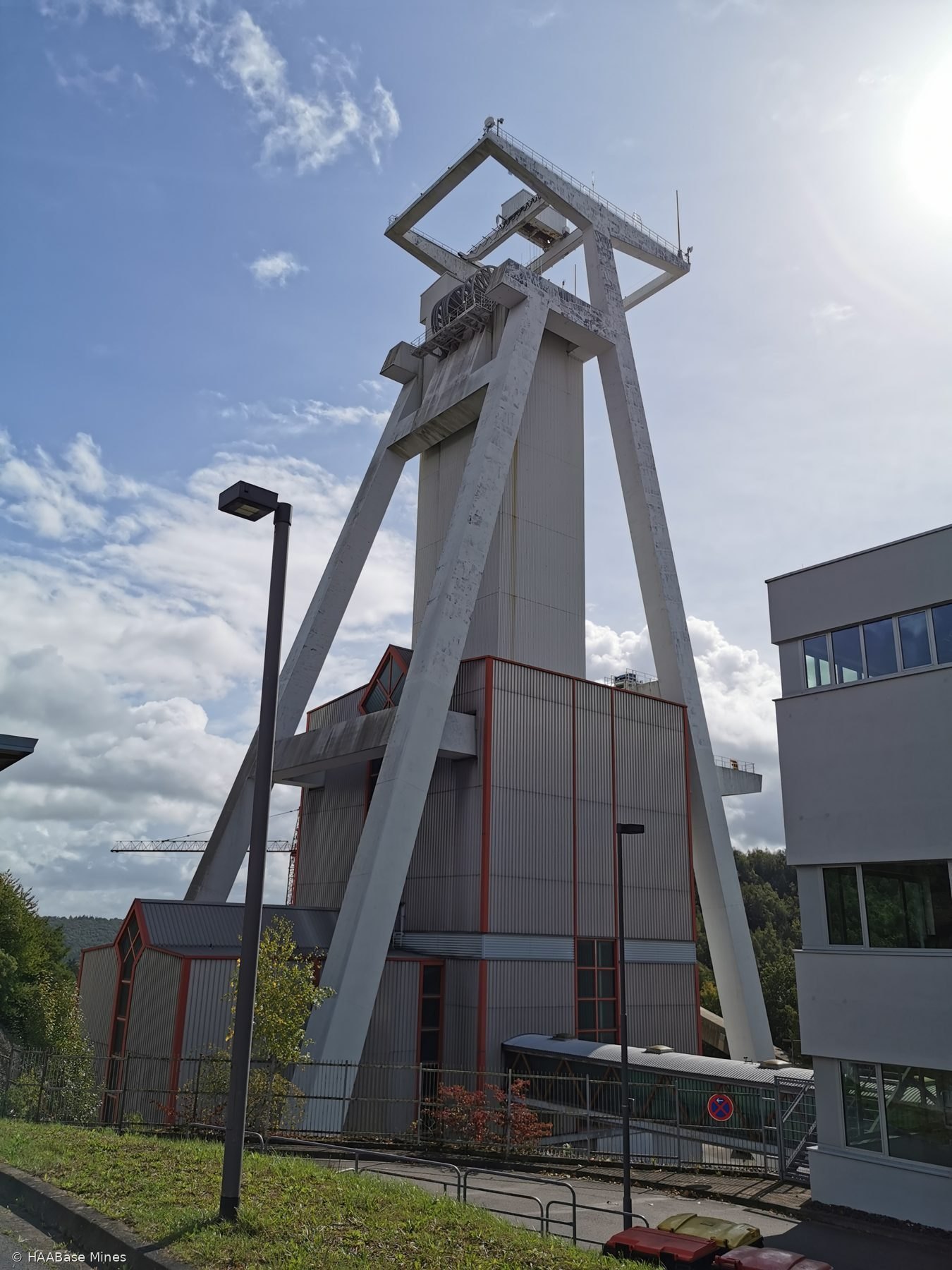
Its three surviving headframes — the full-section plate frame of Schacht II (1920), the listed B. Seibert braced lattice frame of Schacht III (1925–26), and the 90-metre concrete and steel frame of Schacht IV (1990–94) — represent three successive eras of mining engineering and are the only such group at a single Saar colliery. Schacht IV, reaching 1,160 metres, was when built the tallest mining headframe in the world. The closure decision was made in 1997 and implemented on 1 September 2000.

Schacht IV was sealed with a 70-metre concrete plug. The site, approximately 120 hectares, has been progressively redeveloped since 2001 as Campus Göttelborn, combining commerce, education, solar energy, and heritage.

Set on elevated ground in a broad urban-edge landscape, the surviving headframes stand across an extensive former colliery site that still reads clearly despite large-scale redevelopment.

Map & photo

Grube Göttelborn mine headframe or winding tower site
Photograph taken: 16 September 2025
Map markers and directions links are provided for location reference only and do not indicate public access or permission to enter a site.

History

Documentary evidence of coal working in the Göttelborn field is preserved in the Quierschieder Jahrgeding of 1446, where the term Kollwald points to coal digging in the Kohlbachtal. Eighteen coal diggers are recorded in 1730. A private coal pit operating in the Göttelborn area is confirmed from 1771, and this enterprise had become a state colliery by the mid-1880s.

In 1887 the mine was formally established as Grube Göttelborn, with initial development including the sinking of access drifts and the construction of early surface facilities. The mine gained its railway connection in 1890 to 1891, improving coal transport capacity. In 1909 underground haulage was converted from horse traction to benzole locomotive, and two years later benzole traction was replaced by electric locomotive.

In 1912 sinking works began on Schacht Holz in Heusweiler, in the Westfeld of Göttelborn. Schacht II was sunk in 1920 and fitted with a 23.62-metre full-section plate Vollwand-Fördergerüst designed for a rope-breaking load of 3,500 kN and a rope-pulley diameter of 6,000 mm. During the period of French administration, which applied to the Saar mines, Schacht III was developed; its sinking was followed by the erection of a braced lattice frame (Strebengerüst) by the firm B. Seibert in 1925 to 1926, standing 13.45 metres and designed for a rope-breaking load of 2,250 kN with a rope-pulley diameter of 5,500 mm.

Schacht III was taken into operation in 1927, replacing Schacht I. The headframe of Schacht III was subsequently designated a protected monument on grounds of its technical and architectural quality. Under German administration from 1934 following the Saargebiet's return, the mine was at various times subordinated to the Bergwerk Camphausen before regaining independent status. From the 1920s onwards a significant portion of output was conveyed by belt to the adjacent Kraftwerk Weiher power station.

During the Second World War forced labourers and Soviet prisoners of war were employed in the mine; the prisoners reached the underground workings through an access tunnel known as the Russenstollen, whose entrance was located behind the old magazine building at Göttelborn. In 2005 this entrance was sealed and the tunnel backfilled. In 1951 the workforce stood at 4,309, falling to 2,662 by 1971, while production reached two million tonnes in 1971.

Following the end of the Second World War, the Saar mines were again administered by France as the Régie des Mines de la Sarre; after the Treaty of Luxembourg the Saarbergwerke AG was founded in 1957, jointly held by the Federal Republic and the Saarland. In 1954 the Saarbergwerke AG assumed ownership of the mine. A 1976 social building was erected at the site, containing pithead baths with 3,000 chain clothes-hoists, a muster room, lamp room, and crew passage.

In 1978 a world record was set during shaft-sinking operations, achieving what was at the time the fastest boring speed for a shaft diameter of 6.5 metres. Schacht Lummerschied was expanded in 1986; its diameter and depth were both substantially increased, and it was converted to an exhaust ventilation shaft and equipped with a modern concrete headframe, with the winding machine from Schacht Frieda of the Grube Maybach installed at its summit. In 1988 the Saarbergwerke AG adopted its three-pit concept, proposing the merger of the then independent mines Ensdorf, Reden/Göttelborn, and Warndt/Luisenthal into a large compound operation.

Göttelborn was selected as the central hoisting site. The plan called for a maximum extraction rate of 1,050 tonnes of raw coal per hour, or 2.5 million tonnes annually, supplying Saarland and other south-west German power stations. On 15 January 1990 construction work began on the new headframe over Schacht IV.

By 15 December 1992 the shaft had reached its final depth of 1,160 metres with a nine-metre diameter, of which 8.3 metres were usable. The eastern hoisting installation, with an output of 7.5 megawatts (approximately 10,000 hp), was capable of lifting payloads of up to 34 tonnes at 65 km/h, or transporting up to 93 miners at 43 km/h. On 21 October 1994 the completion of the headframe was formally celebrated.

At 90 metres in height — with rope pulleys set at 74 metres and fitted with 68-millimetre steel ropes — the headframe was at the time of its construction the tallest mining headframe in the world; the local population gave it the nickname weißer Riese (white giant). The investment in headframe and shaft installation amounted to approximately 200 million euros. The compound underground roadway system of Verbundbergwerk Göttelborn-Reden reached at its peak over 100 kilometres in length; the wider network included Schacht Peter and the mines Göttelborn, Landsweiler-Reden, Fischbach-Camphausen, Heusweiler-Holz, Heusweiler-Lummerschied, Quierschied, and Maybach.

In November 1997, as falling coal subsidies made the operation unsustainable against international competition, the plan to develop Verbundbergwerk Göttelborn/Reden into one of Europe's highest-capacity collieries was abandoned; Schacht IV had received only one of the two planned hoisting machines. The closure decision was implemented on 1 September 2000. Schacht IV was subsequently sealed with a 70-metre concrete plug.

The Russenstollen entrance was blocked and backfilled in 2005. The Gesellschaft Industriekultur Saar (IKS) was founded by the Saarland state government in July 2001 to manage structural conversion of the Göttelborn and Reden sites. Göttelborn was developed primarily as a commerce and education site, with Reden as a leisure park.

A photovoltaic power station comprising approximately 23,500 solar modules was installed on a former spoil heap area covering 165,000 square metres, producing approximately 8,000 megawatt-hours annually. A public access ramp called the Himmelspfeil was constructed between the spoil heap and the solar installation, with a viewing platform at its upper end. The former colliery canteen (Kaffeeküche des Bergwerks) was converted into the Cafécantine Flöz.

The site accommodates the Fachhochschule für Verwaltung and the Werkstatt der Industriekultur, operated by the Hochschule für Technik und Wirtschaft des Saarlandes. The three surviving headframes of Schächte II, III, and IV, together with the associated shaft halls and the Kohlenwäsche, remain in the condition they were in at the time of closure in 2000. The colliery settlement (Grubensiedlung) in Göttelborn, with houses in Grubenstraße, Fichtenstraße, and Josefstraße dating from 1888 to 1912, stands under monument protection.
Timeline

Redevelopment

Photovoltaic power station installed on former spoil heap; Himmelspfeil access ramp constructed

A photovoltaic power station of approximately 8 megawatt capacity, comprising around 23,500 solar modules on 165,000 square metres, was installed on a former heap area. The Himmelspfeil ramp with viewing platform was constructed between the heap and the solar installation.
1446
Exploration

Earliest documentary record of coal working in the Göttelborn field

The Quierschieder Jahrgeding of 1446 documents coal digging in the Kohlbachtal under the term Kollwald. Eighteen coal diggers are recorded in 1730.
1771
Exploration

Private coal pit confirmed in Göttelborn area

A private coal pit operating in the Göttelborn area is confirmed from 1771.
1887
Construction

Grube Göttelborn formally established as state colliery

In 1887 the mine was formally constituted as Grube Göttelborn, with the first drifts and surface infrastructure established.
1890–1891
Construction

Railway connection established

The mine gained its railway connection in 1890 to 1891, enabling efficient coal transport.
1909
Construction

Underground haulage converted from horse traction to benzole locomotive

In 1909 underground haulage was converted from horse traction to benzole locomotive; two years later benzole traction was replaced by electric locomotive.
1912
Construction

Schacht Holz in Heusweiler begun

In 1912 sinking works began on Schacht Holz in Heusweiler, in the Westfeld of Göttelborn.
1920
Construction

Schacht II sunk; Vollwand-Fördergerüst erected

Schacht II was sunk in 1920 and fitted with a 23.62-metre full-section plate Vollwand-Fördergerüst, designed for a rope-breaking load of 3,500 kN and a rope-pulley diameter of 6,000 mm.
1925–1927
Construction

Schacht III headframe erected by B. Seibert; shaft commissioned 1927

The braced lattice Strebengerüst of Schacht III was erected in 1925 to 1926 by the firm B. Seibert, standing 13.45 metres. Schacht III was brought into operation in 1927, replacing Schacht I. The headframe was subsequently placed under monument protection for its technical and architectural quality.
1939–1945
Operation

Forced labour and Soviet prisoners of war employed

During the Second World War, forced labourers and Soviet prisoners of war were employed in the mine. Prisoners reached the underground workings through the Russenstollen, whose entrance was behind the old magazine building.
1951
Operation

Workforce at 4,309

In 1951 the workforce at Göttelborn stood at 4,309.
1954
Legislation

Saarbergwerke AG assumes ownership

In 1954 the Saarbergwerke AG assumed ownership of the mine following the postwar French administration period.
1957
Legislation

Saarbergwerke AG constituted under Treaty of Luxembourg

Following the Treaty of Luxembourg the Saarbergwerke AG was founded in 1957, jointly held by the Federal Republic of Germany and the Saarland.
1971
Operation

Output of two million tonnes; workforce 2,662

By 1971 production had reached two million tonnes annually while the workforce had declined from 4,309 in 1951 to 2,662.
1976
Construction

Social building erected

A social building was erected at the mine in 1976, containing pithead baths with 3,000 chain clothes-hoists, a muster room, lamp room, and crew passage.
1978
Construction

World record set for shaft-boring speed

In 1978 a world record was achieved for shaft-boring speed at a shaft diameter of 6.5 metres.
1986
Construction

Schacht Lummerschied enlarged and converted; concrete headframe erected

Schacht Lummerschied was expanded in 1986 with both its diameter and depth substantially increased. It was converted to an exhaust ventilation shaft and equipped with a modern concrete headframe, with the winding machine from Schacht Frieda of Grube Maybach installed at its summit.
1988
Operation

Saarbergwerke AG adopts three-pit concept; Göttelborn designated central hoisting site

In 1988 the Saarbergwerke AG resolved to merge the mines Ensdorf, Reden/Göttelborn, and Warndt/Luisenthal into a compound operation, with Göttelborn as the central hoisting site targeting 2.5 million tonnes annually.
1990–1994
Construction

Construction of Schacht IV headframe begun; shaft reaches final depth December 1992

Construction of the new headframe over Schacht IV began on 15 January 1990. By 15 December 1992 the shaft had reached its final depth of 1,160 metres with a nine-metre diameter. On 21 October 1994 completion of the 90-metre headframe was formally celebrated; at the time of construction it was the tallest mining headframe in the world. Total investment in shaft and headframe was approximately 200 million euros.
1997
Closure

Closure decision taken; expansion plan abandoned

In November 1997 the plan to develop Verbundbergwerk Göttelborn/Reden into one of Europe's highest-capacity collieries was abandoned. The closure decision was made in 1997.
2000
Closure

Final coal production; mine closed

The last shift was worked on 1 September 2000. Schacht IV was subsequently sealed with a 70-metre concrete plug.
2001
Redevelopment

Gesellschaft Industriekultur Saar founded; Campus Göttelborn redevelopment begun

In July 2001 the Gesellschaft Industriekultur Saar (IKS) was founded by the Saarland state government to manage structural conversion of the Göttelborn site, designated primarily as a commerce and education location.
2005
Closure

Russenstollen entrance sealed and backfilled

In 2005 the entrance to the Russenstollen, the wartime access tunnel used by forced labour prisoners, was closed and the tunnel backfilled.

Sources and records

Wikipedia (German): Grube Göttelborn
Saarland.de heritage portal: Campus Göttelborn
industriedenkmal.de: Grube Göttelborn
rodena.org: Grube Göttelborn
de-academic.com: Grube Göttelborn entry
mogroach.de: Lost Place Grube Göttelborn
ich-geh-wandern.de: Grube Göttelborn Quierschied
GRIN document: Die Grube Göttelborn
docplayer.org: Denkmäler des Steinkohlenbergbaus im Saarland (partial)
Der Landgraph: Zechen im Saarland (Göttelborn section)
This researched site record is part of the HAABase Mines database. Normal personal research and browsing is welcome. Automated bulk extraction, republication, or harvesting of site text and images is not permitted without written consent.