Site overview

Bergwerk Velsen is a former hard coal colliery in the Saarbrücker district of Klarenthal. Its origins lie in the expansion of the Grube Geislautern, which by the late nineteenth century had exhausted its workable seams near Saarbrücken. The Rosselschacht was sunk in 1899 as the founding shaft of a new mine; coal production began in 1904.

In 1907 the enterprise was renamed Grube Velsen after the Oberberghauptmann Gustav von Velsen (1847–1923). A second shaft complex, Schacht Gustav II, was developed between 1913 and 1917. Coal extraction ceased in 1965, when the mine became part of the Verbundbergwerk Warndt.

Gustavschacht II continued as a ventilation, manriding, and material shaft for the Grube Warndt until 2005. An underground training gallery, developed from a wartime air-raid shelter, served as the colliery apprentice training facility from 1945 until 2011. In 2000 the Erlebnisbergwerk Velsen was established in the former Lehrstollen.

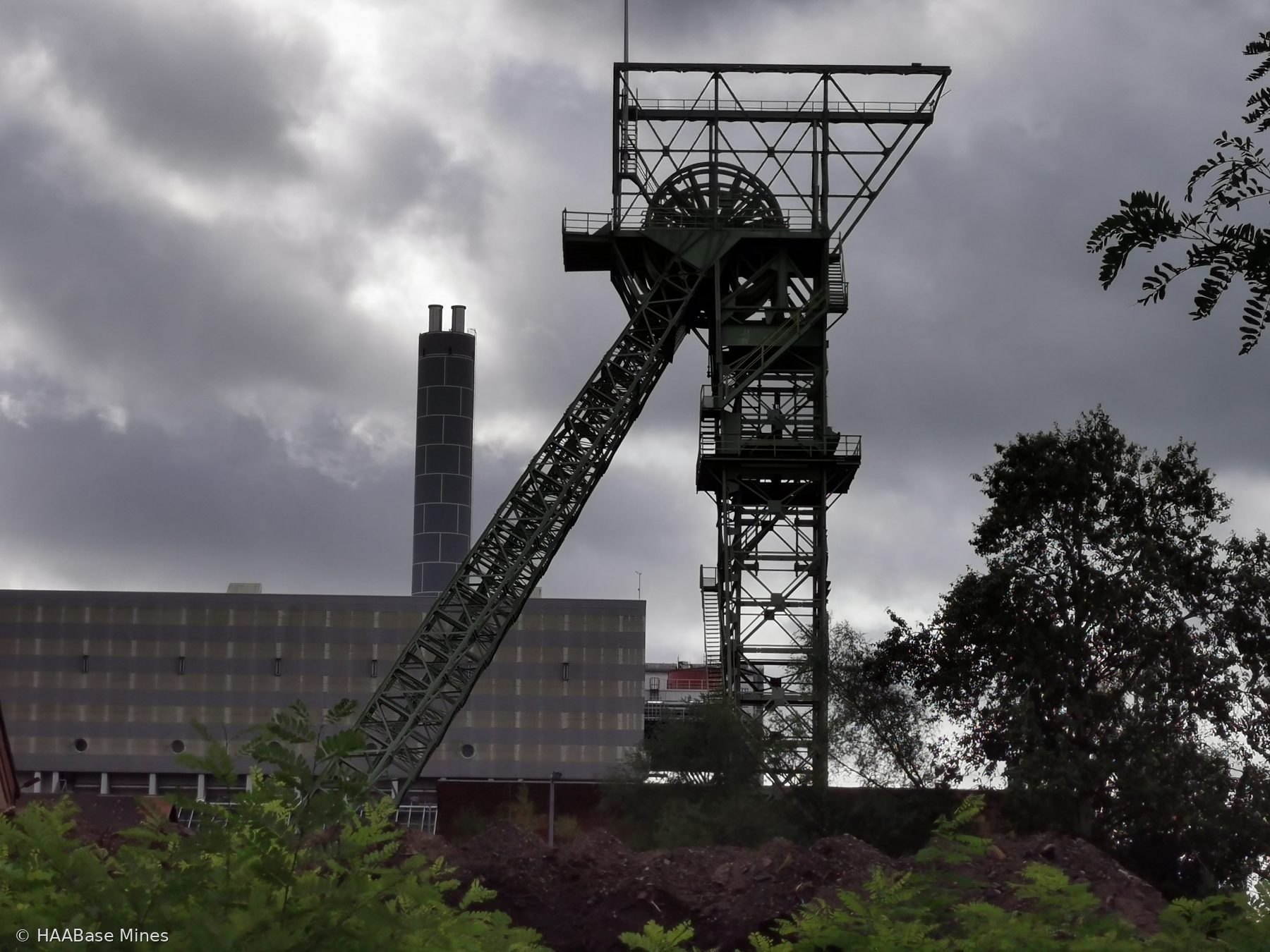
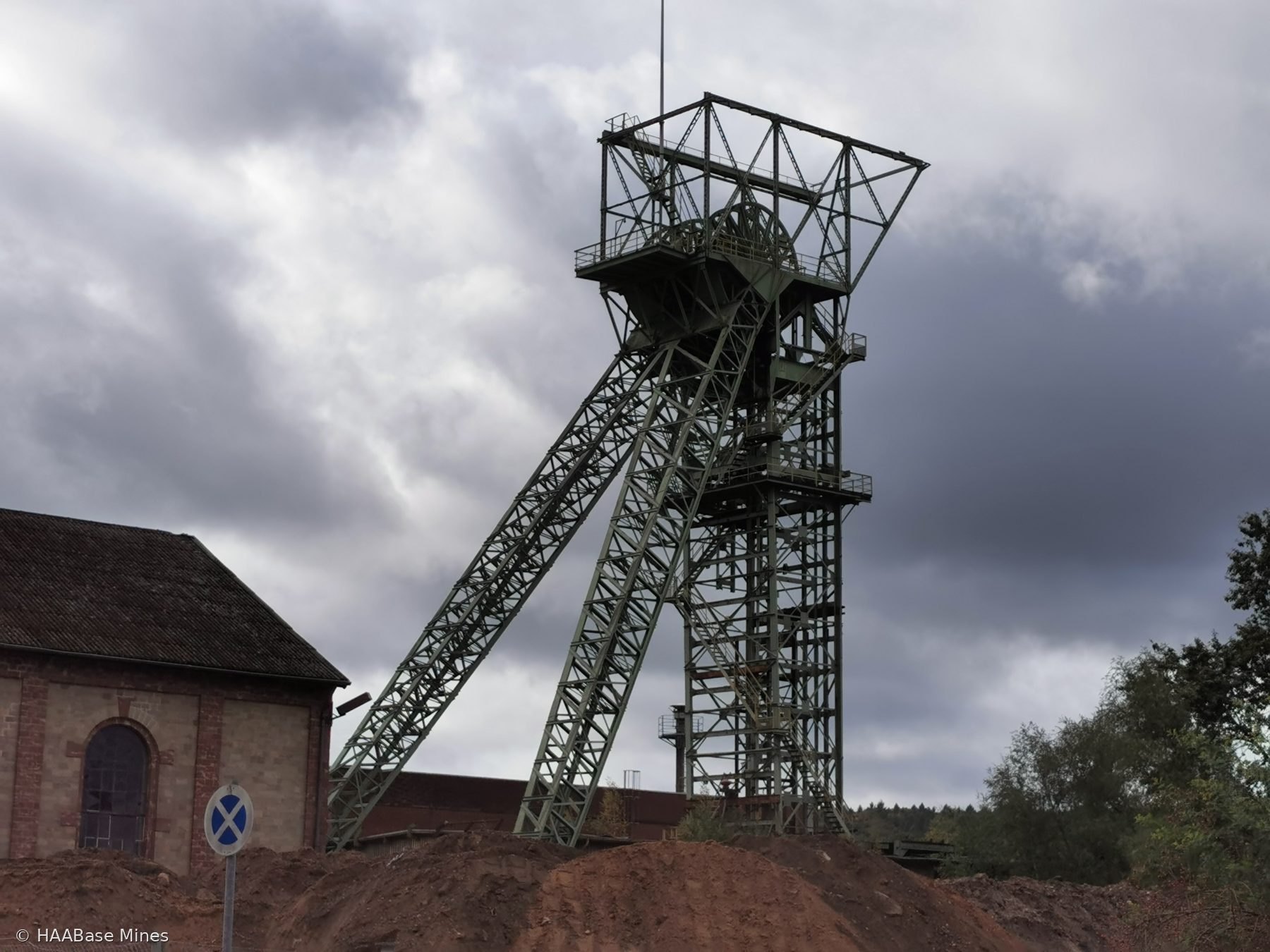
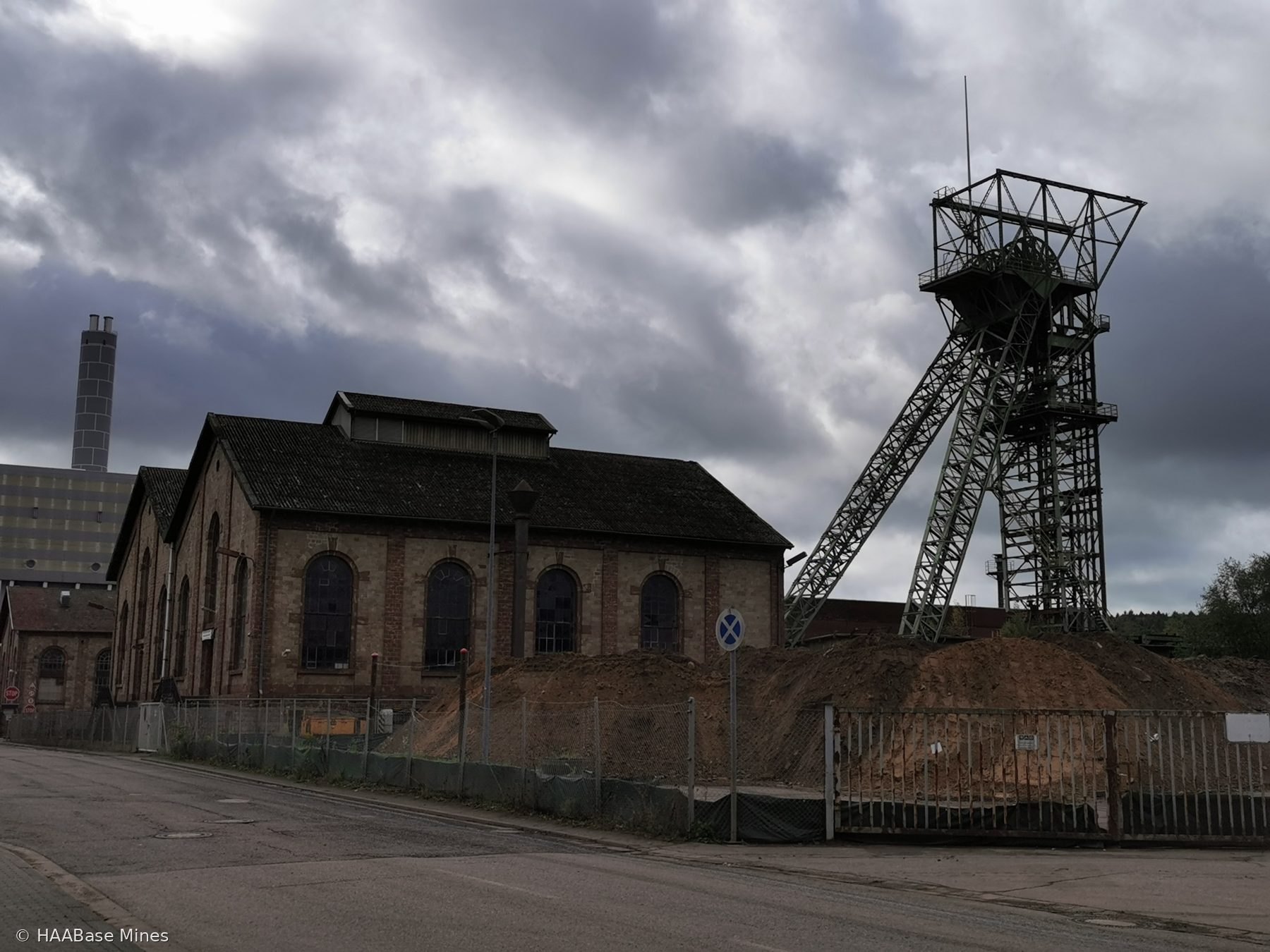
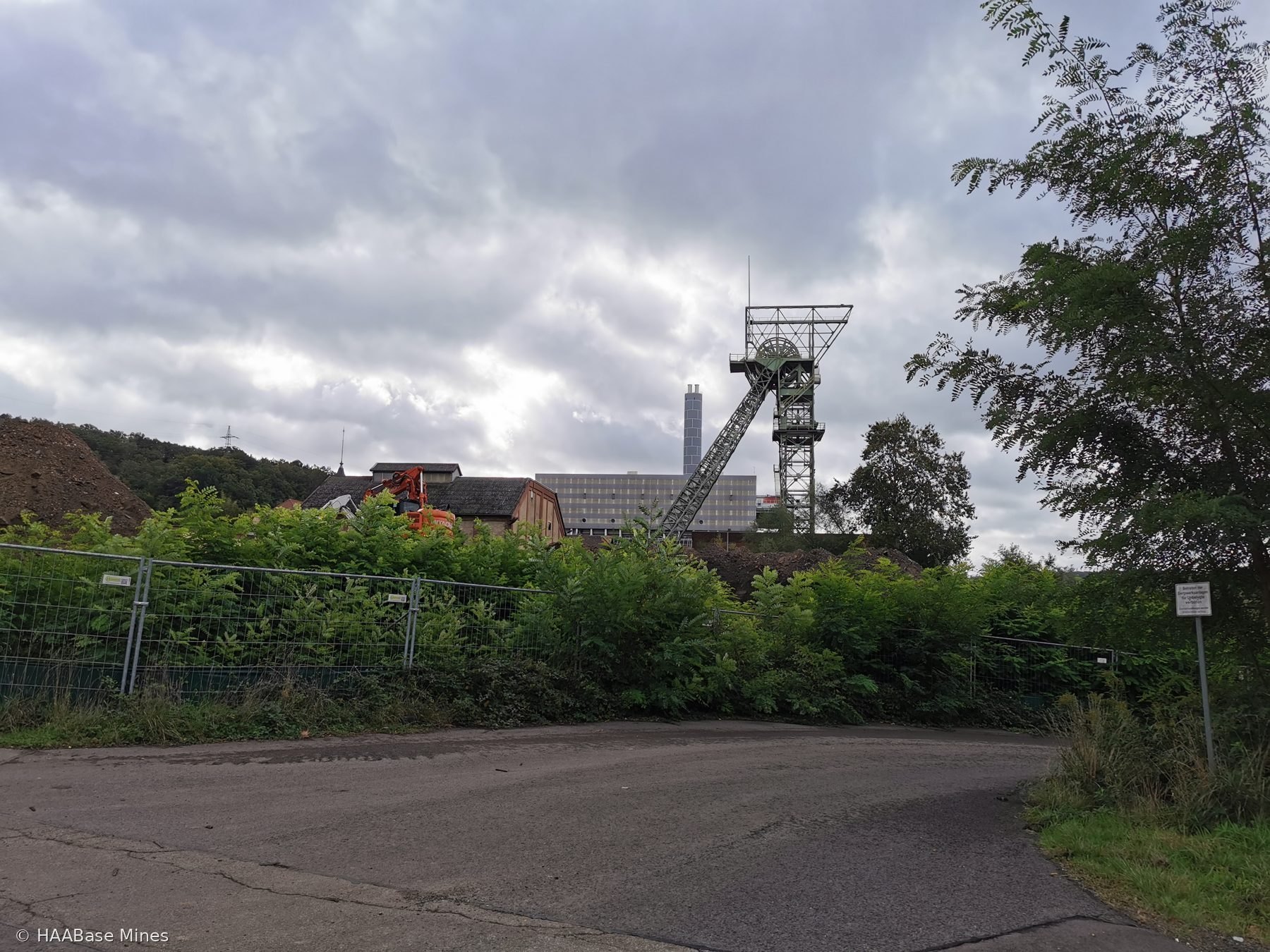
The site was designated a priority heritage colliery site by the Saarland state government in 2013 and placed under monument protection in 2019. The building ensemble of Grube Velsen, including the 30.95-metre Dingler headframe of Schacht Gustav II (1915) and the 1916/17 twin steam winding engine, is described as the only almost completely preserved colliery complex from the era of the Prussian Bergfiskus.

The site lies in a wooded valley-side setting on the urban edge, where the surviving buildings and headframe form a coherent historic group still clearly readable in the landscape.

Map & photo

Grube Velsen mine headframe or winding tower site
Photograph taken: 16 September 2025
Map markers and directions links are provided for location reference only and do not indicate public access or permission to enter a site.

History

The predecessor enterprise of Grube Velsen was the Grube Geislautern, which had operated in the Rotweg area of Saarbrücken since around 1750. As the seams at the Rotweg site neared exhaustion in the late nineteenth century, trial boreholes located further coal in the Rosseltal. In 1899 the Versuchsschacht II at Kleinrosseln was developed as the Rosselschacht and a new mine was formally established.

Initially the shaft was equipped with a timber headframe; in 1906 an iron braced lattice frame was installed. The Ostschacht (later Ludwigsschacht) was angehauen in 1902. Coal production began in 1904.

In 1907 the mine was renamed Grube Velsen in honour of the Oberberghauptmann Gustav von Velsen (1847–1923), who gave his name to both the mine and the local settlement; in the same year the Rosselschacht was renamed Gustavschacht (later Gustavschacht I), and the mine gained rail access via the newly constructed Eisenbahnlinie Fürstenhausen–Großrosseln on 1 July 1907, a line built specifically to open up the Warndt coal. From 1913 the mine was expanded according to its original design as a double-shaft operation. The Annaschacht, named after the deceased wife of Gustav von Velsen, was sunk from 1913; from 1920 it was redesignated Gustavschacht II.

The Doppelschacht Gustav II received a German braced lattice headframe of steel lattice construction by the Zweibrücken firm Dingler in 1915; the frame stands 30.95 metres and was reinforced again in 1936. The 1915 Dingler headframe is designed for double hoisting, with two symmetrical rope lines. A matching double winding engine house was constructed for Schacht Gustav II, containing two separate winding machine rooms of equal dimensions, with the sandstone facade articulated by pilasters and arched windows with elegant external staircases.

In the right section of this building the original twin-cylinder compound steam winding engine made by the Dingler-Werke Zweibrücken in 1916/17 survives in working order. The machine, designated Dampffördermaschine Gustav II-West, is the oldest surviving winding engine of the Saarbergbau. It was fully overhauled in 1986/87.

A small part of the mine workings was used as an air-raid shelter for the colliery workforce during the Second World War. In the post-war period this area was greatly expanded to serve as a Lehrstollen (training gallery), where apprentice miners from 1945 until 2011 received systematic underground instruction in machinery, safety installations, and mining vocabulary using genuine equipment and experienced Lehrhauer instructors. In 1958 Gustavschacht I was converted from cage to skip hoisting (Gefäßförderung), substantially increasing hoisting capacity.

Between 1937 and 1939 Gustavschacht I was deepened to its final level, reaching the fifth Sohle at 843 metres depth. In 1965 the Grube Velsen lost its independent status and became part of the Verbundbergwerk Warndt; coal extraction was thereupon ceased. Gustavschacht II continued in operation as a ventilation, manriding, and material shaft for the Grube Warndt, carrying the underground workforce of the wider operation.

Gustavschacht I was backfilled in 1978 and its headframe subsequently demolished. In 2000 the RAG reduced its training activities and established the Erlebnisbergwerk Velsen in the former Lehrstollen buildings, enabling public visits. Gustavschacht II continued as a working shaft of the Grube Warndt until 2005, when the Bergwerk Warndt/Luisenthal operation was finally shut down; the shaft was then partially backfilled.

The underground Lehrstollen continued to operate for training purposes until 2011. In 2011 former miners formed the Erlebnisbergwerk Velsen e.V., a registered non-profit association, to continue the tours that had been operated by the RAG and to save the stollen from a threatened concrete backfill. The association pached the bergwerk from the RAG for a symbolic price of one euro, assuming responsibility for maintenance and all ongoing costs.

In 2013 the Saarland state government commissioned an expert report which identified Velsen as one of four priority heritage sites for the documentation of the history of the Saarland hard coal industry. The building ensemble of Grube Velsen, comprising the Gustavschacht II headframe, the double winding engine house, the winding equipment, pithead baths, the administrative building, and the Zechenhaus, is the only almost completely preserved colliery complex from the era of the Prussian Bergfiskus. The former Gustavschacht I winding engine house survives as a repurposed heating plant.

The Erlebnisbergwerk Velsen today offers guided visits to approximately 800 metres of underground workings on three levels, featuring functioning machinery including the only blind shaft in Germany with a pneumatic Koepescheibe (friction disc) winding machine. The underground installation has been placed under monument protection (Denkmalschutz) as of 2019. Original railway vehicles including former colliery locomotives are used for visitor transport on an above-ground rail network.
Timeline

1899
Construction

Rosselschacht sunk; new mine established

In 1899 the Versuchsschacht II at Kleinrosseln was developed as the Rosselschacht, founding the new mine. The shaft was initially fitted with a timber headframe.
1902
Construction

Ostschacht (later Ludwigsschacht) begun

The Ostschacht, later renamed Ludwigsschacht, was begun in 1902.
1904
Operation

Coal production commenced

Coal production from the Rosselschacht began in 1904.
1906
Construction

Timber headframe replaced by iron braced frame at Gustavschacht I

In 1906 the original timber headframe at the Rosselschacht (Gustavschacht I) was replaced by an iron braced lattice frame.
1907
Operation

Mine renamed Grube Velsen; railway connection opened

In 1907 the mine was renamed Grube Velsen in honour of Oberberghauptmann Gustav von Velsen (1847–1923). The Rosselschacht was simultaneously renamed Gustavschacht. On 1 July 1907 the mine gained rail access via the Eisenbahnlinie Fürstenhausen–Großrosseln.
1913–1917
Construction

Annaschacht (later Gustavschacht II) sunk; new buildings erected

Sinking of the Annaschacht, named after the deceased wife of Gustav von Velsen, began in 1913. Between 1913 and 1917 the double headframe of Schacht Gustav II, the double winding engine house, and the other surviving surface structures were erected.
1915
Construction

Dingler steel lattice headframe erected at Gustavschacht II

In 1915 the Zweibrücken firm Dingler erected the steel lattice braced headframe (Strebengerüst) at Gustavschacht II. The frame stands 30.95 metres, is designed for double hoisting, and was reinforced in 1936.
1916–1917
Construction

Twin steam winding engine installed at Gustavschacht II

In 1916/17 the Dingler-Werke Zweibrücken installed the twin-cylinder compound steam winding engine (Dampffördermaschine Gustav II-West) in the right section of the double winding engine house. This machine is the oldest surviving winding engine of the Saarbergbau and remains in working order.
1920
Operation

Annaschacht renamed Gustavschacht II

In 1920 the Annaschacht was renamed Gustavschacht II.
1937–1939
Construction

Gustavschacht I deepened to final level at 843 metres

Between 1937 and 1939 Gustavschacht I was deepened to its fifth Sohle at 843 metres depth.
1939–1945
Operation

Part of mine workings used as wartime air-raid shelter

A small part of the underground workings served as an air-raid shelter for the colliery workforce during the Second World War.
1945–2011
Operation

Former air-raid shelter developed and operated as Lehrstollen apprentice training gallery

From 1945 the wartime shelter area was progressively expanded into a full training gallery (Lehrstollen) where apprentice miners received systematic underground instruction. The training facility operated continuously until 2011.
1958
Construction

Gustavschacht I converted to skip hoisting

In 1958 Gustavschacht I was converted from cage to skip hoisting (Gefäßförderung), substantially increasing hoisting capacity.
1965
Closure

Coal extraction ceased; mine absorbed into Verbundbergwerk Warndt

In 1965 coal extraction at Grube Velsen was discontinued and the mine became part of the Verbundbergwerk Warndt. Gustavschacht II continued to serve the wider operation as a ventilation, manriding, and material shaft.
1978
Closure

Gustavschacht I backfilled; headframe demolished

In 1978 Gustavschacht I was backfilled. Its headframe was subsequently demolished.
1986–1987
Heritage

Steam winding engine of Gustavschacht II overhauled

The Dingler steam winding engine (Dampffördermaschine Gustav II-West) of Gustavschacht II underwent a complete overhaul in 1986/87.
2000
Heritage

Erlebnisbergwerk Velsen established in former Lehrstollen

In 2000 the RAG reduced its training activities and established the Erlebnisbergwerk Velsen in the former Lehrstollen, enabling public guided visits.
2005
Closure

Gustavschacht II ceases operation; partially backfilled

In 2005, when the Bergwerk Warndt/Luisenthal definitively closed, Gustavschacht II ceased operation and was partially backfilled.
2011
Heritage

Erlebnisbergwerk Velsen e.V. founded; mine preserved by volunteer association

In 2011 former miners founded the non-profit association Erlebnisbergwerk Velsen e.V. to continue public guided visits and save the stollen from threatened concrete backfill. The association pached the bergwerk from the RAG for a symbolic price of one euro, assuming full maintenance responsibility.
2013
Heritage

Designated priority heritage colliery site by Saarland state government

In 2013 an expert report commissioned by the Saarland state government identified Grube Velsen as one of four priority sites for the documentation and preservation of the history of saarländischer Steinkohlenbergbau.
2019
Heritage

Lehrstollen and building ensemble placed under monument protection

In 2019 the underground Lehrstollen and the above-ground building ensemble of Grube Velsen were placed under monument protection (Denkmalschutz).

Sources and records

Wikipedia (German): Grube Velsen
Saarland.de heritage portal: Prioritärer Bergbau-Denkmalstandort Velsen
Erlebnisbergwerk Velsen e.V. website: Historie
Erlebnisbergwerk Velsen e.V. website: Gustavschacht
Erlebnisbergwerk Velsen e.V. website: Ensemble Alte Grube Velsen
Erlebnisbergwerk Velsen e.V. website: Historische Gebäude
kuladig.de: Grube Velsen und Erlebnisbergwerk Velsen
Der Landgraph: Zechen im Saarland (Grube Velsen section)
ERIH: Erlebnisbergwerk Velsen
bergbau-sammlungen.de: Erlebnisbergwerk Velsen
This researched site record is part of the HAABase Mines database. Normal personal research and browsing is welcome. Automated bulk extraction, republication, or harvesting of site text and images is not permitted without written consent.