Site overview

Long Rake Mine is a former underground mine located near the village of Youlgreave in the Derbyshire Dales, on land historically associated with the Staley and Shimwell families. The mine was opened by W. G. Cooke and Co. in 1867 to extract fluorspar, calcite, and lead ore, with production beginning in 1872. Around 1877 co-landowner Thomas Shimwell bought the mine, and in 1881 the company was renamed Long Rake Spar Mining Company, with calcite as its primary focus.

Operations expanded to three underground levels at 300, 375, and 420 feet. In 1913 Thomas Shimwell gifted the mine to his daughter Mary Shimwell. Surface plant was erected in 1924–25 and a shaft 300 feet deep was wound by a 12 hp vertical boilered winding engine.

Under Captain Percy Potter's direction in the 1920s, twelve miners produced approximately 12,200 tons of calcite and 100 tons of lead ore annually. In 1936 electric haulage was introduced. Potter bought the lease on his death in 1956 of Mary Shimwell, and the mine continued to expand.

In the 1970s Potter sold the company to Derbyshire Silica Firebrick, and underground extraction declined to two miners. The previously flooded 500-foot level was drained and explored in the late 1970s, but underground extraction ceased in 1981 as the price of spar fell. In 1985 the company was bought by the Broadhurst family, who expanded surface processing and mineral diversification.

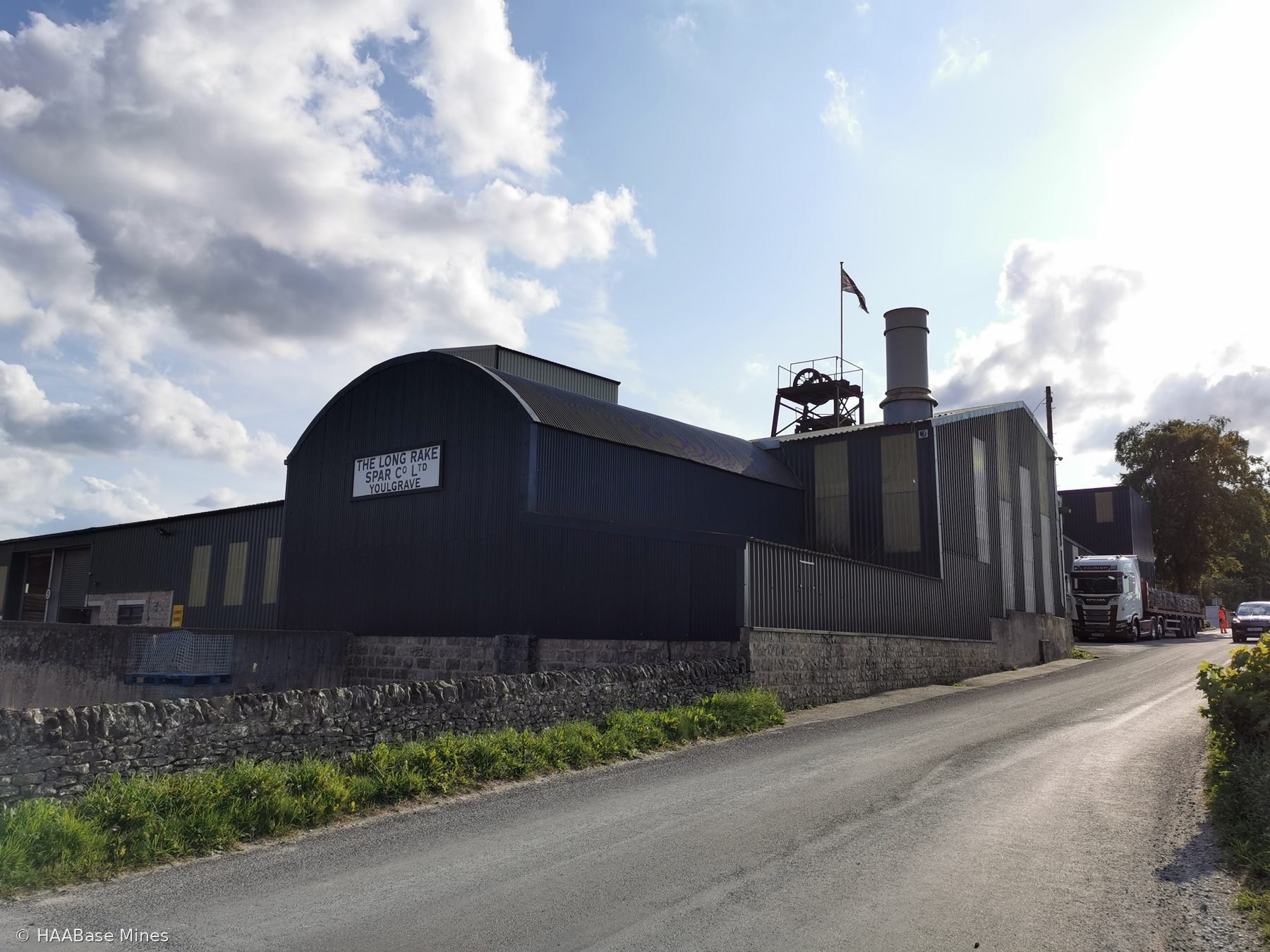
The twentieth-century headgear and a one-storey horizontal winding engine house survive on site.

The site stands in open upland countryside near Youlgreave, where surface plant and headgear sit within a working mineral landscape and read as a distinct industrial presence in otherwise rural surroundings.

Map & photo

Long Rake Mine mine headframe or winding tower site
Photograph taken: 1 September 2022
Map markers and directions links are provided for location reference only and do not indicate public access or permission to enter a site.

History

Long Rake Mine is situated near the village of Youlgreave in the Derbyshire Dales, on land originally owned by the Staley and Shimwell families. The Youlgreave area was historically an important lead-mining parish, with five lead mines recorded in the 1857 Directory of Derbyshire. The mine was opened by W. G. Cooke and Co. in 1867, with construction starting on land in the Youlgreave area to extract fluorspar, calcite, and lead ore.

Production began in 1872. Around 1877, co-landowner Thomas Shimwell purchased the mine. In 1881 the company was renamed Long Rake Spar Mining Company, with calcite — commonly known as Derbyshire Spar — becoming the principal focus of extraction, the material being increasingly used for pebble-dashing and in gardens and driveways.

By 1899 the company had issued £1 shares and operations had expanded underground to three levels at 300, 375, and 420 feet. The majority of extraction took place at the middle (375-foot) level, which was also the driest and was equipped with tramways; the lower two levels were accessed by underground declines. In 1913 Thomas Shimwell gifted the mine to his daughter, Mary Shimwell.

At that time Long Rake employed six men working on the surface and between two and six working underground. The company was subsequently known as Long Rake Spar Co. Surface plant was erected in 1924–25 and a shaft 300 feet deep was sunk, wound by a 12 hp vertical boilered winding engine (built 1926 and re-boilered 1934). The cage in the shaft had a capacity of three men and served only the 300-foot level.

Under the direction of Captain Percy Potter during the 1920s, the mine reached peak output with twelve miners producing approximately 12,200 tons of calcite and 100 tons of lead ore annually, distributed across the United Kingdom. In 1936 electric haulage was introduced with the purchase of locomotives, wagons, and rails from the Leeds-based engineering company Greenwood and Batley. On Mary Shimwell's death in 1956, Potter bought the lease on the mine and plant.

The mine continued to expand with fifteen miners working levels that extended approximately two kilometres underground, though the vein at the 300-foot level had by then become nearly exhausted. In the 1970s Potter sold Long Rake Spar Co. to Derbyshire Silica Firebrick (DSF). At this point only two miners remained working the spar.

The surface plant continued processing material from other mines and quarries. In the late 1970s the previously flooded 500-foot level was drained and explored, but despite this investigation underground extraction of spar ceased in 1981 because it had become uneconomical as the price of spar fell. In 1985 Long Rake Spar Co. Ltd was purchased by Trevor, Tom, and Jean Broadhurst, who immediately began expanding the facilities and the variety of aggregates supplied.

The company diversified into mineral processing, installing washing, blending, and drying equipment. The 1990s saw significant investment in technology and infrastructure. As of the early 1980s the site retained its twentieth-century headgear and a one-storey horizontal winding engine house, with the main engine shaft no longer safely accessible from the surface.

The Derbyshire Historic Environment Record notes that the site had an old-fashioned mine and treatment plant still working in the early 1980s. The surface aggregate processing operations continue to the present day under the Long Rake Spar name.
Timeline

1867–1872
Operation

Mine opened by W. G. Cooke and Co.; production begins

The mine at Long Rake was opened by W. G. Cooke and Co. in 1867, on land owned by the Staley and Shimwell families near Youlgreave, to extract fluorspar, calcite, and lead ore. Production began in 1872.
1877–1881
Legislation

Thomas Shimwell buys mine; Long Rake Spar Mining Company founded

Around 1877 co-landowner Thomas Shimwell purchased the mine. In 1881 the company was renamed Long Rake Spar Mining Company, with calcite as its primary focus. Operations expanded to three underground levels at 300, 375, and 420 feet.
1899
Operation

Company issues shares; operations expand to three underground levels

By 1899 the company had issued £1 shares and operations had expanded to three underground levels at 300, 375, and 420 feet. The majority of extraction took place at the middle level, equipped with tramways.
1913
Legislation

Mine gifted to Mary Shimwell; company renamed Long Rake Spar Co.

In 1913 Thomas Shimwell gifted the mine to his daughter Mary Shimwell. At this time the mine employed six surface workers and between two and six underground workers. The company became known as Long Rake Spar Co.
1920–1929
Operation

Peak output under Captain Percy Potter: 12,200 tons calcite per year

Under Captain Percy Potter's direction in the 1920s, twelve miners produced approximately 12,200 tons of calcite and 100 tons of lead ore annually.
1924–1925
Construction

Surface plant erected; 300-foot shaft sunk

Surface plant was erected in 1924–25 and a shaft 300 feet deep was sunk, wound by a 12 hp vertical boilered winding engine built in 1926 and re-boilered in 1934. The shaft cage had a capacity of three men.
1936
Construction

Electric haulage introduced

In 1936 electric haulage was introduced with the purchase of locomotives, wagons, and rails from Greenwood and Batley of Leeds.
1956
Legislation

Captain Potter buys lease on Mary Shimwell's death; mine expands

On Mary Shimwell's death in 1956, Potter purchased the lease on the mine and plant. The mine continued to expand with fifteen miners working levels extending approximately two kilometres underground, though the 300-foot vein was nearly exhausted.
1970–1979
Operation

Sale to Derbyshire Silica Firebrick; workforce reduced; 500-foot level explored

In the 1970s Potter sold Long Rake Spar Co. to Derbyshire Silica Firebrick. Only two miners remained working underground. The surface plant processed material from other mines and quarries. In the late 1970s the previously flooded 500-foot level was drained and explored.
1981
Closure

Underground extraction ceases

Underground extraction of spar ceased in 1981 as it had become uneconomical due to falling spar prices.
1985
Redevelopment

Broadhurst family purchases company; surface processing expanded

In 1985 Long Rake Spar Co. Ltd was purchased by Trevor, Tom, and Jean Broadhurst. They immediately began expanding the facilities and variety of aggregates supplied, diversifying into mineral processing and installing washing, blending, and drying equipment.

Sources and records

Long Rake Spar company heritage page (longrakespar.co.uk)
28DaysLater urban exploration report, July 2025: Long Rake Spar Mine, nr Bakewell, Derbyshire
28DaysLater urban exploration report, November 2020: Long Rake Spar Mine, Youlgreave, Derbyshire
Derbyshire Historic Environment Record: MDR8771 — Long Rake Mine, Long Rake and Moor Lane, Youlgreave
Geograph photograph record: Long Rake spar mine, Youlgreave (Chris Allen)
This researched site record is part of the HAABase Mines database. Normal personal research and browsing is welcome. Automated bulk extraction, republication, or harvesting of site text and images is not permitted without written consent.