Site overview

The Steenkoolmijn van Beringen was one of seven collieries in the Belgian Kempen coalfield, situated on the territory of Koersel near Beringen in the province of Limburg. Exploratory drilling confirmed coal deposits in the area between 1902 and 1903, and the concession Beeringen-Coursel of 4,950 hectares was granted on 26 November 1906. The operating company Société anonyme Charbonnages de Beeringen was founded on 23 February 1907, with capital held predominantly by French industrial groups.

Shaft sinking began in 1907 but was interrupted by the First World War; the first coal seam was reached on 20 October 1919 at 623 metres depth. Production began in 1922, with working levels at 727, 789, and 850 metres. The colliery reached peak employment of 6,796 miners in 1948 and its highest annual output of approximately 1,900,000 tonnes in 1956.

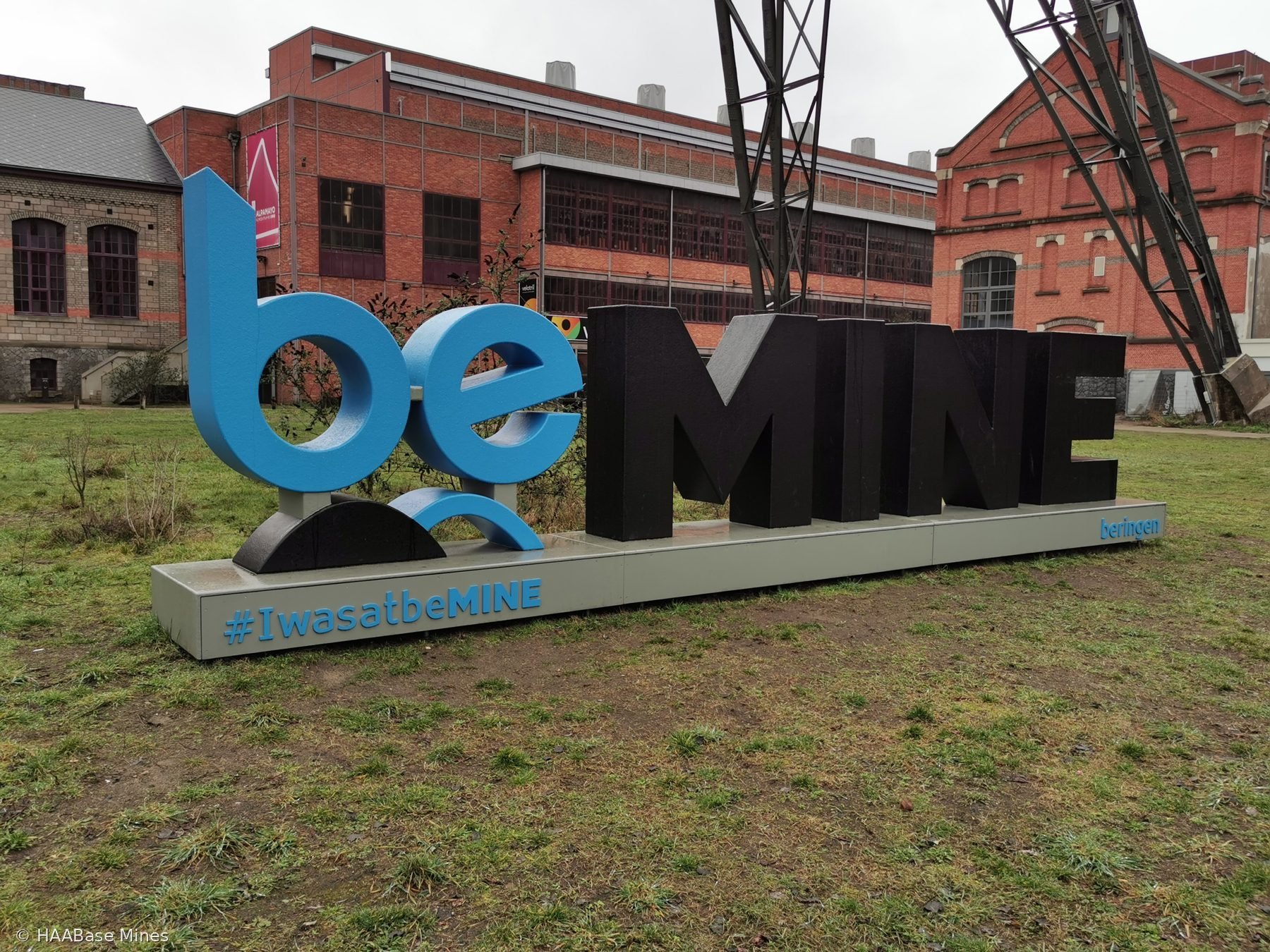
It closed on 28 October 1989 after producing a total of around 79,332,200 tonnes. The surface complex is largely intact, protected as a monument since 1993, and now forms the core of the be-MINE heritage and recreation site, which also houses the Flemish Mining Museum.

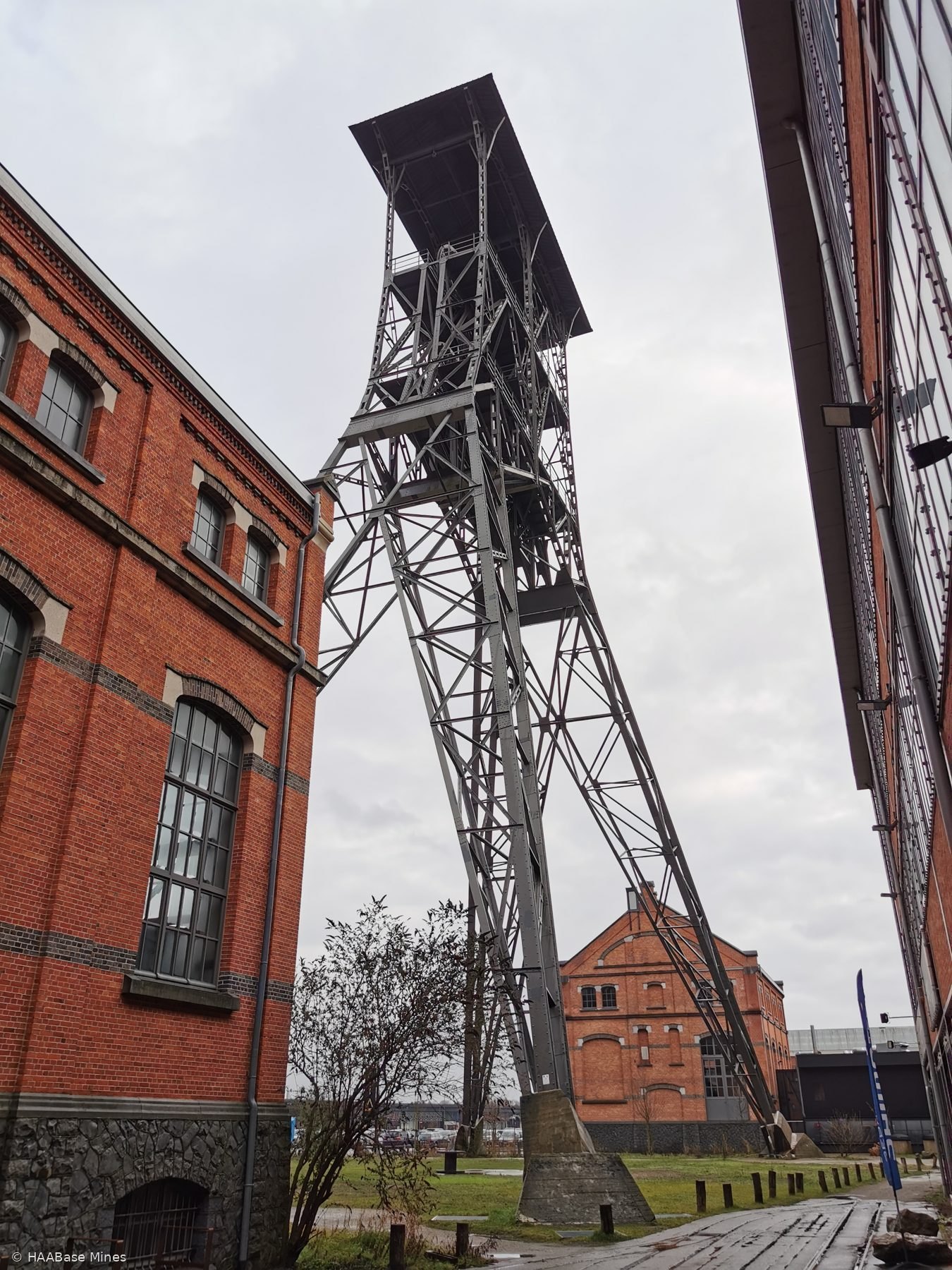
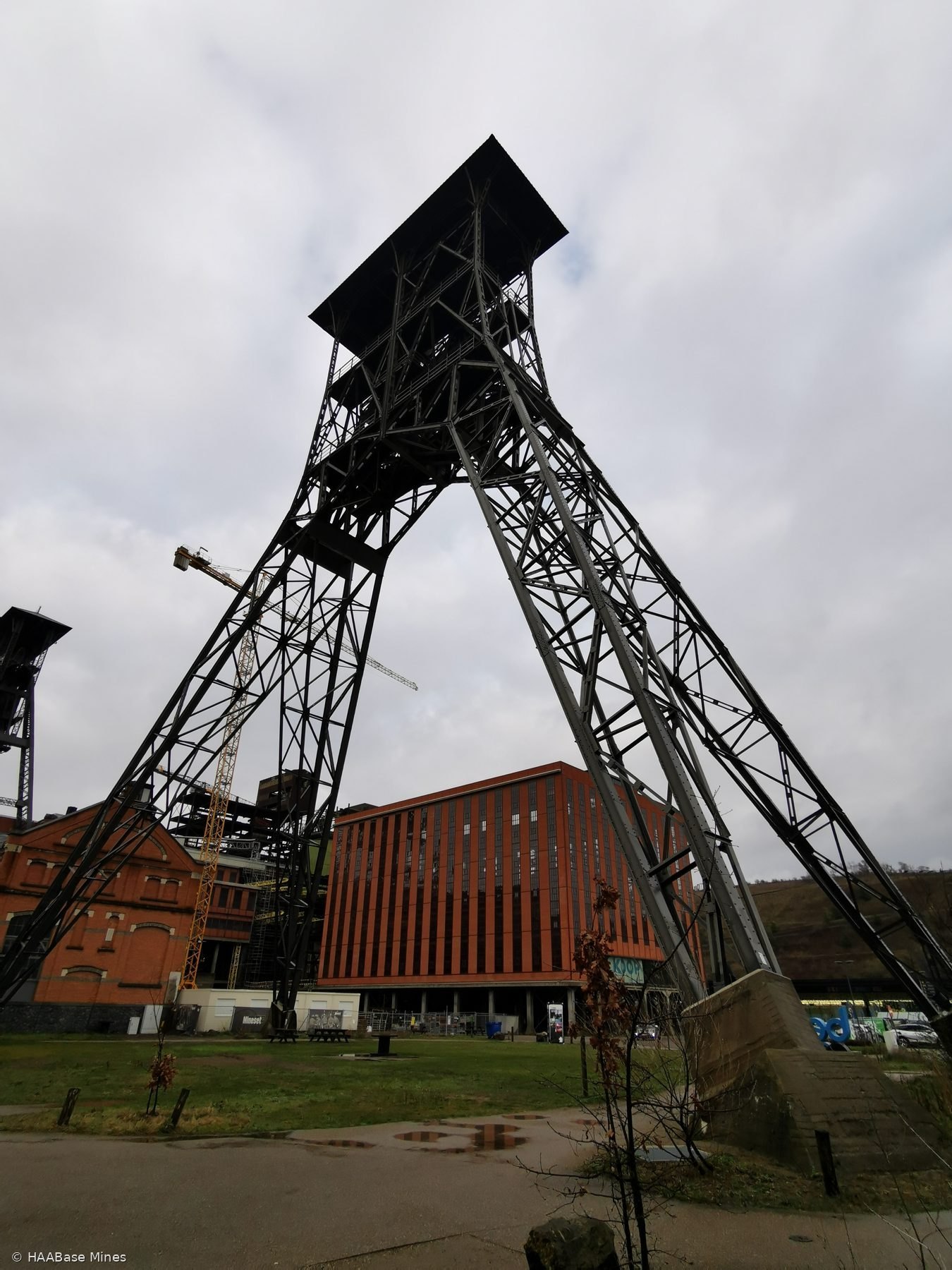
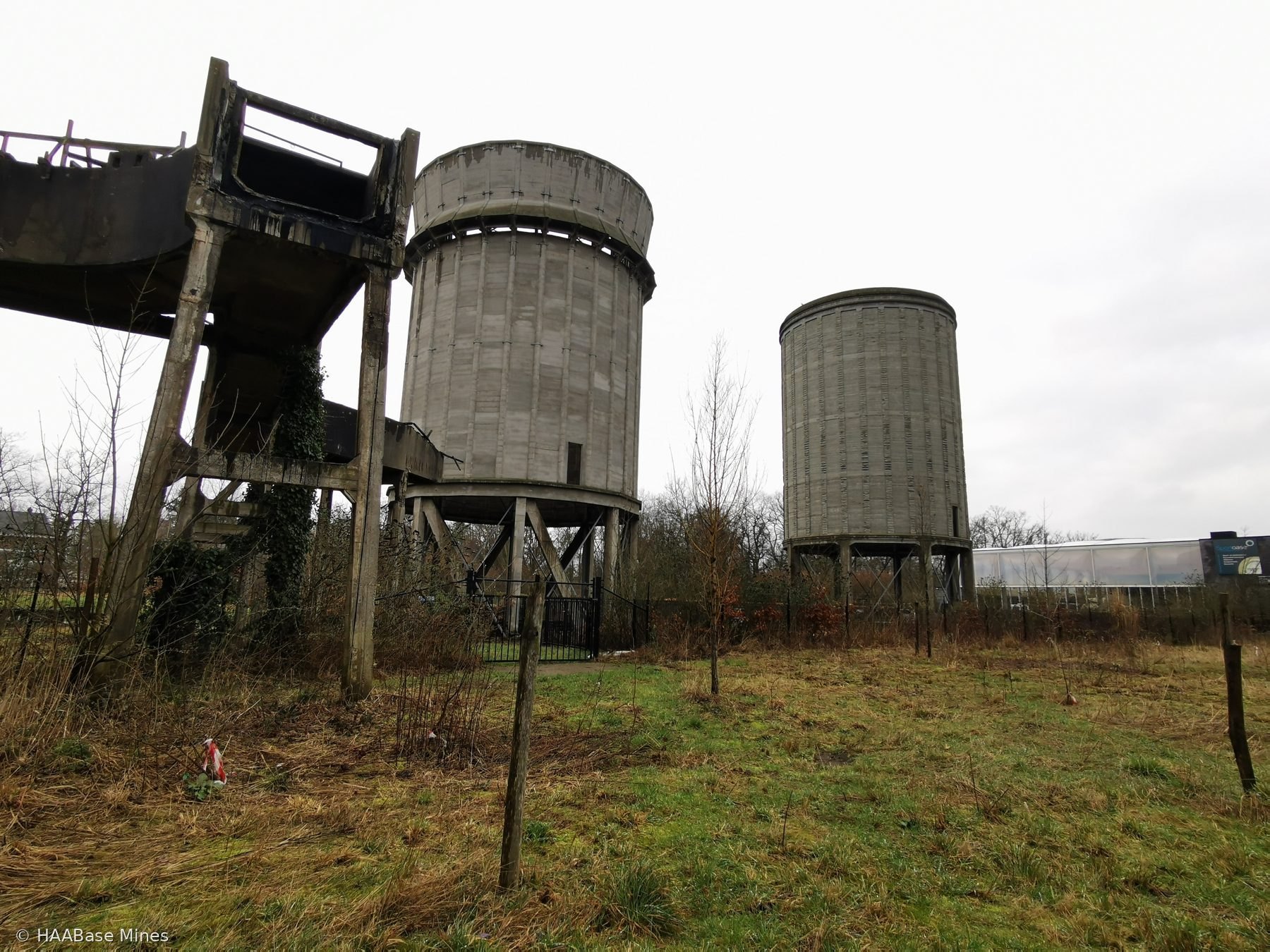
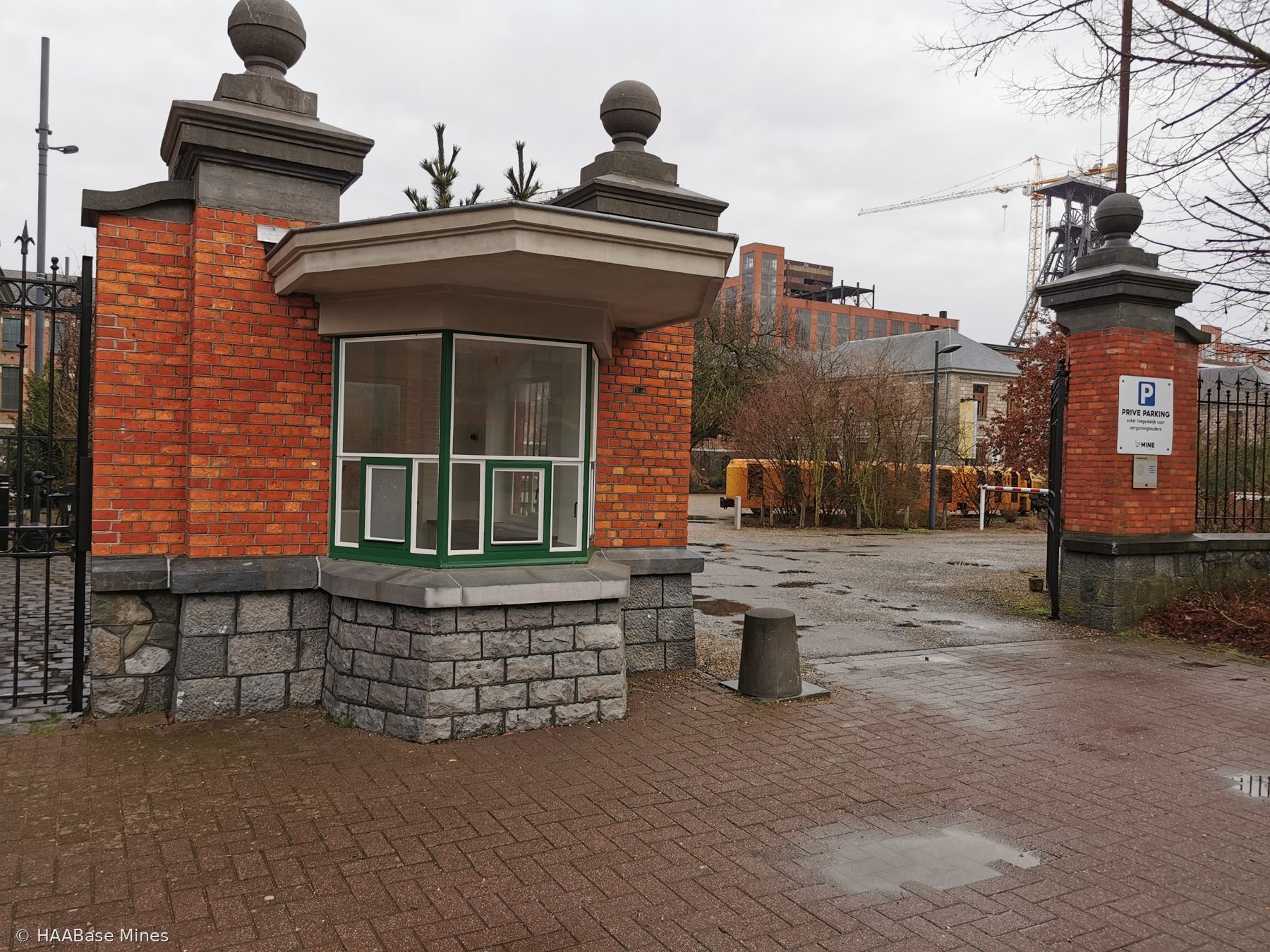
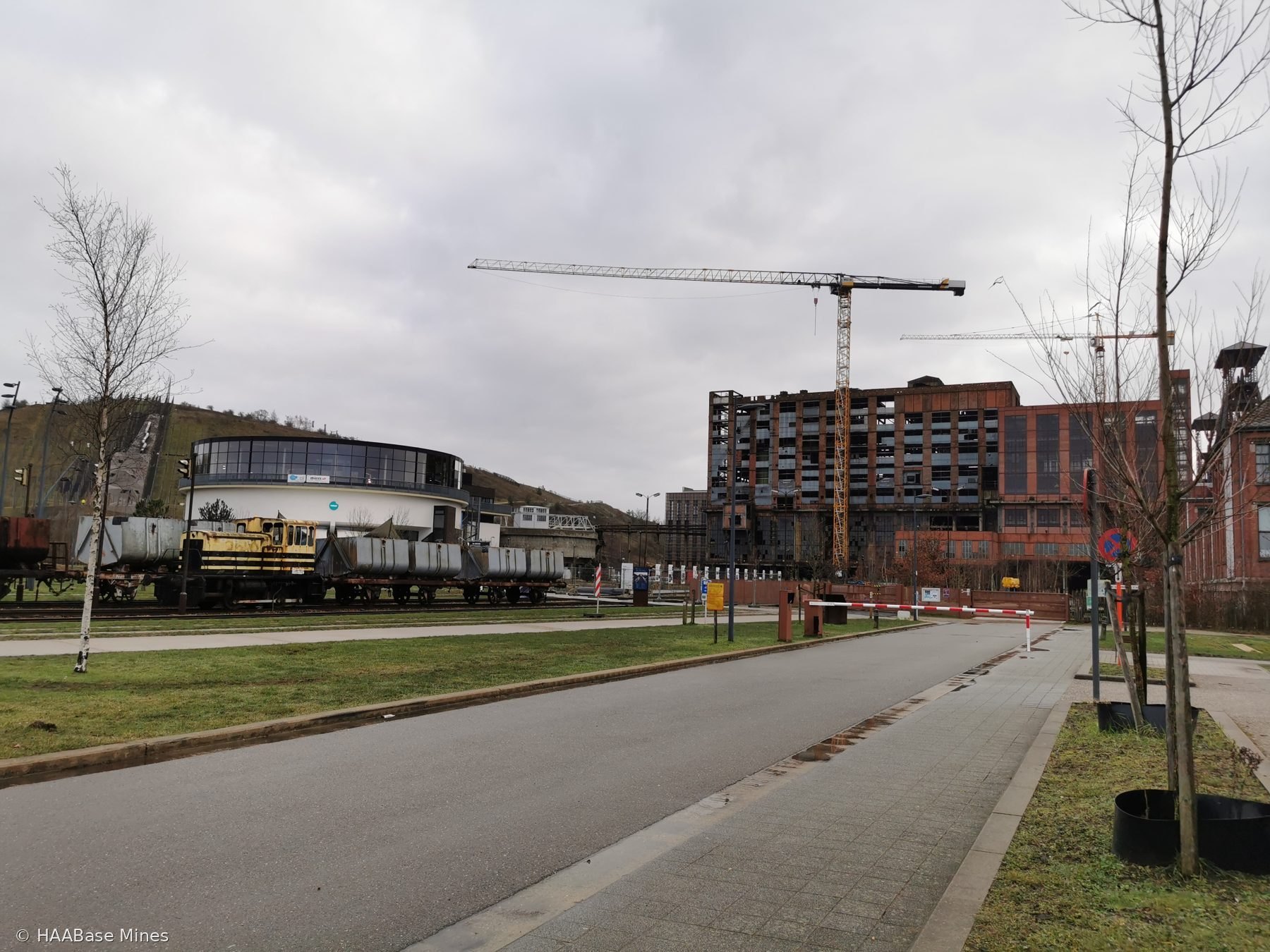
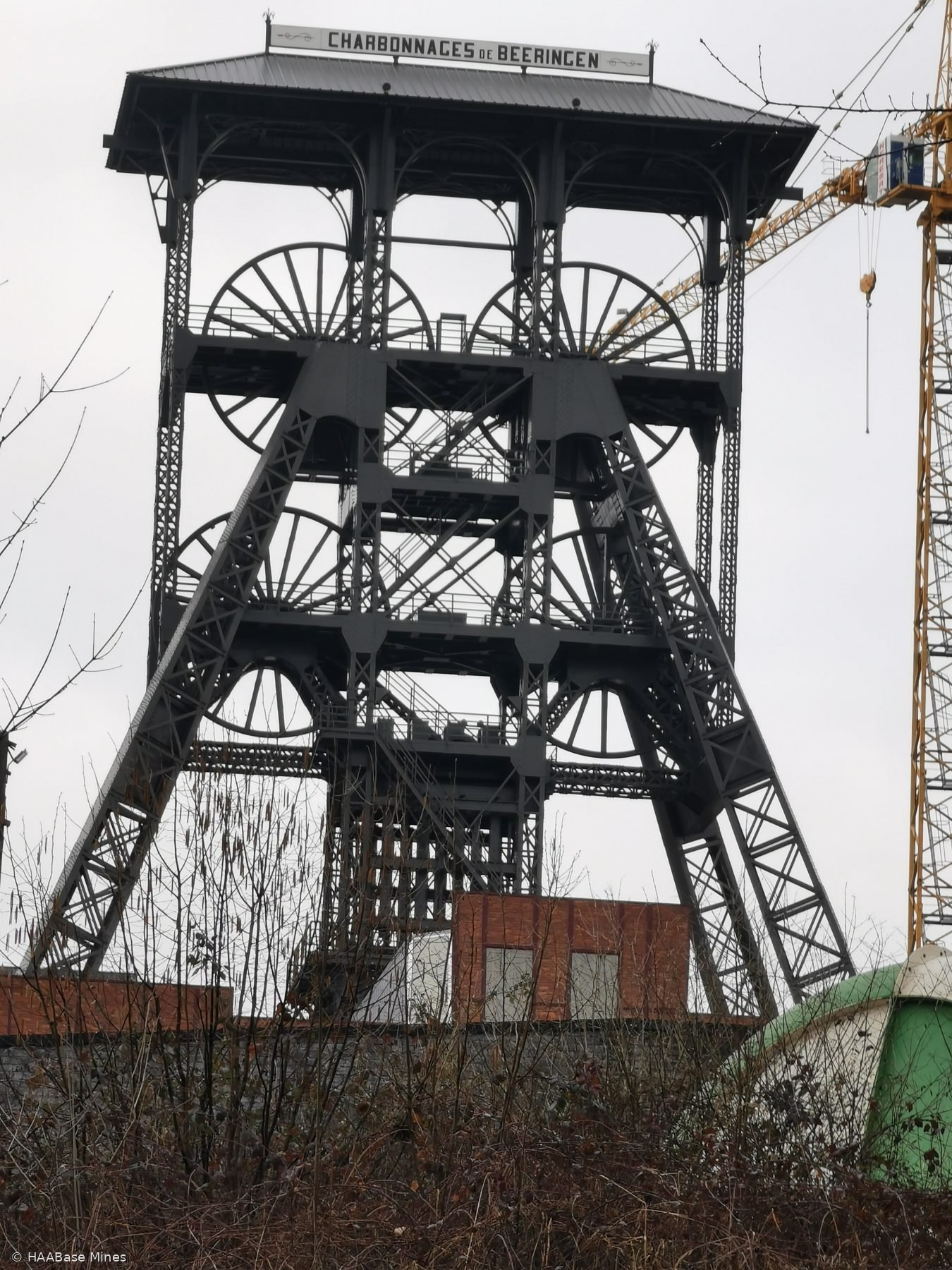
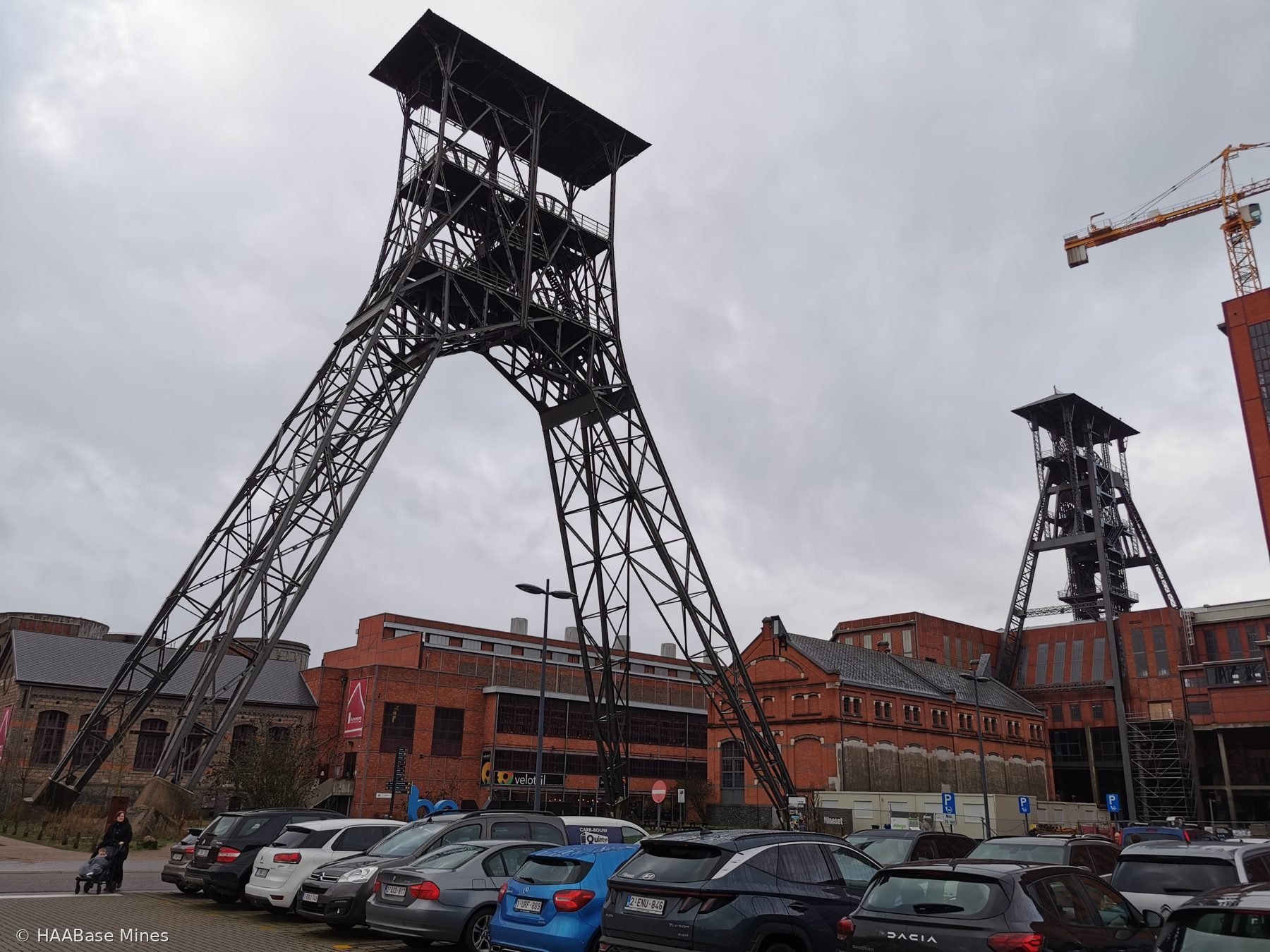
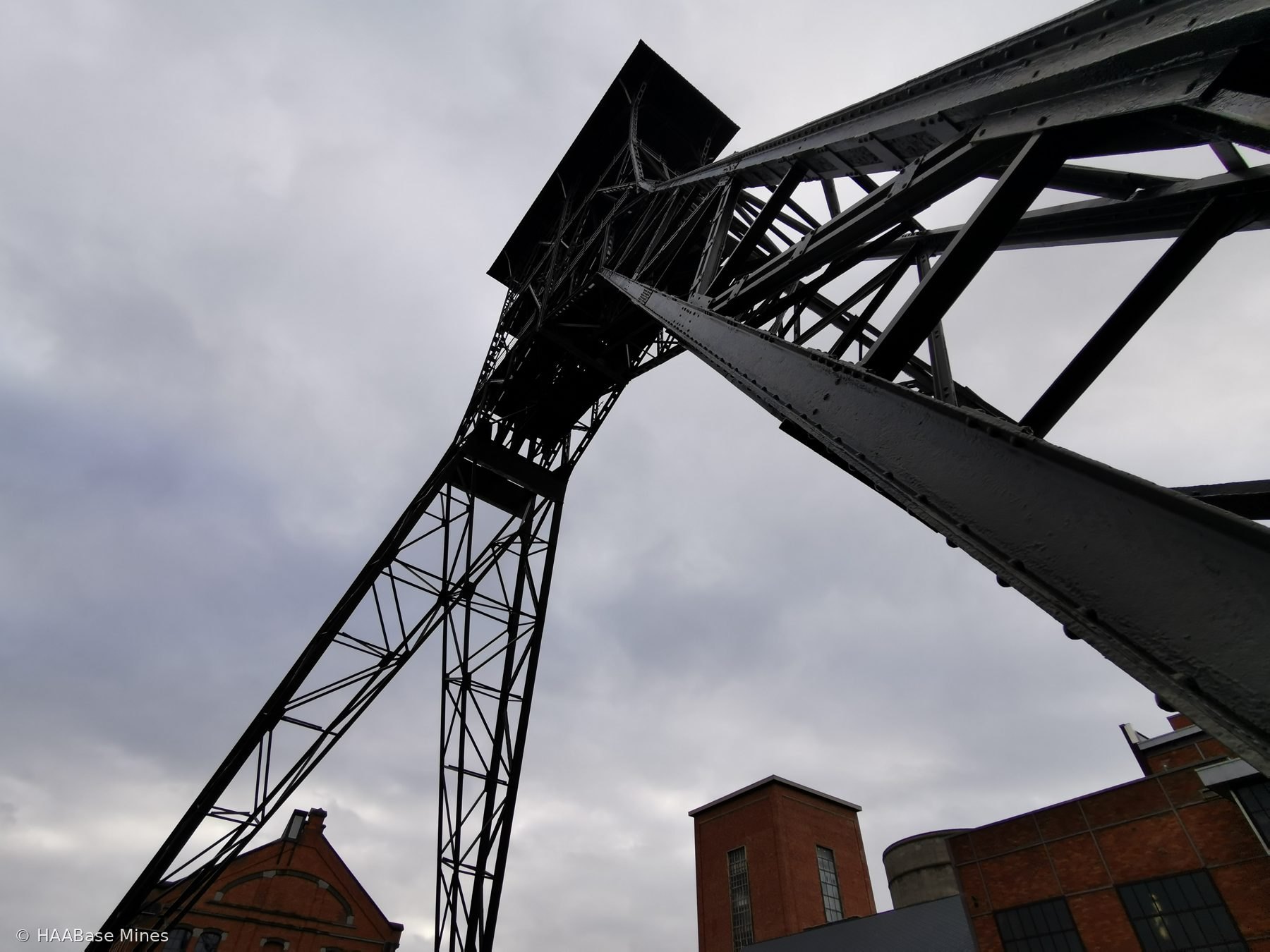
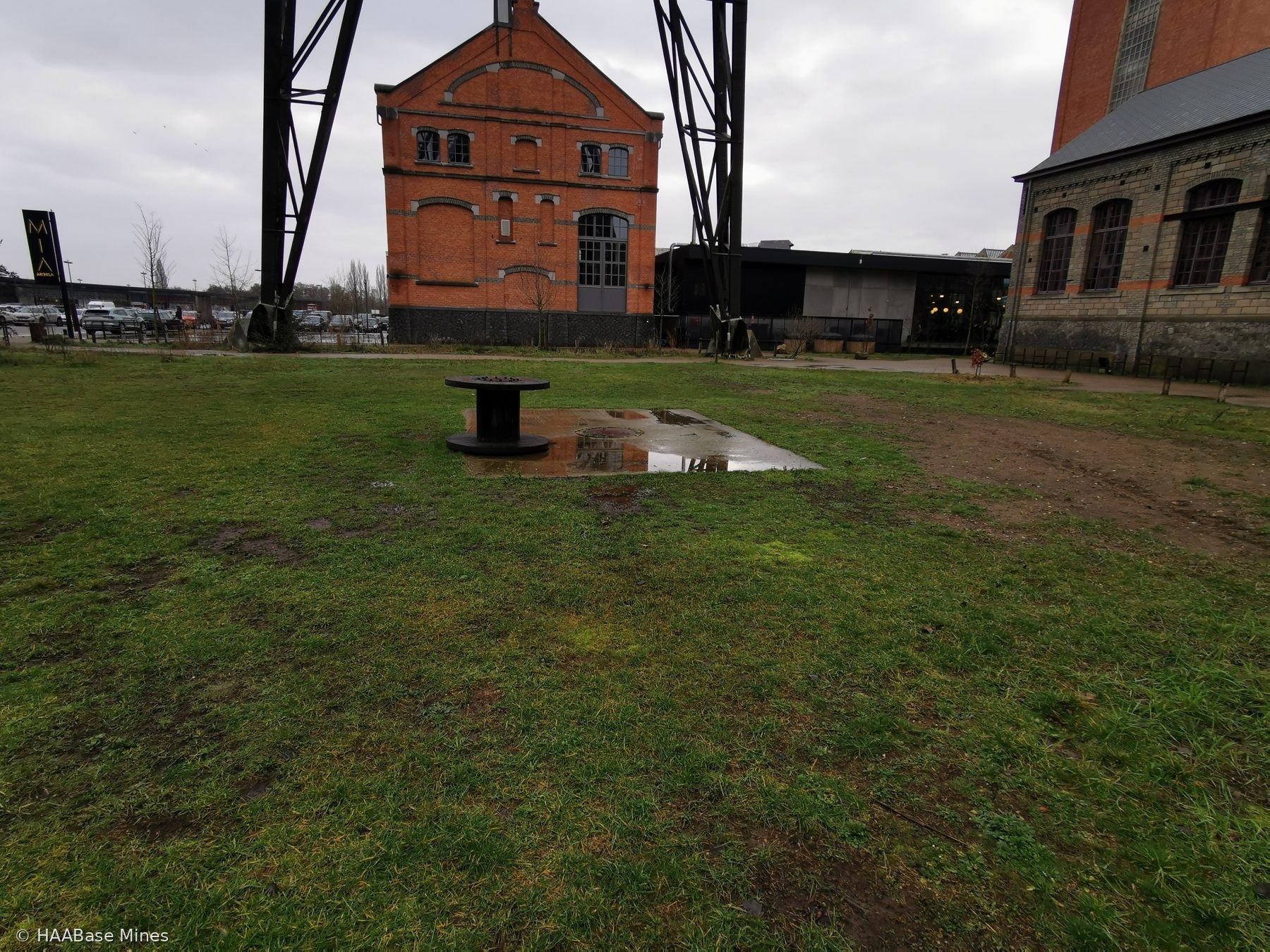
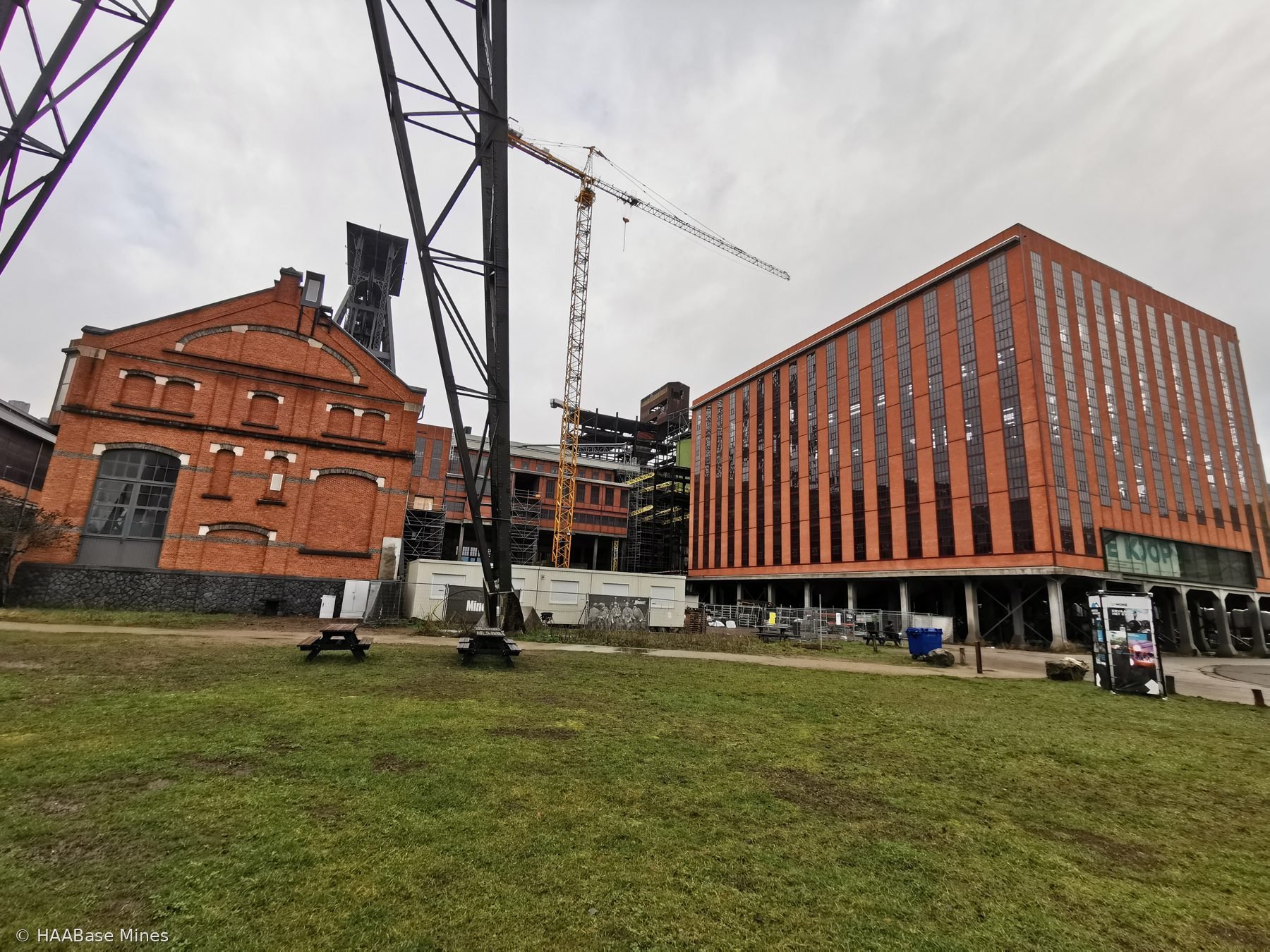
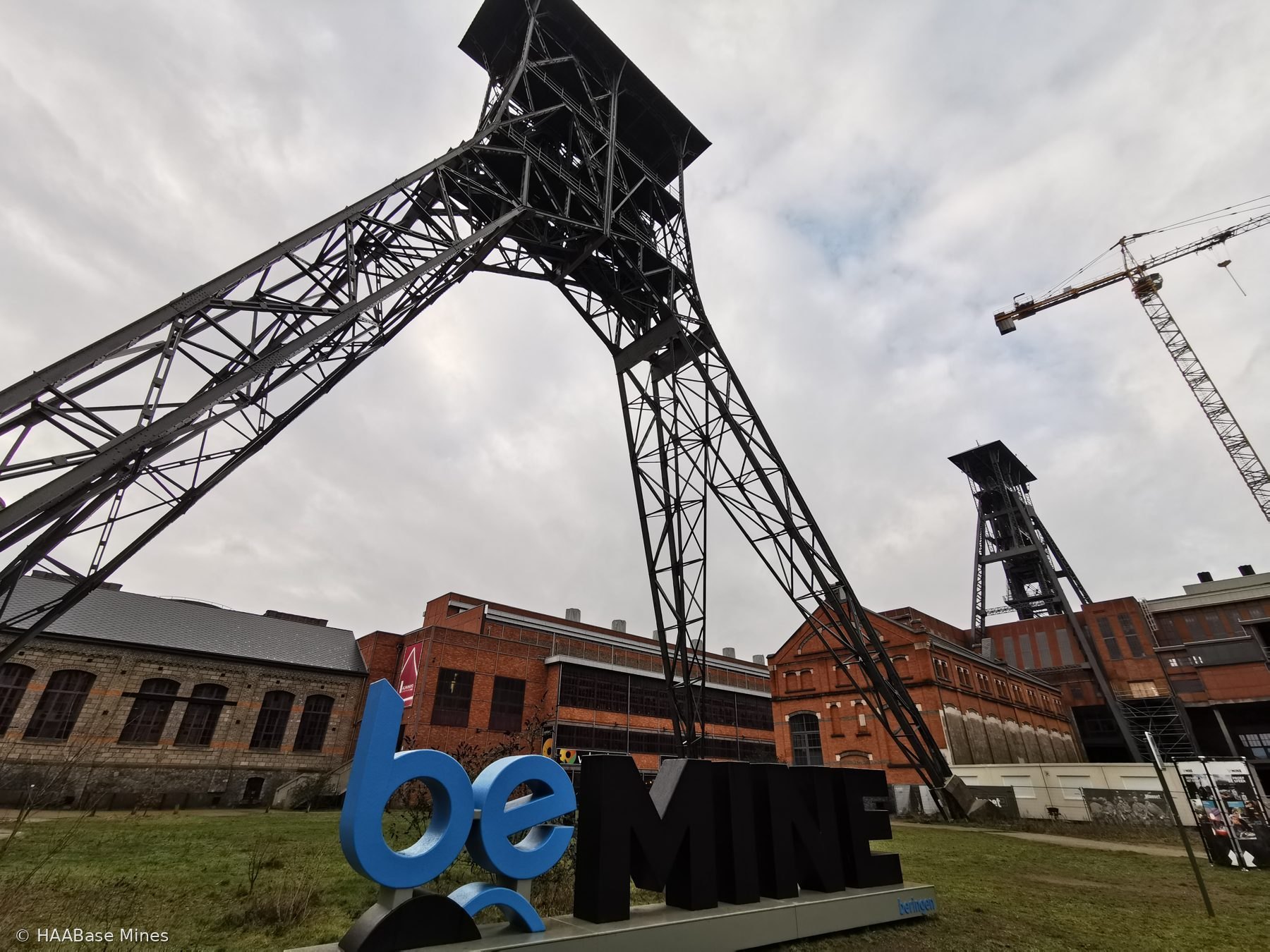
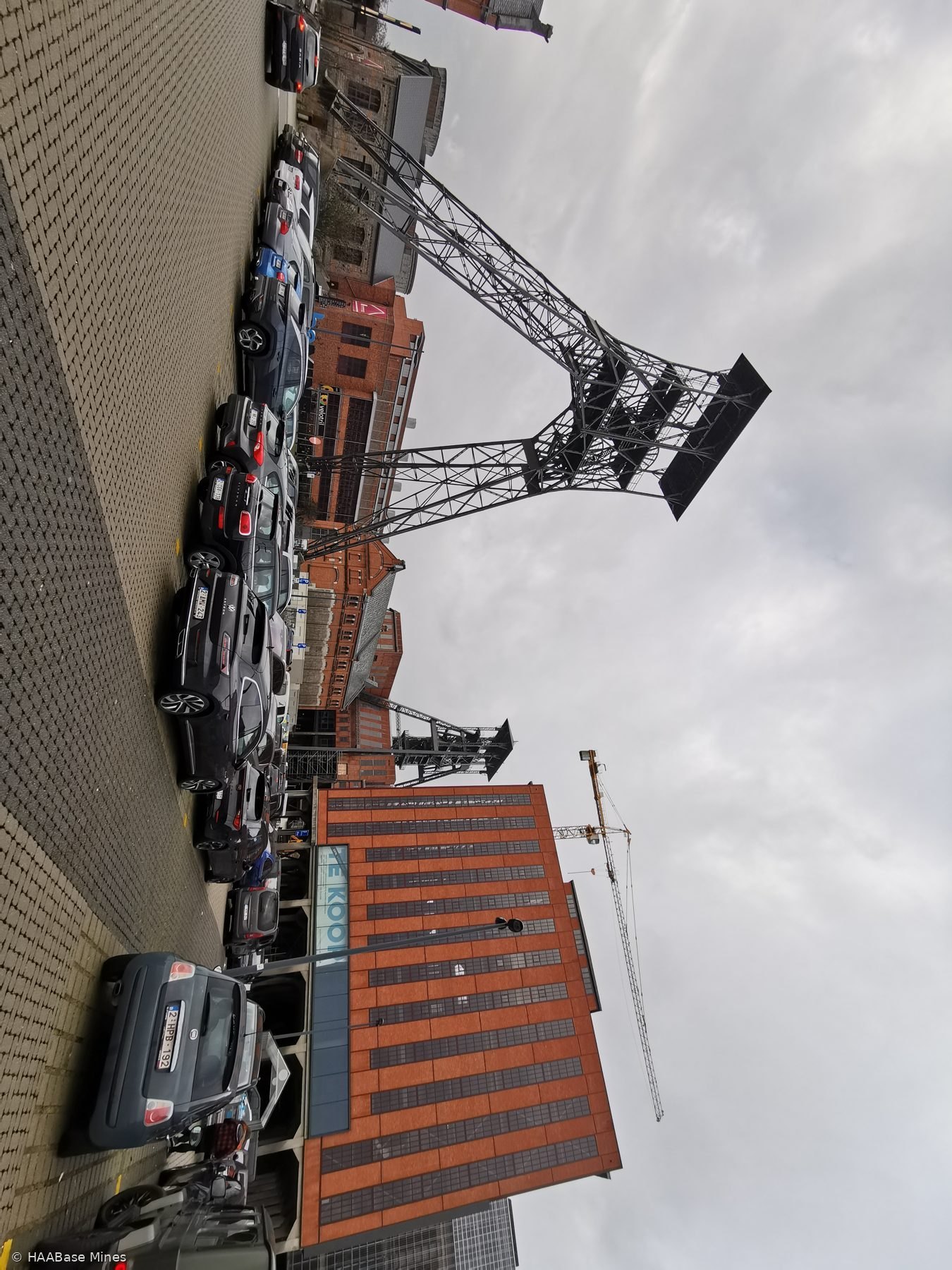
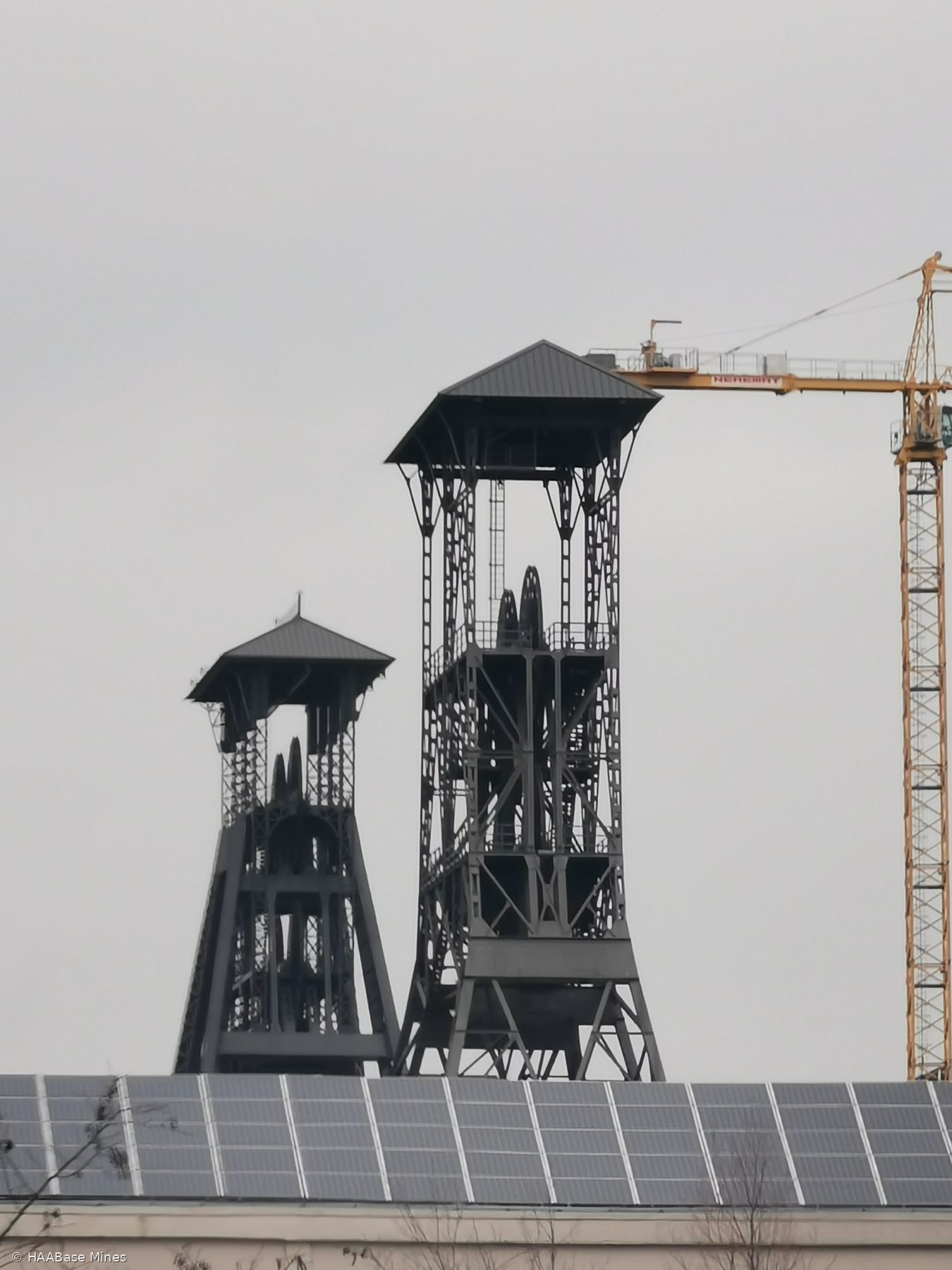
The site stands in a broad urban-edge setting, where the largely intact buildings form an extensive and clearly legible mining complex within a landscape of later reuse.

Map & photo

Steenkoolmijn van Beringen mine headframe or winding tower site
Photograph taken: 21 February 2026
Map markers and directions links are provided for location reference only and do not indicate public access or permission to enter a site.

History

The Steenkoolmijn van Beringen occupied a position at the heart of the Kempen coalfield, one of the last major coalfields to be developed in western Europe. References to coal in the area date to fourteenth-century documents, but systematic exploitation did not begin until the late eighteenth century across the region. In 1901, Professor André Dumont confirmed the presence of coal in Belgian Limburg during overnight drilling operations. Between 1902 and 1903, six test borings between the villages of Beverlo, Beringen, Koersel, and Paal confirmed viable deposits. Further Foraky survey borings followed between 1904 and 1909 to establish the optimal shaft location. An initial site at Langeneiken was considered and land purchased there, but further investigation revealed an underground water body, and the decision was made instead to locate the pit at Kleine-Heide on Rijksweg 21. Clearance of the site began in 1909.

The concession Beeringen-Coursel, covering 4,950 hectares across the communes of Koersel, Heusden, Lummen, Beringen, Oostham, Paal, Tessenderlo, and Beverlo, was granted on 26 November 1906. Three companies that had conducted the preparatory surveys received the concession, which was transferred to the newly formed operating company three months later. The Société anonyme des Charbonnages de Beeringen was established at Liège on 23 February 1907 with an initial capital of 25,000,000 francs divided into 50,000 shares. The majority of shares passed to French industrial groups including the Société anonyme des Hauts-Fourneaux et Fonderies de Pont-à-Mousson, La Compagnie des Aciéries de la Marine et d'Homécourt, the Société des Forges du Nord et de l'Est, and Les Aciéries de Michéville. Capital increases in May 1919, November 1920, and December 1923 further consolidated French control, so that by 1931 fourteen of the eighteen board members held French nationality.

Shaft sinking for Schacht I began in 1910, and for Schacht II in 1912. Both shafts have a useful diameter of six metres. The frozen ground technique was required given the 622-metre overburden of sand, marl, chalk, and peat deposits, all largely water-bearing. Schacht I flooded in both 1913 and 1920, requiring renewed application of the freezing method devised by engineer Louis Sauvestre from depth 585 metres. The First World War caused further disruption: from 1916 the company was placed under German forced administration, and in 1917 the occupying forces dismantled the 2,000 kW turbine and transported it to Germany. Despite these setbacks, the coal seam was reached on 20 October 1919 at a depth of 623 metres.

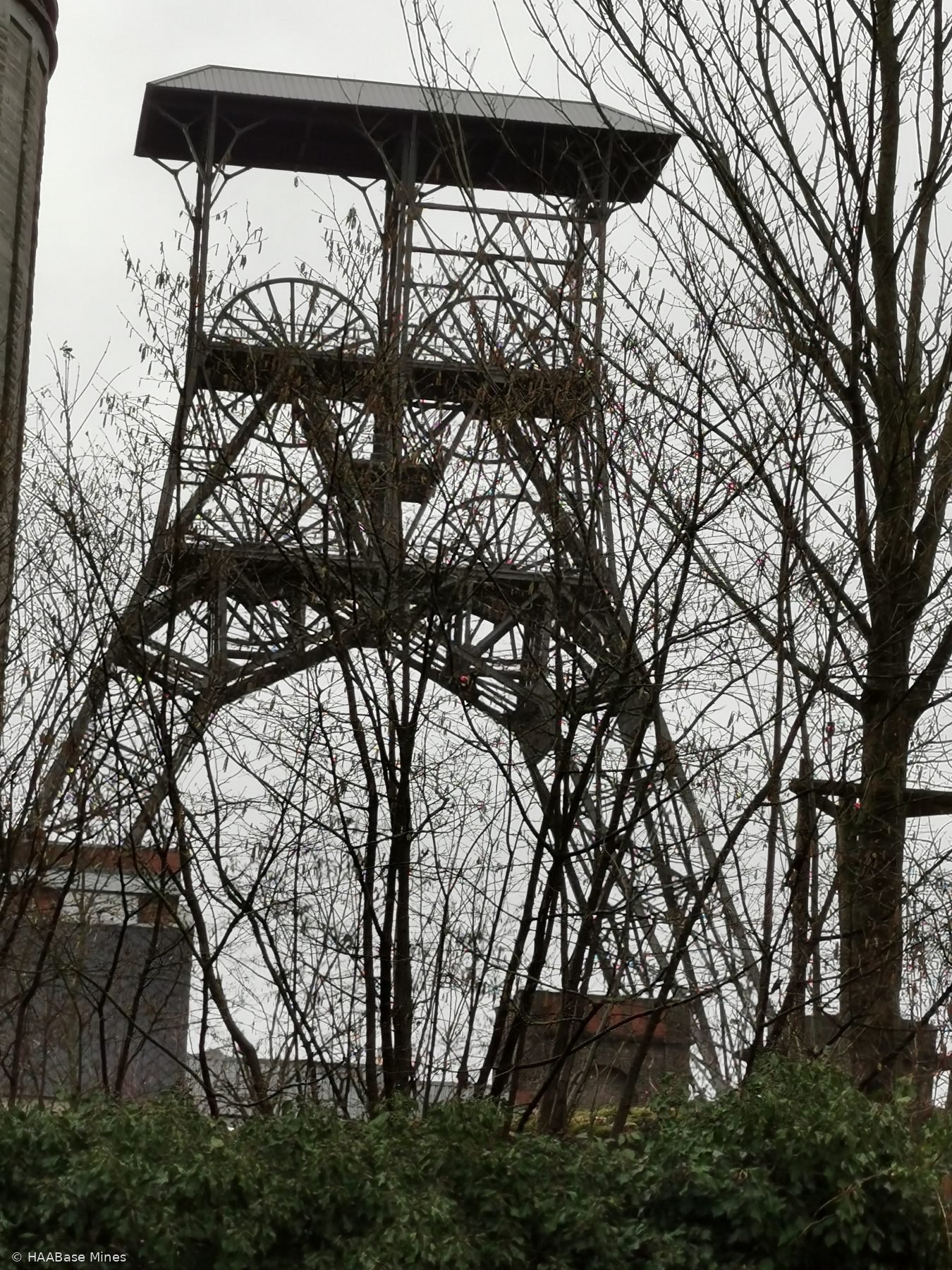
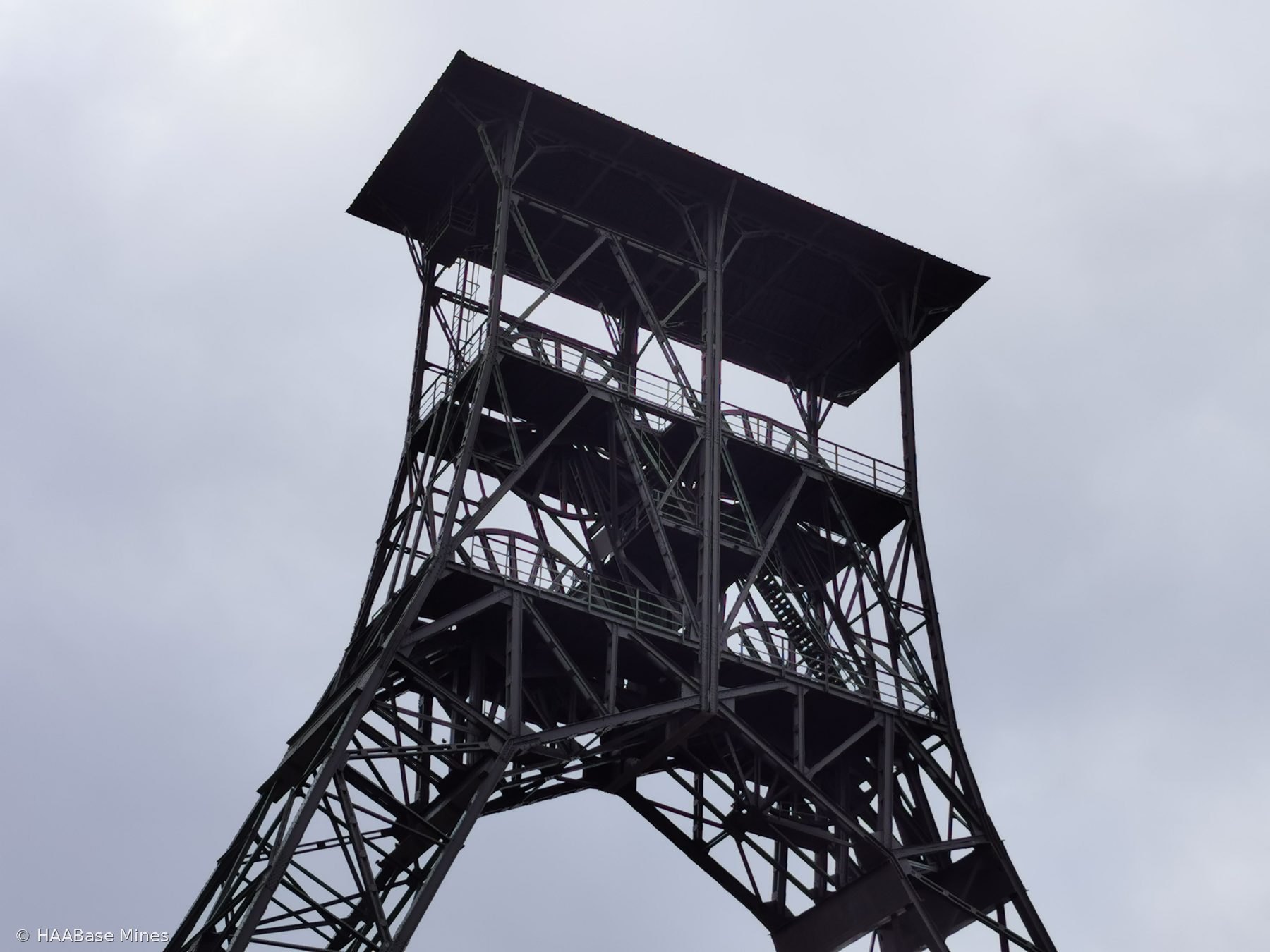
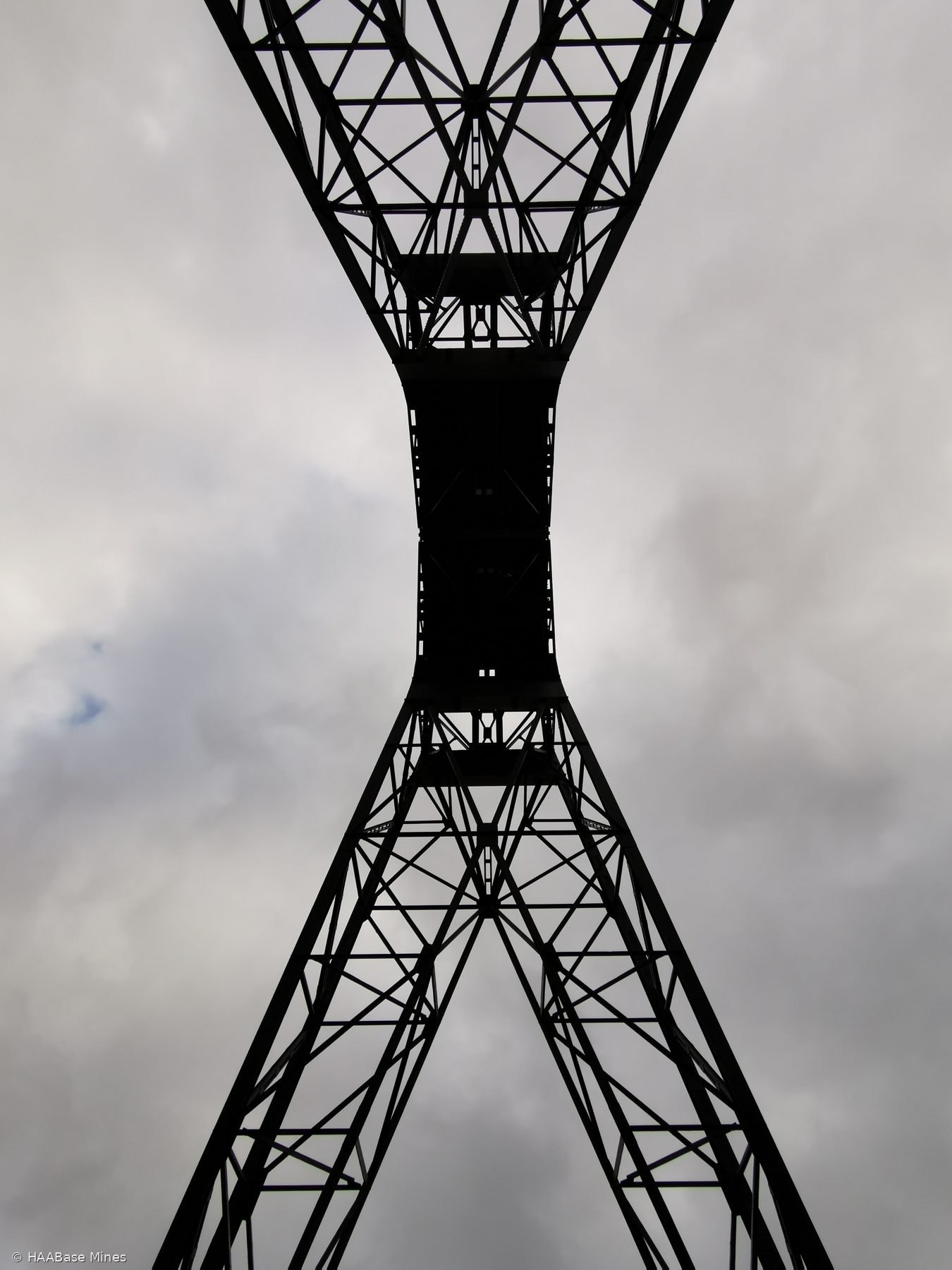
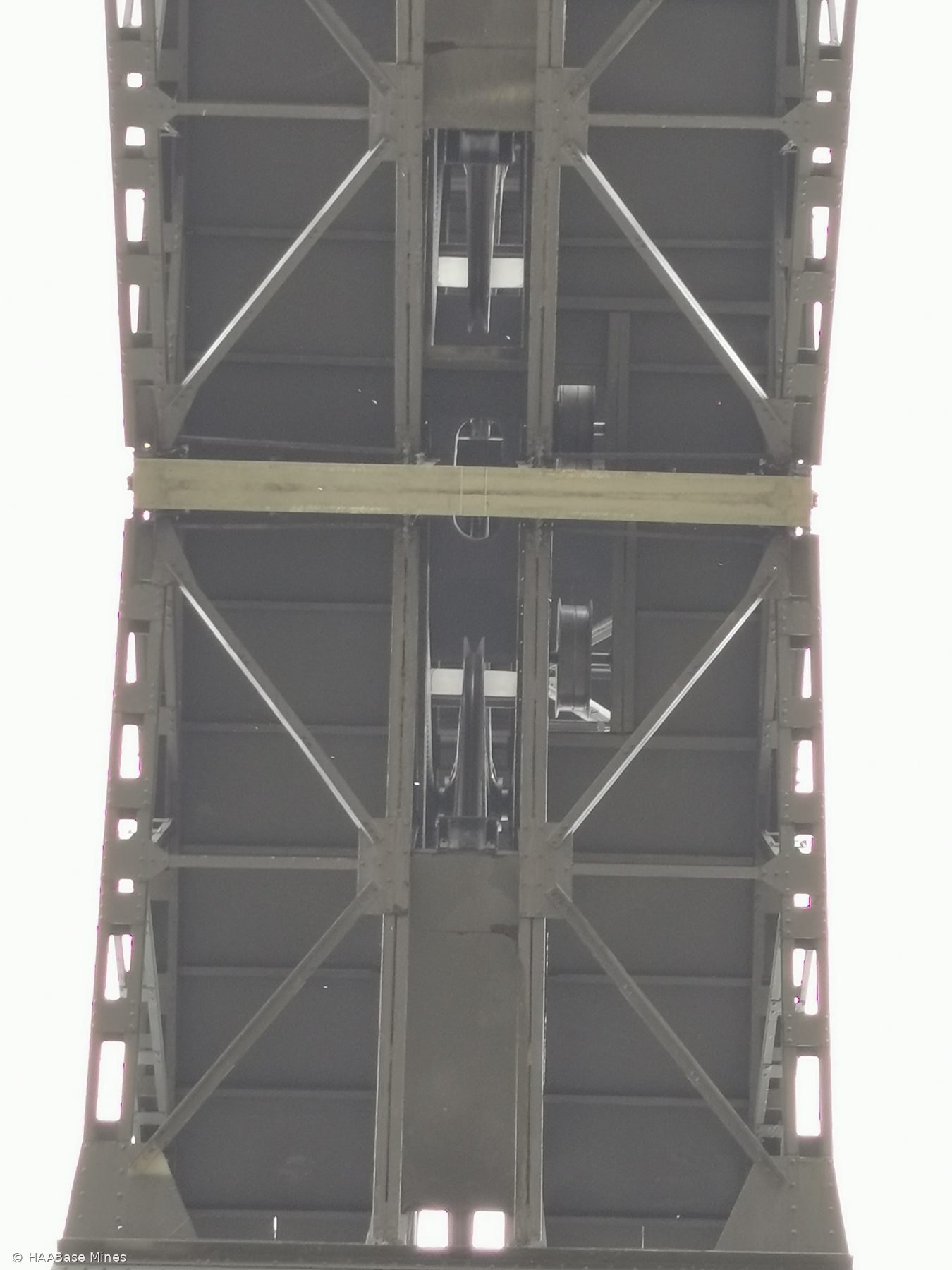
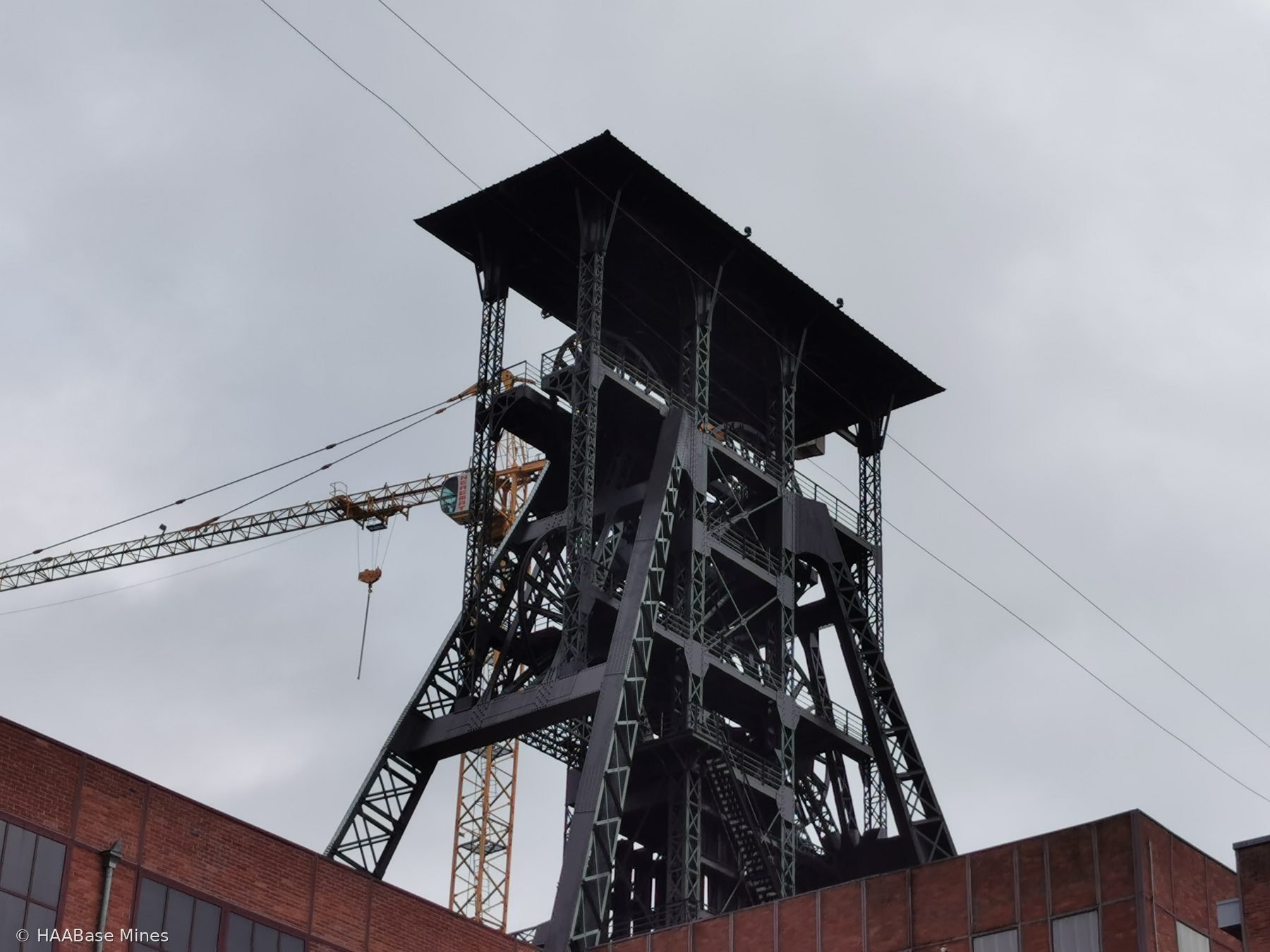
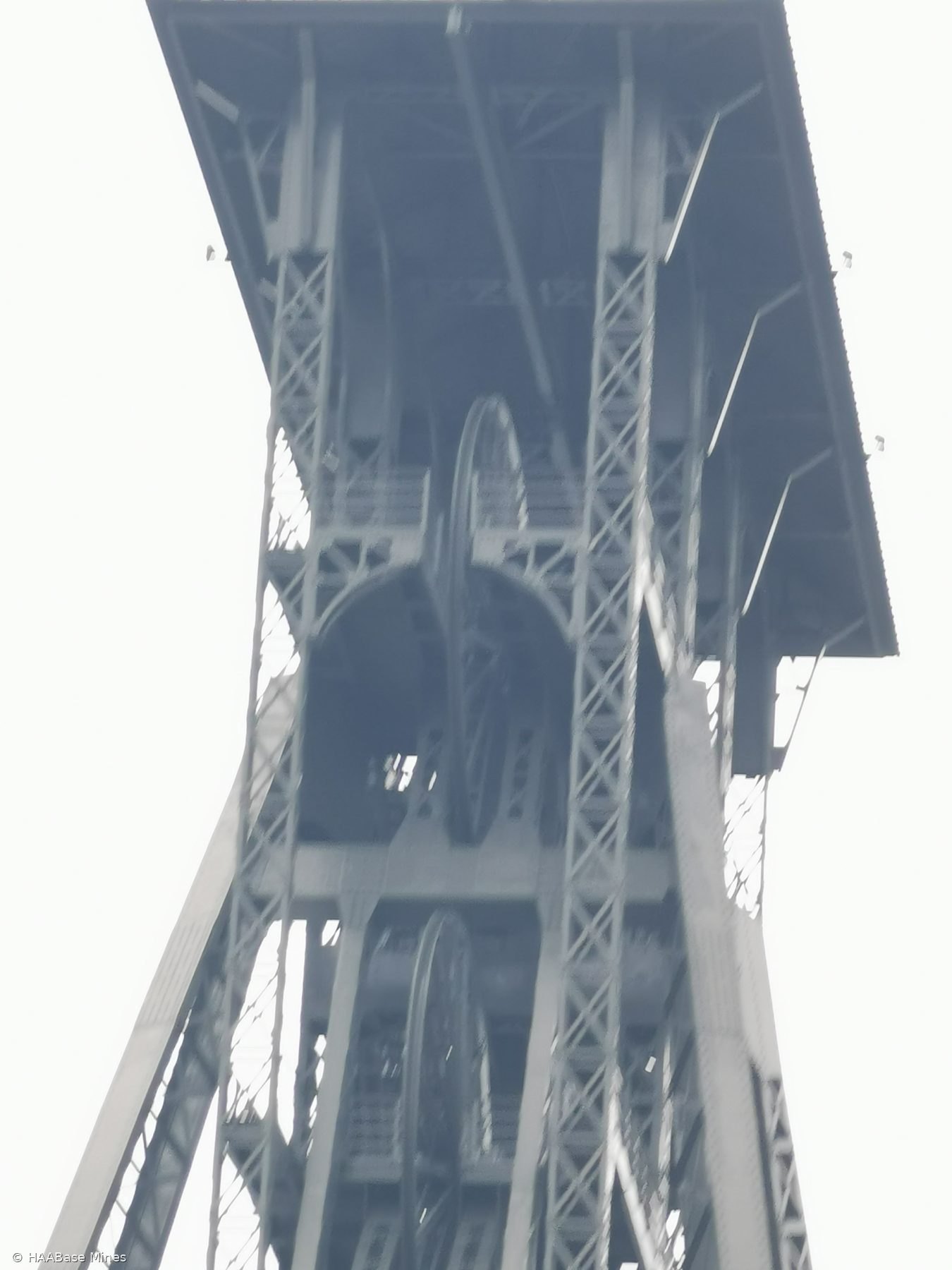
The wooden sinking towers were replaced from 1919 onwards by permanent steel headframes. The headframe above Schacht II was the first to be erected, designed by engineer L. Lemaire of Liège and built by the S.A. du Nord de Liège; it consists of an open steel lattice structure on four concrete supports. The headframe above Schacht I, built by DEMAG of Duisburg between 1926 and 1928, used a somewhat different construction with lighter legs of single-crossed compound lattice girders. Both headframes stand approximately 60 metres high. Around 1950, the ironwork of Schacht II's legs was encased in concrete as protection against corrosion. Each headframe was served by two winding houses of one and a half storeys in brick construction on a stone plinth.

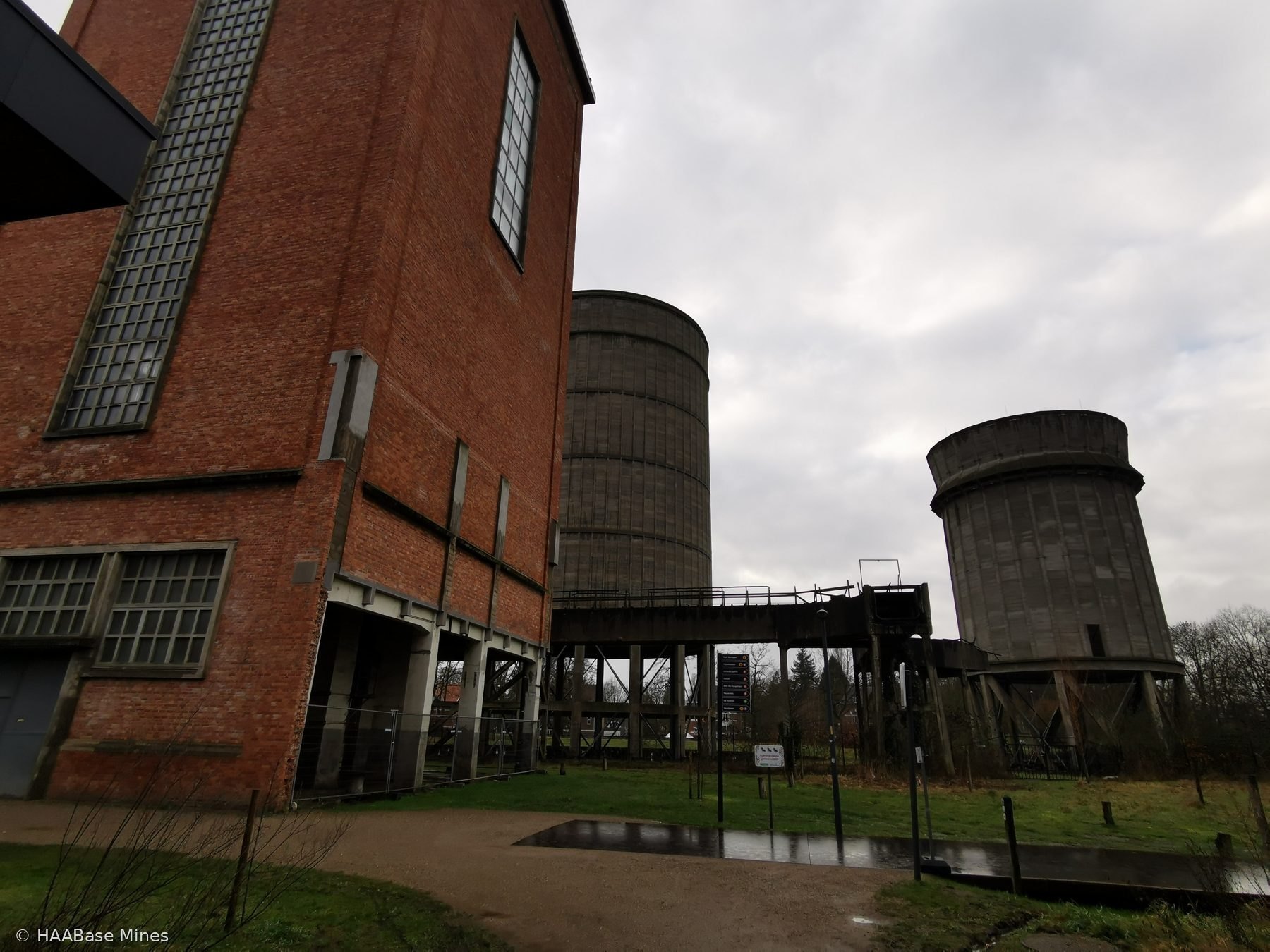
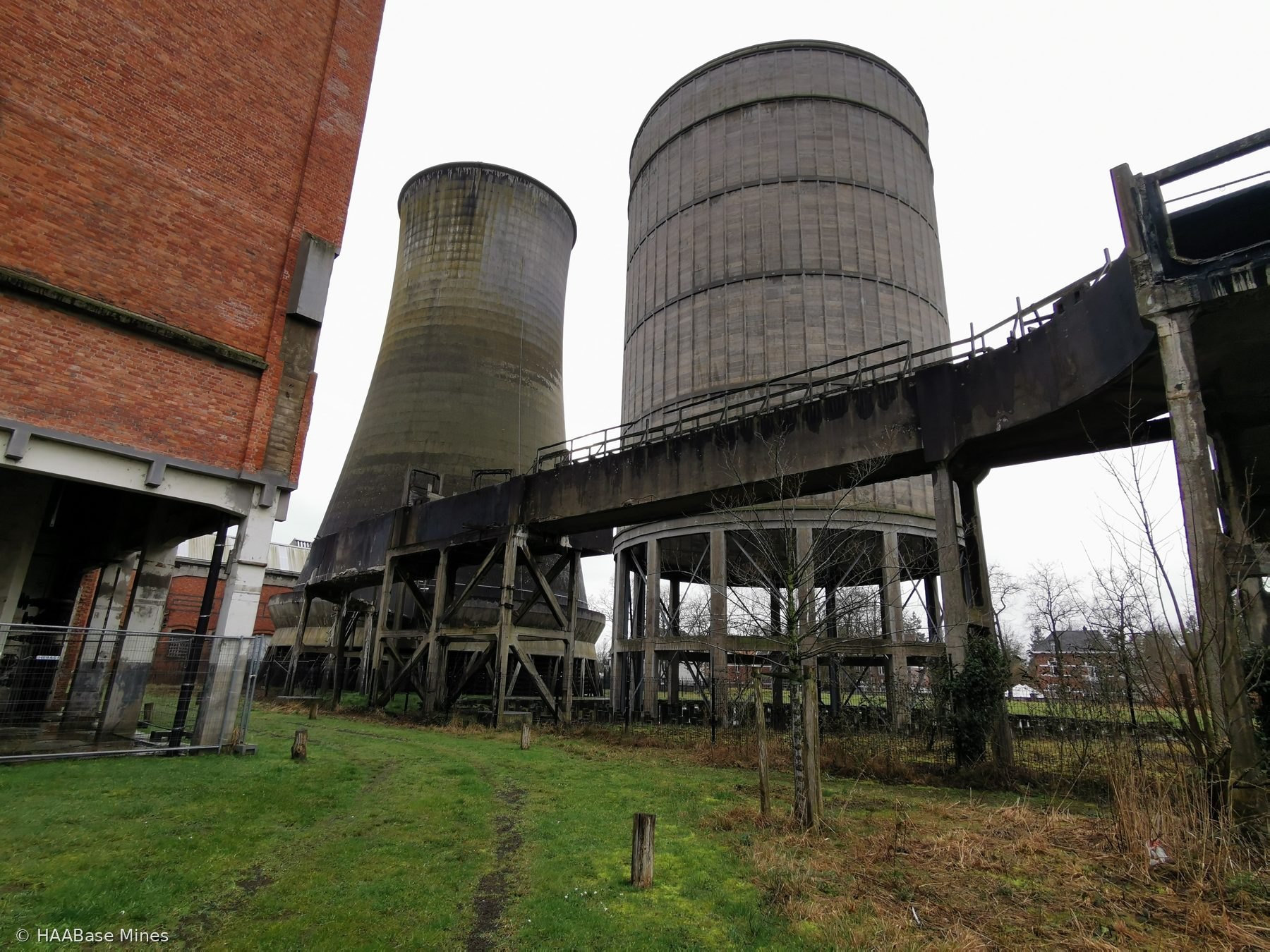
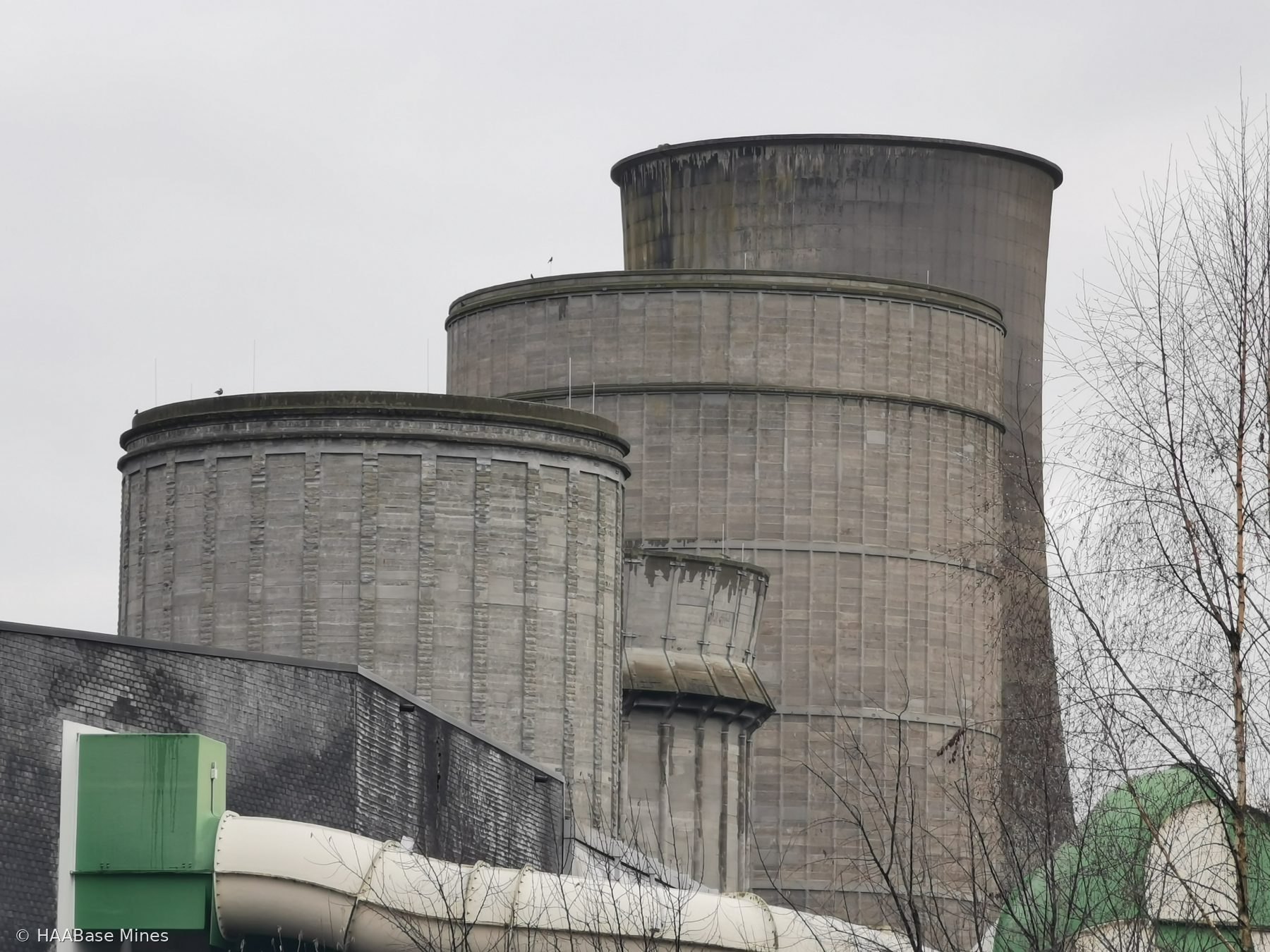
Coal production began in 1922, with the first working levels established between 727 and 789 metres depth. After the Second World War both shafts were deepened to 849-850 metres to open an additional horizon. The coal preparation plant, a ten-storey steel lattice structure with glass and brick infill panels built above railway sidings for direct wagon loading, began operation in September 1924, two years after production started. The reception building and coal washing plant were completed in the same period, with the boilerhouse completed in 1924 in a concrete frame with brick infill. Four concrete cooling towers were built to replace earlier wooden predecessors, dating from 1923, 1926, 1942, and 1952 respectively; these are the only surviving mine cooling towers in the Limburg coalfield. The pithead baths and changing rooms were constructed in three phases between 1922 and 1953.

The concession was extended in 1954 to 5,271 hectares, and from 1959 coal was also extracted from a leased portion of the adjacent Oostham-Kwaadmechelen concession. Peak employment of 6,796 miners was recorded in 1948. Peak annual production of approximately 1,900,000 tonnes was achieved in 1956, the zenith of Belgian coal's post-war golden age. Between 1946 and 1956, large numbers of Italian workers arrived in Limburg under bilateral labour agreements; after the Marcinelle disaster of 1956, which killed many Italians working in Belgian mines, Italy terminated that agreement and the collieries recruited workers from Greece, Spain, Turkey, and Morocco instead. During the Second World War the colliery operated under German administration, with coal exported directly to Germany and Russian prisoners employed underground; after liberation German prisoners of war took their places.

As cheap imported energy undercut Belgian coal from the late 1950s, the industry entered a long contraction. Production at Beringen continued beyond several earlier closures in the Kempen coalfield. The last coal wagon ascended on 28 October 1989, the second to last Kempen colliery to close; the Heusden-Zolder colliery closed finally in 1992. Total net production over the mine's operating life reached approximately 79,332,200 tonnes. The shafts were sealed and backfilled after closure, as was standard practice for Belgian collieries.

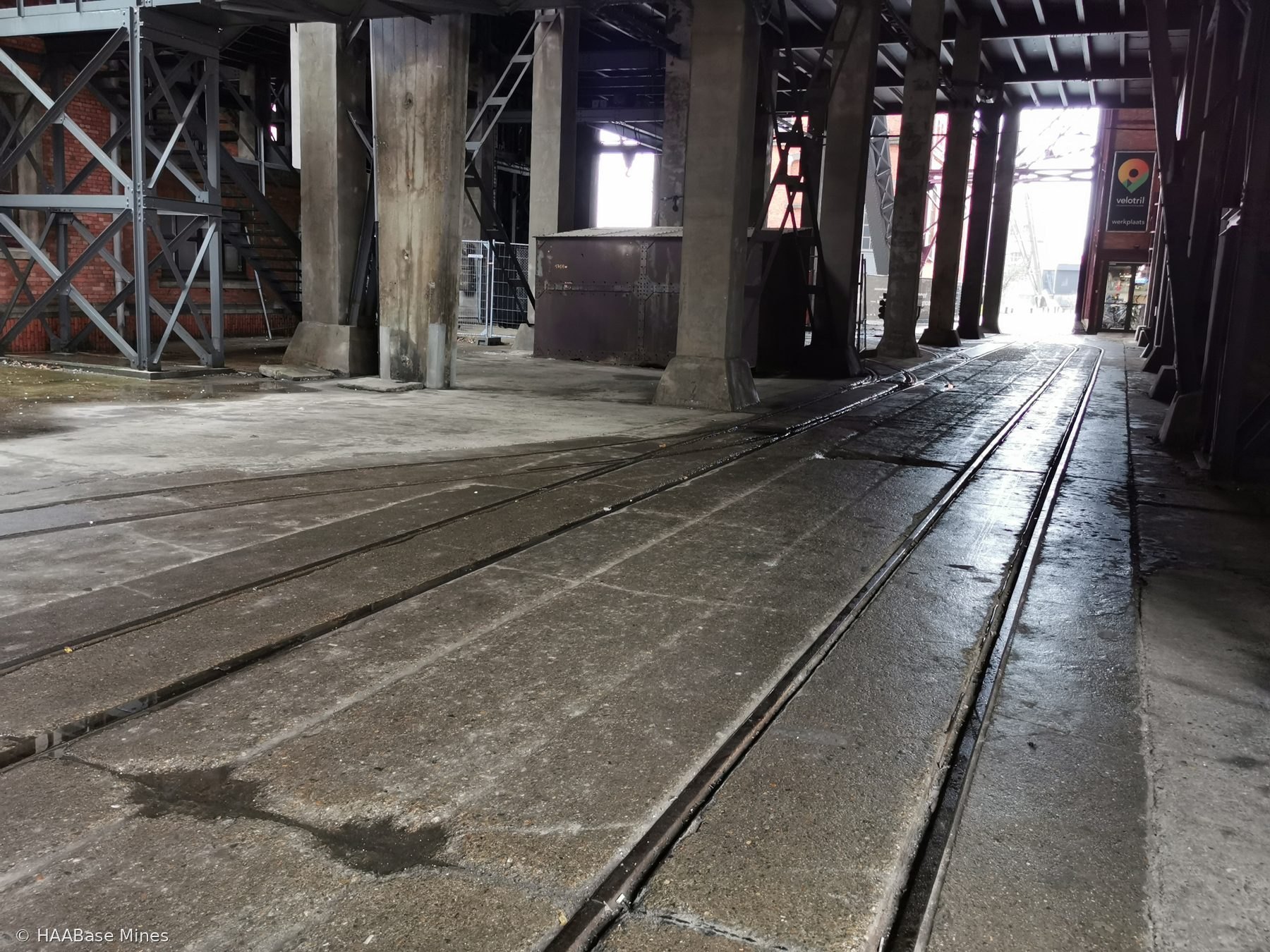
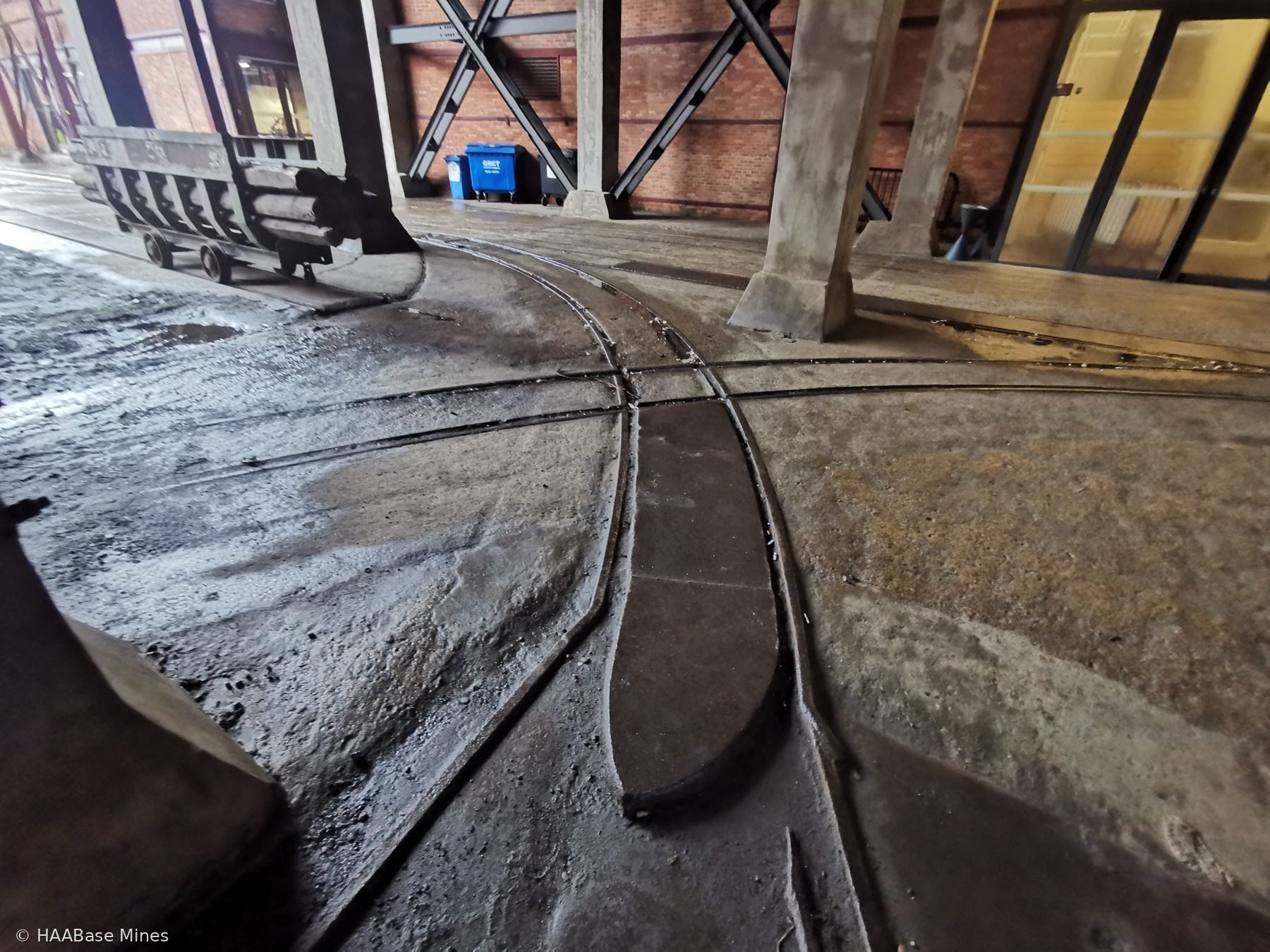
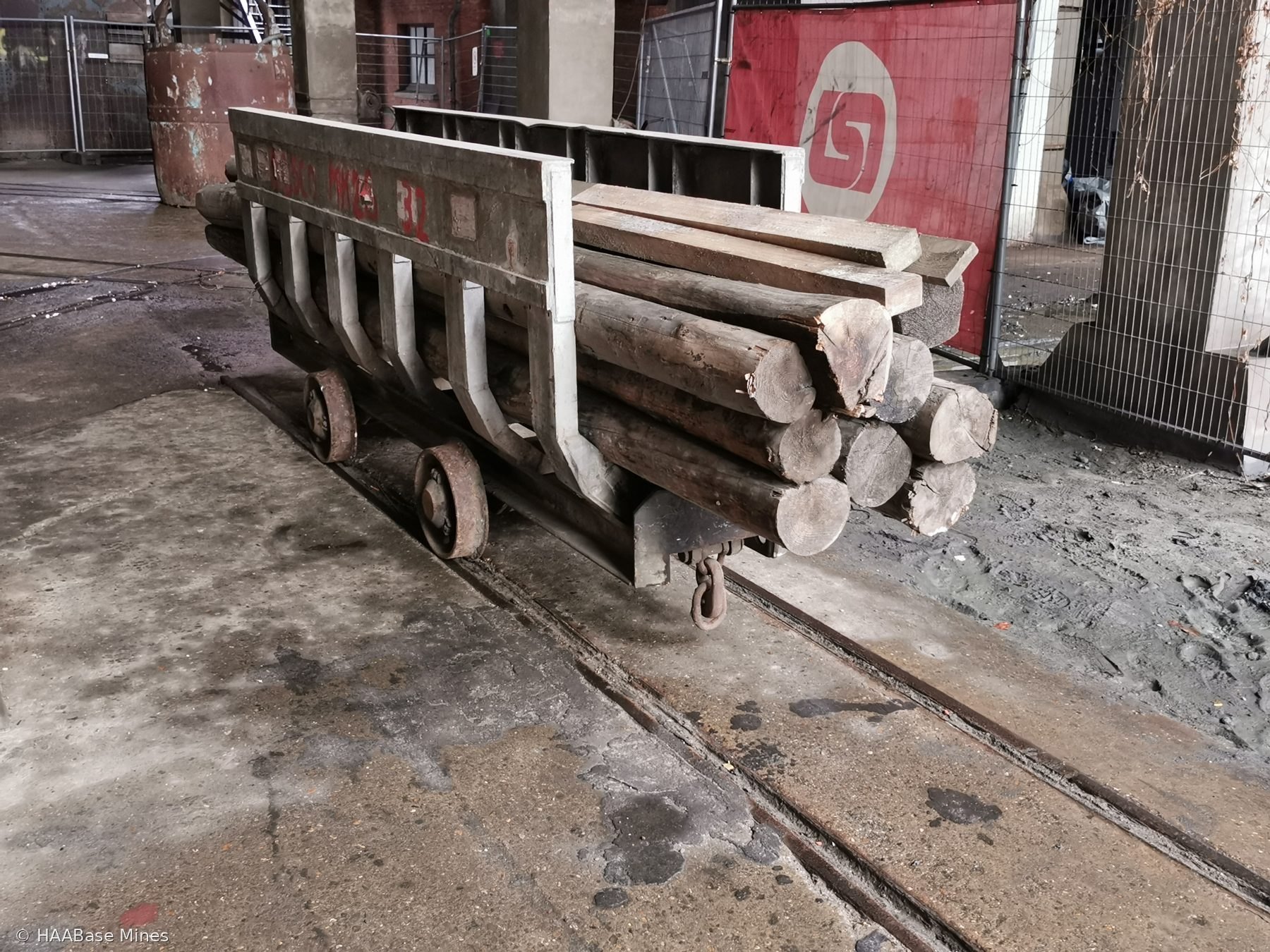
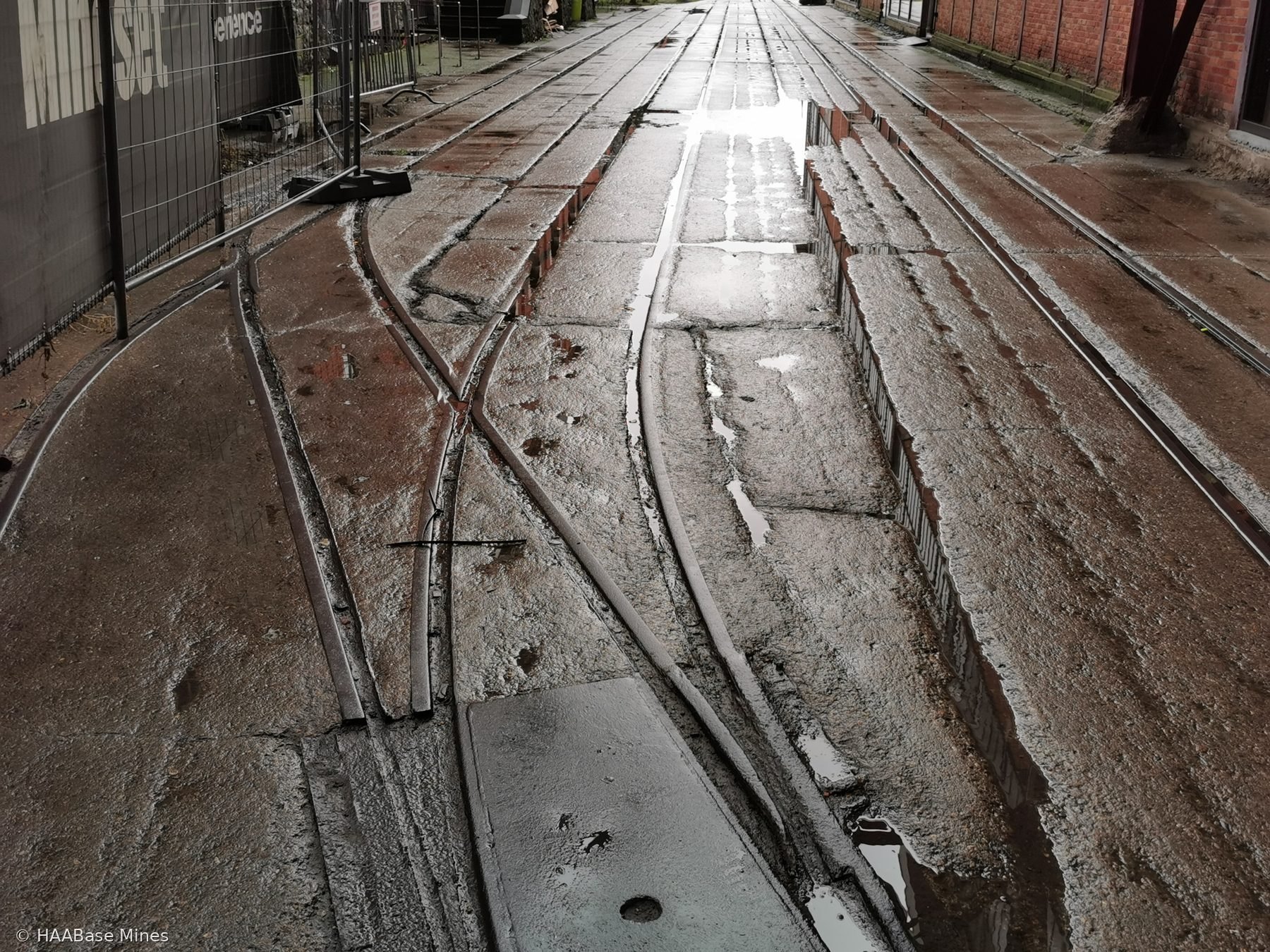
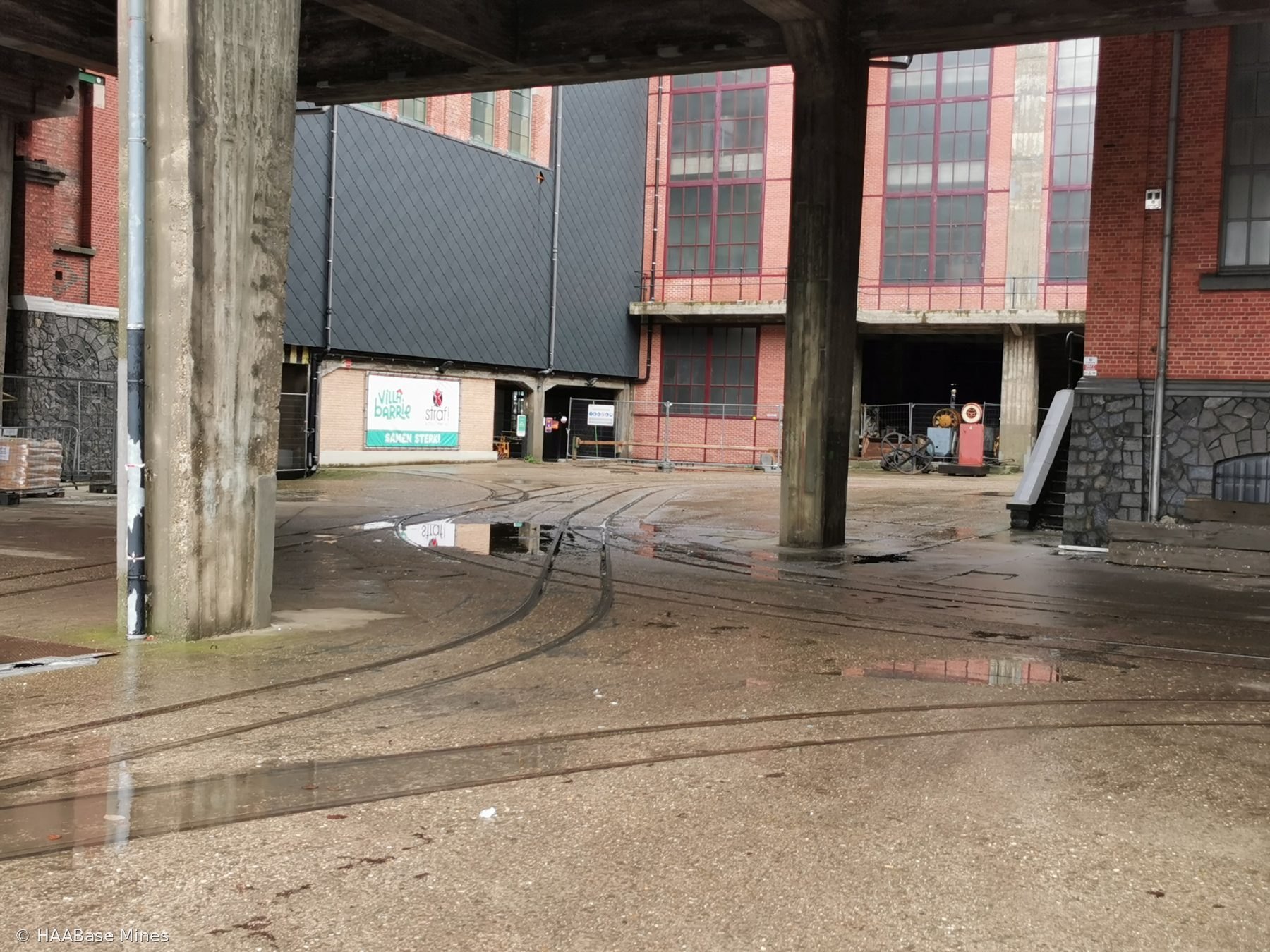
Planning for a museum on the site had already begun during the final years of extraction. The Flemish Mining Museum opened at the site in 1986, housed principally in the former social building. The majority of the surface buildings were preserved intact. Heritage protection was granted in December 1993, when the main mine buildings were listed as a protected monument; the coal washing plant and sedimentation tanks received separate protection in December 1994. In 2009, a major redevelopment project named be-MINE was launched to transform the abandoned colliery into a heritage, tourism, and residential destination. The greened-over slag heaps were converted into a recreation area with an adventure mountain and panoramic viewpoint. A swimming and leisure complex was constructed alongside the cooling towers. The railway tracks, coal wagons, and signalling equipment of the former marshalling yard were preserved in a rail heritage park. In 2011, the Flemish government allocated funds for the restoration of the four distinctive cooling towers.
Timeline

1901
Exploration

Coal confirmed in Belgian Limburg

On the night of 1 to 2 August 1901, drilling under the direction of Professor André Dumont confirmed the presence of coal in Limburg, establishing the basis for the development of the Kempen coalfield.
1902–1903
Exploration

Survey borings confirm coal at Beringen

Six test borings between the villages of Beverlo, Beringen, Koersel, and Paal confirmed viable coal deposits, providing the basis for a concession application.
1902–1909
Exploration

Exploratory and location borings confirm coal measures

Exploratory borings from 1902 confirmed the presence of coal in the Beringen area. Detailed Foraky borings to determine the optimal colliery location were carried out between 1904 and 1909 at several points including Langeneiken, Heppen-Statie, Bredonk and Kleine Heide.
1906
Legislation

Concession Beeringen-Coursel granted

The concession Beeringen-Coursel, covering 4,950 hectares across multiple communes including Koersel, Heusden, Lummen, Beringen, Oostham, Paal, Tessenderlo, and Beverlo, was granted to three prospecting companies.
1906
Legislation

Concession Beringen-Koersel granted

The concession Beringen-Koersel was granted on 26 November 1906, covering 4,950 hectares across portions of eight communes including Koersel, Beringen, Paal and Beverlo.
1907
Legislation

Société anonyme des Charbonnages de Beeringen founded

The operating company was established at Liège with an initial capital of 25,000,000 francs. The majority of shares were held by French industrial groups including Pont-à-Mousson, the Aciéries de la Marine et d'Homécourt, the Forges du Nord et de l'Est, and Les Aciéries de Michéville.
1907
Legislation

Société anonyme des Charbonnages de Beeringen founded

The operating company, the Société anonyme des Charbonnages de Beeringen, was incorporated at Liège on 23 February 1907 with a founding capital of 25,000,000 francs, predominantly subscribed by French industrial groups.
1907
Construction

Preparatory works and site selection begin

Preparatory works began from 1907. Plans to locate the colliery at Langeneiken were abandoned after a subterranean lake was encountered; after further borings, the site at Kleine-Heide on Rijksweg 21 was chosen by 1908–1909. The site was cleared and the first buildings erected in 1909.
1909
Construction

Shaft site selected and ground cleared at Kleine-Heide

After an initial site at Langeneiken was rejected due to an underground water body, the colliery location was fixed at Kleine-Heide on Rijksweg 21. The site was cleared of woodland in 1909 and the first buildings and workers' houses erected.
1910
Construction

Sinking of Schacht I begun

Freezing borings for Schacht I commenced. The overburden of 622 metres consisted of sand, marl, chalk, and peat deposits, largely water-bearing, requiring the frozen ground technique. A layer of Hervian quicksand under pressure of 63 atmospheres was encountered immediately above the coal measures.
1910
Construction

Freezing borings for Schacht I commenced

Freezing borings for Schacht I began in 1910 to address the difficult overburden of 622 metres, including Hervian quicksand saturated with water under 63 atmospheres of pressure between 608 and 622 metres depth.
1912
Construction

Sinking of Schacht II begun

Sinking of the second shaft commenced. Both shafts have a useful diameter of six metres and are lined with the original cast-iron tubbing to 650 metres depth, and with concrete below that level.
1912–1913
Construction

Shaft borings begin; serious technical difficulties encountered

Shaft borings began in 1912 for Schacht I and in 1913 for Schacht II. Both shafts encountered severe difficulties. A new freezing technique devised by engineer Louis Sauvestre had to be applied from 585 metres depth. Schacht I flooded in 1913.
1913–1920
Construction

Shaft flooding and wartime disruption

Schacht I flooded in both 1913 and 1920, requiring renewed application of the freezing method devised by engineer Louis Sauvestre from 585 metres depth. From 1916, the company was placed under German forced administration; in 1917, the 2,000 kW turbine was dismantled and removed to Germany.
1916
Legislation

Colliery placed under German forced administration

From 1916 the Société anonyme des Charbonnages de Beeringen came under German forced administration. In 1917 the occupying authorities dismantled and removed to Germany the heavy 2,000-kilowatt turbine.
1919
Exploration

Coal seam reached

The coal seam was reached at a depth of 623 metres on 20 October 1919. The first working level was subsequently established between 727 and 789 metres.
1919
Construction

Permanent steel headframe erected over Schacht II

The wooden sinking tower over Schacht II was replaced by a permanent open steel lattice headframe designed by engineer L. Lemaire of Liège and built by the S.A. du Nord de Liège. The structure rests on four concrete supports with cast-steel shoes.
1919
Exploration

Coal measures reached in Schacht I

On 20 October 1919 Schacht I reached the coal measures at a depth of 623 metres. The first operational working level was established between 727 and 789 metres.
1919
Construction

Permanent headframe erected over Schacht II

The headframe over Schacht II was erected from 1919 to replace the timber sinking headframe, designed by Ir. L. Lemaire of Liège and built by the Société anonyme du Nord de Liège. It is an open steel lattice construction on four concrete supports.
1922
Operation

Coal production begins

The colliery entered production in 1922, working coal from levels at 727, 789, and 850 metres depth. Beringen was the second Kempen colliery to come into production, after Winterslag.
1922
Operation

Coal production commences

Coal production began in 1922, making Beringen the second colliery in Limburg to enter production after Winterslag. Working levels were operational between 727, 789 and 850 metres depth.
1923
Construction

First concrete cooling tower constructed

The first of four concrete cooling towers was built, replacing an earlier wooden predecessor. Designed by A. & F. Hamon Frères and built by S.A. de Travaux Tirifahy of Charleroi, it is a chimney-form tower of 2,500 m³ capacity in reinforced concrete masonry.
1923–1924
Construction

Coal washery and sizing plant constructed

The kolenwasserij and kolenzeverij were built out from 1923 and 1924 as integral components of the surface installation, designed in metal framework to allow direct loading and unloading of coal wagons.
1923–1952
Construction

Four cooling towers constructed in stages

Four concrete cooling towers were built in 1923, 1926, 1942 and 1952 to cool the water of the colliery power plant for reuse. They are the only preserved mine cooling towers in the Limburgse mijnstreek.
1924
Operation

Coal preparation plant enters service

The coal washing and preparation plant began operation in September 1924, two years after production started. The ten-storey steel lattice building with glass and brick infill panels was designed to allow direct loading of railway wagons from elevated bays.
1926
Construction

Permanent headframe erected over Schacht I

The headframe over Schacht I was erected in 1926, built by the German firm DEMAG in an open lattice construction with lighter legs than Schacht II.
1926–1928
Construction

Steel headframe erected over Schacht I

The headframe above Schacht I was designed and built by DEMAG of Duisburg. It uses an open steel lattice construction with lighter legs formed by single-crossed compound lattice girders coupled by flat base plates, differing in character from the Schacht II headframe.
1929
Construction

Concrete water tower erected

A reinforced concrete water tower was erected in 1929 as part of the colliery infrastructure.
1946–1957
Operation

Large-scale Italian labour recruitment

Between 1946 and 1956 approximately 28,000 Italian workers arrived in Limburg under a bilateral labour agreement. After the Marcinelle disaster of August 1956, in which many Italian miners were killed, the Italian government terminated the agreement in 1957. The collieries subsequently recruited workers from Greece, Spain, Turkey, and Morocco.
1948
Operation

Peak employment reached

The colliery employed 6,796 miners in 1948, the highest figure in its history.
1954
Legislation

Concession extended

The concession was enlarged to 5,271 hectares in 1954.
1954
Legislation

Concession extended; shafts deepened to 849 metres

The concession Beringen-Koersel was extended in 1954 from 4,950 to 5,271 hectares. After the Second World War, both shafts were deepened to a final depth of 849 metres.
1956
Operation

Peak annual production recorded

Annual production reached approximately 1,900,000 tonnes in 1956, the highest in the colliery's history.
1956
Operation

Peak annual output recorded

The colliery's highest annual production, approximately 1,900,000 tonnes of hard coal, was recorded in 1956.
1959
Operation

Extraction extended to Oostham-Kwaadmechelen concession

From 1959, coal was also extracted from a leased portion of the adjacent Oostham-Kwaadmechelen concession, which had no colliery of its own.
1959
Operation

Working extended to Oostham-Kwaadmechelen concession

From 1959 coal was also worked from a leased portion of the neighbouring concession Oostham-Kwaadmechelen.
1986
Heritage

Flemish Mining Museum opens on site

A mining museum opened at the colliery site in 1986, housed in the former social building, while the mine was still in its final years of operation. It was subsequently developed into the Flemish Mining Museum.
1986
Heritage

Mijnmuseum established on site

A mijnmuseum opened on the colliery site as early as 1986, predating the final closure of the mine. It was subsequently developed into the Vlaams Mijnmuseum.
1989
Closure

Final closure

The last coal wagon ascended on 28 October 1989. Total net production over the operating life of the mine reached approximately 79,332,200 tonnes. The shafts were subsequently sealed and backfilled.
1989
Closure

Colliery closed

The Steenkoolmijn van Beringen was closed on 28 October 1989 as the second to last colliery in Belgium. Total net production over the life of the mine amounted to 79,332,200 tonnes of hard coal.
1993
Heritage

Heritage protection granted

The main buildings of the Steenkoolmijn van Beringen were listed as a protected monument by the Flemish government on 22 December 1993.
1993
Heritage

Principal surface structures listed as protected monument

The main surface structures of the Steenkoolmijn van Beringen — including the two headframes, the administrative building, the cooling towers, the wash houses and the power plant — were listed as a protected monument on 22 December 1993 under Flemish heritage law.
1994
Heritage

Coal preparation plant and sedimentation tanks receive separate protection

The coal washing plant, sedimentation tanks, and associated equipment received a separate monument designation on 19 December 1994.
1994
Heritage

Coal washery and indikkers receive monument protection

The indikkers, the kolenwasserij and the kolenzeverij, together with their mechanical and electrical equipment, were listed as a protected monument on 19 December 1994.
2000
Redevelopment

Redevelopment plan initiated

After the closure in 1989, it was not until 2000 that a concrete plan was developed to give the site new life. The Limburgse Reconversiemaatschappij (LRM) brought together public bodies and private enterprises to take the project forward.
2009
Redevelopment

be-MINE redevelopment project launched

In 2009, the be-MINE project was initiated to redevelop the colliery site as a heritage, tourism, and residential destination. The greened slag heaps were converted into a recreation area with an adventure mountain. A new swimming and leisure complex was built alongside the historic cooling towers.
2009
Redevelopment

be-MINE redevelopment project approved and launched

In 2009 the Flemish authorities approved the be-MINE redevelopment of the colliery site as a tourist, recreational and residential project. The project involves the restoration of 100,000 square metres of protected building stock across 32 hectares of industrial land.
2011
Heritage

Cooling tower restoration funded

The Flemish government allocated 1,500,000 euros for the restoration of the four surviving concrete cooling towers, the only preserved mine cooling towers in the Limburg coalfield.
2018
Heritage

Entire site registered as established architectural heritage

From 2018 the entire Steenkoolmijn van Beringen site was registered as vastgesteld bouwkundig erfgoed under Flemish heritage law.

Sources and records

Dutch Wikipedia article: Steenkoolmijn van Beringen
Inventaris Onroerend Erfgoed record: Steenkoolmijn van Beringen (erfgoedobjecten/120883)
Inventaris Onroerend Erfgoed record: Schachten, schachttorens en ophaalgebouwen (erfgoedobjecten/200555)
Inventaris Onroerend Erfgoed record: Steenkoolmijn van Beringen, indikkers en kolenwasserij (aanduidingsobjecten/4048)
Industriecultuur.be article: Steenkoolmijn van Beringen
Fabriekofiel.com article: Beringen
Belgischesteenkoolmijnen.be: Beringen
Koolmijnen.be: Beringen
Wikipedia (English): Beringen coal preparation plant
Wikipedia (English): Beringen, Belgium
ERIH (European Route of Industrial Heritage): Beringen Mine Museum entry
Flanders Today article: Built on black gold
Visit Limburg: Beringen colliery
Stad Beringen official website: Mijnsite vroeger de schachtbokken
Cosimo.be / Ons Mijnverleden: Beringen
This researched site record is part of the HAABase Mines database. Normal personal research and browsing is welcome. Automated bulk extraction, republication, or harvesting of site text and images is not permitted without written consent.