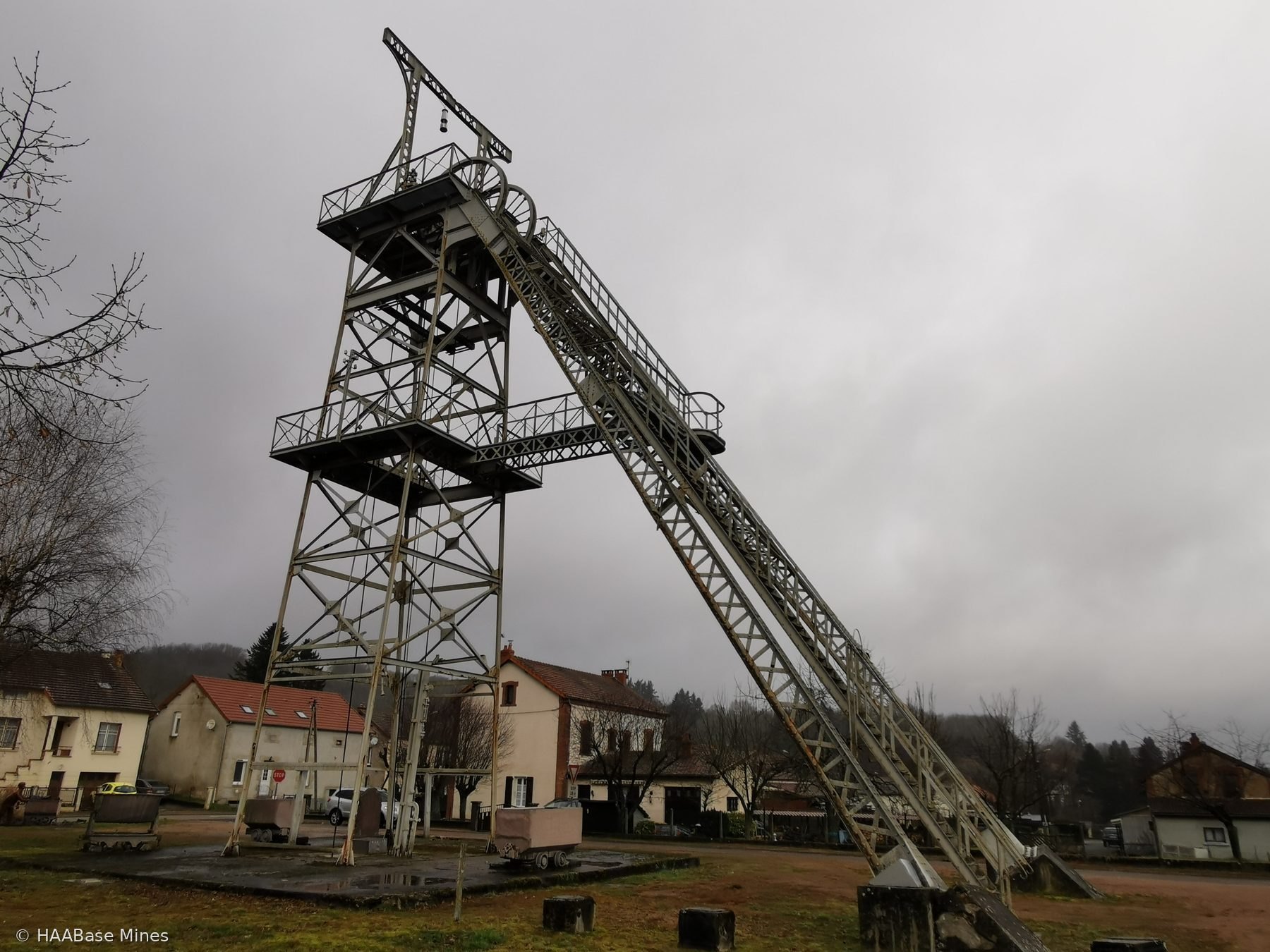
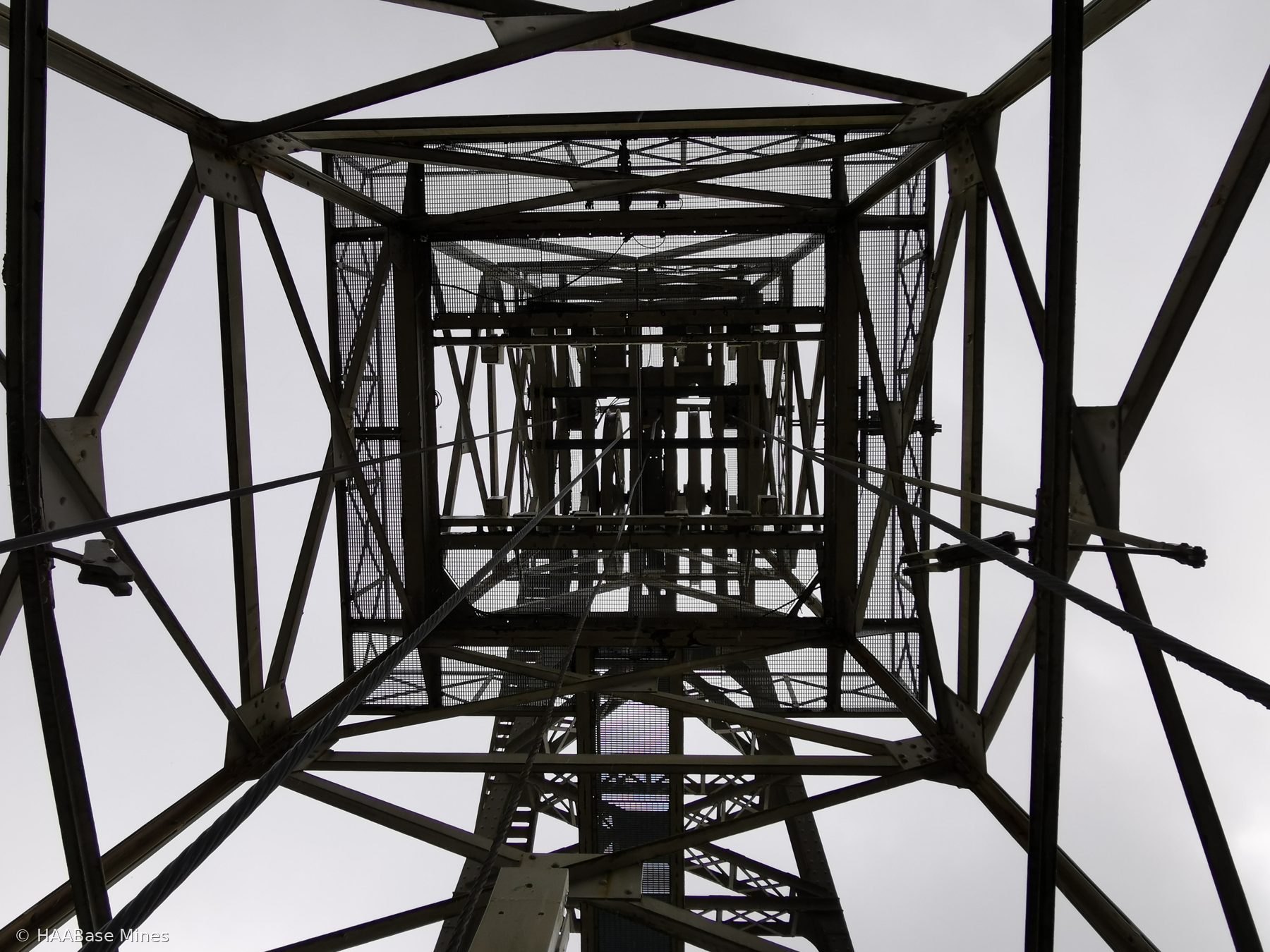
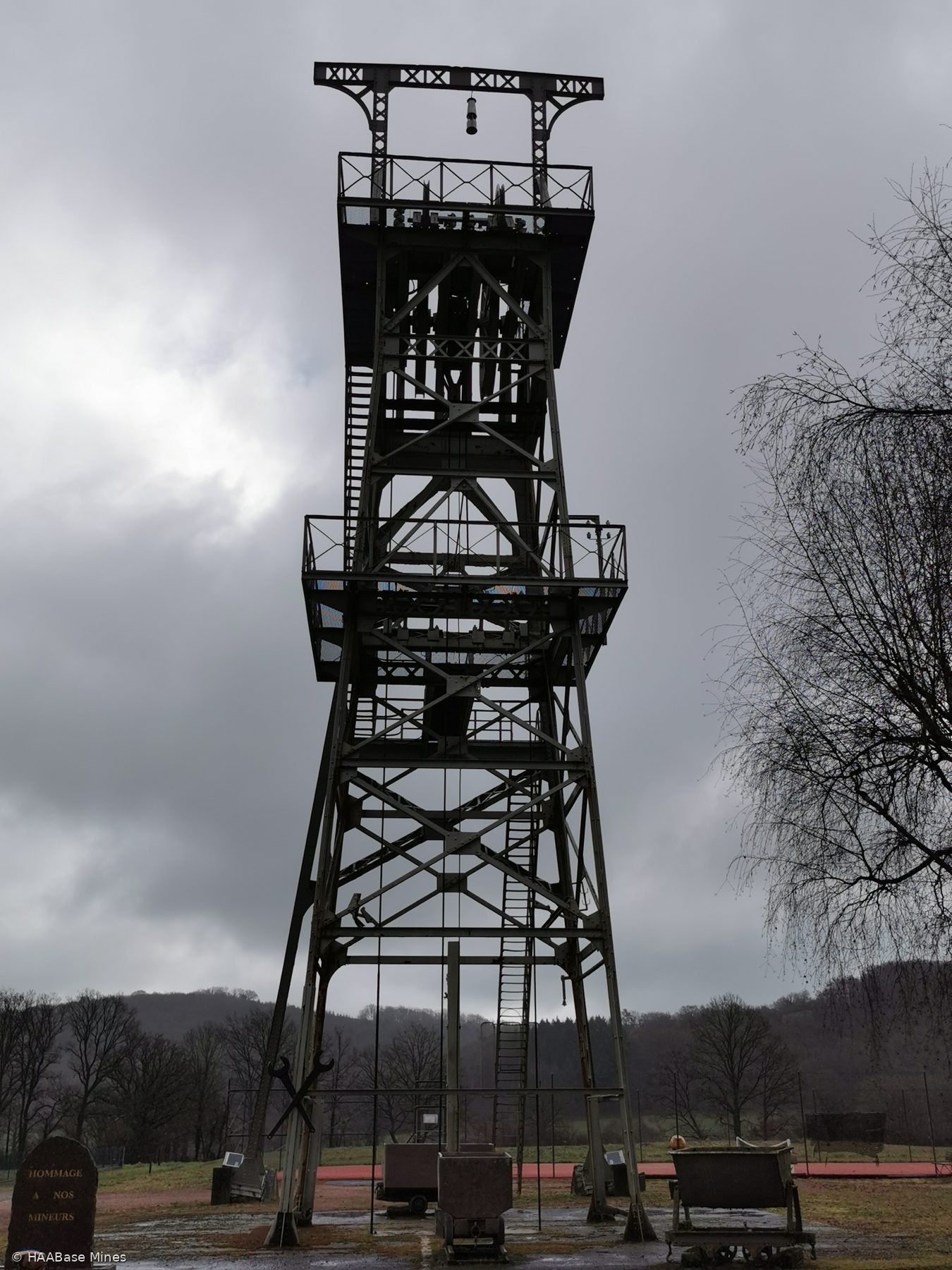
Site overview

The Mine de La Bouble takes its name from the river Bouble, which runs through the coal basin of Saint-Éloy-les-Mines in the Puy-de-Dôme département. Coal was already known in the area from the eighteenth century. The southern part of the basin — the concession La Bouble — was prospected by a syndicate in the later nineteenth century.

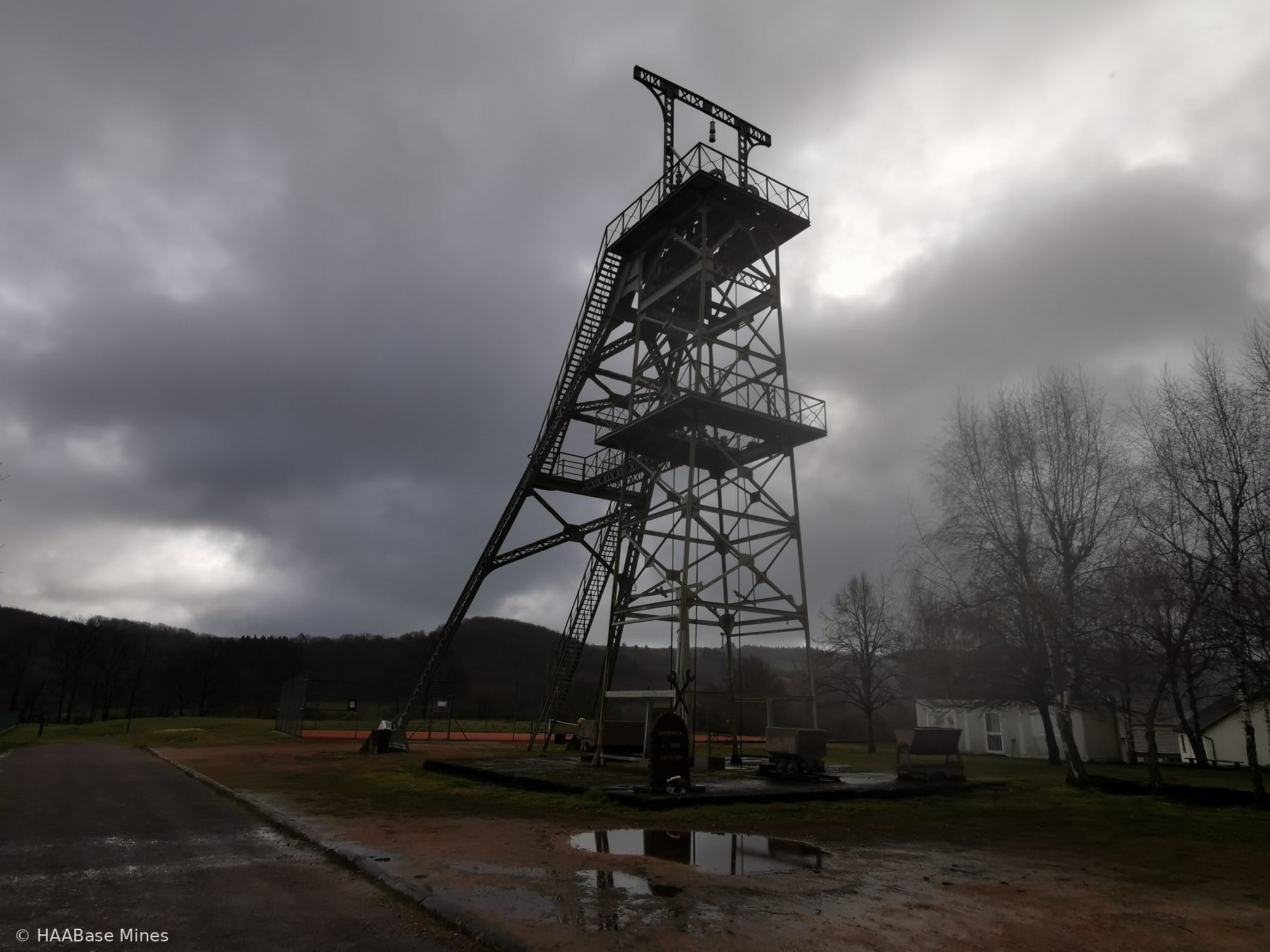
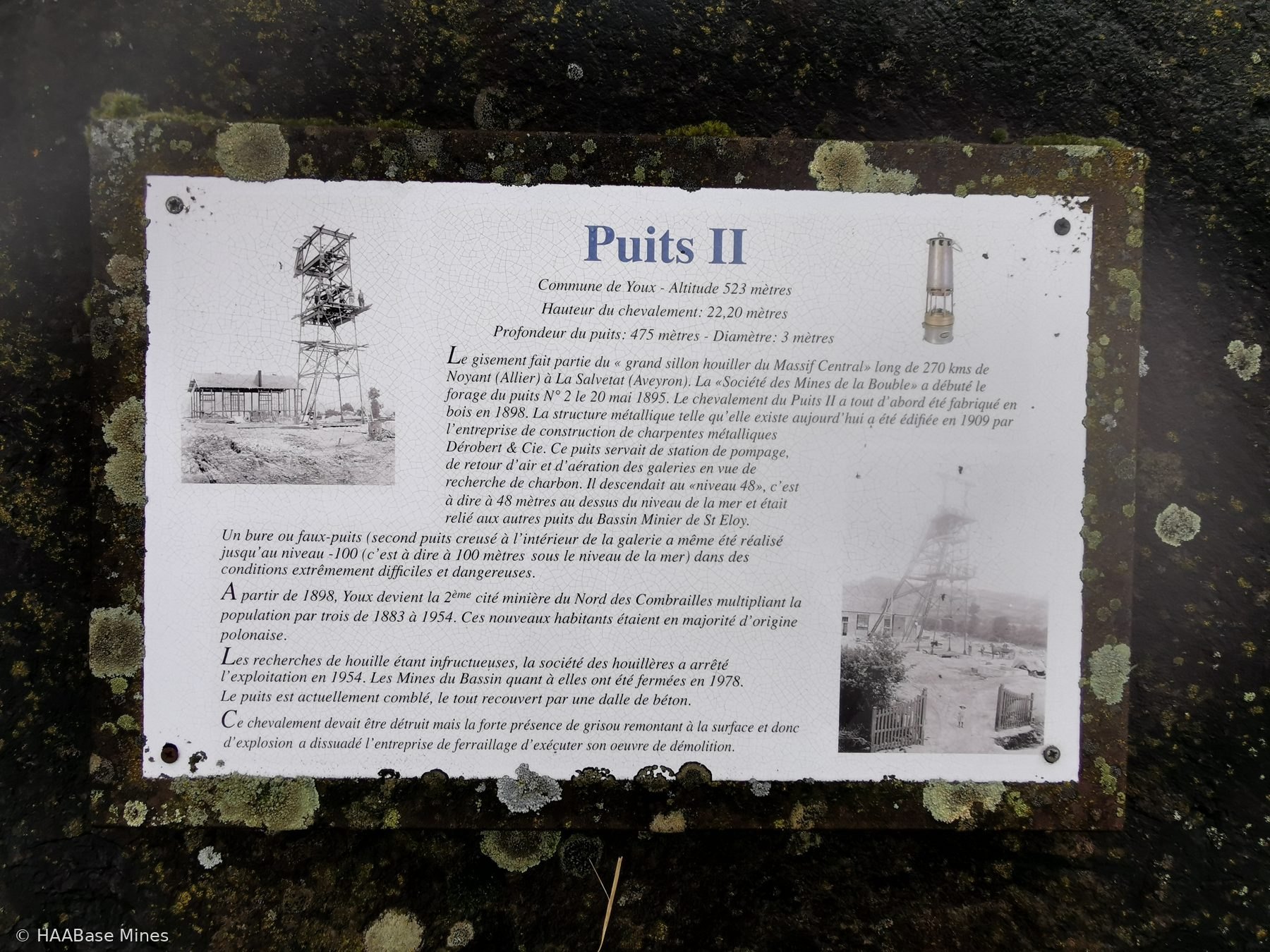
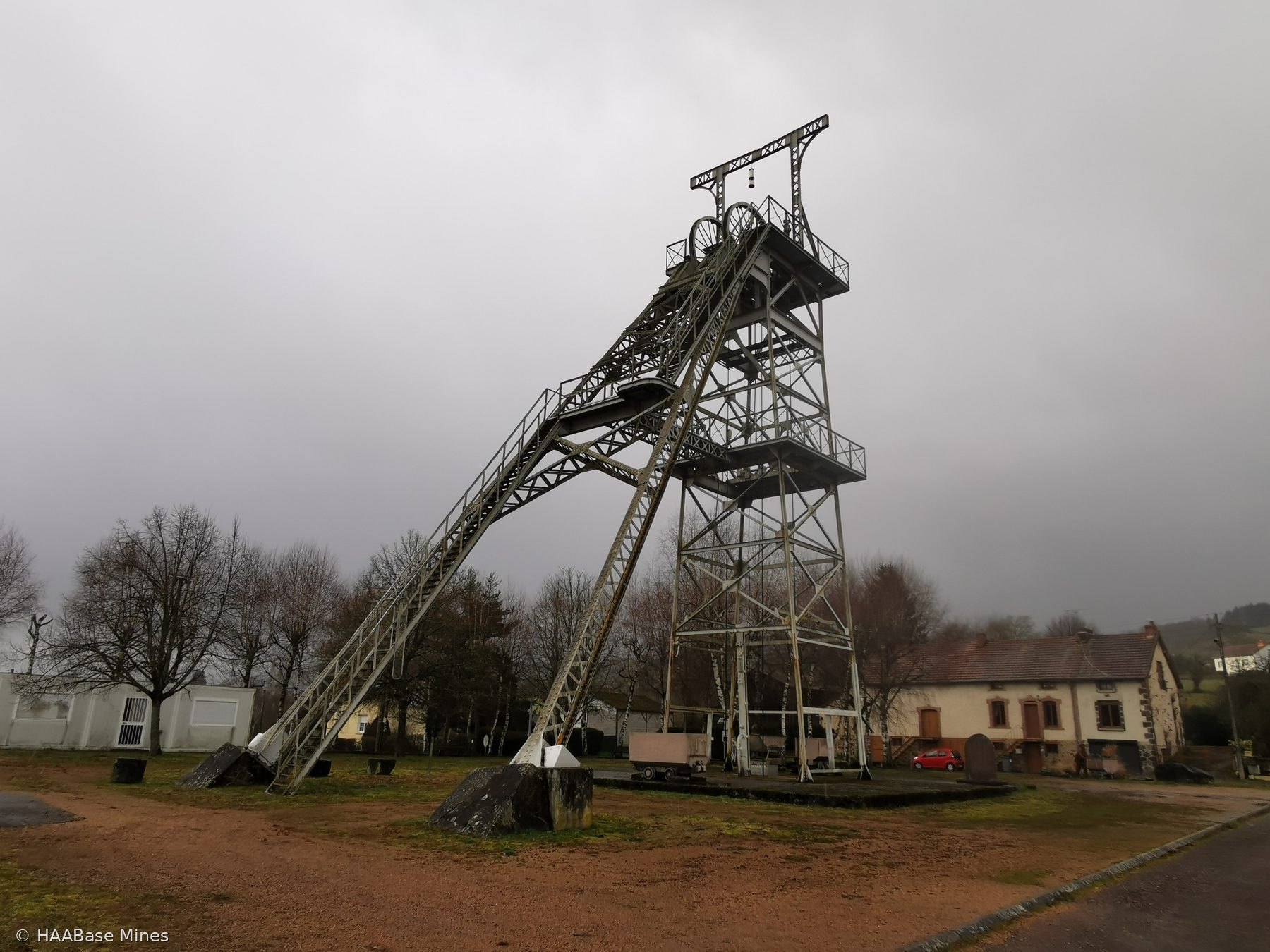
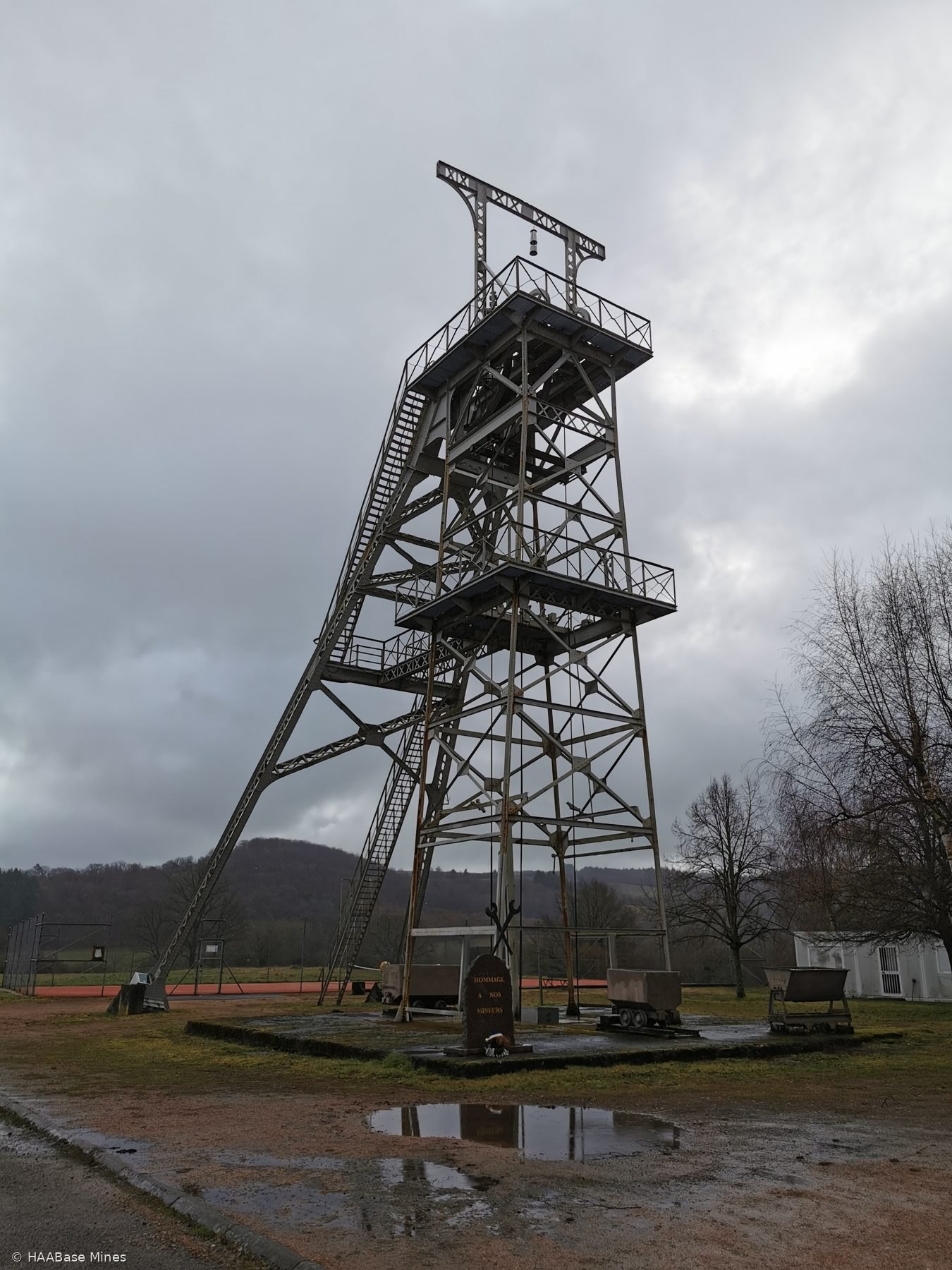
The Société des Mines de la Bouble sank puits n°2 on 20 May 1895. A wooden headframe was erected over the shaft in 1898 and replaced in 1909 by a metal structure built by the firm Derobert et Compagnie, which stands today at 22.20 metres. The shaft was 3 metres in diameter and reached a depth of 475 metres below surface.

It functioned as a pumping station, return-air and ventilation shaft for the mining galleries. By decree of 26 August 1898 the Syndicat de Recherche became the Société anonyme des Mines de la Bouble. Following the nationalisation of the French coal industry in 1946, the La Bouble workings were grouped with those of Saint-Éloy under the Houillères du Bassin d'Auvergne.

The La Bouble operations were halted in 1954. The headframe survives freely accessible.

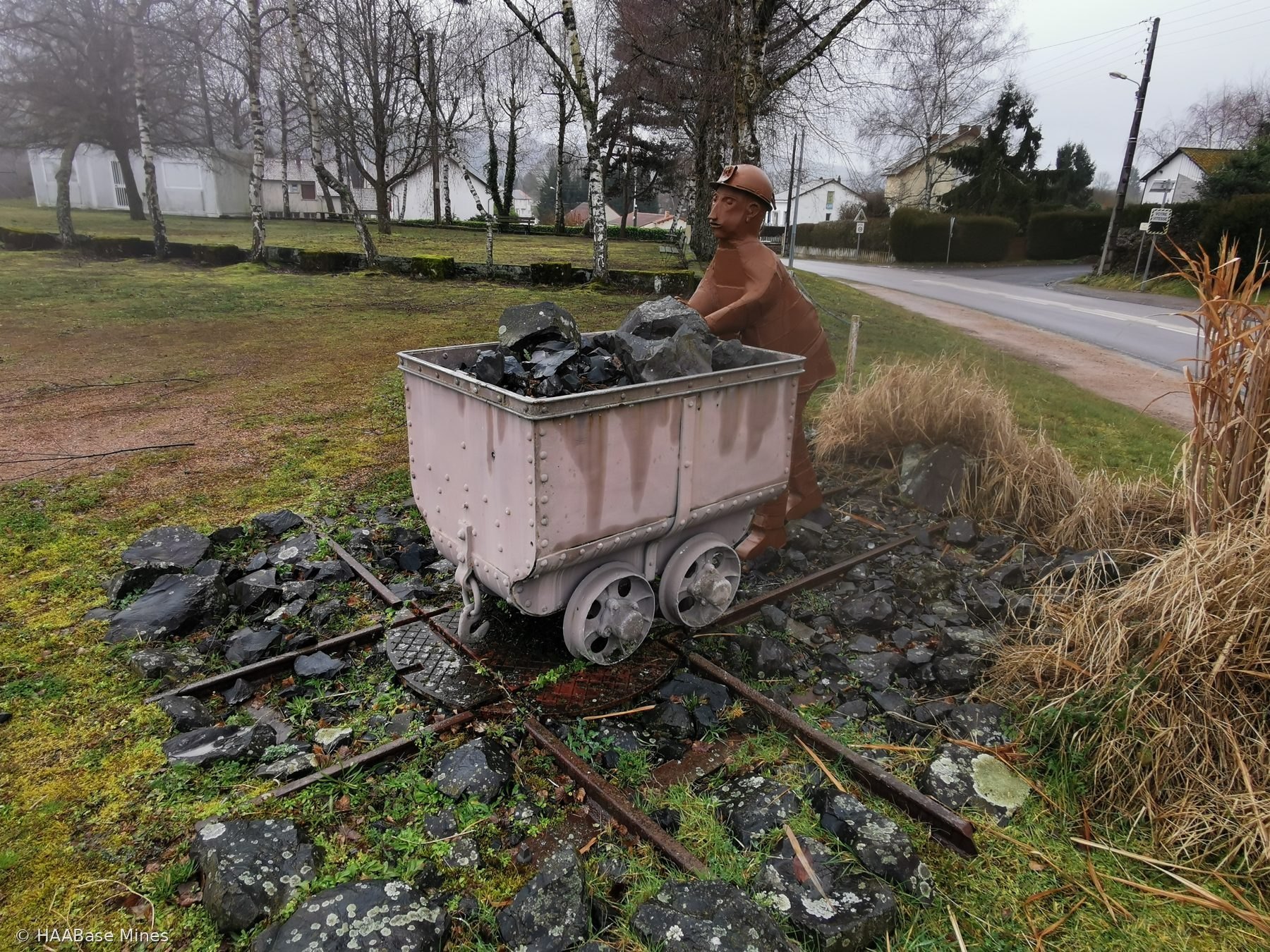
Set in a small town valley landscape, the surviving headframe stands in open ground as an isolated but still clearly legible remnant of the former mine.

Map & photo

Mine de La Bouble — Puits n° 2 mine headframe or winding tower site
Photograph taken: 17 February 2026
Map markers and directions links are provided for location reference only and do not indicate public access or permission to enter a site.

History

Coal was already known in the Saint-Éloy basin from the eighteenth century, exploited informally by local peasants from around 1768. In the southern part of the basin, the concession La Bouble was explored in the later nineteenth century by a Syndicat de Recherche. Despite opposition from the neighbouring Compagnie des Forges de Châtillon-Commentry, the Syndicat obtained its concession by decree of President Félix Faure signed at Le Havre on 26 August 1898.

The entity had already become, on 22 February 1898, the Société anonyme des Mines de la Bouble. The concession covered the southern part of the Saint-Éloy basin, the area known as the "Nouvelle Mine" as distinct from the northern "Vieille Mine" operated by Châtillon-Commentry. Sinking of puits n°2 — later referred to also as the puits de Youx, since it was located in the commune of Youx — had been started by the Société des Mines de la Bouble on 20 May 1895, before the formal concession was granted.

The shaft had a diameter of three metres and ultimately reached a depth of 475 metres (level 48, being 48 metres above sea level). An auxiliary bure was also sunk to reach the level of minus 100 metres. A first wooden headframe was constructed over the shaft in 1898.

In 1909 this was replaced by the metal structure built by the firm Derobert et Compagnie which stands today at 22.20 metres height. The shaft served as a pumping station (puits d'exhaure) and for return air and ventilation of the exploration galleries. Puits n°1 of the La Bouble operations, known as puits Tollin after the engineer who conducted the initial surveys, was sunk in 1895 and eventually deepened to 400 metres; it confirmed the coal seam that led to the construction of the puits Saint-Joseph by the neighbouring Châtillon-Commentry company.

Other shafts in the La Bouble division included puits 4 and puits 5. The Bouble concession produced coal, including charbon maigre. By the first decade of the twentieth century, production from the La Bouble mines reached 231,000 tonnes in 1917 with 890 miners.

Following the nationalisation of the French coal industry in 1946, the La Bouble concession was grouped with the Saint-Éloy mines under the Houillères du Bassin d'Auvergne, forming the "Groupe de Saint-Éloy/Bouble" and combining the Nouvelle Mine to the south with the Vieille Mine to the north. A decision was subsequently taken to concentrate all operations on the Saint-Éloy side, in particular on the puits Saint-Joseph. The workings of the La Bouble division were halted in 1954.

Puits n°2 at Youx was scheduled for demolition after closure but the strong presence of firedamp rising to the surface prevented the demolition contractor from carrying out the work. The metal headframe consequently survived. It stands today as a freely accessible reminder of the mining past of the commune of Youx, which had become the second mining town in the Nord des Combrailles between 1883 and 1954, with its population multiplying threefold during this period.

From 1898 Youx was significantly shaped by the mining activity centred on puits n°2.
Timeline

1895
Construction

Société des Mines de la Bouble begins sinking of puits n°2 at Youx

On 20 May 1895 the Société des Mines de la Bouble began the sinking of puits n°2, located at Youx (also referred to as puits de Youx). The shaft had a diameter of three metres and would eventually reach 475 metres depth. Puits n°1 (puits Tollin) was also sunk in 1895.
1898
Legislation

Société anonyme des Mines de la Bouble formed; concession granted by decree

On 22 February 1898 the Syndicat de Recherche formally became the Société anonyme des Mines de la Bouble. By presidential decree of 26 August 1898 the concession for the southern La Bouble coalfield was granted, confirmed by evidence from puits Tollin of an exploitable seam. The first wooden headframe over puits n°2 was also constructed in 1898.
1909
Construction

Wooden headframe over puits n°2 replaced by metal structure built by Derobert et Compagnie

In 1909 the original wooden headframe over puits n°2 was replaced by a metal structure erected by the firm Derobert et Compagnie, standing 22.20 metres high. This is the structure that survives today.
1917
Operation

Production of 231,000 tonnes with 890 miners

The La Bouble mines produced 231,000 tonnes of coal in 1917, with a workforce of 890 miners, reflecting the peak wartime output of the concession.
1946
Legislation

Nationalisation; La Bouble grouped with Saint-Éloy under Houillères du Bassin d'Auvergne

Following the nationalisation of French coal mines in 1946, the La Bouble concession was grouped with the Saint-Éloy workings under the Houillères du Bassin d'Auvergne as the "Groupe de Saint-Éloy/Bouble".
1954
Closure

La Bouble workings halted; headframe survives due to firedamp

In 1954 the workings of the La Bouble division were halted as operations were concentrated on the puits Saint-Joseph at Saint-Éloy-les-Mines. Puits n°2 at Youx was scheduled for demolition but the strong presence of firedamp rising from the shaft prevented the demolition contractor from proceeding, leaving the metal headframe standing.

Sources and records

French Wikipedia: Houillères de Saint-Éloy-les-Mines
French Wikipedia: Houillères d'Auvergne
Combrailles Auvergne Tourisme: Headstock Mine II – Chevalement du Puits II
Auvergne Destination: Chevalement du Puits II
Auvergne-Rhône-Alpes Tourisme: Headstock Mine II
Exxplore.fr: Les Houillères d'Auvergne
Apphim.fr: Musée de la Mine Saint-Eloy (63) – puits de Youx section
Patrimoine-minier.fr: Auvergne section
Archives départementales du Puy-de-Dôme: Mines de Saint-Éloy-les-Mines et La Bouble
This researched site record is part of the HAABase Mines database. Normal personal research and browsing is welcome. Automated bulk extraction, republication, or harvesting of site text and images is not permitted without written consent.