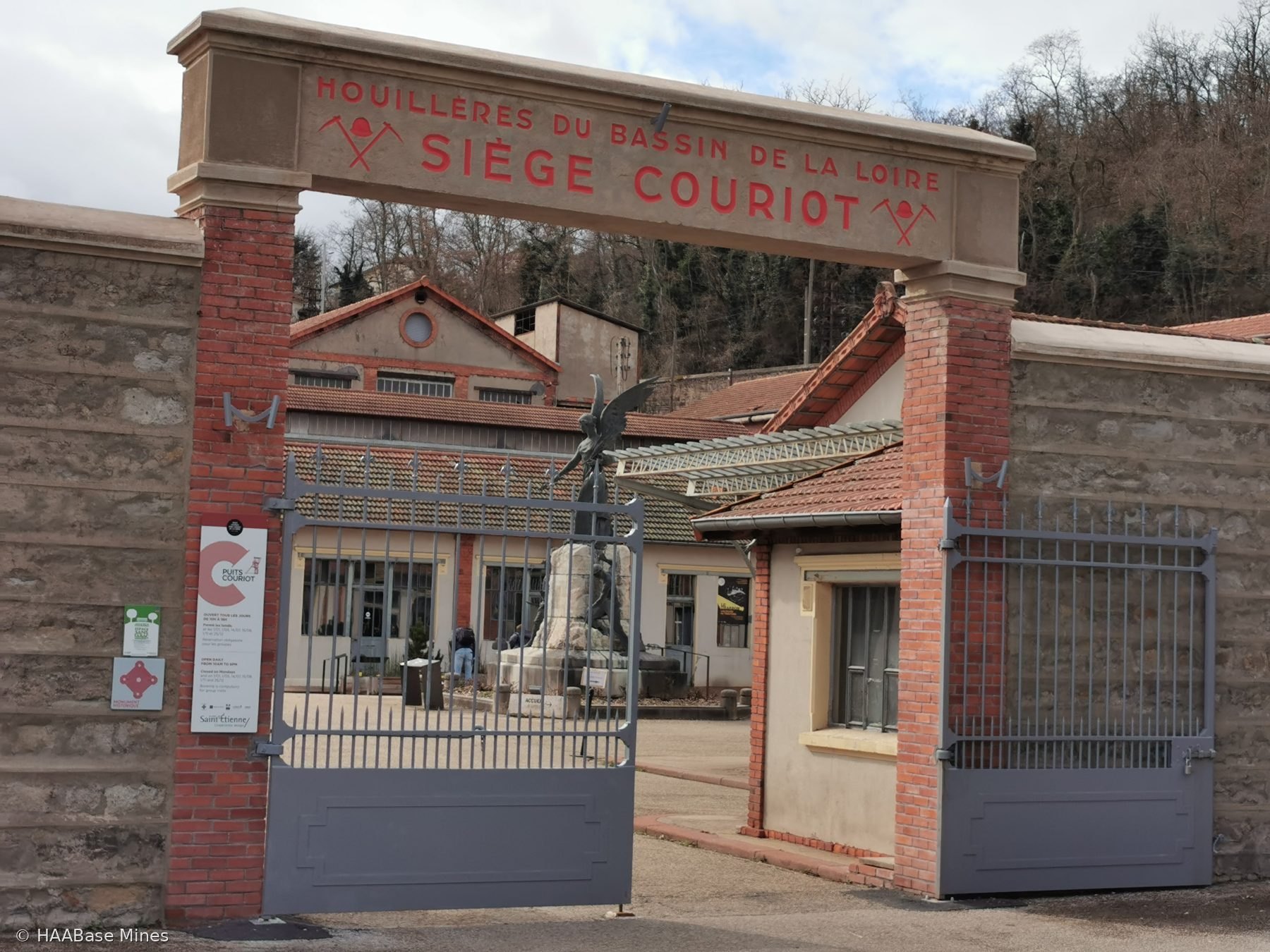
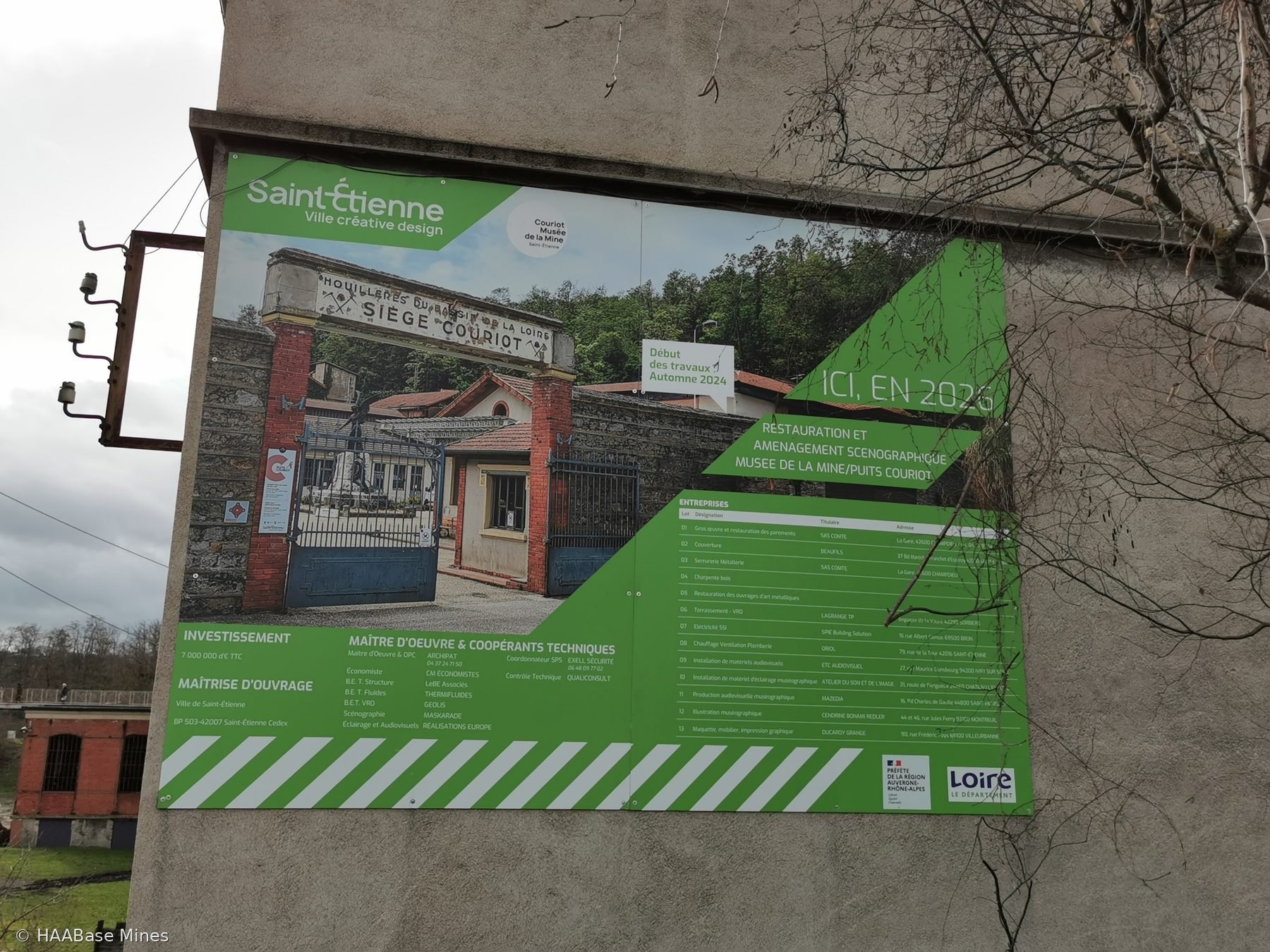
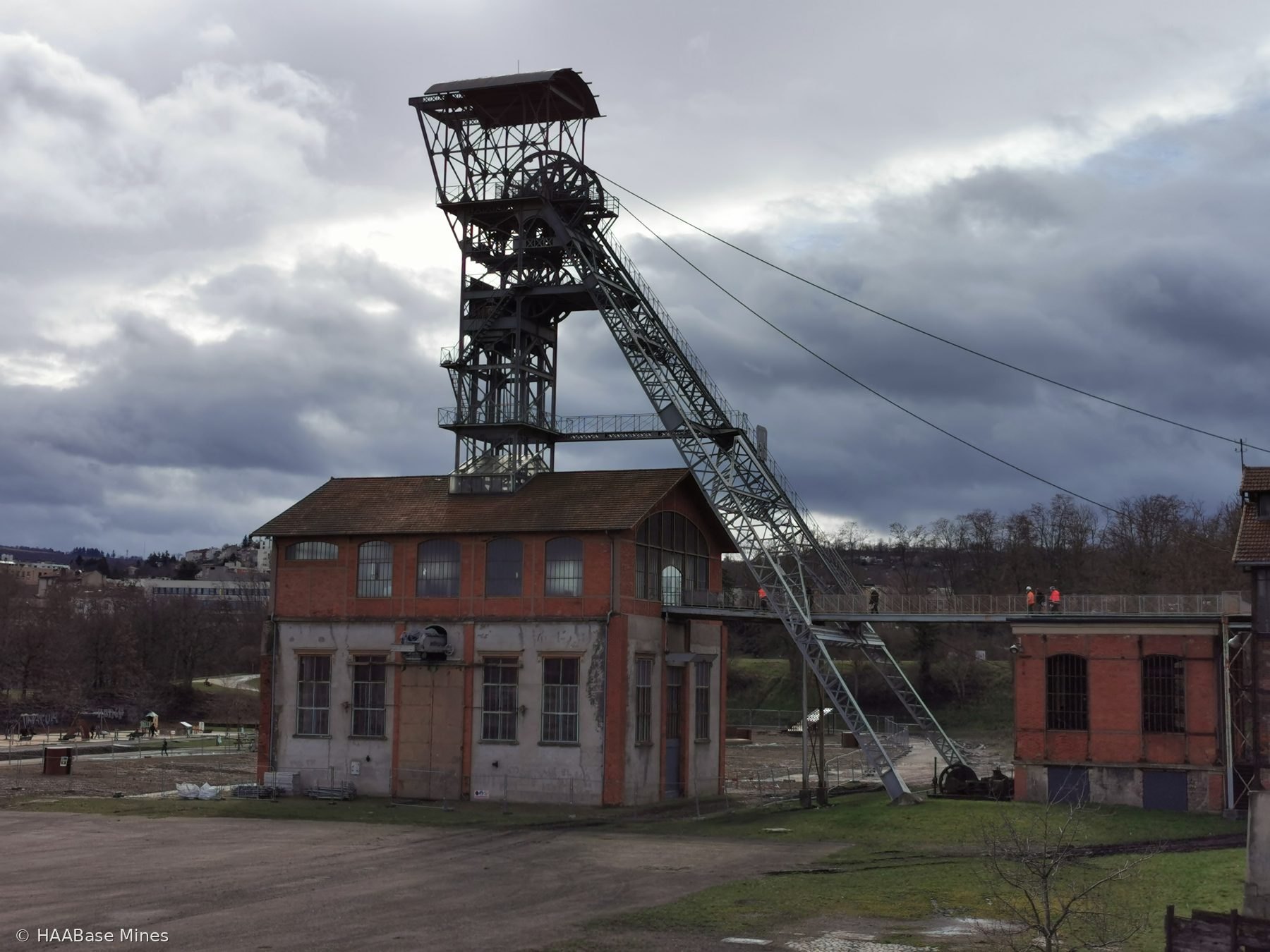
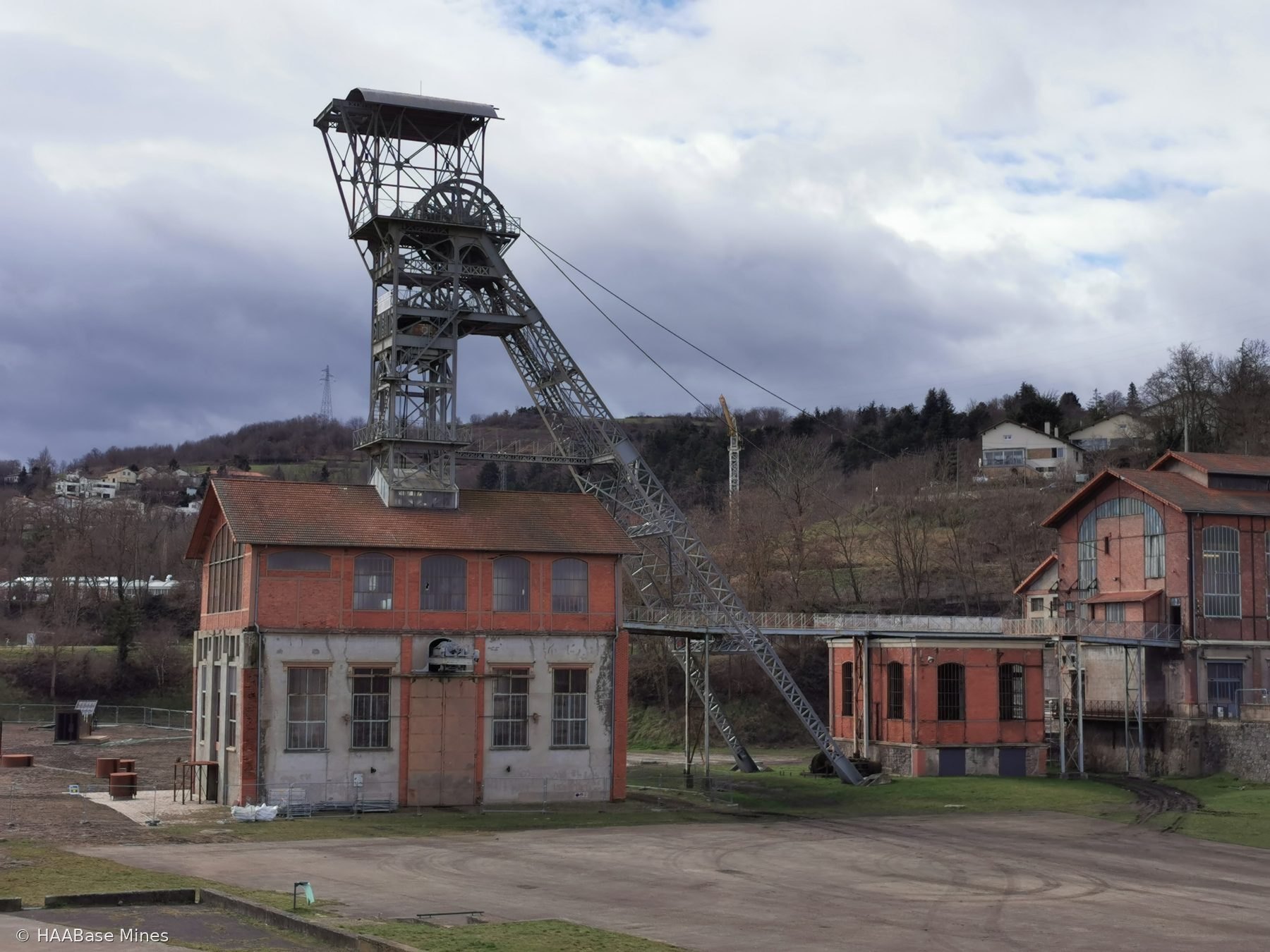
Site overview

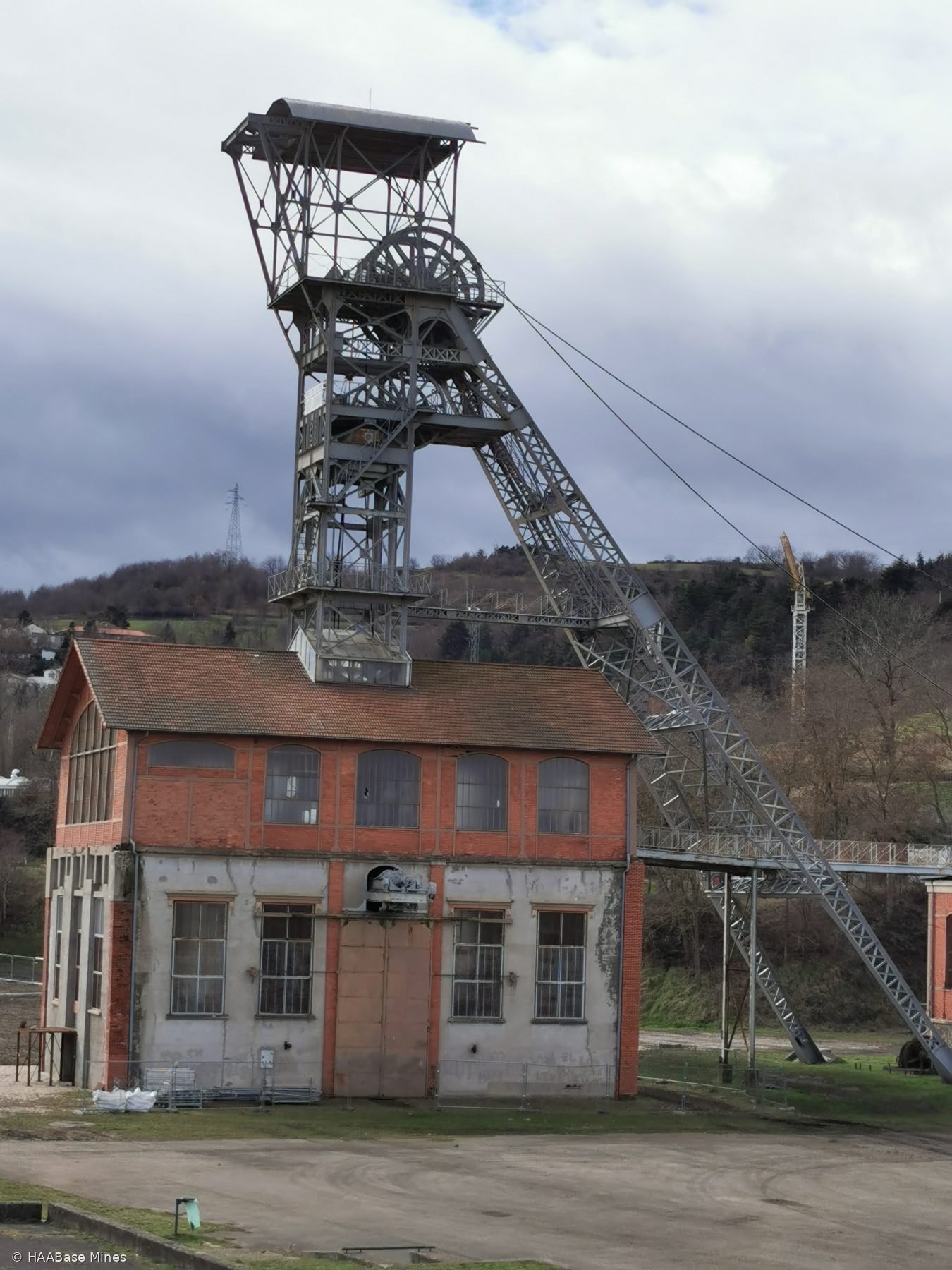
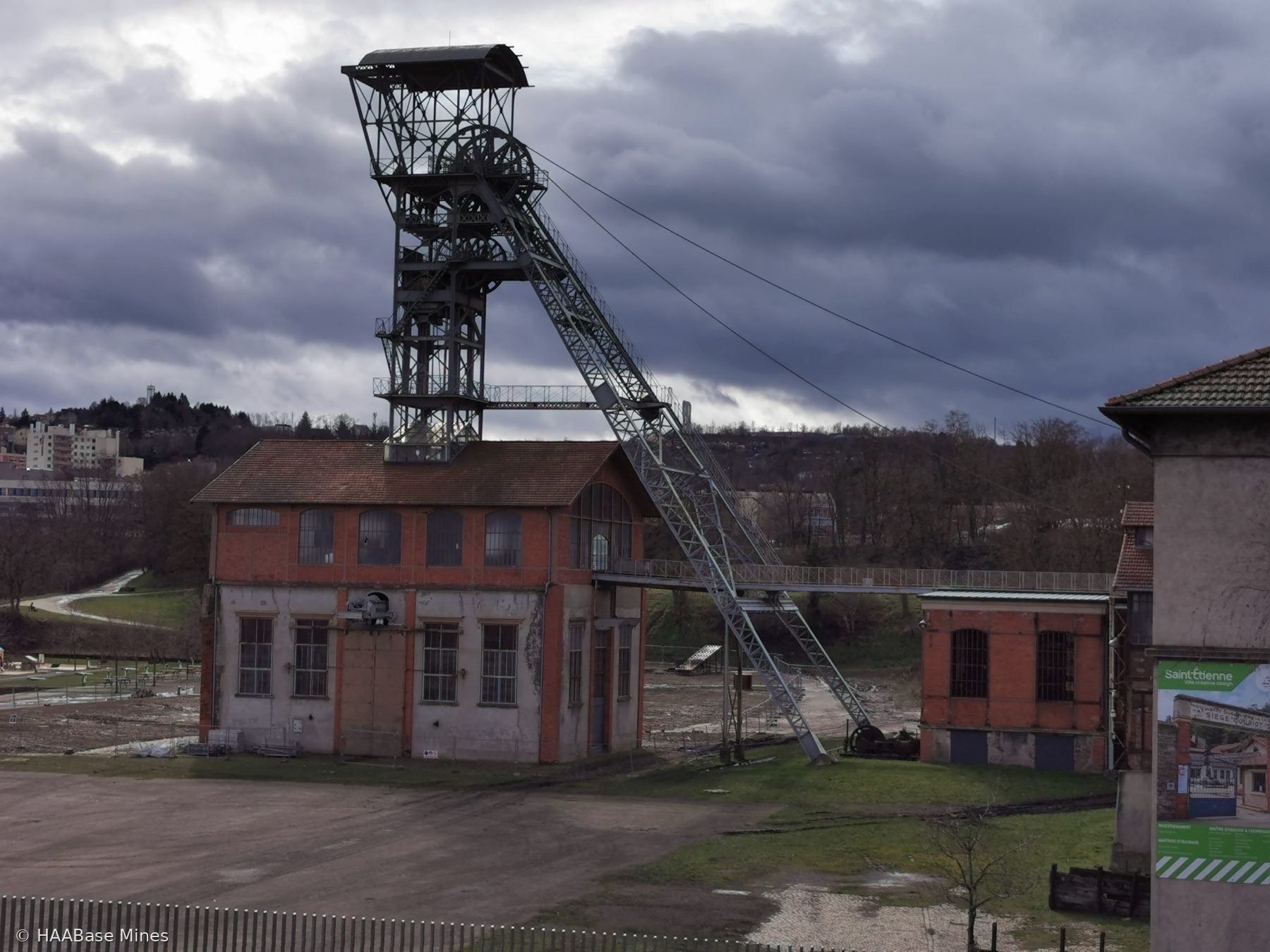
The Puits Couriot in Saint-Étienne is the most complete surviving site of the stéphanois coal basin. Its history begins with the puits Châtelus, sunk from 1850, and continues with the decision in 1907 by Henry Couriot, engineer-director and later president of the Société anonyme des Mines de la Loire, to sink a new deep shaft. The fonçage of this puits Châtelus III, later renamed puits Couriot in 1917, began in 1907 and reached 727.25 metres in 1914; the shaft was brought into service in 1919.

The fosse became the foremost extraction site of the stéphanois basin, serving as a concentration shaft from 1936 with a capacity of 900,000 tonnes per year. Extraction ceased progressively between 1965 and the definitive closure of 5 April 1973. The Musée de la mine opened on the site in 1991; the first stone was laid in 1988.

The site was inscribed as a monument historique by arrêté of 22 April 2010, then classified by arrêté of 26 April 2011. The Parc Joseph Sanguedolce and new museum spaces opened in 2013 and 2014.

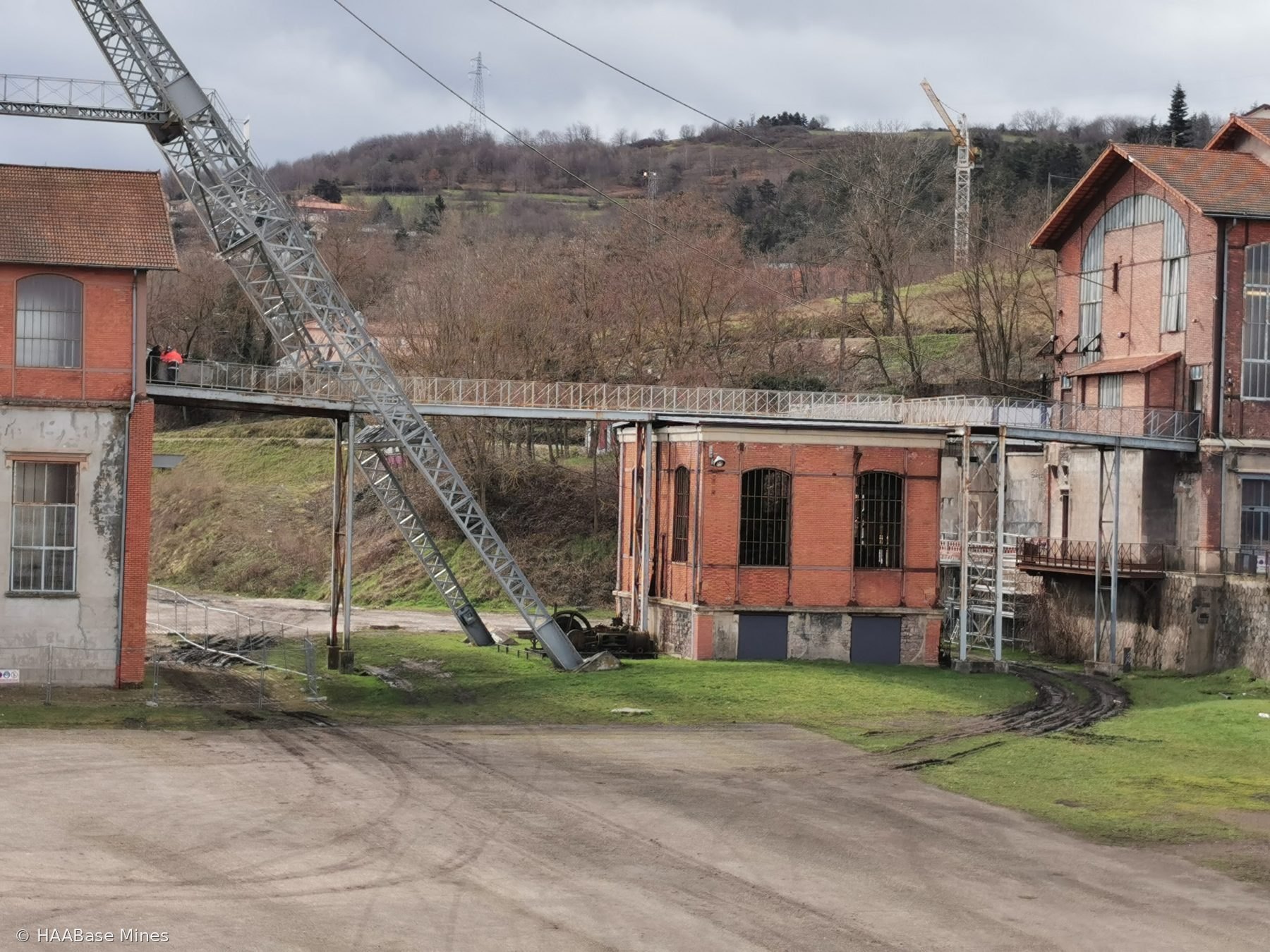
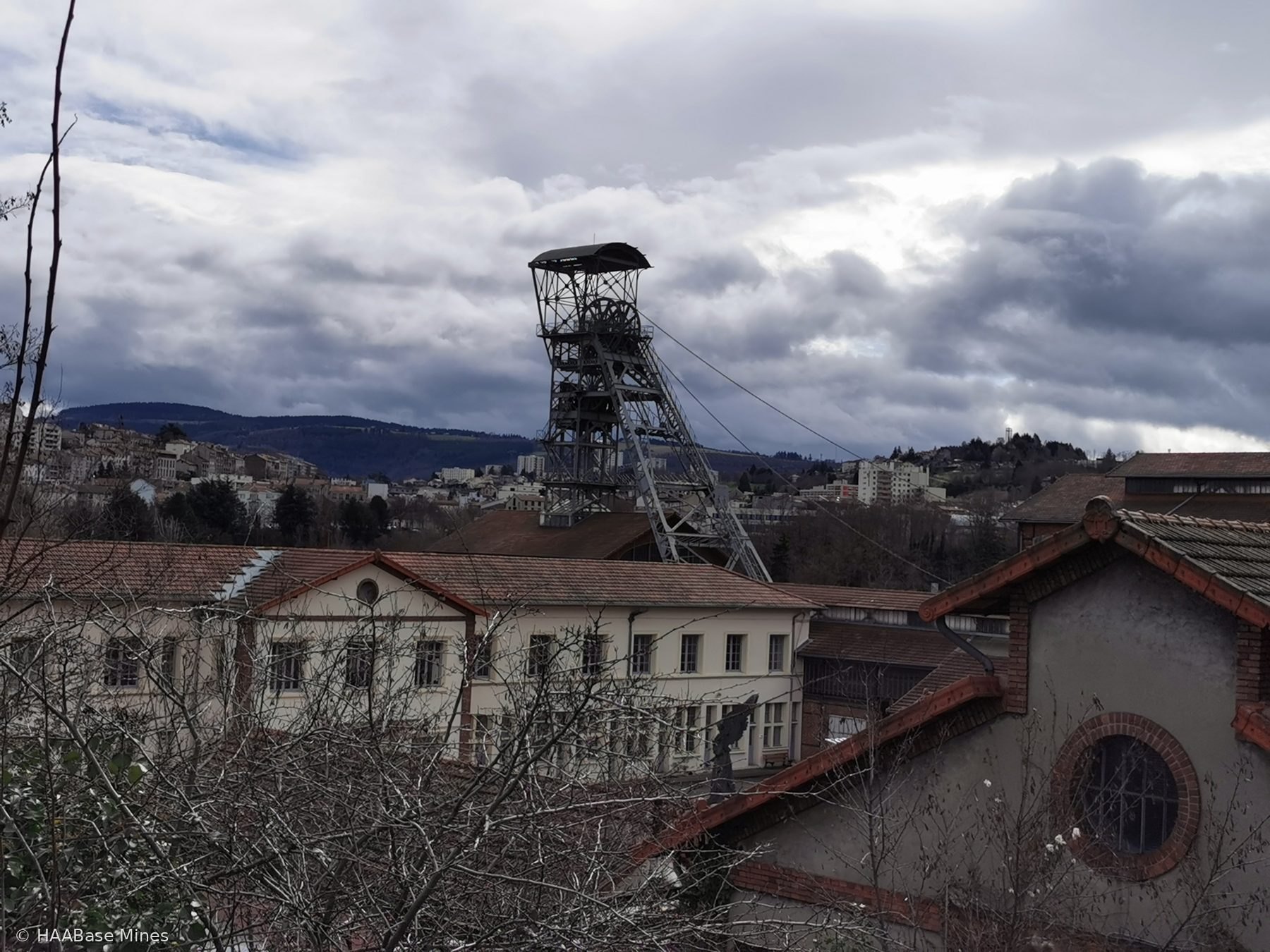
The site lies within the urban fabric of Saint-Étienne, where the surviving buildings and headframe rise prominently above the surrounding city and still read as a substantial historic complex.

Map & photo

Puits Couriot mine headframe or winding tower site
Photograph taken: 19 February 2026
Map markers and directions links are provided for location reference only and do not indicate public access or permission to enter a site.

History

The Bassin de Saint-Étienne — stretching some fifty kilometres from Firminy to Rive-de-Gier — has been exploited for coal since the Middle Ages, with the earliest documented citation of a coal mine dating to 1257. The site of the future puits Couriot was occupied from 1850 onwards by the puits Châtelus, sunk by the Compagnie des Mines de la Loire. In 1870 a second shaft, puits Châtelus II, was sunk.

In 1887 a firedamp explosion in the workings between Châtelus I and the puits Culatte killed 79 miners; Châtelus I was subsequently closed. The Société anonyme des Mines de la Loire acquired the concession and the stricken site in June 1893. Châtelus I was modernised and restarted in 1899.

In April 1907 the decision was taken to sink a new and much larger shaft — Châtelus III — with a diameter of 5.10 metres, approximately twice the width of the earlier puits, intended to reach coal at 700 metres depth. The fonçage began in real earnest at the end of March 1908. The shaft reached 721 metres in March 1914, at which point the engineers decided not to deepen it further; the final depth was 727.25 metres.

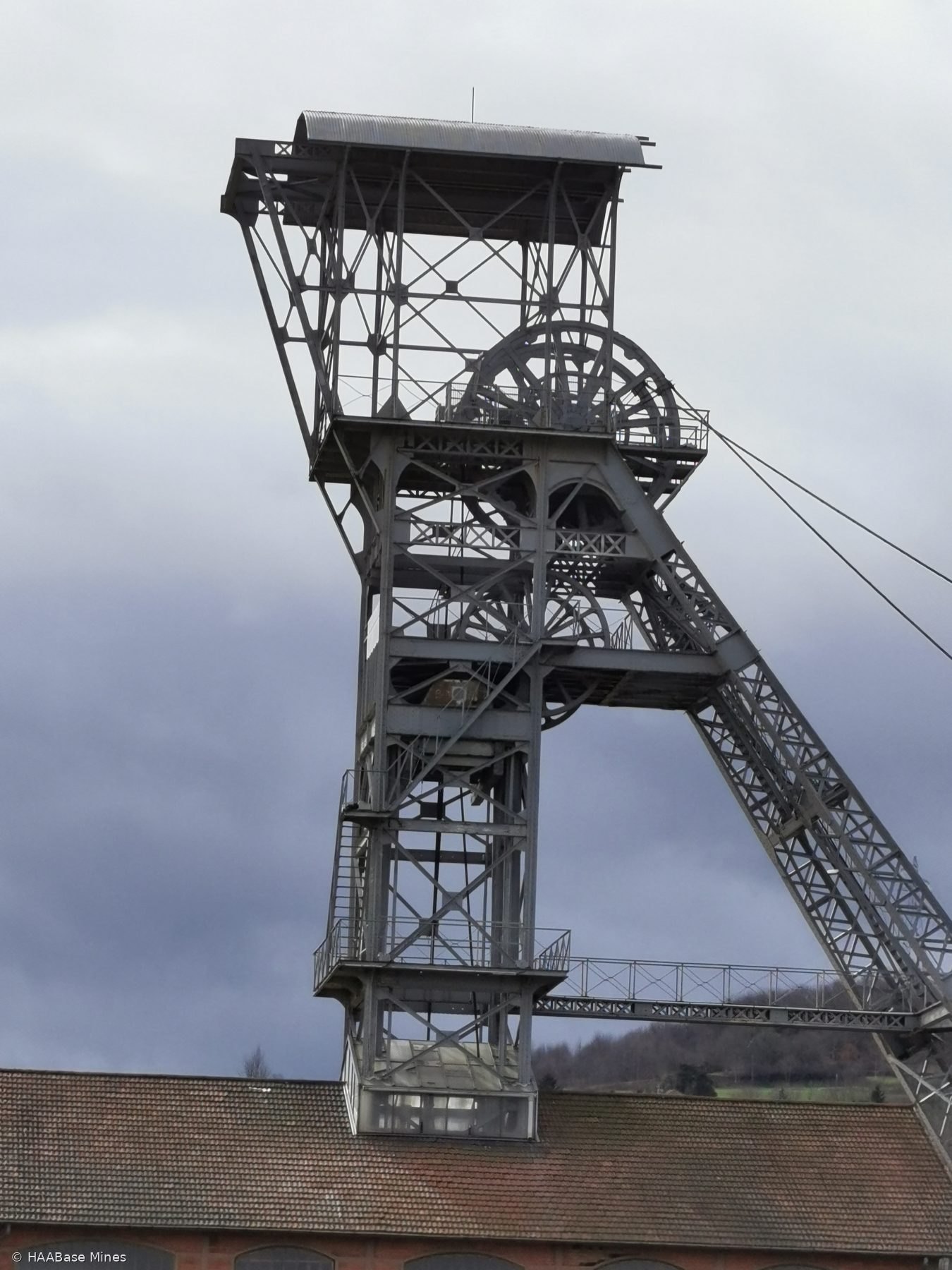
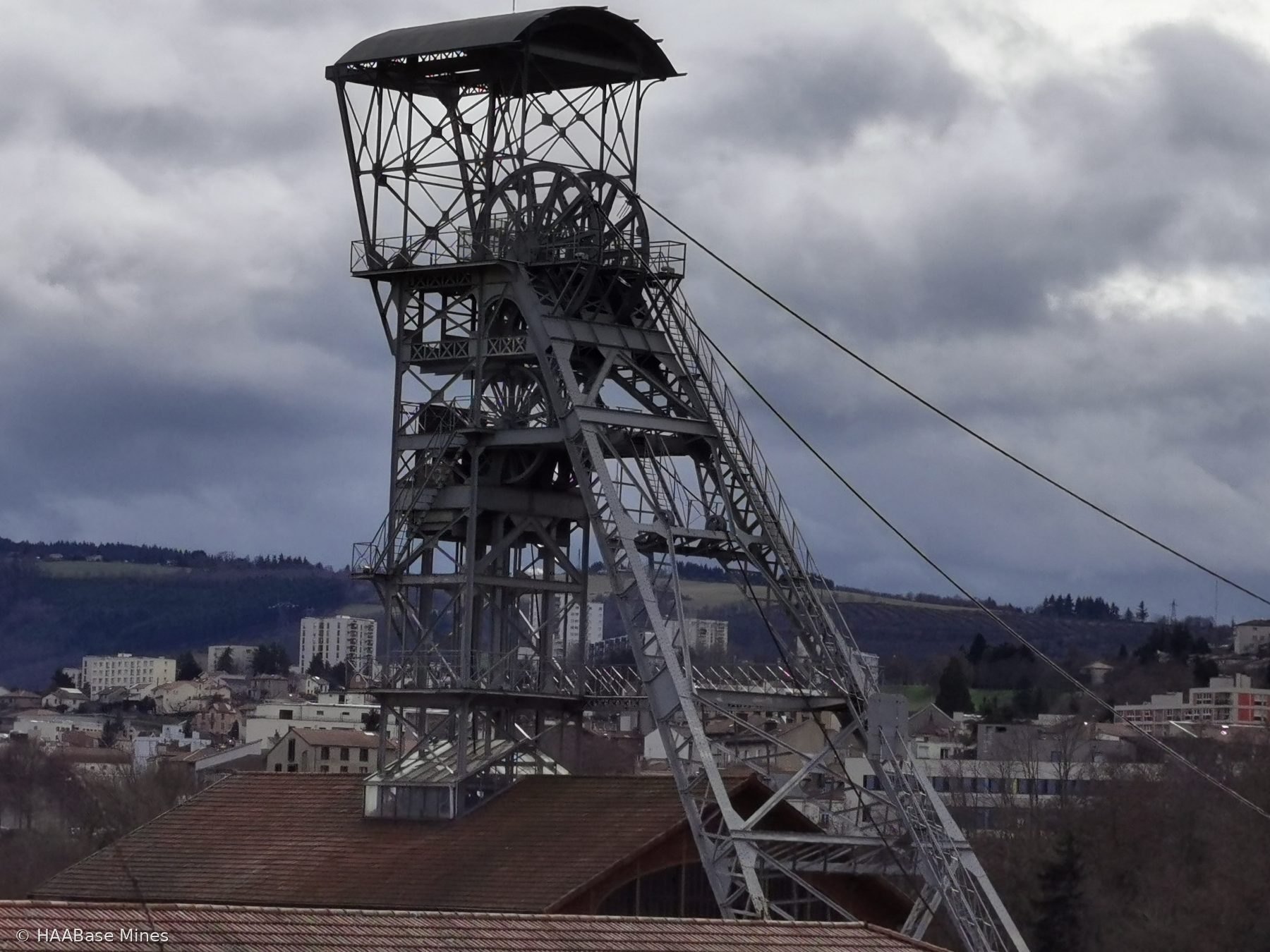
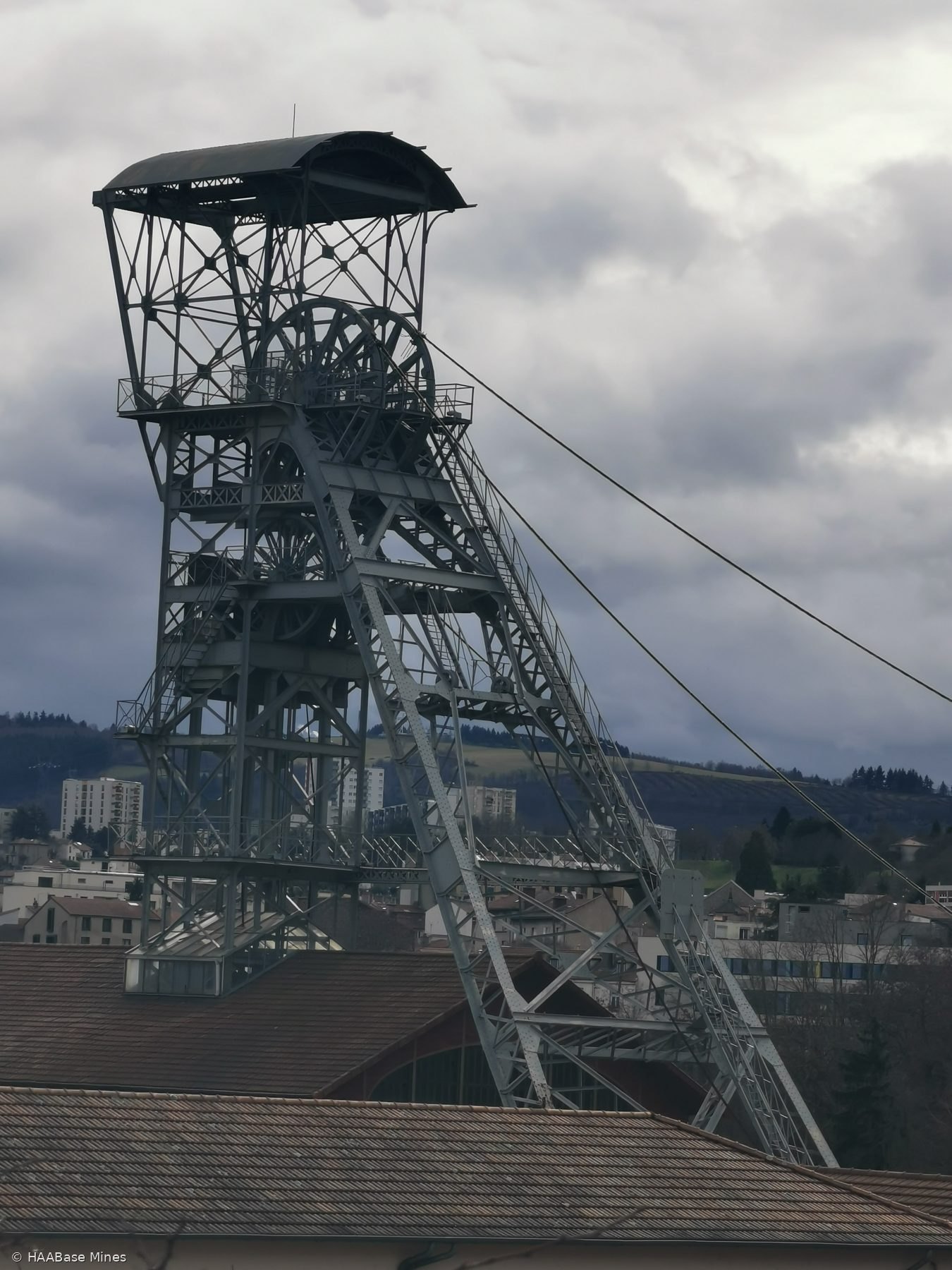
The metal chevalement, one of the first in the stéphanois basin to be built in metal, was assembled nearby and installed over the shaft opening. Work on the shaft was interrupted by the outbreak of war in August 1914. Châtelus III was renamed puits Couriot in 1917 in honour of Henry Couriot, who had become president of the company in 1911; he died in 1924.

The recettes were completed in 1918 and 1919, and the puits Couriot was brought into full service at the end of 1919. With over 1,000 miners after the First World War, Couriot was the deepest and widest shaft in the stéphanois basin, and could process 300,000 tonnes of coal per year. Alongside the shaft, a complex of industrial installations was assembled: a central electricity station, a battery of coke ovens, a gas distillation plant, and a steel works.

A major workers' cité, the cité de Chavassieux, was progressively built two kilometres away. Between 1920 and 1924 the site acquired a fine washery, electric locomotives, and a second compressor building. The S.A. des Mines de la Loire was reorganised in 1929 when the Houillères de Saint-Étienne were taken over in liquidation.

In 1928 puits Châtelus I was rebuilt with a new concrete chevalement and became a service shaft; puits Châtelus II was abandoned and backfilled. By 1934 Couriot concentrated the remontée of coal from the deep seams. In 1936 major works raised the shaft's capacity to 900,000 tonnes per year — nearly a quarter of the total production of the stéphanois basin — and the extraction machine was modernised with a new Koepe pulley system.

Couriot thus became a puits de concentration in the fullest sense. The first crassier began to form from 1938, growing at more than 15 metres per year; it exceeded 150 metres in height by the late 1940s. In March 1941 Marshal Pétain visited the site and delivered a speech announcing the main lines of his Charte du travail.

Following the Liberation, Couriot played a crucial role in France's reconstruction through the Bataille du charbon. The nationalisation of the coal industry in 1946 brought the site under the management of the Charbonnages de France. A mining strike in October 1948 brought the garde mobile to occupy the site.

The central electricity station and the battery of coke ovens ceased operation in the early 1950s. A second crassier was begun from 1947; both crassiers became prominent landmarks of the stéphanois skyline. Extraction at Couriot ceased in 1965 as production was concentrated at the puits Pigeot in the Ondaine valley.

The washeries were halted in 1965 and the concrete chevalement of Châtelus I was demolished in 1966. Puits Couriot was definitively closed on 5 April 1973, when the cables were cut; the last team descended to extinguish the pumps ascended via the puits Rochefort. On that date Couriot was the last active shaft on the commune of Saint-Étienne.

The last shaft in the entire stéphanois basin, the puits Pigeot at La Ricamarie, closed in 1983. After closure, former mining employees worked to preserve what remained of the installations and lobbied industrialists and elected officials for the creation of a museum. The first stone of the museum was laid in 1988 by the mayor of Saint-Étienne.

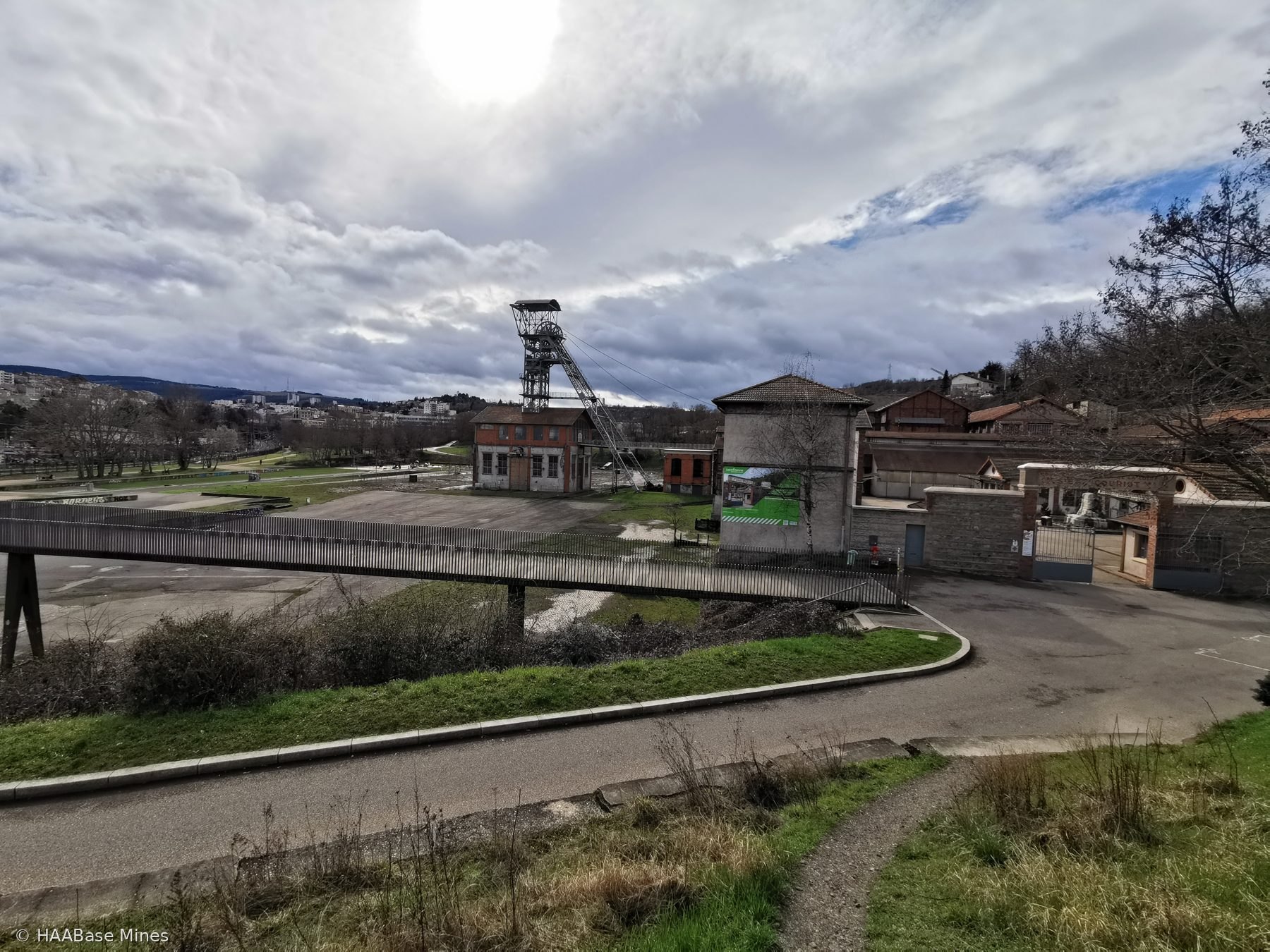
The Musée de la mine opened on the site in 1991, presenting the technical history of the mine. The site was inscribed as a monument historique by arrêté of 22 April 2010; the site was then classified as a monument historique by arrêté of 26 April 2011, covering the crassiers and their parcel, the facades and rooflines of all buildings, all other buildings in their entirety, the technical installations and machines including the chevalement, the monument aux morts, the water basins, and the entrance to the fendue des passerelles. The Parc Joseph Sanguedolce, designed by landscape architect Michel Corajoud, was delivered in 2013, and three new exhibition spaces were inaugurated in December 2014.

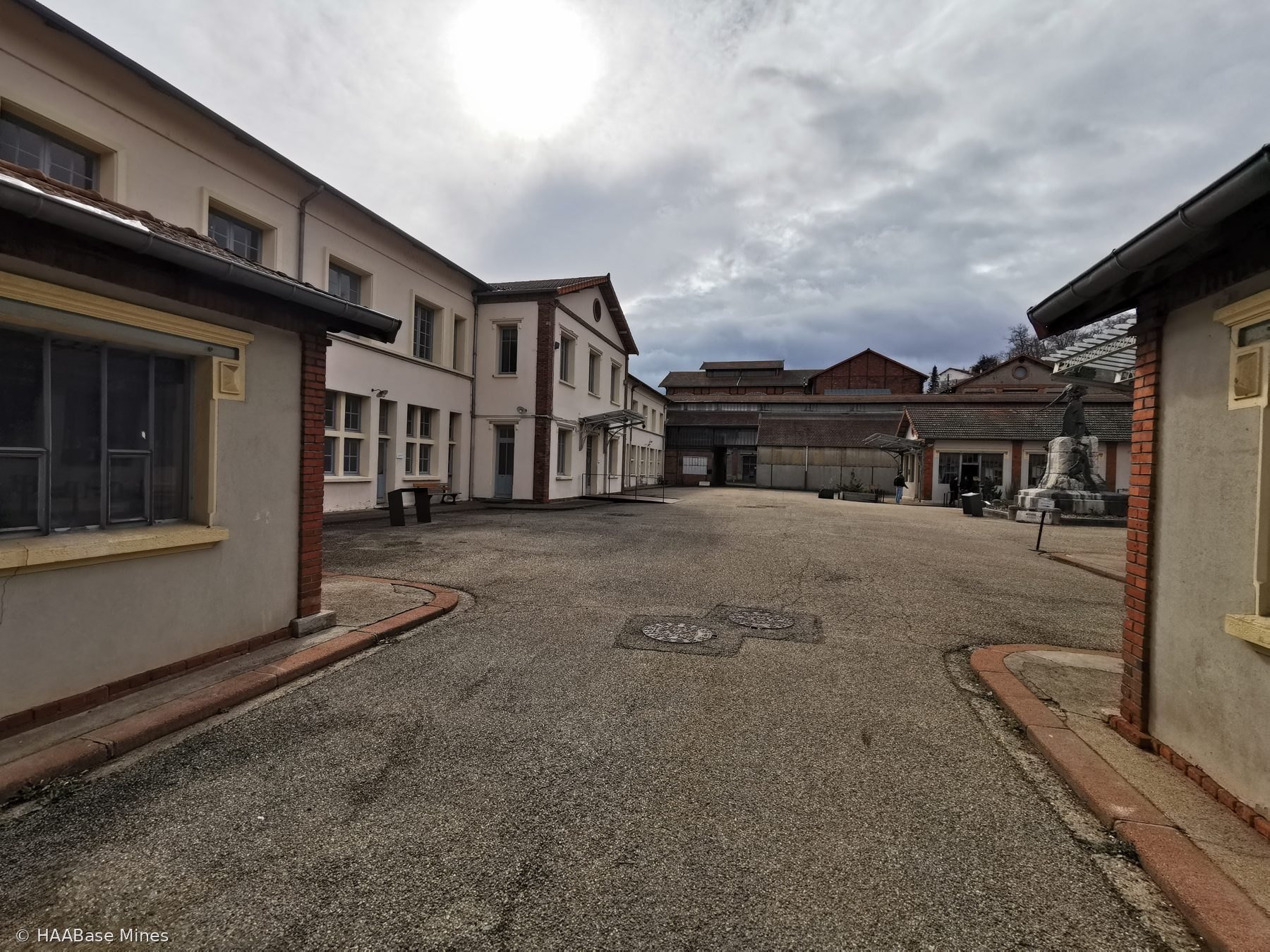
The preserved site includes the 35-metre metal chevalement, the bâtiment de la machine d'extraction, the compressor room, the lampisteries, the lavabos ouvriers (workers' washrooms), the administrative offices, the monument aux morts, and the two crassiers. The site covers 15 hectares, or 30 hectares including the crassiers.
Timeline

1850
Construction

Puits Châtelus sunk on the future Couriot site

From 1850 the puits Châtelus was sunk on the site by the Compagnie des Mines de la Loire, followed by puits Châtelus II in 1870. These were operated on the concession Beaubrun, which the Société anonyme des Mines de la Loire acquired in 1893.
1887
Operation

Firedamp explosion kills 79 miners; Châtelus I closed

In 1887 a firedamp explosion in the workings between Châtelus I and the puits Culatte killed 79 miners. Châtelus I was subsequently closed. The Société anonyme des Mines de la Loire acquired the concession in June 1893 and restarted Châtelus I after modernisation in 1899.
1907–1914
Construction

Fonçage of puits Châtelus III (future puits Couriot) begins; depth 727.25 m reached 1914

In April 1907 the decision was taken to sink a new deep shaft, Châtelus III, with a 5.10-metre diameter. The fonçage began in earnest at the end of March 1908. The shaft reached a final depth of 727.25 metres by March 1914. The metal chevalement, among the first in the stéphanois basin to be built in metal, was installed over the shaft opening. War broke out in August 1914 and interrupted further work.
1917
Construction

Puits Châtelus III renamed puits Couriot

In 1917 puits Châtelus III was renamed puits Couriot in honour of Henry Couriot (1851–1924), who had become president of the Société anonyme des Mines de la Loire in 1911. Couriot had initiated the decision to sink the new shaft and to create a fully integrated industrial complex around it.
1919
Operation

Puits Couriot brought into full service

The recettes of puits Couriot were completed in 1918–1919 and the shaft entered full service at the end of 1919. It was then the deepest and widest shaft in the stéphanois basin and could process 300,000 tonnes of coal per year, making it one of the most modern puits in Europe.
1936
Construction

Major modernisation; capacity raised to 900,000 tonnes per year; puits de concentration

New works in 1936 raised the capacity of puits Couriot to 900,000 tonnes of coal per year, representing nearly a quarter of the total production of the stéphanois basin. The extraction machine was modernised with a Koepe pulley system. Couriot became the sole central concentration shaft for all extraction in the company.
1938
Operation

First crassier begins to form from 1938

The first crassier at Couriot began to form from 1938, following the abandonment of remblayage in favour of tipping shale from the coal washery directly above the site. The crassier grew at more than 15 metres per year and exceeded 150 metres in height by the late 1940s. A second crassier was begun from 1947.
1946
Legislation

Nationalisation; site passes under Charbonnages de France

Following the nationalisation of the French coal industry in 1946, the site was placed under the management of Charbonnages de France. Couriot continued as the principal extraction point of the stéphanois basin.
1965–1973
Closure

Extraction ceases 1965; puits definitively closed 5 April 1973

Extraction at Couriot ceased in 1965 as production was concentrated at the puits Pigeot in the Ondaine valley. The washeries were halted and the concrete chevalement of Châtelus I was demolished in 1966. The puits Couriot was definitively closed on 5 April 1973, when the cables were cut; the last team to descend ascended via the puits Rochefort. On that date Couriot was the last active shaft on the commune of Saint-Étienne.
1988
Redevelopment

First stone of the Musée de la mine laid

The first stone of the Musée de la mine was laid in 1988 by the mayor of Saint-Étienne, following the initiative of former mining employees and engineers of the Houillères to preserve the site.
1991
Heritage

Musée de la mine opens at puits Couriot

The Musée de la mine opened on the site of puits Couriot in 1991, presenting the technical history of the mine and offering guided visits of the preserved surface installations.
2010–2011
Heritage

Site inscribed and classified as monument historique

The site minier puits Couriot was inscribed as a monument historique by arrêté of 22 April 2010. It was subsequently classified as a monument historique by arrêté of 26 April 2011, covering the crassiers, all buildings, technical installations and machines including the chevalement, the monument aux morts, the basins, and the entrance to the fendue des passerelles.
2013–2014
Redevelopment

Parc Joseph Sanguedolce and new museum spaces opened

The Parc Joseph Sanguedolce, designed by landscape architect Michel Corajoud with architects Gautier + Conquet and Archipat, was delivered in 2013. Three new museum exhibition spaces covering a further 1,000 m² were inaugurated in December 2014, presenting the history of Couriot and six centuries of houillère adventure in the stéphanois basin.

Sources and records

Musée de la mine / Parc-Musée de la Mine official website: history of Couriot
French Wikipedia: Musée de la mine de Saint-Étienne
Saint-Étienne city official website: Couriot description
Inventaire Général du Patrimoine Culturel Auvergne-Rhône-Alpes: dossier IA42000235
Planet-Terre ENS Lyon: Le Parc-Musée de la Mine du puits Couriot
Ministère de la Culture website: Le nouveau Couriot Musée de la mine
Patrimoine-minier.fr: Bassin houiller de la Loire, siège Couriot
Subterranologie.com: puits Couriot musée mine
Canabae ENS Lyon: Dossier pédagogique puits Couriot 2015
Chronologie du site Couriot PDF (musée-mine.saint-etienne.fr)
APPHIM: Les puits Couriot, Chatelus 1 et 2
This researched site record is part of the HAABase Mines database. Normal personal research and browsing is welcome. Automated bulk extraction, republication, or harvesting of site text and images is not permitted without written consent.