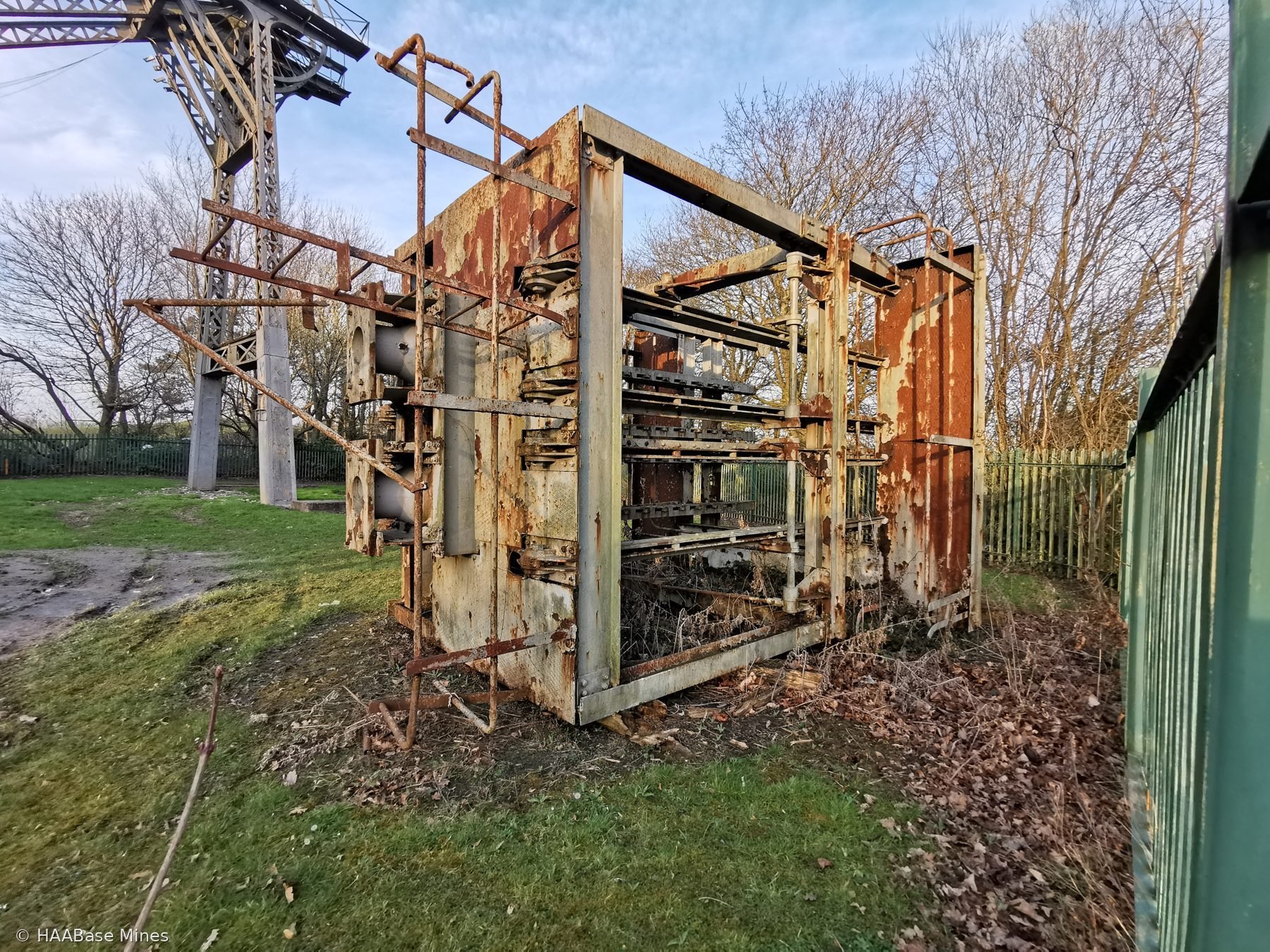
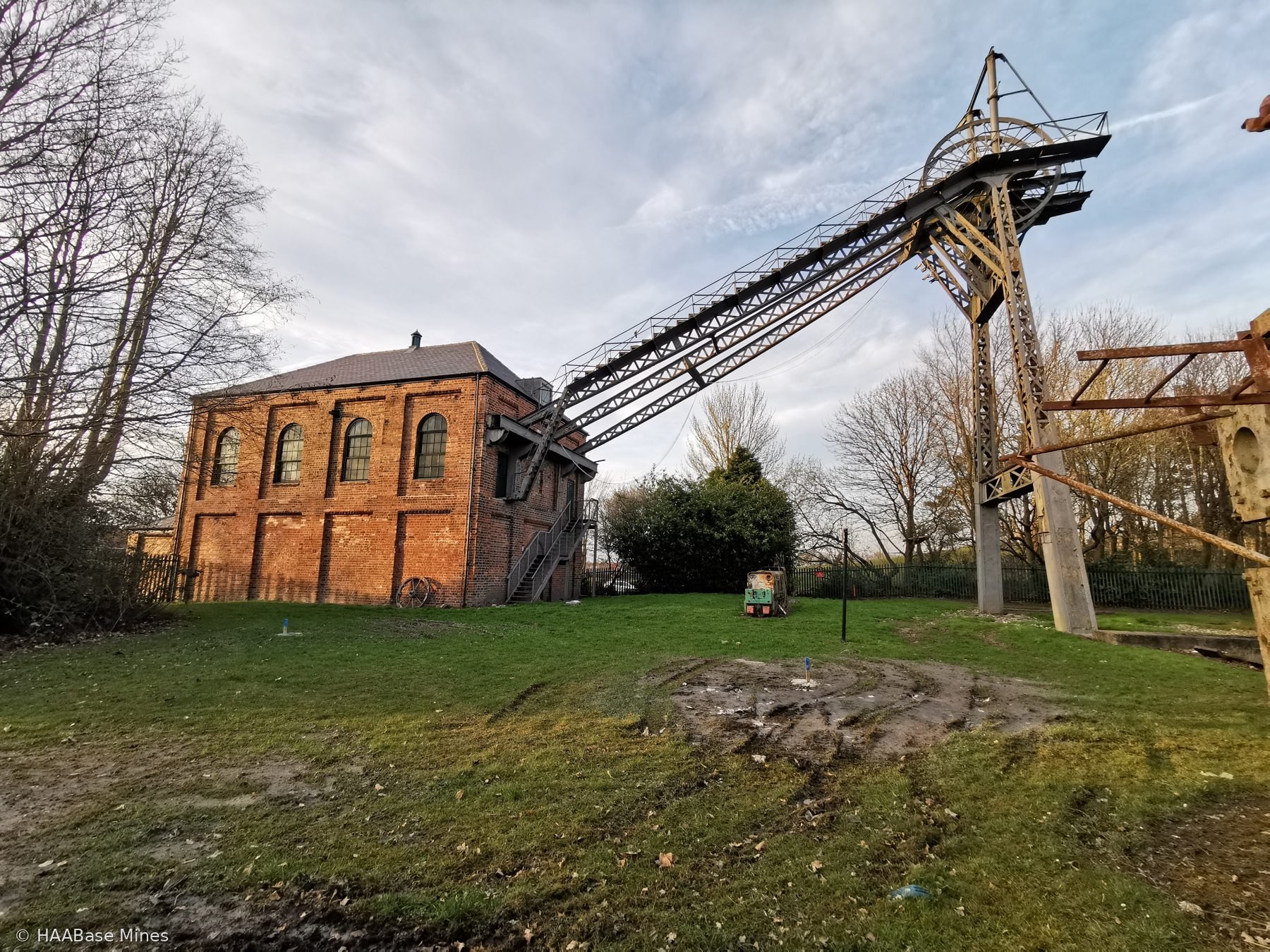
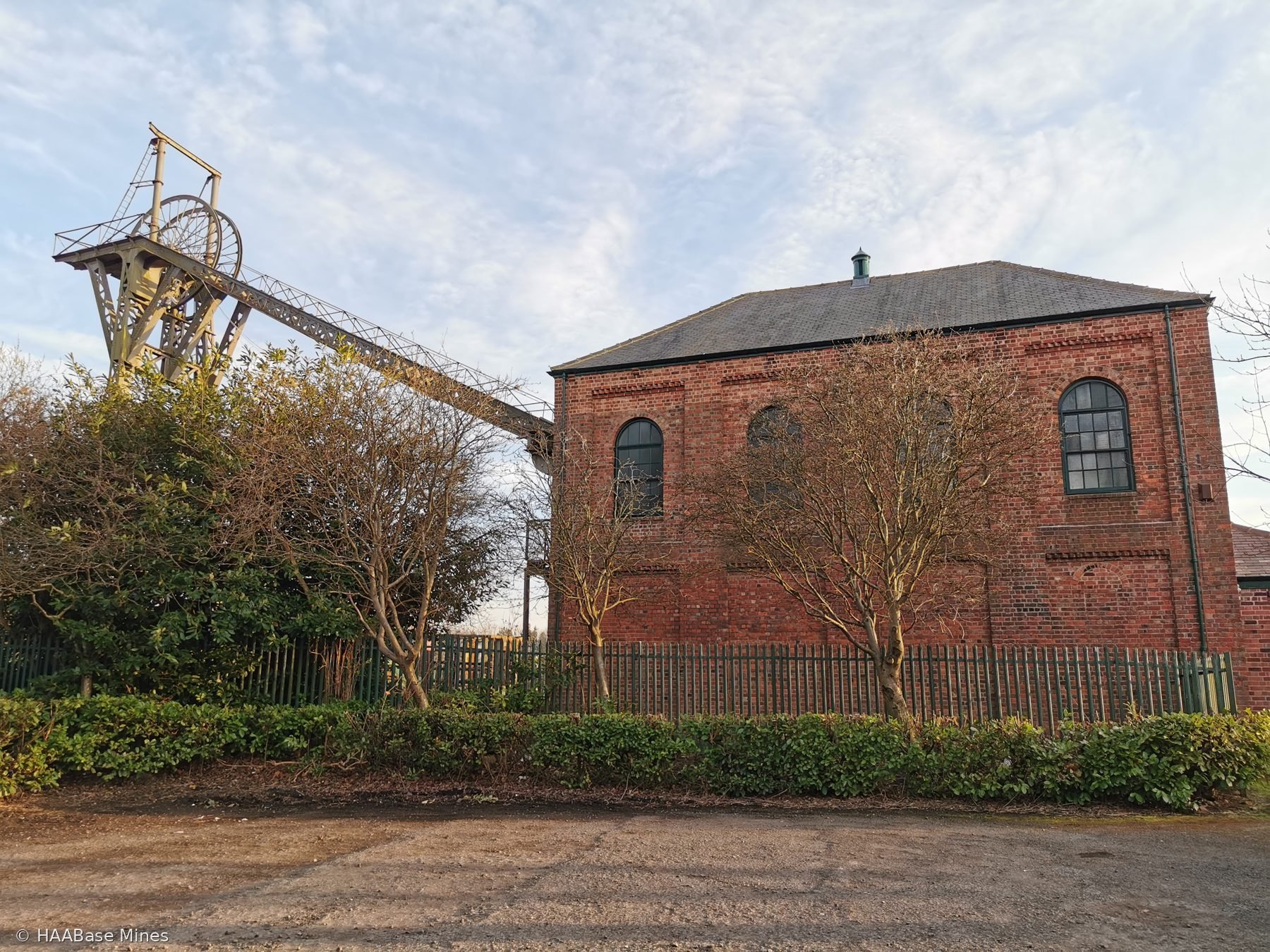
Site overview

Washington Colliery F Pit, located in Albany, Washington, is the preserved remnant of the New Washington Colliery. The original F Pit shaft was sunk in 1777 and is thought to have been one of the earliest working pits in England. After an explosion flooded the shaft in 1796 the pit was abandoned, then re-opened in 1820.

It was deepened to reach the Hutton seam in 1856, and by 1870 had become a major coal outlet for the colliery. A comprehensive remodelling of the surface in 1903 produced the buildings visible today. The twin-cylinder steam winding engine, built by the Grange Iron Company of Durham in 1888, was installed at the site secondhand in 1926, when the present engine house was also built.

The colliery reached peak production in the mid 1960s, producing approximately 486,000 tonnes of saleable coal per year and employing over 1,500 workers. The final coal was drawn on 21 June 1968. The pit head was presented to the people of Washington by the National Coal Board as a memorial to coal mining in the area.

A museum was opened in 1976 by Washington Development Corporation and is now managed by Sunderland City Council. The site is both a Scheduled Ancient Monument and a Grade II listed building, and is one of only ten Scheduled Ancient Monuments in the city of Washington. Plans for a new visitor centre were submitted in late 2024.

The site stands within settled suburban surroundings, where the preserved pithead buildings form a compact and clearly defined historic enclave amid later development.

Map & photo

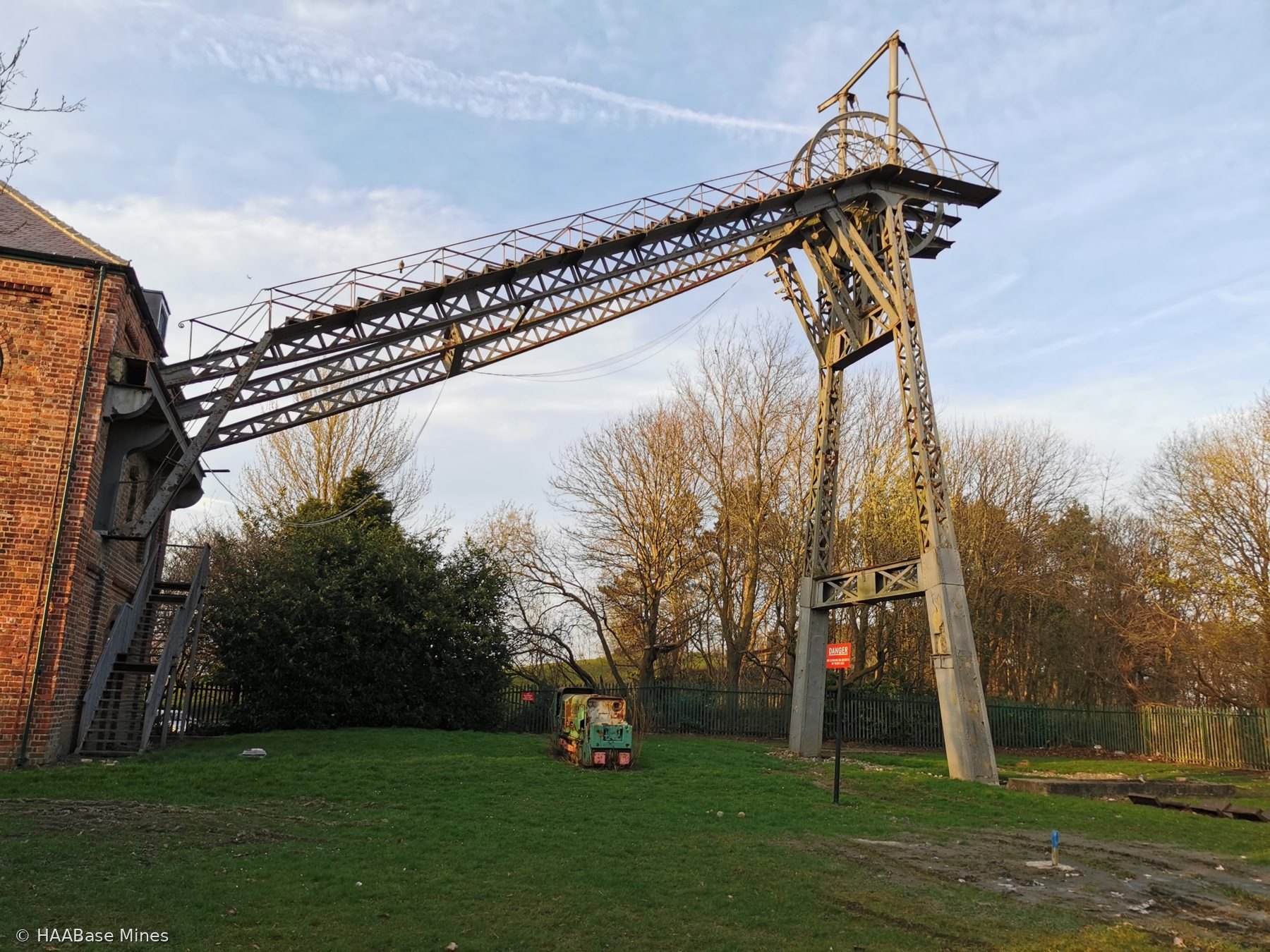
Washington Colliery — F Pit mine headframe or winding tower site
Photograph taken: 26 March 2025
Map markers and directions links are provided for location reference only and do not indicate public access or permission to enter a site.

History

The F Pit shaft of the New Washington Colliery was sunk in 1777 in what is now the Albany area of Washington, Sunderland. The colliery operated under a lease of the coal granted in December 1775 by the lords of the manor of Washington — Robert Shafto, Sir Gilfred Lawson, and Sir James Musgrave — to William Russell and Partners, a coal shipping agent from Sunderland. The colliery comprised a number of small pits spread across the area, each identified by a letter from A to I. The F Pit was one of the earliest, sunk to a depth of 283 metres, and is thought to have been among the earliest working pits in the country. First coals were taken by wagonway to Sunderland by 1778. Shortly after sinking, the pit had to be abandoned following an explosion in 1796 which flooded the shaft. It did not reopen until 1820.

In 1856 the shaft was deepened to reach the Hutton coal seam at approximately 200 metres, and by 1870 the F Pit had become a major coal outlet for the colliery. Most of the smaller letter-pits in the area were progressively abandoned as output concentrated at a few highly modernised collieries, of which the F Pit was the principal survivor. The most significant transformation of the surface came in 1903, when the colliery was extensively remodelled, producing the principal buildings that survive today. The twin-cylinder steam winding engine that dominates the engine house was built by the Grange Iron Company of Durham in 1888 but was installed at the F Pit secondhand; the present engine house was built in 1926 to accommodate it. The engine, capable of approximately 500 horsepower, is a horizontal twin-cylinder steam machine of a type which dominated coal winding until the introduction of electrical winding in the early twentieth century. From 1927 electricity was brought to all faces underground and pneumatic picks were introduced. Following nationalisation of the coal industry in the late 1940s the pit was further deepened.

The colliery reached peak production in the mid 1960s, producing approximately 486,000 tonnes of saleable coal per year at its height and employing over 1,500 workers. At its earlier peak in 1921 the colliery had employed 1,785 men and boys. The final coal was drawn on 21 June 1968. Over the course of its working life approximately 150 fatalities were recorded at the mine. Among the recorded disasters were an explosion caused by a naked flame in 1850 that killed 13 men; a cage accident on 31 May 1867 in which a brakeman failed to stop the cage at the shaft top, causing the rope to break and the cage to fall 750 feet, killing eight men and two boys; and a gas explosion caused by shot-firing in 1885 that killed 42 men.

After closure the site was cleared, with the engine house and headgear presented to the people of Washington by the National Coal Board as a memorial to mining in the area. A museum was opened on the site in 1976 by Washington Development Corporation. Tyne and Wear Museums Service took responsibility in April 1984, and Sunderland City Council subsequently became the managing authority. The winding engine is maintained in working order, now operated by electric motor for demonstration purposes; the boiler was removed to create an interpretation area. The engine house is a two-storey red-brick structure with a hipped Welsh slate roof. The steel lattice headgear remains on site and is included in the scheduling within a separate area of protection. The site is both a Scheduled Ancient Monument and a Grade II listed building, and one of only ten Scheduled Ancient Monuments in the city of Washington. Plans for a new visitor centre and cafe, designed by Mosedale Gillatt Architects, were submitted in late 2024, proposing new exhibition spaces and landscape improvements.
Timeline

Heritage

Scheduled Ancient Monument and Grade II listed designation

The site was designated both a Scheduled Ancient Monument and a Grade II listed building. It is one of only ten Scheduled Ancient Monuments in the city of Washington. The scheduling covers the engine house, the in-situ winding engine, and the steel lattice headgear within a separate area of protection.
1775
Legislation

Coal lease granted to William Russell and Partners

In December 1775 the lords of the manor of Washington leased the coal under the northern part of the parish to William Russell and Partners. The resulting colliery comprised a number of small pits each assigned a letter from A to I.
1777
Construction

F Pit shaft sunk to 283 metres

The F Pit shaft was sunk in 1777 to a depth of 283 metres, one of the earliest recorded working pits in England. First coals were taken by wagonway to Sunderland by 1778.
1796
Operation

Explosion and flooding; pit abandoned

An explosion at the F Pit in 1796 flooded the shaft, forcing abandonment. The pit did not reopen until 1820.
1820
Operation

F Pit re-opened

The F Pit was re-opened in 1820 following the period of abandonment caused by the 1796 explosion.
1850
Operation

Explosion kills 13 men

An explosion caused by a naked flame in 1850 killed 13 men underground.
1856
Construction

Shaft deepened to reach Hutton seam

The F Pit shaft was deepened in 1856 to reach the Hutton coal seam at approximately 200 metres. By 1870 it had become a major coal outlet for the colliery.
1867
Operation

Cage accident kills eight men and two boys

On 31 May 1867 a brakeman failed to stop the cage at the top of the shaft. The cage struck the stops near the pulleys and the rope broke, causing the cage to fall 750 feet to the shaft bottom. Eight men and two boys were killed.
1885
Operation

Gas explosion kills 42 men

A gas explosion caused by shot-firing in 1885 killed 42 men underground.
1888
Construction

Winding engine built by Grange Iron Company

The twin-cylinder steam winding engine now preserved at the site was built by the Grange Iron Company of Durham in 1888. It was installed at the F Pit secondhand in 1926.
1903
Construction

Comprehensive remodelling of surface buildings

The F Pit was extensively remodelled at the surface in 1903. The principal buildings surviving on the site today date substantially from this remodelling.
1926
Construction

Engine house built; secondhand winding engine installed

The present engine house was built in 1926. The 1888 Grange Iron Company winding engine, acquired secondhand, was installed within it at the same time.
1927
Construction

Electrification of faces; pneumatic picks introduced

From 1927 electricity was brought to all faces underground and pneumatic picks were introduced.
1964–1965
Operation

Peak production period

Production levels were at their greatest in 1964 and 1965, when approximately 468,000 to 486,000 tonnes of saleable coal were produced annually and over 1,500 workers were employed.
1968
Closure

Final coal drawn; colliery closed

The final coal was drawn to the surface on 21 June 1968, ending commercial coal production at the F Pit. The site was subsequently cleared, with the engine house and headgear retained as a memorial.
1976
Heritage

Museum opened by Washington Development Corporation

The pit head was presented to the people of Washington by the National Coal Board as a memorial to coal mining in the area. A museum was opened on the site in 1976 by Washington Development Corporation.
1984
Heritage

Tyne and Wear Museums Service assumes responsibility

In April 1984 Tyne and Wear Museums Service took over responsibility for managing the Washington F Pit Museum.
2024
Redevelopment

Planning application for new visitor centre submitted

Plans for a new visitor centre and cafe, designed by Mosedale Gillatt Architects, were submitted in late 2024. The proposals include repair of the winding house and new indoor and outdoor exhibition spaces, landscape improvements, and a contemporary building designed as an interpretation of the original colliery buildings.

Sources and records

Washington History Society: Collieries page
Sunderland Heritage: Washington F-Pit Museum
MySunderland: Washington F Pit
Sitelines / Tyne and Wear Historic Environment Record, record SMR/2617: Washington Colliery F Pit
AncientMonuments.uk: Colliery engine house at Washington F Pit, Albany
Fabulous North: Washington F Pit
Co-Curate: Washington Colliery (1775-1968)
Culture24: Washington F Pit Museum
Mosedale Gillatt Architects: Plans submitted for new visitor centre, December 2024
This researched site record is part of the HAABase Mines database. Normal personal research and browsing is welcome. Automated bulk extraction, republication, or harvesting of site text and images is not permitted without written consent.