Site overview

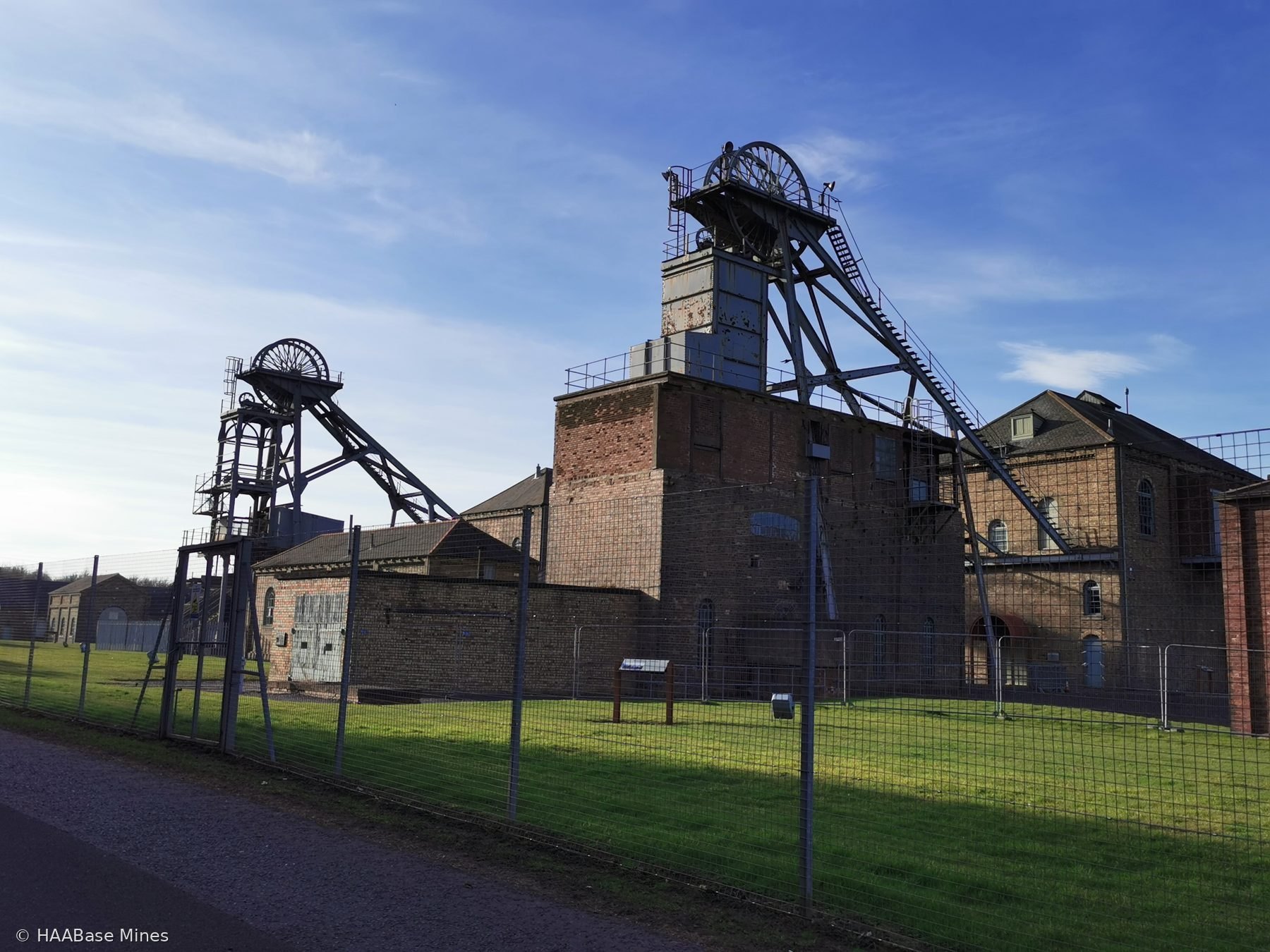
Woodhorn Colliery, located in Ashington, Northumberland, was sunk in 1894 by the Ashington Coal Company and operated as a coal mine until 1981. At its peak the colliery employed over 2,000 people and produced 600,000 tons of coal a year. The site is the most complete surviving example of a late nineteenth and early twentieth century colliery in north-east England, retaining two shaft headframes, winding houses, fan houses, engine houses, stables, a blacksmith and joiners shop, and the colliery office.

In August 1916 thirteen miners were killed underground by a firedamp explosion. The colliery was nationalised in 1947 and from 1966 coal was no longer raised to the surface at Woodhorn but was conveyed underground to Ashington Colliery. Production ceased on 27 February 1981.

The site opened as Woodhorn Colliery Museum in 1989 and was designated a Scheduled Monument in 1999. Following redevelopment from 2002 to 2006, a new building known as the Cutter was opened alongside the original pithead structures in October 2006. The museum is now known as Woodhorn and forms part of Museums Northumberland, housing the Northumberland Archives and the permanent collection of the Ashington Group, commonly known as the Pitmen Painters.

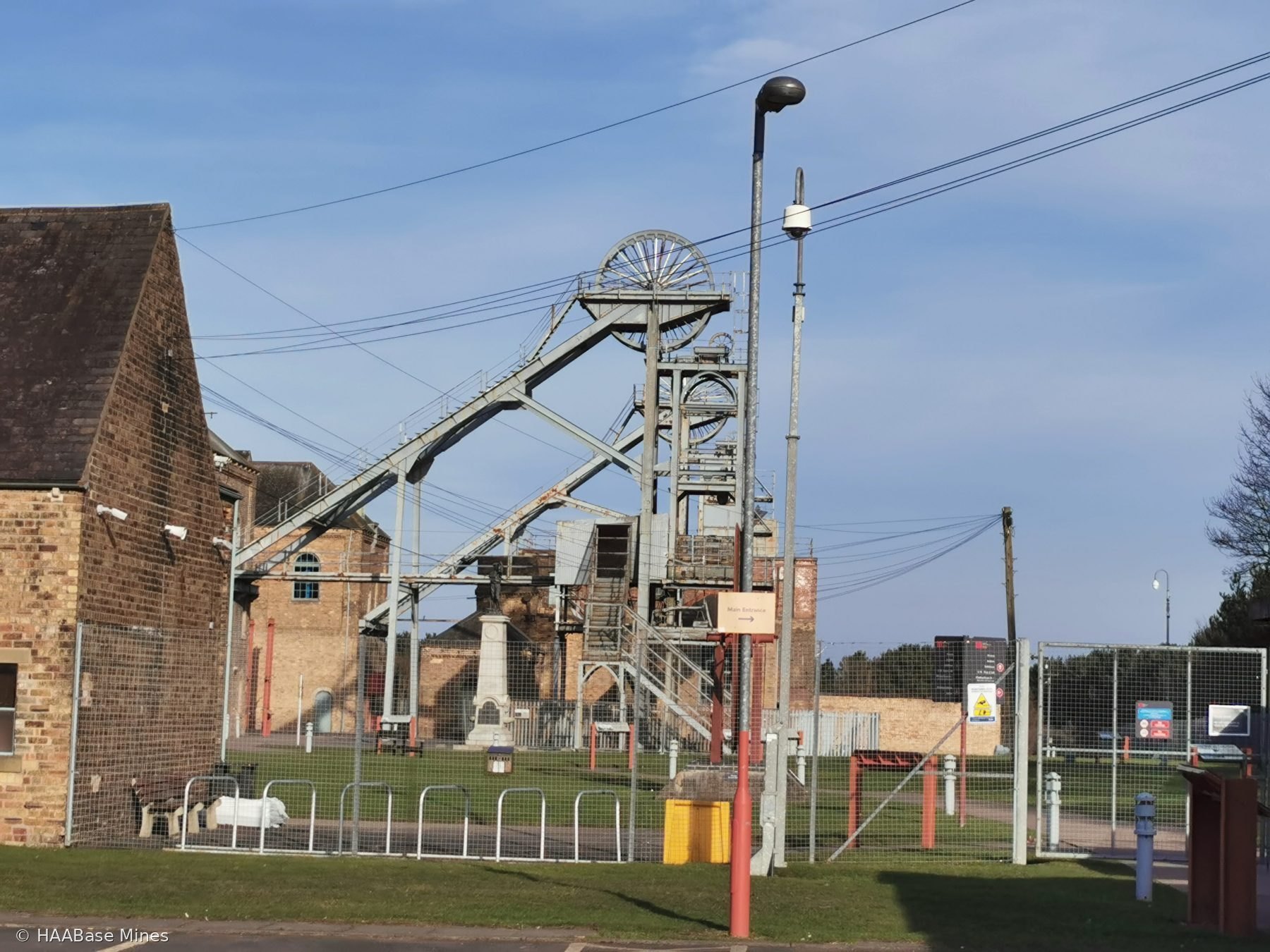
The site stands in open post-industrial surroundings on the edge of Ashington, where the extensive surviving pithead buildings remain highly legible as a distinct historic complex.

Map & photo

Woodhorn Colliery mine headframe or winding tower site
Photograph taken: 26 March 2025
Map markers and directions links are provided for location reference only and do not indicate public access or permission to enter a site.

History

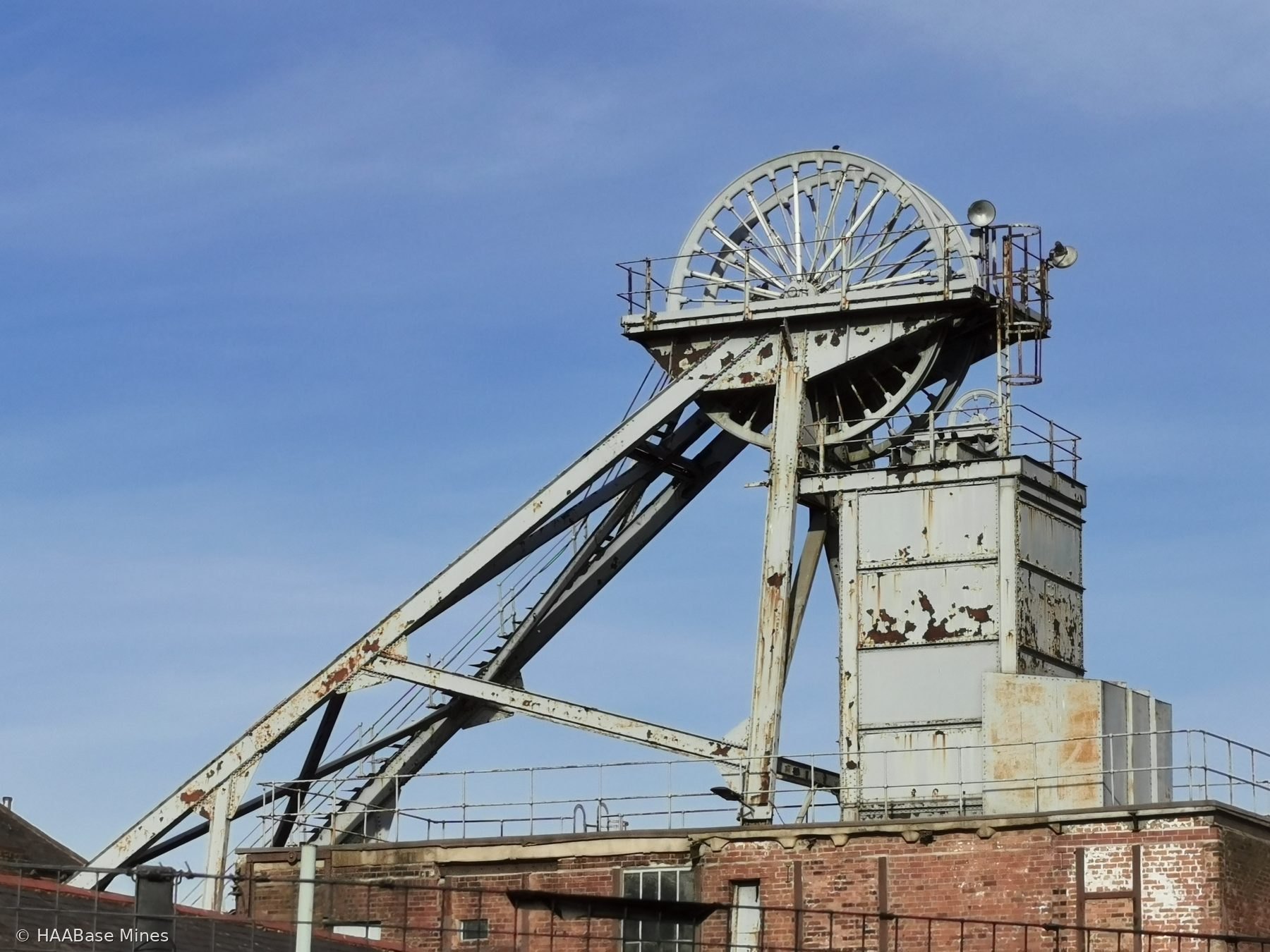
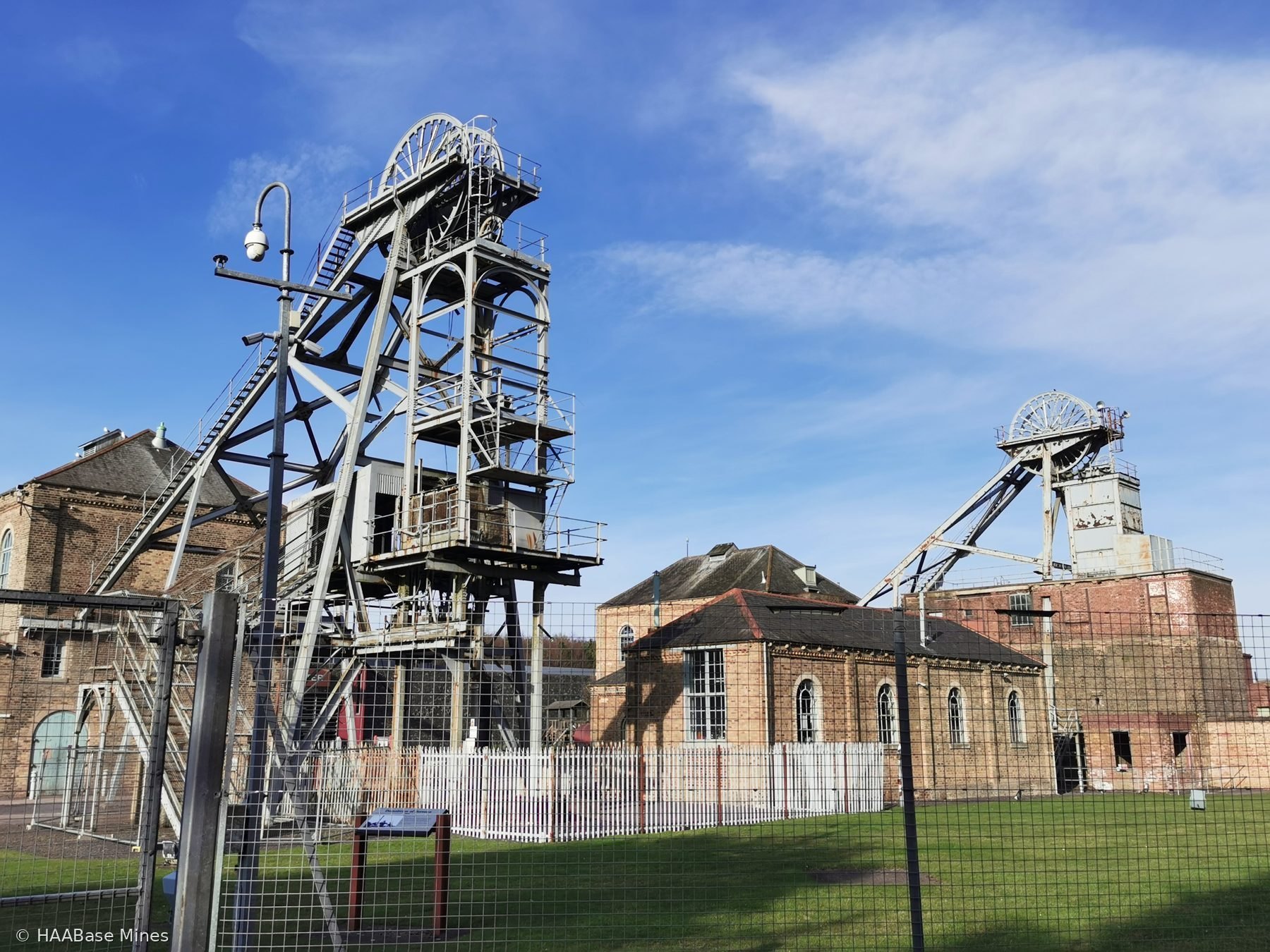
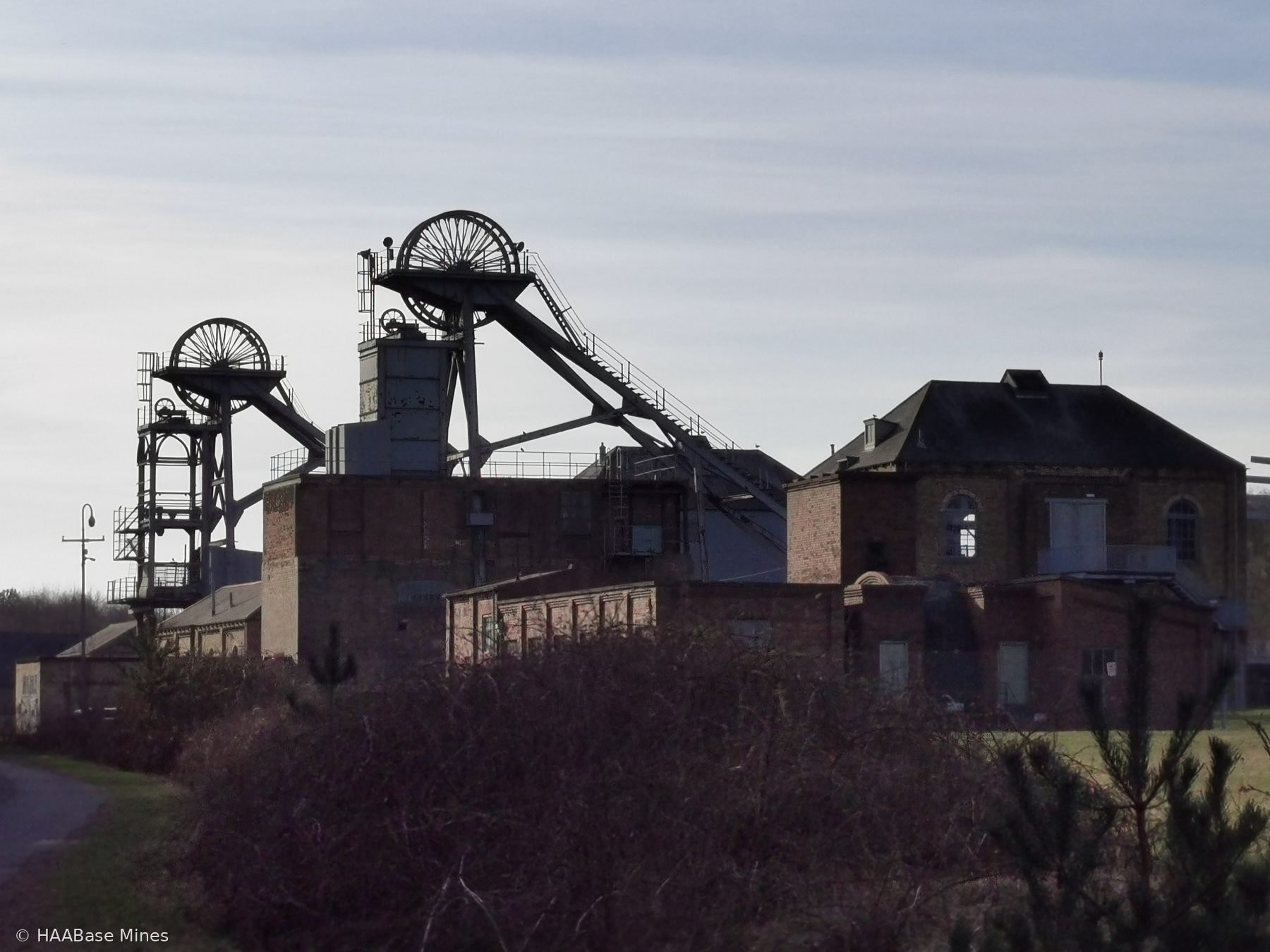
Woodhorn Colliery was sunk in 1894 by the Ashington Coal Company, which also owned the Ashington, Ellington, Linton, and Lynemouth collieries. The first coal was brought to the surface in 1898 and production was firmly established by 1901. The colliery buildings are constructed from local Ashington brick. The site included two shafts: No. 1, the Downcast shaft, and No. 2, the Upcast shaft, each marked by large two-storey brick-built engine houses fronted by steel girder headframes supporting the pulley wheels for the winding cables. The west headframe stands over the downcast shaft and is an unenclosed frame structure of steel girders supporting two pulley wheels; the east headframe, which encloses its structure to control the circulation of ventilation air, stands over the upcast shaft. The fan houses, stables, blacksmith and joiners shop, and colliery office were all part of the original pithead complex. A complex system of narrow gauge railways carried mined coal away from the pithead structures. By 1914 the colliery employed in excess of 2,000 workers. One of the winding engines is described as the most powerful winding engine in the region.

On 13 August 1916 a firedamp explosion occurred in the Main Seam at Woodhorn Colliery. A repairing shift of eight deputies and five other men was underground setting steel girders as roof supports. A pocket of firedamp was ignited, causing an explosion which damaged the ventilation doors and allowed afterdamp — a lethal mixture of carbon dioxide, nitrogen, and carbon monoxide — to flood the mine. Eleven of the thirteen men working underground that day were killed. A subsequent inquest found that gas had accumulated through insufficient ventilation and had been ignited by a naked light. The investigation uncovered violations of the Coal Mines Act 1911 and legal proceedings were instituted against the manager and enginewright, though both proceedings were ultimately dismissed or overturned. A memorial to the eleven men killed stands near the museum entrance.

During the Second World War, the ventilation fan at Woodhorn took a direct hit but survived the German bombing of 1941. The colliery was nationalised in 1947. At its peak the colliery produced 600,000 tons of coal in a single year and employed over 2,000 people underground. From 1966 coal was no longer brought to the surface at Woodhorn; instead it was conveyed underground to Ashington Colliery where it was raised to the surface. The colliery went into decline in the 1960s as a result of thin coal seams and the availability of cheaper alternative fuels including oil and gas. Output and manpower declined steadily through the 1970s. Production ceased on 27 February 1981 and the remaining workforce was transferred to other pits. At closure Woodhorn had recorded 102 fatalities during its operational life.

The Woodhorn Colliery Museum opened in 1989 using the original pithead buildings. In 1999 the pit yard was designated a Scheduled Monument, recognised as the most complete surviving example of a late nineteenth and early twentieth century colliery in north-east England. Repairs to the east shaft headgear and its enclosing structure were completed in 2014, though significant corrosion has since reappeared and the east shaft enclosing structure is leaking; the roof to the adjoining Walker Fan House is also leaking, and consent was granted in late 2022 for roof and internal repairs to the Walker Motor Room, Walker Fan Room, and Capell Fan House. Construction of the new Cutter Building took place between 2002 and 2006; it opened in October 2006 following a major redevelopment with chief architect Tony Kettle, who was inspired by the form of coal cutting machines. The Cutter houses the main museum reception, café, exhibition spaces, and the Northumberland Archives. The original pithead buildings remain open to visitors and contain original equipment and mining exhibits. The museum holds a permanent collection of works by the Ashington Group — amateur painters who are also known as the Pitmen Painters — which is reputed to be the first collection of amateur art to go on permanent display anywhere in the world. The collection documents life in and around Ashington from the 1930s. The site is now known as Woodhorn and operates as part of Museums Northumberland.
Timeline

1894
Construction

Colliery sunk by Ashington Coal Company

In 1894 the Ashington Coal Company sunk the first shaft at Woodhorn Colliery. The company also owned the Ashington, Ellington, Linton, and Lynemouth collieries.
1898–1901
Operation

First coal raised; production established

Coal was first brought to the surface in 1898 and production was firmly established by 1901.
1914
Operation

Peak employment exceeds 2,000 workers

By 1914 Woodhorn Colliery employed in excess of 2,000 workers.
1916
Operation

Firedamp explosion kills eleven miners

On 13 August 1916 a firedamp explosion occurred in the Main Seam. A repairing shift of thirteen men was underground; eleven were killed when the explosion damaged ventilation doors and afterdamp flooded the mine. A subsequent inquest found gas had accumulated through insufficient ventilation and had been ignited by a naked light. Violations of the Coal Mines Act 1911 were identified.
1941
Operation

Ventilation fan survives German bombing

The colliery's ventilation fan took a direct hit during German bombing in 1941 but survived the attack.
1947
Legislation

Nationalisation

Woodhorn Colliery was nationalised in 1947 as part of the national coal industry nationalisation programme.
1966
Closure

Coal no longer raised to surface at Woodhorn; underground conveyor to Ashington

From 1966 coal was no longer brought to the surface at Woodhorn. Instead it was conveyed underground by conveyor to Ashington Colliery where it was raised to the surface.
1981
Closure

Final closure; workforce transferred

Production ceased at Woodhorn on 27 February 1981. The remaining workforce was transferred to other pits. At closure the colliery had recorded 102 fatalities over its operational life.
1989
Heritage

Site opens as Woodhorn Colliery Museum

The original pithead buildings were opened to the public as Woodhorn Colliery Museum in 1989.
1999
Heritage

Pit yard designated a Scheduled Monument

The pit yard at Woodhorn was designated a Scheduled Monument in 1999, recognised as the most complete surviving example of a late nineteenth and early twentieth century colliery in north-east England.
2002–2006
Redevelopment

Construction of the Cutter Building; museum redeveloped

From 2002 to 2006 the new Cutter Building was constructed alongside the original colliery buildings. The building, designed by chief architect Tony Kettle and inspired by the form of coal cutting machines, houses the main museum reception, café, exhibition spaces, and the Northumberland Archives. The redeveloped museum reopened in October 2006.
2014
Heritage

Repairs to east shaft headgear completed

Repairs to the east shaft headgear and its enclosing structure were completed in 2014. Subsequent significant corrosion and water ingress have been identified and further repair consents were granted in late 2022.

Sources and records

Wikipedia: Woodhorn (museum)
Historic England Scheduled Monument record 1016976: Woodhorn Colliery, Ashington
Historic England Heritage at Risk record 2703691: Woodhorn Colliery east and west shaft headgear and Walker fan house
Woodhorn Museum website (museumsnorthumberland.org.uk): About Us page
North East Museums website: Woodhorn Colliery, Our Past Your Future
Northern Mine Research Society: Woodhorn Colliery Explosion, Ashington, 1916
The Durham Cow website: Woodhorn Mining Museum
Fabulous North website: Woodhorn Museum
England's Coast / Woodhorn Museum listing
Co-Curate: Woodhorn Museum entry
AncientMonuments.uk: Woodhorn Colliery, Ashington
This researched site record is part of the HAABase Mines database. Normal personal research and browsing is welcome. Automated bulk extraction, republication, or harvesting of site text and images is not permitted without written consent.