1406
First recorded open-cast quarry at Trélazé
The first documented open-cast quarry at Tire-Poche at Trélazé is recorded in 1406.
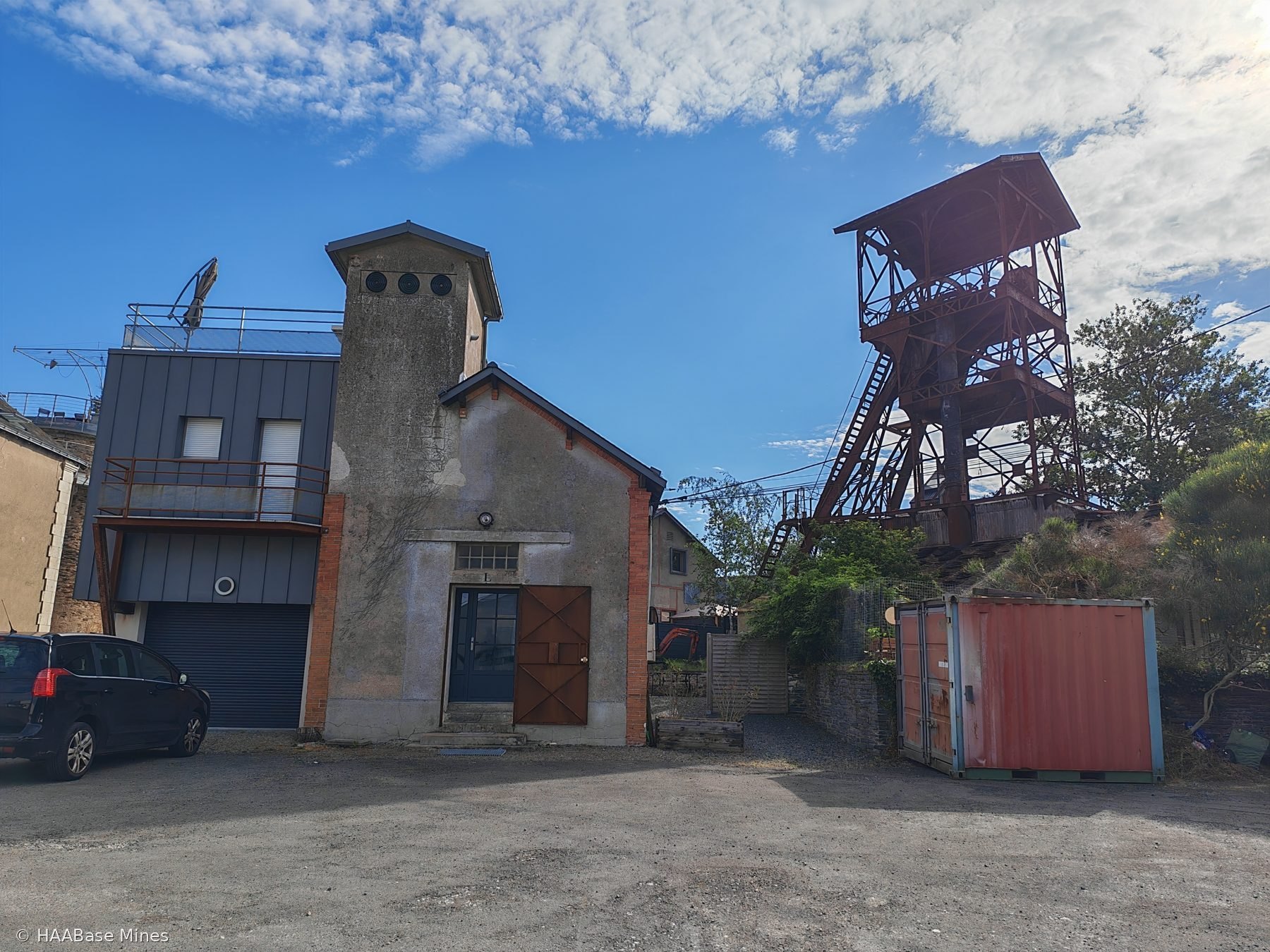
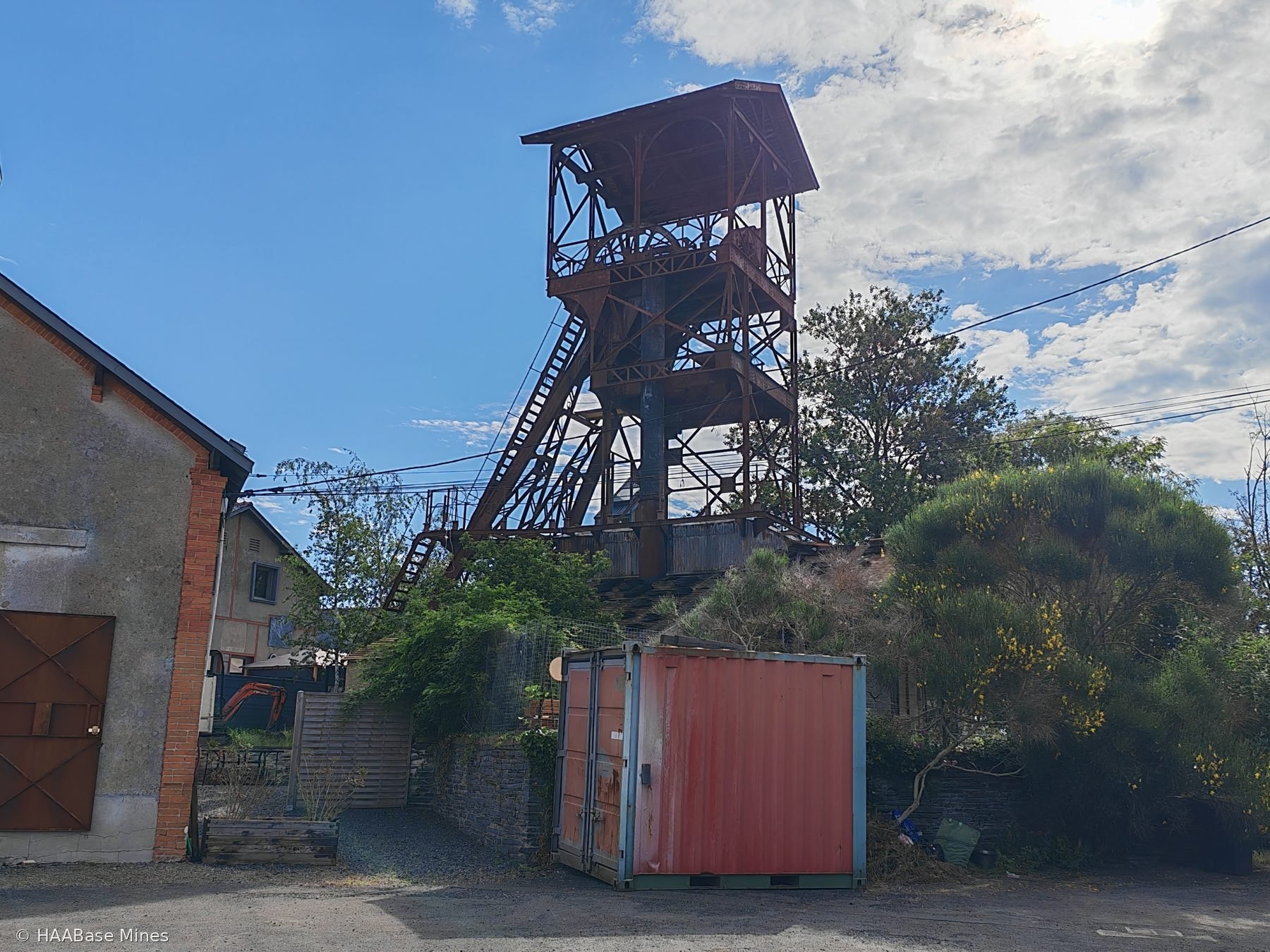
Former Grand-Maison ardoisière at Trélazé, retaining its metal headframe and winding engine building on a site closed in 1986 when its operator, the Société des Ardoisières de l'Anjou, filed for bilan.
This record is based on the research currently available to HAABase Mines. It has not yet completed the site's formal source-by-source fact-checking process, so the history and timeline should be regarded as a well-researched provisional account and may be refined as further evidence is reviewed.
The puits de Grand-Maison at Trélazé, Maine-et-Loire, is the surviving headframe site of the carrière de Grand'Maison, which was operated by the Société des Ardoisières de l'Anjou. The Société des Ardoisières de Grand'Maison was formed in 1864 and the carrière subsequently became part of the Société des Ardoisières de l'Anjou when that body was created in July 1894, grouping the Grand'Maison, Pont-Malembert, and Aubinière quarries at Trélazé. The first metal headframe installed anywhere in the Trélazé basin was erected at the puits N°6 de Grand'Maison in 1909.
A photographic archive document dated 6 Fi 11065 records extraction by inverted benches in a chamber at 300 metres depth. The Société des Ardoisières de l'Anjou attempted in 1983 to match Spanish production costs by producing ardoise at the same price as imported Spanish slate, but this failed. The bilan was filed on 28 March 1986 and the site closed in 1986, with 160 ouvriers losing their employment.
The metal headframe and its winding engine building survive on the former carreau and are visible today. The puits de Grand-Maison is named among the six surviving chevalements of Trélazé identified by Wikipedia.
The ardoisières of Trélazé are set within the Silurian schist of Maine-et-Loire, and the Grand'Maison sector is one of the historic extraction sites in the basin. The extraction of schiste ardoisier at Trélazé is documented from the ninth century for tombstones and the eleventh century for roofing, with the first open-cast quarry at Tire-Poche recorded in 1406. Among the multiple historic extraction sites at Trélazé, the Grand'Maison became particularly significant in the second half of the nineteenth century.
The Société des Ardoisières de Grand'Maison was formally created in 1864. In July 1894 the Société des Ardoisières de l'Anjou was created, uniting the quarries of Grand'Maison, Pont-Malembert, and l'Aubinière at Trélazé under a single operator. This body was distinct from the Commission des Ardoisières d'Angers, established on 1 January 1891, which grouped 85 per cent of total production.
In 1899 the last open-cast quarries at Trélazé closed, leaving all extraction underground via shaft and chamber. In 1909, the first metal headframe in the entire Trélazé basin was installed at the puits N°6 de Grand'Maison — a landmark event in the industrialisation of the basin. In 1911, the record production level for the entire Anjou-Mayenne basin was attained, with 182,000 tonnes produced.
Municipal archive photographs record the ateliers of the Grand'Maison fendeurs looking toward the puits (6 Fi 11061), and the extraction by gradins renversés in a chamber at 300 metres depth (6 Fi 11065). The underground workings were based on the ascending method of chamber extraction, working upward in bands of 2.5 metres with waste accumulated underfoot, as practised across the Trélazé basin. At the end of the 1960s, the Société des Ardoisières de l'Anjou — the body operating Grand'Maison — represented a significant part of French production alongside the Commission/Société des Ardoisières d'Angers.
In 1983, with the pressure of cheaper Spanish open-cast slate intensifying, the Société des Ardoisières de l'Anjou attempted to produce ardoise at a competitive price equivalent to that of Spanish imports. This effort failed. On 28 March 1986 the Société des Ardoisières de l'Anjou deposited its bilan, closing the Grand'Maison site and the Renazé operations simultaneously, resulting in 160 redundancies at Grand'Maison and affecting the Renazé operations as well.
The closure of the Grand'Maison site in 1986 ended independent extraction at the site, though the Ardoisières d'Angers briefly considered a possible reprise. The metal headframe of the puits de Grand-Maison and its bâtiment de la machine d'extraction survive on the former carreau and are visible today. The puits de Grand-Maison is named by Wikipedia as one of six surviving chevalements of Trélazé from the eight that once stood across the basin.
The former ardoisière territory as a whole was classified as a zone naturelle d'intérêt écologique, faunistique et floristique after the final 2014 closure of the Ardoisières d'Angers.