History
The ardoisières of Trélazé occupy the Silurian schist deposits on the western side of the commune of Trélazé, adjacent to the city of Angers in Maine-et-Loire. Archaeological evidence suggests some use of the schiste ardoisier as building material from the eighth century, and the first documented references to roofing slate extraction in Anjou date from the eleventh century. The first open-cast quarry at the lieu-dit Tire-Poche at Trélazé is recorded in 1406.
From the seventeenth century onward, the ardoisières of Trélazé supplied the great residences of France: the slate of Trélazé covered Chambord in 1539, and the quarries were visited by Marie de Médicis in 1619 and the philosopher John Locke in 1678. By 1762 the intendant of the Généralité de Tours estimated 1,200 workers employed at the Angers-Trélazé quarries combined, producing some 26 million slates per year. The grand exploitants progressively consolidated between 1808 and 1891, when the Commission des Ardoisières d'Angers was formed as the principal production company, a société en nom collectif.
In 1963 this body became the Société des Ardoisières d'Angers. The first metal headframe at Trélazé was installed at the puits N°6 de Grand'Maison in 1909; the first metal headframe at the entire basin was built at the same site in 1910. Open-cast quarrying gave way entirely to underground working in 1899.
The basin's two exploited veins — the Veine Nord and the Veine Sud, each with extreme variants — run through the Silurian schist in a roughly east-west orientation. Underground extraction was by the ascending method (en remontant): a shaft was sunk to the vein, collectrice galleries established, plan inclinés opened, and the chambers worked upward in horizontal bands of 2.5 metres, the waste material accumulated underfoot. In the 1960s, mechanical cutting equipment — jumbos, havage machines — began to replace hand drilling in new chamber development.
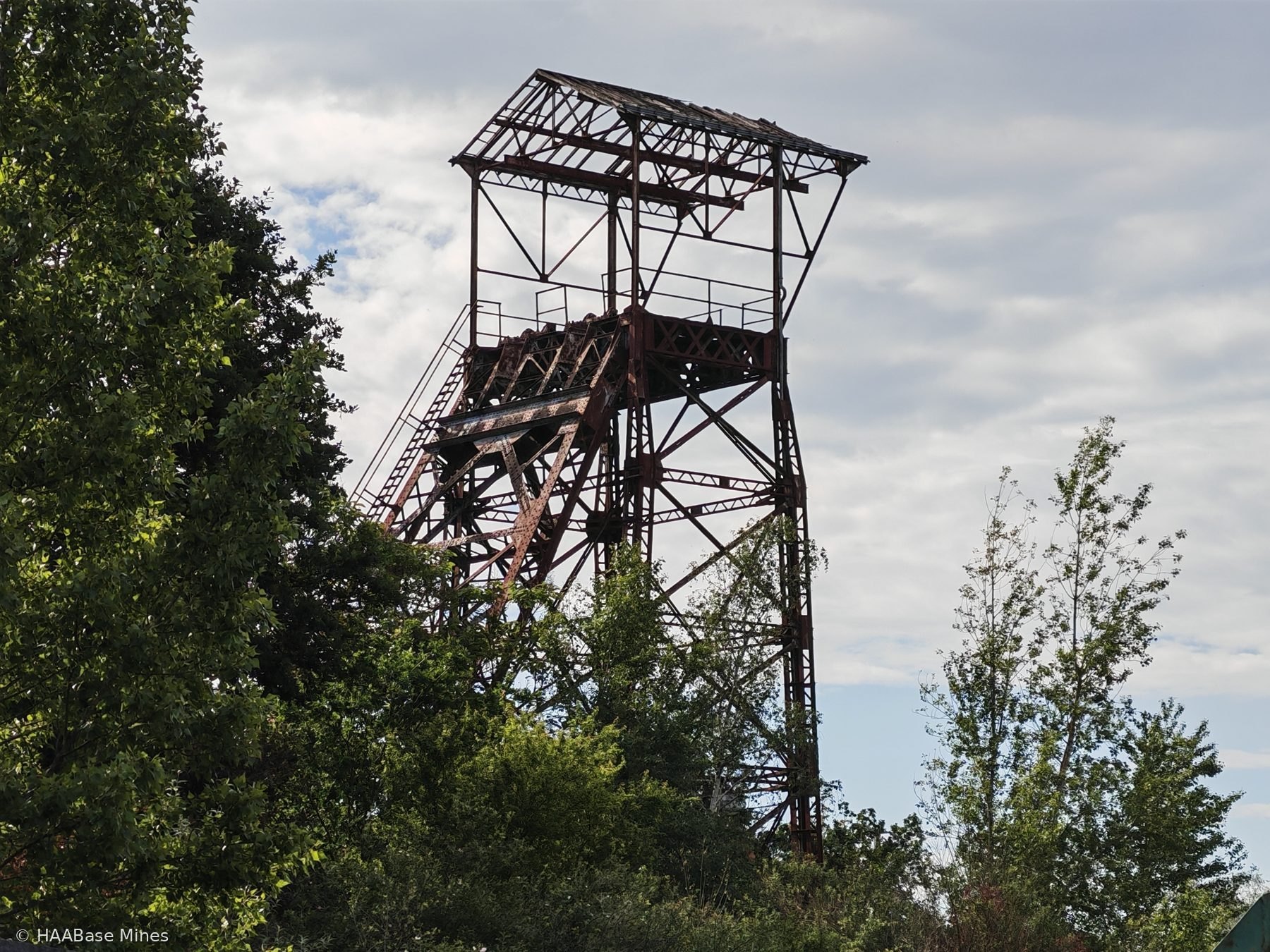
The puits N°3 de Monthibert stands on the Grands-Carreaux sector, the last underground extraction site in the Trélazé basin. Its metal headframe dates from 1939. The winding engine associated with the puits N°3 is driven by two horizontal Horme et Buire steam engines of 1912; steam is produced by two Babcock et Wilcox multi-tubular boilers, one from 1909 and one from 1925.
When in 1976 the new puits N°7 de Monthibert was commissioned with its modern 37.5-metre headframe and electric extraction machinery, the puits N°3 was relegated to serving solely as a ventilation shaft and a safety exit for the Grands-Carreaux workings. From 2009 the Fresnais quarry was closed, leaving the Grands-Carreaux as the only extraction site of the Ardoisières d'Angers. Production at the Ardoisières d'Angers had declined from 80,000 tonnes in 1982 to 40,000 tonnes in 1990 and 25,000 tonnes in 1997; by 2007 the site employed 220 workers including 60 underground, with a capacity of 9,000 tonnes from the Grands-Carreaux.
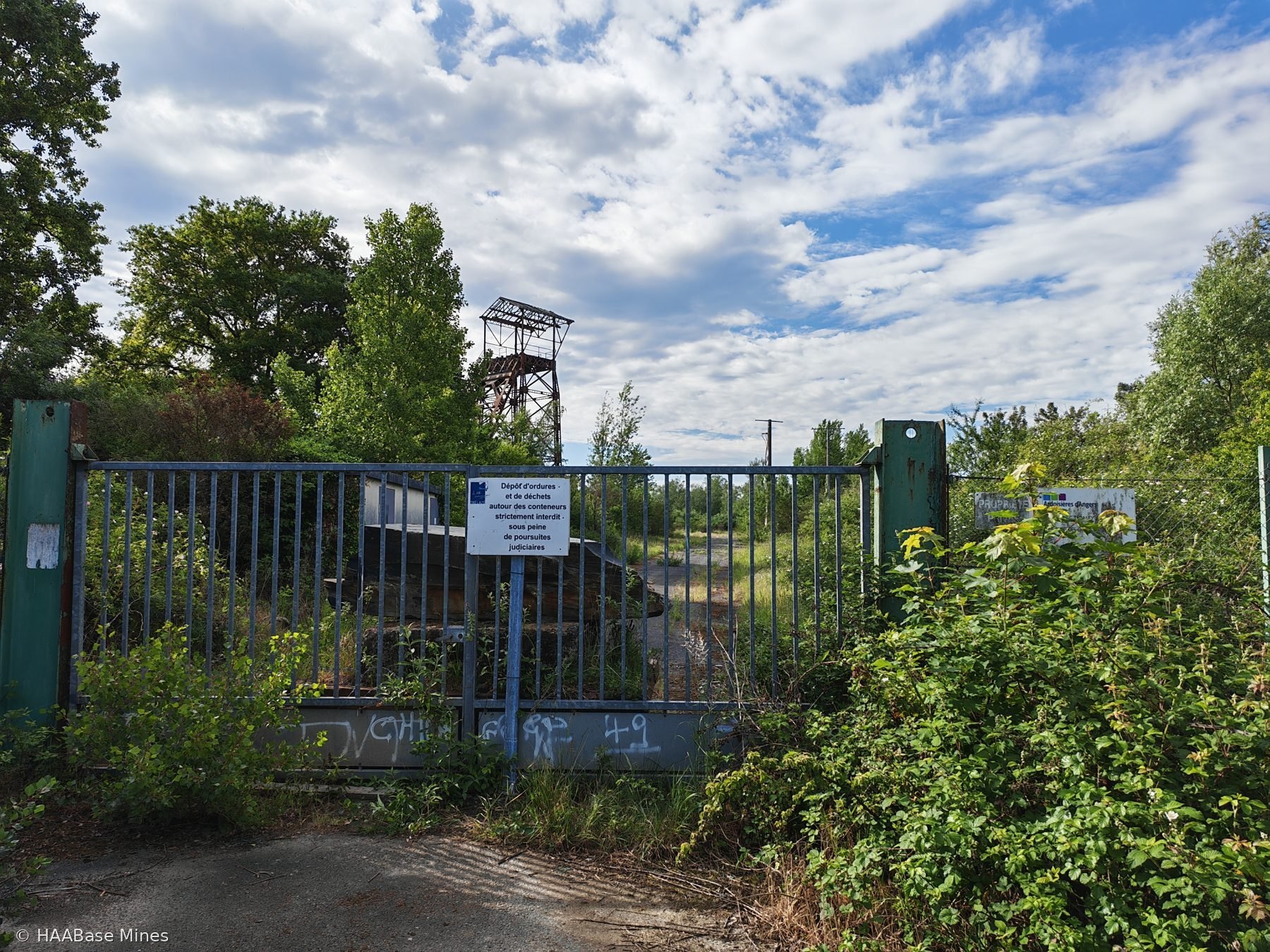
On 25 November 2013, with the gisement judged definitively exhausted by the Imerys group that then controlled the company, the Ardoisières d'Angers announced closure. The plan social was signed on 28 March 2014 and the definitive closure became effective on 29 March 2014, ending 123 years of activity by the Commission and Société des Ardoisières d'Angers and bringing to a close the slate mining history of Trélazé. Following closure the carreau de Monthibert was integrally levelled; the surface railway lines were dismantled and the majority of industrial buildings razed.
The metal headframe of the puits N°3 de Monthibert survives in place, listed among the six chevalements métalliques that remain of the eight that had stood across the Trélazé basin. The former ardoisière territory has been classified as a zone naturelle d'intérêt écologique, faunistique et floristique. The musée de l'Ardoise, established at Trélazé in 1984, documents the history and techniques of the industry.