Site overview

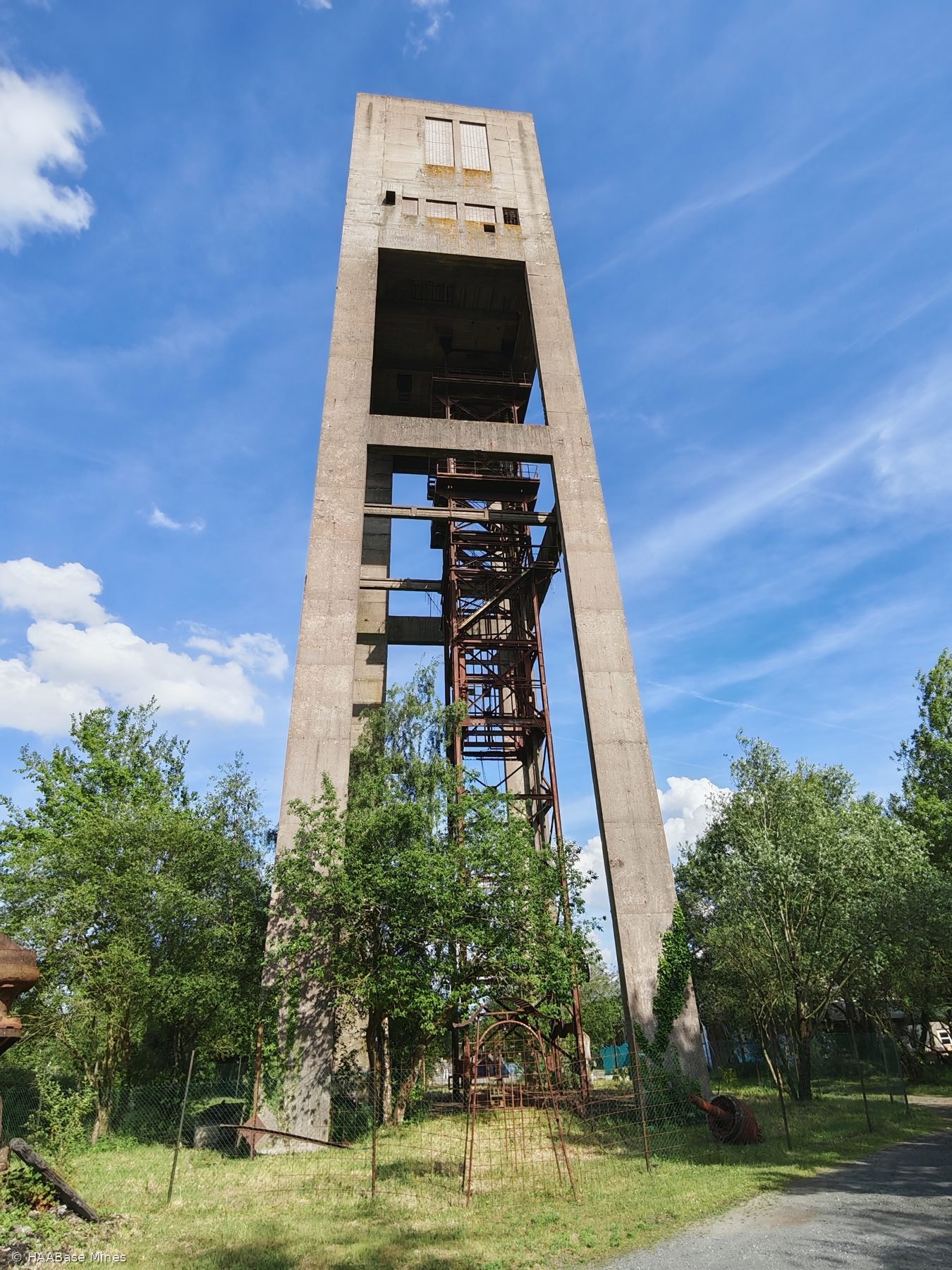
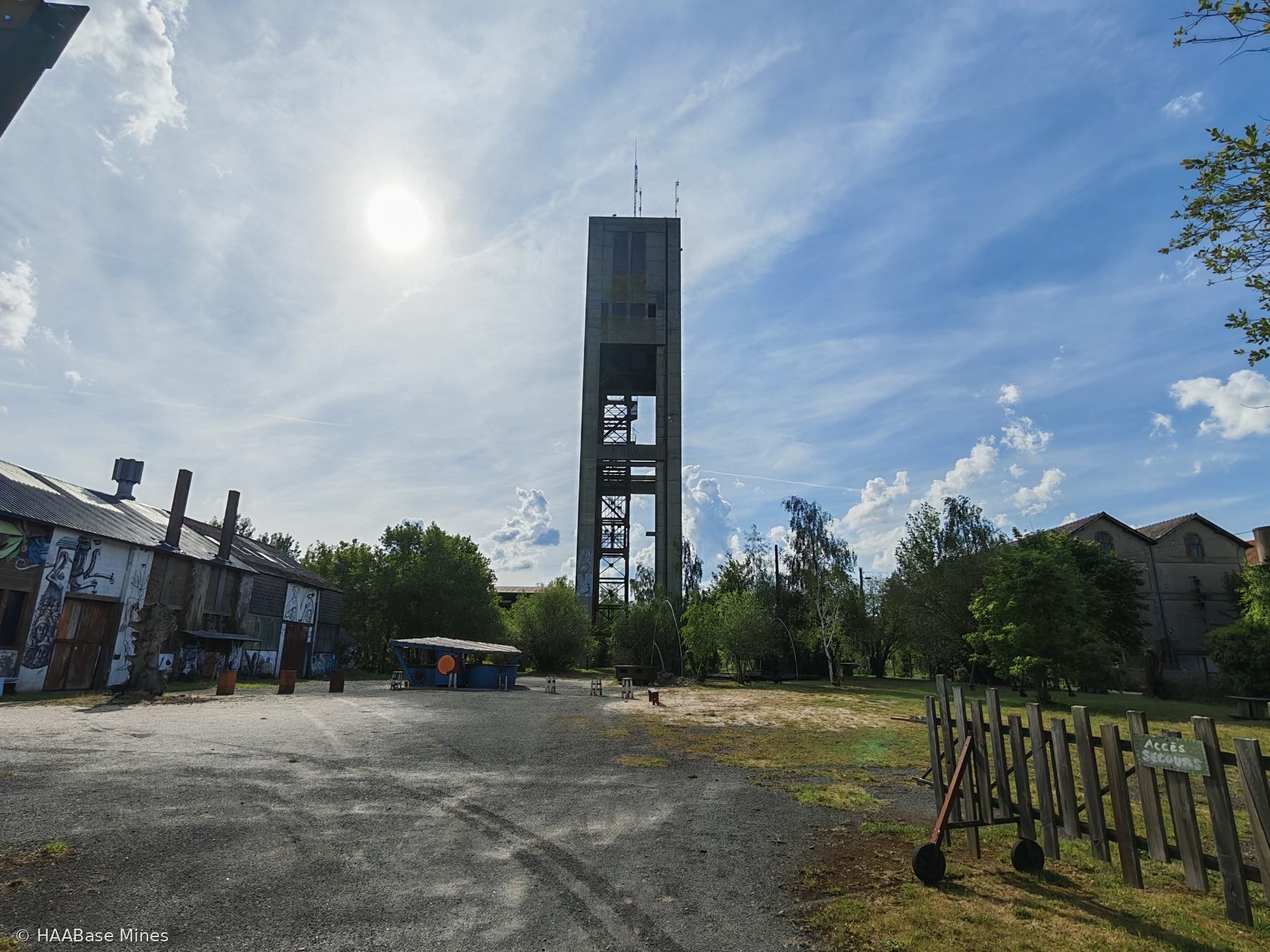
The puits Bois II at Nyoiseau, commune déléguée of Segré-en-Anjou Bleu, was the final operating shaft of the Société des Mines de Fer de Segré and the last iron ore extraction point in the Haut-Anjou basin. The concession du Bois was established by decree on 21 October 1874 across the communes of Noyant-la-Gravoyère and Nyoiseau. Deep underground reconnaissance began in the 1880s but industrial exploitation started only in the early twentieth century, with a railway connection to the gare de Noyant-la-Gravoyère in 1912.

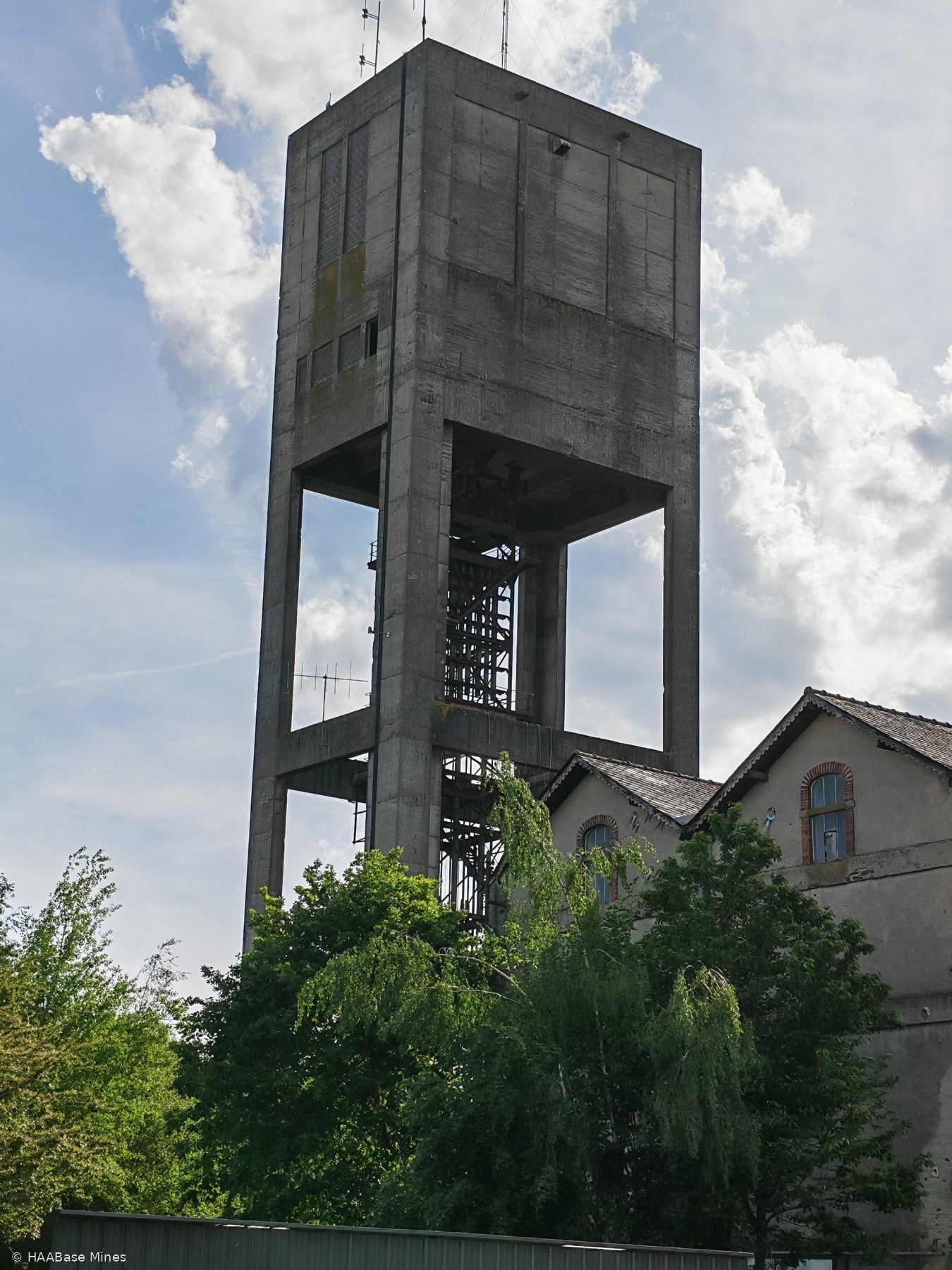
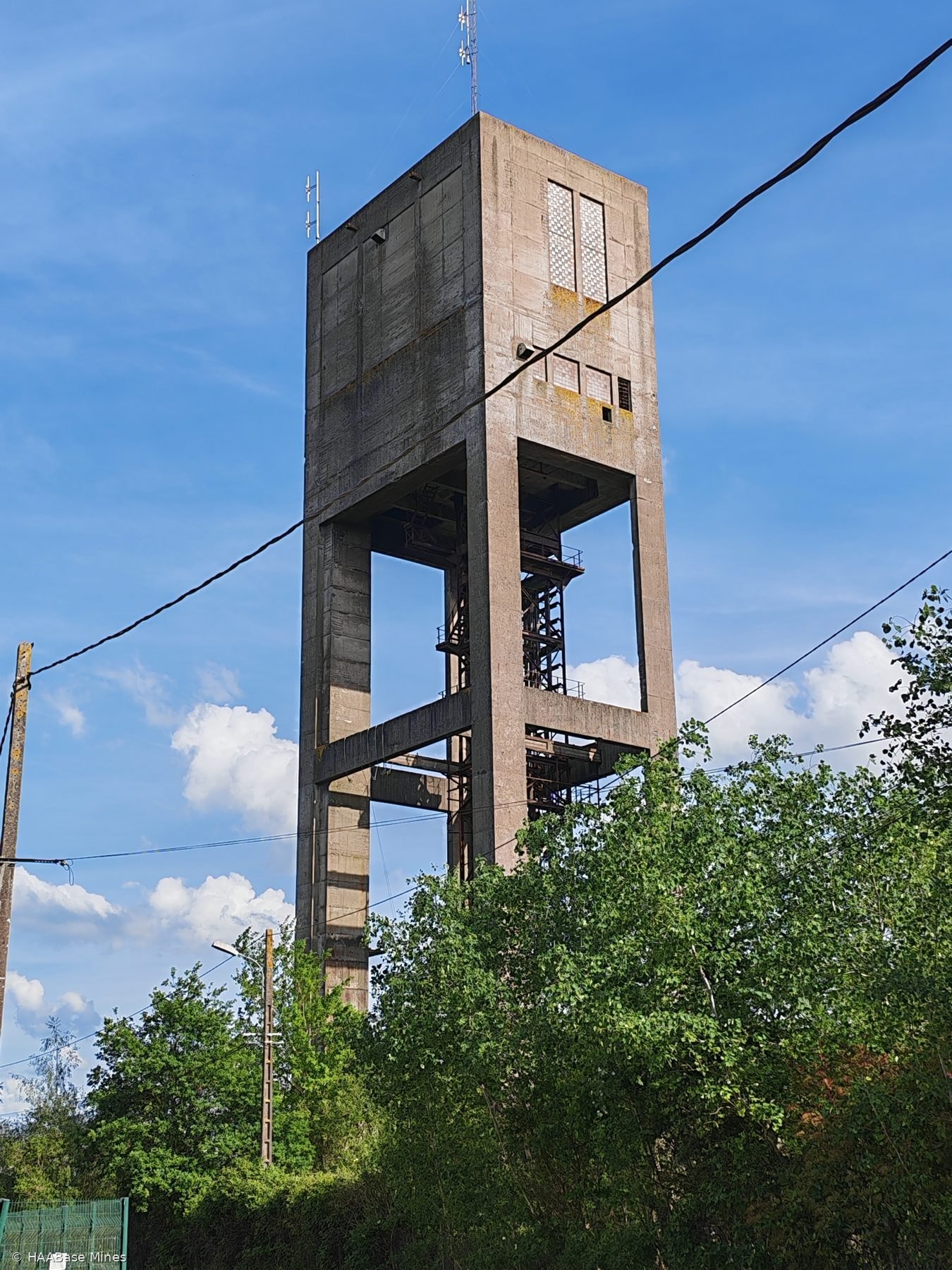
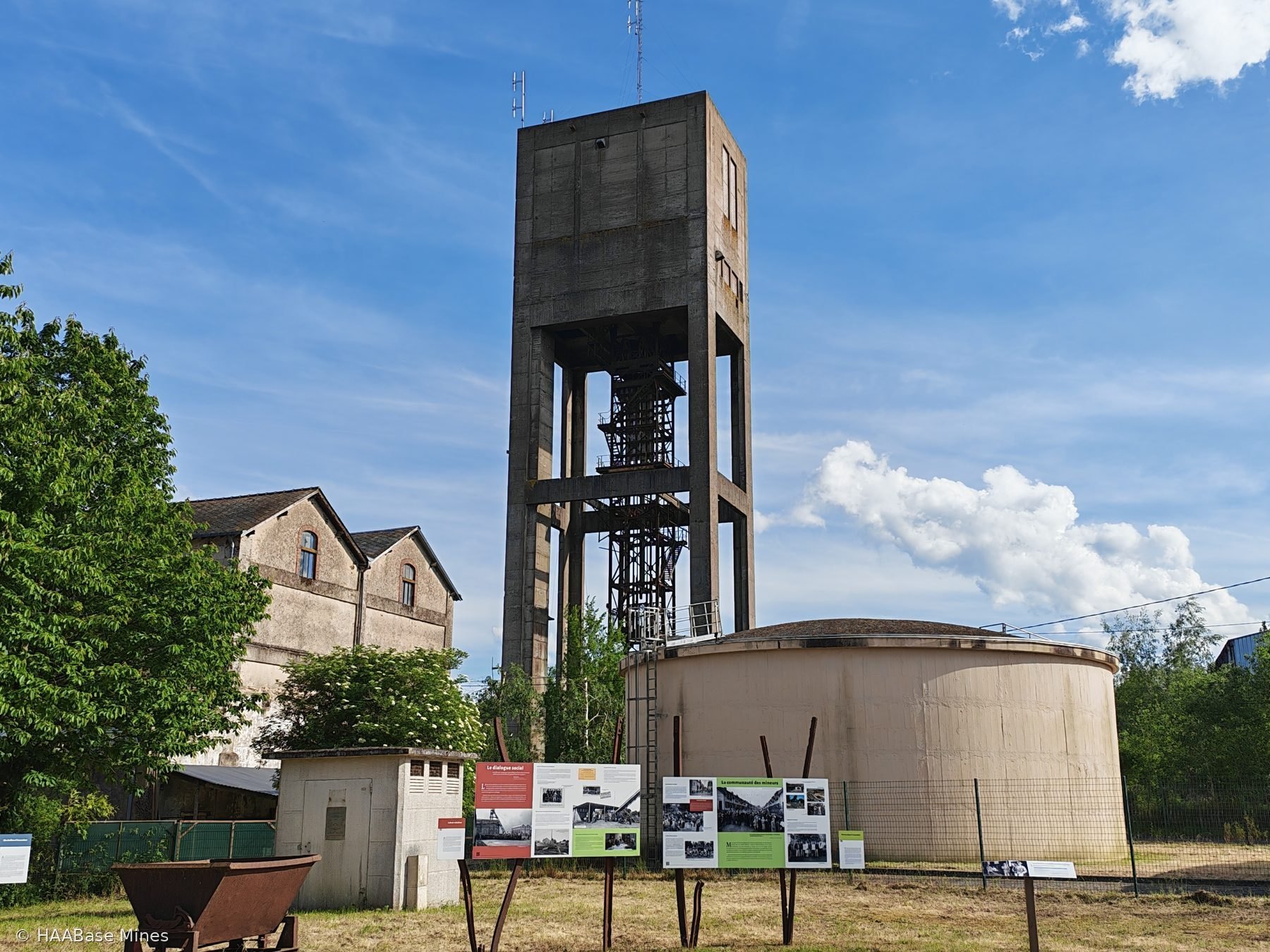
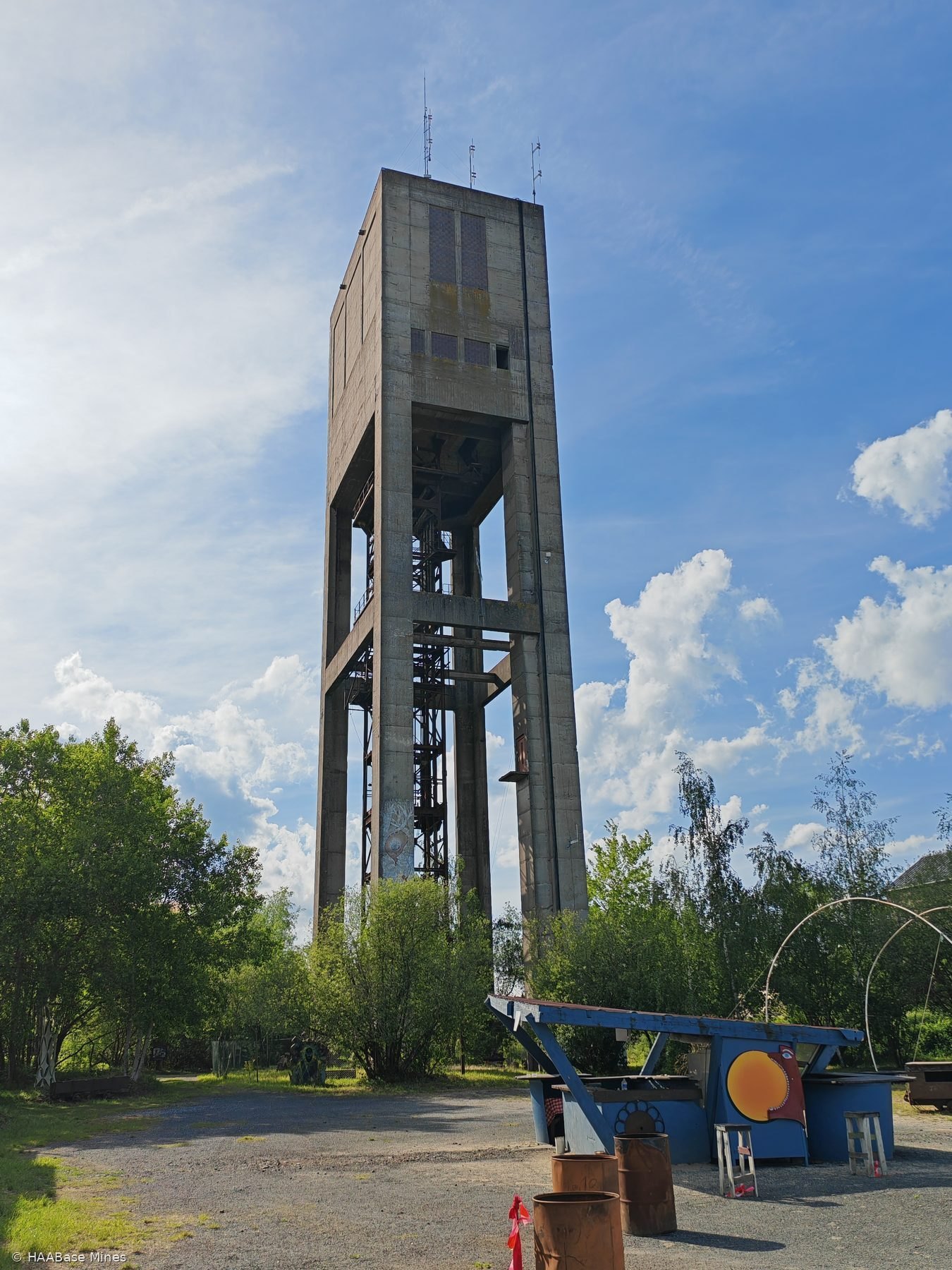
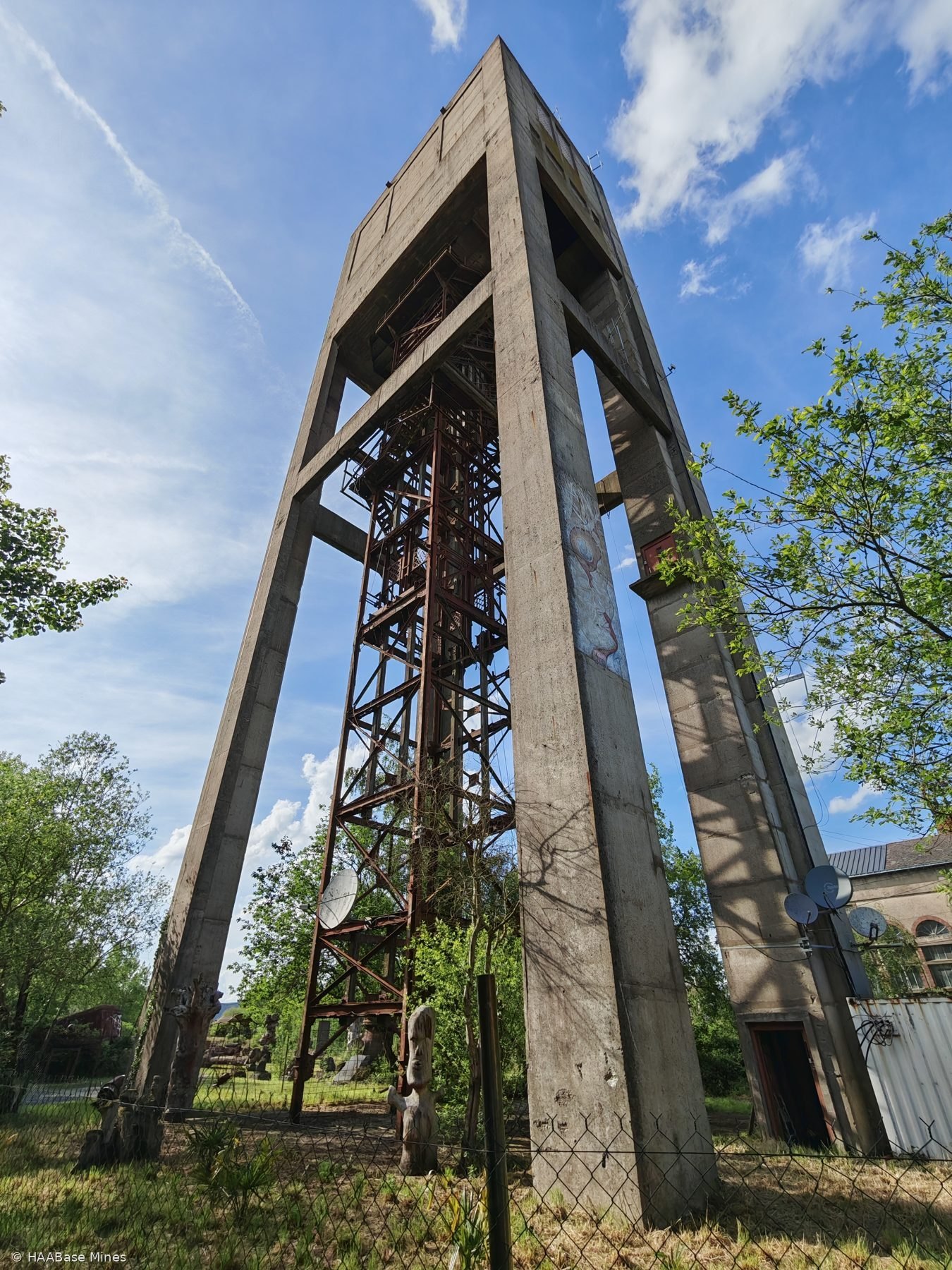
The puits Bois II was sunk to 200 metres in 1916 and later deepened to 600 metres. A major modernisation from 1950 replaced the original metal headframe with a reinforced concrete extraction tower of 57 metres equipped with a Koepe pulley machine; a new shaft at minus 600 metres was foncé in 1956 and a pelletisation atelier was added in 1964. The site closed on 31 July 1985.

It survives today as the most complete iron mining complex in western France, managed as a heritage and cultural site by Centrale 7 and the Association des Mines de Fer de l'Anjou.

Set in open rolling countryside at Nyoiseau, the extraction tower dominates an extensive former mine site that still reads as a major industrial complex.

Map & photo

Mines de Segré — Puits Bois II mine headframe or winding tower site
Photograph taken: 8 May 2026
Map markers and directions links are provided for location reference only and do not indicate public access or permission to enter a site.

History

The bassin ferrifère du Haut-Anjou is formed within Ordovician strata of the Armorican Massif, in which magnetite-bearing beds identified as layers A and B were deposited in Armorican sandstone and schist at depths between 40 and 400 metres, with a near-vertical to steeply inclined dip. The ore is magnetite, an iron oxide of 65 to 75 per cent iron content, significantly richer than the minette of Lorraine, but carrying phosphorus and silica that complicated its use in blast furnaces. The first industrial researches in the Anjou area intensified after 1872, following the loss of the Lorraine iron basin after the Franco-Prussian War.

The concession du Bois was established by decree on 21 October 1874, extending across the communes of Noyant-la-Gravoyère and Nyoiseau. The deposit was recognised in depth from the 1880s but active exploitation did not begin until the early twentieth century. At the outset, extraction was conducted by a travers-banc driven into the hillside above the Misengrain stream.

The concession du Bois joined the concessions of La Ferrière, les Aulnais, and de l'Oudon in 1878 to form the Société des Mines de Fer de l'Anjou et des Forges de Saint-Nazaire. Following successive restructurings, the Société des Mines de Fer de Segré was formally constituted on 8 May 1911 by the Usines Métallurgiques de la Basse-Loire. A rail connection linking the Bois II site to the gare de Noyant-la-Gravoyère was completed in 1912.

Projects for stores, offices, and a forge workshop date from 1914 to 1916. The puits Bois I was sunk in 1911 to minus 80 metres. The puits Bois II was sunk in 1916 to minus 200 metres and equipped with a metal headframe identical in form to that subsequently erected at the puits Bois III.

Several industrial buildings were constructed at this date, including the pont de la Chantelais. The salle des machines, covered by a metal frame roof, was built between 1929 and 1932. From 1922 the Bois and Aulnais concessions were connected underground, and production was progressively concentrated on a single shaft.

From 1950 a major new development phase began: the original metal headframe of the puits Bois II was replaced by a reinforced concrete extraction tower of 57 metres, resting on four legs and equipped with a Koepe pulley extraction machine. The faux-carré of the earlier metal headframe was retained within the four legs of the new tower. Buildings for the recette and triage were newly constructed, and crushing and screening equipment was modernised between 1956 and 1959.

A new, deeper shaft was foncé to minus 600 metres in 1956. In 1964 an atelier was built for the fabrication of ferruginous bentonite pellets, a process that pelletised the magnetite ore into compact spheres suitable for blast furnaces and also allowed enrichment of the ore. By the 1960s annual production exceeded 500,000 tonnes.

From the 1970s, competition from richer and cheaper imported ores and the structural contraction of European steel production drove progressive decline. Strikes and industrial disputes in 1978 and 1979 signalled the terminal phase. Active mining ceased in 1984 and the last remontée took place on 31 July 1985, when the puits Bois II was flooded.

This event ended iron ore extraction across the entire Haut-Anjou basin, having lasted approximately a century since the first concessions. In total, 15 million tonnes of magnetite were extracted from the basin. After closure, the carreau de Bois II was acquired by the commune of Nyoiseau.

The collective Centrale 7, an arts and cultural organisation, subsequently took up occupation of the buildings, enabling their preservation and partial restoration. The Association des Mines de Fer de l'Anjou was established to safeguard and valorise the site. A Parcours découverte, the outdoor exhibition 'Sur les pas des Mineurs de Fer', was developed around the surviving metal headframe of the puits Bois III and the buildings of puits Bois II, with guided visits available on reservation.

The site retains the 57-metre reinforced concrete tower of the puits Bois II, the former salle des machines of the original metal headframe period, the pelletisation atelier, and masonry arch viaducts that carried the ore conveyor belt. The carreau de Bois II is recognised as the most complete iron mining complex surviving in western France.
Timeline

1874
Legislation

Concession du Bois established by decree

The concession du Bois was established by decree on 21 October 1874, extending across the communes of Noyant-la-Gravoyère and Nyoiseau. The deposit was recognised in depth from the 1880s but active exploitation did not begin until the early twentieth century.
1878–1911
Legislation

Formation of successive companies; Société des Mines de Fer de Segré constituted

From 1878 the Bois, La Ferrière, and les Aulnais concessions formed the Société des Mines de Fer de l'Anjou et des Forges de Saint-Nazaire, with the Oudon concession joining in 1881. After restructurings and a faillite, the Société des Mines de Fer de Segré was formally constituted on 8 May 1911 by the Usines Métallurgiques de la Basse-Loire.
1912
Construction

Rail connection completed to gare de Noyant-la-Gravoyère

In 1912 a rail connection was established linking the Bois II site to the gare de Noyant-la-Gravoyère. Projects for stores, offices, and a forge workshop date from the same period, 1914 to 1916.
1916
Construction

Puits Bois II sunk to 200 metres; surface buildings constructed

The puits Bois II was sunk in 1916 to minus 200 metres and equipped with a metal headframe identical in form to the later Bois III headframe. Several industrial buildings were constructed including the pont de la Chantelais. The salle des machines with its metal roof frame was built between 1929 and 1932.
1922
Operation

Bois and Aulnais concessions connected underground

From 1922 the Bois and Aulnais underground workings were connected, and production was progressively concentrated on single shaft operations.
1950–1964
Construction

Major modernisation: concrete tower replaces metal headframe; puits deepened to 600 m; pelletisation atelier built

From 1950 the original metal headframe of the puits Bois II was replaced by a reinforced concrete extraction tower of 57 metres equipped with a Koepe pulley machine. The faux-carré of the original headframe was retained within the four legs of the new tower. Recette and triage buildings were constructed; crushing and screening equipment was modernised between 1956 and 1959. A new shaft was foncé to minus 600 metres in 1956. In 1964 a pelletisation atelier was built to produce ferruginous bentonite pellets for blast furnaces.
1960
Operation

Annual production exceeds 500,000 tonnes

By the 1960s annual production across the basin exceeded 500,000 tonnes, with Bois II as the primary extraction centre.
1984–1985
Closure

Final closure: last ore raised 31 July 1985; shaft flooded

Active mining ceased in 1984. The last remontée took place on 31 July 1985, after which the puits Bois II was flooded. This ended iron ore extraction across the entire Haut-Anjou basin. Total extraction across the basin amounted to 15 million tonnes.
1985
Heritage

Centrale 7 artistic collective and Association des Mines de Fer de l'Anjou preserve and valorise the site

After closure, the carreau de Bois II was acquired by the commune of Nyoiseau. The Centrale 7 artistic collective occupied the buildings, enabling their preservation. The Association des Mines de Fer de l'Anjou developed the outdoor heritage route 'Sur les pas des Mineurs de Fer' with guided visits. The site is recognised as the most complete iron mining complex surviving in western France.
Sources and records

Mérimée / POP heritage inventory notice IA49002143, mine de fer de la Société des mines de fer de Segré, concession du Bois II
Patrimoine-minier.fr, Mines de fer du Haut-Anjou section
Exxplore website, Les mines de fer du Haut-Anjou section, carreau de Bois II/III
Association des Mines de Fer de l'Anjou website (minesdefer-anjou.fr)
Anjou Tourisme, Parcours découverte Sur les pas des mineurs de fer
Office de Tourisme de l'Anjou Bleu, Parcours découverte entry
Wiki-Anjou: Nyoiseau commune article
FranceArchives, Fonds de la société minière des mines de fer de Segré
Marc Bergère, Un siècle de fer dans le Segréen, Annales de Bretagne et des Pays de l'Ouest, t. 104, n°3, 1997
This researched site record is part of the HAABase Mines database. Normal personal research and browsing is welcome. Automated bulk extraction, republication, or harvesting of site text and images is not permitted without written consent.