History
The Puits de la Tranchée stands on the quai Monseigneur Provost at Montjean-sur-Loire, a commune déléguée of Mauges-sur-Loire since 2016, on the left bank of the Loire in Maine-et-Loire. The site lies within the sillon houiller du bassin de la Basse-Loire, a geological formation of Namurian age, exploited by eleven concessions along the river corridor. The extraction of coal in the Montjean area is first attested in written sources from 1541.
In 1743 the seigneur of Montjean, the baron René de Mailly, obtained a royal privilege authorising the modernisation of extraction at the site. The concession of la Tranchée was formally constituted in 1806. The shaft was sunk before 1839 under the direction of the Compagnie minière d'Evain.
In 1822 a Watt steam engine was installed to drive the winding mechanism and to manage water infiltration by pumping. At the time of its installation, the steam engine gave its name to the building that housed it; the same building also provided accommodation for the maintenance technician responsible for the machinery. The shaft ultimately reached a depth of 185 metres.
The coal seams of the Basse-Loire basin consist of seven layers alternating with schists, folded and presenting a dip of between 50 and 80 degrees. The veins are narrow, between 40 centimetres and 1.5 metres in width, and heavily faulted. The Montjean coal was too lean and too flameless to interest the iron-smelting industry and its primary use was to fuel the local lime kilns.
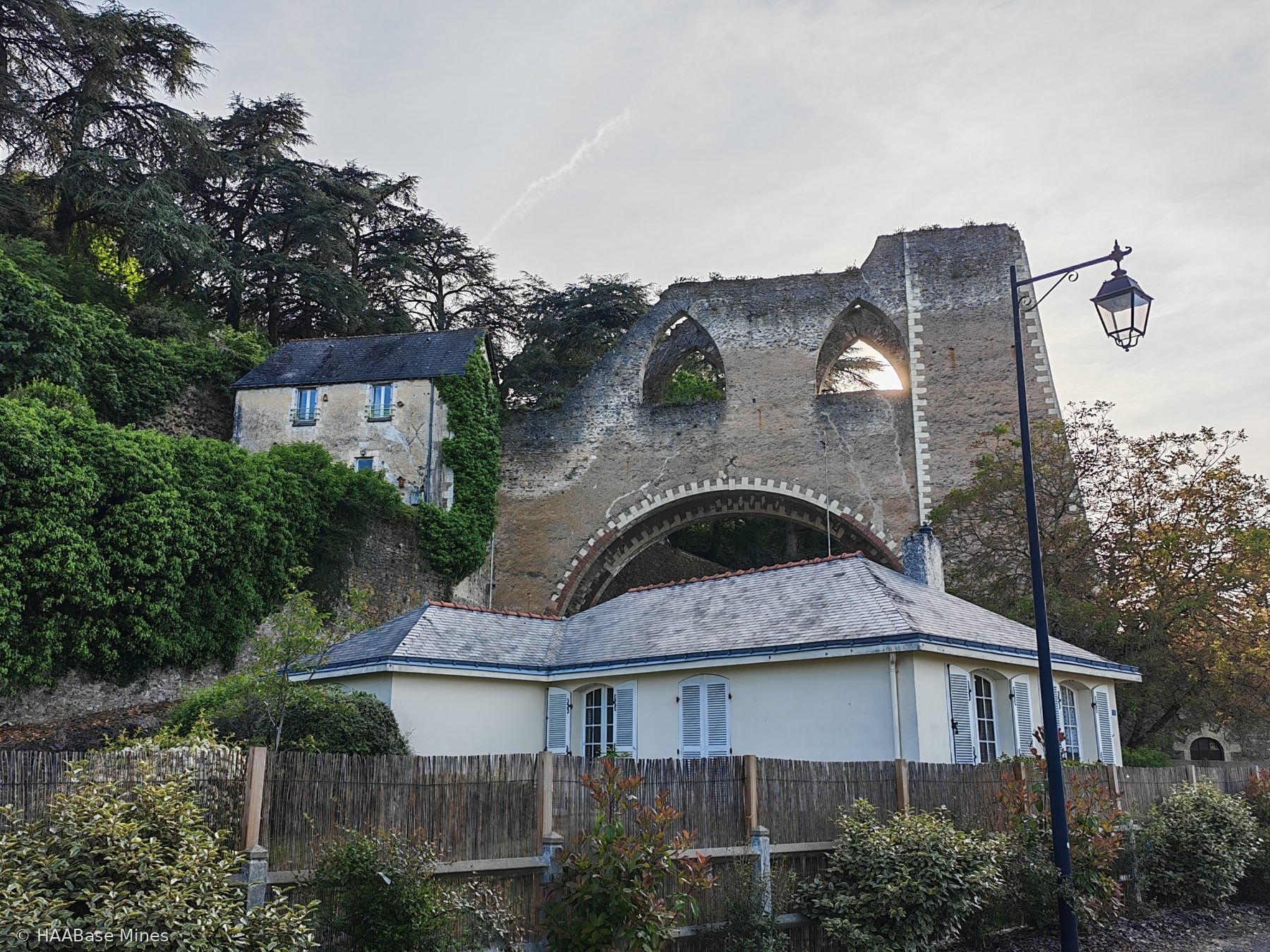
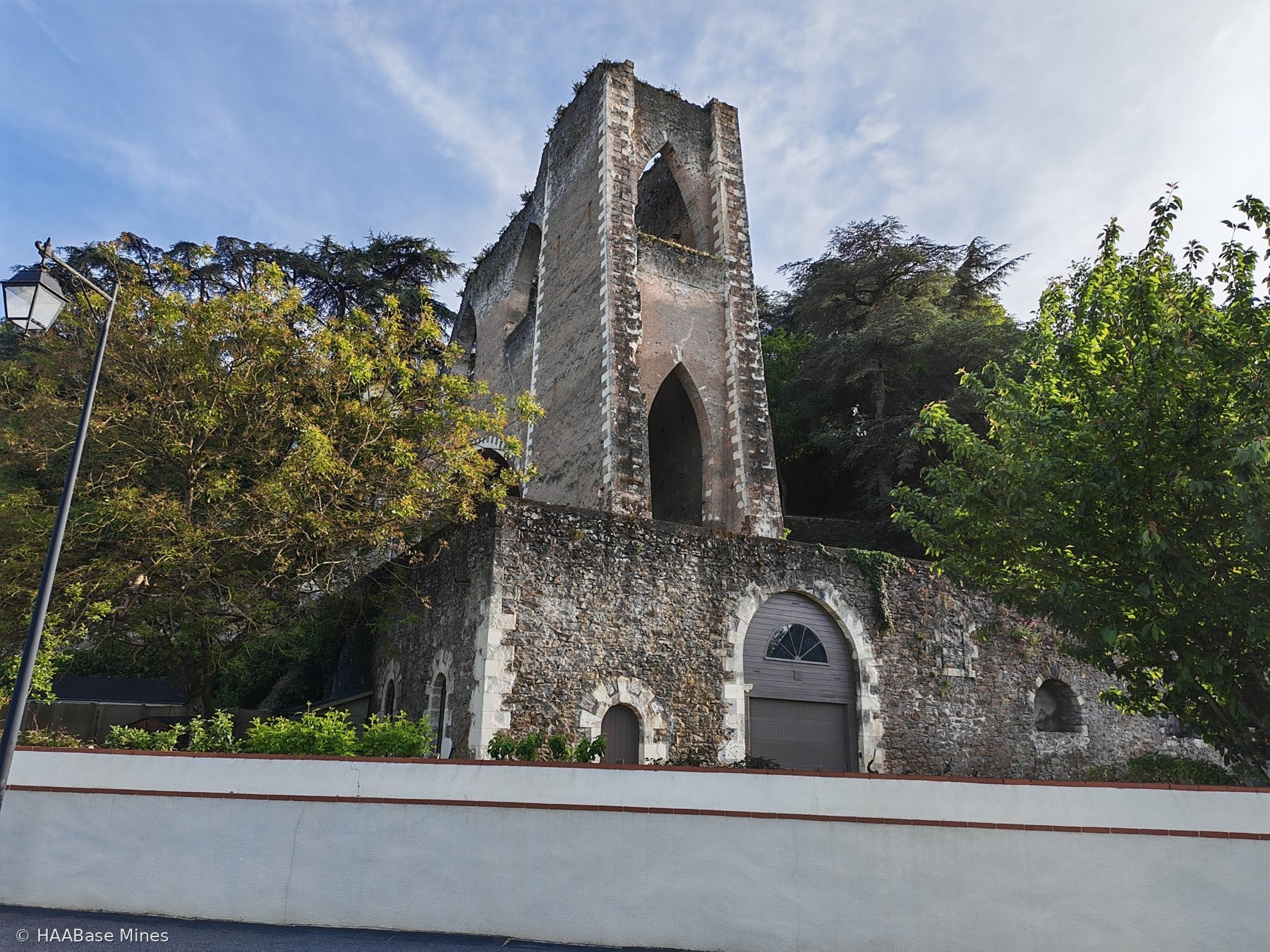
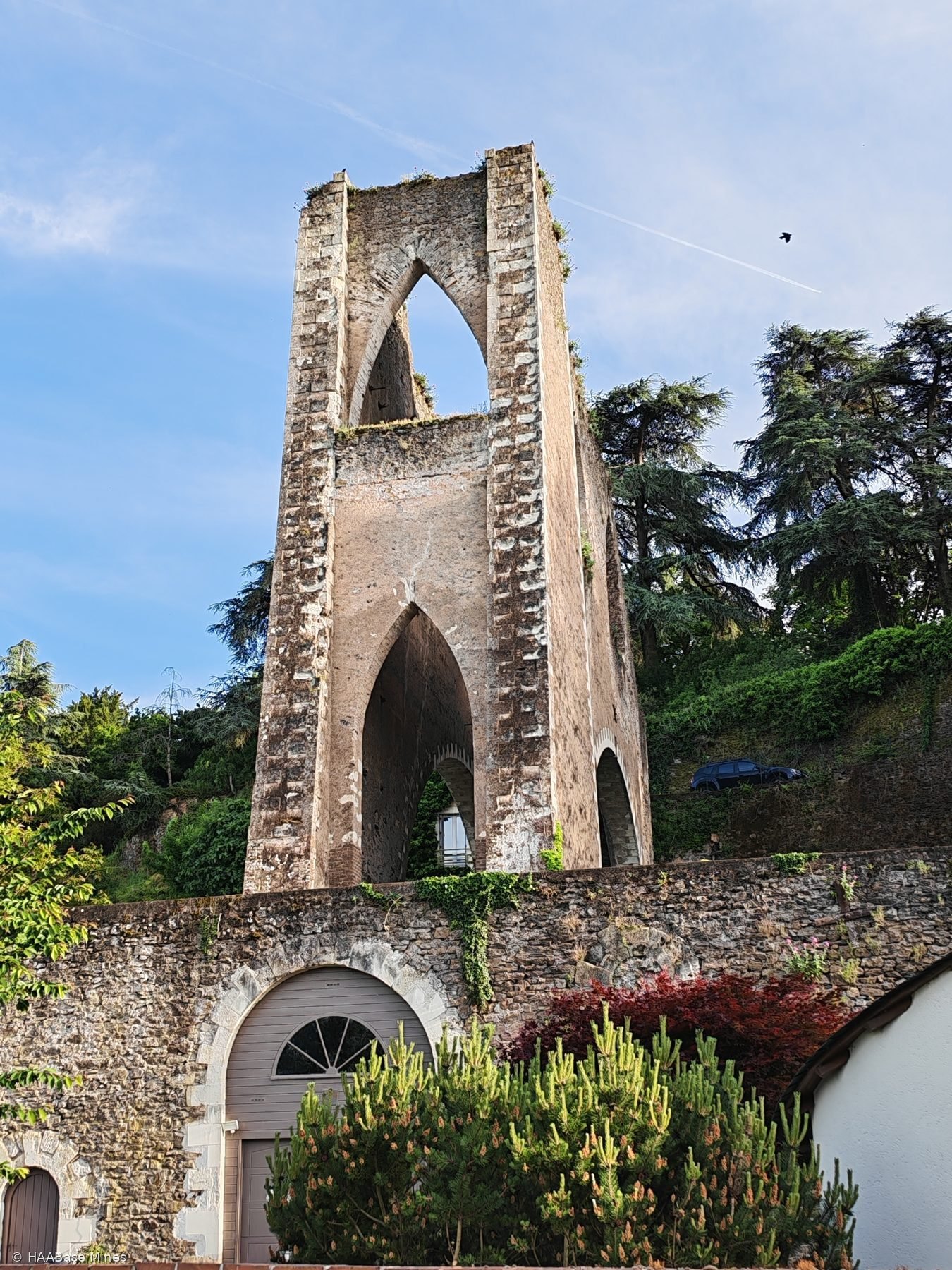
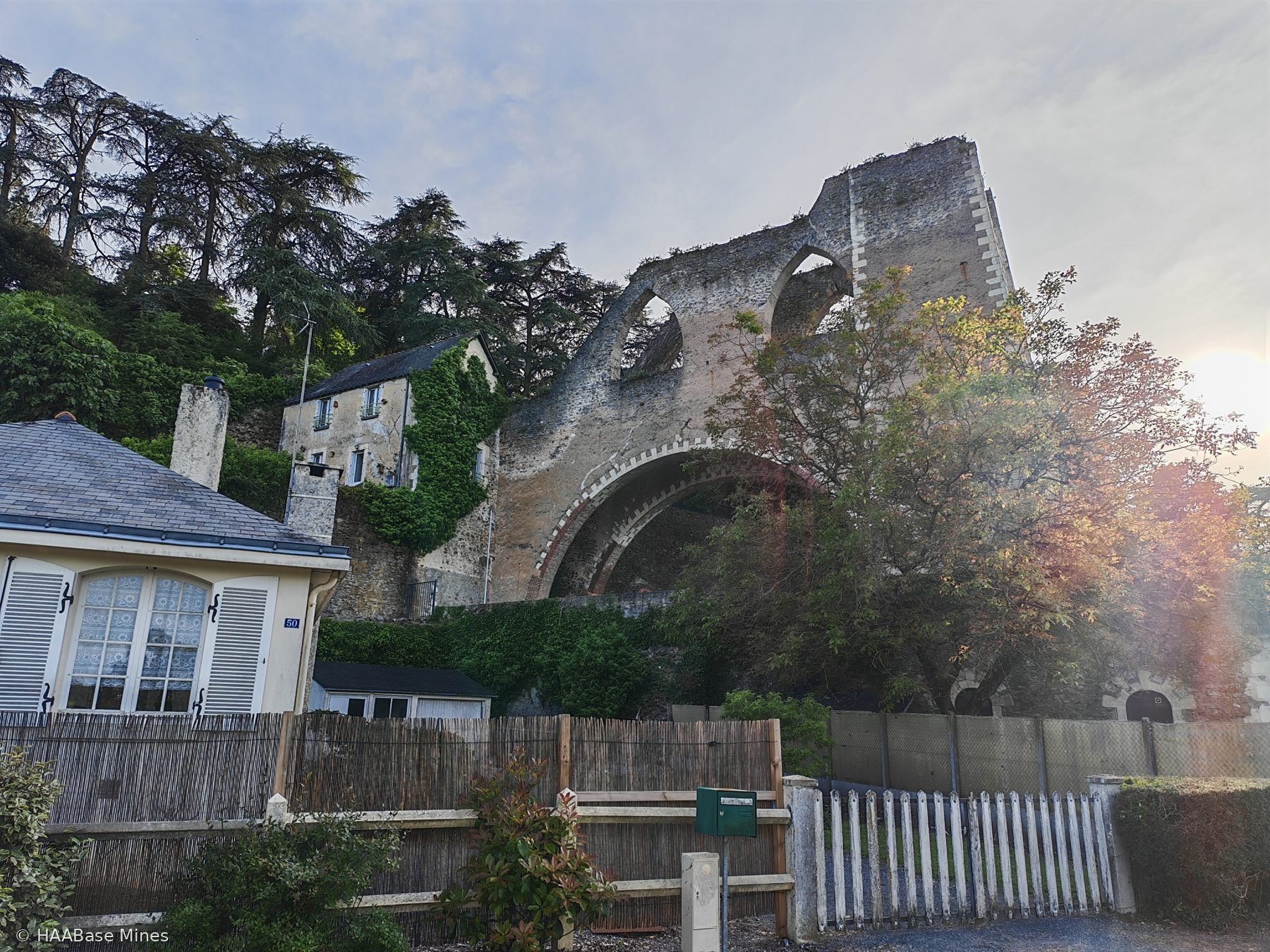
In 1874 the decision was taken to rebuild the headframe in a monumental form. The Belgian architect Edmond Heusschen was commissioned, and he designed a tall and narrow masonry stone building of hangar type, 32 metres in height, enclosing the internal wooden structure that supported the winding sheave. Heusschen completed the structure in 1875.
It is the most massive of the thirteen masonry headframes surviving in France, and the most powerful in terms of structural scale. Simultaneously in 1875, seven lime kilns were constructed at the site, assembled in a building of truncated pyramidal form, varying from 7 to 14 metres in height and from 8 to 16 metres at the base. A narrow-gauge railway connected the mine and an adjacent limestone quarry to the kiln battery, and a river port at the foot of the site enabled the despatch of lime by water to regional markets.
The coal raised directly from the shaft via the winding sheave fed the kilns, where local limestone was calcined to produce lime. The lime and coal industries functioned as an integrated complex. Production reached its apogee in 1891 with an annual output of 16,206 tonnes of coal.
Both the coal extraction and the lime production ceased in 1892. Over the entire operational history of the mine, 500,000 tonnes of coal were extracted in total. After 1892 the surface structures fell into gradual disuse.
The site passed into private ownership. At the beginning of the twentieth century multiple pits were still recorded in the Montjean area — the puits de la Loire, the puits du Cerisier, the puits du Village, the puits des Marronniers, the puits Arthur, and the puits Ouest — but coal production in the commune as a whole ceased in the early twentieth century. The Tranchée site, with its distinctive ensemble of headframe, engine house, seven kilns, quay, and limestone plateau, was inscribed on the Monuments Historiques by arrêté of 1 March 2004.
The protected elements include the masonry headframe with the engine room and the mechanic's dwelling, the battery of seven lime kilns, and the terrain d'assiette of the entire ensemble. The site remains in private ownership and is visible from the riverside quay.
Sources and records
Wikipedia (French): Mine de charbon de la Tranchée
Mérimée / POP heritage inventory notice PA49000044, ancienne mine de charbon de la Tranchée
Monumentum heritage listing PA49000044
Wiki-Anjou: Mine de charbon de La Tranchée
Exxplore website, Houillères Angevine section, puits de la Tranchée and fours à chaux entries
Ôsez Mauges tourism website, Chevalement du Puits de la Tranchée entry
En Pays de la Loire tourism website, Chevalement du Puits de la Tranchée entry
Philippe Cayla, Paysages miniers en Anjou, Annales de Bretagne, 1989, digitised on Persée
Pierre-Christian Guillard, Les chevalements des houillères françaises, 1993
H. Etienne et J.-C. Limasset, Ressources en charbon de la région Pays-de-la-Loire, BRGM, 1979