Site overview

Highhouse Colliery was a coal mine developed at Merlinhill Farm near Auchinleck, East Ayrshire, by William Baird & Company to supply coal to the Lugar Ironworks. The colliery was sunk in 1895 to 1896 and operated with two shafts reaching 177 and 174 metres in depth. A steam winding engine built around 1896 by Grant, Ritchie & Company of Kilmarnock was installed on one shaft, and the wooden headframe was replaced in steel around 1968.

The colliery was acquired by Bairds & Dalmellington Ltd in 1931 and passed to the National Coal Board on nationalisation in 1947. A pit fire in 1908 required rebuilding. The colliery closed in 1983.

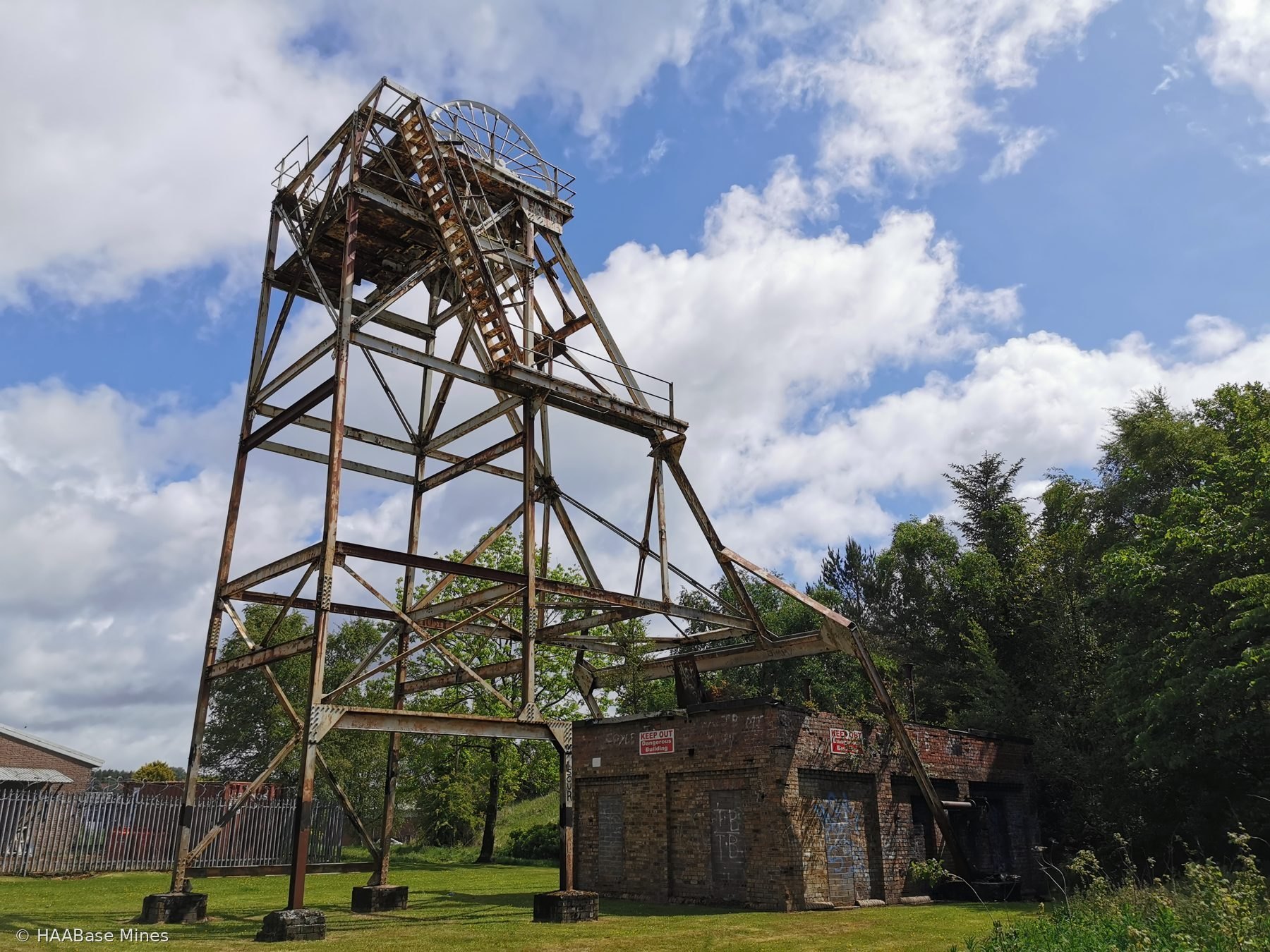
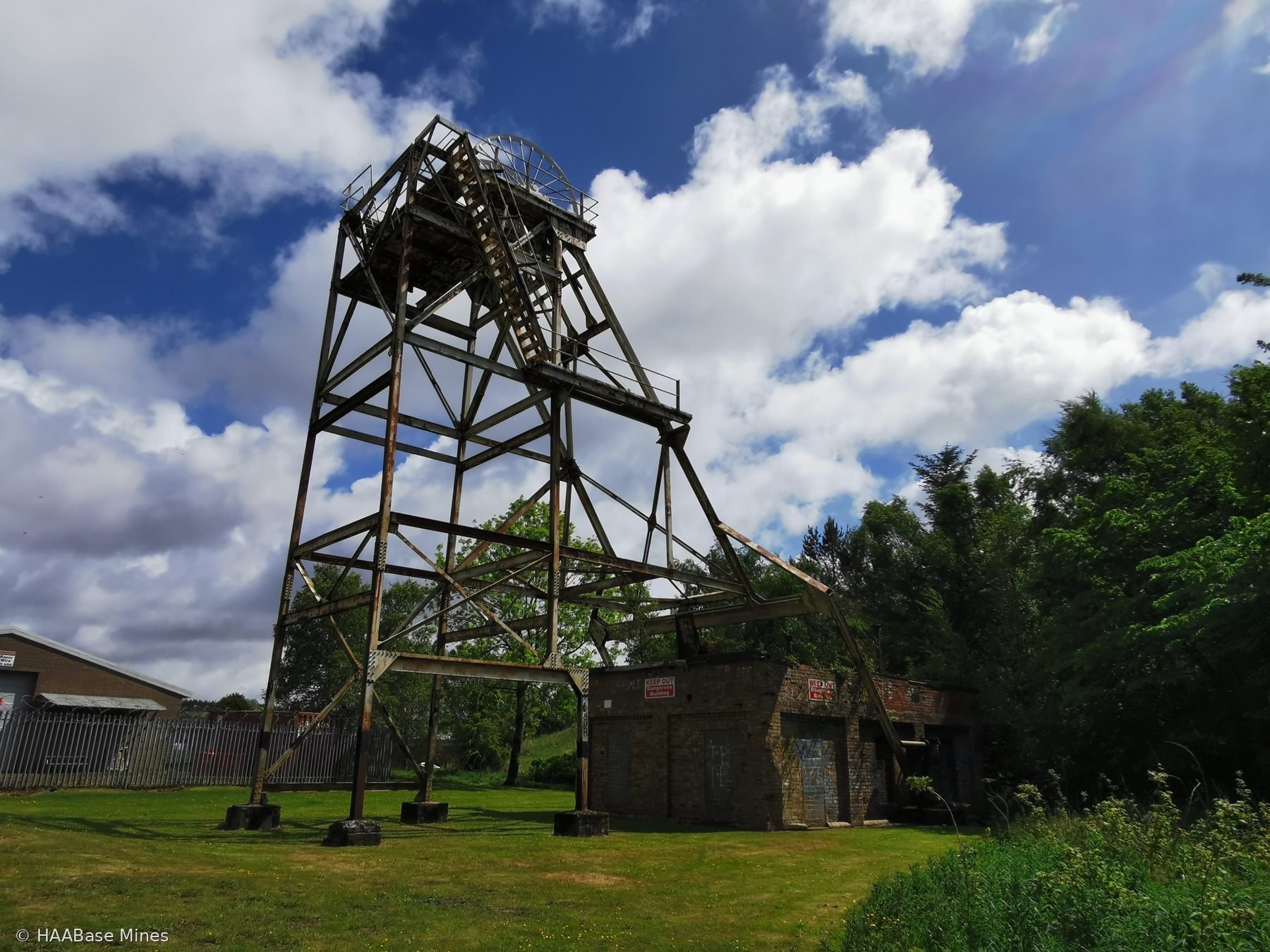
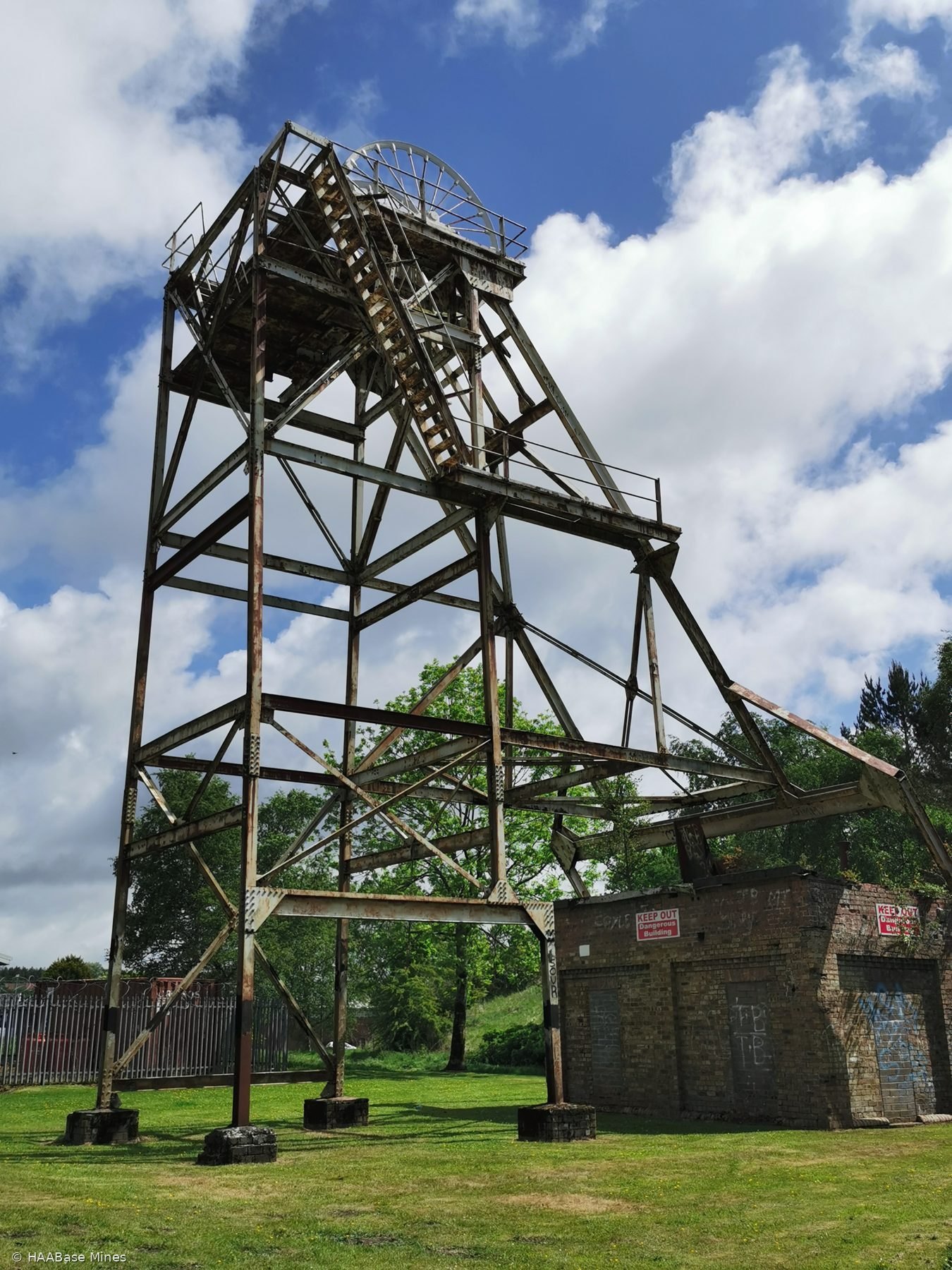
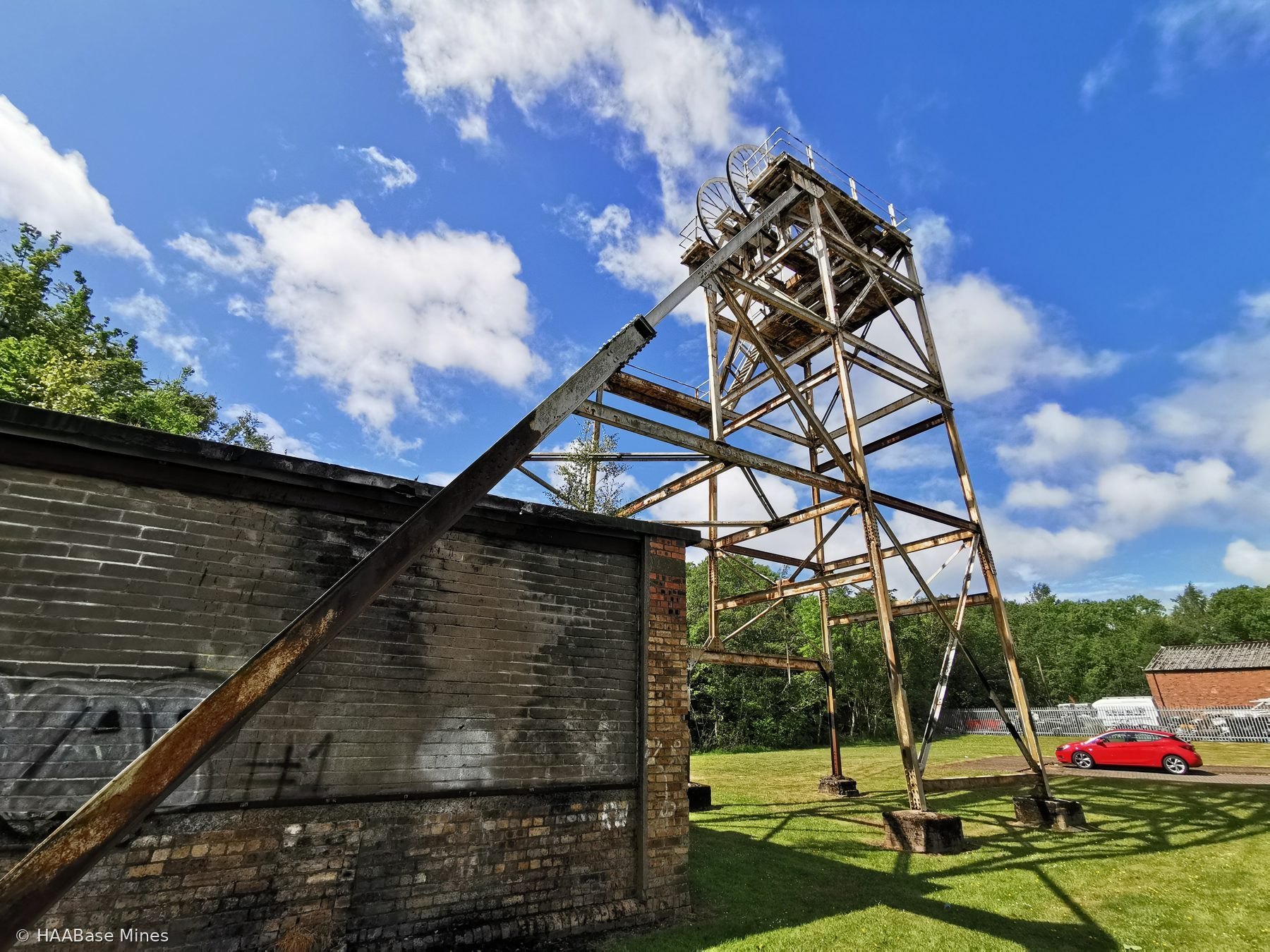
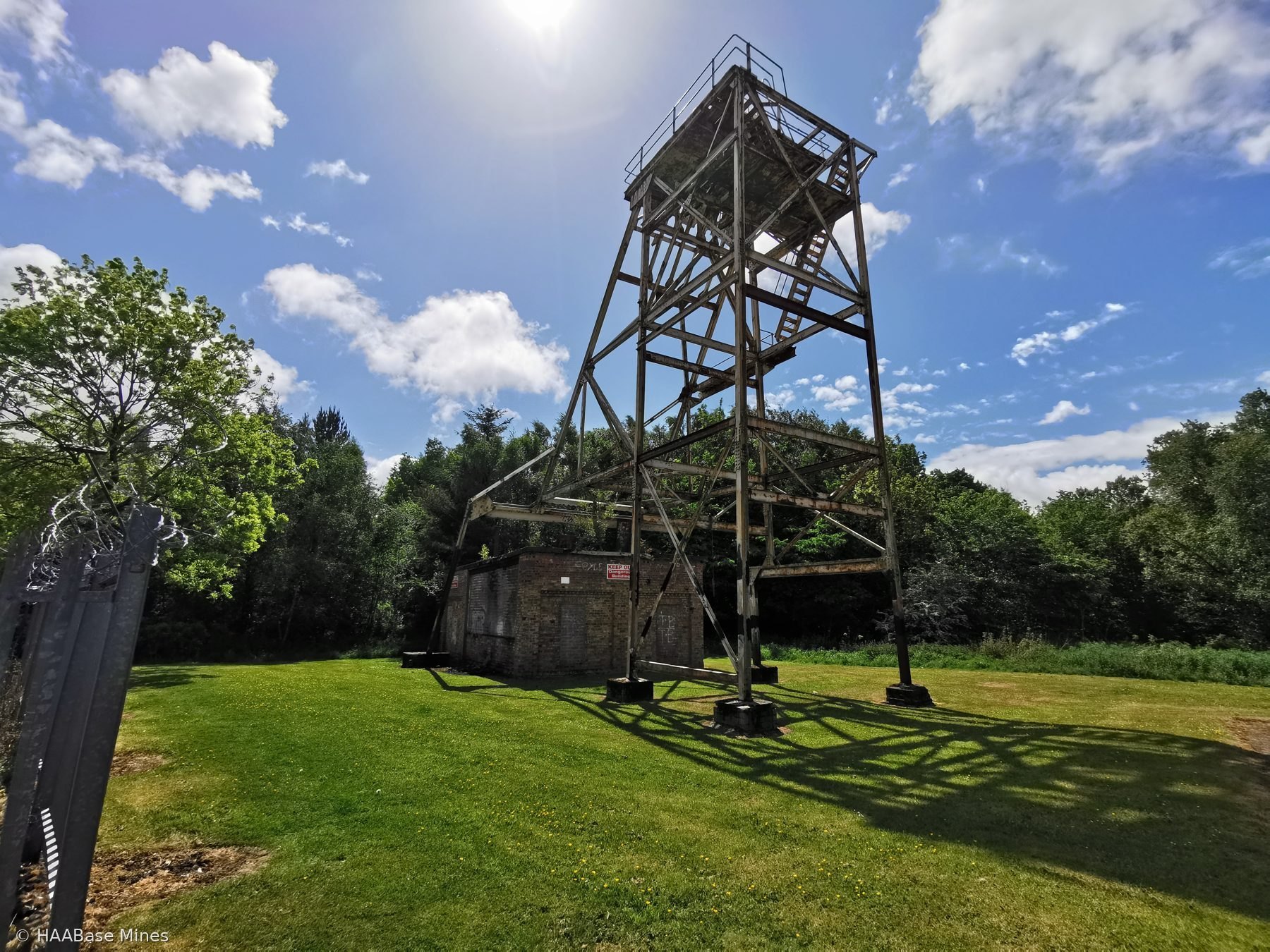
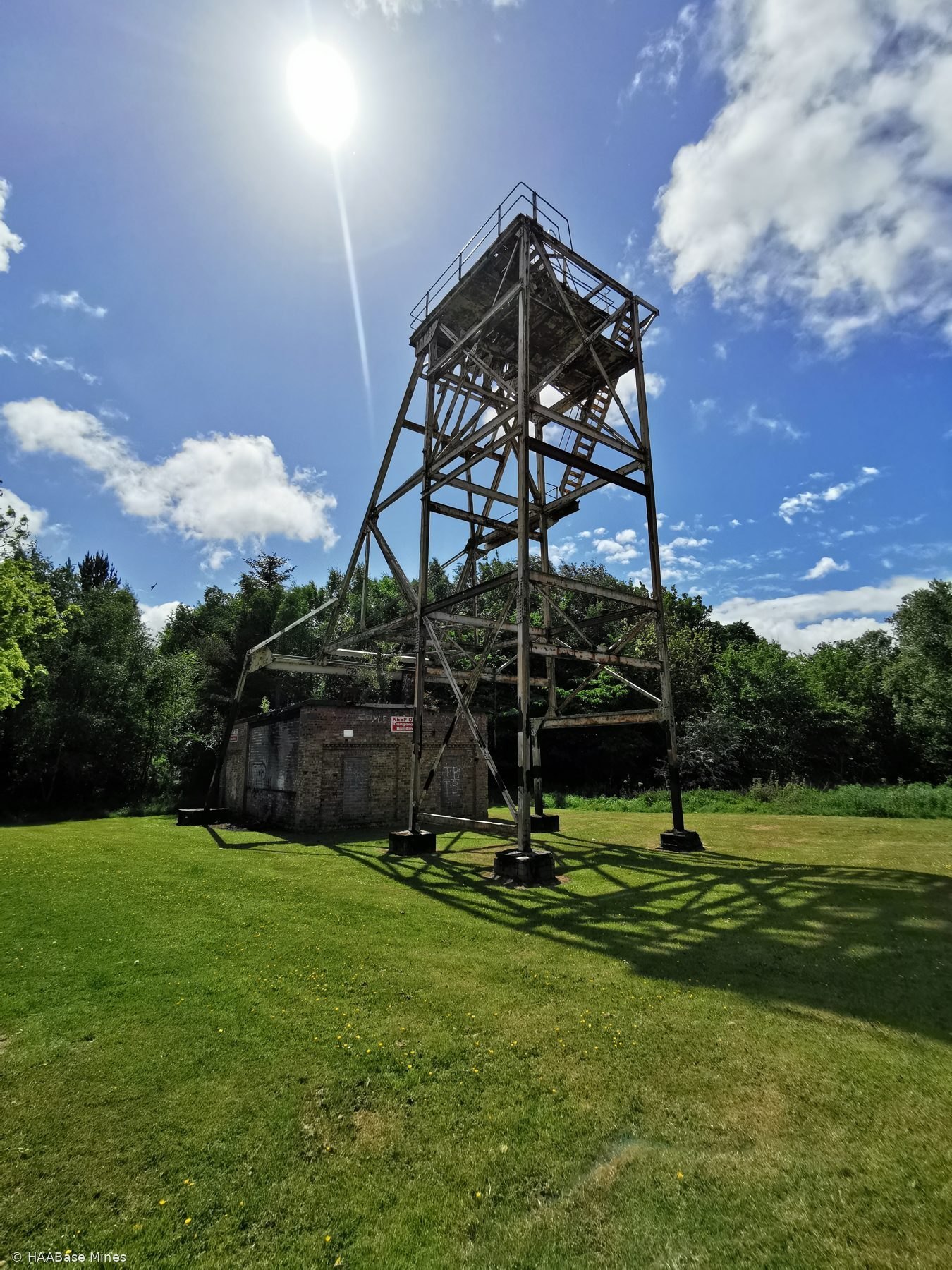
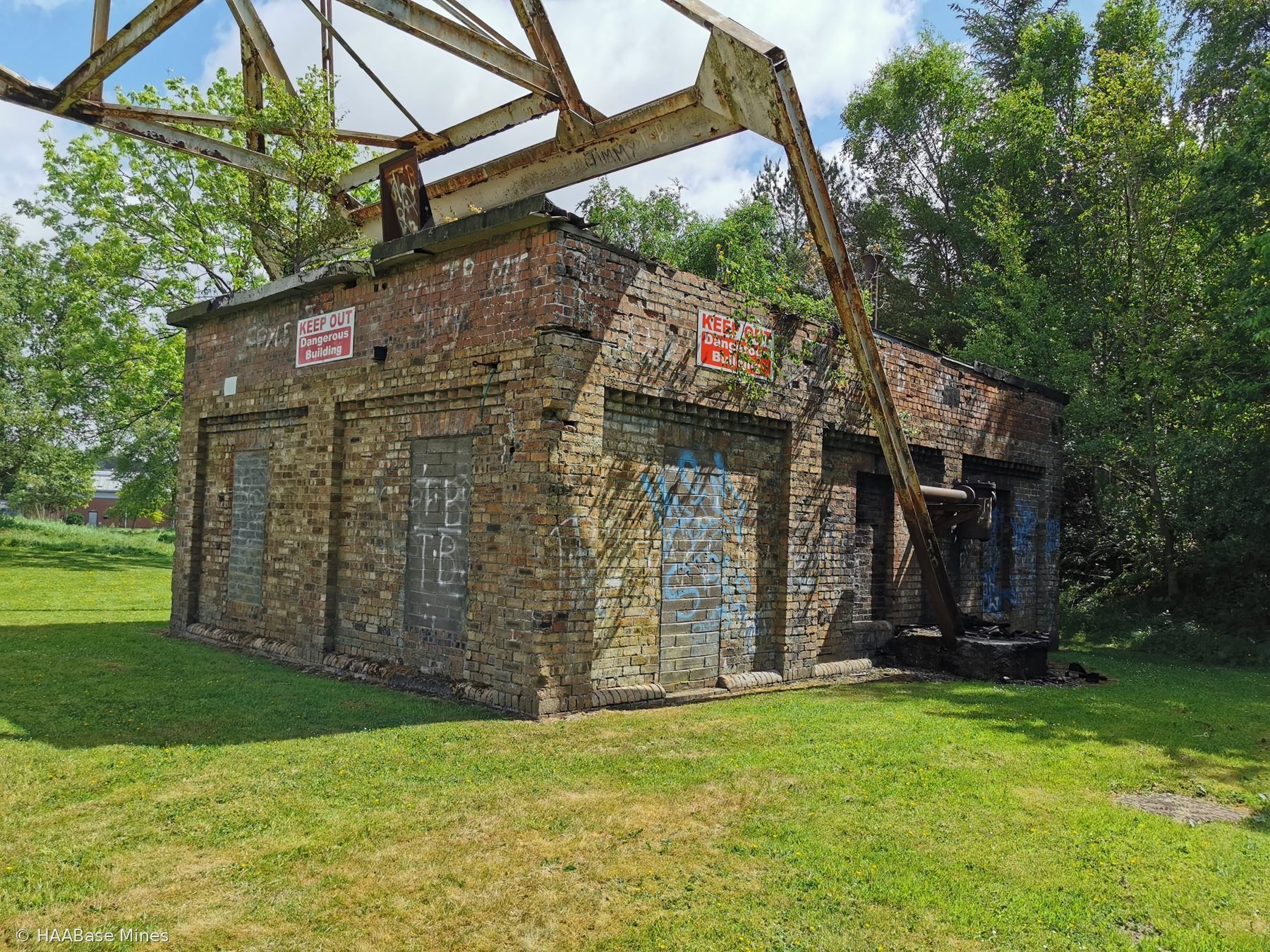
The 1896 winding engine and its engine house, together with the steel headframe, survive in situ on the site of the former Highhouse Industrial Estate and are category B listed buildings, listed in 1992. The headframe is considered to be the last 'traditional' headframe built in Scotland and the engine is, apart from that at Lady Victoria Colliery, Newtongrange, the only steam winding engine remaining in situ in Scotland.

The site stands within a mixed industrial-edge landscape near Auchinleck, where surviving buildings and headframe form a compact historic group amid later commercial and industrial use.

Map & photo

Highhouse Colliery mine headframe or winding tower site
Photograph taken: 25 May 2025
Map markers and directions links are provided for location reference only and do not indicate public access or permission to enter a site.

History

Highhouse Colliery was developed by William Baird & Company at Merlinhill Farm, to the south of Auchinleck station, to supply coal to the Lugar Ironworks. The colliery was sunk between 1895 and 1896 with two shafts; No. 1 reached 177 metres and No. 2 reached 174 metres in depth. The colliery was served by a short, tightly curved branch railway making a trailing connection to the northbound main line at Auchinleck, with exchange sidings in the fork of the junction at the station.

At the time of opening, a secondhand beam engine was employed as a haulage engine at the colliery. This engine had originally been built in Bridgeton, Glasgow in 1790 by Walkinshaw and had previously been used in the Blair collieries. In 1875 it was relocated to Craigston Pit, ironstone mines near the Lugar Iron Works, before being moved to Highhouse around 1894. The engine was subsequently removed to Heriot Watt College in Edinburgh in 1956. In addition to this haulage engine, a steam winding engine was installed around 1896, built by Grant, Ritchie & Company of Kilmarnock, with two horizontal cylinders of 20-inch (0.5 metre) diameter by 4-foot (1.22 metre) stroke, and a drum 10 feet (3.05 metres) by 6 feet 7 inches (2.01 metres) wide. The engine was fitted with Stephenson's link valve gear, operating slide valves, with reversing by hand.

In 1908 a pit fire broke out at Highhouse, after which rebuilding was required. New headgear with metalwork by Dorman Long was erected following the fire. The colliery was working house and steam coal seams. The surface buildings were of steel-framed, corrugated-iron-clad construction.

In 1931 William Baird & Company merged with the Dalmellington Iron Company to form Bairds & Dalmellington Ltd, which thereby acquired Highhouse Colliery. The colliery had been acquired by Bairds & Dalmellington by 1931, according to the Coal and Community research record, which identifies it as having been acquired in 1931. The colliery passed to the National Coal Board on nationalisation of the coal industry in 1947.

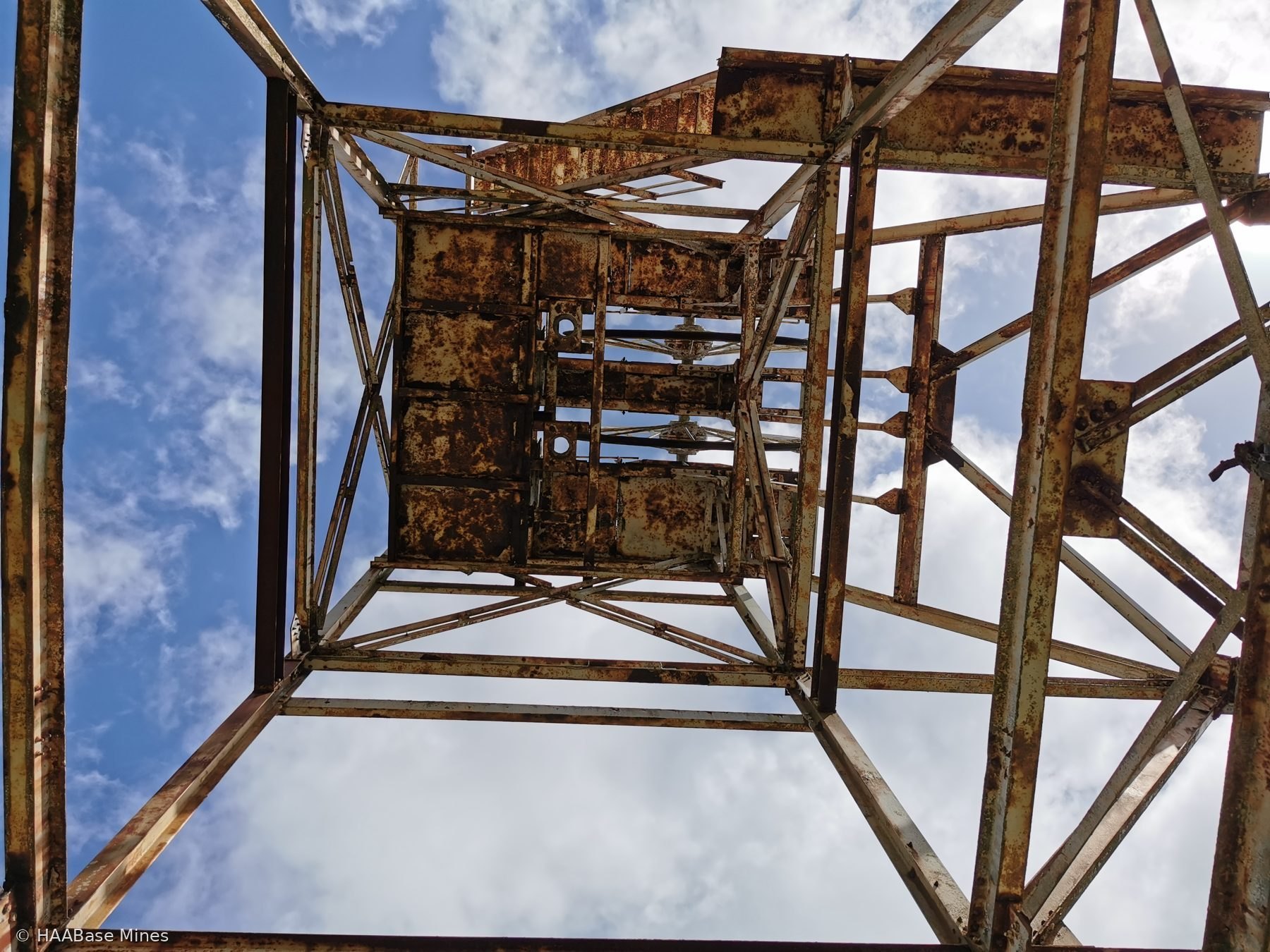
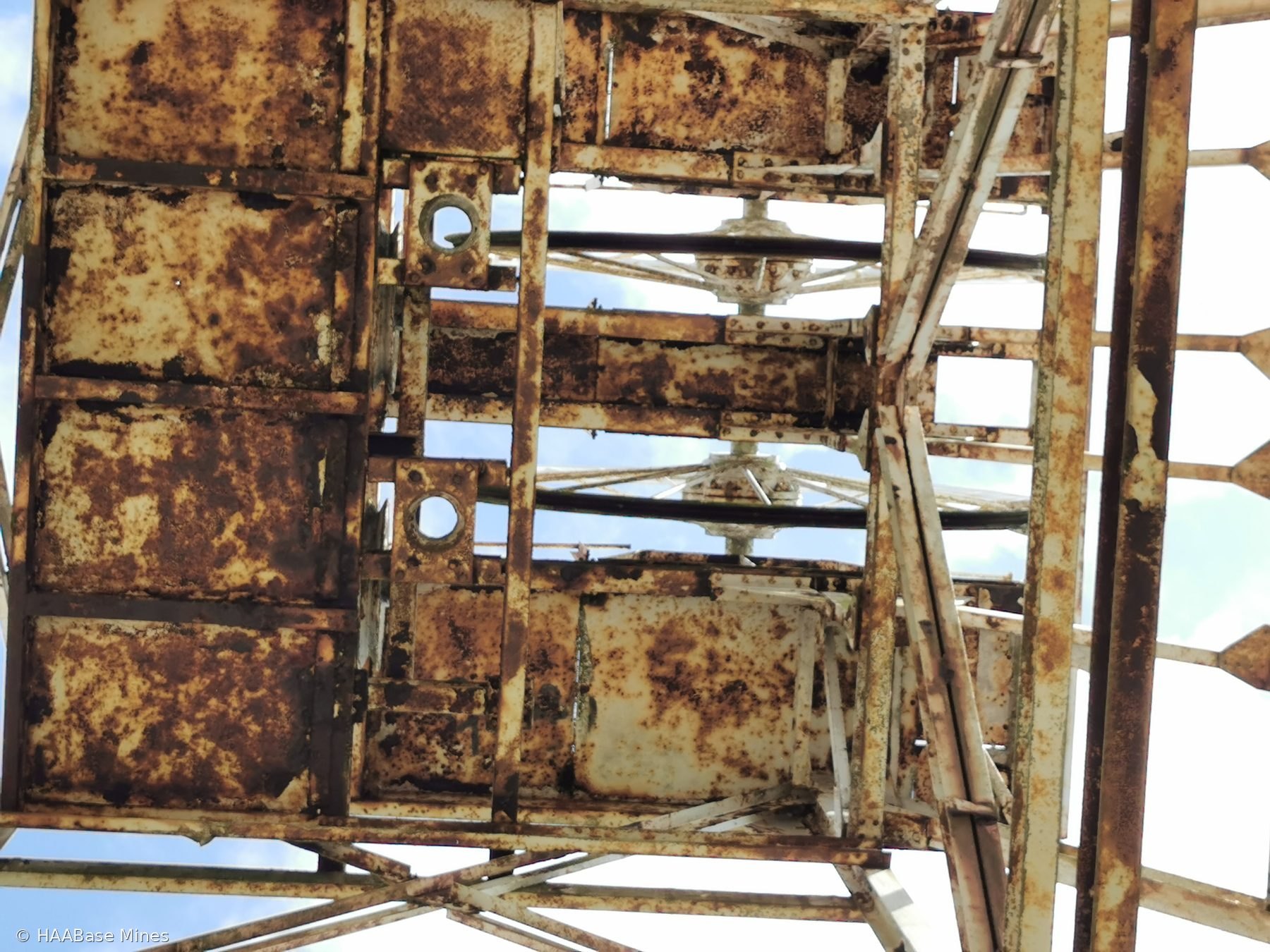
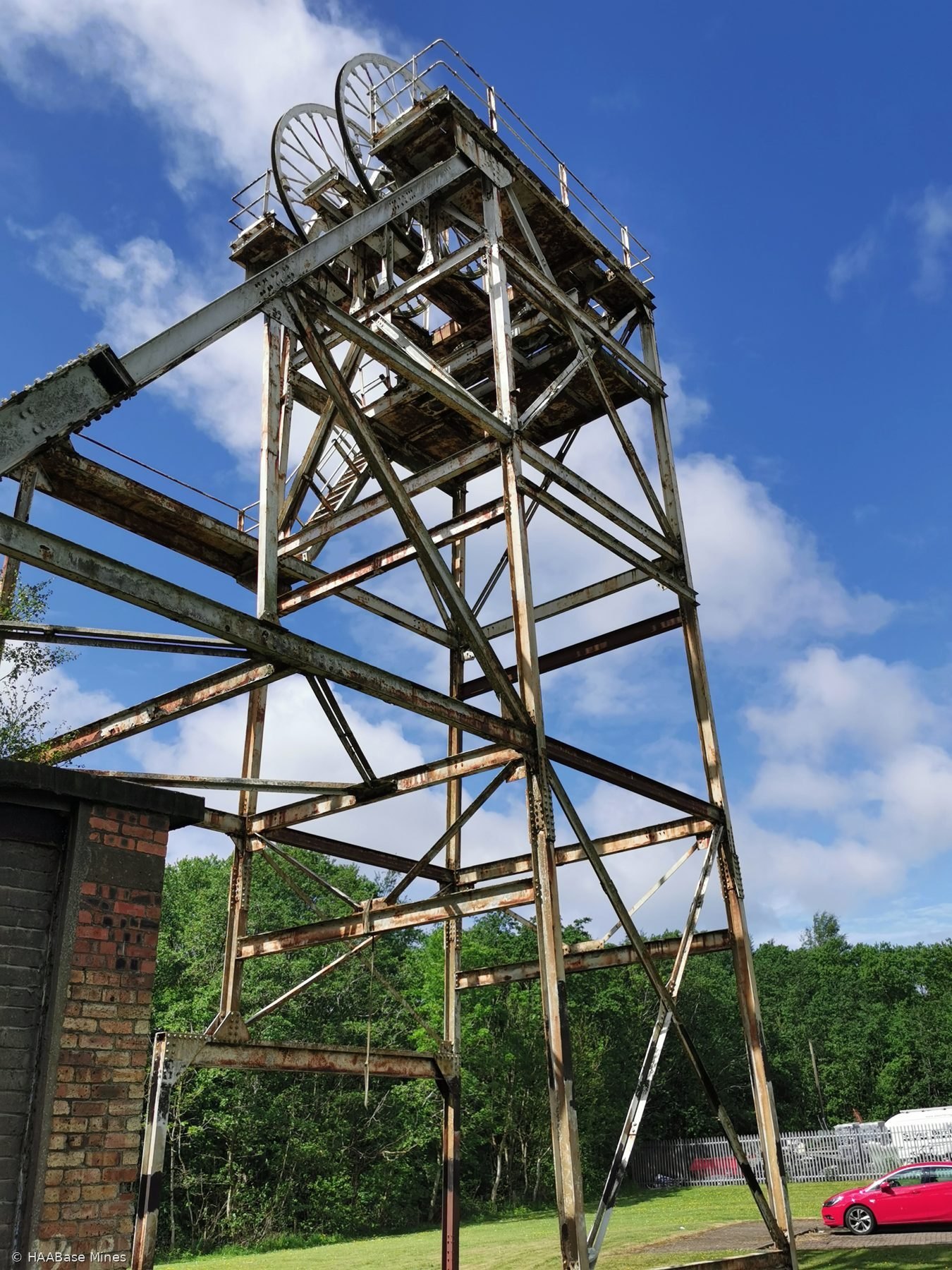
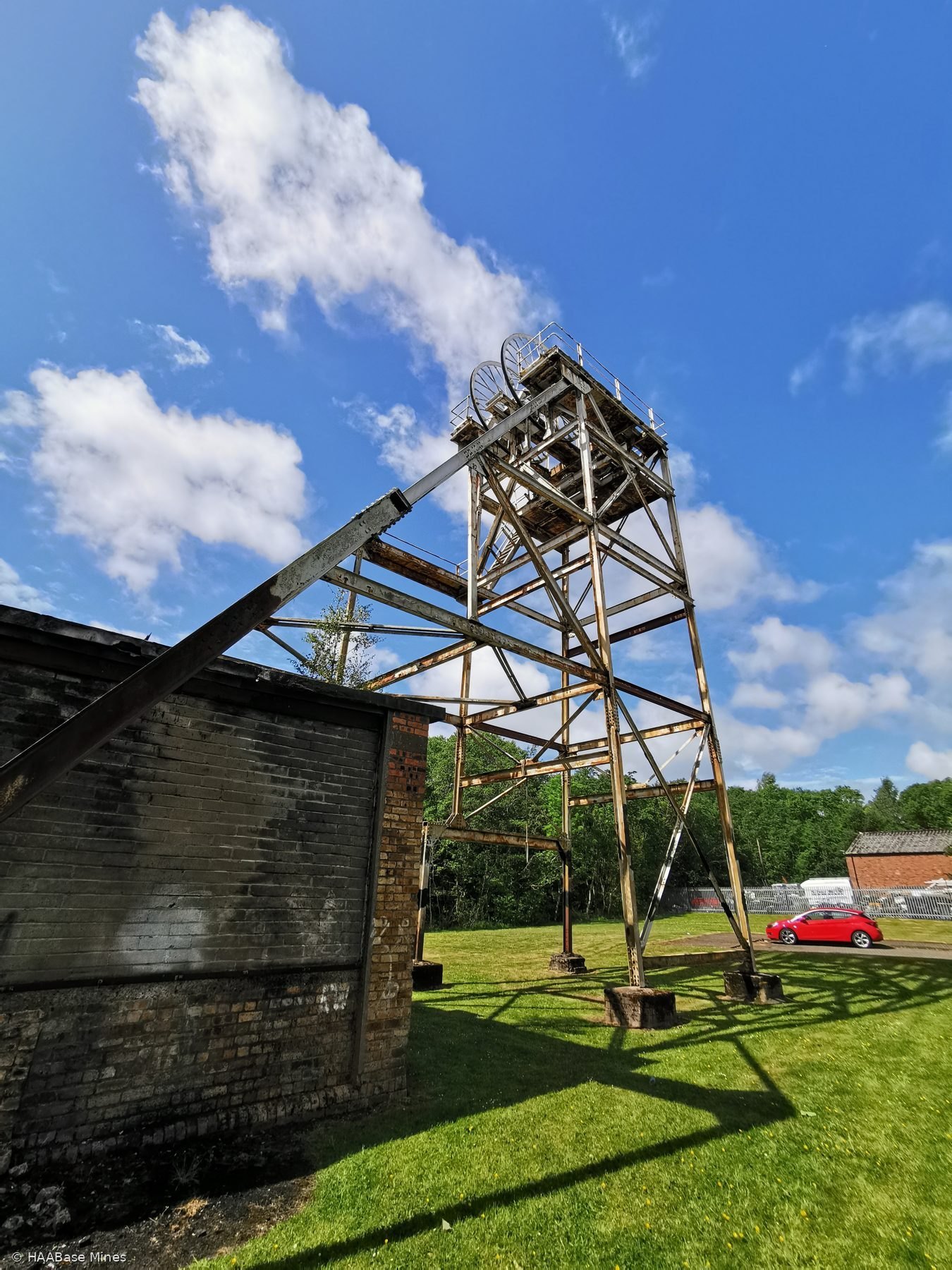
The wooden headframe on the winding engine shaft was replaced by a steel headframe around 1968. The new steel frame was of unusual design, with dog-leg raking struts required to span the engine house, and was built with riveted steel construction carrying two pulleys side by side. It is considered by sources to be the last 'traditional' headframe built in Scotland. The colliery closed in 1983.

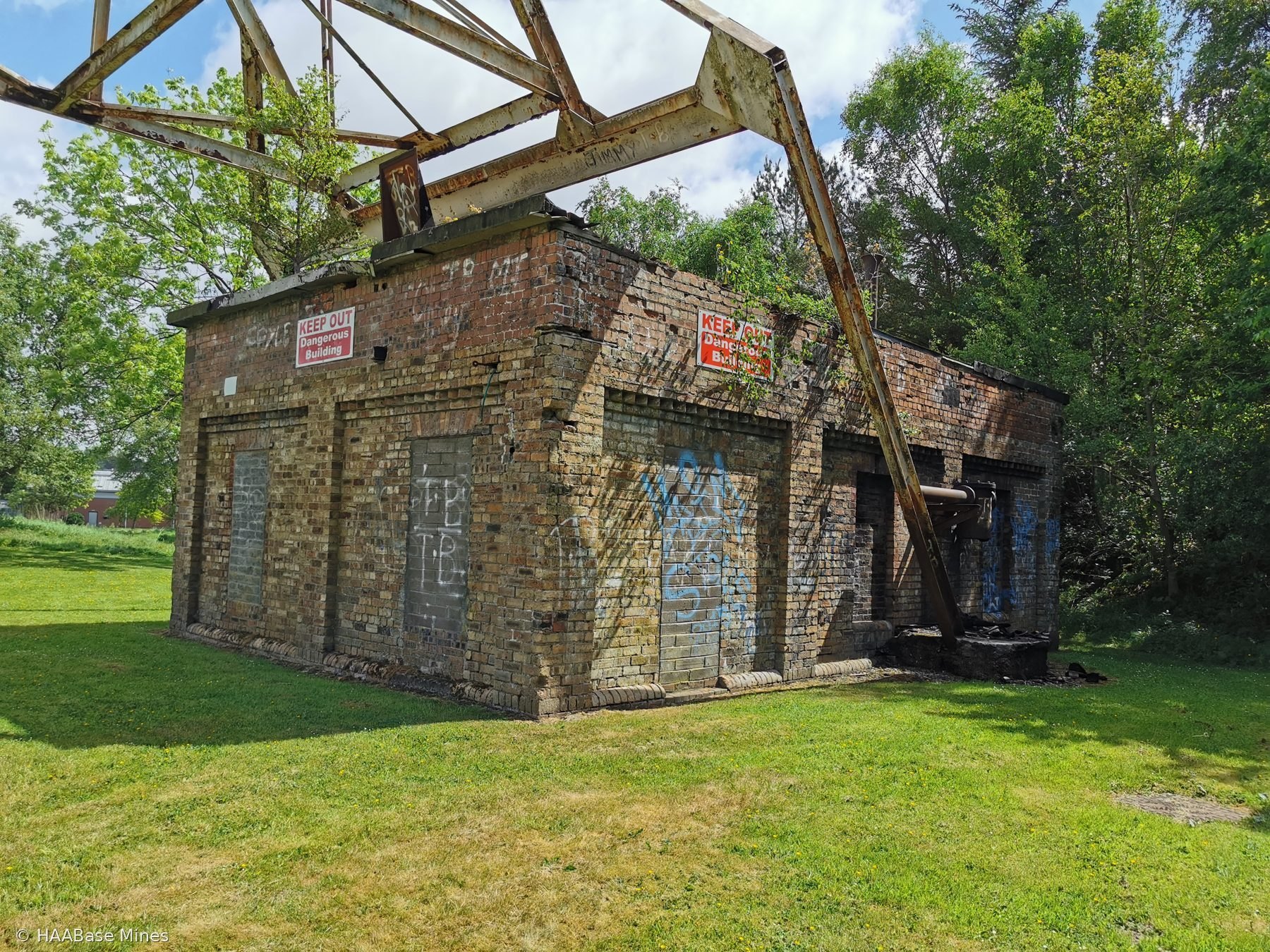
Following closure, the colliery site became the Highhouse Industrial Estate. The 1896 Grant, Ritchie & Company steam winding engine and its engine house, together with the c.1968 steel headframe situated over a capped shaft, survived in situ within the industrial estate. The engine house, single storey and of brick construction, has pilasters separating bays on its lower walls with a linking frieze, and large openings inserted in the north wall. The headframe sits directly over the capped shaft. The engine and engine house, together with the headframe, were given category B listed building status on 4 September 1992 (LB6580), listed under the designation 'Highhouse Industrial Estate Headframe and Steam Winding Engine in House'. The listing notes that the steam winding engine is, apart from that at Lady Victoria Colliery in Newtongrange, the only steam winding engine remaining in situ in Scotland.

Timeline

1894
Construction

Walkinshaw Beam Haulage Engine Relocated to Highhouse

A secondhand beam engine, originally built in Bridgeton in 1790 by Walkinshaw and previously used at Blair collieries and Craigston Pit, was relocated to Highhouse around 1894 for use as a haulage engine.
1895–1896
Construction

Sinking of Highhouse Colliery by William Baird & Company

William Baird & Company developed Highhouse Colliery at Merlinhill Farm to the south of Auchinleck station, sinking two shafts between 1895 and 1896. No. 1 shaft reached 177 metres and No. 2 shaft reached 174 metres in depth. The colliery was intended to supply coal to the Lugar Ironworks.
1896
Construction

Steam Winding Engine Installed by Grant, Ritchie & Company

A steam winding engine was installed around 1896, built by Grant, Ritchie & Company of Kilmarnock. The engine had two horizontal cylinders of 20-inch diameter by 4-foot stroke, a drum 10 feet by 6 feet 7 inches wide, Stephenson's link valve gear, and hand reversing.
1908
Construction

Pit Fire and Subsequent Rebuilding

A pit fire broke out at Highhouse Colliery in 1908, after which rebuilding was required. New headgear with metalwork by Dorman Long was erected.
1931
Legislation

Transfer to Bairds & Dalmellington Ltd

William Baird & Company merged with the Dalmellington Iron Company in 1931 to form Bairds & Dalmellington Ltd, which thereby acquired ownership of Highhouse Colliery.
1947
Legislation

Nationalisation — Transfer to National Coal Board

Highhouse Colliery passed to the National Coal Board on nationalisation of the coal industry in 1947.
1956
Heritage

Walkinshaw Beam Engine Removed to Heriot Watt College

The secondhand Walkinshaw beam engine, which had served as a haulage engine since around 1894, was removed from Highhouse in 1956 and transferred to Heriot Watt College in Edinburgh.
1968
Construction

Wooden Headframe Replaced by Steel Headframe

The original wooden headframe over the winding engine shaft was replaced around 1968 by a riveted steel headframe of unusual design, with dog-leg raking struts to span the engine house and two pulleys side by side. It is considered the last traditional headframe built in Scotland.
1983
Closure

Closure of Highhouse Colliery

Highhouse Colliery closed in 1983. Following closure the site became the Highhouse Industrial Estate, incorporating several adapted colliery buildings.
1992
Heritage

Category B Listed Building Status Granted

The steam winding engine and engine house (dating from c.1896) and the steel headframe (c.1968) were granted category B listed building status on 4 September 1992 (LB6580), listed under the designation 'Highhouse Industrial Estate Headframe and Steam Winding Engine in House'. The listing notes the engine as one of only two steam winding engines remaining in situ in Scotland.

Sources and records

British Listed Buildings record: 200338214 (LB6580, Highhouse Industrial Estate Headframe and Steam Winding Engine in House)
Canmore record: Highhouse Colliery (Historic Environment Scotland / RCAHMS)
Railscot: Highhouse Colliery
Coal and Community project, University of Wolverhampton: Barony colliery profile (references to Highhouse)
Hume J R, The industrial archaeology of Scotland, 1, Lowlands and Borders, London, 1976
Oglethorpe M K, Scottish Collieries, 2006
This researched site record is part of the HAABase Mines database. Normal personal research and browsing is welcome. Automated bulk extraction, republication, or harvesting of site text and images is not permitted without written consent.