Site overview

Hatfield Colliery, also known as Hatfield Main Colliery, was a deep coal mine in the South Yorkshire Coalfield located approximately one mile north-west of Hatfield, near Doncaster. Shaft sinking began in October 1911, with the first of two shafts completed in August 1916 and the second in 1921, using the Francois Cementation Process to overcome the challenges of sinking through waterlogged sandstone. Permanent headstocks and winding engine houses were completed in 1922.

The colliery was acquired by the Carlton Main Colliery Company in January 1927, passed to the National Coal Board on nationalisation in January 1947, and was subsequently merged with Thorne Colliery in 1967 before separating again in 1978. British Coal stopped production in December 1993, but a management buyout the following year led to the formation of Hatfield Coal Company Ltd and the resumption of mining in July 1994. After further closures and changes of ownership involving Coalpower Ltd and Powerfuel Mining Ltd, the mine was finally closed in June 2015 under employee ownership through Hatfield Colliery Partnership Limited, with the shafts subsequently in-filled.

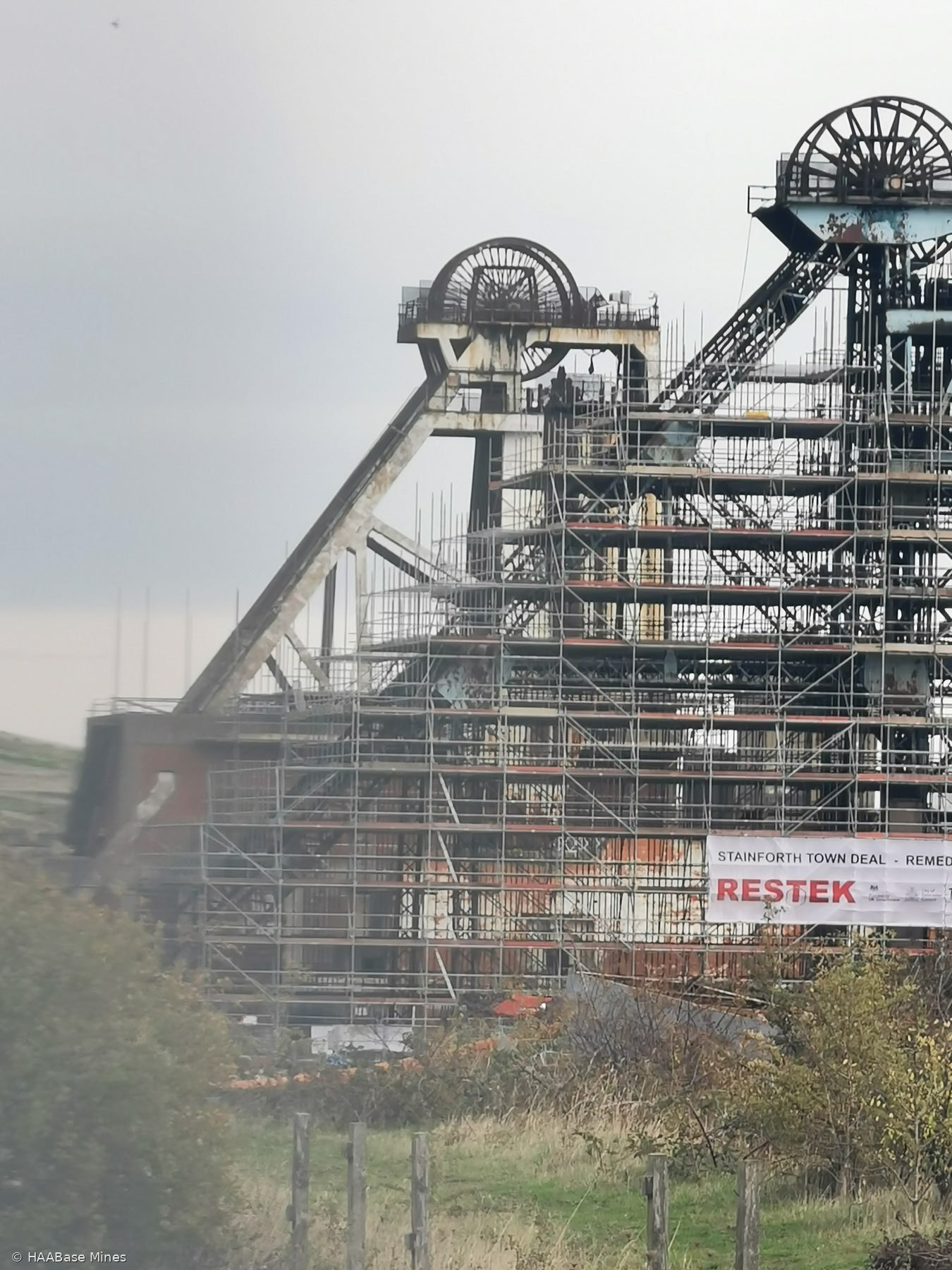
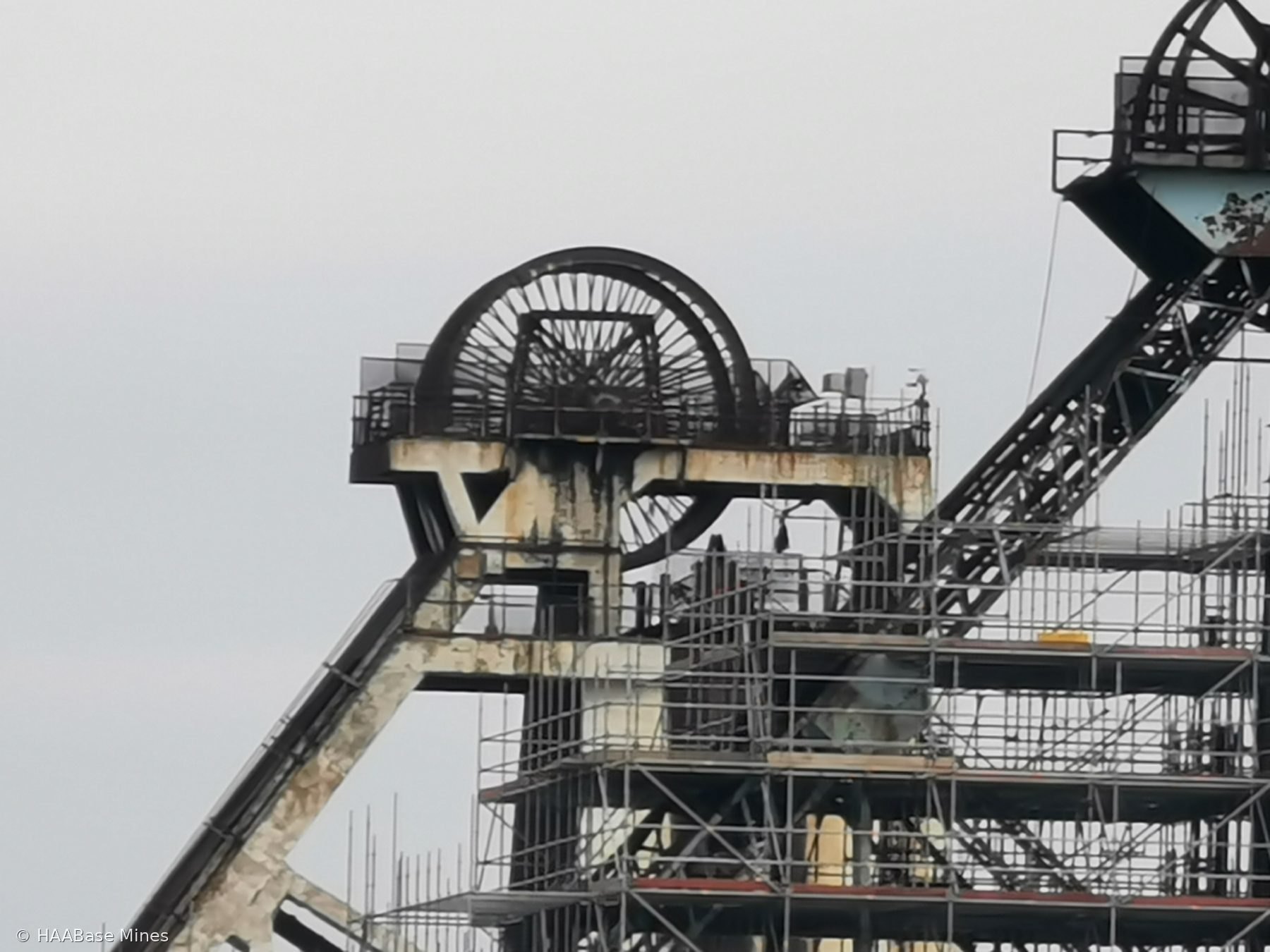
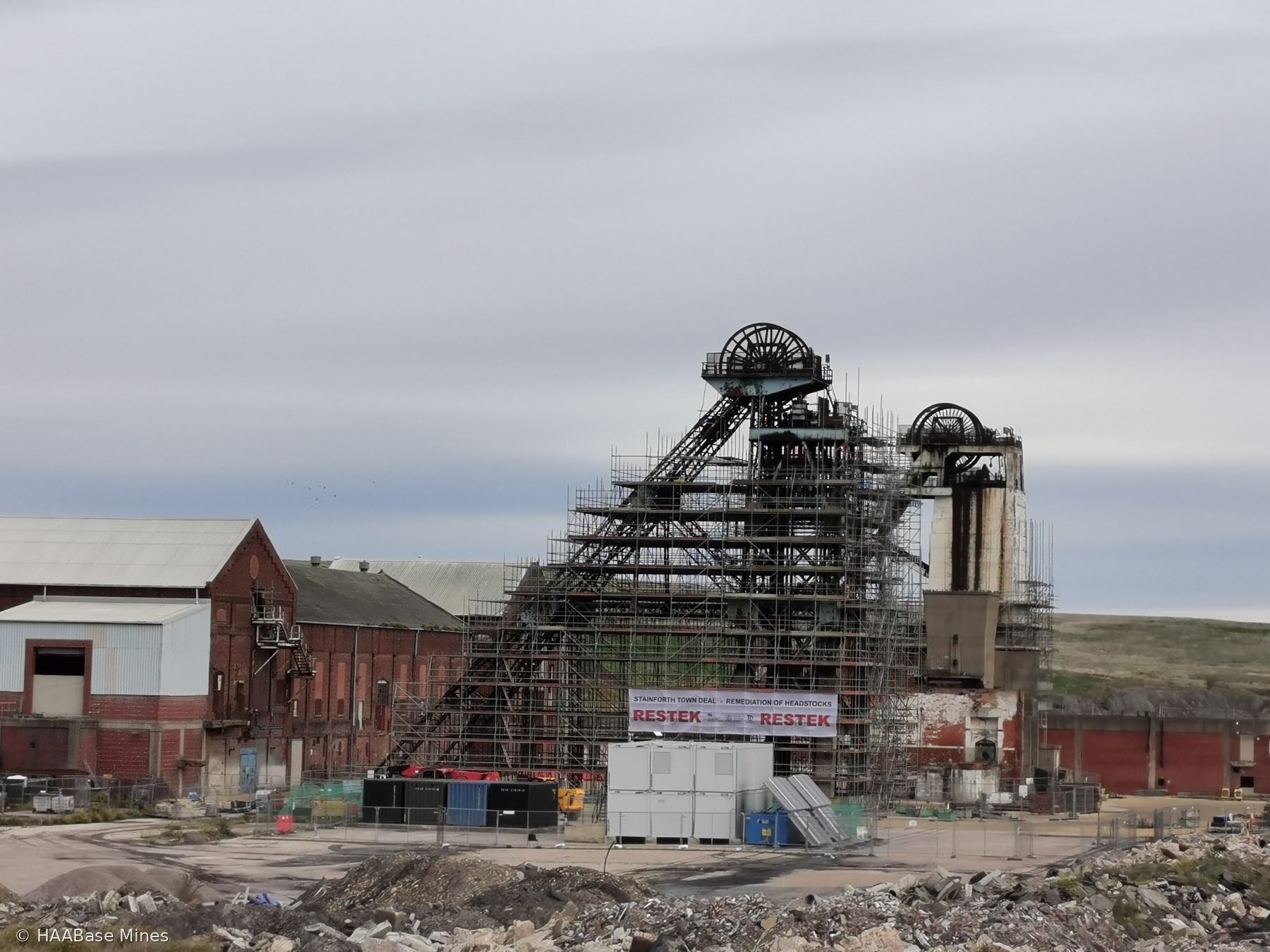
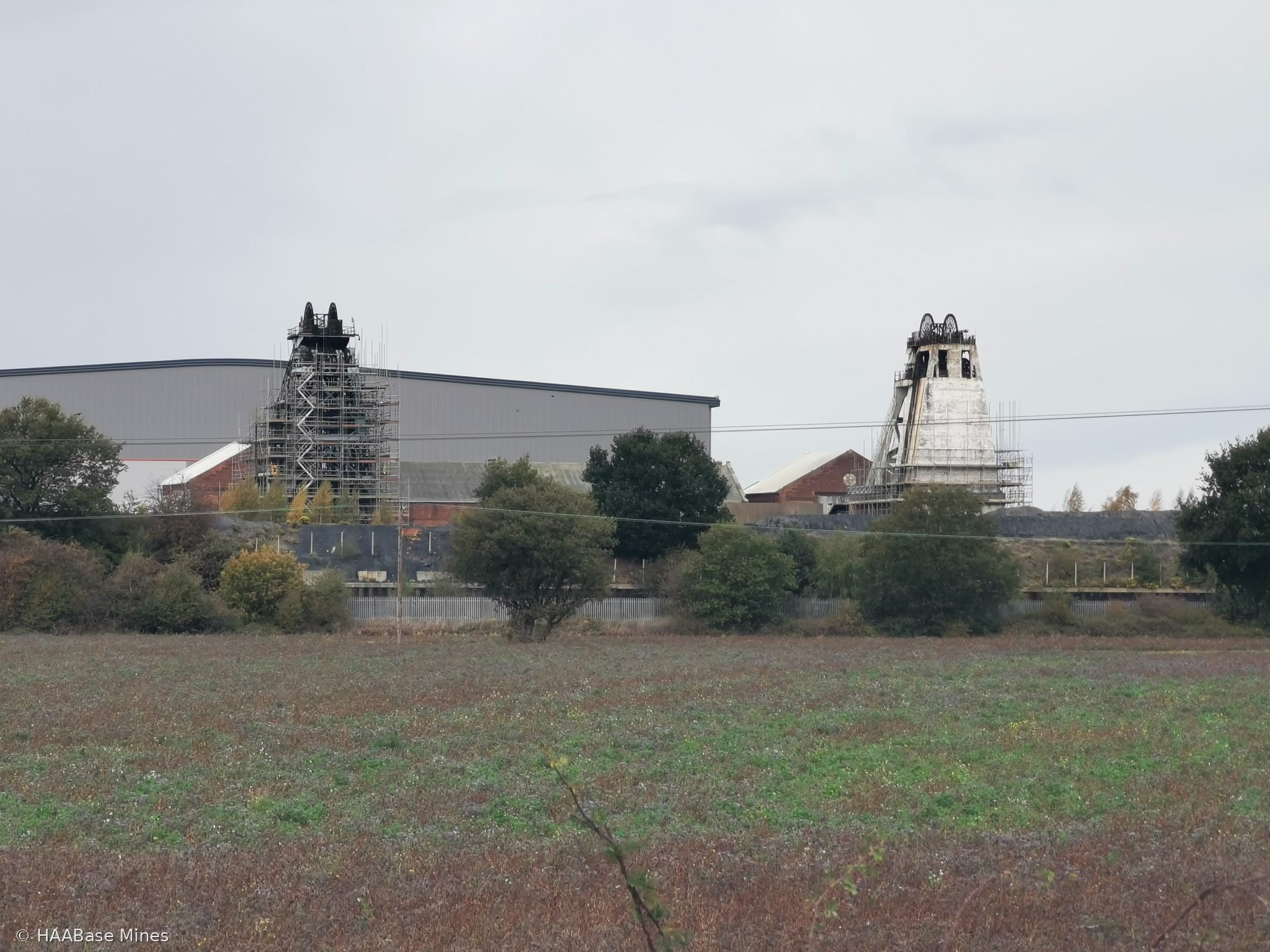
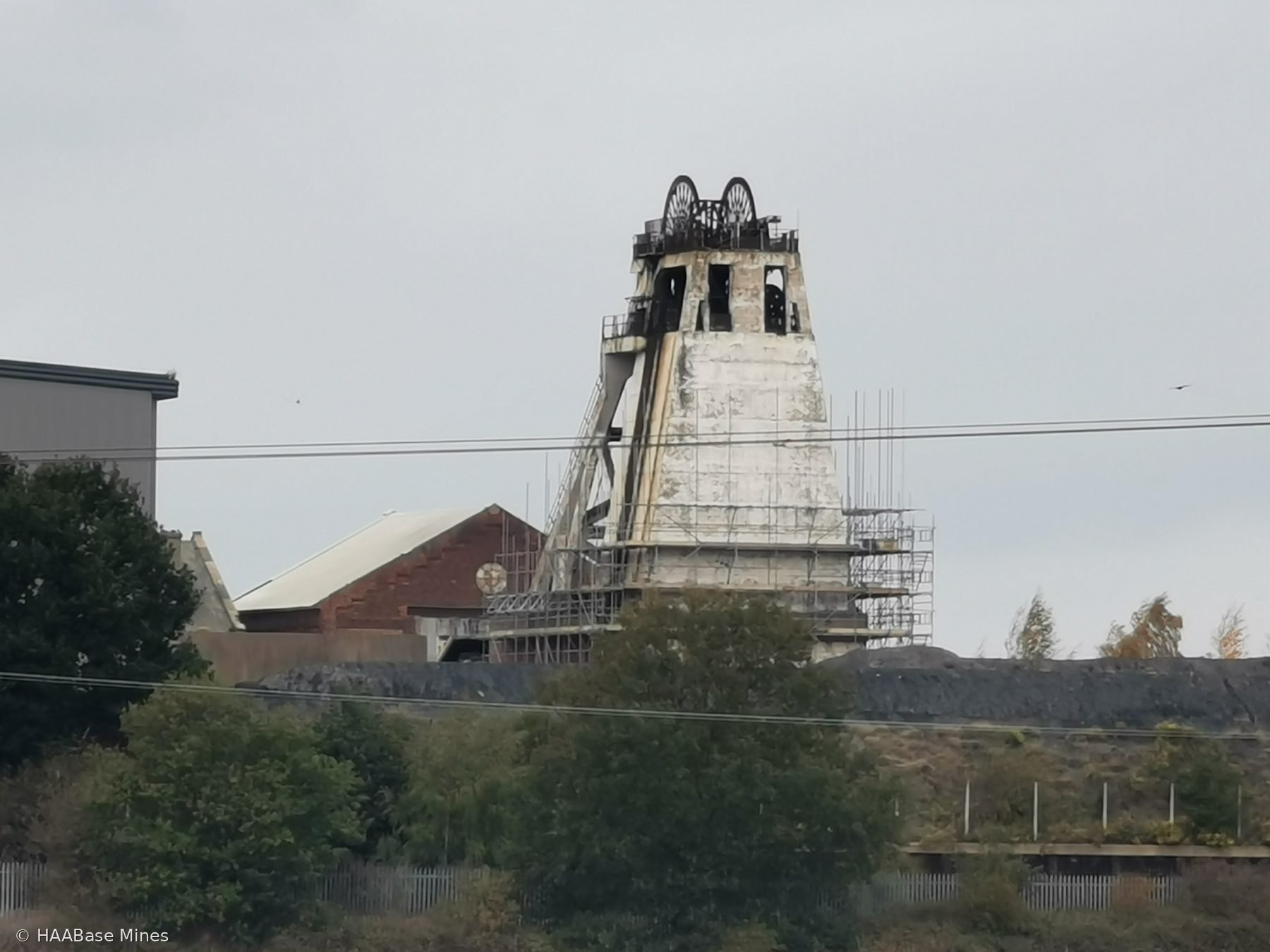
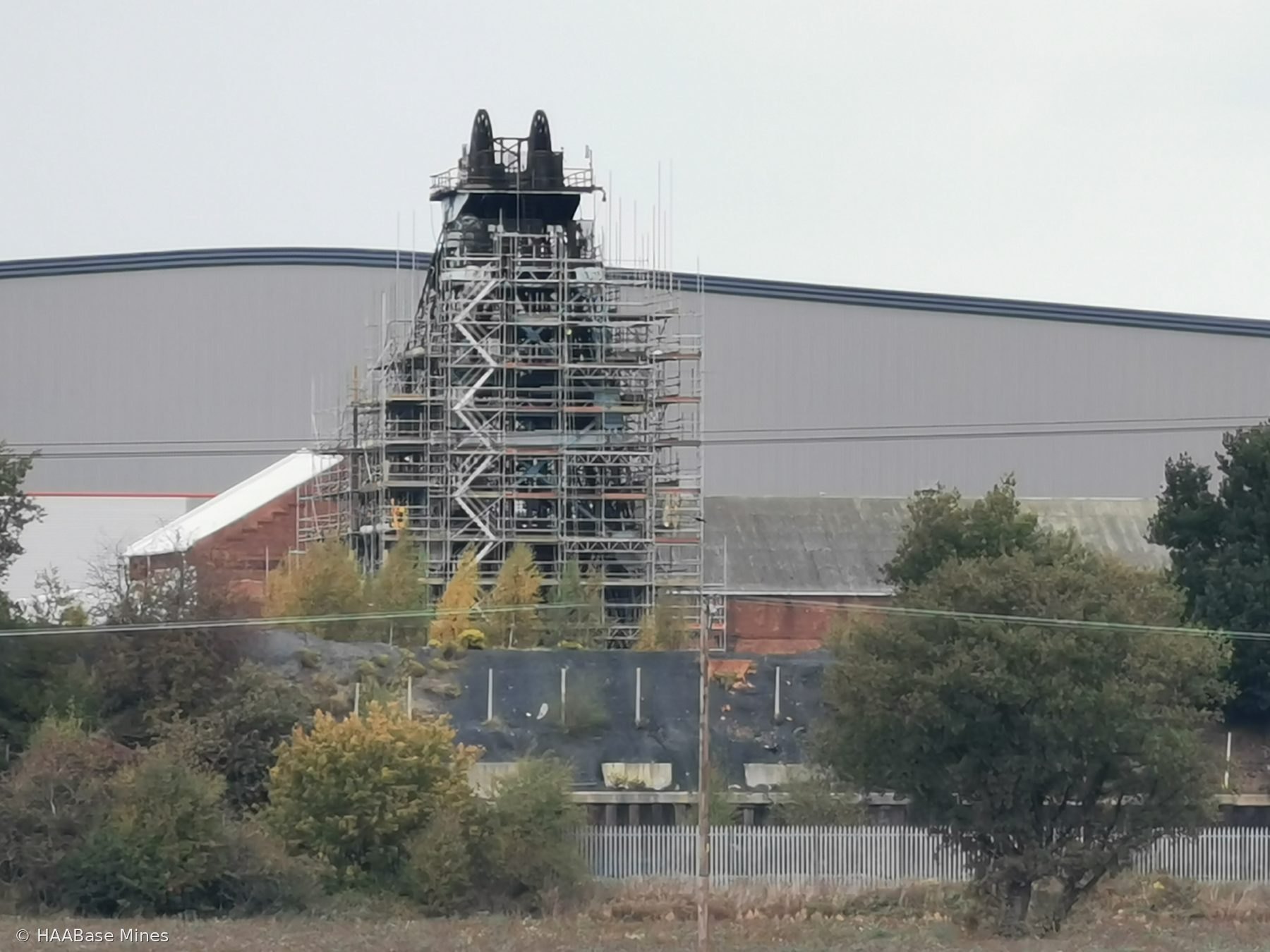
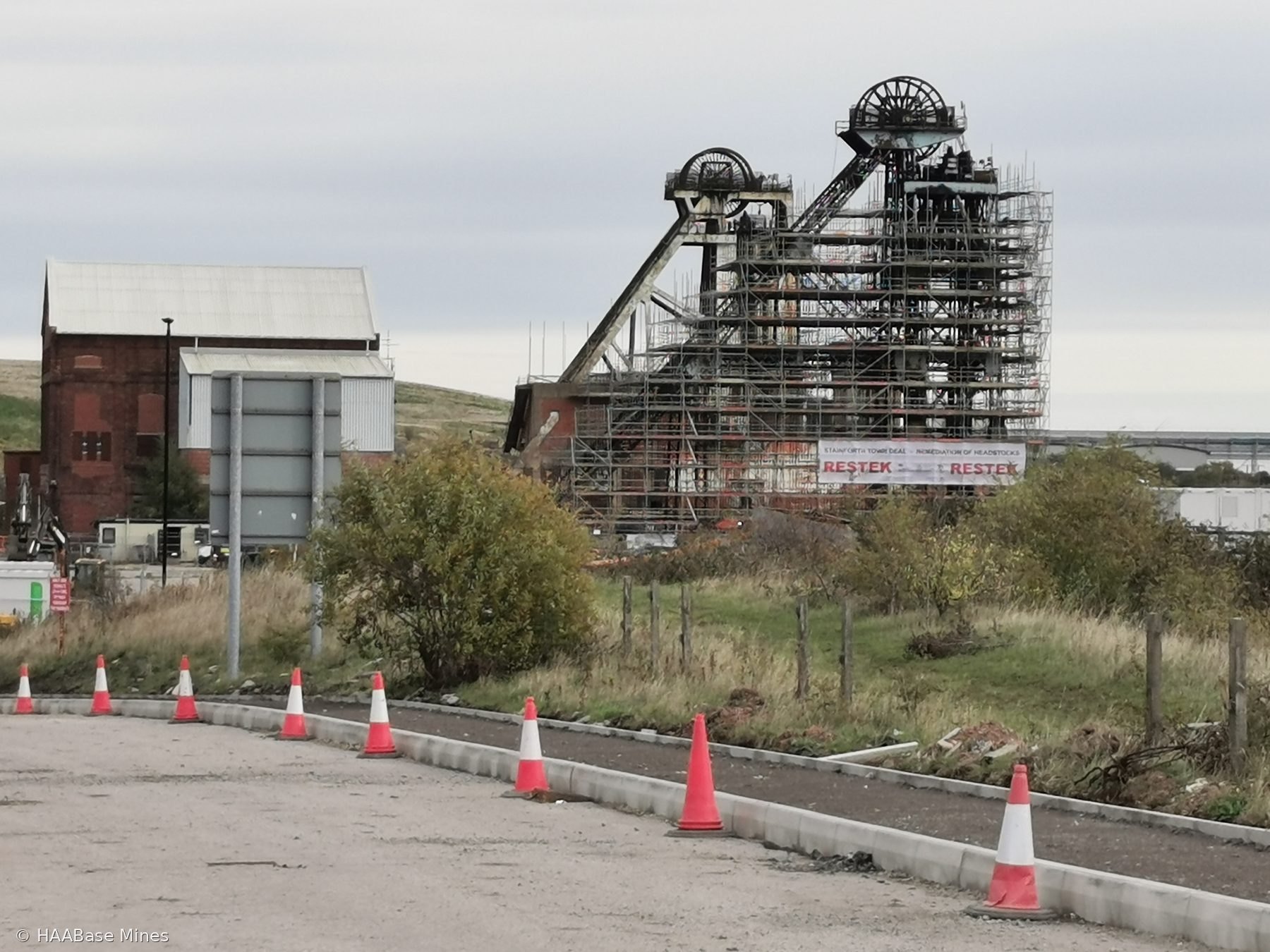
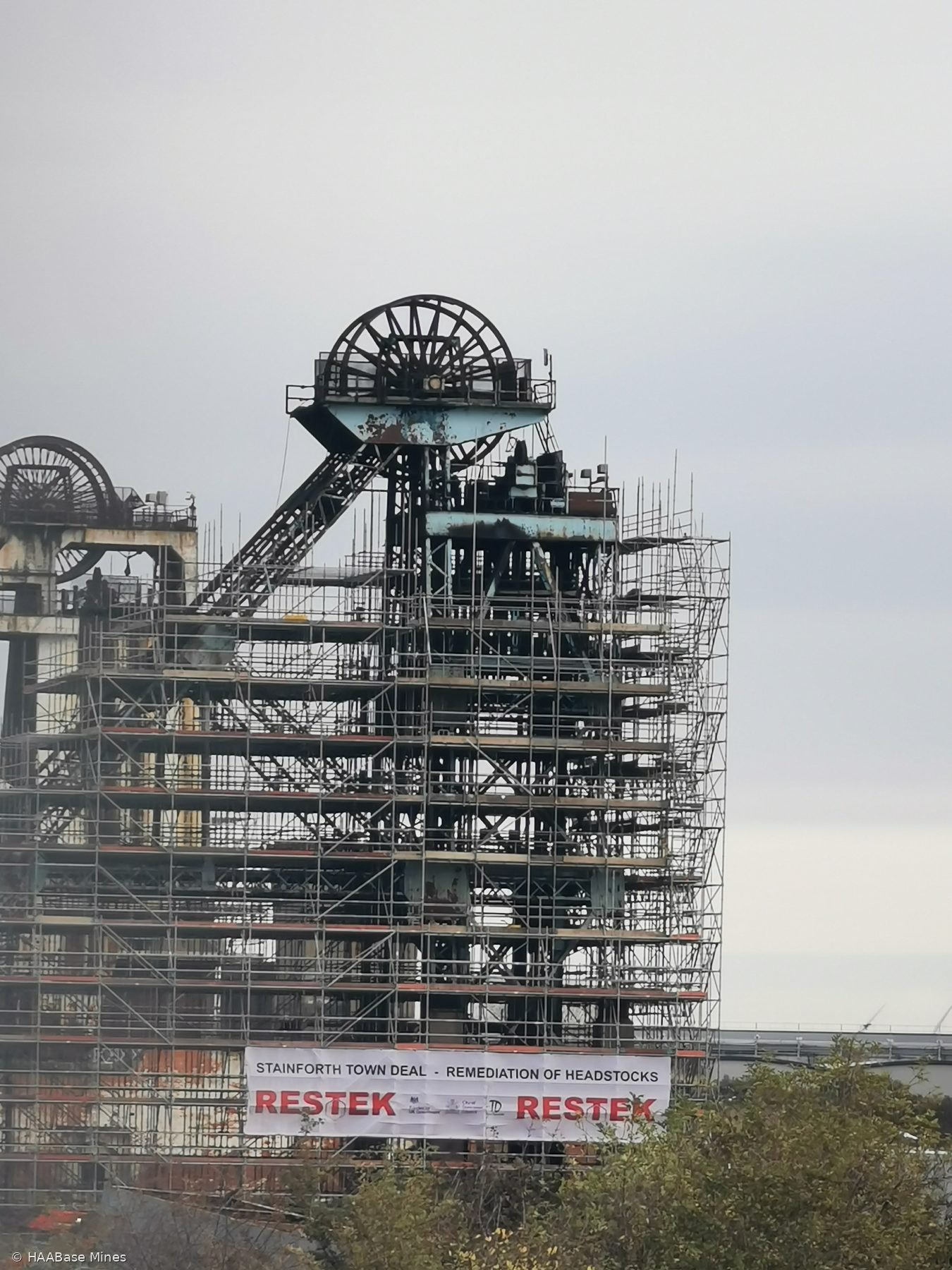
The two surviving headstocks, of contrasting lattice steel and reinforced concrete construction, were listed at Grade II on 10 November 2015.

The surviving headstocks stand in a flat, open lowland setting on the edge of former industrial ground, where they read as isolated and highly prominent remnants within a fragmented post-industrial landscape.

Map & photo

Hatfield Colliery mine headframe or winding tower site
Photograph taken: 26 October 2025
Map markers and directions links are provided for location reference only and do not indicate public access or permission to enter a site.

History

Hatfield Colliery was established by the Hatfield Main Colliery Company on a site adjacent to the Great Central Railway's Barnsley to Barnetby line, approximately one mile north-west of the village of Hatfield in South Yorkshire. The site was also linked to staithes on the Sheffield and South Yorkshire Navigation by a mineral line. The first sod was cut on 14 October 1911, and two shafts of 6.7 metres in diameter were sunk simultaneously.

Both shafts were constructed using the Francois Cementation Process, a ground stabilisation and shaft sinking technique developed on the continent; Hatfield was the first mine in Britain to employ this process, and the sinking was supervised by its inventor, M. Francois. No. 1 downcast shaft reached the Barnsley Seam at a depth of 786 metres in August 1916. Problems with water influx delayed the completion of No. 2 upcast shaft until 1917, with concrete lining throughout both shafts.

Both shafts were sunk on the Morley Campsell Fault Belt and crossed the Stainforth Fault, which divides the colliery take into two parts with pit bottoms at different levels. Coal getting in the Barnsley Seam, up to ten feet thick in places, began in 1917 and continued until 1983. The colliery entered production using the shaft sinking headgear whilst permanent headstocks and winding engine houses were constructed; these were completed in 1922.

No. 1 headstocks, for the downcast shaft, was constructed by Naylor Brothers Ltd. of Lancashire using lattice steel framing. No. 2 headstocks, for the upcast shaft, was constructed by colliery workers to the design of the Trussed Concrete Steel Company employing Kahn System ferro-concrete beams. Both headstocks were designed for twined, double-decker cages, and the winding gear was described in detail in the Colliery Guardian published 6 October 1922.

In January 1927 the colliery was acquired by the Carlton Main Colliery Company, which began working the High Hazel Seam, around four feet of high quality coal. By the mid-1930s the colliery had been deepened to work the High Hazel Seam. The worst accident at Hatfield occurred in 1939, when a cage lifting miners in the upcast shaft overshot and crashed into the headgear, killing one person and injuring fifty more.

The colliery underwent modernisation in the 1970s with conversion to electric winding. No. 1 Shaft was converted from tub to skip winding, with the removal of its heapstead and the introduction of a conveyor, and the lower portions of its lattice steel headstocks were encased in concrete. The heapstead for No. 2 Shaft was also rebuilt.

The colliery passed to the National Coal Board on nationalisation in January 1947. In 1967 the National Coal Board merged Hatfield and Thorne collieries; the two were separated again in February 1978. They were merged again in 1986 when plans to redevelop Thorne were abandoned.

Coal getting in the Barnsley Seam ceased in 1983. British Coal stopped production on 3 December 1993. In January 1994 the pit's management announced plans to reopen the pit, and Hatfield Coal Company Ltd was incorporated on 25 January 1994.

The first coal was cut under the new company on 7 July 1994, and the venture made a profit of £2.4 million in its first year. Geological problems in 2000 reduced planned output by around a fifth from 500,000 tonnes per year, and the company sought operating aid from the government. The mine closed on 9 August 2001 with the loss of 223 jobs, and was mothballed with Department of Trade and Industry funding.

In October 2001 Coalpower Ltd, under Richard Budge, took control of the site and published plans in 2003 for a 450 MW power station. Coalpower went into administration in late 2003, partly due to geological problems at the coal face, and the pit closed again in early 2004. Richard Budge restarted the colliery in 2006 via Powerfuel, planning a carbon capture and storage coal-burning power station; Russian coal company Kuzbassrazrezugol took a 51 per cent stake in the venture, and coal production resumed in March 2007.

EU funding of £180 million for the carbon capture project was approved in 2009, but the project failed to secure sufficient private investment to proceed. Powerfuel Mining Ltd entered administration in December 2010. In 2011, 2Co Energy Ltd acquired the company and renamed it Hatfield Colliery Ltd, with management under contract to Hargreaves Services plc.

In February 2013 a landslide on a spoil tip blocked the Doncaster to Thorne railway line for around six months, requiring the replacement of around 500 metres of quadruple-track railway. Hatfield Colliery Partnership Limited, an employee-controlled company, purchased the mine from ING Bank in December 2013. A bridging loan of £4 million from the National Union of Mineworkers in September 2014 allowed production to move to a new pit face, intended to extend mining until summer 2016.

Coal production at Hatfield ended on 29 June 2015 with the loss of around 430 jobs, the mine being unable to find a market for its coal. Work on filling the shafts began in August 2015. The two surviving headstocks were listed at Grade II on 10 November 2015 under the Planning (Listed Buildings and Conservation Areas) Act 1990, following a campaign by the Hatfield Main Colliery Community Heritage Association.

Hatfield Main Heritage Trust was formed in April 2017 with the aim of developing the pithead site into a heritage centre and country park. As of July 2024 the site remains vacant, closed to public access, and under 24-hour security. The headstocks remain standing under their Grade II protection.
Timeline

1911
Construction

Shaft sinking begins using Francois Cementation Process

The first sod was cut on 14 October 1911. Two shafts of 6.7 metres in diameter were sunk simultaneously using the Francois Cementation Process to overcome waterlogged sandstone and shifting sands. Hatfield was the first mine in Britain to employ this process; sinking was supervised by its inventor, M. Francois.
1916
Exploration

No. 1 downcast shaft reaches Barnsley Seam

No. 1 downcast shaft reached the Barnsley Seam at a depth of 786 metres in August 1916.
1917
Construction

No. 2 upcast shaft completed; coal getting begins

No. 2 upcast shaft was completed in 1917 after delays caused by water influx. Both shafts were lined with concrete. Coal getting in the Barnsley Seam began in 1917, using the shaft sinking headgear whilst permanent headstocks were under construction.
1922
Construction

Permanent headstocks and winding engine houses completed

Permanent headstocks and winding engine houses were completed in 1922. No. 1 headstocks was constructed in lattice steel by Naylor Brothers Ltd. of Lancashire; No. 2 headstocks was built in Kahn System ferro-concrete by colliery workers to the design of the Trussed Concrete Steel Company. Both were designed for twined, double-decker cages.
1927
Legislation

Colliery acquired by Carlton Main Colliery Company

In January 1927 the colliery was acquired by the Carlton Main Colliery Company, which began working the High Hazel Seam.
1939
Operation

Cage accident kills one and injures fifty

The worst accident at Hatfield occurred in 1939 when a cage lifting miners in the upcast shaft overshot and crashed into the headgear, killing one person and injuring fifty more.
1947
Legislation

Nationalisation: colliery passes to National Coal Board

In January 1947 the colliery passed to the National Coal Board on nationalisation.
1967
Legislation

Hatfield and Thorne collieries merged by NCB

The National Coal Board merged Hatfield and Thorne collieries in 1967.
1970–1979
Construction

Modernisation: conversion to electric winding

No. 1 Shaft was converted from tub to skip winding with removal of its heapstead and the introduction of a conveyor. The lower portions of the lattice steel headstocks were encased in concrete. The heapstead for No. 2 Shaft was also rebuilt.
1978
Legislation

Hatfield and Thorne collieries separated again

Hatfield and Thorne collieries were separated in February 1978.
1983
Closure

Coal getting in Barnsley Seam ceases

Coal getting in the Barnsley Seam, worked since 1917, ceased in 1983.
1986
Legislation

Hatfield and Thorne merged again

Hatfield and Thorne collieries were merged again in 1986 when proposals to redevelop Thorne were abandoned.
1993
Closure

British Coal stops production

British Coal stopped production at Hatfield on 3 December 1993. The RCHME carried out a rapid historic building recording survey of the complex in 1994.
1994
Operation

Management buyout: Hatfield Coal Company Ltd formed

Hatfield Coal Company Ltd was incorporated on 25 January 1994 following a management buyout. The first coal under the new company was cut on 7 July 1994. The venture made a profit of £2.4 million in its first year.
2001
Closure

Hatfield Coal Company closes mine; site mothballed

The pit closed on 9 August 2001 with the loss of 223 jobs. The site was mothballed with Department of Trade and Industry funding.
2001–2003
Redevelopment

Coalpower Ltd takes control; power station plans announced

In October 2001 Coalpower Ltd under Richard Budge took control of the pit. In 2003 plans were published for a 450 MW power station at the site. Coalpower went into administration in late 2003 and the pit closed again in early 2004.
2006–2010
Operation

Powerfuel restarts colliery; carbon capture power station planned

Richard Budge restarted the colliery in 2006 via Powerfuel. Russian company Kuzbassrazrezugol took a 51 per cent stake. Coal production resumed in March 2007. EU funding of £180 million was approved for a carbon capture and storage power station in 2009, but the project failed to secure sufficient private investment. Powerfuel Mining Ltd entered administration in December 2010.
2013
Operation

Spoil tip landslide blocks Doncaster–Thorne railway

In February 2013 a landslide on a colliery spoil tip blocked the Doncaster to Thorne railway line. Around 500 metres of quadruple-track railway required replacement and the line was closed for approximately six months before reopening in early July 2013.
2013
Legislation

Employee-controlled Hatfield Colliery Partnership Limited takes ownership

In December 2013 Hatfield Colliery Partnership Limited, an employee-controlled company, purchased the mine from ING Bank. In September 2014 the National Union of Mineworkers provided a bridging loan of £4 million to allow production to move to a new pit face.
2015
Closure

Final closure; production ends and shafts in-filled

Coal production at Hatfield ended on 29 June 2015 with the loss of around 430 jobs, the mine being unable to find a market for its coal. Work on filling the shafts began in August 2015, ending 99 years of coal production at the site.
2015
Heritage

No. 1 and No. 2 headstocks listed Grade II

The two surviving headstocks were listed at Grade II on 10 November 2015 following a campaign by the Hatfield Main Colliery Community Heritage Association, preventing planned demolition by Doncaster Council.
2017
Heritage

Hatfield Main Heritage Trust formed

Hatfield Main Heritage Trust was formed in April 2017 with the aim of developing the pithead site into a heritage centre and country park, including a local mining heritage museum, conference centre, and workshops.

Sources and records

Wikipedia article (English): Hatfield Colliery
Northern Mine Research Society site record: Hatfield Colliery
Historic England listing entry: Numbers 1 and 2 headstocks at the former Hatfield Main Colliery, list entry 1430590, Grade II, listed 10 November 2015
Stainforth Neighbourhood Plan: Protecting and Enhancing Local Mining Heritage
Stainforth Town Council heritage locations page
ITV Calendar news report, 30 June 2015: Hatfield Colliery to close
Hill, A. The South Yorkshire Coalfield: A History and Development (Stroud: Tempus, 2002)
Colliery Guardian, 6 October 1922: description of Hatfield winding gear
This researched site record is part of the HAABase Mines database. Normal personal research and browsing is welcome. Automated bulk extraction, republication, or harvesting of site text and images is not permitted without written consent.