Site overview

The Puits des Malecots is the principal shaft of the Malécots N°2 mine at Chaudefonds-sur-Layon in Maine-et-Loire, the last operational coal mine in the sillon houiller of Basse-Loire and in the département. Coal extraction at the Malécots site has a documented history extending back to at least the fifteenth century, with the first mention of two puits at Ardenay recorded in 1494. The organised mining of the site under the Concession de Layon-et-Loire brought the Grand Puits des Malécots into service from 1822, reaching a depth of 300 metres; this shaft closed in 1873 following an underground fire that killed five miners.

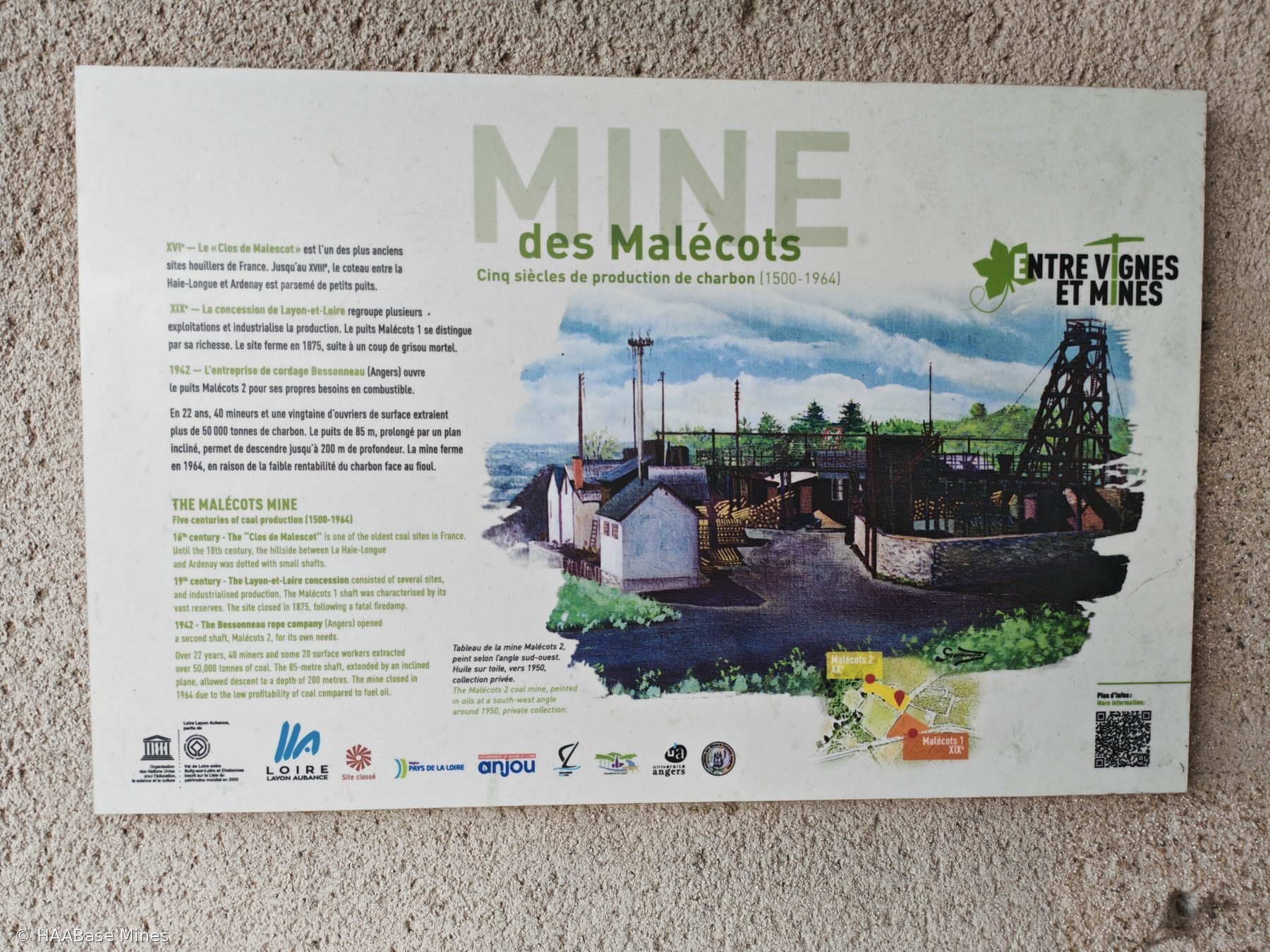
After exploratory work and a modest extraction phase between 1915 and 1923, the Établissements Bessonneau of Angers reopened the site in 1942 using the former puits N°4, deepened to 85 metres and extended by an inclined roadway to 200 metres. This became the puits des Malécots N°2. A 45-metre ventilation shaft was added in 1954.

The mine employed up to 45 workers and produced up to 5,560 tonnes annually. Final closure came in 1964 when Bessonneau declined to renew the exploitation permit. Both shafts were backfilled at closure.

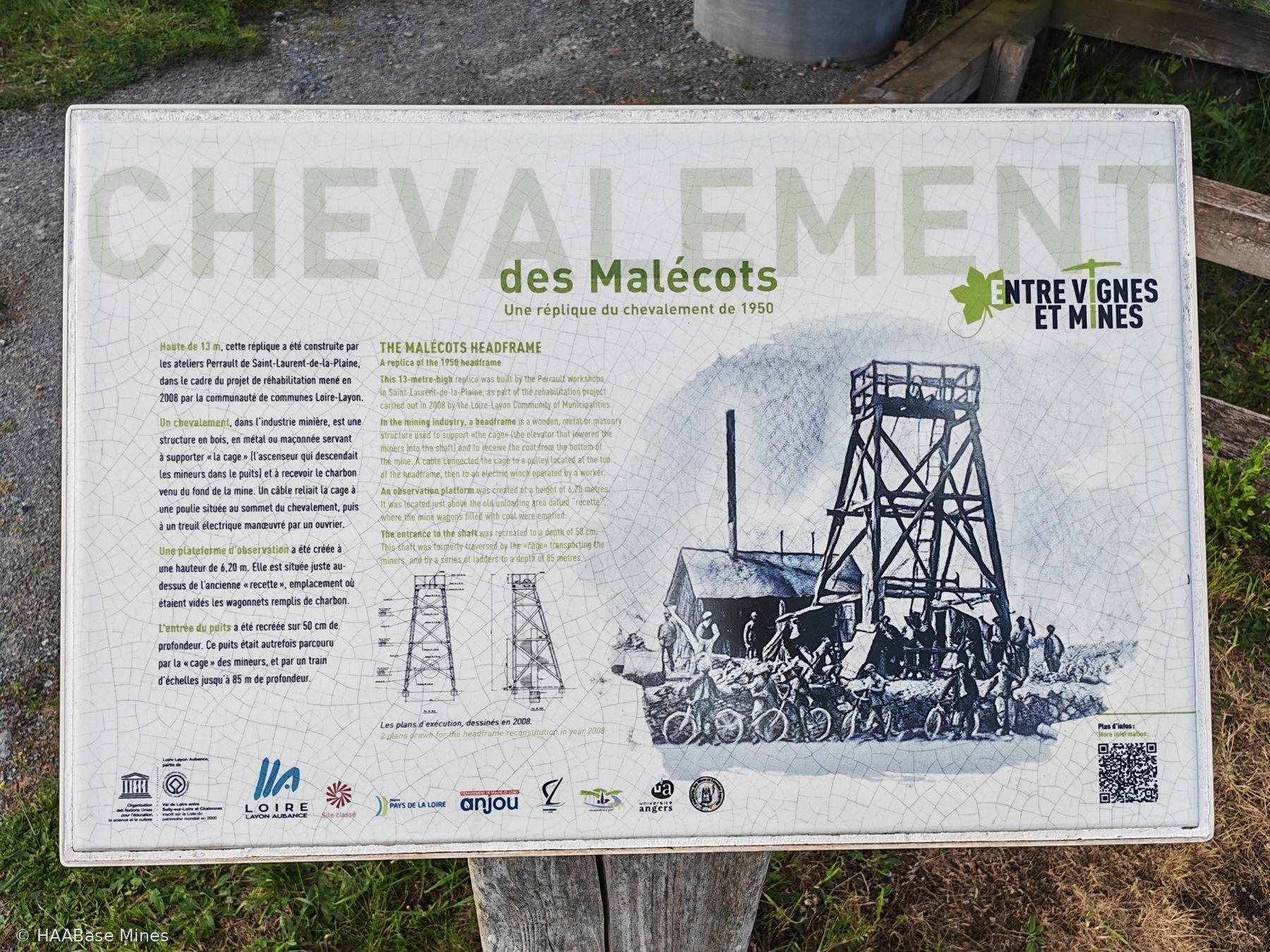
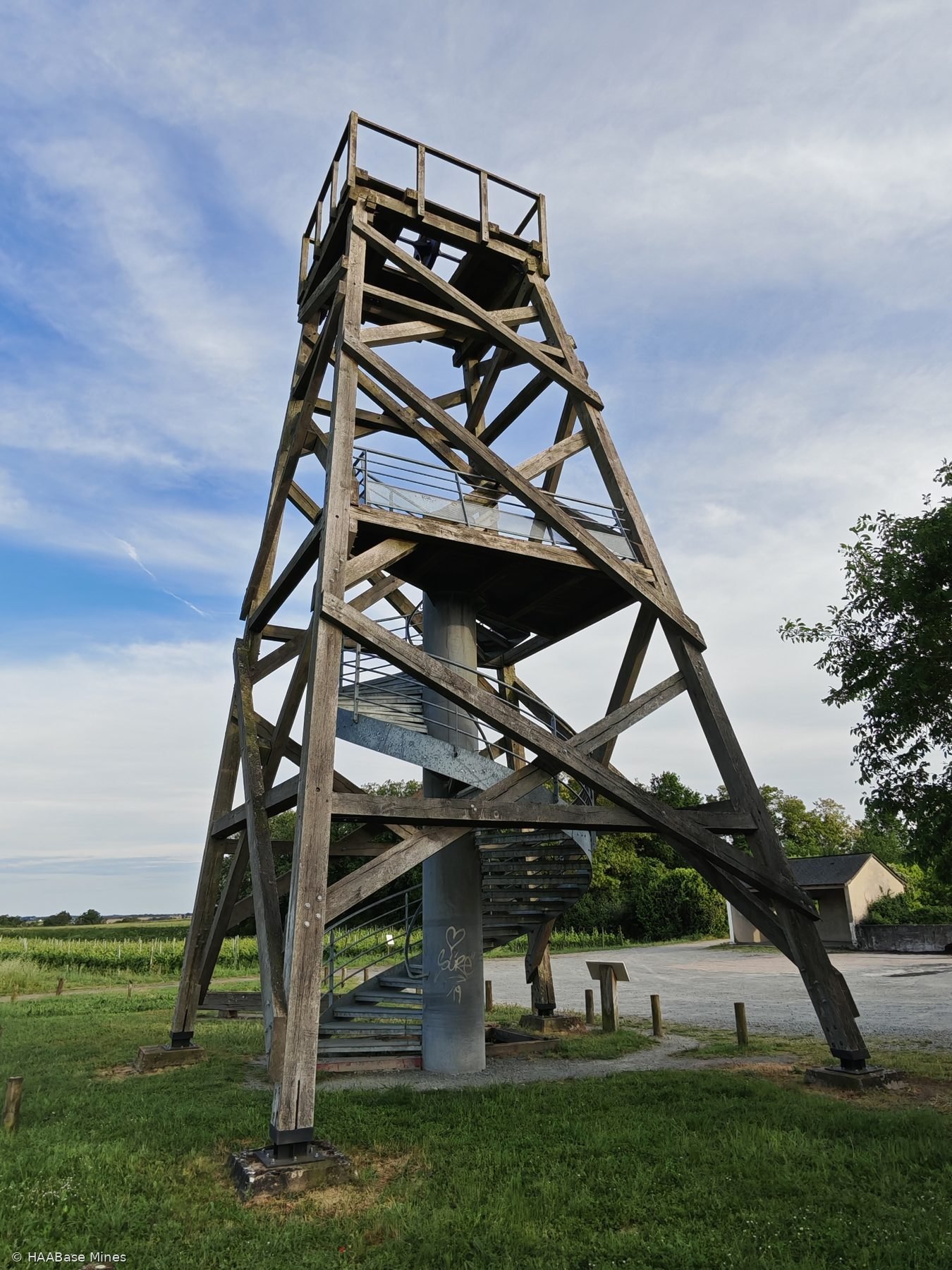
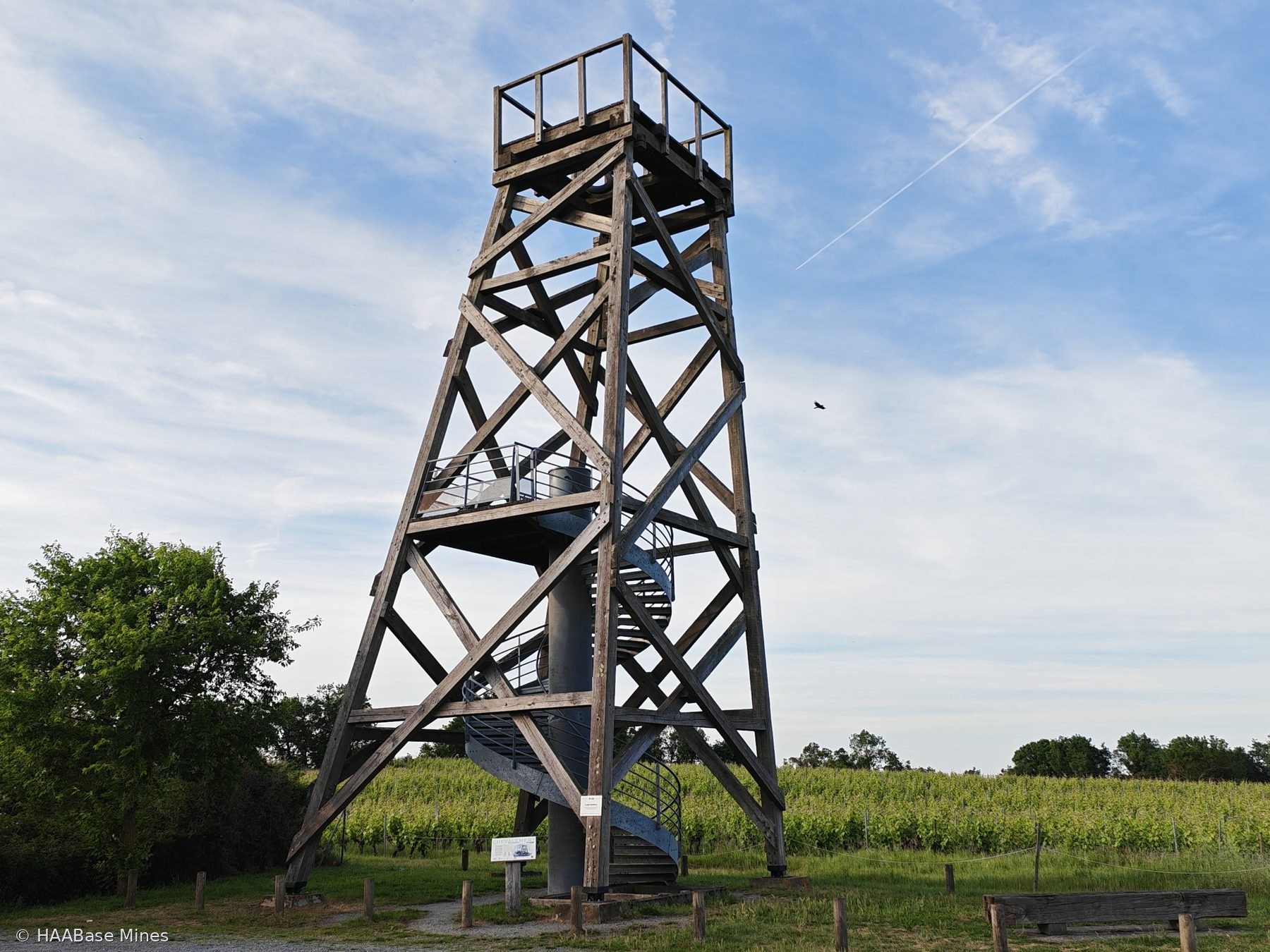
In September 2022 subsidence appeared at the puits N°2 head, requiring remedial works by the DPSM. The Malécots N°2 site has been managed since 2008 by the Communauté de communes Loire-Layon and the Association Sainte-Barbe des Mines et Corniche Angevine. A wooden headframe — a close reproduction of the original — was erected in 2009.

Set in open rural surroundings on the Corniche Angevine, the reconstructed headframe marks the former mine as a small but clearly legible heritage site within an agricultural landscape.

Map & photo

Puits des Malécots mine headframe or winding tower site
Photograph taken: 8 May 2026
Map markers and directions links are provided for location reference only and do not indicate public access or permission to enter a site.

History

The Malécots site lies on the route de la Corniche Angevine (RD751), between the hamlets of Ardenay and La Haie-Longue on the commune of Chaudefonds-sur-Layon. The sillon houiller of Basse-Loire, running from Montrelais in Loire-Atlantique to Saint-Georges-sur-Layon, comprises some eleven concessions of Namurian-age coal. The earliest reference to coal extraction in the Ardenay locality dates from 1494, in the accounts of Jehan Jollivet, châtelain receiver of the barony of Rochefort, which record the existence of two puits at Ardenay.

By 1500 two pits had been dug. By 1750 exploitation had become more organised, with 37 pits employing 123 miners spread across the parishes of Chaudefonds and neighbouring communes. The Concession de Layon-et-Loire was subsequently created; the concession of Chaudefonds-sur-Layon was formally accorded on 23 November 1835 with an area of 2.68 square kilometres.

The concession underwent a series of mergers and boundary adjustments, merging on 4 January 1811 with neighbouring concessions to form the concession de Saint-Lambert et Saint-Aubin. The Grand Puits des Malécots — the first major shaft at the Malécots site, designated puits N°1 — was sunk in 1822 and reached a depth of approximately 300 metres. It served as the most productive shaft in the concession.

Between 1811 and 1892 the concession produced 878,573 tonnes of coal in total. On 16 December 1867 an asphyxiation accident occurred in the shaft; in 1869 a violent firedamp incident ravaged the deepest levels. Of fifteen miners present at the time, ten were rescued alive and five perished, two of whom were never recovered.

A funeral ceremony was held at the shaft head in the presence of some 3,000 people. The mine was found to be burning between the 290 and 300 metre levels, a fire discovered in February 1868, where coal and timber had smouldered in a caved area. Following financial difficulties, the exploitation was closed in 1873, shortly after a serious fire that also cost five miners their lives and left two bodies unrecovered.

The site was then largely abandoned. Between 1915 and 1923 the Société des Recherches Minières de Rochefort-sur-Loire sank four shallow exploratory puits — N°1, N°2, N°3, and N°4. The fourth of these, pushed to 60 metres, proved most productive, yielding some 15,000 tonnes of coal, but without a commercial outlet after the recovery of the northern coalfields following the First World War, the site ceased activity in 1923.

In 1942, under the German occupation, the Société des Mines d'Or de la Bellière exploited the former puits N°4 for the account of the Établissements Bessonneau d'Angers, a maker of rope and cordage. Under the Bessonneau enterprise the puits was progressively deepened from 60 to 85 metres; thereafter a plan incliné extended the workings to a depth of 200 metres. This shaft became known as the puits des Malécots N°2.

A 13-metre wooden headframe was erected over the shaft. The surface infrastructure was organised as a proper colliery: offices, a forge, a lamp room, changing rooms, showers. An exploitation permit of 15 years was applied for in 1949 and granted.

At its maximum in the 1950s, the mine employed 45 workers, approximately 30 of them underground, and produced up to 5,560 tonnes of coal per year, destined entirely for the Bessonneau factory at Angers. In 1954 a second shaft of 45 metres depth was sunk a short distance from the first to serve as a ventilation shaft, completing the ventilation circuit underground. The mine's coal was despatched daily by lorry to the Angers factory.

The permit of exploitation expired at the end of 1964. With cheap fuel oil now available and competition from imported coal, Bessonneau decided not to renew the permit and the mine closed in 1964, followed subsequently by the closure of the Bessonneau factory itself. At closure, the 85-metre puits N°2 was backfilled with demolition rubble from the surface installations, and its head was sealed with a concrete cap.

The 45-metre ventilation shaft was also backfilled. In September 2022 a depression of 0.5 metres appeared at the head of the puits N°2, reported to the DREAL des Pays-de-la-Loire. Investigation by GEODERIS revealed that the original sealing cap rested directly on the backfill and had no support in the competent surrounding ground, making it vulnerable to subsidence of the backfill.

Remediation works were carried out by the Département de Prévention et de Sécurité Minière (DPSM) of BRGM. A new reinforced concrete slab was cast resting on the competent ground around the shaft perimeter, and the ventilation shaft received a conical concrete backfill. The Malécots N°2 site was restored and opened to the public from 2008, under the management of the Communauté de communes Loire-Layon (Maine-et-Loire) with the support of the Association Sainte-Barbe des Mines et Corniche Angevine.

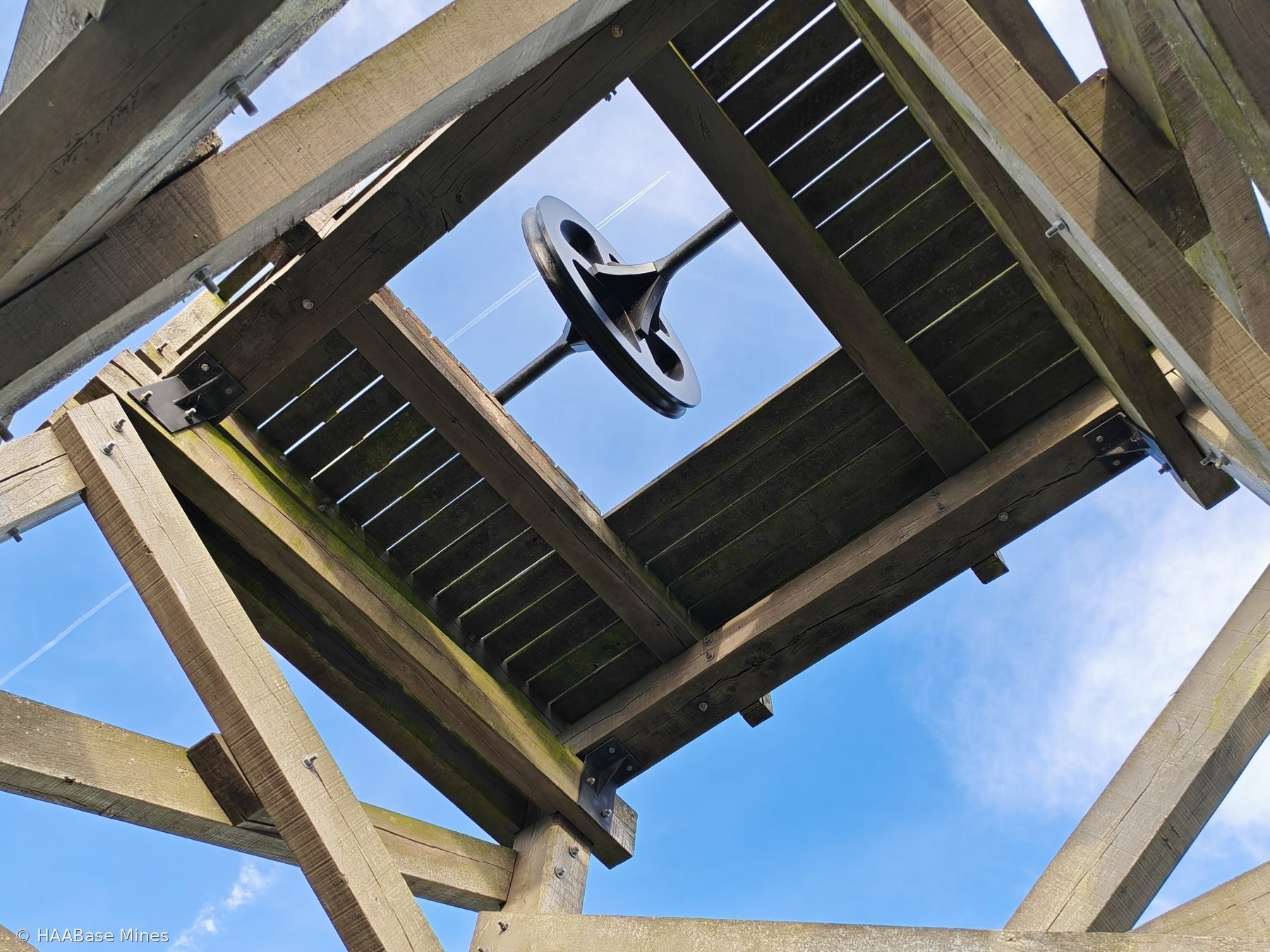
In 2009 a wooden headframe was constructed by the Ateliers Perrault, charpentiers spécialisés dans les monuments historiques, as a close reproduction of the original headframe, with a visitor platform at 6.20 metres accessible by a helical metal stair. The original shaft emplacement was indicated by coloured gravel and by a short section of mine boisage under the stair. The former comptable's building was reconstructed as a shelter and information point with interpretive panels.

The transformer building, original to the mine, was cleaned and preserved, and the terril (spoil heap) was retained intact. The Malécots N°1 site, across the RD751, contains the original nineteenth-century shaft — now some 50 metres deep due to partial collapse — in dense vegetation; access to this area is prohibited as the terrain is unstable.
Timeline

Operation

Early coal extraction in the Malécots and Ardenay area

References to coal pits at Ardenay date from 1494. By 1500 two puits had been sunk. By 1750 there were 37 pits employing 123 miners across the nearby communes. The Concession de Layon-et-Loire formalised exploitation of the territory.
1822–1873
Operation

Grand Puits des Malécots (puits N°1) in operation

The Grand Puits des Malécots was sunk from 1822 and reached a depth of approximately 300 metres. It was the most productive shaft in the Concession de Layon-et-Loire. Between 1811 and 1892 the concession produced 878,573 tonnes of coal in total.
1867–1869
Operation

Underground accidents: asphyxiation and firedamp incident

On 16 December 1867 a worker was asphyxiated at the 60-metre level. Investigation in February 1868 found a smouldering underground fire between the 290 and 300 metre levels. In 1869 a violent firedamp incident devastated the deepest levels of the shaft; of fifteen miners underground, five died — two were never recovered. A ceremony was held at the shaft with approximately 3,000 people in attendance.
1873
Closure

Grand Puits des Malécots closed following underground fire

The Grand Puits des Malécots (puits N°1) was closed in 1873 following a serious underground fire that killed five miners, two of whom remained unrecovered underground.
1915–1923
Exploration

Société des Recherches Minières de Rochefort-sur-Loire sinks four exploratory puits

Between 1915 and 1923 the Société des Recherches Minières de Rochefort-sur-Loire sank four shallow exploratory puits (N°1 to N°4) at the Malécots site. The fourth puits was the most productive, yielding about 15,000 tonnes. Activity ceased in 1923 without a sustainable commercial outlet.
1942–1964
Operation

Établissements Bessonneau reopen and deepen puits N°4 as puits des Malécots N°2

From 1942 the Établissements Bessonneau of Angers, via the Société des Mines d'Or de la Bellière, deepened the former puits N°4 from 60 to 85 metres. A plan incliné extended workings to 200 metres depth. A 13-metre wooden headframe was erected. The mine operated as a modern colliery with offices, forge, lamp room, changing rooms, and showers. An exploitation permit was granted in 1949. At peak the mine employed 45 workers and produced up to 5,560 tonnes per year, all destined for the Bessonneau factory.
1954
Construction

Ventilation shaft of 45 metres sunk

In 1954 a second shaft of 45 metres depth was sunk adjacent to the puits N°2 to serve as a dedicated ventilation shaft, completing the underground ventilation circuit.
1964
Closure

Final closure; shafts backfilled

In 1964 Bessonneau declined to renew the exploitation permit and the mine closed definitively. Both the puits N°2 (85 metres) and the ventilation shaft (45 metres) were backfilled with demolition rubble and sealed. The surface installations were demolished.
2008–2009
Heritage

Site restored and opened; wooden headframe reconstructed

From 2008 the Malécots N°2 site was restored under the management of the Communauté de communes Loire-Layon and the Association Sainte-Barbe des Mines et Corniche Angevine. In 2009 the Ateliers Perrault erected a wooden headframe as a faithful reproduction of the original, with a visitor platform at 6.20 metres. The former comptable's building was reconstructed as a shelter and information point.
2022
Heritage

Subsidence at puits N°2 head; DPSM remediation works

In September 2022 a depression of 0.5 metres appeared at the head of the sealed puits N°2. GEODERIS (for DREAL Pays-de-la-Loire) diagnosed that the original concrete cap rested unsupported on the backfill. The DPSM of BRGM carried out remediation: a new reinforced concrete slab was cast on the competent ground around the shaft perimeter, and the ventilation shaft received a conical concrete backfill.

Sources and records

Wikipedia (French): Site des Malécots
Wikipedia (French): Bassin houiller de Basse Loire
DPSM / BRGM, Après-Mine Opérationnelle, Mise en sécurité de deux têtes de puits à Chaudefonds-sur-Layon (49)
Association Sainte-Barbe des Mines et Corniche Angevine (stebarbe.com), L'industrie du charbon entre Loire et Layon
Association Sainte-Barbe des Mines et Corniche Angevine (stebarbe.com), Le projet Malécots : un site mémoire sur la Corniche Angevine
Association Sainte-Barbe des Mines et Corniche Angevine (stebarbe.com), Mines des Malécots à Chaudefonds
Exxplore website, Houillères Angevine section, Les Malécots
Wiki-Anjou, Mines de charbon des Malécots
La Douceur Angevine website, La mine des Malécots
HCLM49 (Histoire et Culture du Layon et de la Maine), Chaudefonds-sur-Layon visit description
This researched site record is part of the HAABase Mines database. Normal personal research and browsing is welcome. Automated bulk extraction, republication, or harvesting of site text and images is not permitted without written consent.