Site overview

The Mine de Babio is a lignite extraction site associated with the hamlet of Babio, a dependency of the commune of La Caunette in the Hérault department, situated in the Haut-Minervois at the foot of the Montagne Noire. Coal workings in the La Caunette territory are documented from at least 1658, and the lignite deposits — formed in fourteen recognised seams intercalated within Eocene lacustrine limestones — were exploited intermittently over the following three centuries. The La Caunette Rive Gauche concession covering the territory including Babio was granted on 20 March 1807, encompassing over 3,000 hectares.

Under subsequent concessionaires, including members of the Treil de Pardailhan family and later the frères Narbonne, small-scale extraction employing a few dozen miners continued through the nineteenth century. The lignite was of poor quality, with high ash and sulphur content and modest calorific value. In 1948 a final investment was made with the construction of a lignite processing works, but the mines closed definitively that year.

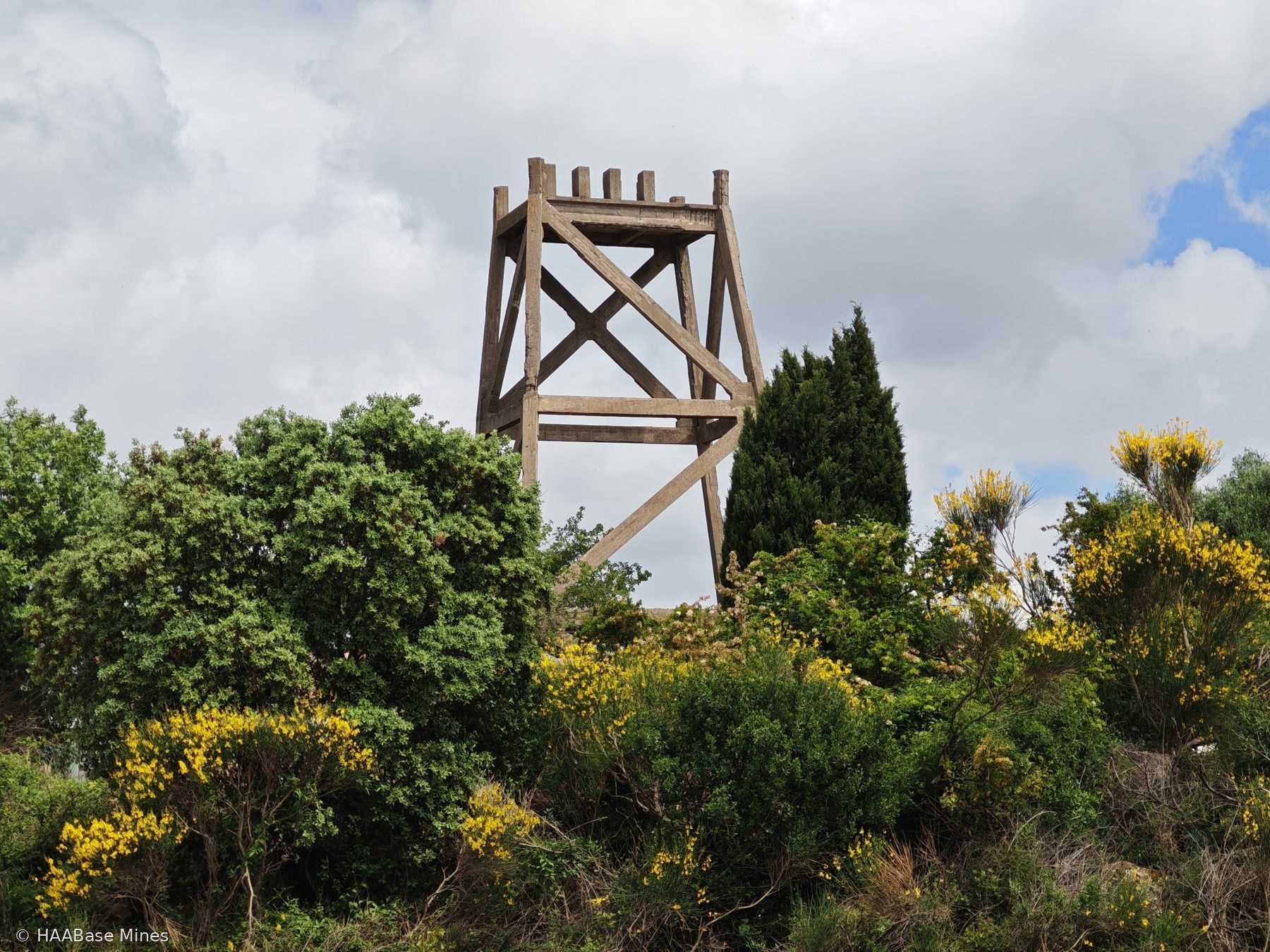
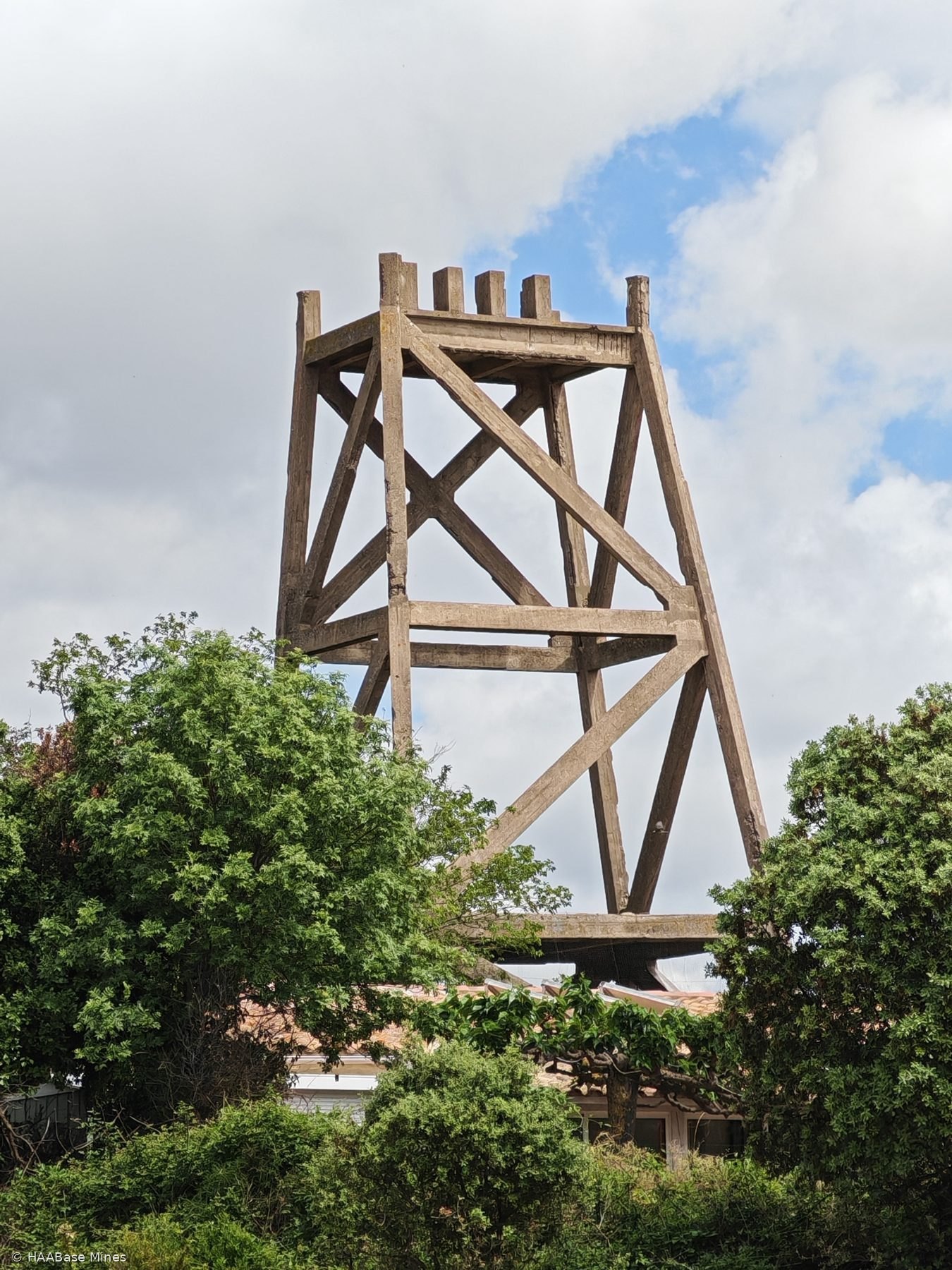
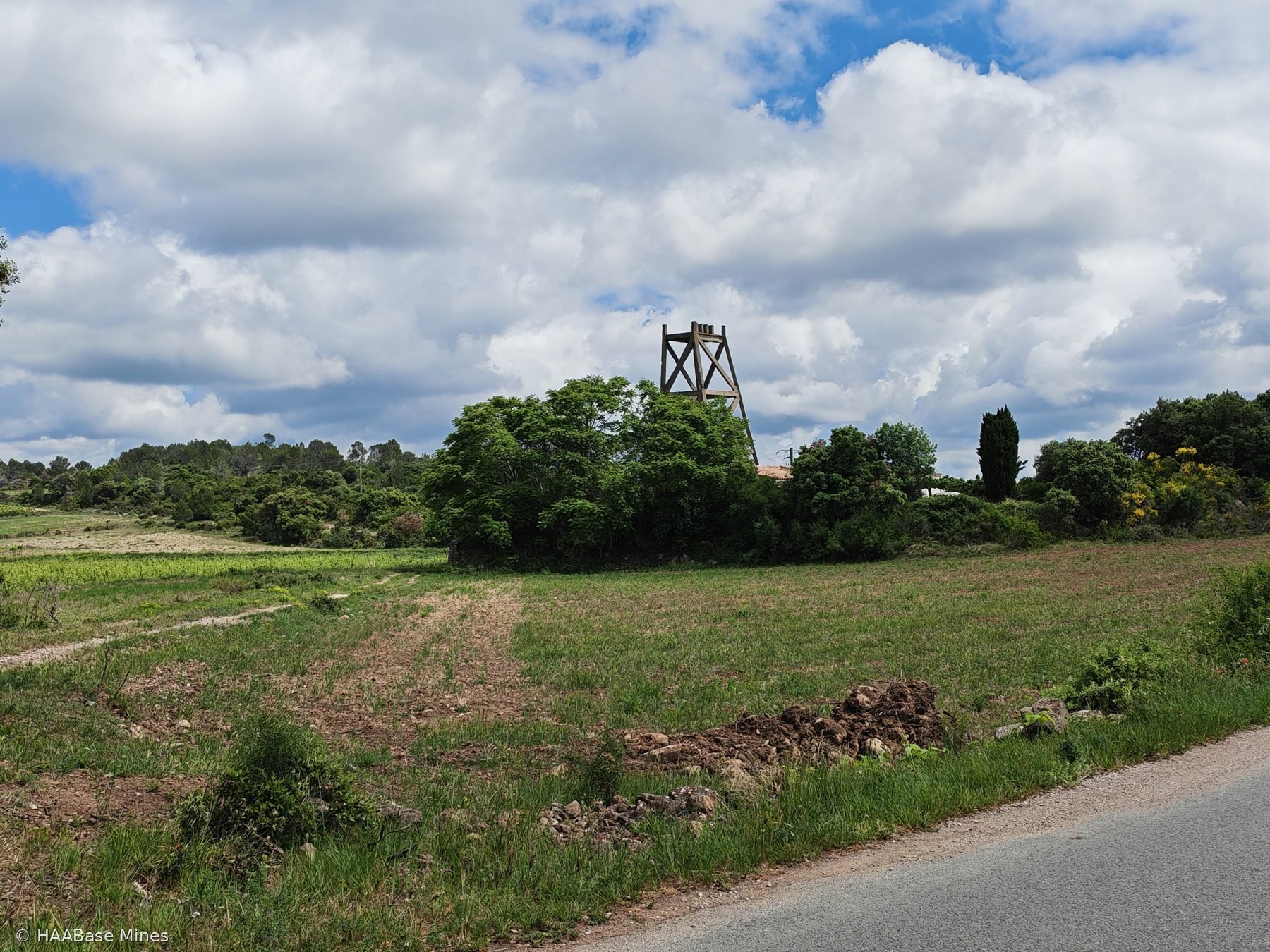
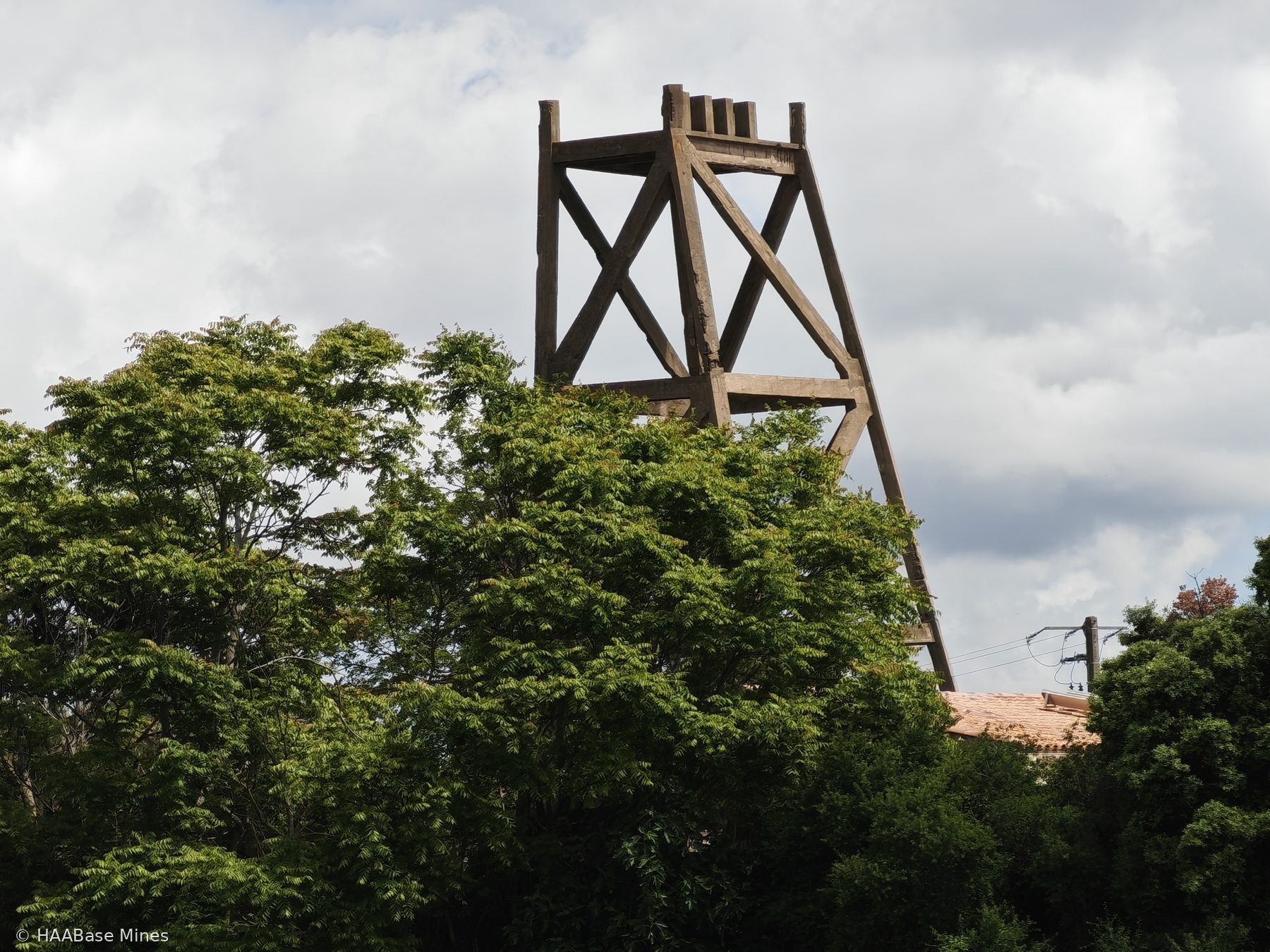
Approximately 250,000 tonnes in total were extracted from the La Caunette workings across their entire history. The principal visible surviving remnant at La Caunette today is a tall chimney from the 1948 processing works, standing at the eastern entrance to the village. The former mine workings are inaccessible, though short horizontal exploratory galleries can be found on the hillsides in the vicinity.

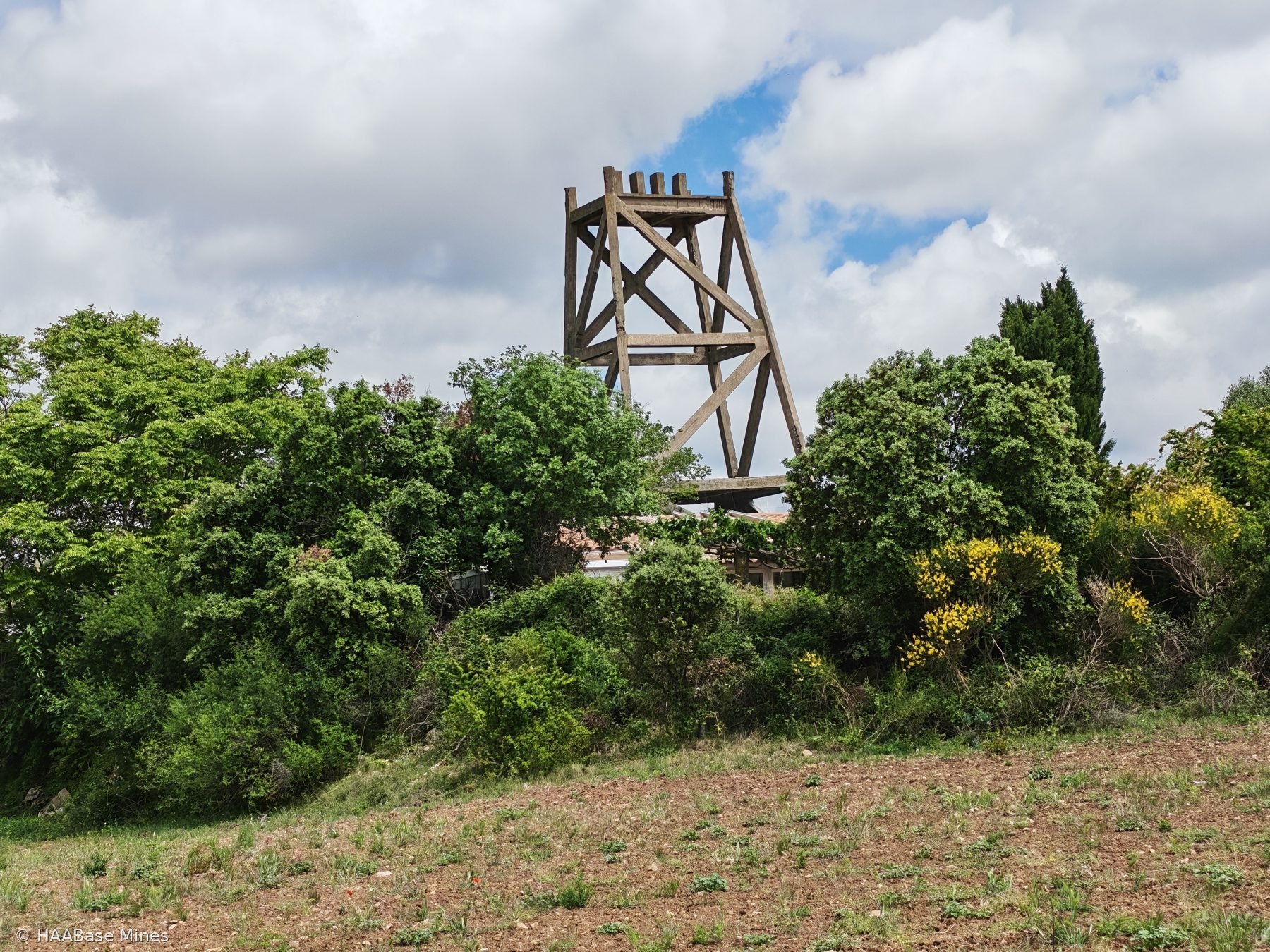
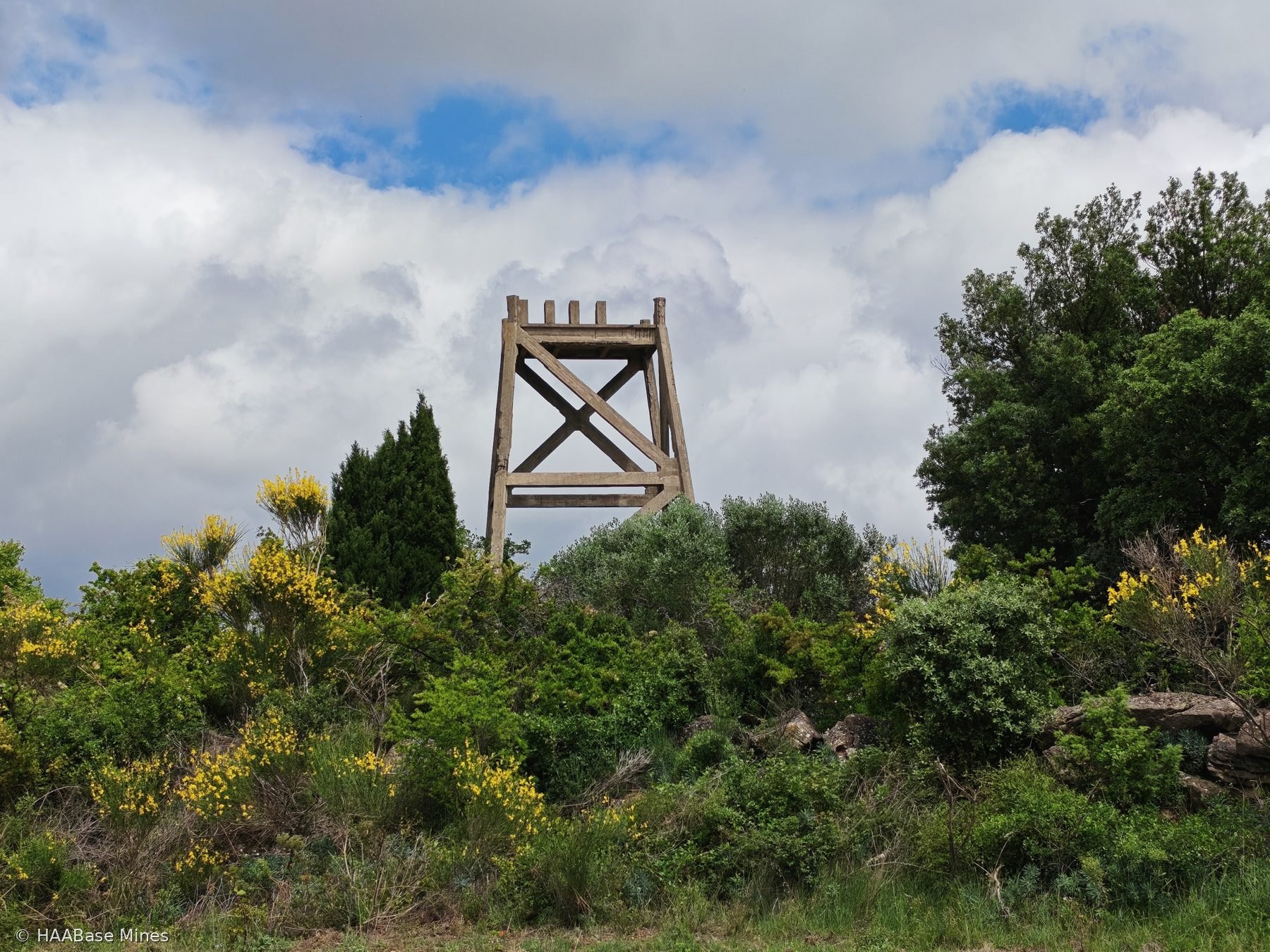
The surviving chimney stands at the edge of the hamlet in a dry hillside landscape, where it reads as an isolated marker of former lignite working within the wider rural setting.

Map & photo

Mine de Babio mine headframe or winding tower site
Photograph taken: 10 May 2026
Map markers and directions links are provided for location reference only and do not indicate public access or permission to enter a site.

History

The Mine de Babio takes its name from the hamlet of Babio, one of several hamlets dependent on the commune of La Caunette in the Hérault, lying in the Haut-Minervois on the southern slopes of the Montagne Noire at approximately 200 metres altitude. The area was an active lignite mining territory for roughly three centuries. The first documented mention of coal workings at La Caunette dates from 1658, when a notarial act records that the mines were being farmed by the local seigneur.

In 1775, the mineralogist and engineer Antoine de Gensanne noted in his Historia naturae provinciae Languedociae that the mines of La Caunette had been worked from time immemorial, with evidence suggesting exploitation as early as the Roman period, later confirmed by references in the Bulletin de la Société Française des ingénieurs coloniaux. During the eighteenth century, the workings remained poorly exploited. In 1788, the baron François de Treil de Pardailhan, seigneur of La Caunette, requested a concession covering the La Caunette and Azillanet area.

In 1791 and 1793, the same individual, now known under the Revolution as citoyen François Treil, operated the mine des Cabanes; however, his assets were placed under sequestration from 1794 as the father of an émigré. His heiress Monique de Planque, née de Pardailhan, subsequently applied for a new concession and obtained in 1807 the Concession de La Caunette de la Rive Gauche, covering 3,031 hectares across the territories of Saint-Jean-de-Pardailhan, Minerve, La Caunette, Aigues-Vives, and Vélieux. A separate Concession de La Caunette de la Rive Droite was granted to her brother Alexandre de Treil de Pardailhan in 1810 and was extended for his heirs in 1822 following his death.

Later in the nineteenth century the mines passed to the frères Narbonne, who were initially farmers of the mine and subsequently purchased the concession from the Treil de Pardailhan family in 1829. In 1853, members of the Pardailhan family still held a concession, which was sold to a Martin Limouzy for 15,000 francs. Throughout the nineteenth century, extraction employed a few dozen miners and served local demand, though the lignite produced was of mediocre quality — with approximately 30 per cent ash content and 10 per cent sulphur — and was difficult to sell at a distance.

The geological formation exploited comprised fourteen recognised lignite seams intercalated in Eocene lacustrine limestones of the Cuisien stage, and the deposits ran in a band across the territory encompassing the hamlet of Babio and the broader La Caunette area. Archives for the Hérault department confirm that the La Caunette Rive Droite et Aigues-Vives concession was granted on 25 December 1822 and that works were taken up intermittently. In 1948 a final investment was made: a lignite processing works was constructed, representing the last attempt to make commercial use of the deposits.

The mines closed definitively in 1948 or shortly thereafter, by some accounts around 1950. Across the entire history of the La Caunette workings approximately 250,000 tonnes of lignite were extracted in total. The mine buildings were subsequently demolished.

The former workings are now inaccessible. On the hillsides surrounding the hamlet of Babio and the village of La Caunette, short horizontal exploratory galleries remain discoverable in the undergrowth. The most prominent surviving industrial feature is the tall chimney of the 1948 processing works, still standing at the eastern entrance to the village of La Caunette and marking the site's long industrial history.

The hamlet of Babio today is a rural settlement whose agricultural identity has largely supplanted its mining past.
Timeline

Exploration

Pre-industrial and early documented workings

The earliest documented mention of coal workings at La Caunette dates from 1658, when a notarial act records the mines being farmed by the local seigneur. Evidence suggests exploitation of the territory from the Roman period. In 1775 the mineralogist Antoine de Gensanne noted the mines had been worked from time immemorial.
1788–1794
Legislation

Baron François de Treil de Pardailhan seeks concession and begins extraction

In 1788 the baron François de Treil de Pardailhan, seigneur of La Caunette, requested a concession for the La Caunette and Azillanet area. In 1791-1793 he operated the mine des Cabanes. From 1794 his assets were sequestered as the father of an émigré.
1807
Legislation

Concession de La Caunette de la Rive Gauche granted

Monique de Planque, née de Pardailhan, obtained the Concession de La Caunette de la Rive Gauche on 20 March 1807 for fifty years, covering 3,031 hectares across Saint-Jean-de-Pardailhan, Minerve, La Caunette, Aigues-Vives, and Vélieux.
1810
Legislation

Concession de La Caunette de la Rive Droite granted

Alexandre de Treil de Pardailhan obtained the Concession de La Caunette de la Rive Droite in 1810. Following his death, the concession was extended to his heirs in 1822.
1829
Operation

Frères Narbonne purchase the concession

The frères Narbonne, initially farmers of the mine, purchased the concession from the Treil de Pardailhan family in 1829 and continued small-scale extraction employing a few dozen miners.
1853
Operation

Concession sold to Martin Limouzy

In 1853, members of the Pardailhan family still held a concession at La Caunette. This was sold to Martin Limouzy for 15,000 francs. Extraction of the poor-quality lignite continued to serve local demand.
1948
Closure

Construction of lignite processing works and final closure

In 1948 a final investment was made with the construction of a lignite processing works on the site. The mines closed definitively around this time, after an operational history of approximately three centuries. Approximately 250,000 tonnes of lignite in total had been extracted from the La Caunette workings.
1948
Heritage

Industrial chimney survives as sole standing remnant

Following closure, the mine buildings were demolished. The tall chimney of the 1948 processing works remained standing at the eastern entrance to the village of La Caunette, the principal surviving industrial monument of the site. Short exploratory galleries survive on the surrounding hillsides.

Sources and records

Pays-Saint-Ponais website, Les mines de charbon de La Caunette
La Caunette commune website (lacaunette34.fr and mairiedelacaunette.wordpress.com)
Planet-Terre (ENS Lyon), Lignite de l'Éocène inférieur à gastéropodes fossiles, La Caunette, Hérault
Archives départementales de l'Hérault, Mines et Energie inventory
Minespatrimoine.fr, Dossier La Caunette Mines Patrimoine en Montagne Noire
Collections Université de Montpellier, Service du Patrimoine Historique, article on Mines d'Argent de La Caunette
Les Godillots baladeurs blog, La Caunette, 13 avril 2016
Pays-Saint-Ponais website, Les mines de La Caunette et des environs en 1775 (de Gensanne)
This researched site record is part of the HAABase Mines database. Normal personal research and browsing is welcome. Automated bulk extraction, republication, or harvesting of site text and images is not permitted without written consent.