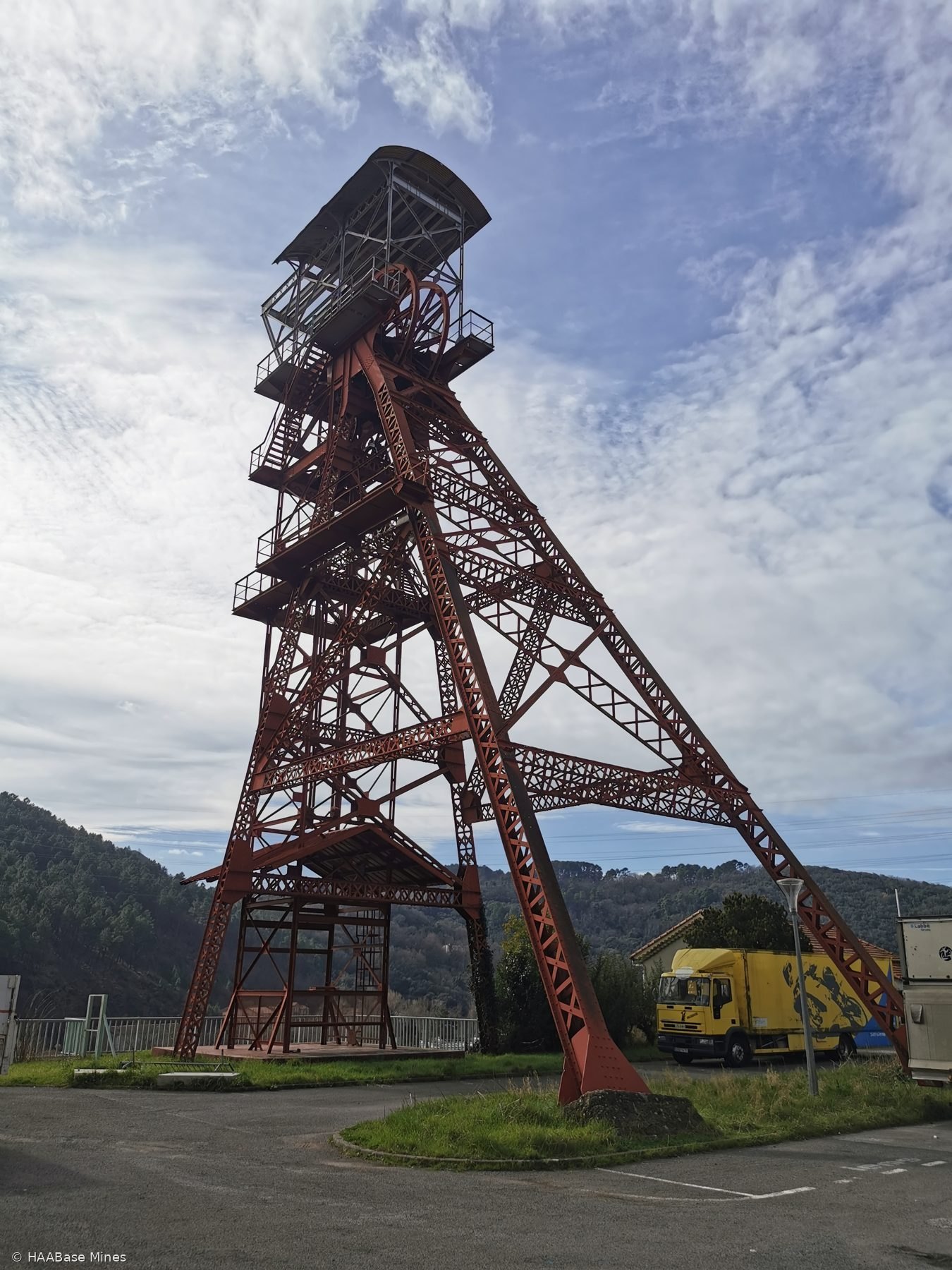
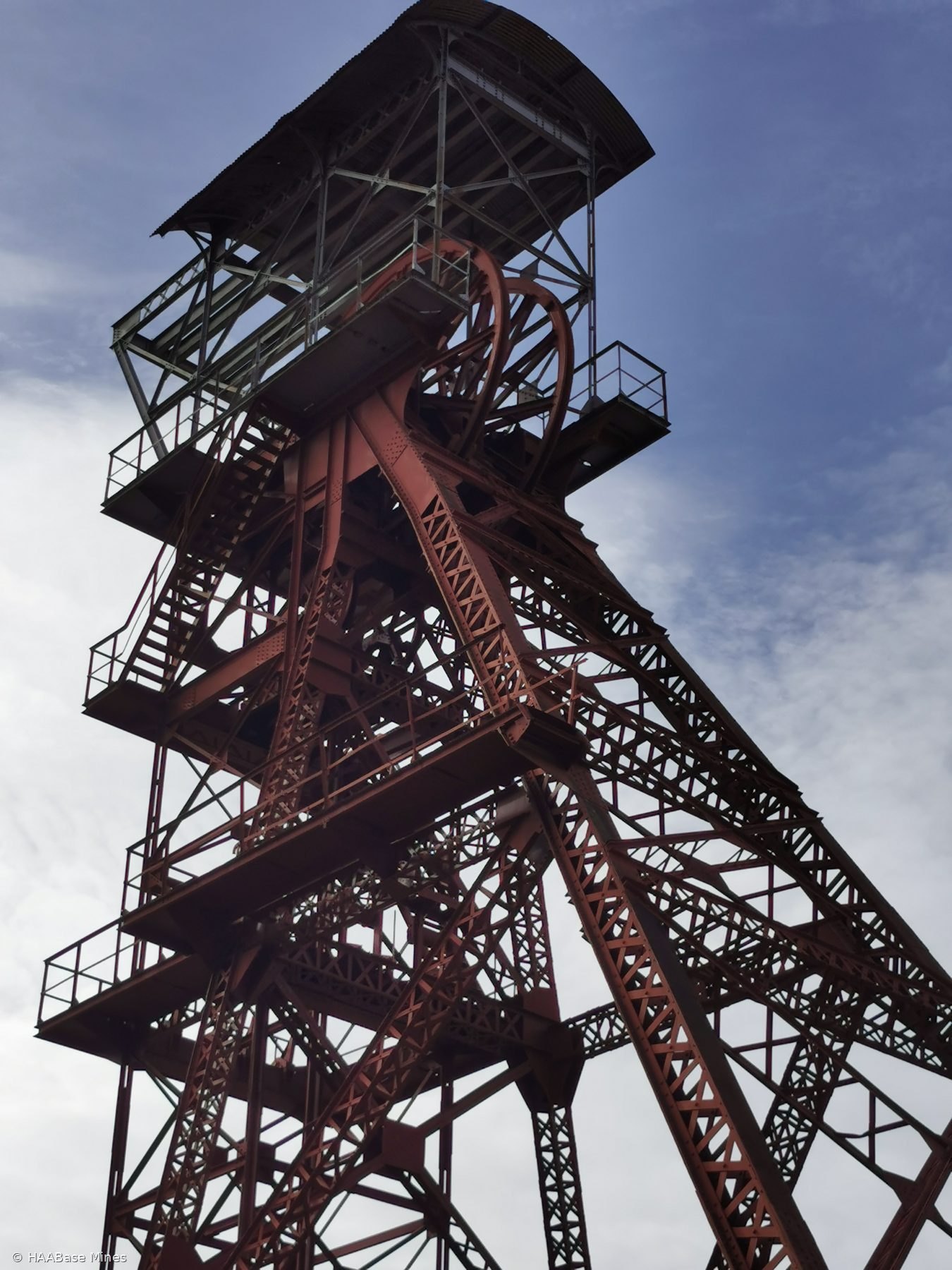
Site overview

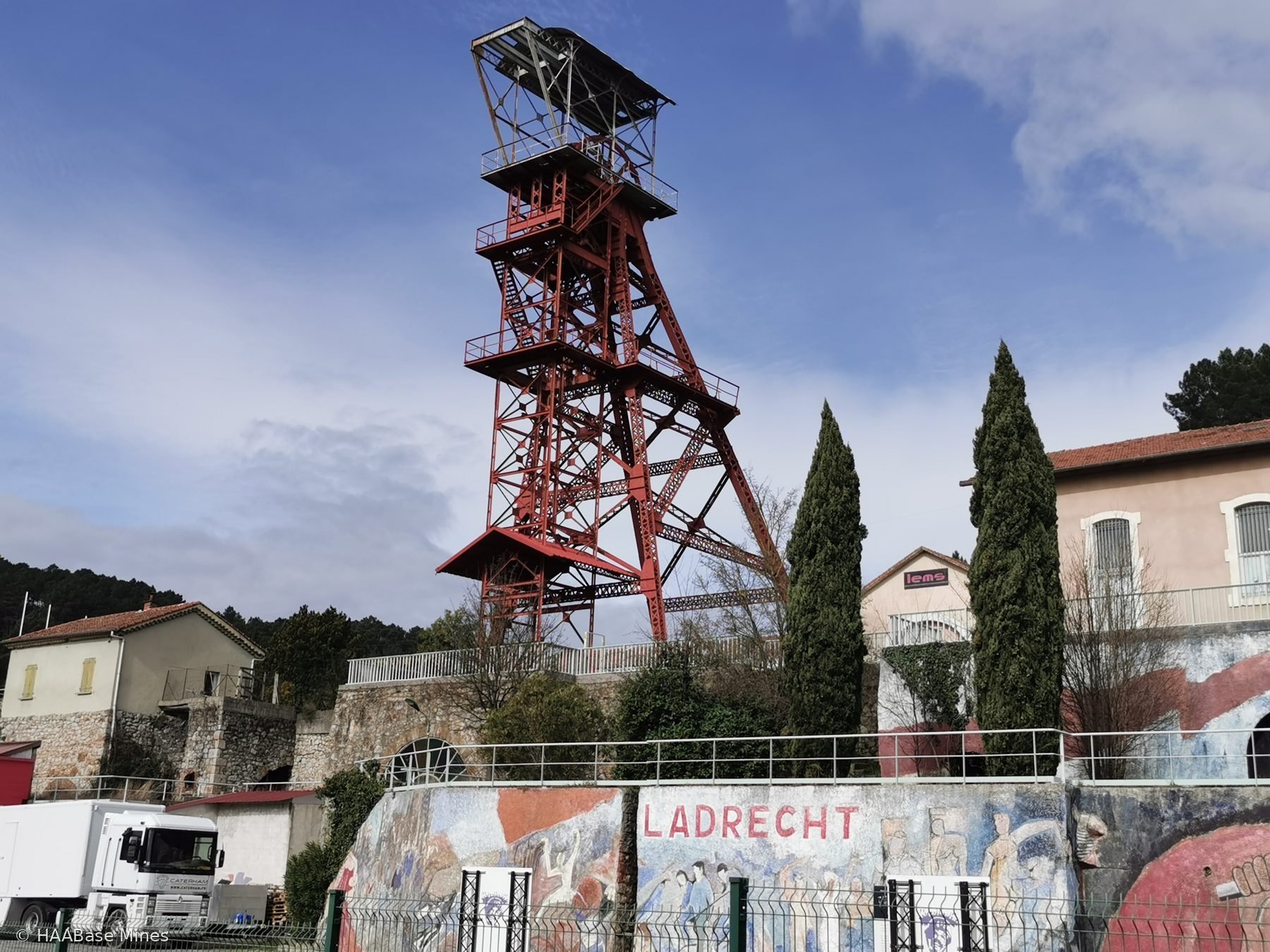
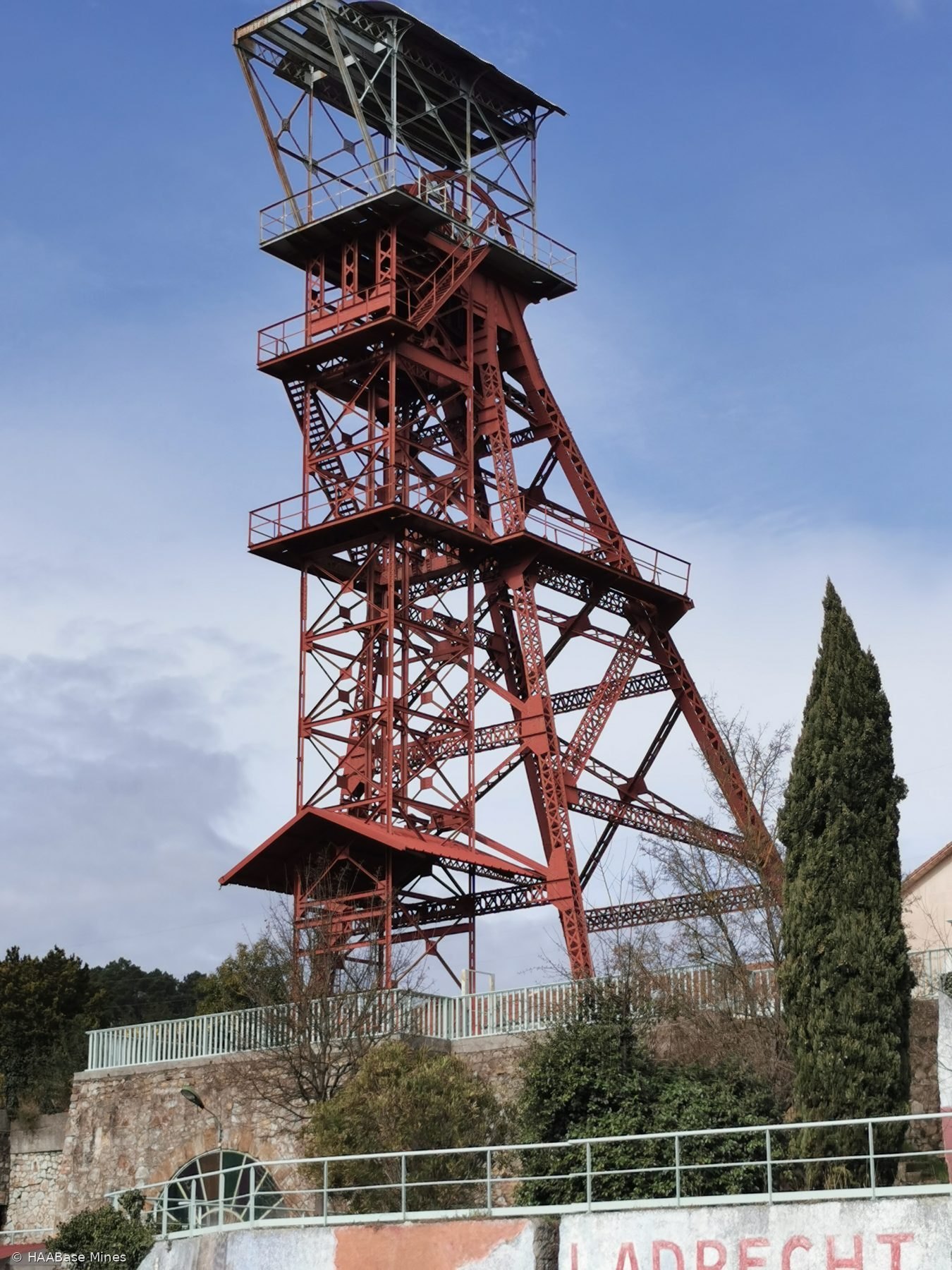
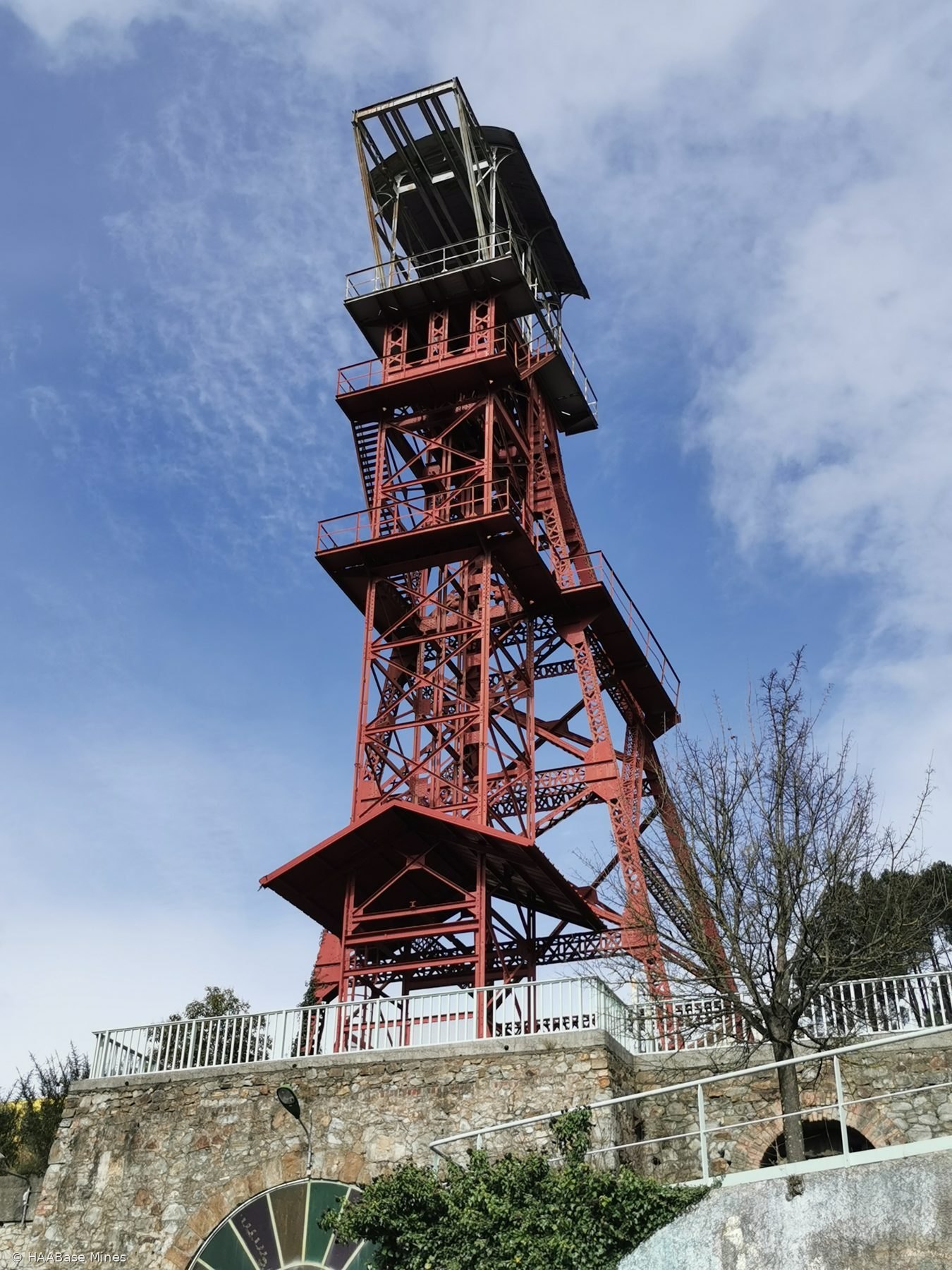
The Mines des Cévennes - Puits Fontanes is the surviving remnant of the Fontanes-Destival colliery complex at Ladrecht, on the commune of Saint-Martin-de-Valgalgues, forming part of the concession of Rochebelle in the southern Cévennes coalfield. Artisanal exploitation in the area preceded the establishment of an industrial shaft, and the puits Fontanes was sunk between 1874 and 1878, entering service in 1884 at a depth of 411 metres and a diameter of 4.3 metres. It was modernised from 1929 onward with a new steel lattice headframe 35 metres in height and electrification of its winding engine.

A second, deeper shaft — the puits Destival — was sunk from 1938 and entered service in 1950, with a reinforced concrete extraction tower 67 metres tall reaching 822 metres depth. From that point, the puits Fontanes was retained solely for ventilation and service duties. The site held the world record for the number of instantaneous carbon dioxide outbursts.

A 13-month strike with underground occupation between May 1980 and June 1981 — the longest such action in European mining history — preceded the final closure of the site in 1984-85. The concrete tower of the puits Destival was demolished in 2002. The steel lattice headframe of the puits Fontanes, the winding engine house, and associated administrative buildings were preserved.

In 1999, the Communauté d'Agglomération Alès-Cévennes redeveloped the former colliery site as the Pôle Mécanique d'Alès.

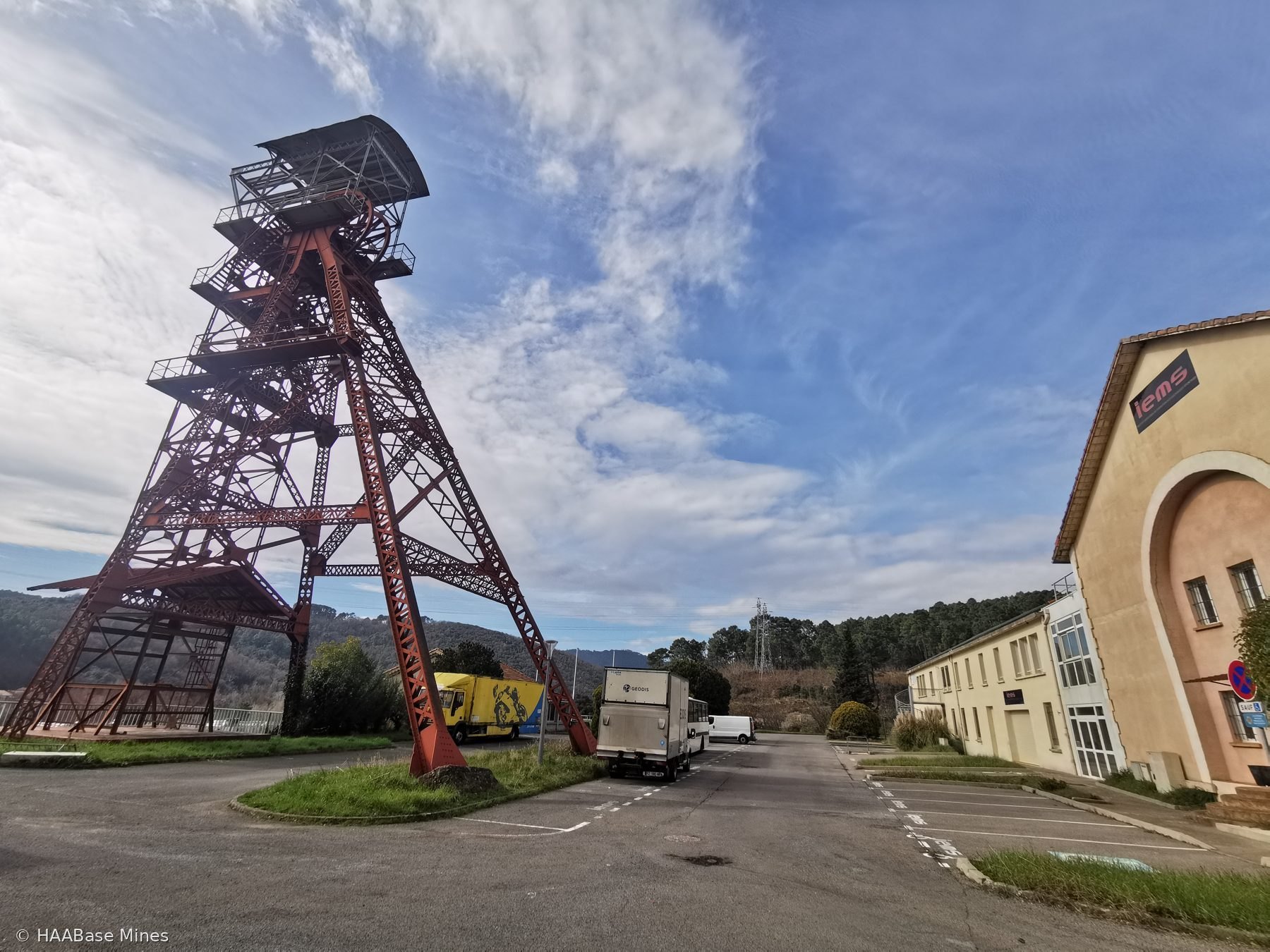
The surviving headframe and buildings stand within a redeveloped urban-industrial landscape at Ladrecht, where the former pit site still reads as a distinct historic enclave.

Map & photo

Siège Fontanes-Destival — Puits Fontanes mine headframe or winding tower site
Photograph taken: 18 February 2026
Map markers and directions links are provided for location reference only and do not indicate public access or permission to enter a site.

History

The Fontanes-Destival colliery complex at Ladrecht, on the commune of Saint-Martin-de-Valgalgues, stands approximately three kilometres north-west of Alès and formed the last major operational site of the southern Cévennes coalfield. The concession of Rochebelle, of which the site forms part, has roots extending back to at least the thirteenth century, when monks of the abbey of Cendras extracted coal from surface outcrops on their lands. The earliest industrial development of the Ladrecht area involved artisanal workings that continued until 1872, when a complete extraction works — including the shaft, screening facilities, a washing plant, and coal agglomeration equipment — was installed and linked to the railway network.

The puits Fontanes was sunk between 1874 and 1878, reaching a final depth of 411.34 metres with a diameter of 4.30 metres. It entered service in 1884. During its early operational life, the shaft used a steam winding engine.

In 1896, a catastrophic instantaneous outburst of carbon dioxide at the puits Fontanes killed 24 men. The site would accumulate the world record for the number of such outbursts. From 1923 onward, the colliery underwent significant modernisation.

A new steel lattice headframe 35 metres in height was erected, and the winding machinery was converted from steam to electric power drawing on the new thermal power station at Rochebelle. By 1929, the winding engine was an electrified Venot machine with a bicylindroconical drum. In 1929, the old surface treatment buildings of 1888 were progressively replaced by new structures.

Sinking of the puits Destival was begun in 1938 by the Compagnie des Houillères de Rochebelle. It was a shaft of six metres in diameter, ultimately reaching 822.20 metres in depth, equipped with a reinforced concrete extraction tower 67 metres tall. The puits Destival did not enter service until 1950, after nationalisation under the decree of 28 June 1946, which created the Houillères de Bassin des Cévennes.

Its winding engine was a Venot machine with a Koepe pulley of seven metres diameter driven by two motors totalling 2,450 horsepower. Two landing levels were equipped underground, at 185 and 600 metres. From the entry into service of the puits Destival, the puits Fontanes was retained exclusively for ventilation and service, and all production from the southern sector of the basin was concentrated at Ladrecht, with underground links to the Rochebelle workings at Alès and the former Nord d'Alès workings.

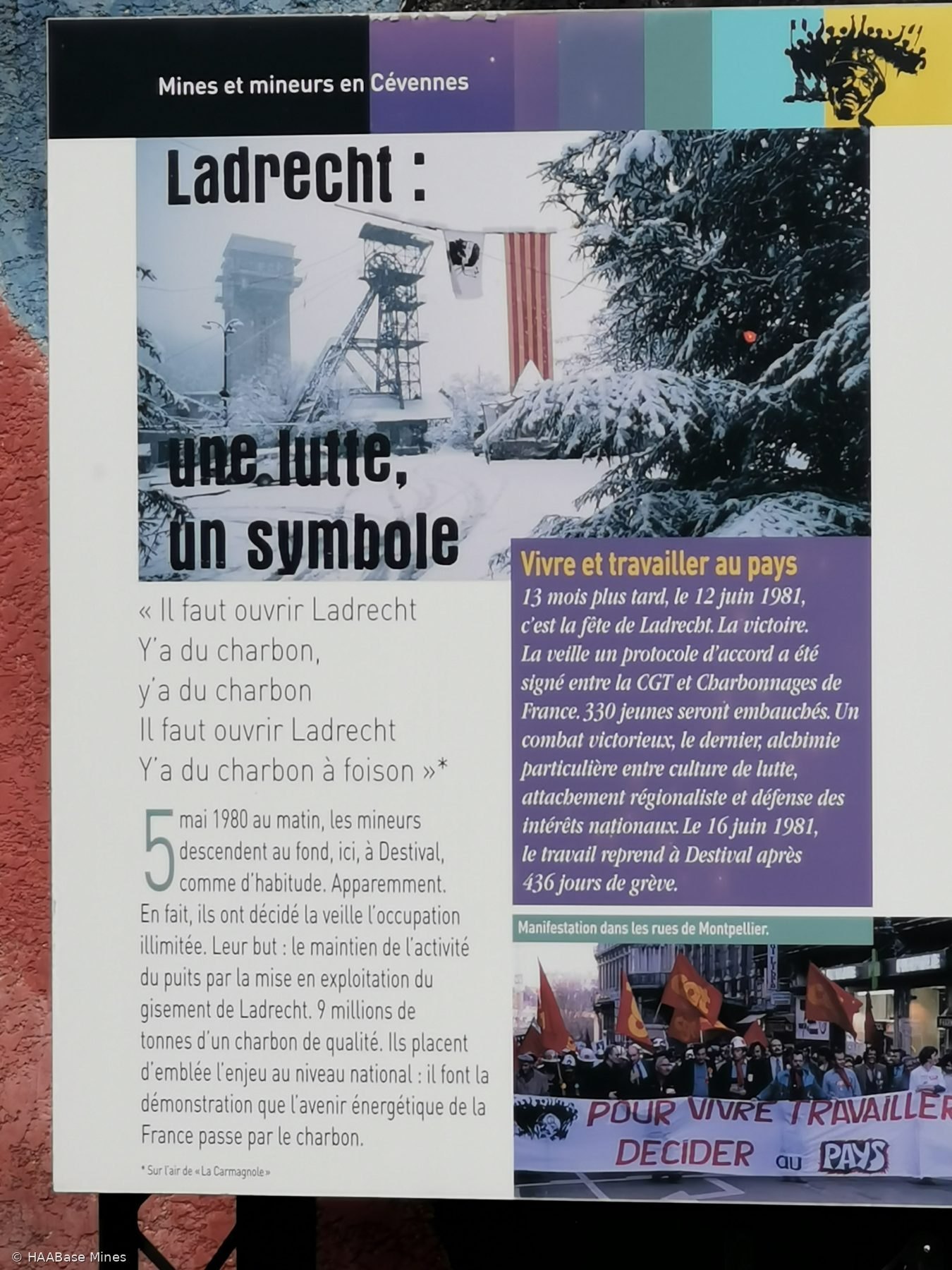
In 1945, approximately 900 workers were employed; by 1962, following concentration of production, the workforce had grown to 1,580. In 1957, output reached 380,000 tonnes; by 1959 it had risen to nearly 650,000 tonnes. On 5 May 1980, the miners of Ladrecht began a strike in opposition to the exploitation of the Ladrecht panel.

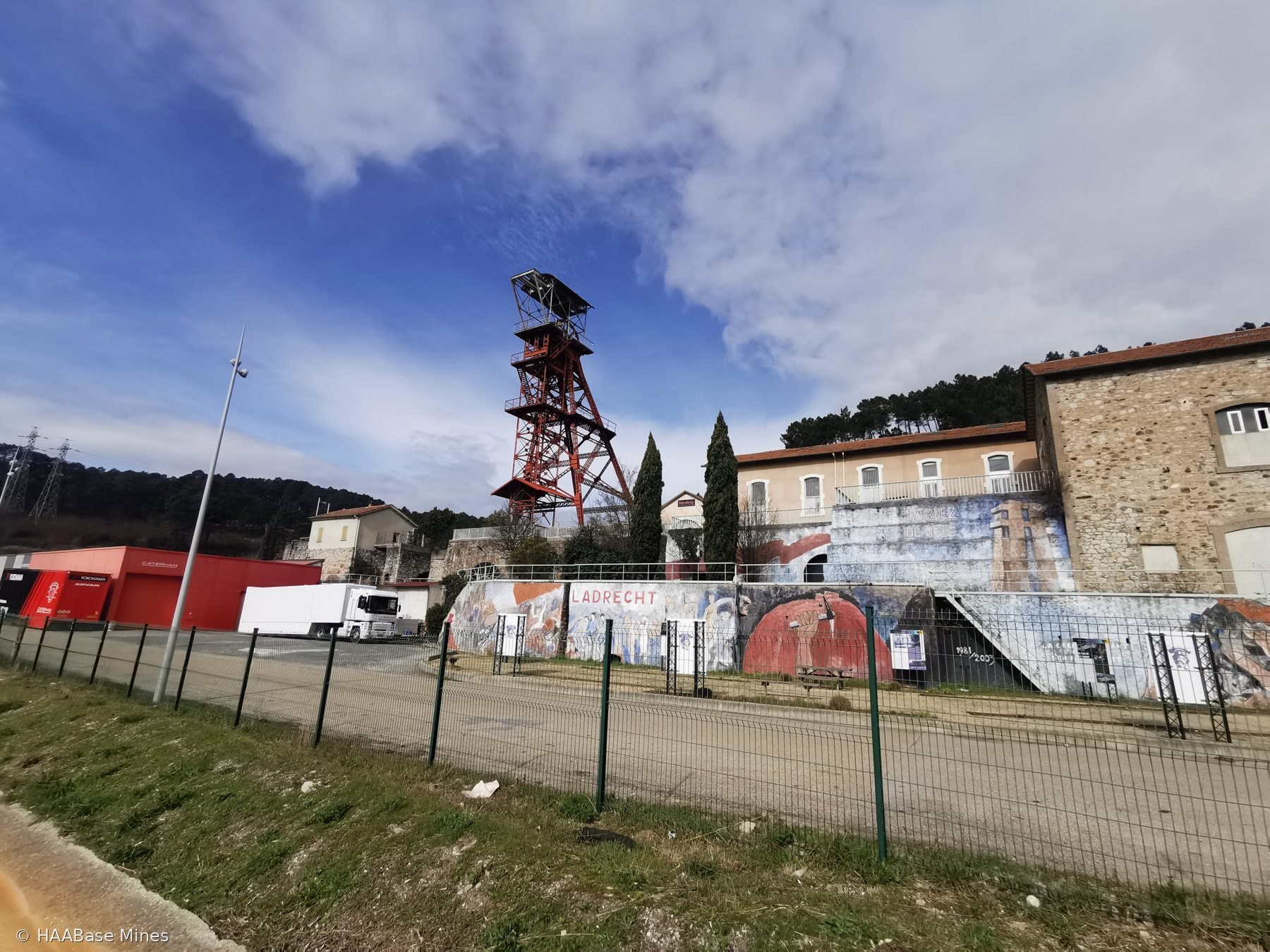
The strike lasted thirteen months until 10 June 1981, with sustained underground occupation — it was the longest strike of this type in European mining history. A large symbolic mural painted in 1981 in solidarity with the miners on the concrete retaining wall of the upper colliery yard remained a visible presence on the site until it was partly destroyed by a collapse. The puits Destival was closed and the site shut in 1984-85, marking the final end of underground coal extraction in the Cévennes.

The reinforced concrete tower of the puits Destival, by then heavily degraded and presenting risks of falling concrete, was demolished in 2002. The winding wheel from the Destival tower was subsequently placed on a roundabout in Saint-Martin-de-Valgalgues as a memorial. The Communauté de Communes purchased the site in 1989.

In 1999, the Communauté d'Agglomération Alès-Cévennes completed the transformation of the former colliery yard into the Pôle Mécanique d'Alès. The steel lattice headframe of the puits Fontanes, the winding engine house in stone, the administrative offices in reinforced concrete, and associated buildings were preserved as witnesses to the industrial and social history of the site, and are now used to house business offices.
Timeline

Operation

Artisanal exploitation at Ladrecht

Coal outcrops in the Ladrecht area were exploited artisanally until 1872, when the site was reorganised as a complete industrial colliery with shaft, screening, washing, and agglomeration facilities, connected to the rail network.
1874–1878
Construction

Puits Fontanes sunk

The puits Fontanes was sunk between 1874 and 1878 to a depth of 411.34 metres with a diameter of 4.30 metres. It was equipped with a steam winding engine and a headframe.
1884
Operation

Puits Fontanes enters service

The puits Fontanes entered service in 1884 and began extracting coal from the Rochebelle concession.
1896
Operation

Instantaneous CO2 outburst kills 24 men

An instantaneous outburst of carbon dioxide at the puits Fontanes in 1896 killed 24 workers. The site was to accumulate the world record for the number of such outbursts.
1923–1929
Construction

Modernisation of puits Fontanes

From 1923 the colliery was modernised. A new steel lattice headframe 35 metres in height was erected. By 1929, the winding machinery had been electrified using power from the thermal station at Rochebelle, and a Venot bicylindroconical drum winding engine was installed. Treatment buildings were progressively reconstructed.
1938–1950
Construction

Puits Destival sunk and brought into service

Sinking of the puits Destival was begun in 1938 by the Compagnie des Houillères de Rochebelle. The shaft had a diameter of 6 metres and ultimately reached 822.20 metres in depth. It was equipped with a reinforced concrete extraction tower 67 metres tall. After nationalisation in 1946, the puits Destival entered production service in 1950, with a Venot Koepe-pulley winding engine of 2,450 horsepower total. From this point the puits Fontanes served only for ventilation and service.
1946
Legislation

Nationalisation and creation of Houillères de Bassin des Cévennes

Under the decree of 28 June 1946, the collieries of the Cévennes basin were nationalised and the Houillères de Bassin des Cévennes was established. In 1968 this body was integrated into the Houillères de Bassin du Centre-Midi as the Unité d'Exploitation du Gard.
1957–1959
Operation

Peak production at puits Destival

Annual production at the site reached 380,000 tonnes in 1957 and nearly 650,000 tonnes in 1959, reflecting the concentration of all southern basin output at Ladrecht.
1980–1981
Closure

Ladrecht strike — longest underground occupation in European mining history

On 5 May 1980, miners at Ladrecht began a strike over plans to exploit the Ladrecht panel. The strike involved sustained underground occupation and lasted thirteen months, ending on 10 June 1981. It is recognised as the longest strike with underground occupation in European mining history.
1984–1985
Closure

Final closure of puits Destival and end of underground coal extraction in the Cévennes

The puits Destival was closed and the Ladrecht site shut in 1984-85, marking the definitive end of underground coal extraction in the Cévennes coalfield.
1989
Redevelopment

Site acquired by Communauté de Communes

The Communauté de Communes purchased the former colliery site in 1989. The steel lattice headframe of the puits Fontanes, the winding engine house, and administrative buildings were retained as heritage witnesses and repurposed to house business offices.
1999
Redevelopment

Pôle Mécanique d'Alès established on former colliery site

In 1999 the Communauté d'Agglomération Alès-Cévennes completed the conversion of the former Fontanes-Destival colliery yard into the Pôle Mécanique d'Alès, a motorsport and business zone. The surviving headframe of the puits Fontanes, the engine house, and administrative buildings were integrated into the redeveloped site.
2002
Closure

Demolition of puits Destival concrete tower

The reinforced concrete extraction tower of the puits Destival, 67 metres tall and heavily degraded, was demolished in 2002 owing to risk of falling concrete. The winding wheel from the tower was later placed on a roundabout in Saint-Martin-de-Valgalgues as a memorial.

Sources and records

Mérimée heritage inventory notice IA00128655, Ministère de la Culture (Plateforme ouverte du patrimoine / POP)
APPHIM website, article on Les puits Fontanes et Destival
Exxplore website, Les Houillères du Bassin des Cévennes, Puits Fontanes entry
Mas de la Regordane blog, entries for puits Fontanes and puits Destival
Patrimoine Industriel Minier website, Bassin Houiller des Cévennes section
Gard tourism notice, Le Vallon de Fontanès, Saint-Martin-de-Valgalgues
Wikipedia (French), Mines de charbon des Cévennes
Saint-Martin-de-Valgalgues commune tourism website
This researched site record is part of the HAABase Mines database. Normal personal research and browsing is welcome. Automated bulk extraction, republication, or harvesting of site text and images is not permitted without written consent.