Fact-checked record
This record has completed the HAABase Mines source-by-source fact-checking process.
Show fact-check assessment and classification
The history, timeline and surviving-site classification shown here reflect the reviewed account.
The record identifies this site as Puits Castan on the Villanière concession, a late twentieth-century shaft serving the integrated Salsigne underground gold and polymetallic mine. The history is supported by official Aude prefecture material, BRGM post-mining monitoring reports, departmental archive inventories, the 2025 Montpellier Administrative Court judgment and specialist technical mining sources. The evidence establishes that the shaft was developed during the 1970s, reached about 350 metres, used Koepe winding equipment, and was superseded as the principal machinery-access route by a long spiral decline around 2002.
It also establishes that the wider mining operation ended in 2004, the decline entrance was secured and the original Castan headframe was retained. The environmental account distinguishes Puits Castan from the separate mines, waste tips and Combe du Saut treatment site contributing to pollution across the wider district. Uncertainty remains over the exact height of the headframe, several detailed winding-equipment specifications, precise corporate transaction dates and some early district production totals.
The site-specific history and principal timeline are strongly supported; the detailed nineteenth-century company history and technical performance figures rely more heavily on specialist secondary material.
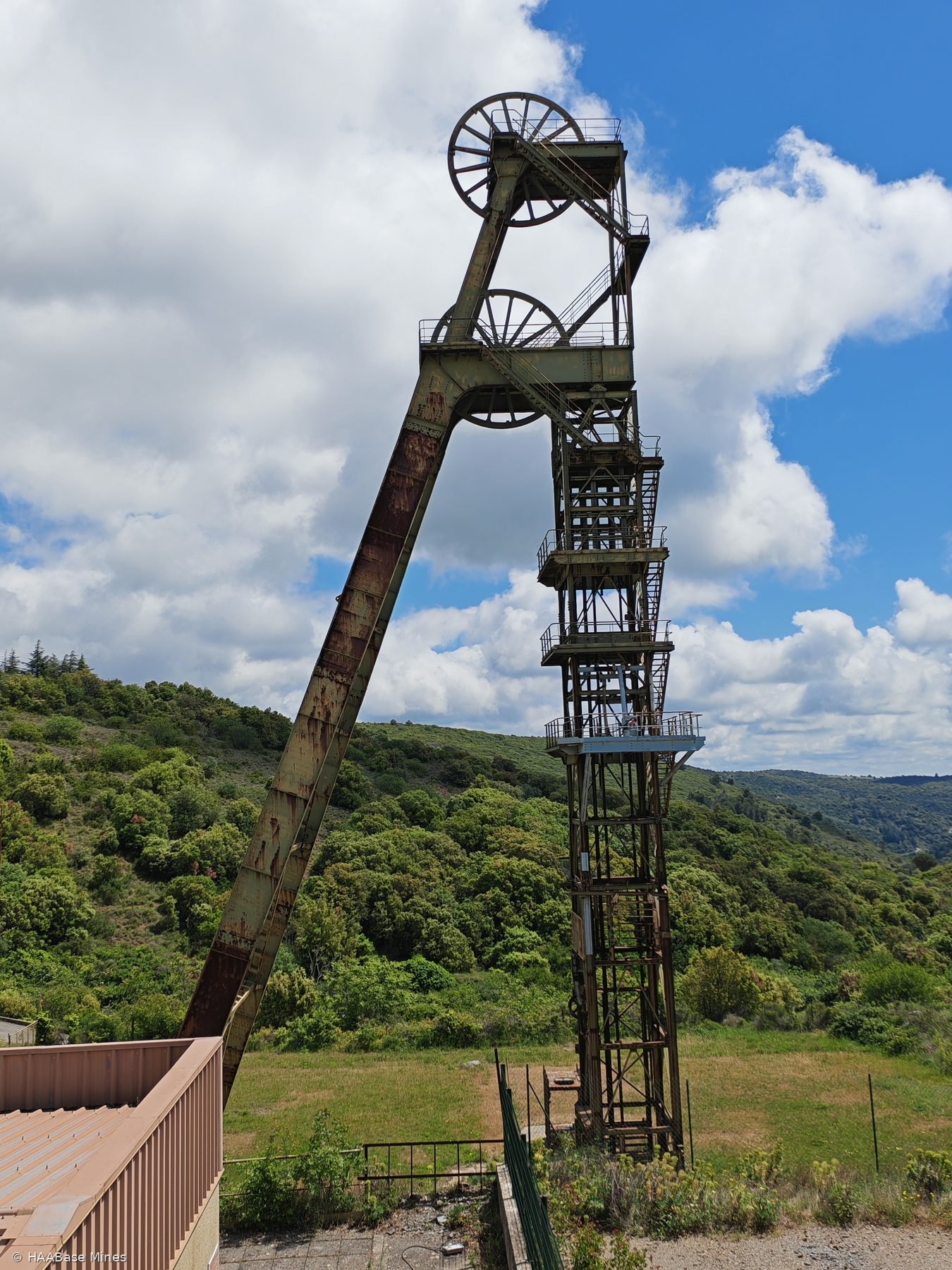
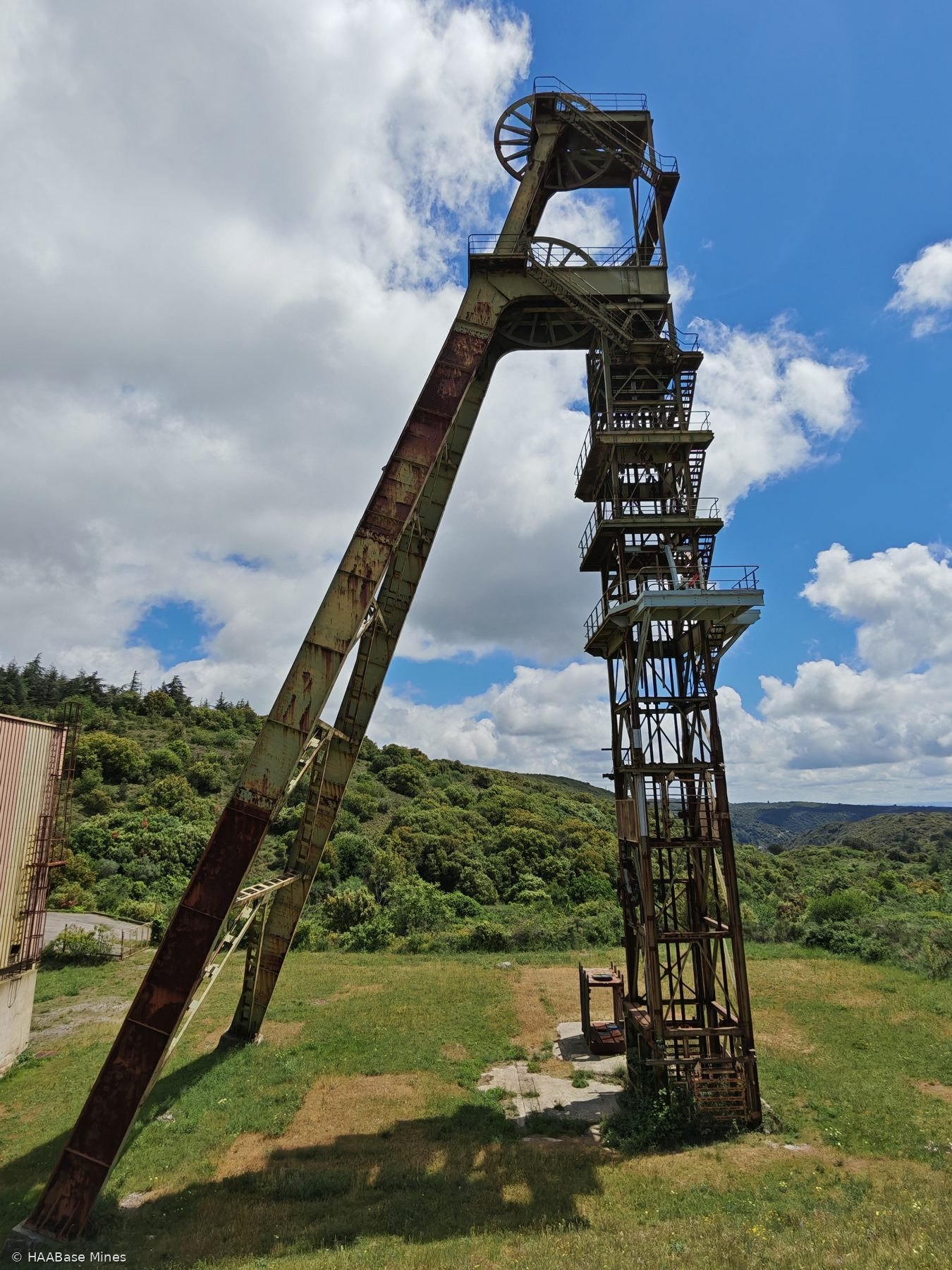
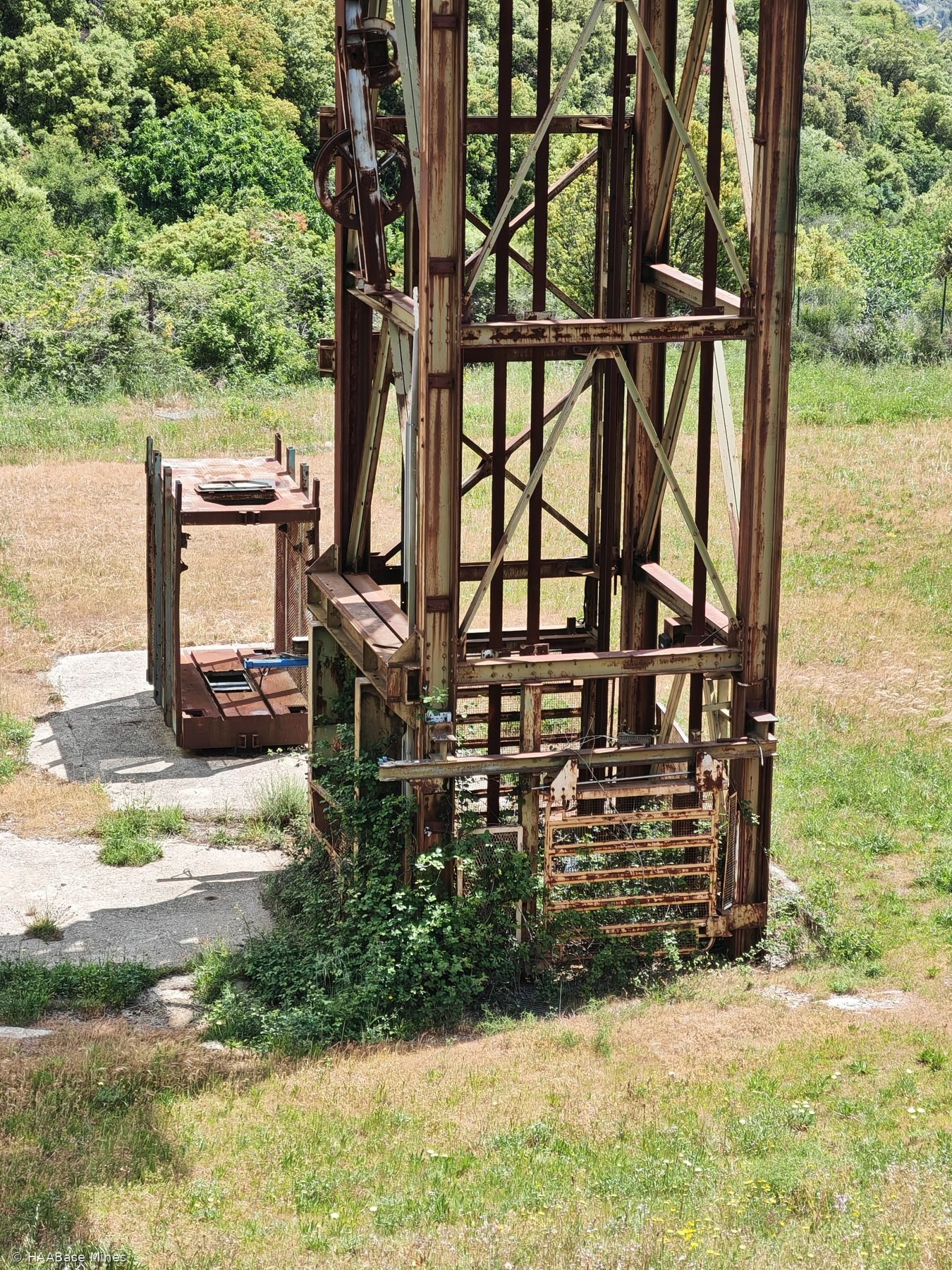
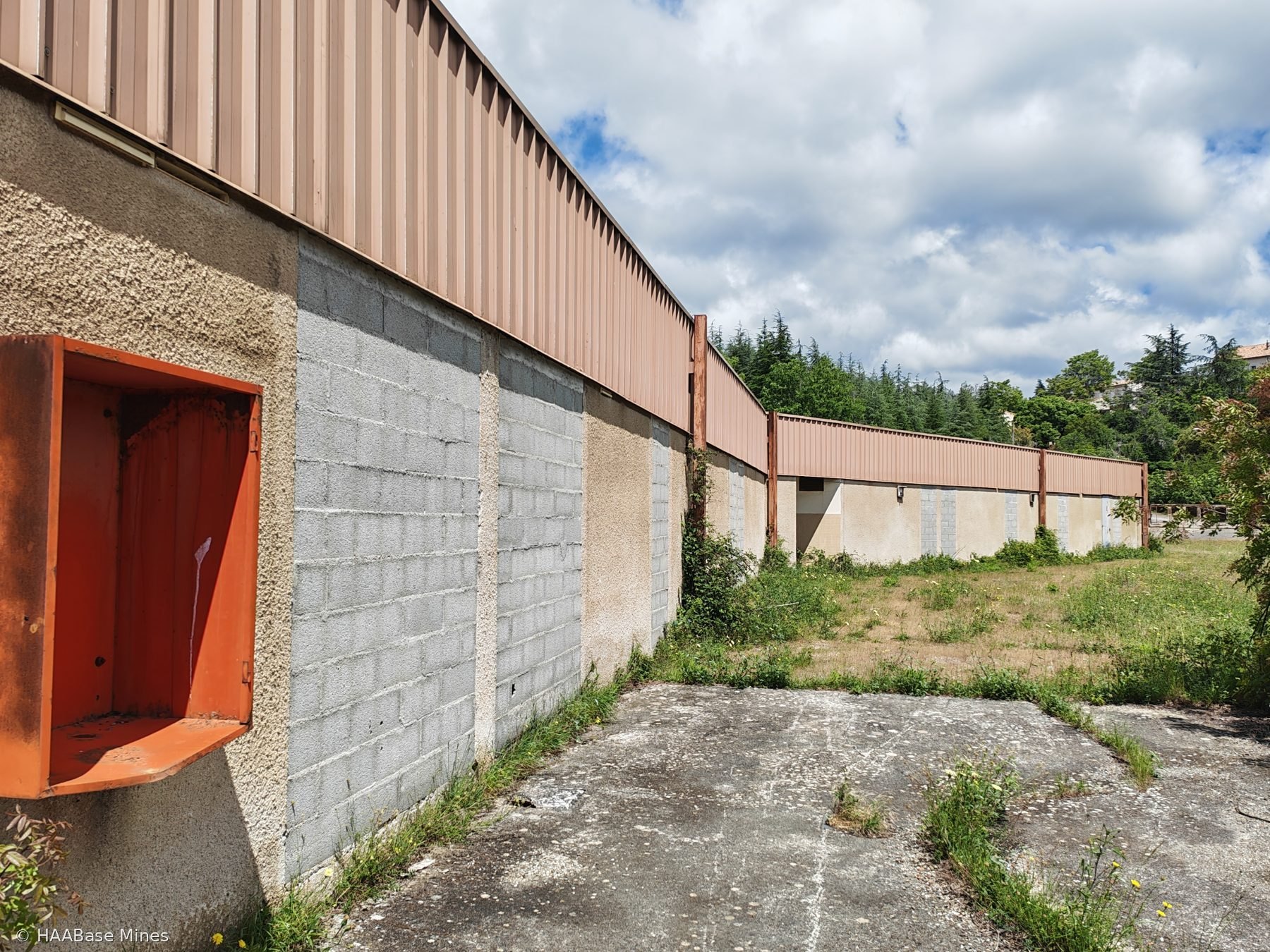
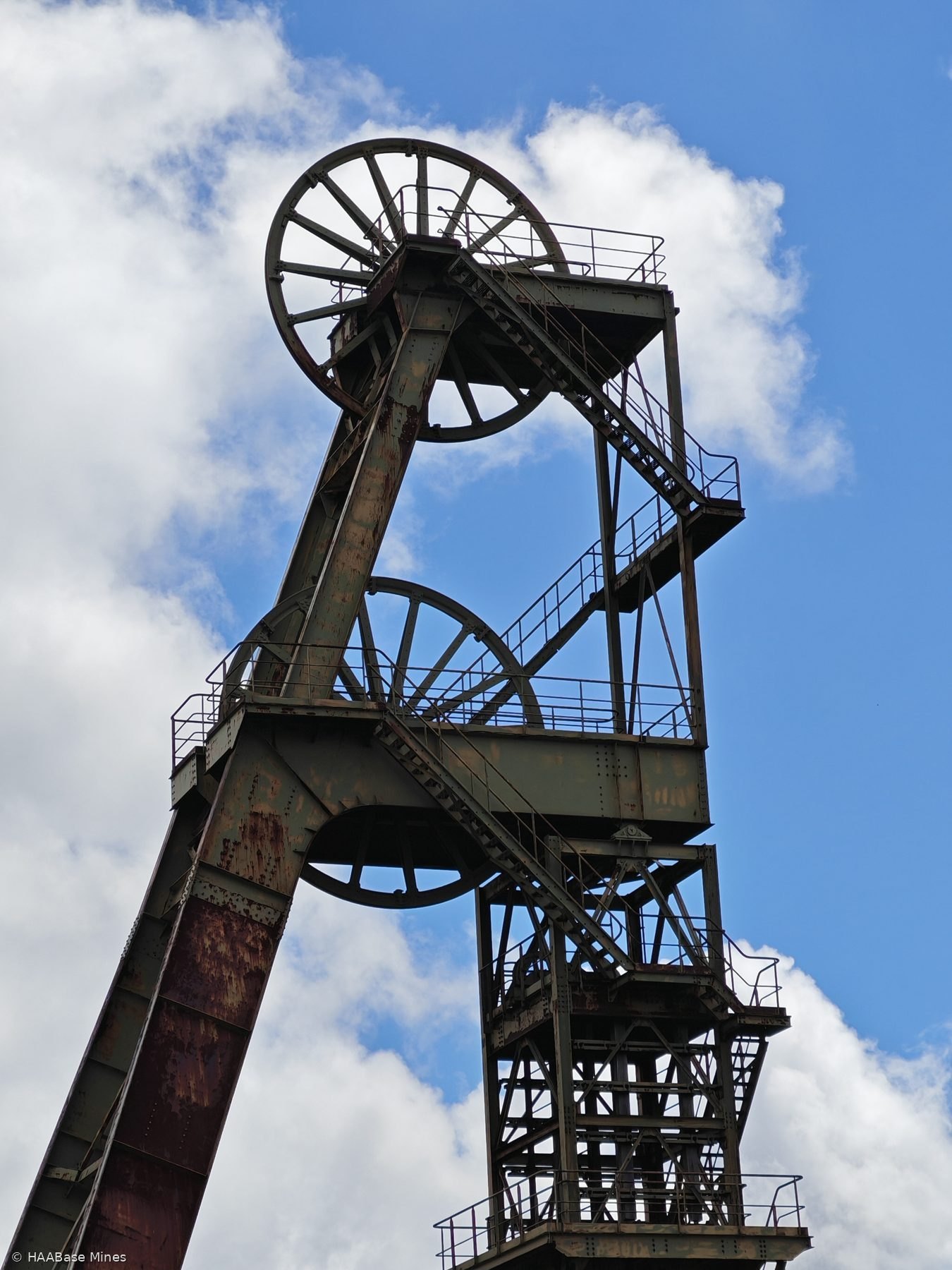
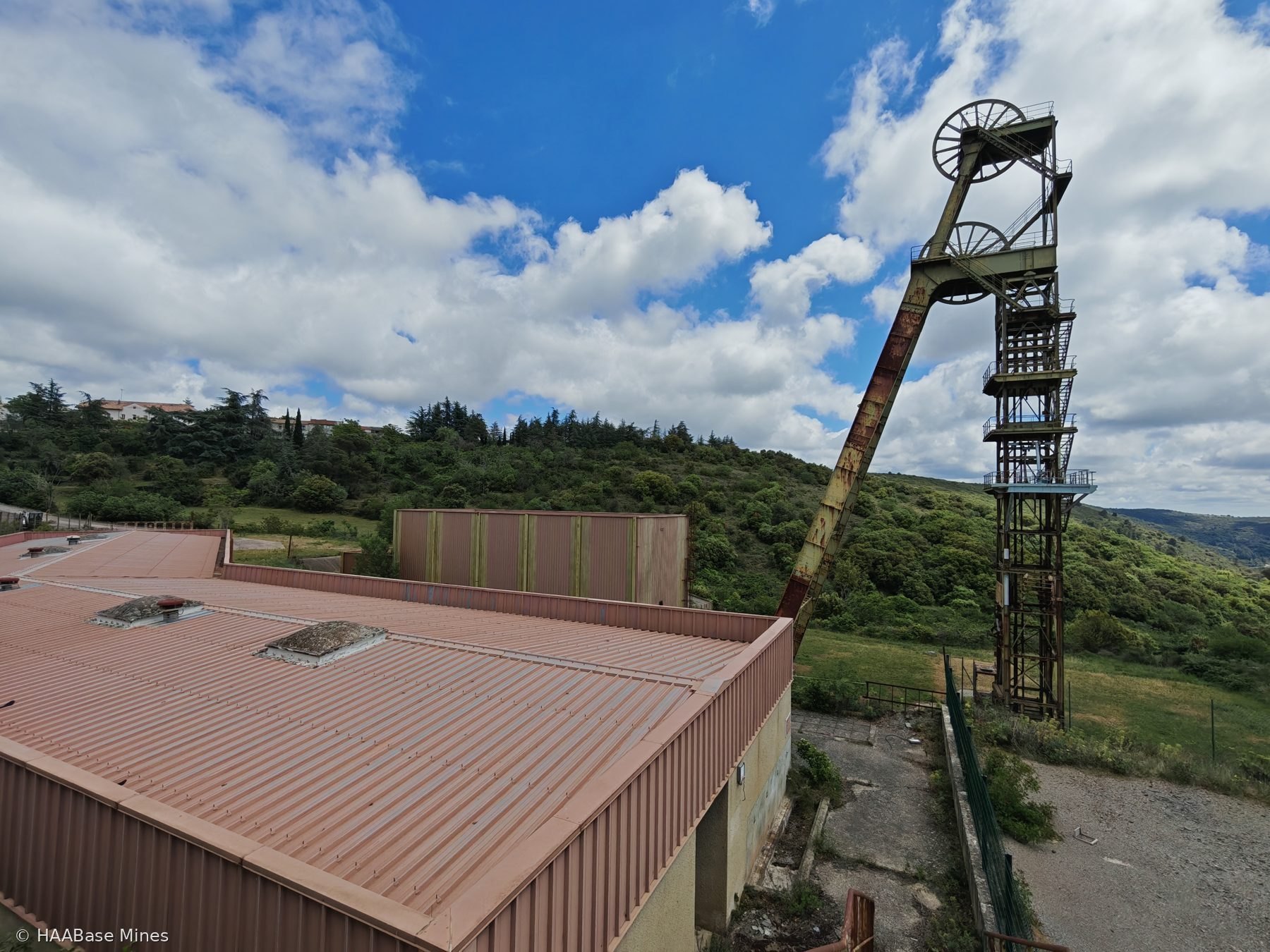
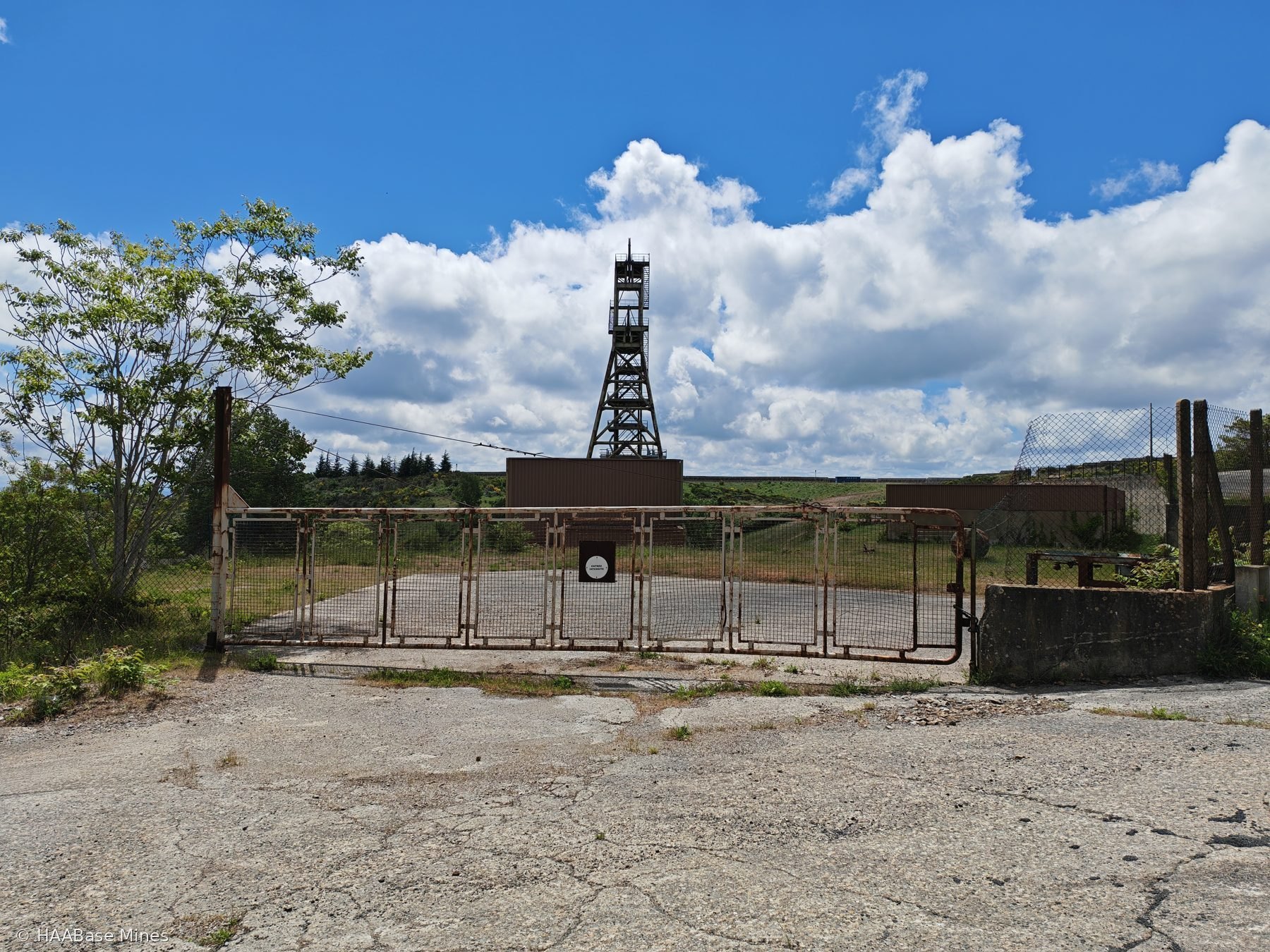
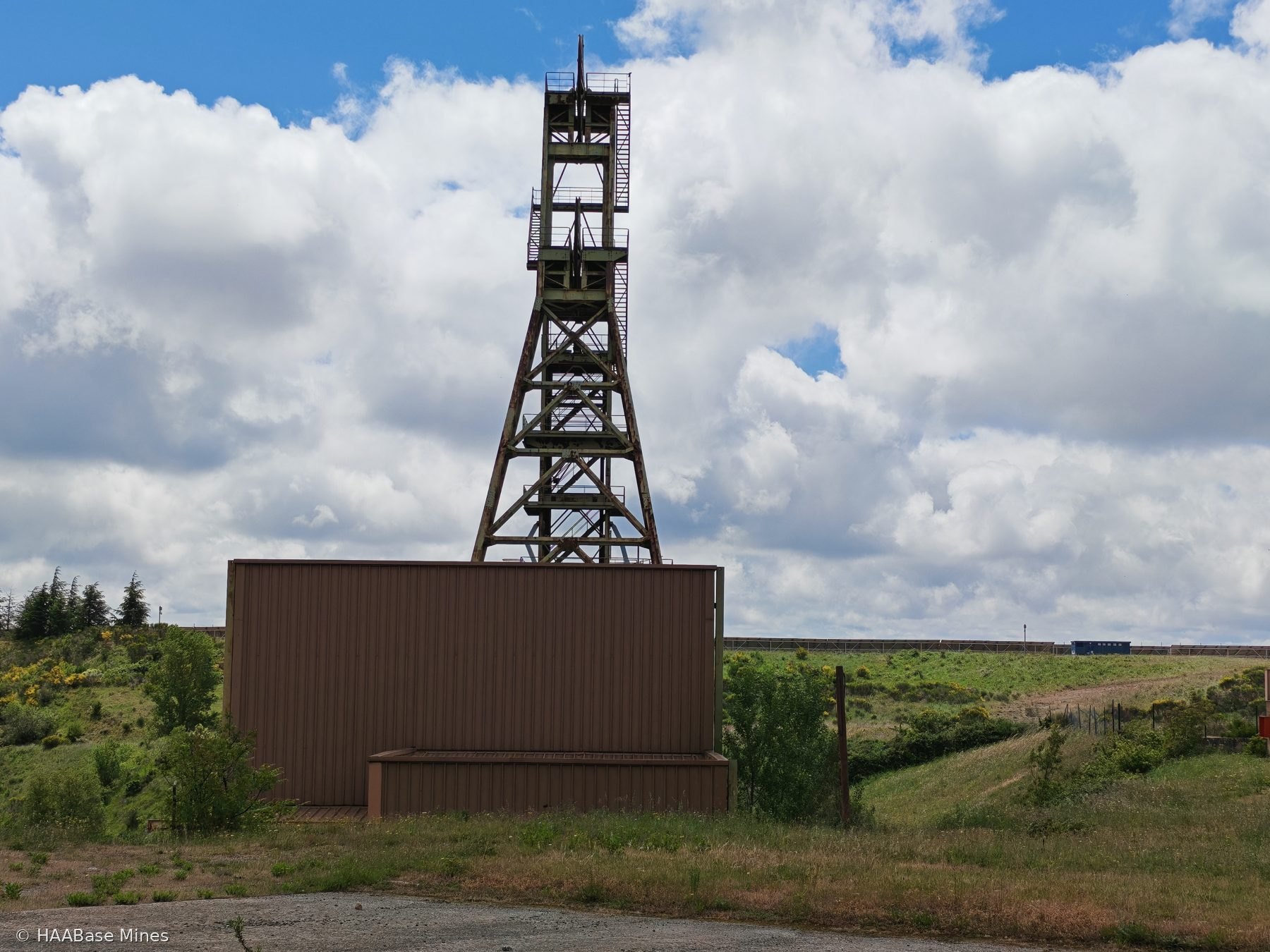
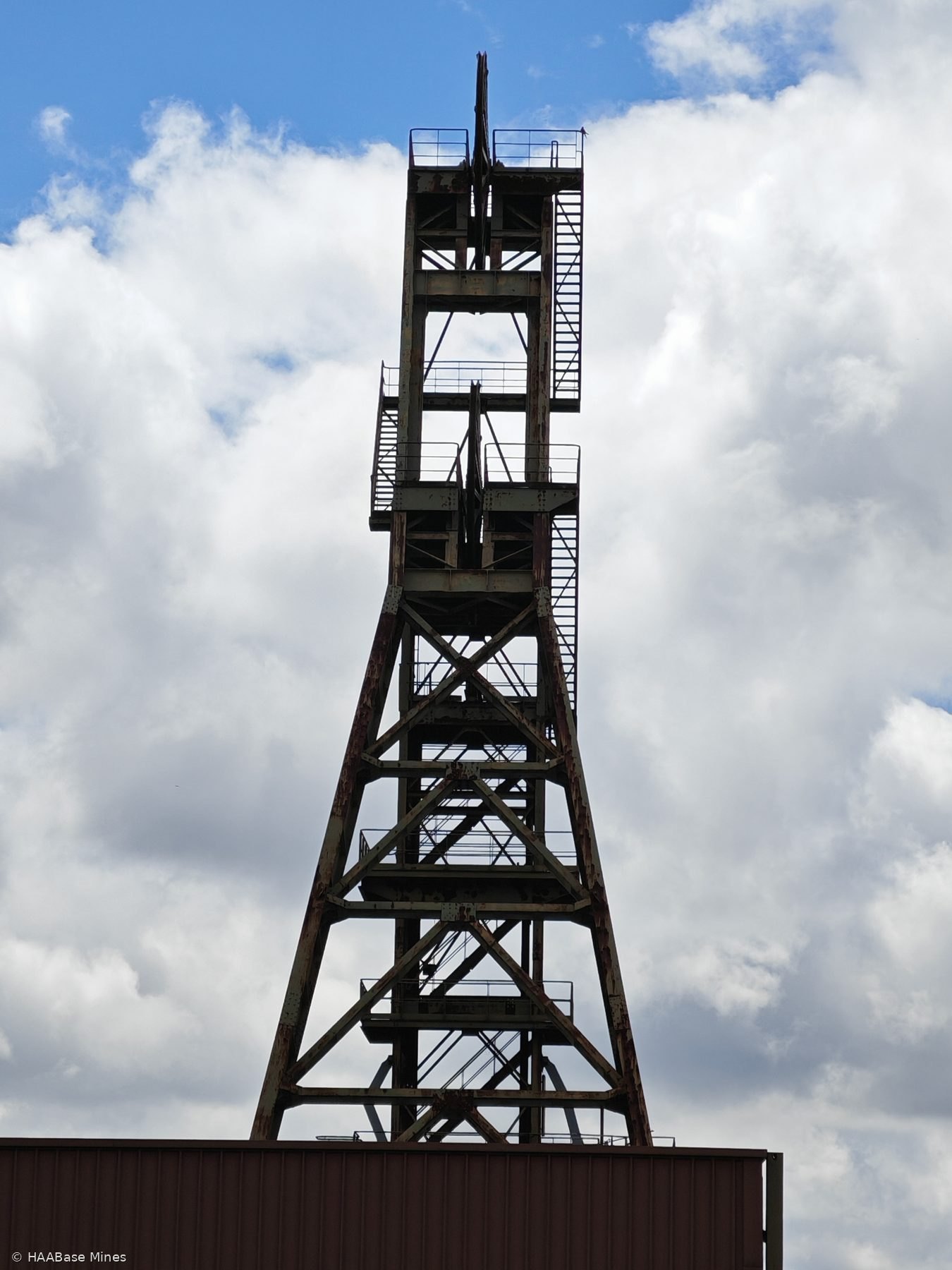
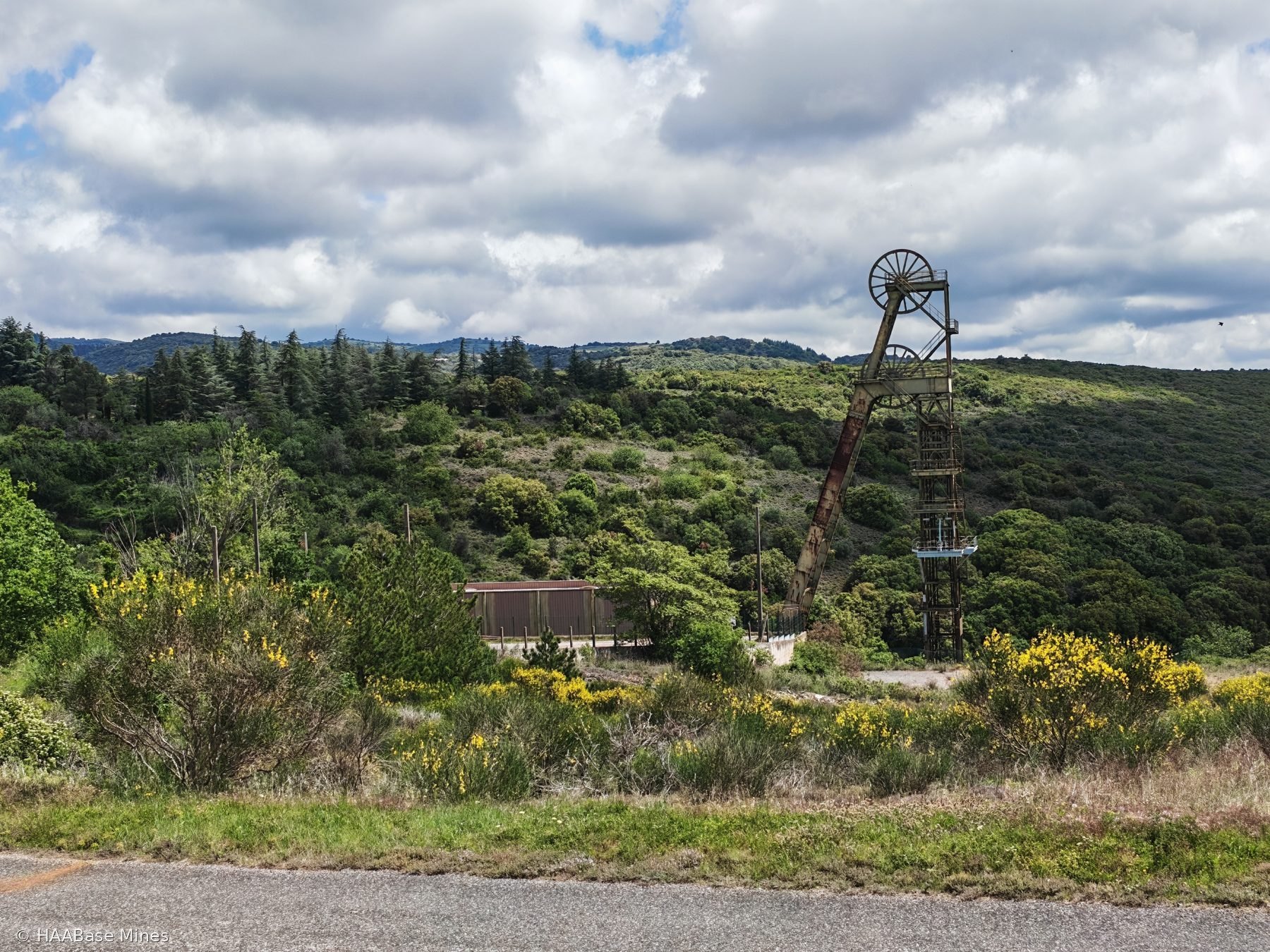
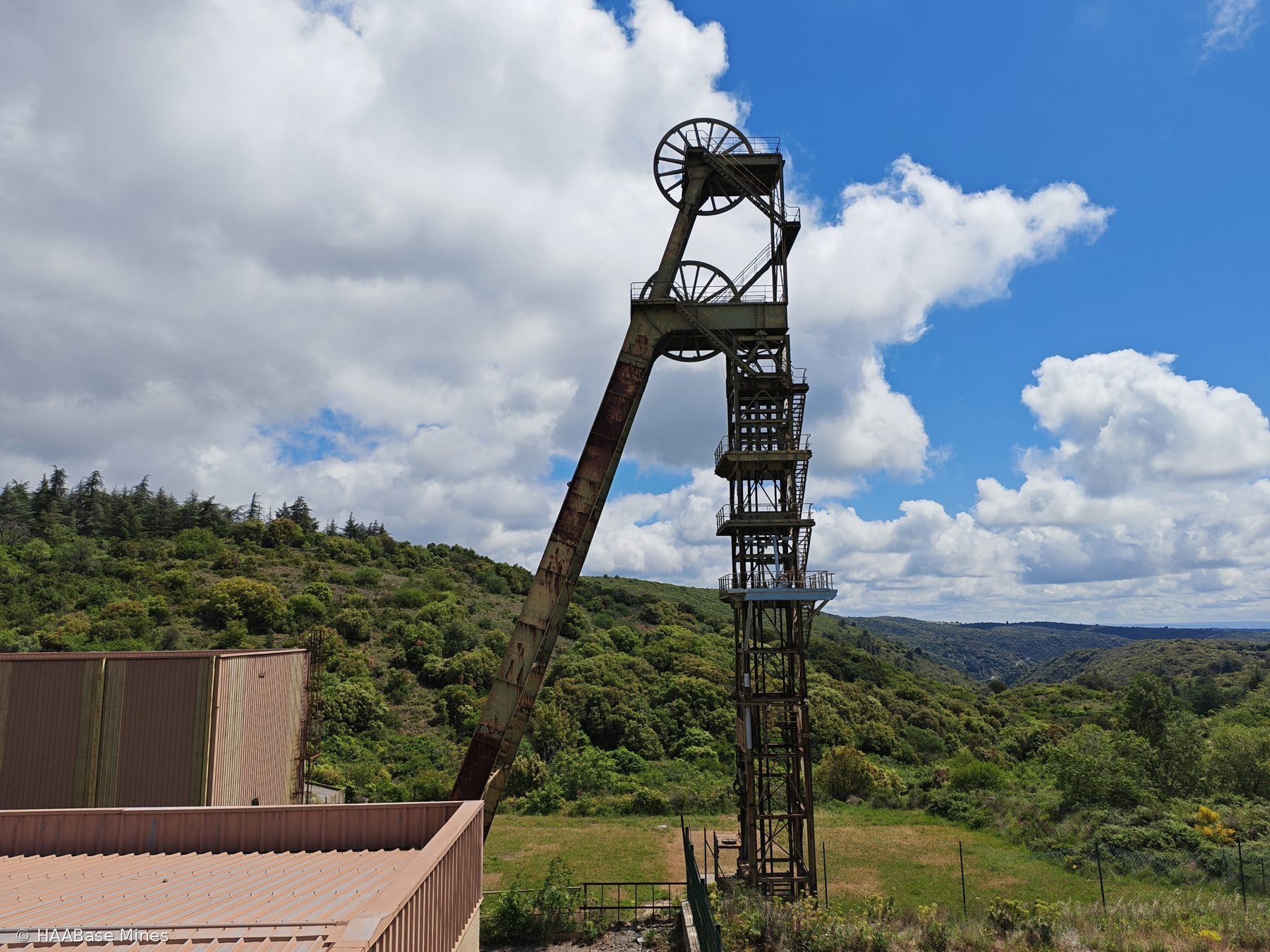
The surviving site comprises the original steel headframe of Puits Castan and the secured former shaft within a substantially altered industrial and post-mining setting at Villanière. It is classified as a headframe and as an isolated headframe in an industrial setting because the headframe remains the dominant identifiable mining structure, while the complete operational shaft complex and most associated buildings no longer survive as a coherent mine site. The structure is original rather than reconstructed.
The mine worked complex gold-bearing polymetallic ores; the permitted output label gold, silver, lead, zinc and copper most closely reflects the documented multi-metal character, although arsenic was also economically and environmentally important and is not included in that available enum. The assessment is supported by the Aude prefecture's site description, BRGM post-mining monitoring records, departmental archive inventories and specialist technical documentation. Exact headframe height remains uncertain because published figures conflict.
Site overview
Puits Castan stands at Villanière within the wider Salsigne mining district on the southern side of the Montagne Noire, north of Carcassonne. The district exploited complex polymetallic ores containing gold and arsenic together with silver, copper and other metals. Gold was identified in the Salsigne mineralisation in 1892, and the Villanière concession was established in 1898. Over the following decades the Villanière workings became part of an integrated operation linking several concessions and extraction sites.
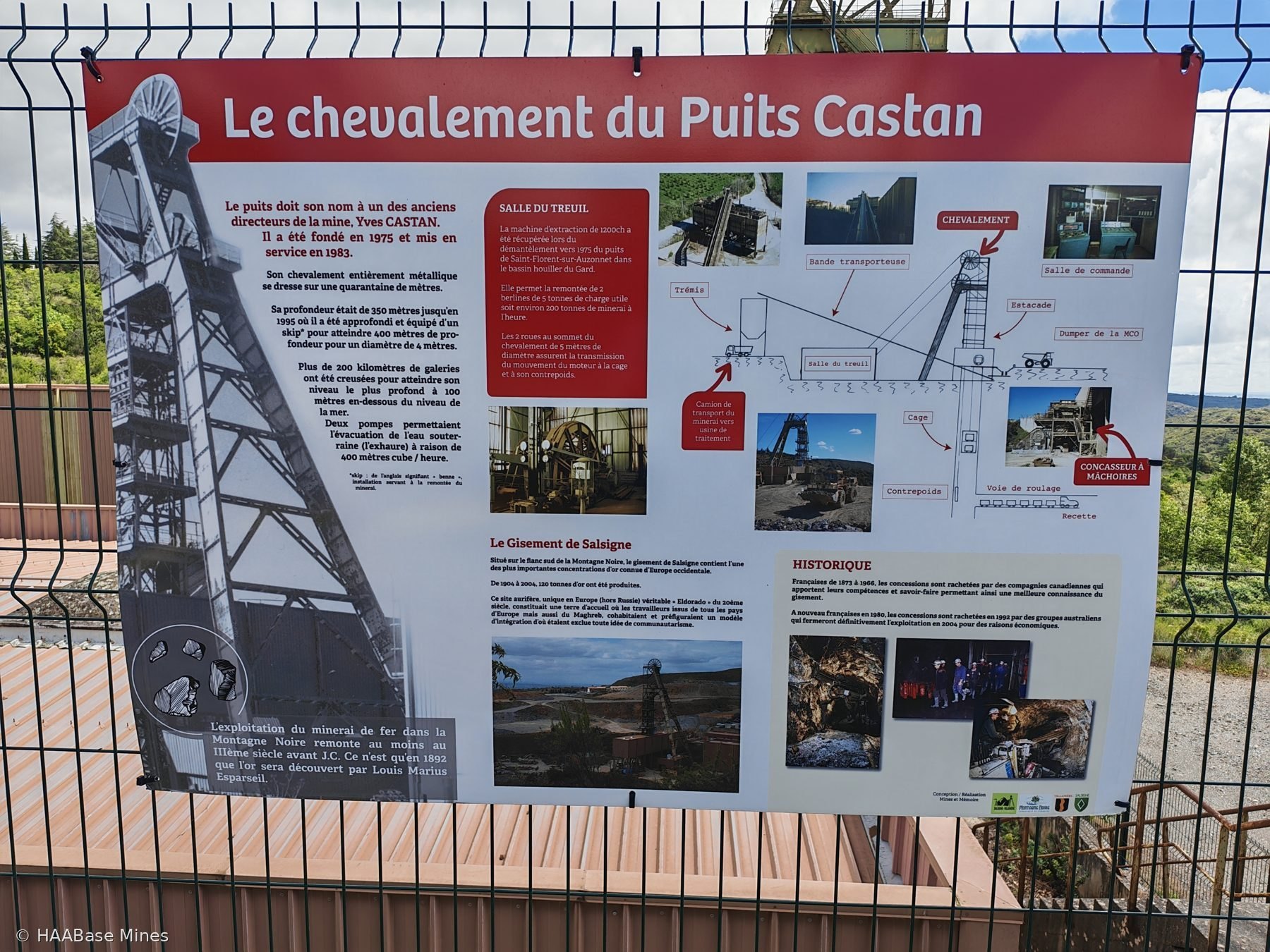
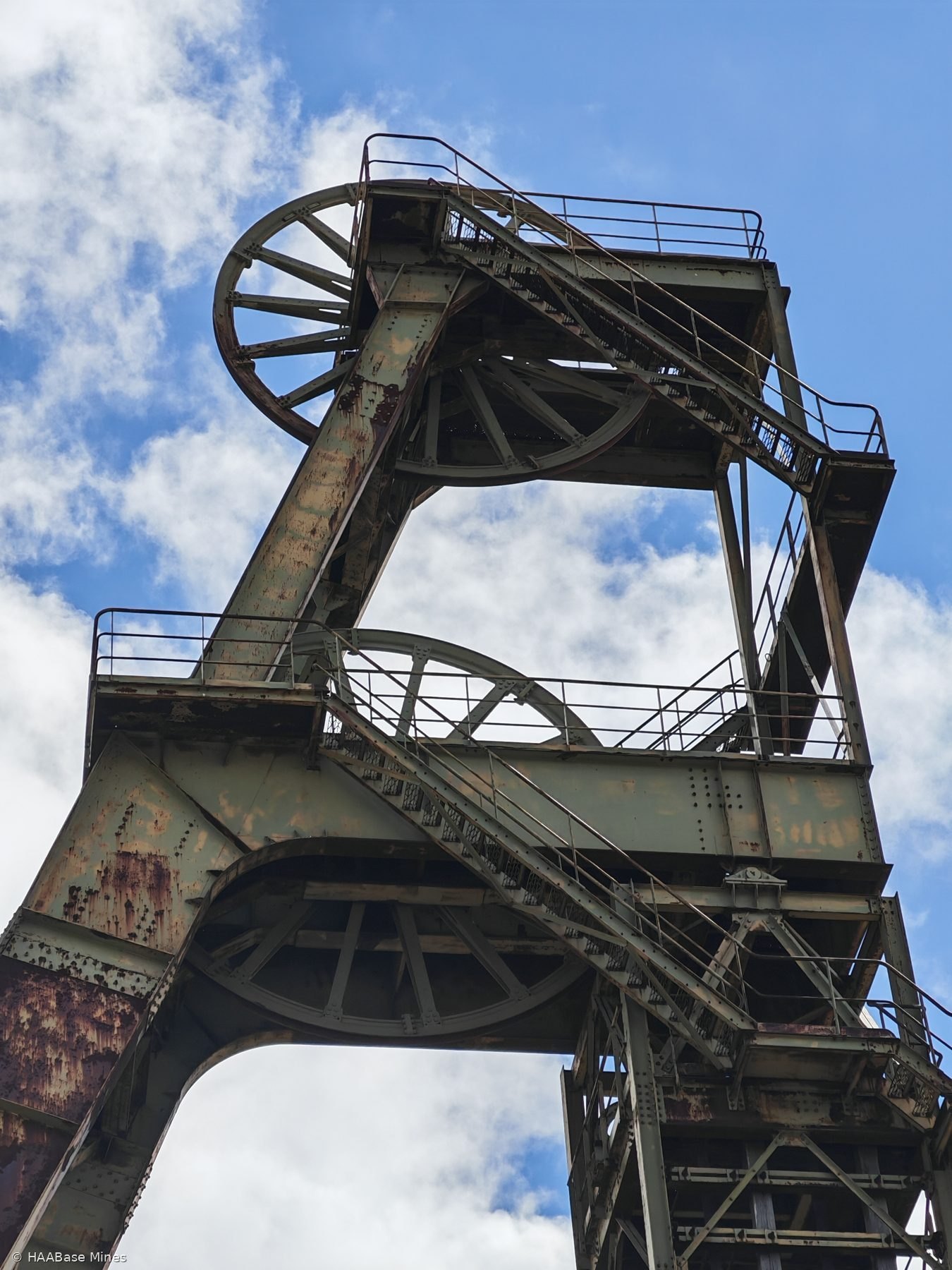
Puits Castan was a much later installation. Preparatory raise-boring began around 1974, followed by conventional shaft sinking from 1976. The shaft reached about 350 metres and was equipped with a tall steel headframe and Koepe friction-winding machinery. It carried workers and equipment and supported extraction from the modern underground mine. Around 2002 a long spiral decline became the principal route for wheeled machinery entering the workings.
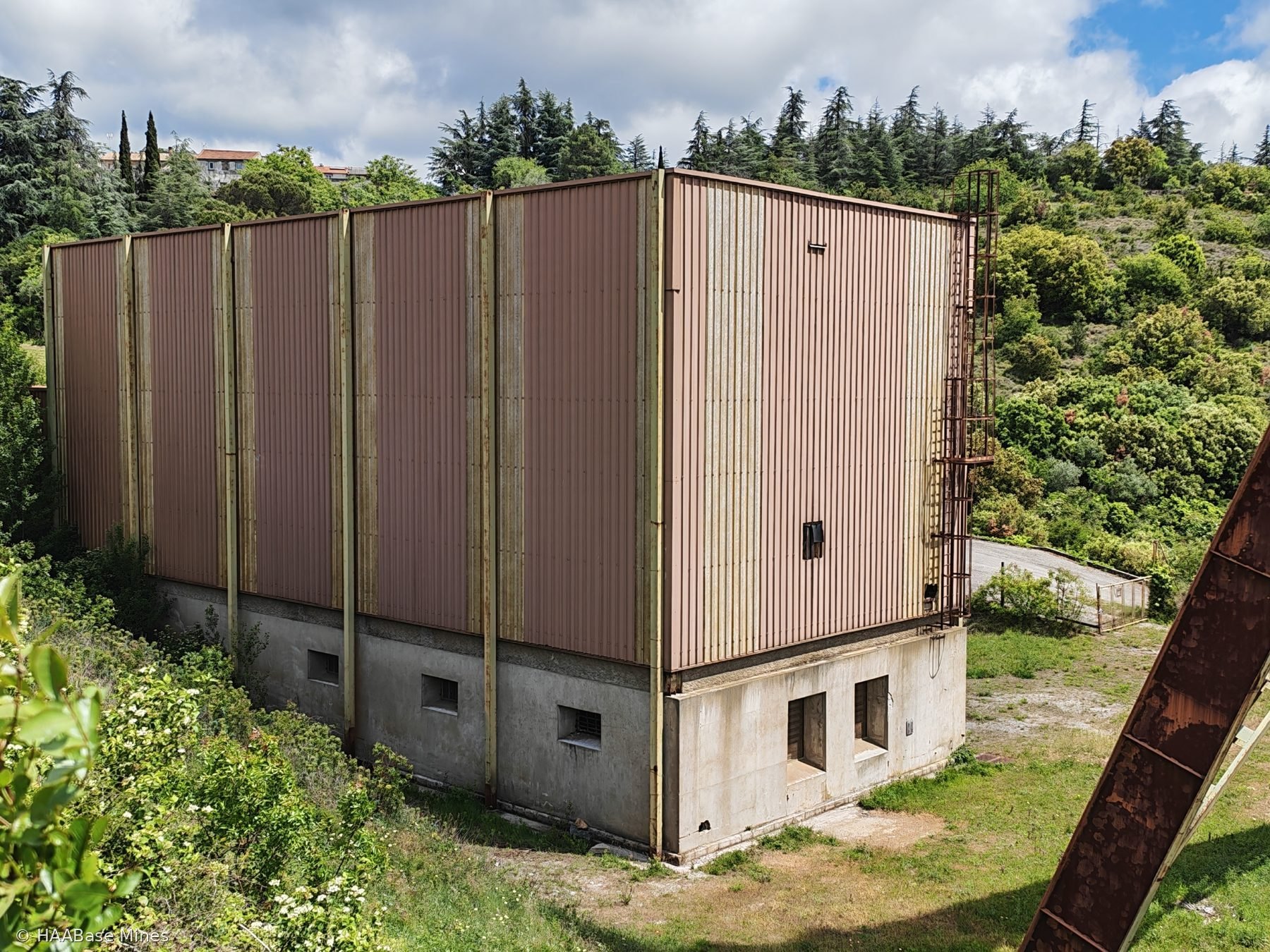
The integrated Salsigne mining operation ended definitively in 2004. The decline entrance was subsequently secured, and BRGM post-mining monitoring treated Puits Castan as part of the flooded underground reservoir and water-management system. Most of the operational surface complex has disappeared or been altered, but the original steel headframe remains standing on the former Villanière mine site.
The wider Salsigne district has a serious environmental legacy, particularly from arsenic-bearing mine waste and former metallurgical operations. These impacts arise from several separate mines, waste tips, water pathways and the Combe du Saut industrial site rather than from Puits Castan alone. In July 2025 the Montpellier Administrative Court ordered the prefect of the Aude to take measures within one year to remedy ecological harm and prevent its worsening, including action to limit the spread of pollutants from the former mining sites.
Map & photo
History
Puits Castan belongs to the wider Salsigne mining district on the southern side of the Montagne Noire, north of Carcassonne. The district contained complex polymetallic sulphide ores carrying gold and arsenic together with silver, copper and other metals. Modern exploitation developed during the late nineteenth century around arsenopyrite and pyrite before the gold content became the district's defining interest. Gold was identified in the mineralisation in 1892 by Louis Marius Esparseil.
The Villanière concession, covering 684 hectares, was established by decree on 11 August 1898. Mining was initially developed by the Société des Mines de l'Aude, which became associated with the Société des Mines de Villanière. A treatment plant operated at Villanière from the early twentieth century. During the 1940s Villanière came under the control of the Société des Mines et Produits Chimiques de Salsigne, and by the post-war period the Salsigne, Lastours and Villanière concessions formed an integrated mining operation.
Control of the undertaking changed several times during the later twentieth century. An American-controlled group became involved during the 1960s, control passed to the BRGM-associated Coframines in 1980, and the operating company entered Australian ownership in the early 1990s. These corporate changes affected the integrated Salsigne operation rather than Puits Castan as an independent mine.
Puits Castan was developed on the Villanière concession during the 1970s and was named after the engineer associated with its construction. Preparatory work using a raise bore began around 1974, followed by conventional shaft sinking from 1976. The shaft reached a depth of about 350 metres. A tall steel headframe supported Koepe friction-winding equipment used to carry workers and machinery and to raise ore from the underground workings. Departmental archives retain records relating to its cables, inspections and operation.
The shaft formed part of the modern underground access and extraction system serving the integrated mine. Around 2002 a spiral decline, reported as five to six kilometres long, became the principal route for wheeled equipment entering the workings. The change allowed machinery to travel directly underground without relying on shaft conveyance for every movement, although Puits Castan remained part of the mine infrastructure.
Underground extraction ended during 2004 as the operation approached final closure, with rising mine water reported as an important factor. The integrated Salsigne mine ceased definitively that year. The entrance to the decline was secured, and the Castan shaft became part of the post-mining water and underground-reservoir monitoring system. The steel headframe was retained and remains the principal visible mining structure at Villanière.
The surviving Castan headframe represents only one element of a much larger former mining and metallurgical district. Puits Bru, the open-pit workings, Combe du Saut treatment works, and the Nartau, Ramèle, Malabau and La Caunette mining or waste sites were physically distinct. The serious arsenic and other contamination affecting parts of the Orbiel catchment derives from this wider network of mines, waste tips, industrial treatment sites and water pathways rather than from Puits Castan alone.
Scientific monitoring has found continuing arsenic impacts in several tributaries and former mining areas. The environmental effect of the October 2018 flood itself was not shown to have produced a clear overall deterioration beyond the contamination already present. On 22 July 2025 the Montpellier Administrative Court ordered the prefect of the Aude to take measures within one year to repair ecological harm and prevent its worsening, including action to control the spread of pollutants from the former mining sites. Against this altered and closely monitored post-mining landscape, the original Puits Castan headframe remains a prominent physical record of the final phase of underground gold mining at Salsigne.
Timeline
Gold identified in the Salsigne mineralisation
Villanière concession established
Villanière treatment plant enters service
Villanière operation comes under Salsigne control
Salsigne, Lastours and Villanière workings integrated
Salsigne operation passes to American control
Puits Castan developed
Coframines takes control
Operating company enters Australian ownership
Combe du Saut remediation programme
Spiral decline becomes the principal machinery access
Salsigne mining operation closes
Mine entrances secured and Castan headframe retained
Photographic record
Sources and records
This list includes live sources already held for the record and any additional sources added or confirmed during the published fact-check review.
Official heritage records
Further sources
- BRGM DPSM annual activity report 2010
- Archives départementales de l'Aude: Villanière mining archives guide
- SystExt: La mine d'or de Salsigne, panorama d'un échec environnemental
- Tribunal administratif de Montpellier: Mines d'or de Salsigne, décision du 22 juillet 2025
- Tribunal administratif de Montpellier judgment N°2301018
- Archives départementales de l'Aude photographic collection: Puits Castan
Research bibliography
Salsigne Mines et Mémoire: Historique du district minier de Salsigne
Minespatrimoine.fr: Puits Castan, Mine d'or de Salsigne à Villanière
Exxplore industrial heritage dossier: Mines du Languedoc
SystExt (Institut de recherche sur les impacts des mines): La mine d'or de Salsigne, panorama d'un échec environnemental (March 2023)
Prefecture de l'Aude (aude.gouv.fr): Le Puits de Castan — présentation et contexte
Patrimoine en Dauphiné blog: Mines d'or de Salsigne — Puits Castan — Villanière (2014)
Société Géologique de France / Géochronique: L'après-mine aux mines d'or de Salsigne
Revue Géographique des Pyrénées et du Sud-Ouest, tome 5 (1934): L'exploitation des mines d'or dans l'Aude (H. Fonvieille)
Tribunal administratif de Montpellier: Jugement relatif à la pollution du site de Salsigne (July 2025)