History
The synclinal de Soumont is oriented broadly northwest to southeast and was subject to seven iron ore concessions over the course of the twentieth century. The seam, composed principally of carbonate of iron (siderite) with a teneur of 36 to 40% iron, varies in thickness between three and six metres. The deposit was divided into northern and southern flanks, the dip on the southern flank varying between 30° and 35°, and on the northern flank between 50° and 70°. The first extraction attempt at Urville on the northern flank dates from the nineteenth century. Organised industrial extraction began in 1899 at the lieu-dit des Fontaines on the territory of Saint-Germain-le-Vasson, where preliminary works and installations were established. The headframe at the Saint-Germain-le-Vasson carreau des Fontaines was erected in 1903.
The Concession de Soumont-Saint-Quentin, covering 773 hectares, was granted on 13 December 1902 to Marie, Bénédicte and Hugues de Mecflet, Pierre-François Tastemain, Adolphe-Henri Pouettre, and Victor Mullois. The Société des Mines de Soumont (SMS) was constituted as the operating company. The SMS developed three carreaux: the principal carreau at Soumont-Saint-Quentin, a second carreau linked by underground gallery to the Livet installations at Saint-Germain-le-Vasson, and from 1962 a third carreau around the puits d'Aisy. The château d'eau on the Soumont-Saint-Quentin carreau bears the date 1914.
From 1924 to 1930 the SMS recruited heavily, in particular attracting a significant contingent of Polish miners. At its peak, nearly three-quarters of the underground workforce was of Polish origin. The SMS simultaneously modernised the operation and, during the 1930s economic crisis, absorbed the concession of the Société nouvelle des mines de Barbery in 1931. The puits du Livet was linked to the Soumont carreau by an underground gallery in 1936. Ore was transported to the Société Métallurgique de Normandie (SMN) plant at Colombelles via a 32-kilometre mining railway.
The Second World War caused widespread damage to the Soumont carreau. Following liberation, extraction resumed in May 1947 at reduced intensity, constrained by the pace of reconstruction of the SMN blast furnaces at Colombelles, which was only completed in 1950. A water inrush (coup d'eau) in 1951 flooded several levels and required three months of intensive pumping before operations could fully resume. Production recovered to pre-war levels by 1955.
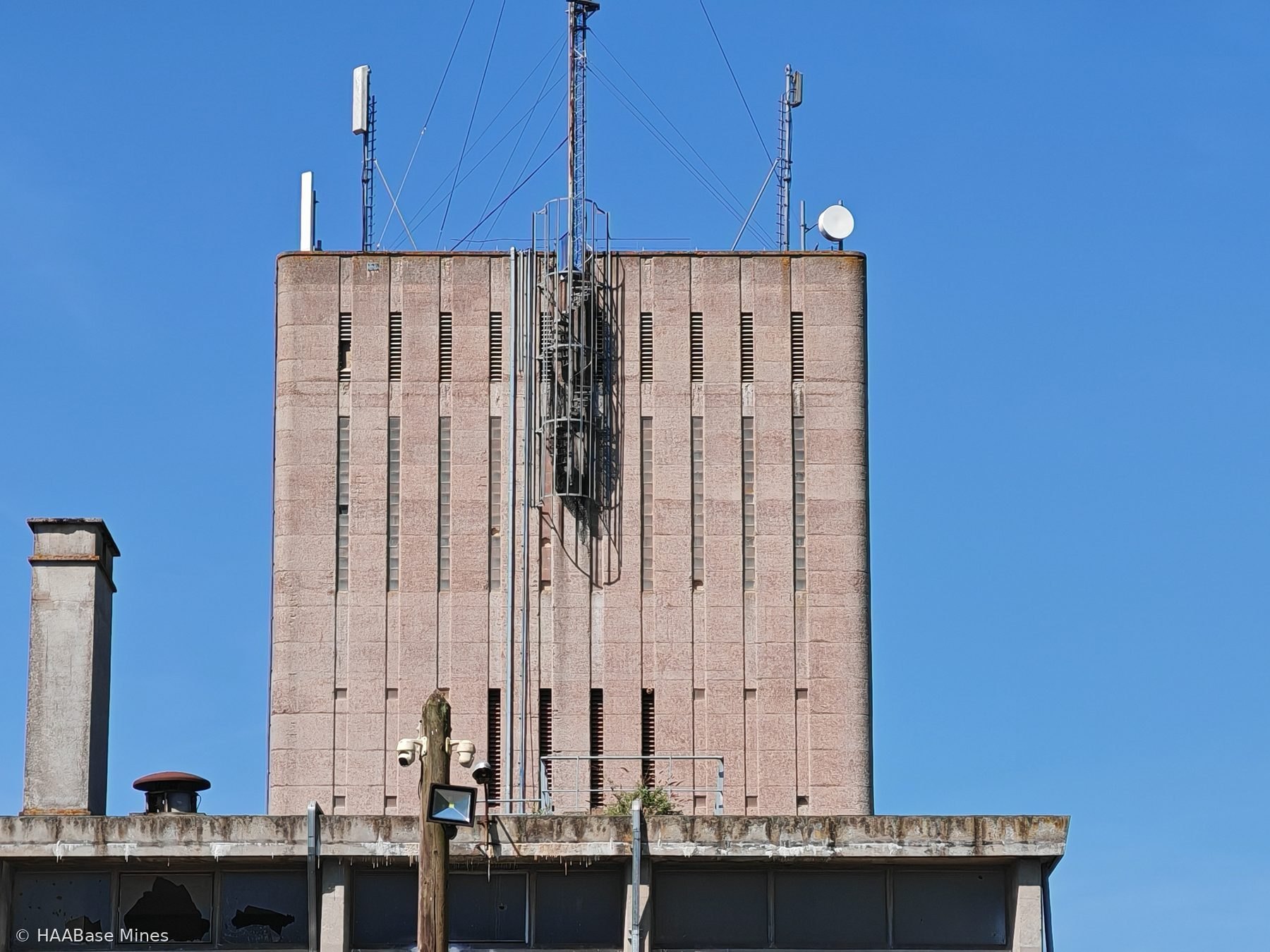
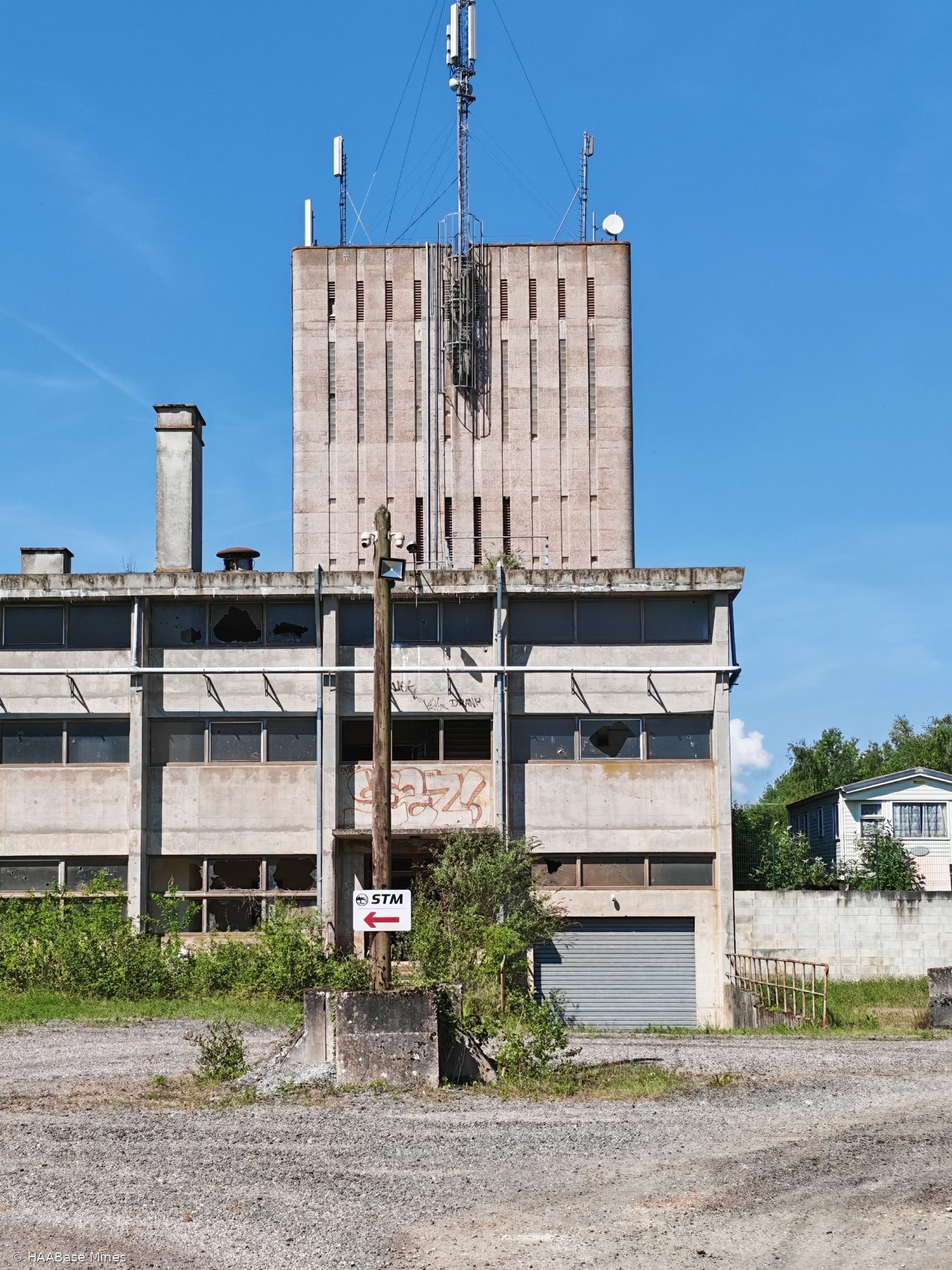
In 1962 the SMS began sinking a new extraction shaft at the lieu-dit d'Aisy on Soumont-Saint-Quentin. The shaft design was the work of Caen architect Pierre Auvray. The shaft reached a depth of 560 metres with a diameter of five metres, and was served by a concrete extraction tower 31 metres in height designed by Auvray. The puits d'Aisy was commissioned in 1970 and equipped for semi-automatic cage handling of two cages of two decks each, with an extraction capacity of 4,500 tonnes per day. A road descent (descenderie routière) was also established at the Livet site at Saint-Germain-le-Vasson, descending 3 kilometres at a gradient of 20% to serve the −475-metre haulage level. This installation allowed large wheeled and tracked machinery to be taken underground. From the commissioning of the puits d'Aisy, all ore was extracted by this shaft and skip operation ceased in the descenderie.
At the Soumont carreau a battery of roasting furnaces was constructed to enrich the ore by converting carbonate of iron to iron oxide; the battery grew from the original installation to 16 furnaces by 1937, each 9.5 metres high with a diameter of 5.5 metres and a capacity of 219 cubic metres. The last calcination furnaces at Soumont were demolished in April 2010. The SMN plant at Colombelles, the mine's sole customer, announced in 1988 its conversion to the hématite process using richer foreign ore. The SMS consequently ceased extraction on 28 July 1989 after more than eighty years of operation.
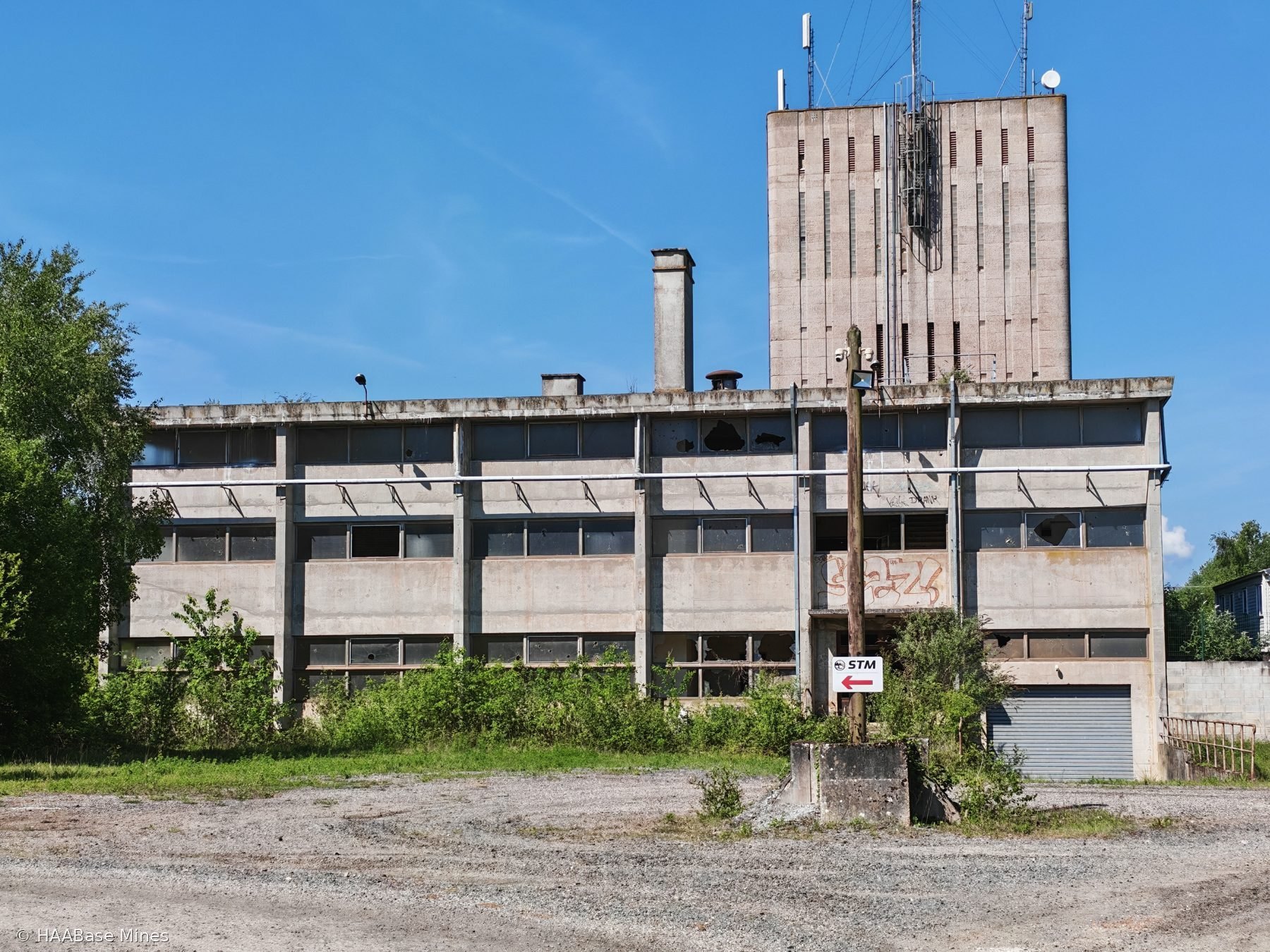
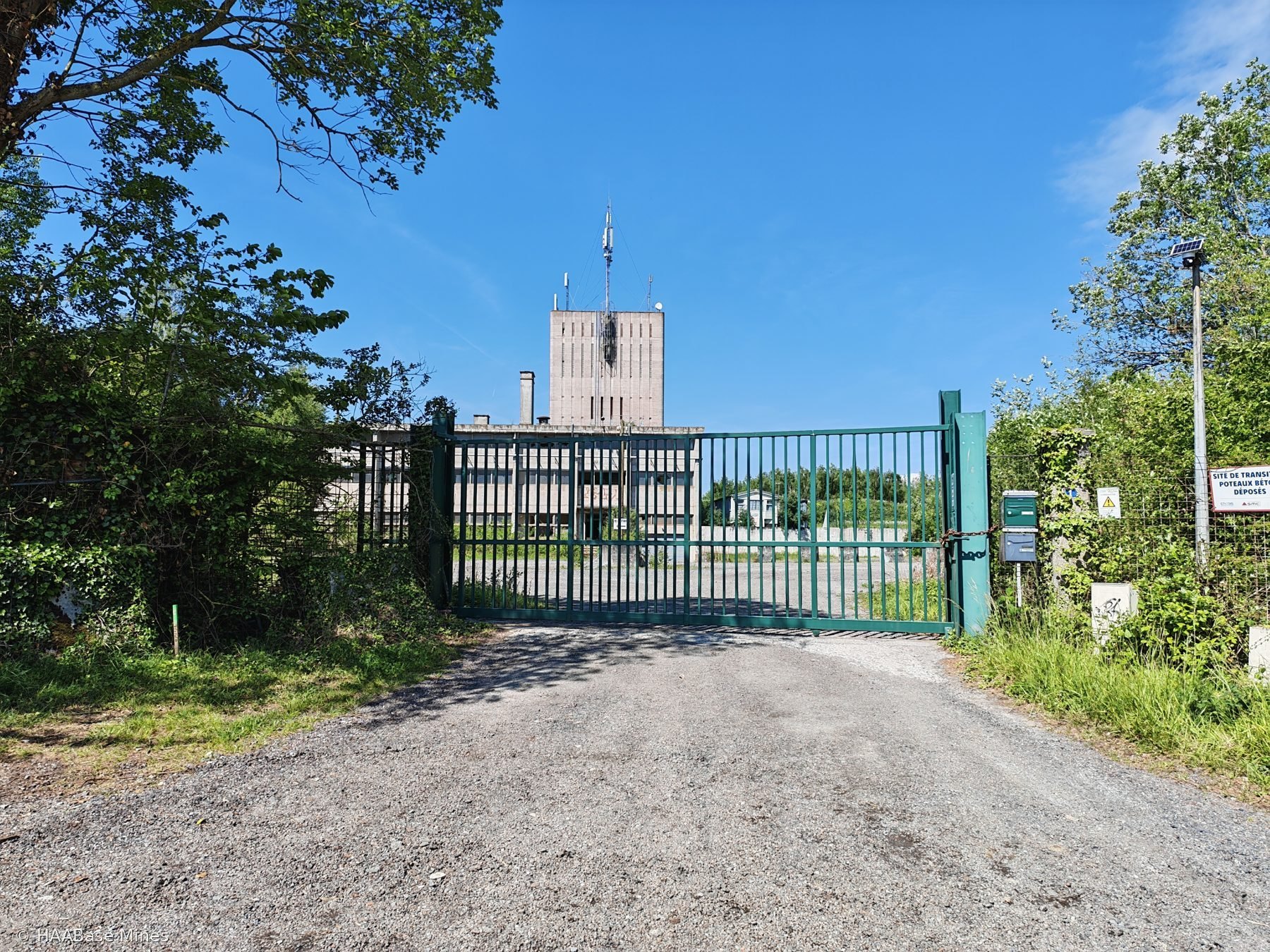
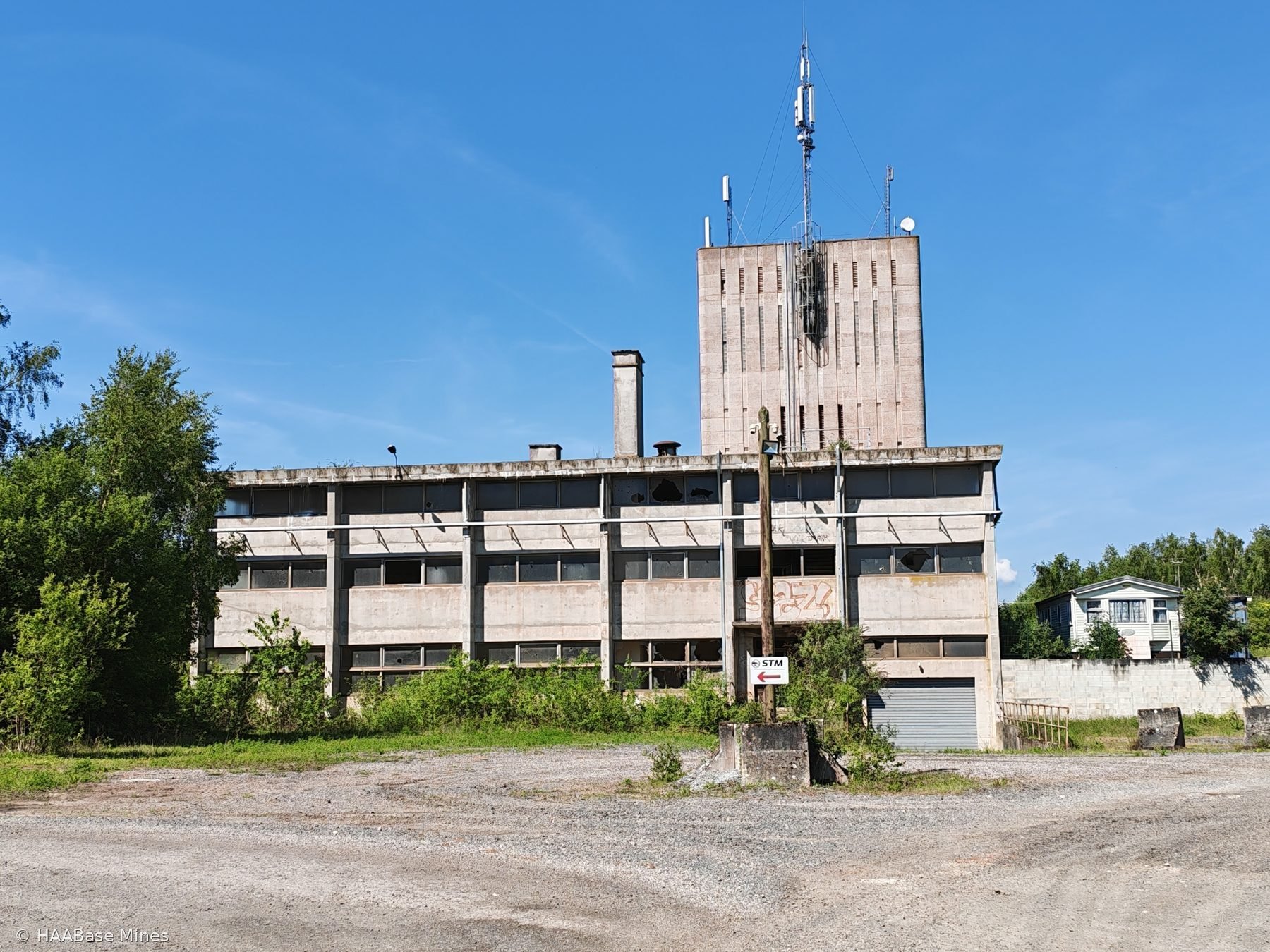
The Soumont-Saint-Quentin carreau was severely damaged during the Second World War and most of its buildings were demolished in 1993. Surviving elements include the 1914 brick château d'eau, the ateliers généraux, the refectory and office building, and the former guard and fire posts. The route of the mining railway to Colombelles remains visible. The puits d'Aisy is identified on the D43 road by its surface installations and the 31-metre concrete extraction tower, in which the large pulley that raised ore wagons at nine metres per second is preserved. The Carreau du Livet at Saint-Germain-le-Vasson has been preserved and opened as the Musée Mémoire de Fer, presenting large underground machines brought to the surface, hand tools, the last surviving salle des pendus in the region, the bains-douches and lampisterie in original configuration, and the descenderie routière. A thematic exhibition titled Les mondes souterrains du Calvados is installed at the museum.