Site overview

Parys Mountain, located approximately two miles south of Amlwch on the Isle of Anglesey, is the site of copper mining with a history spanning at least four thousand years, from the Bronze Age through to the early twentieth century. The first written record of mining dates from Elizabethan times, but large-scale industrial production began only after the discovery of the Great Lode on 2 March 1768 by local miner Rowland Pugh. Within years the two operations on the mountain — the Parys Mine Company in the west and the Mona Mine Company in the east — dominated the world copper market.

At its peak in the 1780s, the mountain was the largest copper mine in Europe, with around 1,200 people employed. The ore was exported through Amlwch Port, which was expanded by Act of Parliament in 1793. Production declined sharply in the early nineteenth century and the mine had effectively ceased operating by approximately 1904.

It is estimated that between 1768 and 1904 some 3.5 million tons of ore were raised, producing around 130,000 tons of copper. Surviving structures include the 1878 windmill tower, the Pearl Shaft engine house, precipitation pits, and the two large opencasts. The site is both a Scheduled Ancient Monument and a Site of Special Scientific Interest.

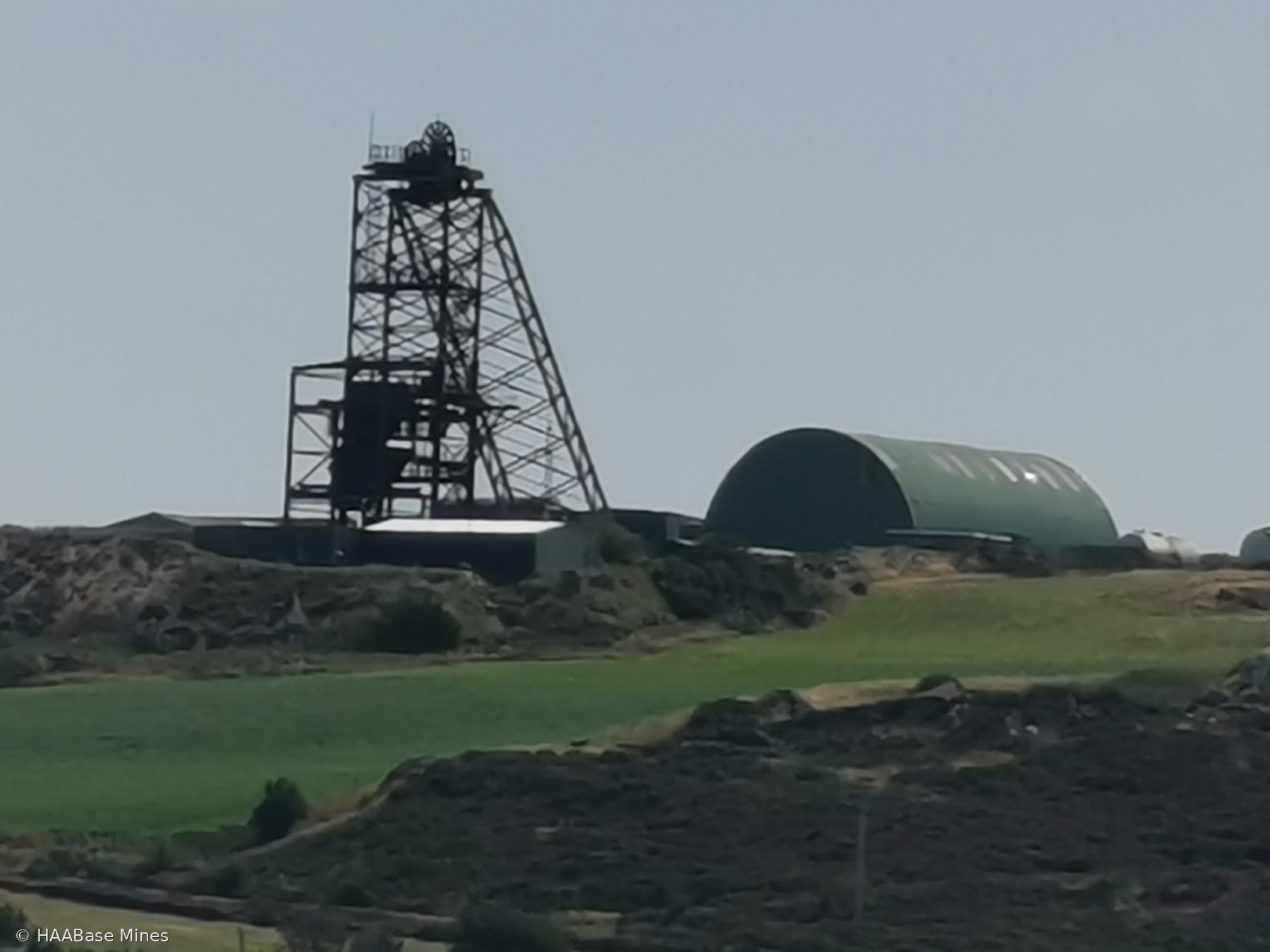
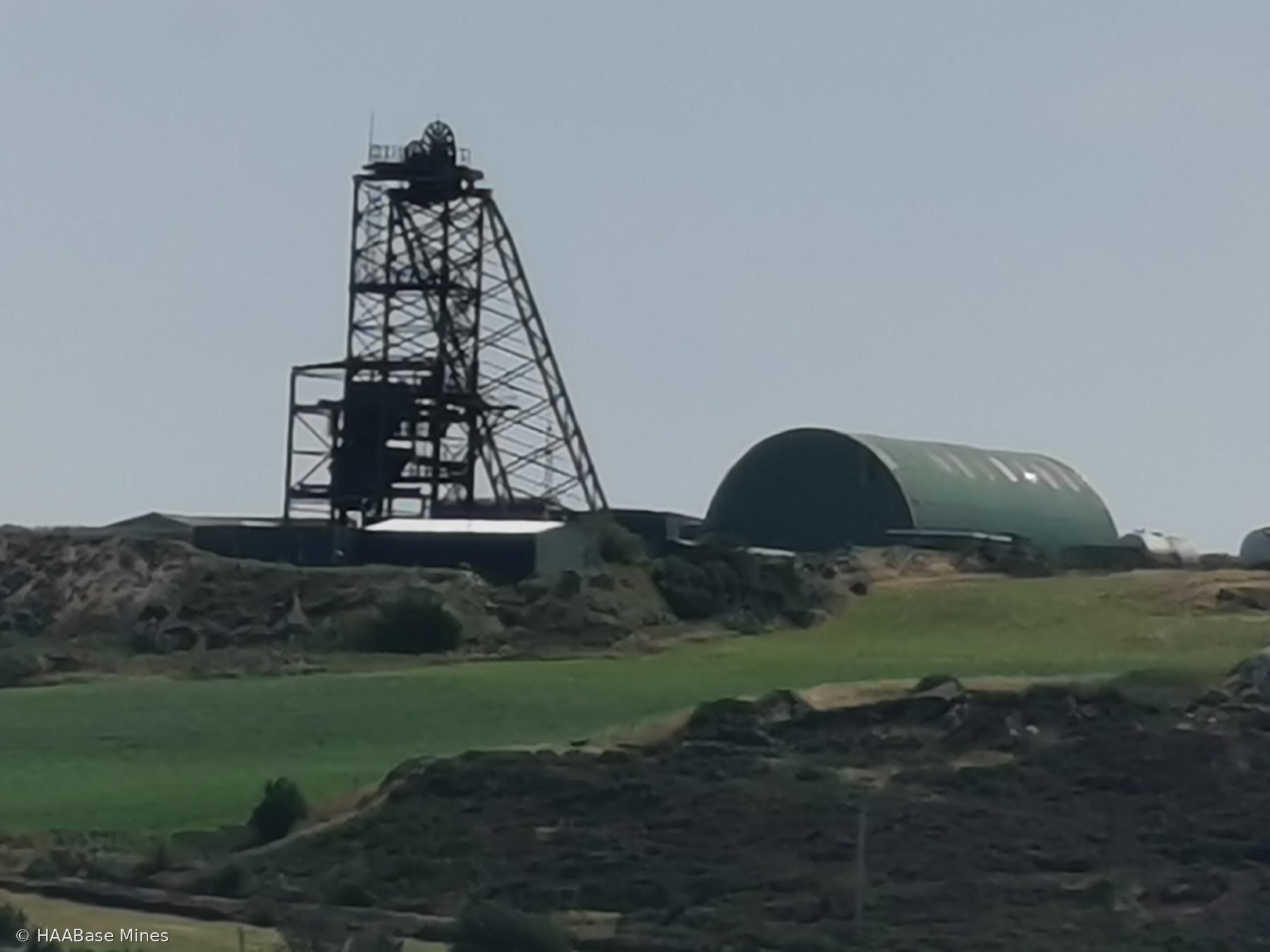
The site occupies a high, open hillside landscape, where large opencast workings and scattered structures give the mountain a wide, exposed, and strongly legible mining character.

Map & photo

Parys Mountain Copper Mine mine headframe or winding tower site
Photograph taken: 14 July 2025
Map markers and directions links are provided for location reference only and do not indicate public access or permission to enter a site.

History

Evidence of Bronze Age copper extraction at Parys Mountain has been established from carbon-14 dating of spoil tip charcoal, and copper ingots with Roman inscriptions have been found in the vicinity. From Elizabethan times the site appears in written records. In 1748 Lewis Morris noted that the mountain produced an ochre earth used as paint, making no mention of copper.

By 1760 Dr John Rutty had described vitriol-rich waters flowing from the mountain. In 1762 Alexander Frazer attempted to locate copper there at the invitation of the owner, Sir Nicholas Bayly, but failed to find economically viable quantities. In 1764 Charles Roe of Macclesfield approached Sir Nicholas Bayly and was granted a 21-year lease from October 1764 on the eastern part of the mountain, on condition of continuing the exploration work.

After years of expensive and largely fruitless searching, a last attempt was made beginning in February 1768 under the direction of Jonathan Roose. On 2 March 1768 local miner Rowland Pugh discovered the Great Lode, only 7 feet below the surface; the date was celebrated by a local festival at least until 1858. In 1772 and 1773 large amounts of scrap iron were being transported from London to Mona Mine's precipitation pits, which were used to recover copper from drainage water.

By 1770 the vein had extended onto Parys farmland, causing boundary disputes. A further discovery of ore was made in 1775 further to the west by the Reverend Edward Hughes, co-owner of that area with Sir Nicholas Bayly, who formed the Parys Mine Company that same year. Following the expiry of Charles Roe's 21-year lease in 1785, the Earl of Uxbridge formed the Mona Mine Company.

Between 1785 and 1788 over £61,000 was invested in the Mona Mine under the direction of Thomas Williams; a new quay was built at Amlwch Port and new buildings erected at Mona. Thomas Williams, a lawyer who became effectively the manager of both operations, was born 31 May 1737 at Llanidan in Anglesey. During 1787 to 1792 his influence extended until he had complete control of both the Anglesey and the Cornwall copper mines.

During the peak years around 1,200 people were employed at the two mines. The two operations on the mountain together dominated the world copper market during the 1780s; at this period the mountain was the largest copper mine in Europe, and its rise severely damaged the mining industry in Cornwall. The ore was exported through the port of Amlwch.

A loading pier was built at Amlwch harbour in 1782, and in 1793 by Act of Parliament the port was enlarged and dredged. The best ore was shipped to Lancashire or to the Lower Swansea Valley for smelting; copper was also concentrated on site using kilns and furnaces, and recovered through precipitation in purpose-built ponds. Associated chemical industries were established on the mountain producing ochre pigments, sulphur, vitriol, and alum.

Thomas Williams also introduced the Parys Mountain copper coinage to pay his workers. In 1778 a company was formed to extract brimstone from the ores on the mountainside. Parys Mountain copper was used to sheath the hulls of Royal Navy warships; the fleet was completely coppered between 1778 and 1782.

Thomas Williams died in 1802 and over the following five years production dropped dramatically; by 1808 only 120 men were employed, compared with around 1,200 at peak. The rapid decline was due partly to the exhaustion of the easily won open-cast areas and partly to a reduction in the market for copper. In 1832 and 1834 the Parys mine's North Discovery Lode was found; this lasted until around 1840, after which most mining had finished, with many workers moving to the Drws y Coed mine in Snowdonia.

There was a further resurgence from around 1858; the Parys Mines Company made an estimated £400,000 profit between 1858 and 1870, after which mining continued in decline until approximately 1890, when most mining had ceased. In 1835 a court ruling gave 2,000 square yards of Mona mine's land to Parys mine. In 1877 part of the lease at the western end was sold to the Morfu Du mining company, which worked the Morfa Du Mine from 1881 to 1904, raising 5,783 tons of ore.

In 1878 the Parys Mountain Windmill was constructed on the mountain's summit at 138 metres above sea level to pump water from mine shafts, replacing coal-powered engines. It was unusual in having five sails and was the last tower mill built in Wales. By 1901 a mining survey noted the windmill was working well.

In 1899 the Mona and Parys mines were merged to form Mona and Parys Mines Ltd, with activity concentrated at the precipitation and ochre works. Mining effectively ceased around 1904. It is estimated that between 1768 and 1904 a total of 3.5 million tons of ore were raised producing approximately 130,000 to 143,000 tons of copper, with around 20 kilometres of underground workings driven.

Following closure, modern exploration commenced in 1955, initially by Anglesey Mining Exploration Ltd and then by Anglesey Copper Mines (UK) Ltd, which drilled eleven boreholes until 1962. From 1966 to 1970 the Canadian Industrial Gas and Oil Company Ltd drilled a further 52 boreholes without finding promising reserves. In 1973 Cominco Ltd discovered a high-grade polymetallic ore deposit, with estimated reserves of 4.8 million tonnes containing 1.5% copper, 3% lead, 6% zinc, and small amounts of gold and silver.

In 1988 Anglesey Mining plc was formed as a new public company and between 1988 and 1990 sank a 300-metre shaft (Morris shaft) and drove 850 metres of levels to remove minerals for processing in a pilot plant, but a recession and fall in metal prices caused the project to be shelved. As of 2023, drilling to better define the Northern Copper Zone continued, with the aim of improving mineral estimates for inclusion in a feasibility study. The site retains the two large opencasts (the Parys and Mona pits), the 1878 windmill tower, the Pearl Shaft engine house, the central precipitation pits, the Dyffryn Adda reverberatory furnace site, and the Mona smelting site.

More than 400 features of archaeological significance were identified in a 1998 survey by Gwynedd Archaeological Trust; six have been made Scheduled Ancient Monuments including both opencast pits. The wider site carries both Scheduled Ancient Monument and Site of Special Scientific Interest designation. A self-guided waymarked trail is open year-round with a free car park beside the B5111 road.

The Parys Underground Group controls access to approximately five kilometres of old tunnels.
Timeline

Exploration

Bronze Age and early mining activity

Carbon-14 dating of charcoal from spoil tips has established Bronze Age extraction activity at Parys Mountain. Copper ingots with Roman inscriptions have also been found in the vicinity. The site appears in written records from Elizabethan times as an established mining location.
1764
Legislation

21-year lease granted to Charles Roe of Macclesfield

In 1764 Charles Roe of Macclesfield was granted a 21-year lease from October 1764 on the eastern part of Parys Mountain by Sir Nicholas Bayly, on condition of continuing exploration work.
1768
Exploration

Discovery of the Great Lode

Local miner Rowland Pugh discovered the Great Lode on 2 March 1768, only 7 feet below the surface, under the direction of Jonathan Roose. The date was celebrated by a local festival at least until 1858.
1775
Legislation

Formation of Parys Mine Company

A further discovery of ore was made in 1775 further to the west by the Reverend Edward Hughes and Sir Nicholas Bayly, leading to the formation of the Parys Mine Company that same year to exploit the western portion of the deposit.
1778–1782
Operation

Royal Navy hulls sheathed with Parys Mountain copper

The copper produced at Parys Mountain was used to sheath the hulls of Royal Navy warships. The entire fleet was coppered between 1778 and 1782.
1782
Construction

Loading pier built at Amlwch harbour

A loading pier was built at Amlwch harbour in 1782 to facilitate export of copper ore. In 1793 an Act of Parliament enlarged and dredged the port, adding piers, buoys, and mooring posts.
1785
Legislation

Formation of the Mona Mine Company; Thomas Williams takes control

Following the expiry of Charles Roe's 21-year lease in 1785, the Earl of Uxbridge formed the Mona Mine Company. Thomas Williams became a partner and directed major investment: between 1785 and 1788 over £61,000 was invested in the Mona Mine. By 1787 to 1792 Williams had effective control of both mines.
1785–1795
Operation

Peak production period; largest copper mine in Europe

During this period the two operations on the mountain together dominated the world copper market. At their peak approximately 1,200 people were employed. The mine was the largest in Europe and its rise severely damaged the Cornish copper industry.
1878
Construction

Construction of the Parys Mountain Windmill

The Parys Mountain Windmill was constructed in 1878 at the summit of the mountain, 138 metres above sea level, to pump water from mine shafts, replacing coal-powered steam engines. It had five sails — unusual for Anglesey — and was the last tower mill built in Wales.
1899
Legislation

Merger to form Mona and Parys Mines Ltd

In 1899 the Mona and Parys mines were merged to form Mona and Parys Mines Ltd. Activity was concentrated at the precipitation and ochre works.
1904
Closure

Mining effectively ceases at Parys Mountain

Mining effectively ceased around 1904. It is estimated that between 1768 and 1904 approximately 3.5 million tons of ore had been raised, producing around 130,000 to 143,000 tons of copper, with approximately 20 kilometres of underground workings driven.
1973
Exploration

High-grade polymetallic ore deposit discovered by Cominco Ltd

In 1973 Cominco Ltd discovered a high-grade polymetallic ore deposit. Estimated reserves were 4.8 million tonnes containing 1.5% copper, 3% lead, 6% zinc, and small amounts of gold and silver.
1988–1990
Construction

Anglesey Mining plc sinks Morris shaft; pilot plant project shelved

Anglesey Mining plc was formed in 1988. Between 1988 and 1990 the company sank a 300-metre shaft (Morris shaft) and drove 850 metres of levels to process minerals in a pilot plant. A recession and fall in metal prices caused the project to be shelved.
1998
Heritage

Gwynedd Archaeological Trust survey identifies over 400 heritage features

A 1998 survey by Gwynedd Archaeological Trust identified more than 400 features of archaeological significance on the mountain. Six features have been made Scheduled Ancient Monuments, including both opencast pits.
2023
Exploration

Renewed drilling to define the Northern Copper Zone

Drilling to better define the Northern Copper Zone commenced in late 2023 with the aim of improving confidence in mineral estimates for inclusion in a feasibility study and exploring adjacent undrilled areas.

Sources and records

Wikipedia article: Parys Mountain
Wikipedia article: Parys Mountain Windmill
Parys Underground Group website: History and Thomas Williams pages
Subterranea Britannica: Mynydd Parys (Parys Mountain)
Mindat.org locality record: Parys Mountain Mines
Coflein (Royal Commission on the Ancient and Historical Monuments of Wales): Parys Mountain Copper Mines record
British Mineralogy website: Parys Mountain, Anglesey
Anglesey History website: Parys Mountain Windmill
People's Collection Wales: Parys Mountain Copper Mines
Journey to the Past project (Bangor University / RCAHMW): Parys Mountain Copper Mines entry
North Wales Live: The historic Anglesey copper mine that feels like it is from another world
This researched site record is part of the HAABase Mines database. Normal personal research and browsing is welcome. Automated bulk extraction, republication, or harvesting of site text and images is not permitted without written consent.