Lead mining at Minera is thought to date back to the Roman period, though no archaeological evidence has been found. The first written record dates from 1296, when Edward I hired miners from Minera to work in his silver mines in Devon. Mining continued until the Black Death brought it to an end around 1349.
Activity resumed in subsequent centuries; an account from 1870 refers to the "Old Minera Mines" on the western side of the Clywedog Valley as having been worked from 1720 to 1824, when water drainage problems forced closure. John Wilkinson, the ironmaster from Bersham and Brymbo, was a partner in the Maesffynnon mine near the lime works from 1783 and installed a steam pumping engine in 1784. A second pumping engine was added in 1799 and a third later, but the cost of pumping made these western workings uneconomic by 1817.
At the eastern end of the same area, similar drainage problems forced closure in 1824. Mining restarted when John Taylor and Sons, a large international mining company originating in Cornwall, formed the Minera Mining Company in 1848. The company invested extensively: a new drainage adit from near Nant Mill of 1,711 yards was completed in 1852; new steam engines for winding and pumping were installed, including a large Cornish pumping engine with an 80-inch cylinder made by Harvey's of Hayle for Taylor's Shaft; and a railway branch was laid from Minera Lime Works by 1851.
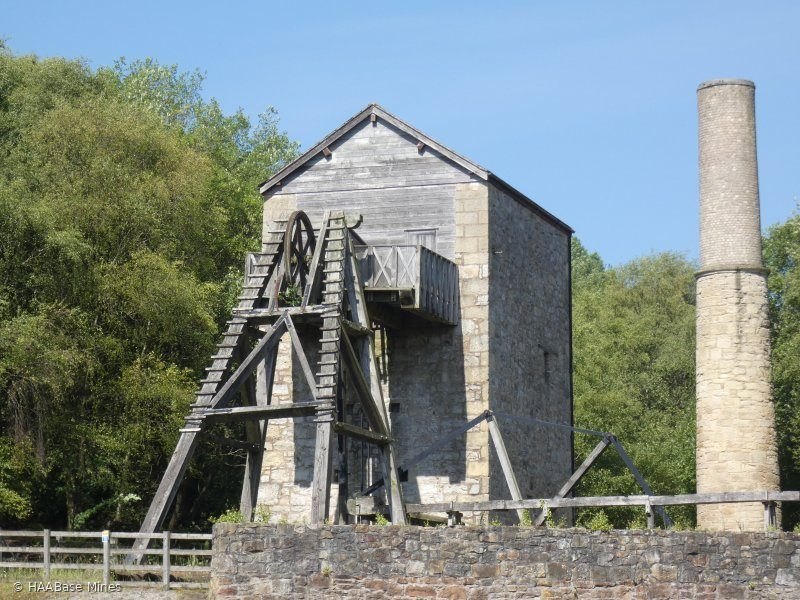
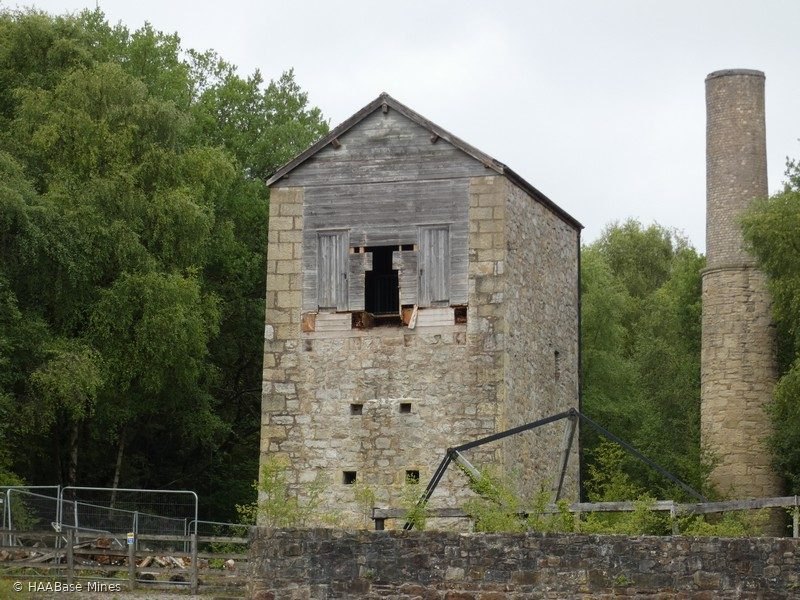
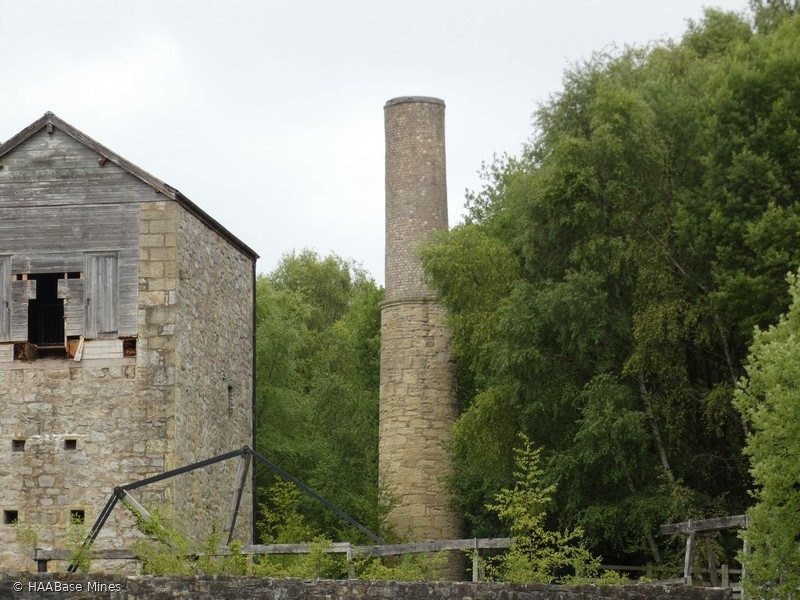
A 44-inch Cornish design pumping engine was installed at Meadow Shaft two years later, around 1847. A new winding engine was installed at Meadow Shaft in 1858 to raise lead ore and work the mechanical ore crusher. The pumping engine inside the Meadow Shaft engine house had a 40-inch cylinder, 9-foot stroke, and raised water 162 yards up the shaft in a four-bucket lift.
The Meadow Shaft, also known as the City Shaft, was the deepest shaft in the Denbighshire and Flintshire orefield at 1,220 feet. With the water controlled, significant veins of lead ore were discovered. John Taylor and Sons had invested £30,000 by 1851; profits for 1864 alone reached £60,000.
By 1870 there were fourteen shafts along the course of the mineral railway. In 1875 the Consolidated Minera Lead Mining Company was formed by merging several companies. The New Minera Mining Company was formed in 1889 to work the veins to the south-east.
In 1897 it amalgamated with the main company to form the United Minera Mining Company. In 1884 a new dressing floor was opened at Roy's Shaft. The Meadow Shaft site became a dumping ground and its dressing floors were gradually buried; only the Meadow Shaft itself remained in active use.
The Minera Havans plant, built by the Taylor mining company between 1872 and 1874 to extract lead ore from existing low-grade waste heaps, included a beam engine, primary and secondary Cornish crushers, jigs, and six buddles; this plant is scheduled. By 1900 the price of lead and zinc had fallen dramatically while the price of coal to run the steam engines rose. In 1908 the United Minera Mining Company announced that the mines were no longer economic.
In 1909 the pumping engines were turned off, and the workings began to flood progressively over the following years. Mining continued above the rising water level until the mine finally closed in 1914. All assets were sold; the original steam engine at the Meadow Shaft was removed in 1914, and the mineral railway branch was lifted the same year.
In 1901 the main eyebolt holding the cage at Meadow Shaft broke whilst winding and four men were killed. Up to the 1950s the enormous spoil heaps were worked for gravel. The lead, zinc, and cadmium in the spoil heaps posed a threat to water supplies.
From 1988 a major restoration and regeneration programme funded by Wrexham County Borough Council and the Welsh Development Agency began to make the lead, zinc, and lime spoil tips safe from contaminating local water supplies. A second phase focused on the Meadow Shaft engine house and began in 1990; the engine house was rebuilt and fitted with replica machinery based on the archaeology of the site. A visitor centre was opened for public use.
The site is now managed as the Minera Lead Mines and Country Park covering 53 acres of grassland, wooded areas, and archaeological sites. Groundwork North Wales manages the site in partnership with Wrexham County Borough Council. Taylor's Shaft is scheduled as an ancient monument.
The site was attacked by vandals in 2004 but repaired by the council in 2005. The mineral railway trackbed is preserved as a public footpath linking the main shaft sites.