Site overview

Lewis Merthyr Colliery at Trehafod in the lower Rhondda Valley was one of the largest and longest-lived collieries in South Wales. The site's origins go back to 1850 when two pits, Hafod and Coedcae, were sunk by separate parties but both abandoned early due to difficult working conditions. In the mid-1870s William Thomas Lewis, later Lord Merthyr, purchased and reopened the two pits and then sank the Bertie shaft around 1878–80 and the Trefor shaft around 1890, both named after his sons.

By 1900 Lewis Merthyr Consolidated Collieries Ltd employed around 5,000 men and produced close to a million tons of coal annually. The colliery passed to the Powell Duffryn Steam Coal Company in 1929 and was nationalised in 1947. In 1958 Lewis Merthyr merged with the neighbouring Ty Mawr Colliery, and all coal winding at Lewis Merthyr ceased.

Coal production at the combined Ty Mawr/Lewis Merthyr Colliery ended in June 1983. The pithead buildings and headframes were preserved and opened as the Rhondda Heritage Park, now operating as a visitor attraction offering underground guided tours led by former miners. The Bertie and Trefor headframes and associated colliery buildings are listed Grade II*.

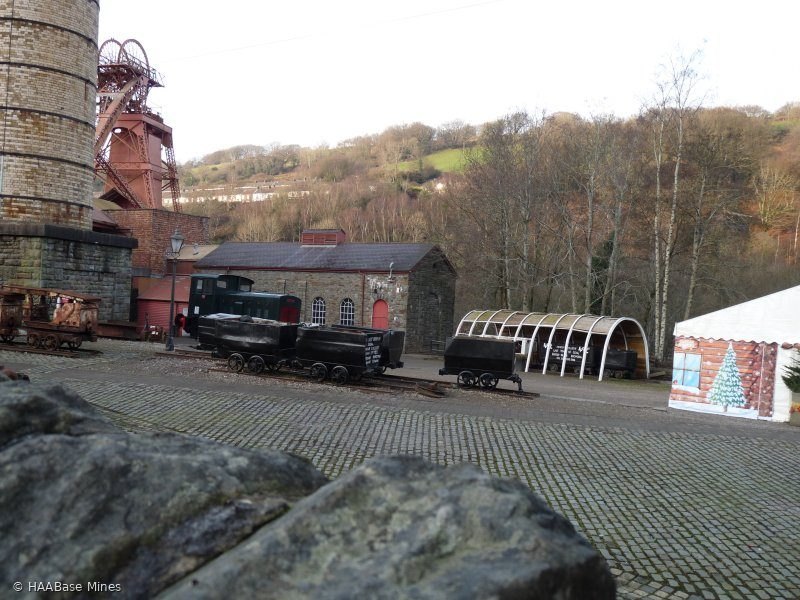
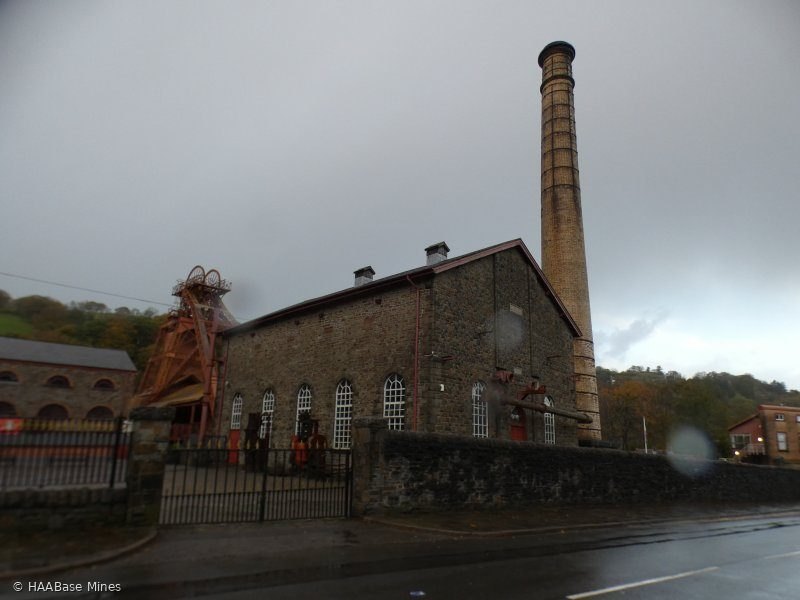
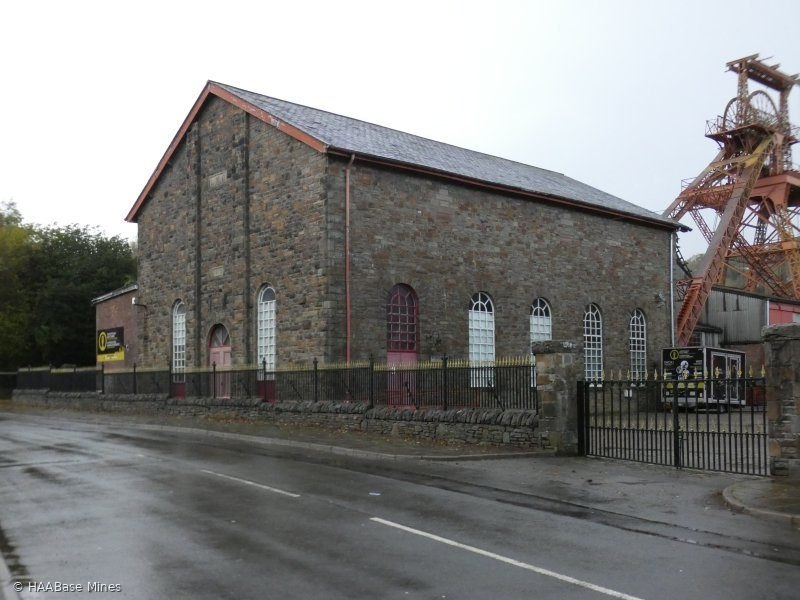
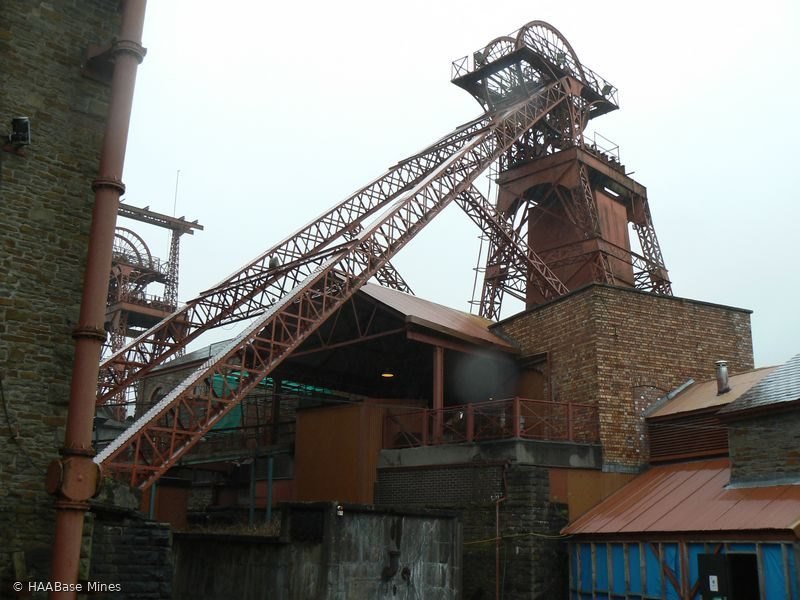
The colliery occupies a narrow valley-floor setting at Trehafod, where the surviving headframes and buildings are enclosed by steep valley sides and later settlement but still read as a substantial historic site.

Map & photo

Lewis Merthyr Colliery / Rhondda Heritage Park mine headframe or winding tower site
Photograph taken: 18 May 2007
Map markers and directions links are provided for location reference only and do not indicate public access or permission to enter a site.

History

The history of the Lewis Merthyr site begins in 1850 when two pits were opened on land in the lower Rhondda Valley at Trehafod. The Hafod pit was sunk by brothers David and John Thomas and the Coedcae pit was started by Edward Mills. Both ventures were abandoned early on due to difficult working conditions; the Coedcae sinking was abandoned by Mills because of excessive water in the shafts, and David and John Thomas then purchased and completed the Coedcae sinking to the No. 3 Rhondda seam, with the Old Pit as the upcast ventilation shaft and the New Pit as the downcast, both 115 yards deep.

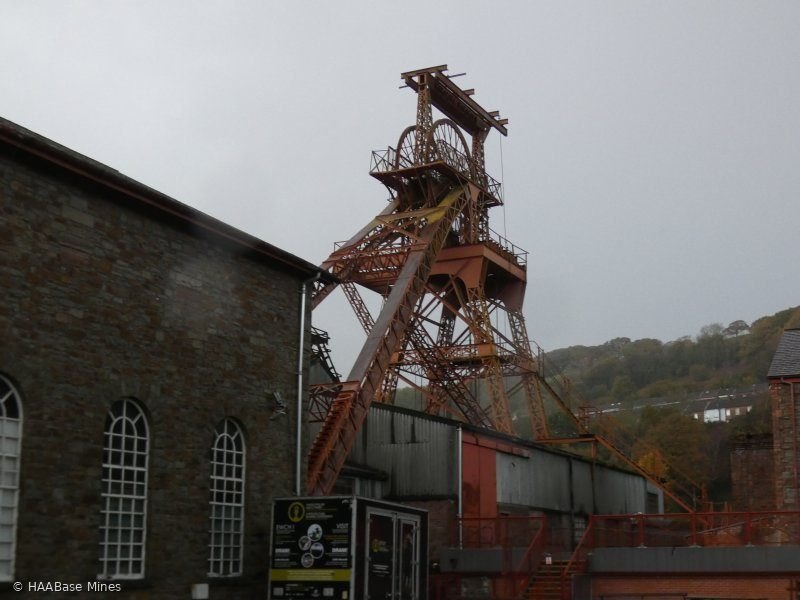
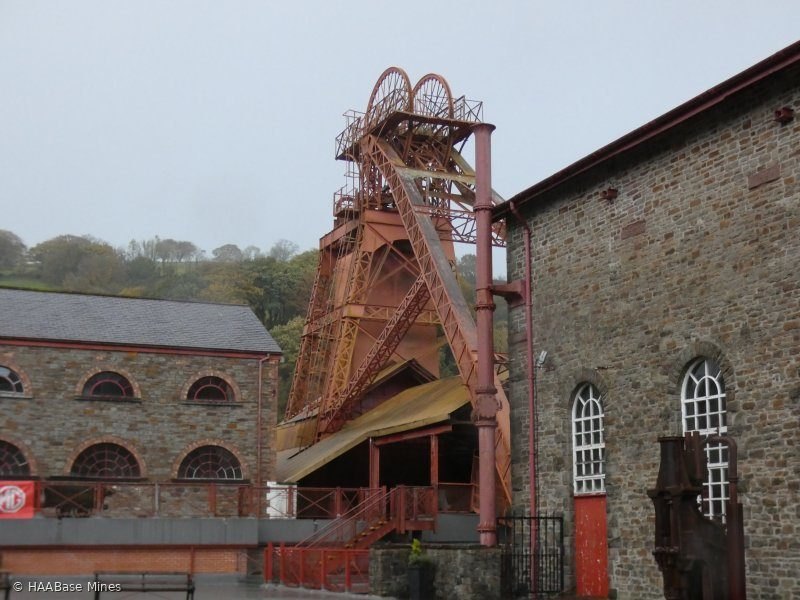
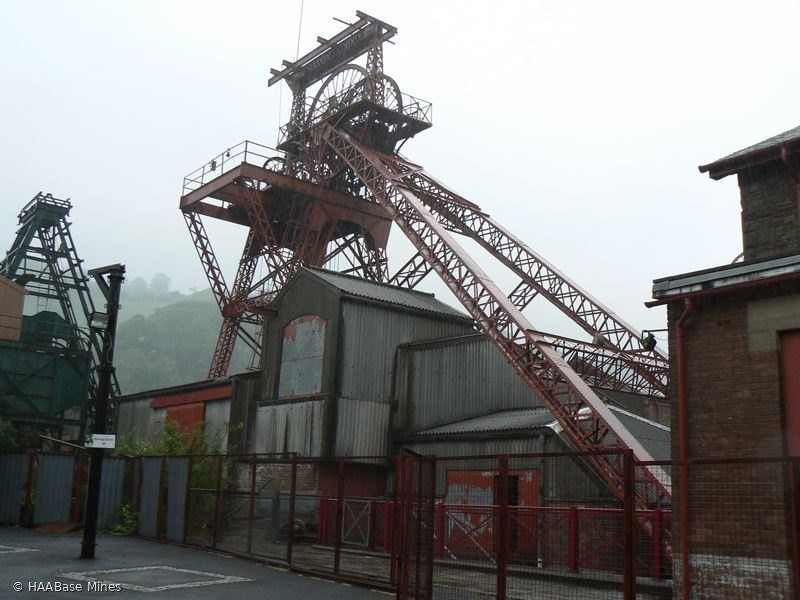
The original Hafod pit was also sunk to the No. 3 Rhondda seam in 1850 but was abandoned because of geological problems before any coal was produced. In the mid-1870s William Thomas Lewis, later Lord Merthyr, purchased and reopened the two pits, working the upper bituminous household coal seams. By 1880 Lewis had sunk the Bertie shaft, constructed around 1878; the Bertie pithead and headframe, built in lattice girder style and covered by a stone and brick pitbank building, are the oldest surviving headframes in Wales.

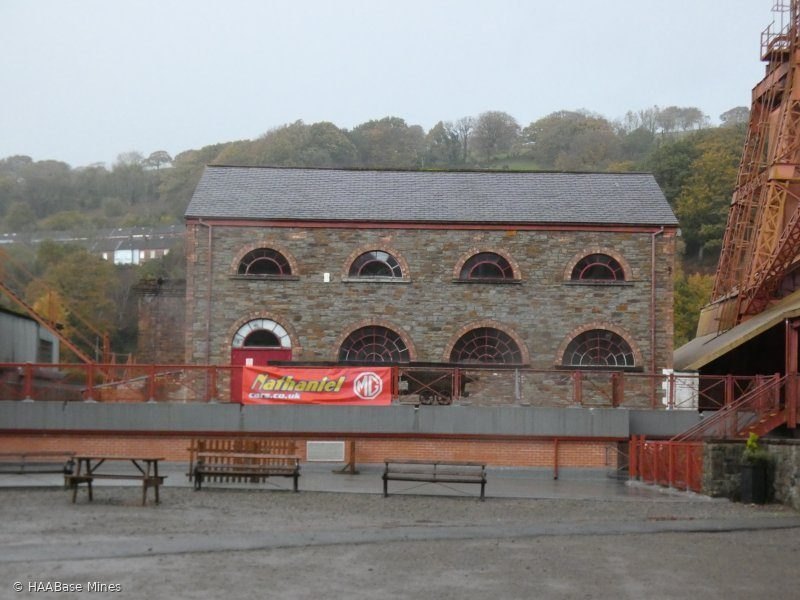
By 1890 the Trefor shaft had been sunk; the associated winding house, dated to 1878, and the Trefor winding engine house, positioned to the east, are constructed of rusticated pennant sandstone. Both shafts were sunk to the steam coal seams, initially to a depth of 359 yards to the Six Feet seam, and later deepened to 453 yards to the Five Feet seam in 1898. The Bertie shaft, 17 feet in diameter, served as the downcast ventilation shaft; the Trefor shaft, 14 feet in diameter, served as the upcast.

In 1881 the Lewis Merthyr Navigation Collieries Limited was formed. By 1896 the colliery was working eight seams: the Two-Feet-Nine, Four Feet, Six Feet, Red Vein, Nine Feet, Upper Five Feet, Lower Five Feet, and No. 3 Rhondda. At this time the ventilation was provided by Schiele type fans generating 430,000 cubic feet of air per minute.

In 1900 W. T. Lewis formed the Lewis Merthyr Consolidated Collieries Limited, uniting the Coedcae Coal Company and Lewis Merthyr Navigation Colliery Company. A coking plant at the colliery, one of the first in the Rhondda, had by 1910 developed into a battery of fifty ovens with a gas and by-product plant. By 1900 the Coedcae pit was using compressed air coal cutters of bar, disc, and chain types.

Lewis Merthyr was among the first collieries in South Wales to adopt electric power turbine pumps to deal with large volumes of water. Annual output reached 1,500,000 tons per year in the early 1900s. By 1908 Bertie pit employed 1,053 men and Trefor pit 1,066.

In 1918 Bertie and Trefor pits employed 1,792 men combined, Coedcae 556 men, and Hafod Nos. 1 and 2 a total of 1,496 men. In 1929 Lewis Merthyr Consolidated Collieries Limited was purchased by the Powell Duffryn Steam Coal Company Limited. In the same year Coedcae ceased winding coal.

Hafod No. 2 ceased in 1930, and Hafod No. 1 in 1933. During 1945 Bertie and Trefor pits together employed 1,433 men. A pocket of gas was ignited by a rock fall on 22 November 1956; two men were killed instantly and seven others including the manager died later from their injuries.

Output at this time was around 1,250 tons per day with a workforce of 1,160 men. On nationalisation in 1947 the colliery was placed in the National Coal Board's South Western Division. In 1958 Lewis Merthyr Colliery merged with the neighbouring Ty Mawr Colliery.

All coal winding ceased at Lewis Merthyr, with coaling continuing via Ty Mawr and men and supplies only transported via Lewis Merthyr. By 1969 the combined concern was known as the Ty Mawr/Lewis Merthyr Colliery. The colliery worked up to thirteen seams in total using the longwall method.

Production at Lewis Merthyr came to an end on 14 March 1983. Coal production continued in the Four Feet seam until July 1983, when coaling ceased forever at the Ty Mawr/Lewis Merthyr site. The pithead gear and buildings were preserved.

The site was subsequently developed as the Rhondda Heritage Park. The two headframes and associated colliery buildings are listed Grade II*. The Bertie pithead and headframe are listed as a rare surviving pitbank complete with cover building and for having the oldest headframe remaining in Wales.

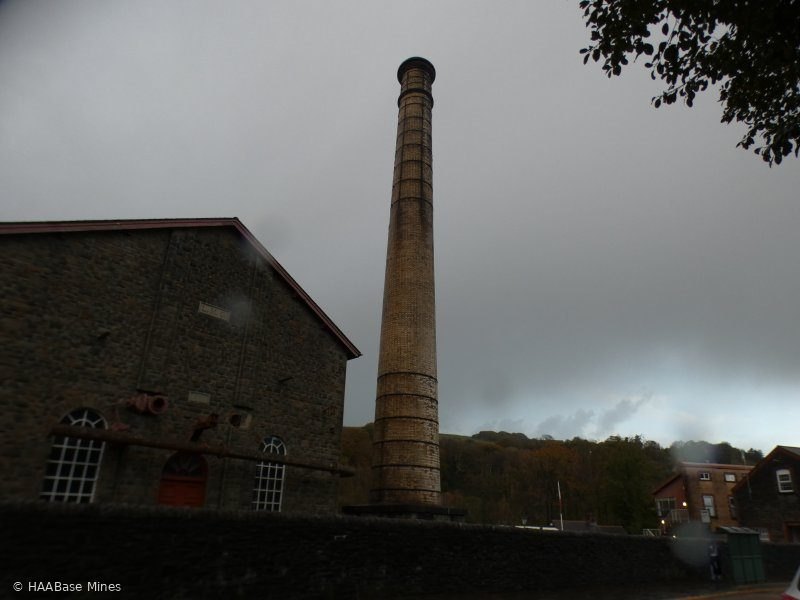
The Trefor pithead and headframe, Bertie winding engine house, Trefor winding engine house, and lamproom and fan house are also listed Grade II*. The chimney, a tall yellow-brick stack approximately 50 metres high built in 1892 on a pennant sandstone base, and the fanhouse are listed Grade II. In May 2000 a six-foot replica Miner's Lamp monument was unveiled at the entrance of Rhondda Heritage Park as a memorial to those who lost their lives or suffered as a result of the mining industry of the South Wales coalfield.
Timeline

Redevelopment

Opening of Rhondda Heritage Park

The pithead buildings and headframes were preserved and the site was developed as the Rhondda Heritage Park, a visitor attraction offering underground guided tours of the Lewis Merthyr mine workings led by former miners.
Heritage

Grade II* and Grade II listing of colliery structures

The Bertie pithead, headframe, tram circuit, and tippler were listed Grade II*, noted as having the oldest headframe remaining in Wales. The Trefor pithead and headframe, Bertie winding engine house, Trefor winding engine house, and lamproom and fan house were also listed Grade II*. The chimney and fanhouse carry Grade II listings.
1850
Construction

Sinking of Hafod and Coedcae pits

Two pits were opened at what was to become the Lewis Merthyr site. Hafod was sunk by brothers David and John Thomas to the No. 3 Rhondda seam. Coedcae was started by Edward Mills but abandoned due to excessive water; David and John Thomas then completed the Coedcae sinking to the No. 3 Rhondda seam. Both ventures were abandoned early on due to difficult working conditions.
1875
Legislation

W. T. Lewis purchases and reopens the two pits

In the mid-1870s William Thomas Lewis (later Lord Merthyr) purchased and reopened the Hafod and Coedcae pits, working the upper bituminous household coal seams.
1878–1880
Construction

Sinking of the Bertie shaft

W. T. Lewis sank the Bertie shaft, the downcast ventilation shaft, 17 feet in diameter, initially to 359 yards to the Six Feet seam. The associated Bertie pithead and headframe, the oldest surviving headframe in Wales, were built around 1878. The Bertie winding engine house faces Coedcae Road on the west side of the complex.
1881
Legislation

Formation of Lewis Merthyr Navigation Collieries Limited

The Lewis Merthyr Navigation Collieries Limited was formed in 1881. At that time the colliery was working eight seams including the Two-Feet-Nine, Four Feet, Six Feet, Red Vein, Nine Feet, Upper Five Feet, Lower Five Feet, and No. 3 Rhondda.
1890
Construction

Sinking of the Trefor shaft

By 1890 W. T. Lewis had sunk the Trefor shaft, the upcast shaft, 14 feet in diameter, initially to 359 yards to the Six Feet seam. Both the Bertie and Trefor shafts were named after Lewis's sons. The associated Trefor winding engine house is constructed of rusticated pennant sandstone.
1892
Construction

Construction of colliery chimney

The colliery chimney, a tall yellow-brick stack approximately 50 metres high on a pennant sandstone base, was built in 1892 to serve the boilers for the steam engines on site.
1898
Construction

Bertie and Trefor shafts deepened to Five Feet seam

Both the Bertie and Trefor shafts were deepened from 359 yards to 453 yards to reach the Five Feet seam.
1900
Legislation

Formation of Lewis Merthyr Consolidated Collieries Limited

W. T. Lewis formed the Lewis Merthyr Consolidated Collieries Limited in 1900, merging the Coedcae Coal Company and Lewis Merthyr Navigation Colliery Company. By this time the colliery employed some 5,000 men and produced almost a million tons of coal annually.
1908
Operation

Combined workforce exceeds 2,100 at Bertie and Trefor pits

By 1908 Bertie pit employed 1,053 men and Trefor pit 1,066, a combined total of over 2,100 men at those two shafts alone.
1929
Closure

Acquisition by Powell Duffryn Steam Coal Company; closure of Coedcae pit

The Lewis Merthyr Consolidated Collieries Limited was purchased by the Powell Duffryn Steam Coal Company Limited in 1929. In the same year Coedcae pit ceased winding coal.
1930
Closure

Hafod No. 2 pit ceases winding

Hafod No. 2 pit ceased winding coal in 1930.
1933
Closure

Hafod No. 1 pit ceases winding

Hafod No. 1 pit ceased winding coal in 1933.
1947
Legislation

Nationalisation under the National Coal Board

Lewis Merthyr Colliery was nationalised and placed in the National Coal Board's South Western Division in 1947.
1956
Operation

Gas ignition kills nine men

A pocket of gas was ignited by a rock fall on 22 November 1956. Two men were killed instantly and seven others including the manager died later from their injuries.
1958
Closure

Merger with Ty Mawr Colliery; coal winding ceases at Lewis Merthyr

Lewis Merthyr Colliery merged with the neighbouring Ty Mawr Colliery in 1958. All coal winding ceased at Lewis Merthyr, with coaling continuing via Ty Mawr and men and supplies only via Lewis Merthyr. The Trevor pit ceased winding coal in 1958; the Bertie pit had wound coal from the Bute seam until the merger.
1983
Closure

Production ceases at Lewis Merthyr

Coal production at Lewis Merthyr came to an end on 14 March 1983.
1983
Closure

Final closure of Ty Mawr/Lewis Merthyr Colliery

Coal production in the Four Feet seam continued until July 1983, when coaling ceased forever at the Ty Mawr/Lewis Merthyr Colliery. The last dram of coal was raised from Ty Mawr in June 1983.
2000
Heritage

Miner's Lamp memorial unveiled at Rhondda Heritage Park

In May 2000 a six-foot replica Miner's Lamp monument was unveiled at the entrance of Rhondda Heritage Park as a memorial to all those who lost their lives or otherwise suffered as a result of the mining industry of the South Wales coalfield. The memorial was unveiled by Rhondda-born actor Glyn Houston.
Sources and records

Wikipedia article: Rhondda Heritage Park
Northern Mine Research Society: Lewis Merthyr Colliery
Welsh Coal Mines resource: Lewis Merthyr Colliery
British Listed Buildings (Cadw): Bertie pithead headframe and tippler; Trefor pithead and headframe; Bertie winding engine house; Trefor winding engine house; lamproom and fan house; chimney; fanhouse
Coflein (Royal Commission on the Ancient and Historical Monuments of Wales): Lewis Merthyr Consolidated Collieries site record
Rhondda Heritage Park history page (Liquisearch)
Becster.com: A Welsh Coal Mining Experience, Rhondda Heritage Centre
VisitWales: Rhondda Heritage Park attraction entry
This researched site record is part of the HAABase Mines database. Normal personal research and browsing is welcome. Automated bulk extraction, republication, or harvesting of site text and images is not permitted without written consent.