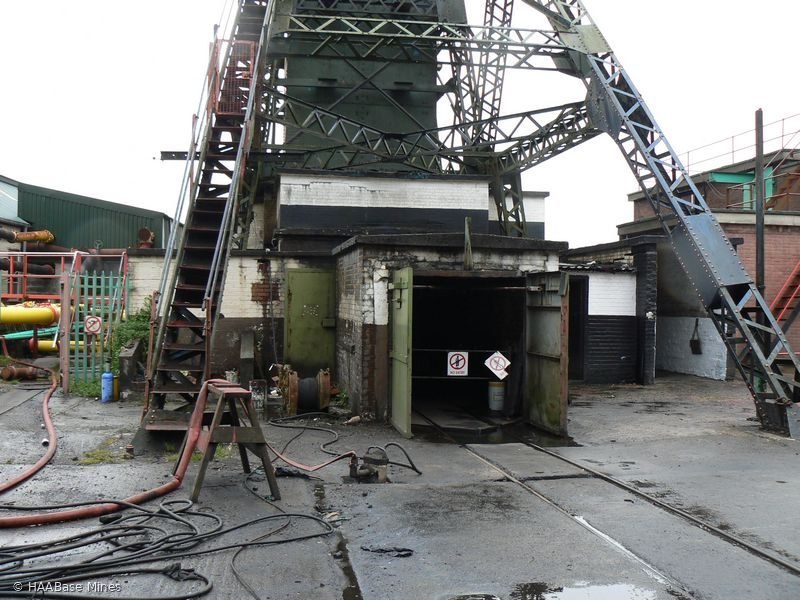
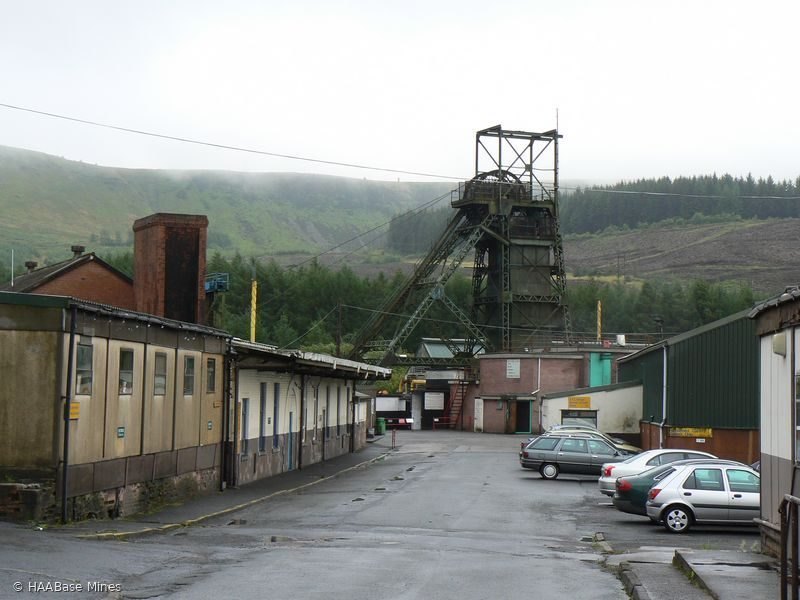
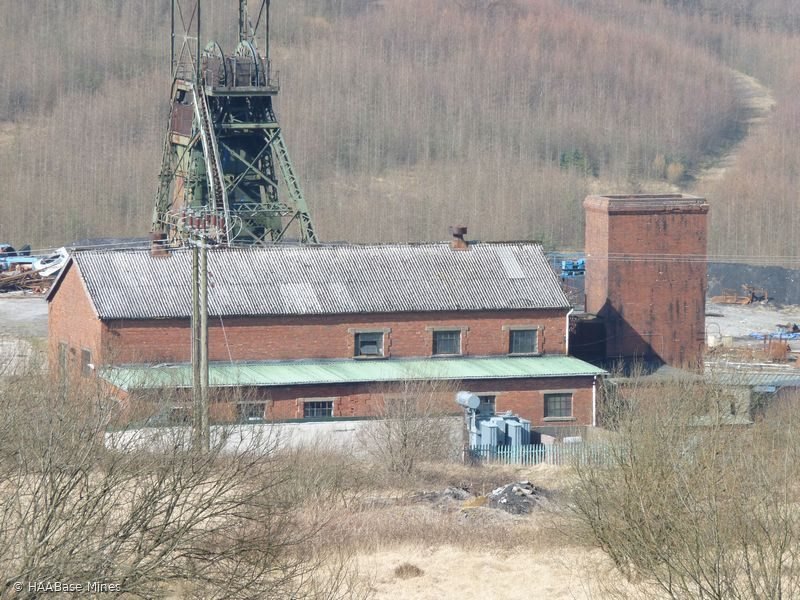
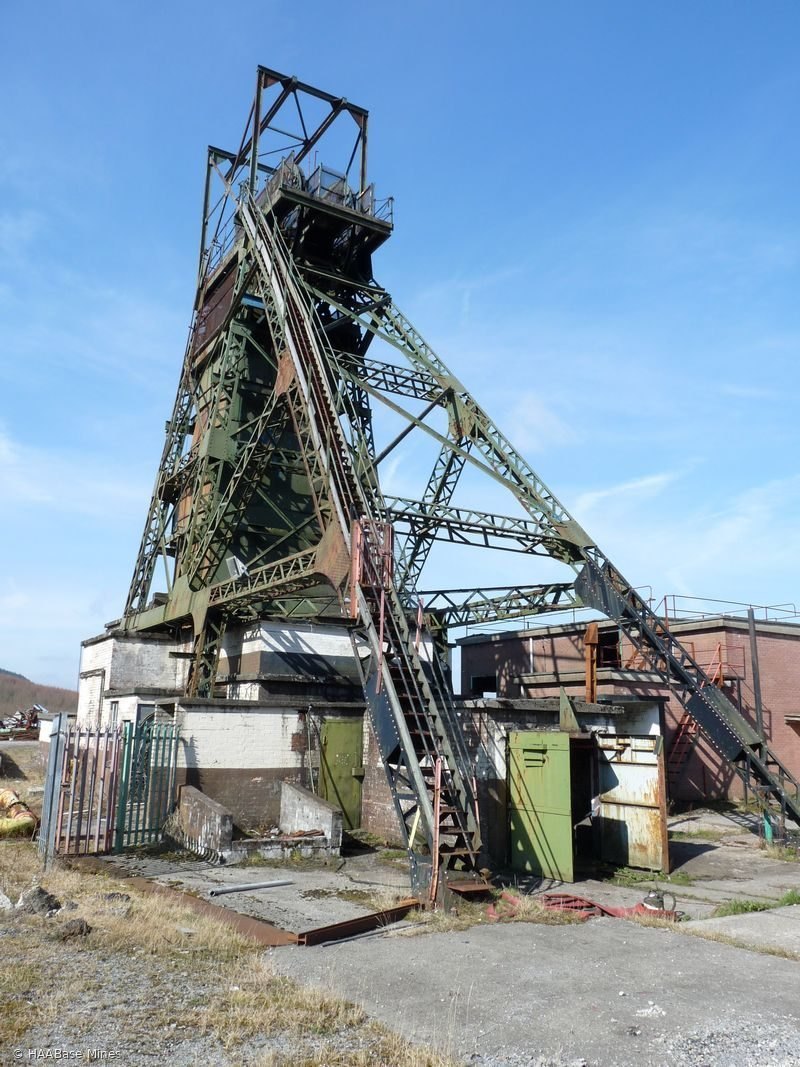
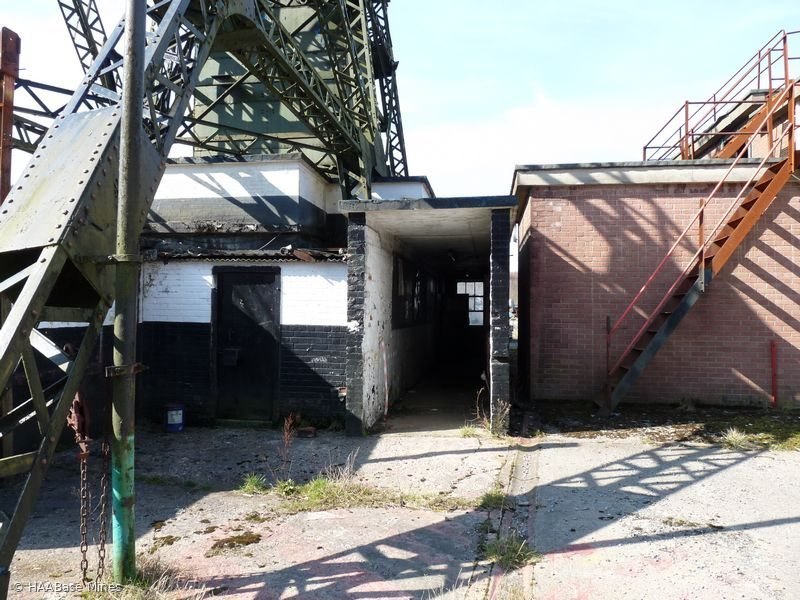
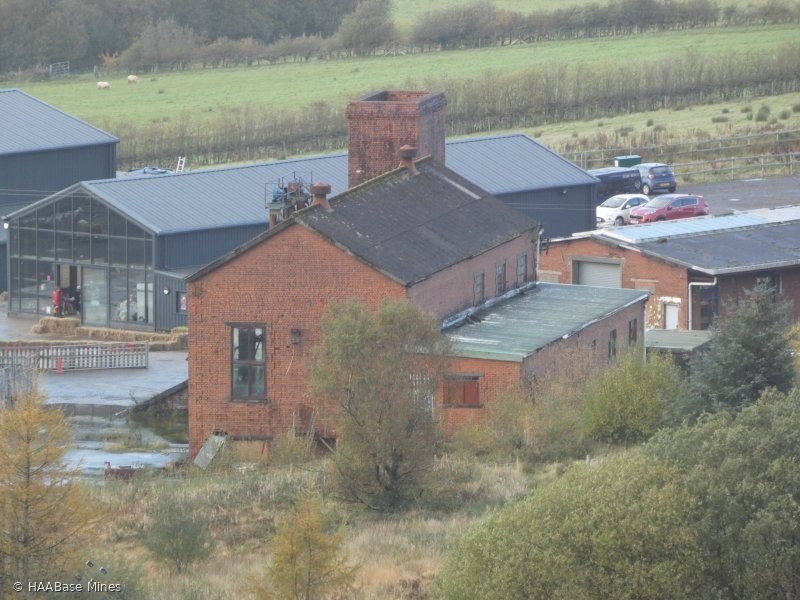
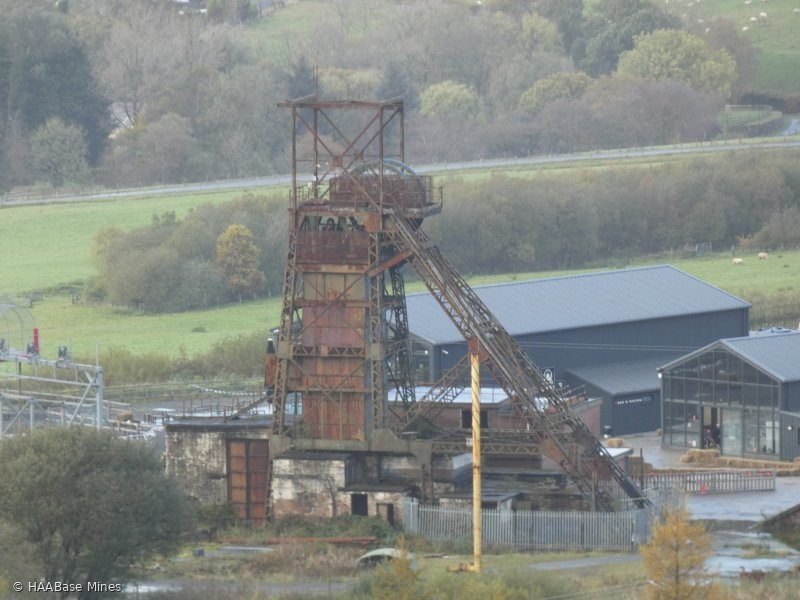
The earliest recorded coal working in the Hirwaun area took place from at least 1805, when locals exploited seams close to the surface of Hirwaun Common by drift mining. In 1864 William Williams began producing house coal, manufacturing coal, and fireclay from a drift mine at the location named Tower Graig, taking the name from the nearby Crawshay's Tower, a folly built in 1848 and named after Richard Crawshay. Tower Colliery was formally opened in 1878 by the Bute Trustees.
On the 1896 Inspector of Mines list, Tower Graig Colliery was discontinued, while Tower Colliery, owned by the Marquess of Bute, was recorded producing steam coal with a workforce of 420 men. In 1918 there were 679 men employed. No. 3 Drift was driven in 1920.
The Powell Duffryn Group, the largest coal company in South Wales, took over ownership by 1935. Tower No. 4 shaft was sunk between 1941 and 1944 to a depth of 165 yards; from 1943 until final closure this shaft served as the main return ventilation shaft and for the transport of men. In 1945 there were 1,045 men working at the colliery.
The National Coal Board assumed control on nationalisation in 1947. In 1958 Tower No. 3 was driven to meet the No. 4 colliery workings, thereafter serving as the main intake airway and for conveying coal and materials. On 13 April 1962 an explosion of firedamp killed nine men and injured a further nine at the colliery.
In 1964 Tower was linked underground to Fernhill Colliery, situated on the other side of the Rhigos mountain, forming a single production unit employing 860 men and producing around 250,000 tons of semi-anthracite per year. An overland conveyor installed in 1964, three quarters of a mile long, was the longest of its kind in South Wales at the time. Fernhill closed completely in 1980.
By the late 1970s, mining operations covered an area of around four square miles, working the Five Feet and Nine Feet seams at a maximum subterranean depth of 457 metres. During the 1984–85 miners' strike, Tower was one of several South Wales collieries that did not see a single strikebreaker for the duration of the dispute. In 1986 Tower received investment of £5 million in new double telescopic power roof supports in the V29 coal face in the Five/Seven Feet seam, where anthracite reached up to ten feet in thickness.
From 30 June 1986, following the driving of new underground roads, all coal from Mardy Colliery was also raised at Tower, the two mines effectively operating as a single coalfield system. Mardy closed as an access shaft on 21 December 1990. By this period the only seam worked at Tower was the Seven Feet/Five Feet combined seam, offering 1.3 metres of anthracite in a mined section of 1.65 metres.
A coal washing plant built in the mid-1980s processed coal extracted via an overland conveyor belt. In October 1993 the red flag was raised on Hirwaun Common during a march by Tower workers to highlight the threat of closure. In 1994, constituency MP Ann Clwyd staged a sit-in in the mine to protest against closure.
British Coal closed Tower Colliery on 22 April 1994, on the grounds that it would be uneconomic in current market conditions to continue production. Led by local NUM Branch Secretary Tyrone O'Sullivan, 239 miners formed the Tower Employees Buy-Out (TEBO), each pledging £8,000 from their redundancy payments to constitute a £2 million buyout fund. Against resistance from central government, a price of £2 million was agreed.
Ownership of Tower Colliery formally passed to Goitre Tower Anthracite Ltd on 23 December 1994. The miners marched back to the colliery on 2 January 1995 and production resumed, making it the first worker-owned coal mine in the United Kingdom. In the first year of worker ownership the colliery produced 450,000 tons of high-grade anthracite and made over £4 million in pre-tax profit.
Mining continued profitably for thirteen years under worker ownership. The board of Goitre Tower Anthracite eventually recommended concentrating work on coal to the north of the existing workings, a decision accepted by the workforce and shareholders, which effectively marked the end of Tower as a deep mine. The colliery was last worked on 18 January 2008.
The official closure occurred on 25 January 2008, the colliery having been until that point the last deep mine in Wales. Machinery from Tower was used to boost production at the nearby Aberpergwm Colliery. In 2012 Tower Regeneration Ltd, a joint venture between Tower Colliery Ltd and Hargreaves Services plc, was formed to extract remaining coal by surface mining and restore the site.
Surface coal extraction for Aberthaw Power Station ended in 2017. The site was subsequently developed by Zip World as an adventure tourism destination. Zip World Tower opened in April 2021, retaining most of the original mining structures and infrastructure as part of the visitor experience.
Historical mining structures remained standing on site as part of the attraction.