History
Mining on the area that became South Crofty can be traced to at least 1592, with early workings known as Penhellick Vean. The first significant modern development came in 1710 when Francis Bassett obtained a lease of Penhellick Vean and a drainage adit was begun. Over the following two decades, shallow copper workings less than 40 metres deep produced ore of great value and made the fortune of the Bassett family. Following the opening of the Anglesey copper mines in the 1770s and 1780s, most of the surrounding mines closed. By 1822 copper ore was again being raised at a new operation in the area, East Wheal Crofty, which by 1833 had incorporated Penhellick Vean. Mining depths had by then exceeded 80 metres, and through the 1830s a substantial programme of investment was undertaken, including a rail link, such that by 1842 East Wheal Crofty was regarded as a model mine.
The various setts were progressively merged and in 1854 the formation of South Wheal Crofty brought together the Longclose, Dudnance, and Penhellick mines into a single concern. In 1859 a man engine was installed on Dunkin's shaft at Cook's Kitchen, and in 1861 part of the South Wheal Crofty sett was sold, with the proceeds funding construction of Palmer's pumping engine house near the boundary with the neighbouring East Pool sett. Copper production declined through the 1860s and the mine shifted its principal focus to deeper tin mineralisation. In 1872 the Cook's Kitchen sett on the western boundary with Dolcoath was subdivided into the northern New Cook's Kitchen sett and the southern Cook's Kitchen sett. Cook's Kitchen Mine was sold to Tincroft mines in 1895, with Tincroft and Carn Brea Mines amalgamating the following year. In 1899 the new company purchased the New Cook's Kitchen sett and pumping recommenced. The sinking of Robinson's shaft began in 1901 and Robinson's pumping engine house was constructed by 1903. An 80-inch-cylinder Cornish beam engine, dated 1854 and originating from Tregurtha Downs Mine near Marazion, was installed in the engine house at Robinson's shaft; this engine last worked in 1955 and remains inside the building. The former South Wheal Crofty company was reconstituted as South Crofty Limited in July 1906. By 1908 Robinson's shaft had been sunk to the 205-fathom level and work had begun on a second new shaft at New Cooks Kitchen. By 1910 the mine operated profitably, hoisting 60,000 tons of ore annually. By 1914 the works had reached a depth of 310 fathoms and the mine employed over 2,000 workers.
From the 1890s onward the mine systematically acquired surrounding setts as neighbouring operations closed, absorbing New Cook's Kitchen, Tincroft and Carn Brea, North Roskear, and South Roskear. In 1921 the post-war slump caused the closure of Dolcoath, Carn Brea, and Tincroft mines. A large rock collapse underground that year blocked both shafts at the neighbouring East Pool Mine, and with no pumping occurring in the adjoining setts, parts of South Crofty began to flood. This was resolved in 1922 by the purchase of a 90-inch pumping engine formerly at Fortescue's shaft at Wheal Grenville. Taylor's shaft at East Pool was constructed and commissioned between 1922 and 1927, along with shafts at New Tolgus and New Roskear. The large Dolcoath sett to the west was purchased in 1936, extending South Crofty's underground workings from the east of Camborne to the Barncoose area of Redruth.
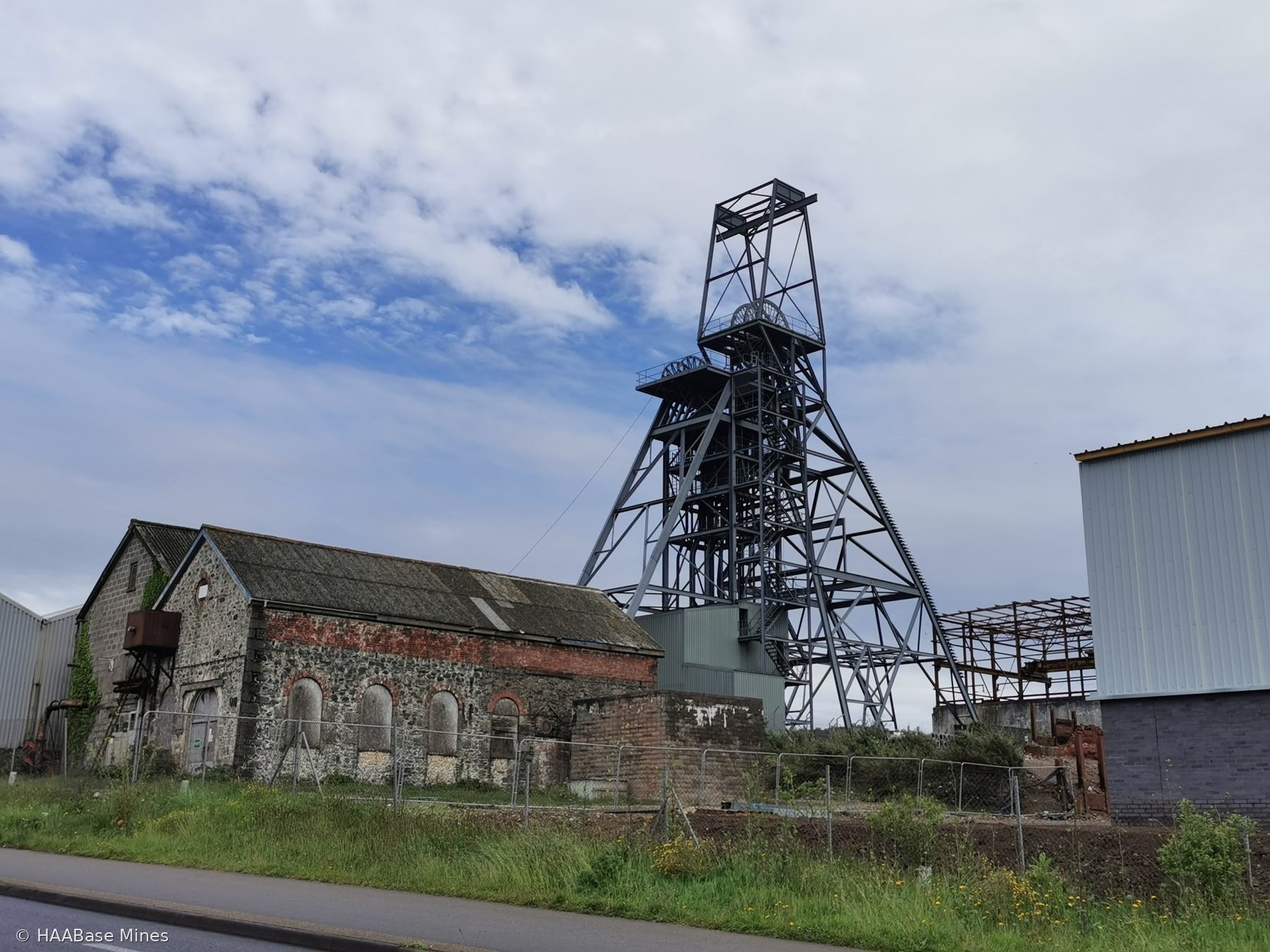
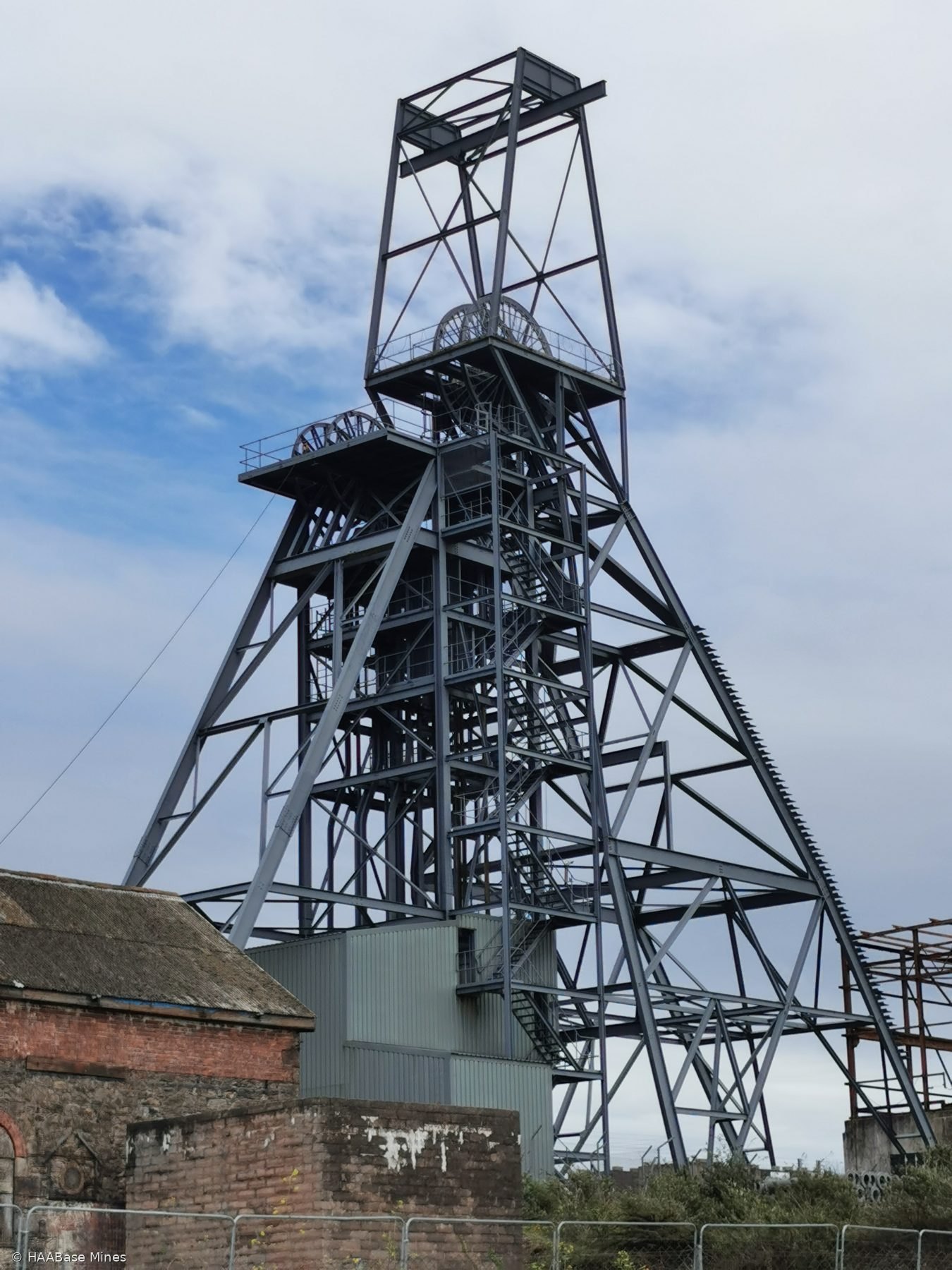
Roskear shaft, begun by the Dolcoath company in 1923 and completed to 610 metres by 1926, passed to South Crofty with the Dolcoath acquisition in 1936. From 1962 South Crofty used Roskear shaft as an upcast ventilation shaft, with a large electric fan installed to improve ventilation. Black tin production was steady at between 500 and 800 tons a year from 1907 to 1956, excluding a break during the tin price slump of the early 1920s. Wolframite production ran at approximately 50 to 150 tons between 1907 and 1956, and arsenic output ranged from 500 to 1,000 tons between 1907 and 1919, declining to around 100 tons by 1956. Ore production, which had not exceeded 75,000 tons a year since 1906, was increased to 92,000 tons in 1959 following improvements to both the mine and the mill. Production exceeded 100,000 tons in 1968 for the first time. In 1967 South Crofty Ltd became a wholly owned subsidiary of Siamese Tin Syndicate Ltd and its subsidiary St Piran Ltd. By the early 1970s the principal working and access shaft was New Cooks Kitchen, which reached a depth of 769 metres; the headframe over this shaft was installed during the 1970s. The mill at the surface closed in the mid-1980s as a result of the tin price crash.
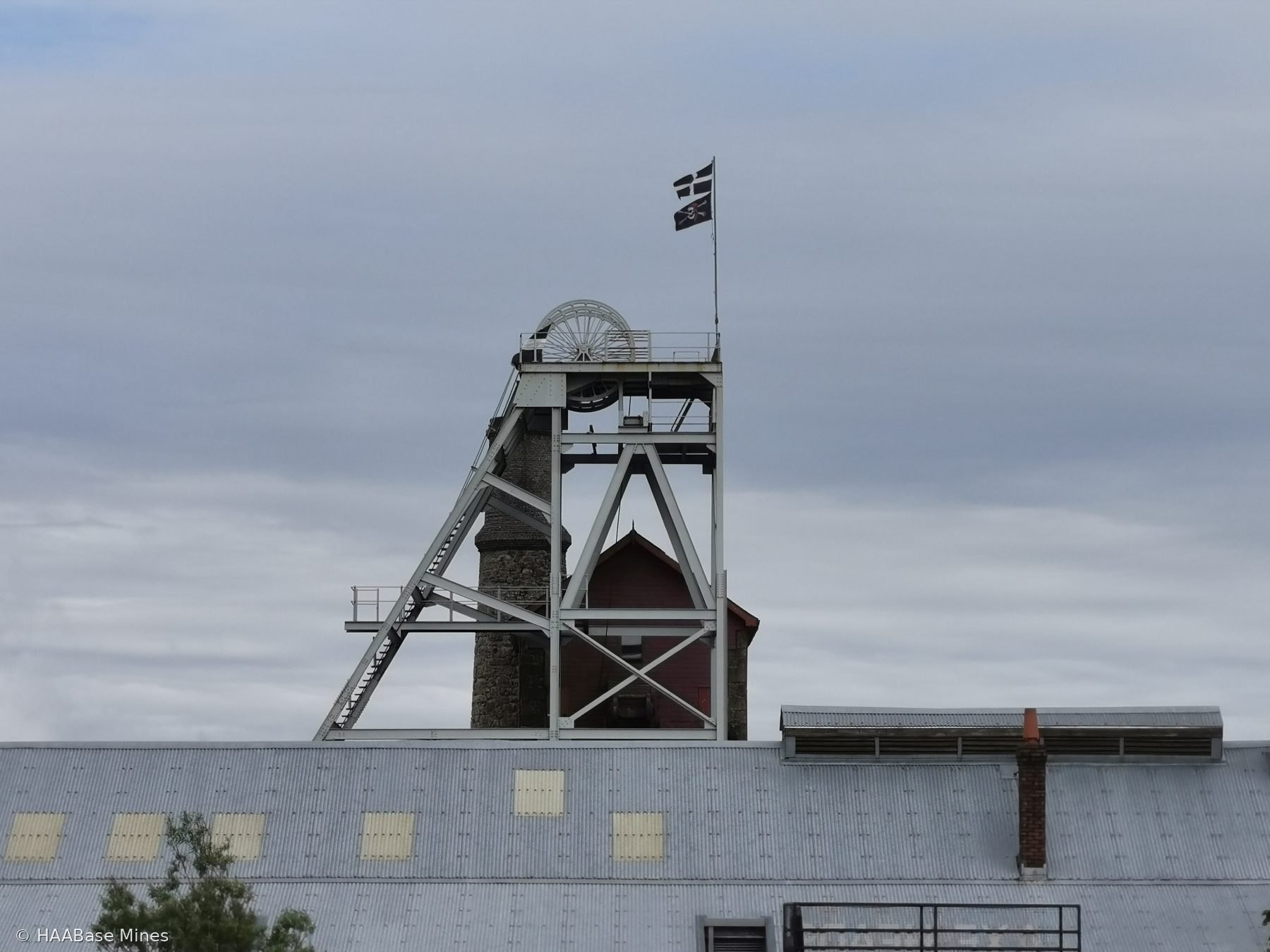
In October 1985 the collapse of the International Tin Agreement caused a severe fall in tin prices, producing unemployment and hardship across the Cornish mining industry. South Crofty survived through reduced labour costs and the sale of surplus land and assets. By the early 1990s Robinson's shaft was condemned as becoming dangerous and all man-riding and ore hoisting was transferred to New Cooks Kitchen shaft. Robinson's shaft was formally abandoned in 1994. Roskear shaft was deepened to the 400-fathom level in the early 1990s and refurbished with a new winder house to serve as the secondary egress, replacing Robinson's. New Roskear shaft took over from Robinson's as the secondary access shaft during this period. The mine produced approximately 1,900 tons of black tin in 1993, shipped to a smelter in Malaysia. In 1994 South Crofty was purchased by Crew Natural Resources of Canada. In August 1997 South Crofty Ltd announced that closure was imminent, and closure was completed on 6 March 1998. At closure the mine was the last working tin mine in Cornwall and in Europe, having operated for approximately 400 years. The workings were left with approximately 2 million tonnes of ore on the books.
After closure the mine flooded progressively. Baseresult Ltd acquired the site and formally unabandoned South Crofty in September 2001, operating a section of the workings above adit on North Tincroft Lode as New Cook's Kitchen Mine for a period of tourist visits from around 2003. In November 2007 Western United Mines was formed, with Baseresult holding 51% and Galena LLP 49%, to finance further operations; crosscuts and exploration drives were driven from the Tuckingmill Decline. Equipment from the dormant Wheal Jane processing plant was purchased in 2006. Planning permission for resumption of mining and construction of a new process plant was granted in November 2011. The Cornwall and West Devon Mining Landscape had been inscribed as a UNESCO World Heritage Site in 2006, and the UNESCO World Heritage Committee subsequently raised concerns about the impact of the proposed new mine buildings on the historic engine houses in the landscape. In June 2013 the South Crofty site was placed into administration. In March 2016 the Canadian company Strongbow Exploration acquired a 100% interest in the South Crofty Tin Project from administration. Cornish Metals subsequently acquired the project and the associated mineral rights, with the underground mining permission valid until 2071 and the permission area covering 26 former producing mines across 1,490 hectares. The site retains several usable vertical shafts including New Cooks Kitchen (770 metres deep), Roskear (610 metres), and Williams (915 metres), together with a 300-metre decline. A mine water treatment plant was officially opened on 26 October 2023 and mine dewatering commenced in November 2023. The pit yard was designated a Scheduled Monument in 1999. The Robinson's shaft pump engine house, dating from 1903 and containing an 80-inch Cornish beam engine, is identified as a surviving surface structure within the World Heritage Site landscape.