—
Area worked as East Levant Mine
The area was worked under the name of East Levant Mine until 1840. During the 1880s there had been up to 176 workers at the mine.
Multi-award-winning heritage museum and the largest preserved tin mining site in Britain, managing an underground tour and surface complex of an active mine closed in 1990.
This record is based on the research currently available to HAABase Mines. It has not yet completed the site's formal source-by-source fact-checking process, so the history and timeline should be regarded as a well-researched provisional account and may be refined as further evidence is reviewed.
Geevor Tin Mine at Pendeen, on the Tin Coast of west Cornwall, is the largest preserved tin mining site in Britain and the last complete twentieth-century Cornish tin mine. Tin and copper have been mined in the general area since at least the late eighteenth century. The area was worked intermittently under various names including Wheal an Giver, East Levant Mine, and North Levant Mine before the Geevor Tin Mines Limited company was registered in 1911.
During the twentieth century the mine drove over 85 miles of tunnels and produced approximately 50,000 tons of black tin and 4.5 million tons of raw ore. By the 1970s the sett covered about three square miles and incorporated neighbouring workings including Levant Mine. The International Tin Council's failure in 1985 precipitated a dramatic fall in tin prices; the mine entered care and maintenance in February 1990 and the pumps were switched off in May 1991 allowing the workings to flood.
Cornwall County Council purchased the site in 1992 and the mine opened as a museum in 1993. Since 2001 it has been managed by Pendeen Community Heritage. Since 2006 Geevor has been part of the Cornwall and West Devon Mining Landscape UNESCO World Heritage Site.
Tin and copper have been mined in the area around Geevor since at least the late eighteenth century. The site was originally a small enterprise known as Wheal an Giver, derived from the Cornish for goat, described as 'a piece of ground occupied by goats'. The area was worked under the name of East Levant Mine until 1840 and then as North Levant Mine from 1851 to 1891 when it closed. During the 1880s there had been up to 176 workers at the mine.
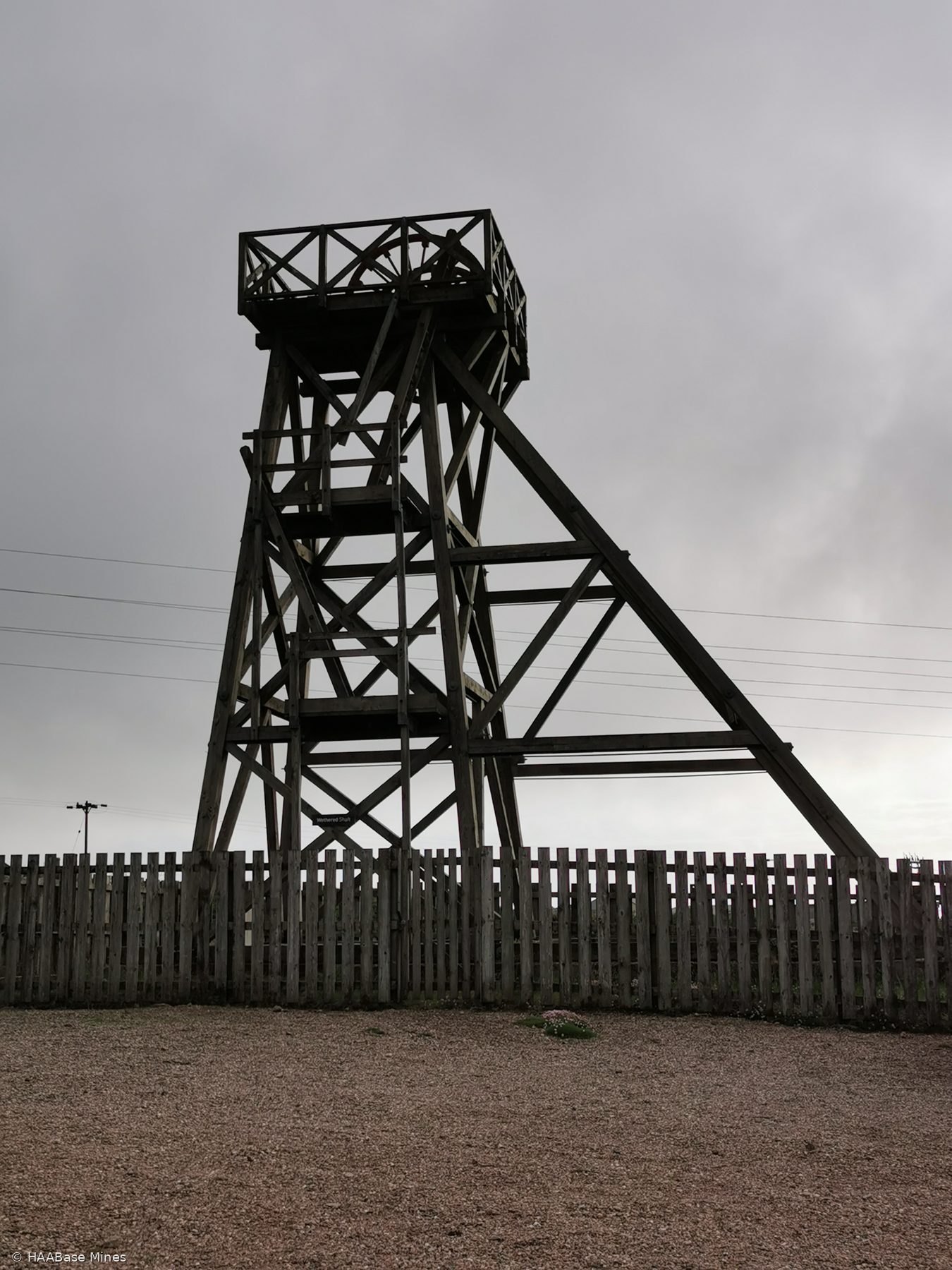
At the turn of the twentieth century a group of St Just miners who had emigrated to South Africa were forced to return by the outbreak of the Second Boer War. They leased the area and conducted more thorough prospecting. A company called Levant North (Wheal Geevor) was set up in 1901. This was acquired by the West Australian Gold Field Company Ltd. in 1904, which brought together various mines under the name of Geevor Tin Mines Ltd. in 1911, a reorganisation that followed a rapid rise in the price of tin to £181 a ton in 1906 from a low of £64 in 1896. The Wethered shaft, named after Oliver Wethered, one of the founders of the mine, was begun in 1909 and initial development took place around it. By 1919 the works were moving west toward the coastline and the Victory shaft, named to celebrate the end of the First World War, was sunk approximately 540 metres to the north-west.
By the 1970s Geevor's sett covered an area of about three square miles and included Boscaswell Downs Mine, Pendeen Consols, and Levant Mine. Following exploration work in Levant Mine, a decision was taken to reopen those workings; Victory Shaft was deepened and a sub-incline shaft was developed from Victory Shaft into Levant, allowing mining under the seabed to recommence. On average over a million gallons of water daily — a quarter of which was seawater — was pumped from the mine. During the twentieth century Geevor drove over 85 miles (137 km) of tunnels, producing approximately 50,000 tons of black tin and making a profit of over £7 million.
In 1985 the International Tin Council failed and the price of tin fell dramatically. The mine struggled on for several years. On 16 February 1990 Geevor went onto a care and maintenance programme with only a skeleton staff, and all miners were laid off. The underground pumps were switched off in May 1991, allowing the workings to flood. Surface machinery was sold or cut up for scrap.
Cornwall County Council purchased the site in 1992, recognising the opportunity to develop it as a mining heritage centre. Volunteers, mostly former Geevor employees, adapted the old mine offices and created a museum during the winter of 1992 to 1993. The museum opened in 1993. Since 2001 the museum has been managed by Pendeen Community Heritage, a local charity. A £3.8 million improvement programme, funded by the Heritage Lottery Fund, Objective One, Cornwall County Council, and Penwith District Council, funded major conservation works and the creation of the new Hard Rock museum within an existing building on site. In July 2007 successful applications for £3.4 million in grants from the Heritage Lottery Fund and Objective One allowed conservation works to begin.
Geevor Tin Mine is now the largest preserved tin mining site in Great Britain, covering 67 acres. It is an Anchor Point of ERIH, the European Route of Industrial Heritage. The museum includes an underground tour of the eighteenth-century Wheal Mexico Mine workings, original winders and compressors, a processing mill where ore was washed, crushed, separated, and refined, and oral history recordings. The mine is the site of the largest collection of undersea tin mines in the world. In 2006 the mine was recognised within the Cornwall and West Devon Mining Landscape UNESCO World Heritage Site. All former Geevor miners have free access to the museum.