History
The Houillères de Montrambert et de la Béraudière held a concession of eleven square kilometres extending across parts of Saint-Étienne, La Ricamarie, and Le Chambon-Feugerolles from 1854. The Ondaine valley formed the western part of the wider Loire coalfield, which produced coal from the Stéphanien geological formation and had been mined since at least the early nineteenth century.
By 1900, the engineers of the Mines de Montrambert et de la Béraudière had chosen the location and technical design of a new secondary shaft to rationalise extraction in the sector. The shaft was designated puits Rolland n°2. The purpose from the outset was not primary coal extraction but service functions: ventilation of the western Montrambert districts and of the nearby puits Flotard workings, and the introduction of backfill material. The sinking site was chosen and the technique determined in 1900; the shaft was renamed puits Du Marais in 1907 after Baron Léon Du Marais, a Lyonnais administrator of the Société Anonyme des Mines de Montrambert et de la Béraudière who subsequently became vice-president of the board.
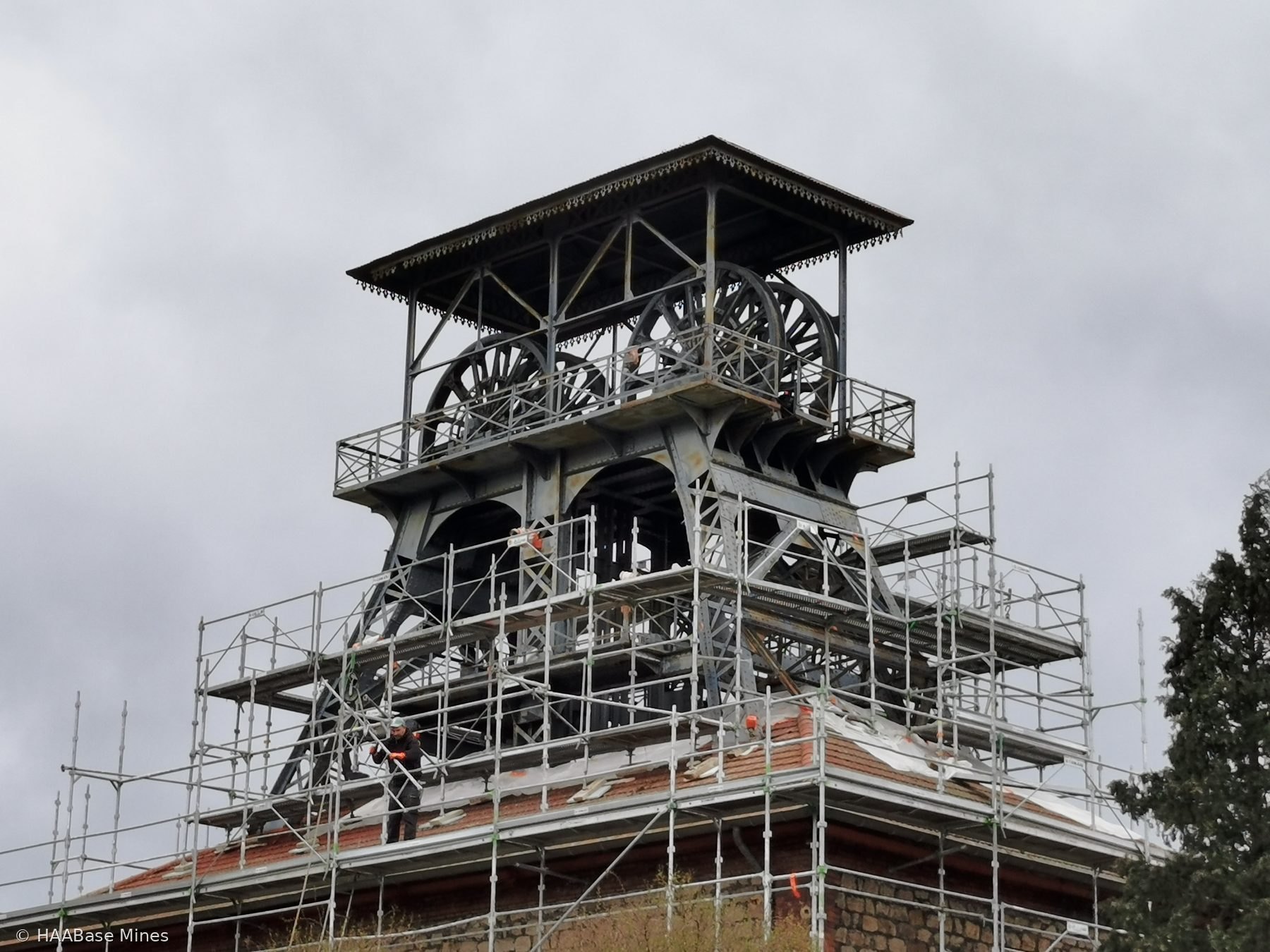
Sinking began on 2 January 1903 and was completed in 1909–1910 at an initial depth of 524.75 metres. The shaft put into service around 1911–1912, providing ventilation for the western Montrambert and Flotard sectors. The defining technical feature of the puits Du Marais was its double-shaft arrangement: the single bored column was divided longitudinally into two independent compartments by a central dividing structure, each compartment served by its own winding machine and two sheave wheels. One compartment served the Montrambert division levels; the other served those of the Chambon-Feugerolles sector. Four cages operated simultaneously. This arrangement allowed independent, concurrent interventions in the two divisions from a single shaft opening.
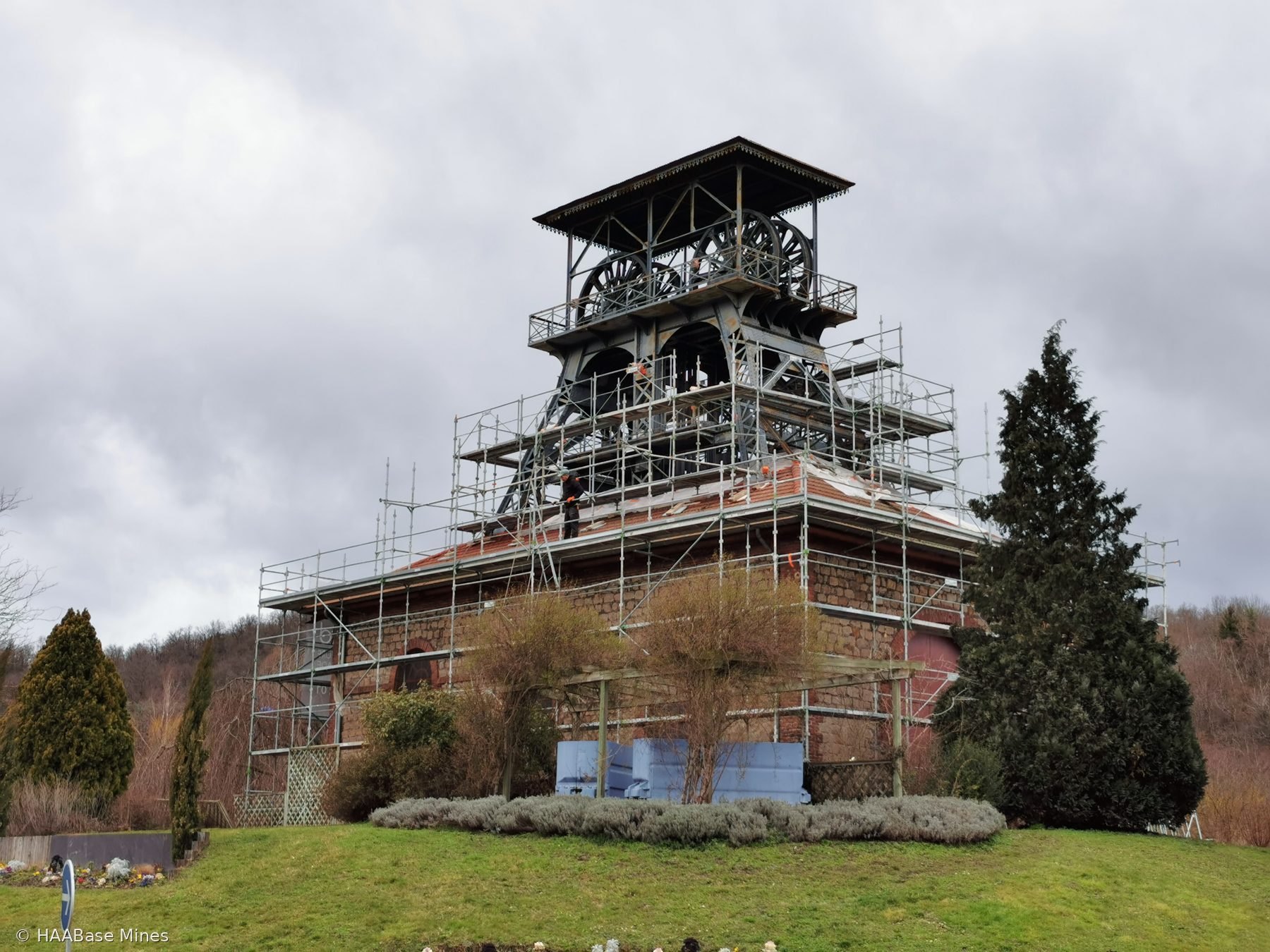
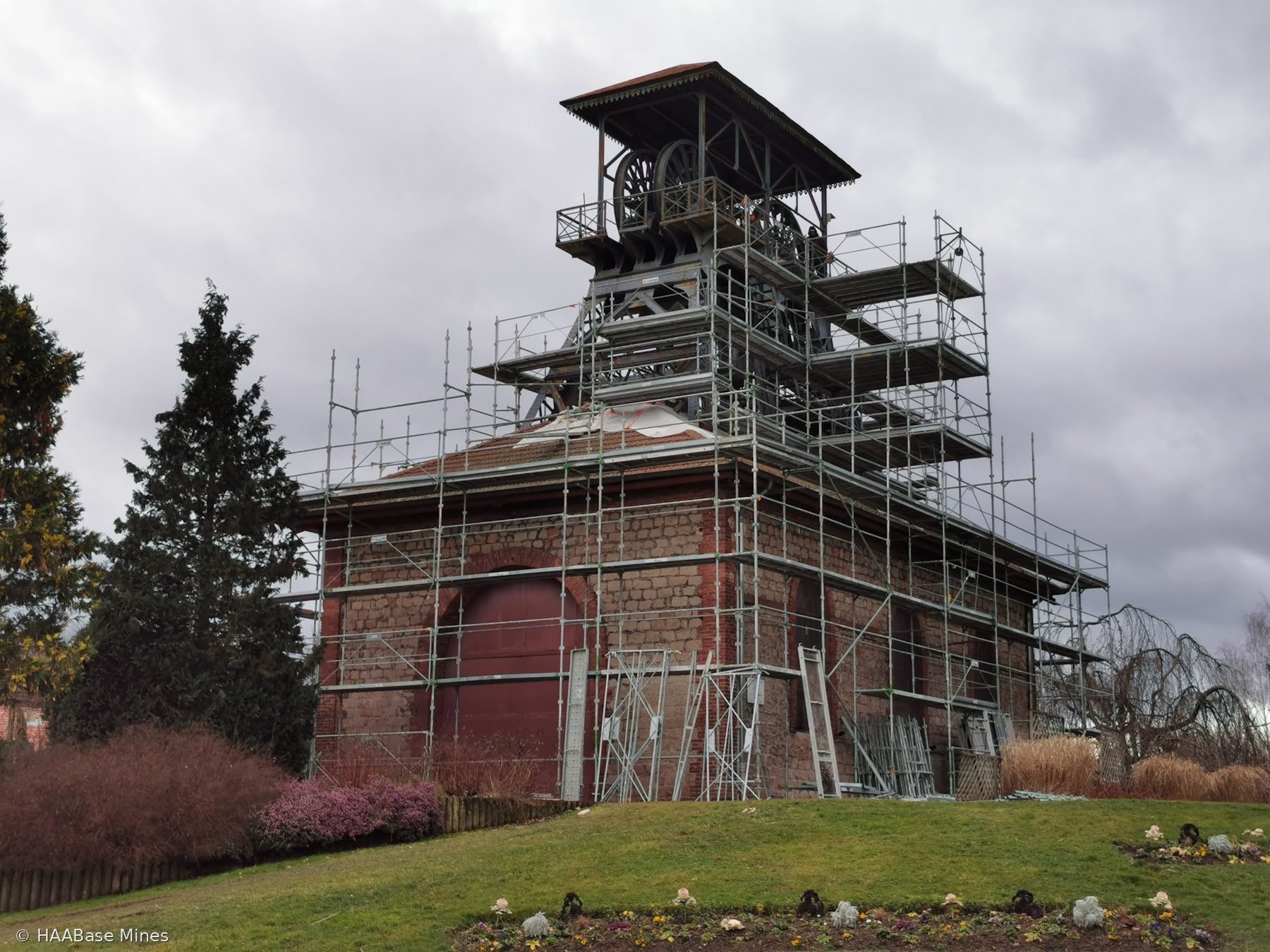
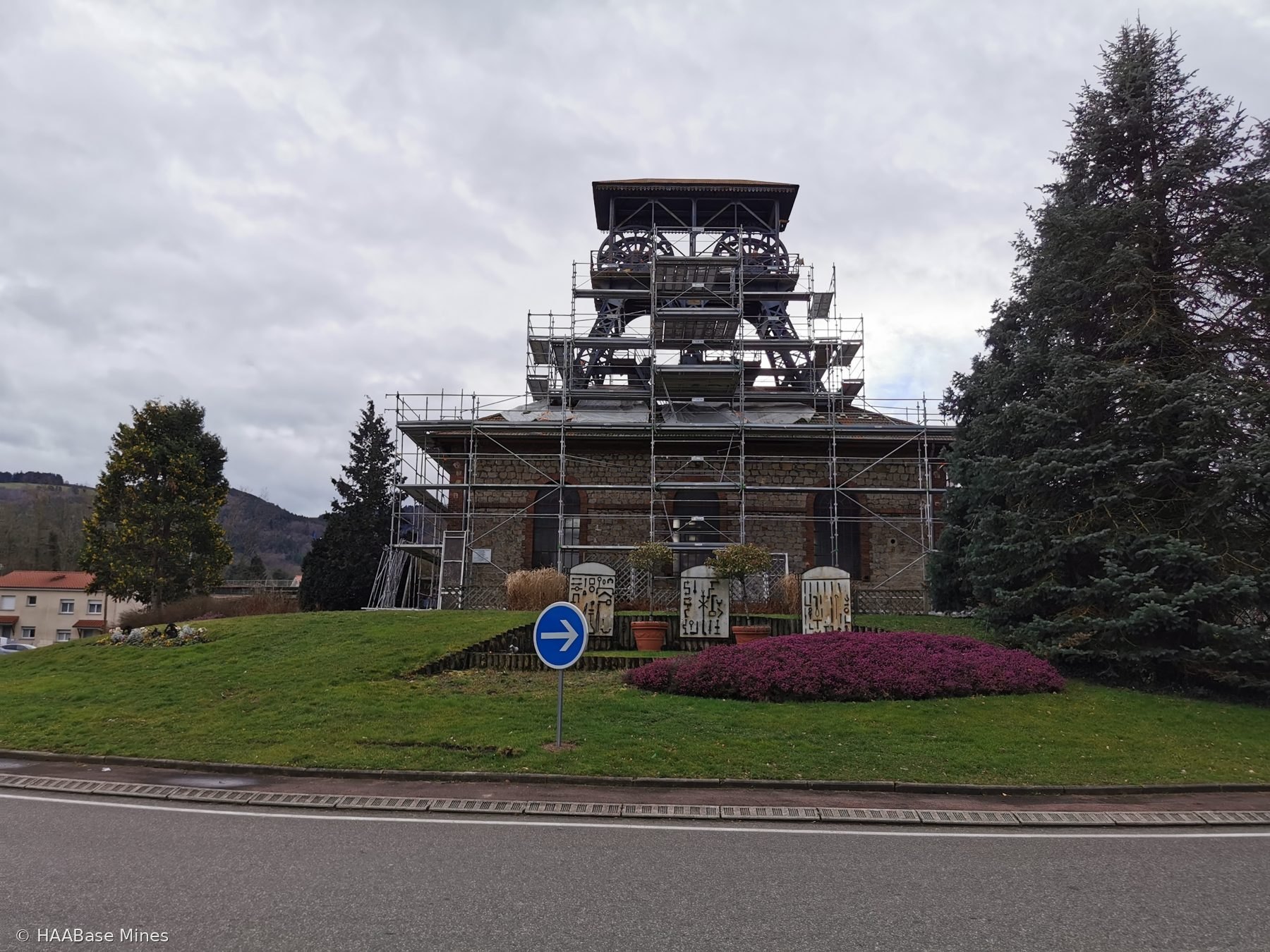
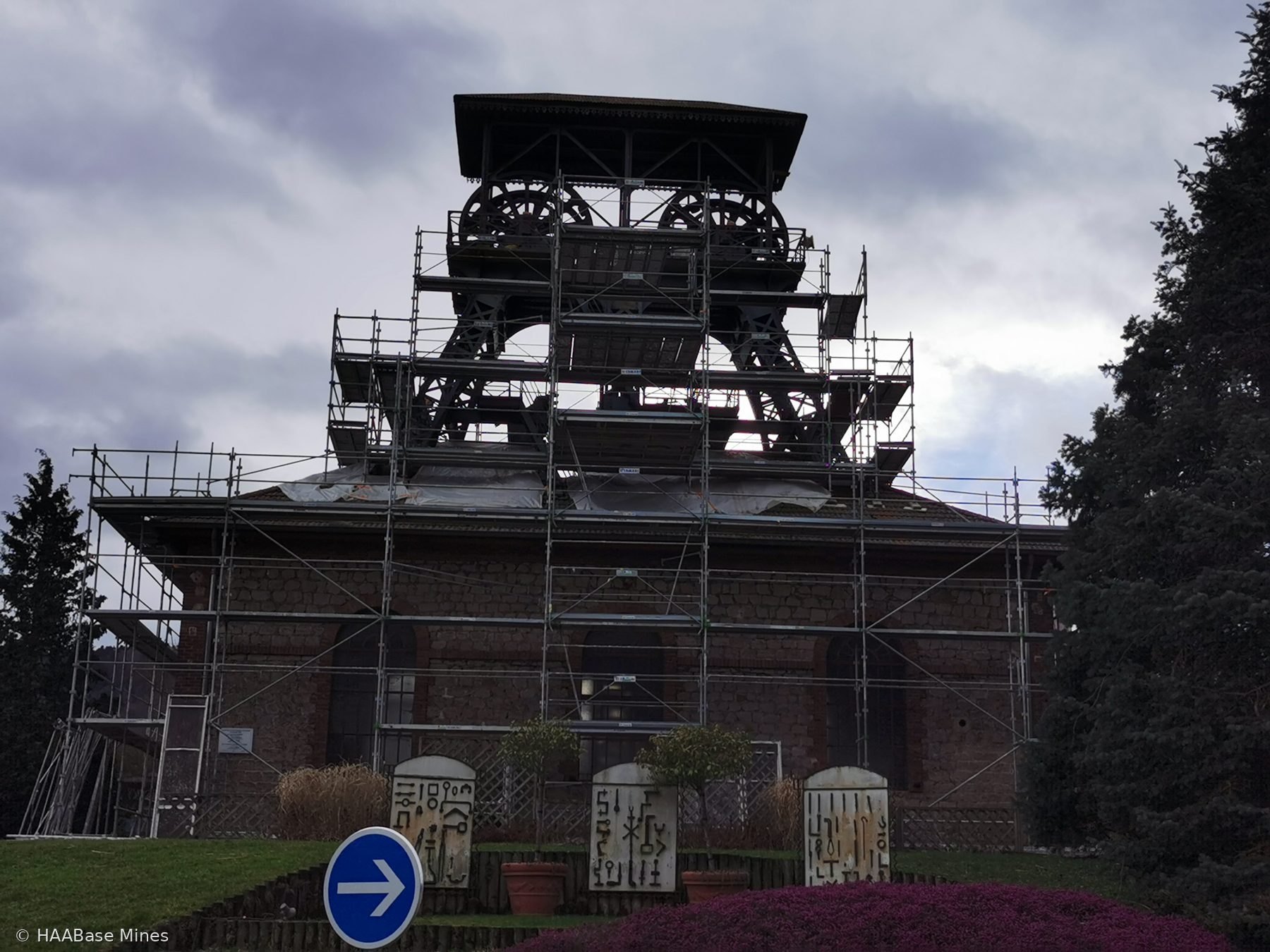
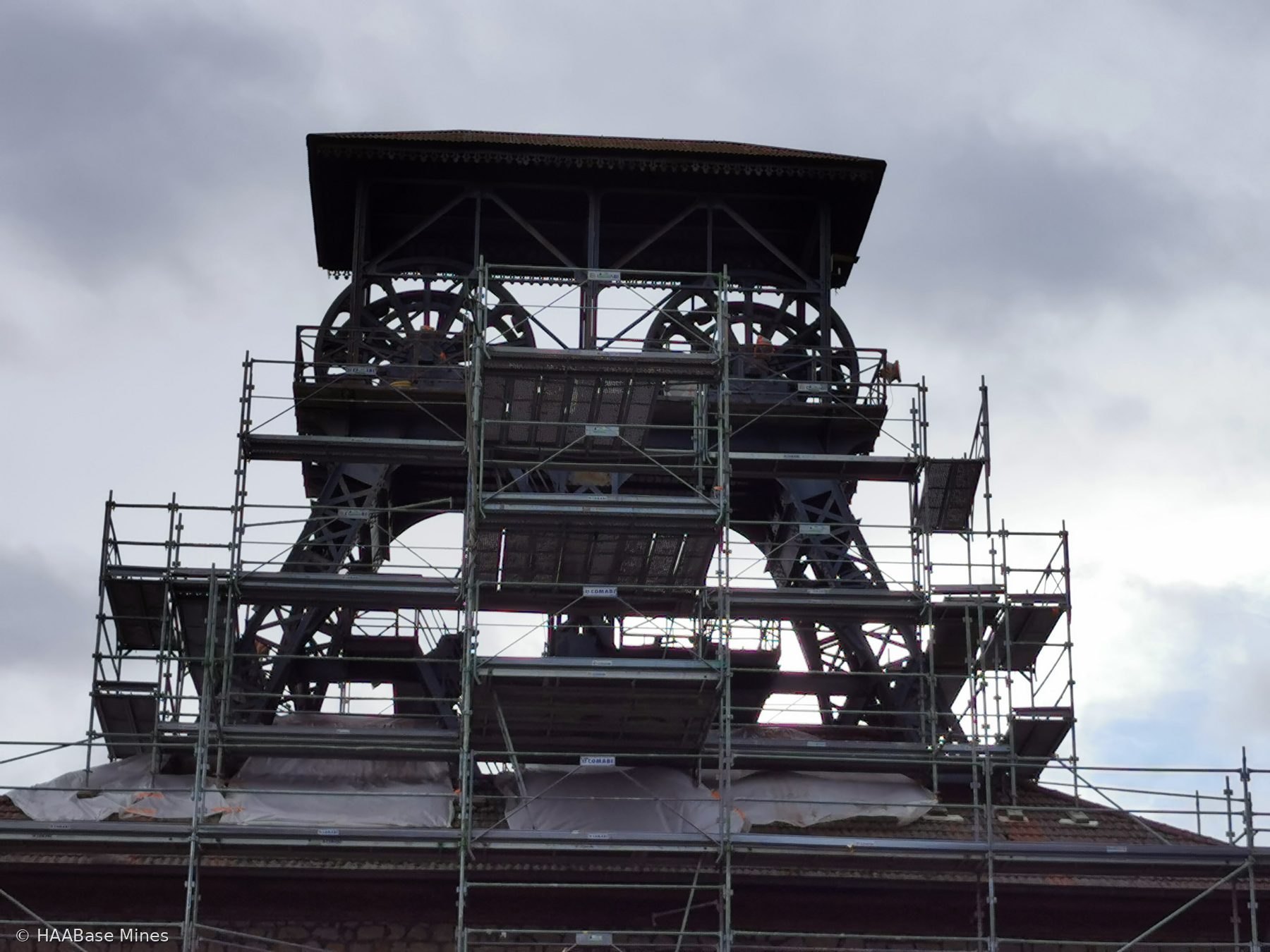
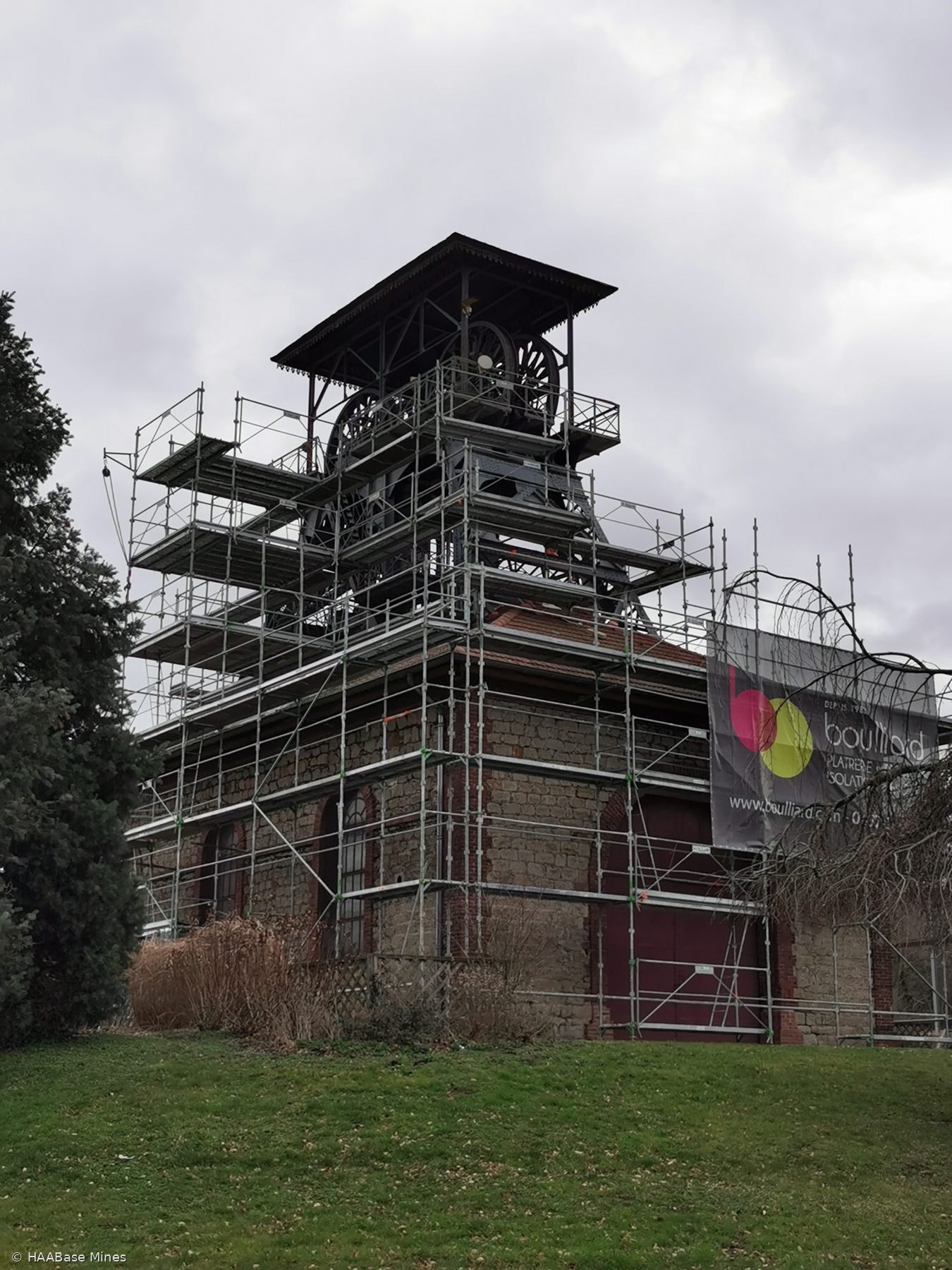
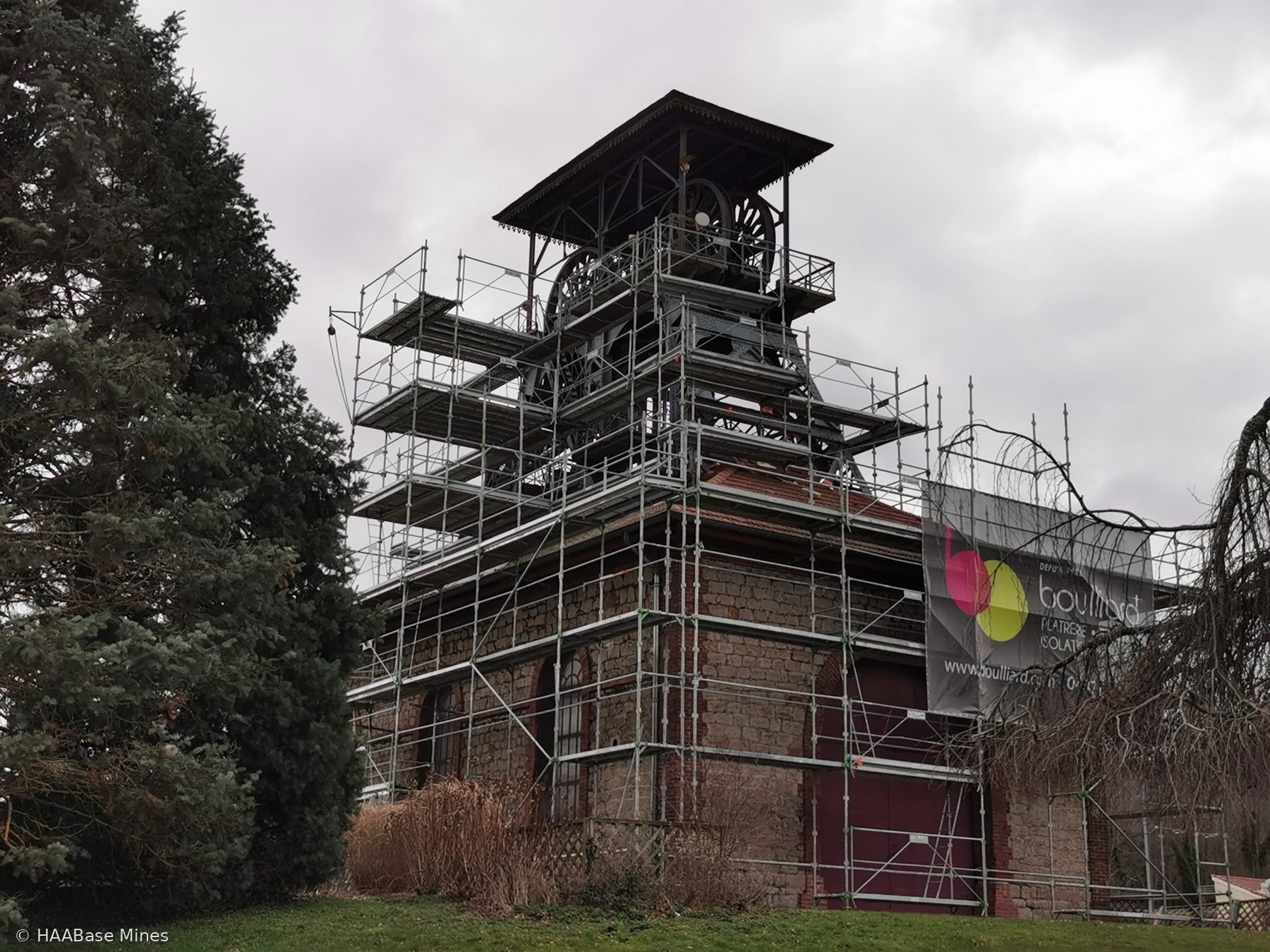
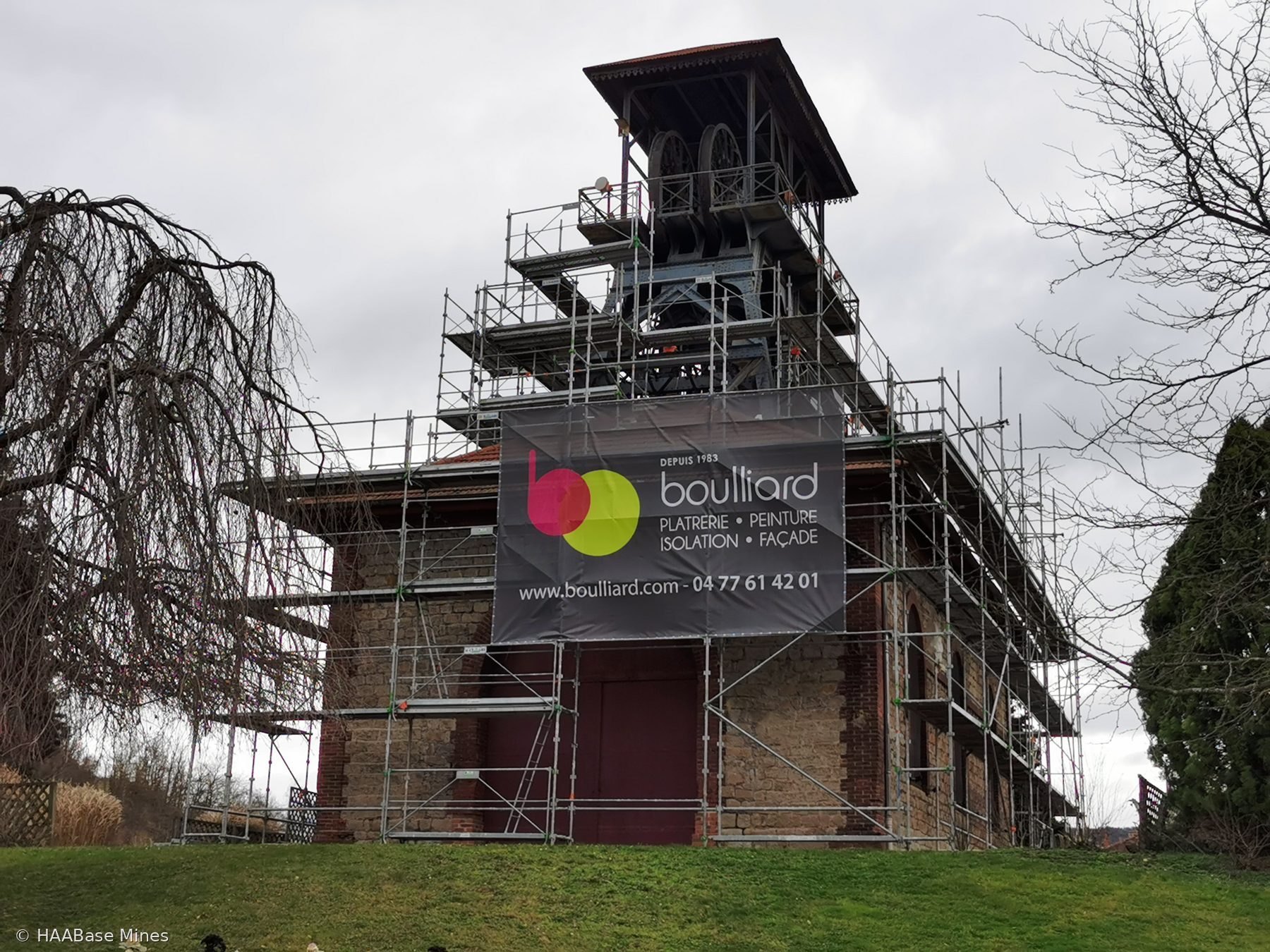
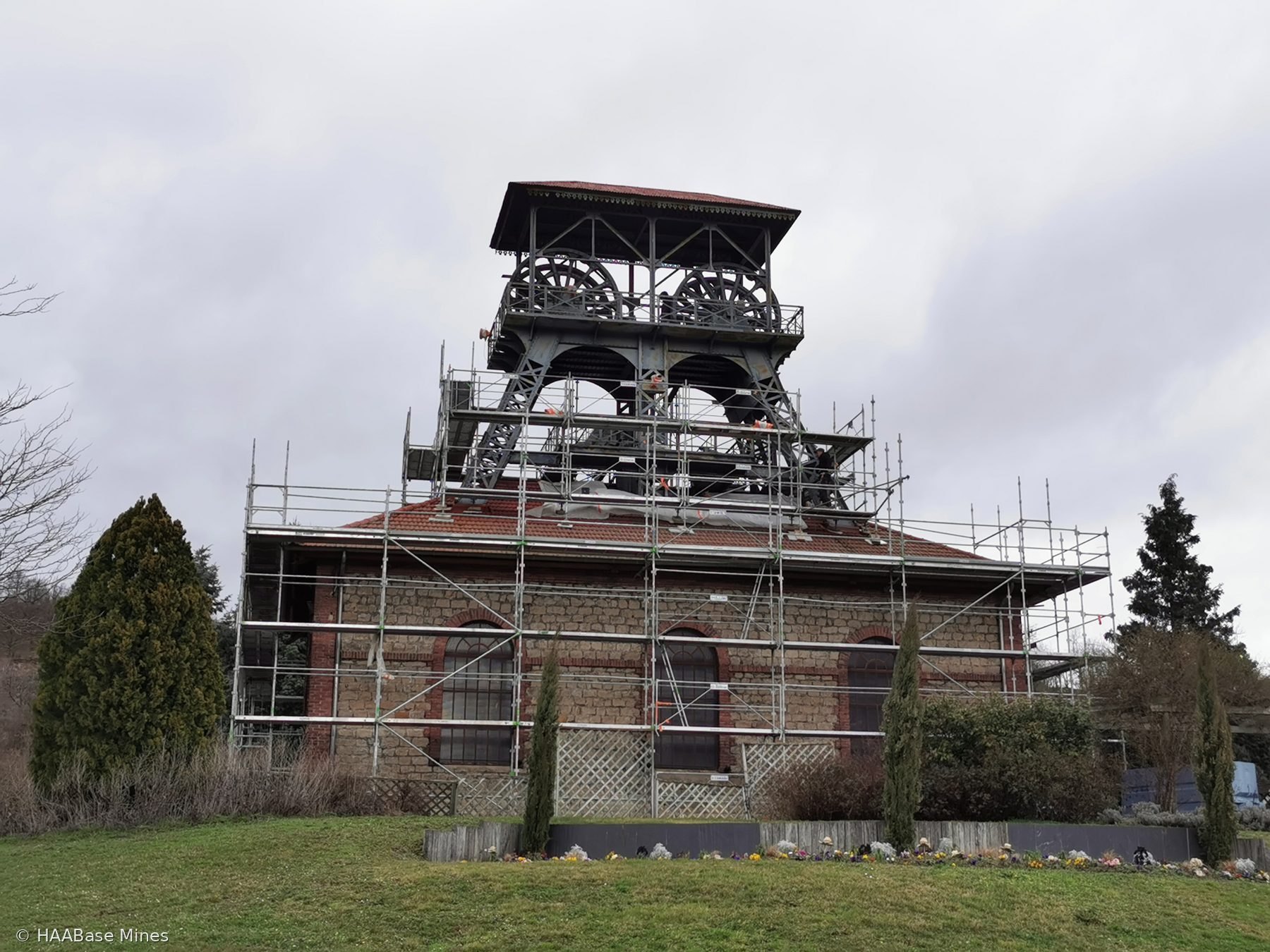
The headframe, completed in 1909, is a steel structure of Westphalian architectural form and is unique in France. It carries four sheave wheels — two double sets — positioned to serve the two independent compartments. From 1922, this double-shaft arrangement was used to deliver backfill simultaneously to the Flotard and Montrambert sectors.
The shaft was deepened on four subsequent occasions: to 600 metres in 1923, to 650 metres in 1933, to 720 metres in 1943, and to 840 metres in 1950. Until 1938, coal from the sector had been brought to the surface through the fendue du niveau 206 rather than through the shaft itself. In the 1950s, the puits Du Marais was reduced to a purely ventilation function.
In 1958, a decision was taken to drive a cross-measure drift to connect the puits Flotard to the major puits Pigeot at La Ricamarie, passing through the puits Du Marais. This connection was completed in 1963, after which activity in the Marais sector progressively declined as workings were concentrated at Montrambert and then Pigeot. From 1957 onwards, the puits Du Marais served only for backfilling, ventilation, and emergency access, until the cessation of all exploitation in 1983 — the same year that the puits Pigeot, the last colliery in the basin, also closed.
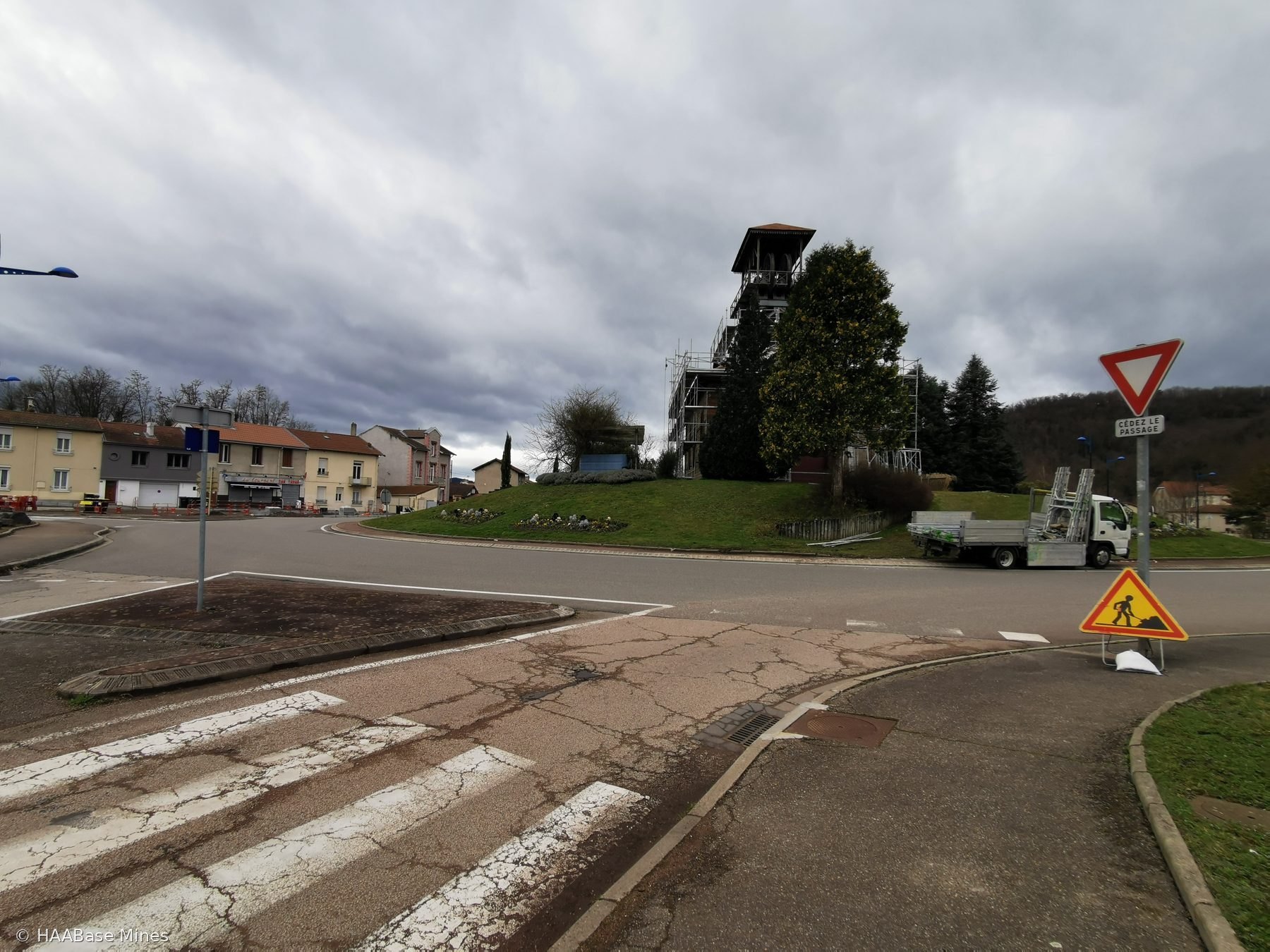
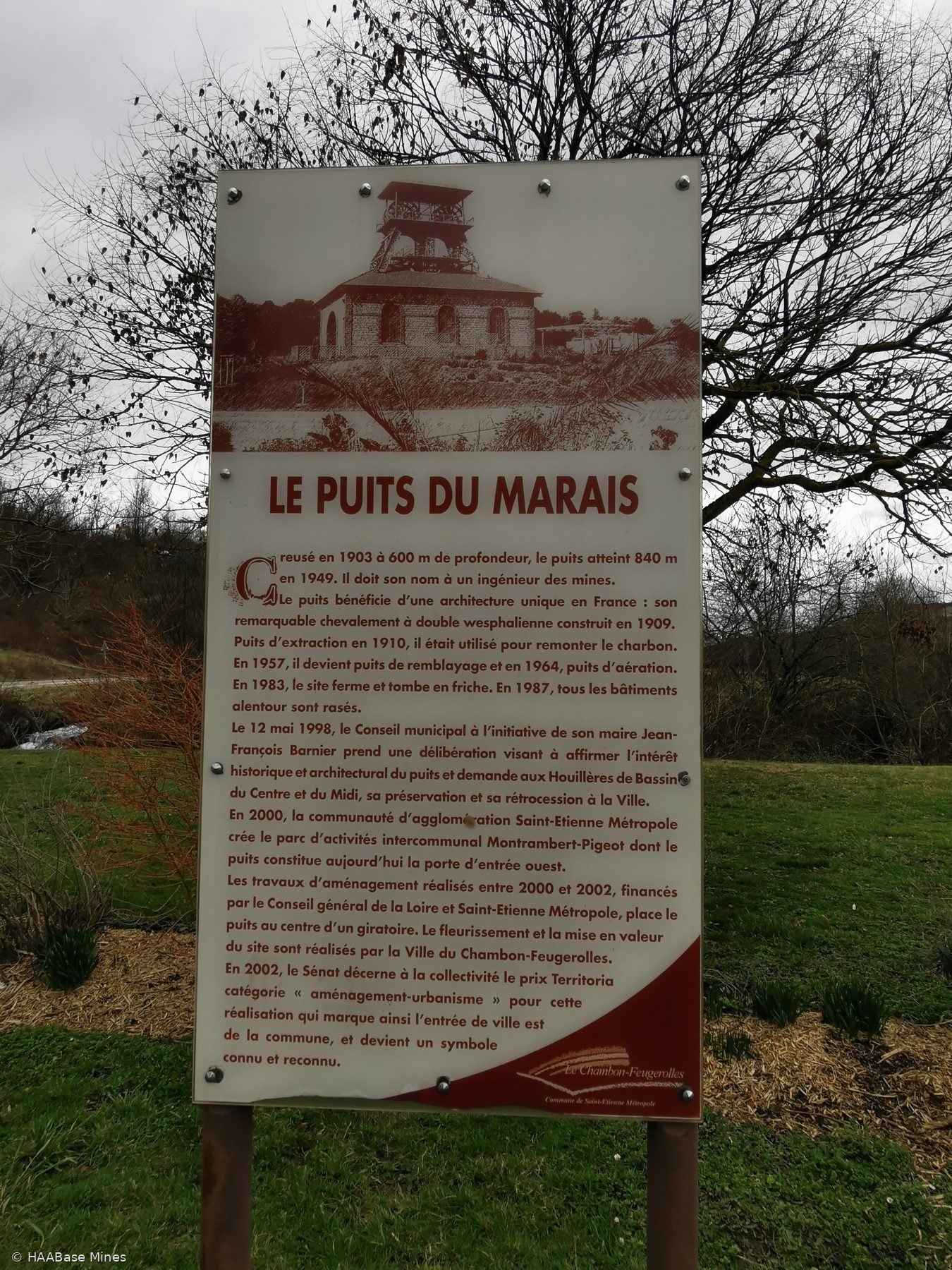
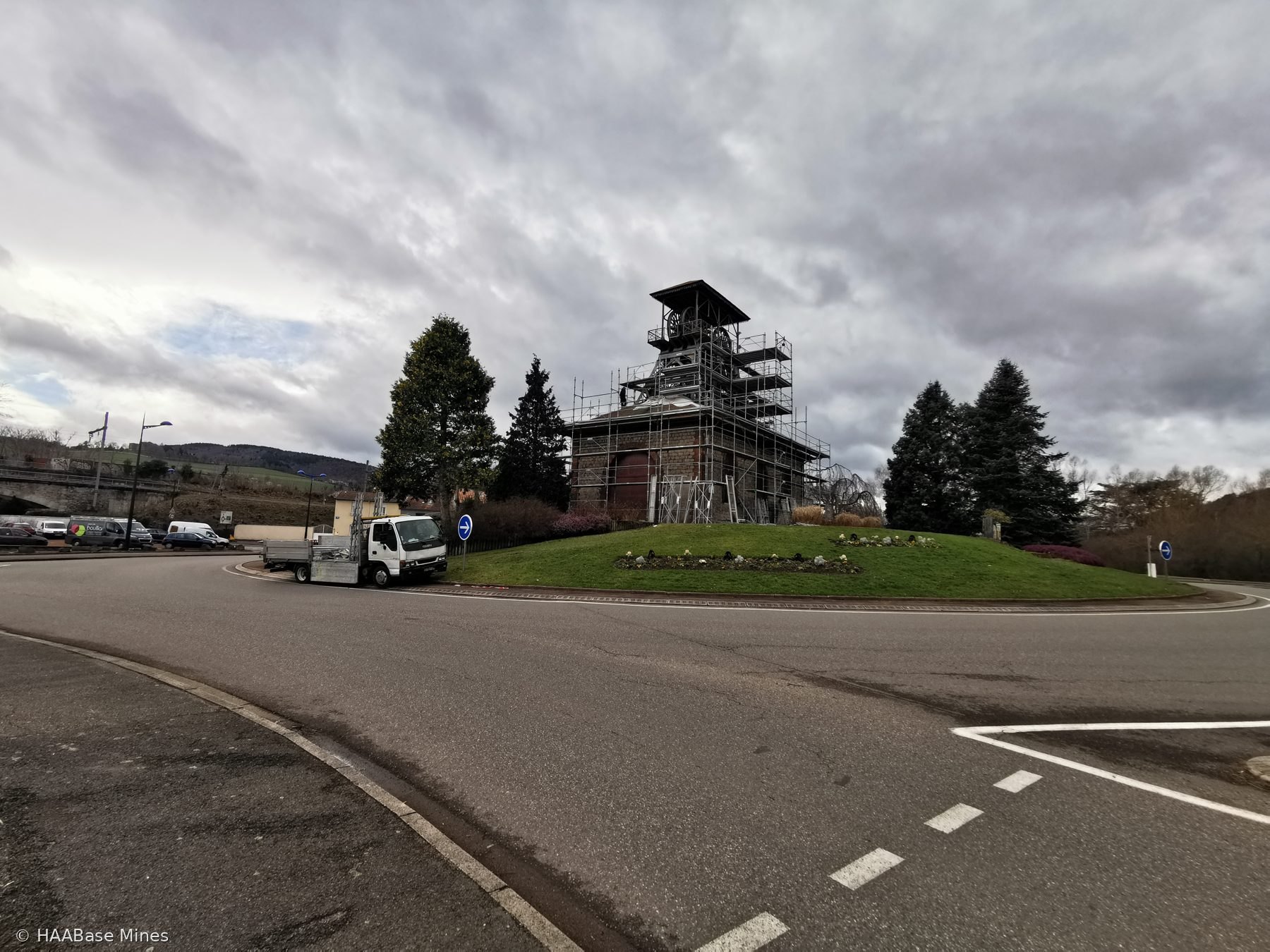
All ancillary buildings around the headframe, including the two machine halls that had flanked it, were demolished in 1987. The headframe and the pithead building (bâtiment de recette) alone survived. On 12 May 1998, the municipal council of Le Chambon-Feugerolles, under mayor Jean-François Barnier, voted to affirm the historical and architectural importance of the headframe and to request its preservation and transfer to the commune from the Houillères de Bassin du Centre et du Midi. In 1999, a roundabout was constructed around the headframe at the eastern entrance to the commune, giving access to the new Pigeot-Montrambert industrial zone developed on the former mining land. The headframe, illuminated at night, stands at the centre of this roundabout and constitutes the sole surviving colliery monument of Le Chambon-Feugerolles. In 2002, the commune received the Sénat's Prix Territoria in the aménagement et urbanisme category for this heritage initiative.