Site overview

The Mine de sel d'Einville-au-Jard, formally known as the mine Saint-Laurent, is a closed rock-salt mine in the Meurthe-et-Moselle at Einville-au-Jard, approximately 30 kilometres east of Nancy. The concession of the Sablonnière and Saint-Laurent-Charmel at Einville, covering 1,089 hectares, was obtained in 1872. The associated company, the Société Anonyme des Mines de Sel gemme et saline d'Einville Meurthe, had deposited its statutes in 1871.

A shaft was sunk from 1871 to 1876, reaching 126 metres depth in the deepest exploitable salt seam, where extraction by the abandoned-pillar method began in 1887. In the early twentieth century the mine ranked fifth among the salines of eastern France and employed up to 200 workers. In 1922 a majority of the company's capital passed into that of the Varangéville salines.

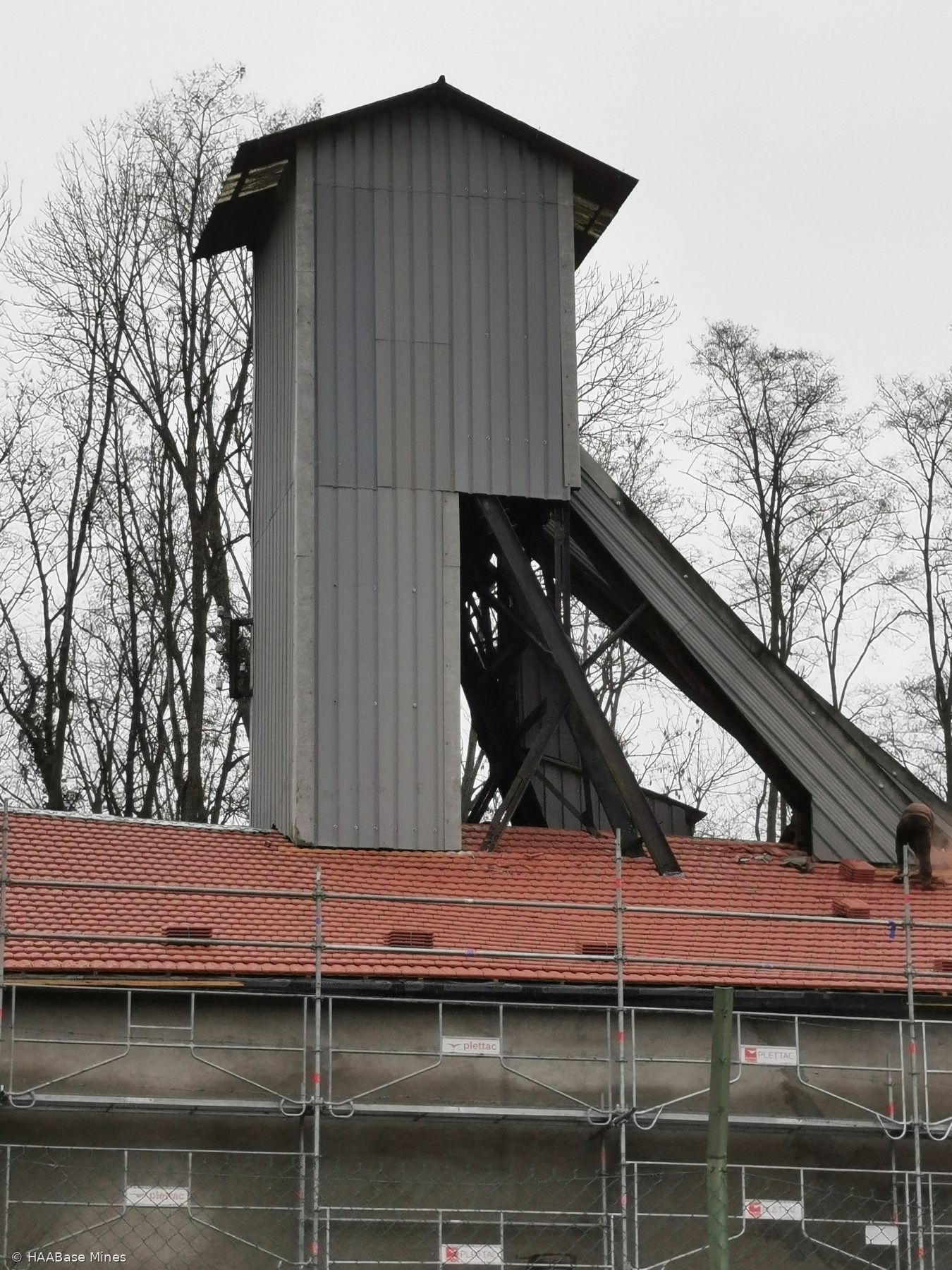
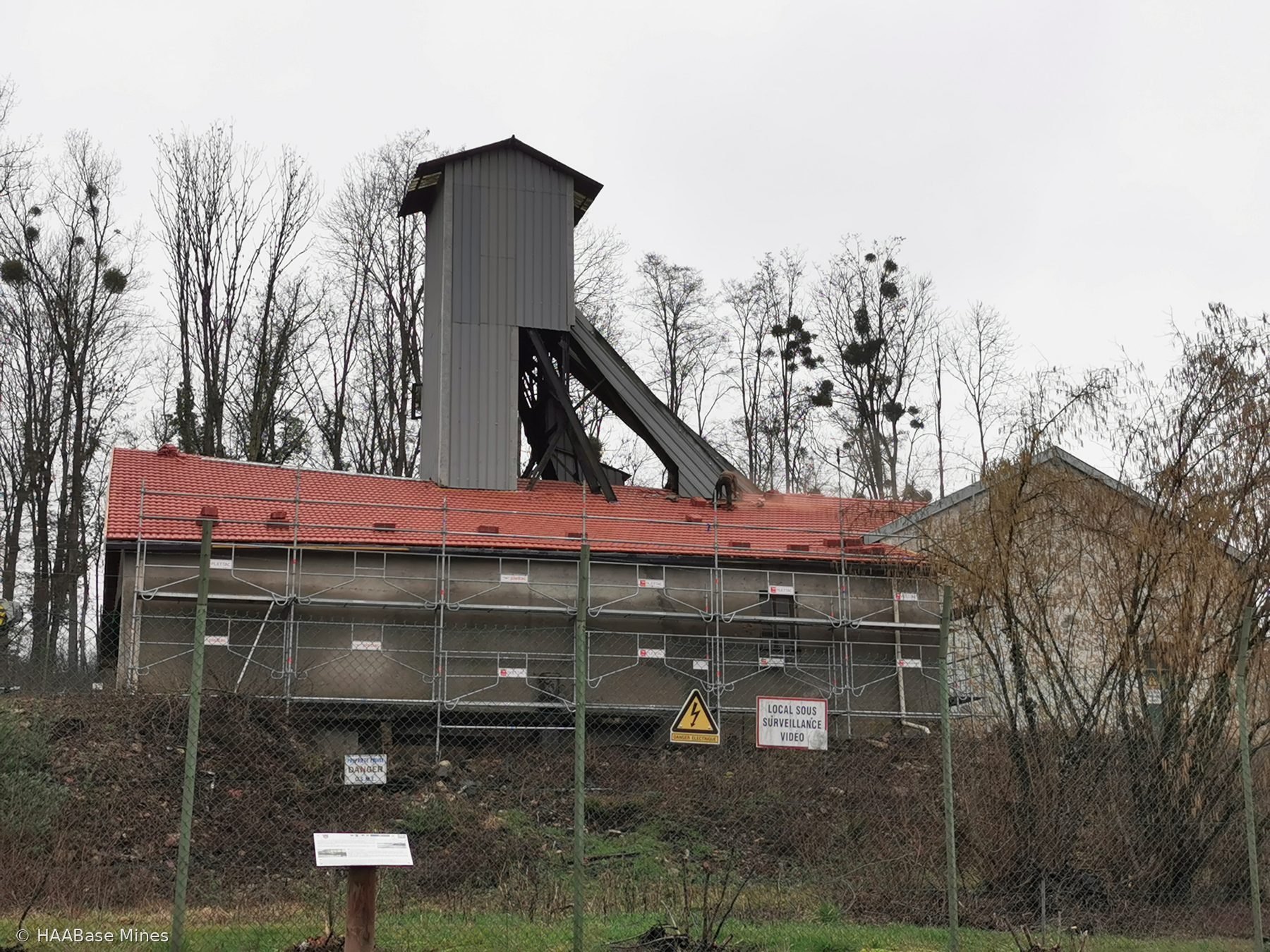
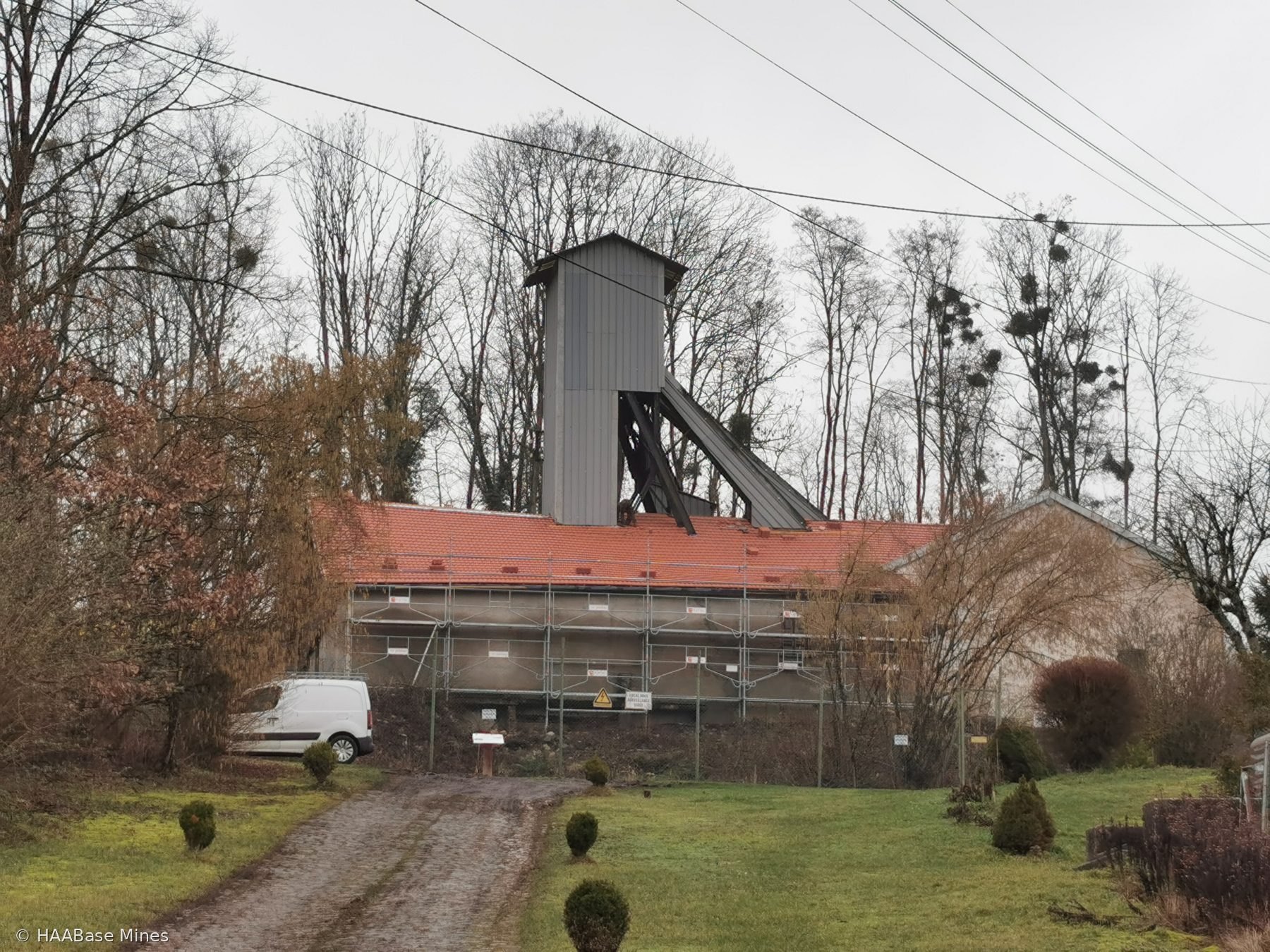
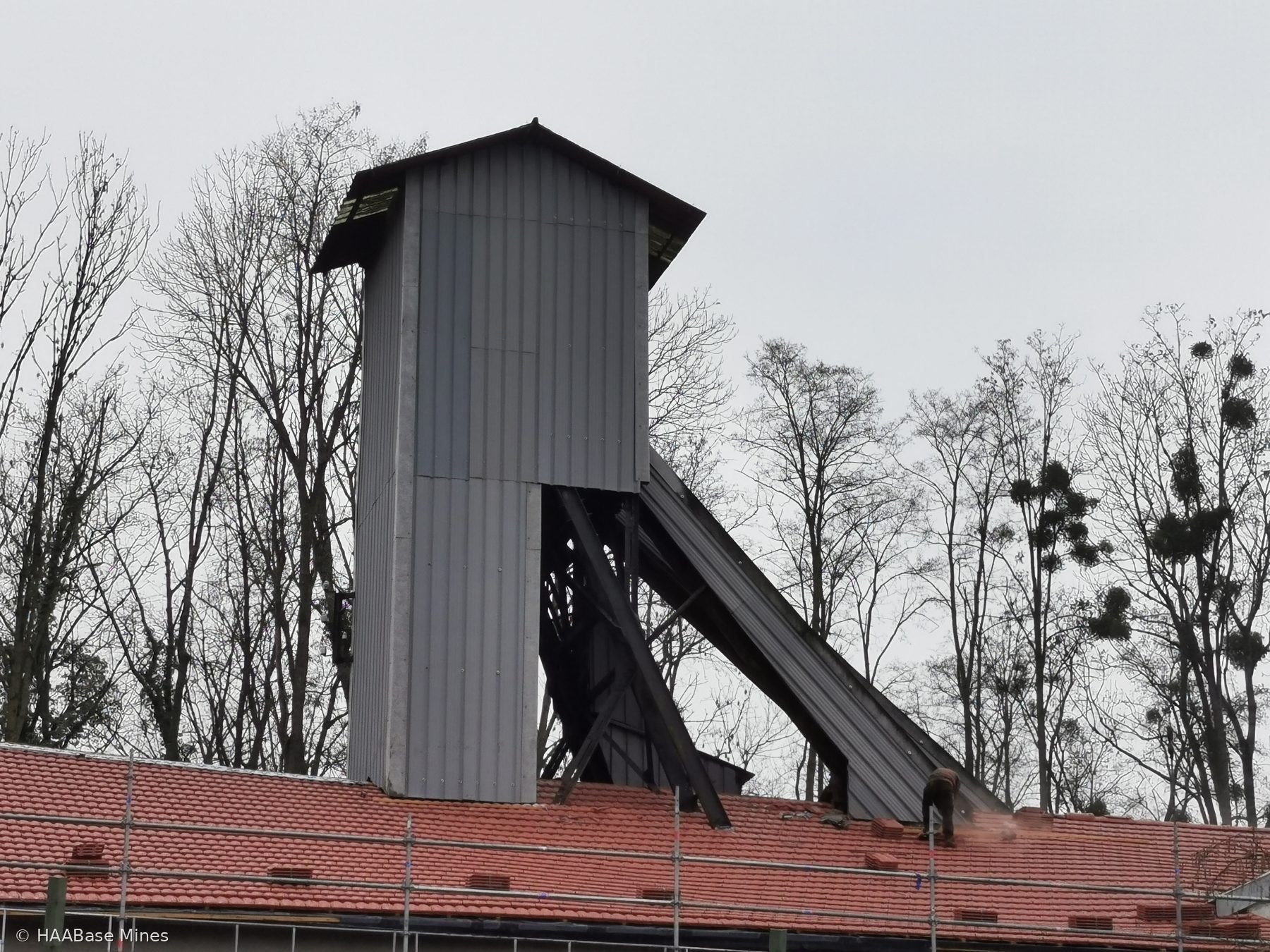
Extraction of rock salt ceased in 1953, the ignigène saline ceased in 1962, and all activities were definitively terminated in 1965. The puits with its metal headframe, winding machine, and double cage, and the mine's underground galleries extending to approximately 6 kilometres, survive. The site is maintained by the Compagnie des Salins du Midi et des Salines de l'Est, with monthly inspections focused on water management.

In 2018 responsibility passed to the DREAL.

The surviving shaft stands in a flat rural edge-of-settlement landscape at Einville-au-Jard, where the headframe and associated structures read as a compact and well-defined former mine site.

Map & photo

Mine Saint-Laurent mine headframe or winding tower site
Photograph taken: 20 February 2026
Map markers and directions links are provided for location reference only and do not indicate public access or permission to enter a site.

History

The basse vallée du Sânon around Einville-au-Jard offered conditions for industrial salt exploitation from the late nineteenth century, following the construction of the canal de la Marne au Rhin in 1853, which provided access to coal for evaporating and to markets for the finished salt.

In 1870, two competing companies sought to exploit the salt deposits under the commune of Einville-au-Jard: the Société Hannezo (later Saline Sainte-Marie, then Saline d'Einville), and the Société Colombier, which would develop the mine Saint-Laurent. The statutes of the Société Anonyme des Mines de Sel gemme et saline d'Einville Meurthe were deposited in 1871, and the company is sometimes referred to as the association De La Ruelle et Colombier. The concession of the Sablonnière and Saint-Laurent-Charmel at Einville, covering 1,089 hectares over the communes of Einville, Raville, Valhey, Bienville and Bonviller, was formally obtained in 1872.

A shaft was sunk from 1871 during four years of construction, completing in 1876. The sinking traversed four salt seam formations between 104 and 126 metres depth. On 15 May 1875 a saturated brine inflow of 300 litres per minute at 8.5 kilograms per square centimetre pressure was encountered at 103.30 metres; this brine was used by the associated saline. Full underground exploitation in galleries 10 to 15 metres wide and 4.5 metres high began in 1887 in the deepest and purest seam at 126 metres depth. In the first year of underground extraction, 35,000 tonnes of rock salt were raised and despatched to the Solvay soudière at Dombasle.

Before the First World War, around 1908, the Saint-Laurent mine occupied fifth rank among the eastern French salines, producing 8,500 tonnes of ignigène salt and 48,000 tonnes of rock salt per year with a workforce of approximately sixty. The mine possessed its own small barge fleet of three towed boats for canal transport. In 1902 a narrow-gauge railway connecting Einville to Lunéville, 10 kilometres away, entered service; its industrial siding to the port of Einville remained in use until 1942. The pits and galleries were electrified from 1917. In 1888 the Saint-Laurent saline had supplied 30,000 tonnes of salt to the Solvay works at Dombasle.

In 1922 a majority of the capital of the Saint-Laurent saline passed into that of the Varangéville salines, and the combined enterprise entered a period of expansion that brought the workforce to up to 200 before the Second World War.

From the 1950s the operation declined as the Société Salinière de l'Est began absorbing the salines of the Sânon valley. Extraction of rock salt from the mine ceased in 1953. The ignigène salt production of the associated saline ceased in 1962, and a portion of the surface buildings were demolished. All remaining activities were definitively terminated in 1965. The 99-year concession was not renewed. Workers displaced from the Saint-Laurent mine transferred to Varangéville, and a bus service between Einville and Varangéville ran until 1993 for former personnel.

Following closure, the site passed to the Compagnie des Salins du Midi et des Salines de l'Est at Varangéville, which undertook its maintenance and surveillance. The metal headframe of the mine shaft, a drum-type winding machine, and the double cage descending to approximately 127 to 144 metres depth survive on the site, together with the underground galleries extending to approximately 6 kilometres. Responsibility for the site transferred to the DREAL (Direction Régionale de l'Environnement, de l'Aménagement et du Logement) in 2018. Monthly inspections are carried out, principally to monitor and manage water ingress. The mine is not open to the public. Visible from the exterior are the metal headframe, the former régie building where a salt tax was collected until 1946, and a building formerly used for the denaturisation of agricultural salt. The headframe is listed among France's surviving mine headframes.
Timeline

1871
Legislation

Statutes of Société Anonyme des Mines de Sel gemme et saline d'Einville deposited

In 1871 the statutes of the Société Anonyme des Mines de Sel gemme et saline d'Einville Meurthe (association De La Ruelle et Colombier) were deposited, formally constituting the company.
1872
Legislation

Concession of Sablonnière and Saint-Laurent-Charmel obtained; shaft sinking begins

In 1872 the concession of 1,089 hectares was formally obtained. Shaft sinking began at the same time and continued for four years, reaching completion in 1876.
1875
Exploration

Saturated brine inflow encountered at 103 metres

On 15 May 1875, during shaft sinking, a saturated brine inflow of 300 litres per minute at 8.5 kg/cm² pressure was encountered at 103.30 metres depth. This brine was subsequently used by the associated saline.
1877
Operation

First profitable exercise; 92,000 quintaux of refined salt produced

In 1877 the Saint-Laurent saline recorded its first profitable exercise, producing 92,000 quintaux of refined salt.
1887
Operation

Underground rock-salt extraction begins; 35,000 tonnes raised in first year

Underground extraction of rock salt in the deepest seam at 126 metres depth began in 1887. In the first year of operation 35,000 tonnes of salt were extracted and despatched to the Solvay soudière at Dombasle.
1888
Operation

30,000 tonnes of salt supplied to Solvay works at Dombasle

In 1888 the Saint-Laurent saline supplied 30,000 tonnes of salt to the Solvay soudière at Dombasle.
1902
Construction

Narrow-gauge railway to Lunéville opened

In 1902 a narrow-gauge railway on a one-metre track width connecting Einville to Lunéville, 10 kilometres away, entered service. Its industrial siding to the port of Einville operated until 1942.
1908
Operation

Fifth rank among eastern French salines; 48,000 tonnes of rock salt and 8,500 tonnes of ignigène produced

Around 1908, with a workforce of approximately sixty, the mine occupied fifth rank among the eastern French salines, producing 48,000 tonnes of rock salt and 8,500 tonnes of ignigène salt per year.
1917
Construction

Mine and galleries electrified

The mine shafts, underground galleries, and surface installations were electrified in 1917.
1922
Legislation

Majority of capital passes to Varangéville salines

In 1922 a majority of the capital of the Saint-Laurent company passed into that of the Varangéville salines. The combined operation entered a period of expansion, employing up to 200 workers before the Second World War.
1953
Closure

Rock-salt extraction from the mine ceases

In 1953 the extraction of rock salt from the underground mine of Saint-Laurent ceased.
1962
Closure

Ignigène salt production ceases; part of surface buildings demolished

In 1962 the production of ignigène salt in the associated saline ceased. A portion of the surface buildings was demolished at the same time.
1965
Closure

All remaining activities definitively terminated

In 1965 all remaining activities at the Saint-Laurent mine and saline were definitively terminated. The 99-year concession was not renewed.
1965
Operation

Site passes to Compagnie des Salins du Midi et des Salines de l'Est; maintenance regime established

After closure the site and mine passed to the Compagnie des Salins du Midi et des Salines de l'Est at Varangéville, which established a maintenance and surveillance regime with monthly inspections focused on water ingress management. The metal headframe, winding machine, double cage, and underground galleries survive.
2018
Legislation

Responsibility for site transferred to DREAL

In 2018 responsibility for the maintenance and surveillance of the Saint-Laurent mine site was transferred from the Compagnie des Salins du Midi et des Salines de l'Est to the DREAL (Direction Régionale de l'Environnement, de l'Aménagement et du Logement).

Sources and records

Image-Est.fr itinerary: Salines d'Einville-au-Jard, chronology and documents
Le Coin des Becs Salés blog: Les Salines Sainte-Marie et Saint-Laurent d'Einville
Académie de Nancy-Metz geology base (sites.ac-nancy-metz.fr): Saline d'Einville descriptive fiche
Einville-au-Jard commune official site: histoire (salt history section)
CHLRE Cercle d'Histoire Locale du Foyer Rural d'Einville, publications; and Alain Weber et al., La Mémoire du Sel au Pays du Sanon, 1999
Nicau.be: Les Salines d'Einville historical summary
Mines et Patrimoine survey of surviving French mine headframes (February 2020)
CC Sanon document: Le Sel à Einville-au-Jard (2021)
This researched site record is part of the HAABase Mines database. Normal personal research and browsing is welcome. Automated bulk extraction, republication, or harvesting of site text and images is not permitted without written consent.