Site overview

The Laboratoire souterrain de Bure, formally the laboratoire de recherche souterrain de Meuse/Haute-Marne (LSMHM), is an underground research installation operated by the Agence nationale pour la gestion des déchets radioactifs (Andra) beneath the commune of Bure in the Meuse department, on the border with Haute-Marne. It was constructed from 2000 following the loi Bataille of 1991, which mandated research into deep geological disposal of high-level and intermediate-level long-lived radioactive waste. The site at Bure was selected by the French government in December 1998 for its stable, homogeneous Callovo-Oxfordian clay layer situated at approximately 500 metres depth, about 130 to 140 metres thick, and geologically undisturbed for over 100 million years.

Construction involved the sinking of two access shafts of 5 and 4 metres diameter to depths of 508 and 503 metres, and the excavation of more than 2,000 metres of experimental galleries at 445 and 490 metres depth. The laboratory does not and cannot contain radioactive waste. It supports the Cigéo deep geological repository project, for which Andra submitted a construction authorisation application in January 2023.

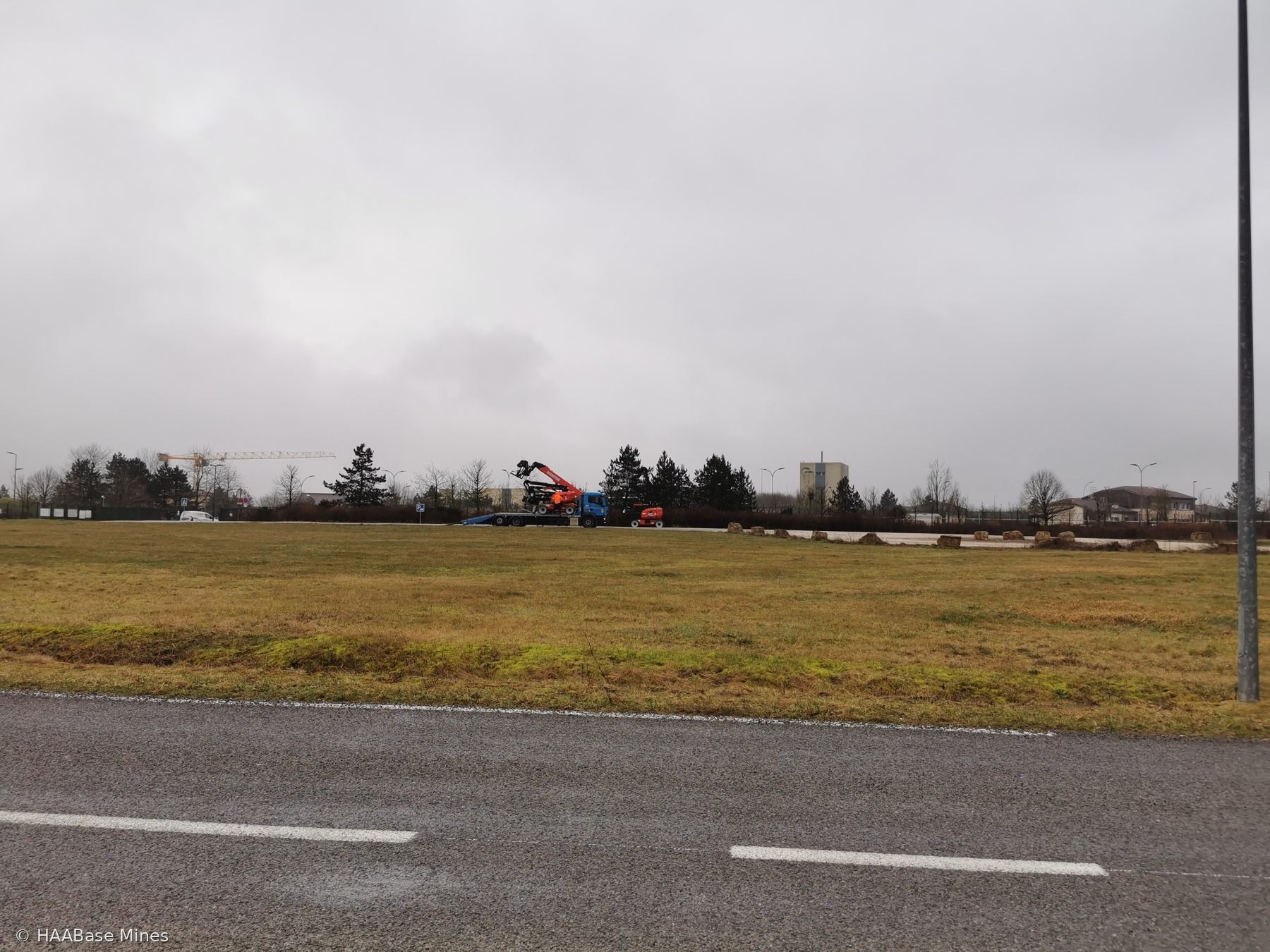
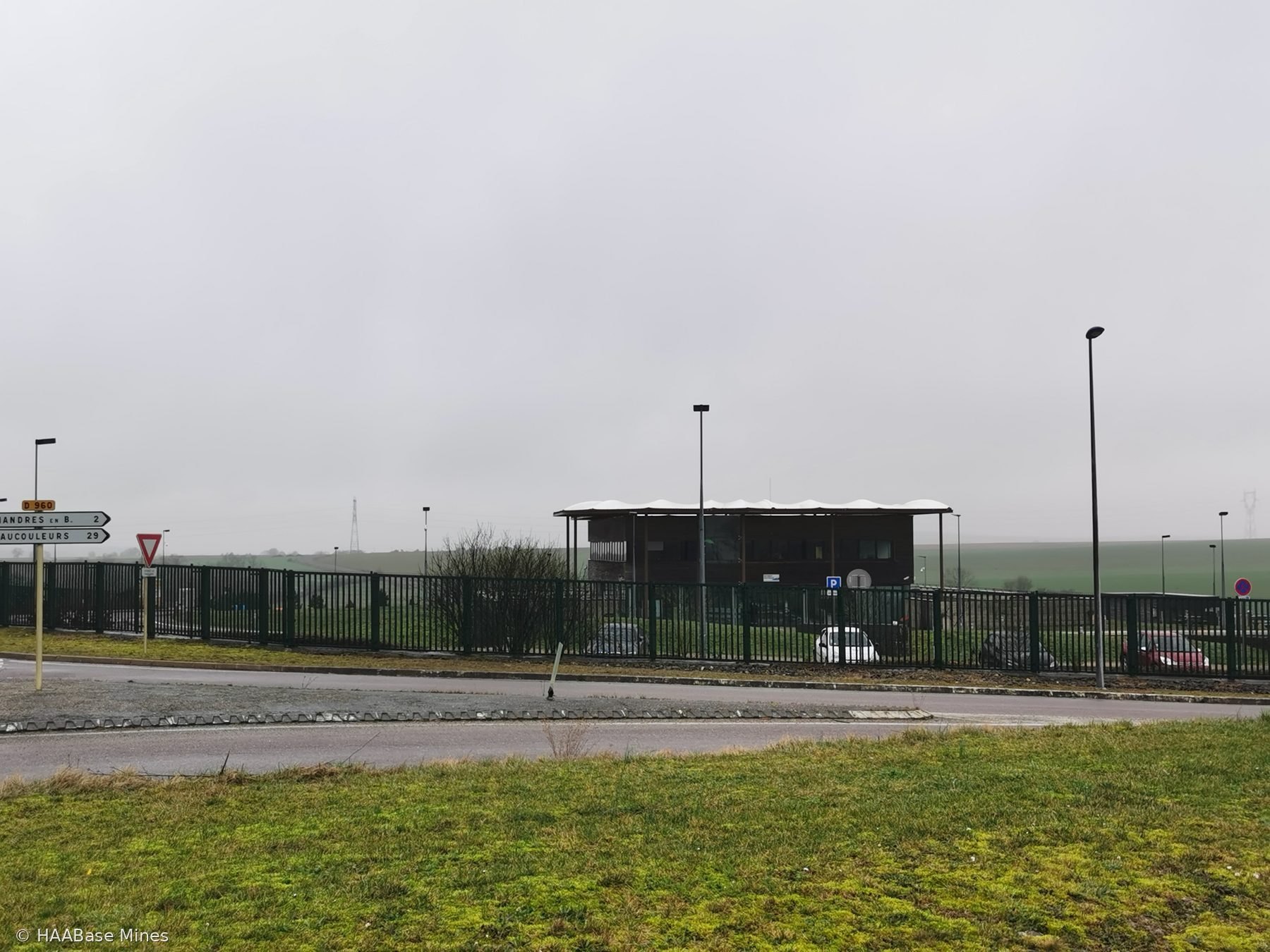
The site stands in open agricultural surroundings on the Meuse-Haute-Marne plateau, where the modern headworks read as a compact and self-contained technical complex.

Map & photo

Laboratoire souterrain de Bure mine headframe or winding tower site
Photograph taken: 20 February 2026
Map markers and directions links are provided for location reference only and do not indicate public access or permission to enter a site.

History

The Laboratoire souterrain de Bure has its institutional origins in the loi no 91-1381 of 30 December 1991, known as the loi Bataille after its rapporteur Christian Bataille. This law defined three research axes for the management of the most radioactive waste: separation and transmutation, long-term surface storage, and reversible or irreversible deep geological disposal. For the third axis, the law charged the Andra — reconstituted as a public body by the same law — with conducting studies on deep geological storage. Andra also undertook preliminary geological site studies from 1994.

Between 1993 and 1994, approximately thirty territories in eleven departments proposed their candidacy to host an underground laboratory. A process of consultation conducted by Christian Bataille concluded with a report in December 1993, leading the government to retain four candidate sites: Haute-Marne and Meuse (Bure), the Gard (Marcoule), and the Vienne (La Chapelle-Bâton). Geological reconnaissance studies carried out by Andra from 1994 to 1996 narrowed the selection to three sites. The government authorised Andra on 15 May 1996 to submit applications for the construction and operation of underground laboratories, which it did on 2 July 1996 for the Bure site.

In March 1998 the prefectoral decrees required for the Bure construction were issued. On 9 December 1998, the French government selected the Bure site in an interministerial committee decision, specifying that the research must address reversible disposal. On 3 August 1999 a decree authorised Andra to install and operate an underground laboratory on the territory of Bure.

Construction of the laboratory began in October 2000. The two access shafts were sunk using explosives to their target depths of approximately 500 metres; the main shaft has a useful diameter of 5 metres reaching 508 metres depth, and the auxiliary shaft has a diameter of 4 metres reaching 503 metres. The experimental galleries, in contrast, were excavated using a hydraulic rock-breaker. A first experimental gallery at −445 metres was completed on 26 November 2004 and made available to scientists for instrumentation and experiments. On 15 December 2005, the underground tunnelling faces from both shafts met, marking the junction celebrated as the ceremony of Sainte Barbe, patron saint of miners. The creusement of the galleries was completed on 27 April 2006 with the second junction between the shafts. A first phase of construction was complete by 2007, and extension works have continued from 2008.

The laboratory is situated directly in the Callovo-Oxfordian argilite layer. This rock, approximately 160 million years old, is about 130 to 140 metres thick at this location and lies between 420 and 555 metres depth. Its very low permeability and high chemical retention capacity are the properties essential to the confinement of radionuclides. The laboratory comprises surface installations on approximately 17 hectares (including administrative buildings, workshops, analytical laboratories, and a public reception building), the two access shafts, and more than 2,300 metres of underground galleries at 445 and 490 metres depth, equipped with more than 700 boreholes from the gallery walls and more than 11,000 measurement sensors.

Experiments conducted in the laboratory characterise the mechanical, thermal, geochemical, and hydraulic properties of the argilite, including the behaviour of the rock during excavation, its response to heating (as would be caused by high-level waste canisters), and the diffusion and retention of radioactive elements. In 2005, Andra published its Argile 2005 dossier summarising fifteen years of research, concluding that geological disposal in the Callovo-Oxfordian was feasible.

The 2006 law (loi du 28 juin 2006) confirmed deep geological disposal as the reference solution for French high-level and intermediate-level long-lived waste, and required reversibility for at least 100 years. This law directed Andra to design and site a deep geological repository designated Cigéo (Centre industriel de stockage géologique). In 2009 Andra proposed a zone of approximately 30 km² for the underground repository, designated the zone d'intérêt pour la reconnaissance approfondie (ZIRA). A second public debate in 2013 and a further law in 2016 refined the project framework. In 2021 a public inquiry delivered an unconditionally favourable opinion. On 8 July 2022 a decree declared the public utility of Cigéo.

On 16 January 2023 Andra submitted a 10,000-page demande d'autorisation de création (DAC) for Cigéo to the Ministry of Energy Transition. In June 2023 the Autorité de Sûreté Nucléaire (ASN) declared the application admissible, opening a technical instruction process. On 1 December 2023 the Conseil d'Etat confirmed the public utility of the Cigéo project. The Cigéo installation is projected to receive its first waste packages around 2035 to 2040, following a compulsory industrial pilot phase. The laboratory itself, designed and authorised exclusively for research, cannot and will not be used for waste storage.

In January 2016 a collapse in a research gallery caused the death of one worker and injure one other.
Timeline

1991
Legislation

Loi Bataille mandates deep geological disposal research

The loi no 91-1381 of 30 December 1991, the loi Bataille, defined three research axes for radioactive waste management, including deep geological disposal, and charged the Andra with underground laboratory studies.
1994–1996
Exploration

Geological reconnaissance studies at candidate sites

Andra conducted geological reconnaissance at four candidate sites — Bure (Meuse/Haute-Marne), Marcoule (Gard), La Chapelle-Bâton (Vienne), and a fourth — between 1994 and 1996, retaining three for further consideration.
1996
Legislation

Andra authorised to submit construction applications

On 15 May 1996 the government authorised Andra to submit Dossiers d'Autorisation d'Implantation et d'Exploitation for underground laboratories; the Bure application was filed on 2 July 1996.
1998
Legislation

French government selects Bure site

On 9 December 1998 the French government, in an interministerial committee decision, selected the Bure site for an underground research laboratory, specifying that the research must address reversible disposal.
1999
Legislation

Decree authorises Andra to construct and operate underground laboratory at Bure

On 3 August 1999 a decree authorised Andra to install and operate an underground laboratory on the territory of the commune of Bure in the Meuse.
2000–2005
Construction

Construction begins; shafts sunk to approximately 500 metres

Construction of the underground laboratory began in October 2000. The two access shafts were sunk using explosives: the main shaft (5 metres diameter) to 508 metres and the auxiliary shaft (4 metres diameter) to 503 metres. Target depths were reached by 2005.
2004
Construction

First experimental gallery at −445 metres completed

On 26 November 2004 the first experimental gallery, at a depth of 445 metres, was completed and made available to scientists for instrumentation and experiments.
2005
Construction

Underground gallery fronts from both shafts meet: Sainte Barbe ceremony

On 15 December 2005 the underground tunnelling faces from the two shafts met, marked by the traditional Sainte Barbe ceremony. The second junction between the shafts was completed on 27 April 2006.
2005
Operation

Argile 2005 dossier published; feasibility confirmed

In 2005 Andra published its Argile 2005 dossier summarising fifteen years of research and confirming the feasibility of deep geological disposal in the Callovo-Oxfordian argilite at Bure.
2006
Legislation

Loi du 28 juin 2006 mandates Cigéo project

The loi du 28 juin 2006 confirmed deep geological disposal as the reference solution for French high-level and intermediate-level long-lived waste and directed Andra to design and site the Cigéo repository.
2007
Construction

First construction phase complete; extension works begin from 2008

A first phase of construction of the laboratory was complete by 2007. Extension works continued from 2008, progressively expanding the gallery network to more than 2,000 metres.
2016
Operation

Gallery collapse causes one fatality

On 26 January 2016 a collapse at the end of an experimental gallery caused one fatality and injured one worker from the Eiffage workforce. A judicial inquiry was opened by the Bar-le-Duc prosecutor.
2022
Legislation

Decree declares public utility of Cigéo

On 8 July 2022 a decree declared the public utility (Déclaration d'Utilité Publique) of the Cigéo project, enabling Andra to acquire land by expropriation.
2023
Legislation

Andra submits construction authorisation application for Cigéo

On 16 January 2023 Andra submitted a 10,000-page demande d'autorisation de création (DAC) for the Cigéo deep geological repository to the Ministry of Energy Transition. In June 2023 the ASN declared the application admissible.

Sources and records

Wikipedia article (French): Laboratoire de Bure
Wikipedia article (English): Cigéo
Andra Centre de Meuse/Haute-Marne official site: history page and laboratory installation page
Cigeo.gouv.fr: Comment est né Cigéo; Chiffres clés
Laradioactivite.com: article on the Bure underground laboratory
Connaissancedesenergies.org: Cigéo project summary
Autorité de Sûreté Nucléaire (ASN/ASNR): Cigéo creation authorisation process page
Département de la Meuse official site: Cigéo project page
SFEN (Société Française d'Énergie Nucléaire): reportage au coeur du laboratoire souterrain de l'Andra
Exxplore.fr: dossier on the Andra underground laboratory
This researched site record is part of the HAABase Mines database. Normal personal research and browsing is welcome. Automated bulk extraction, republication, or harvesting of site text and images is not permitted without written consent.