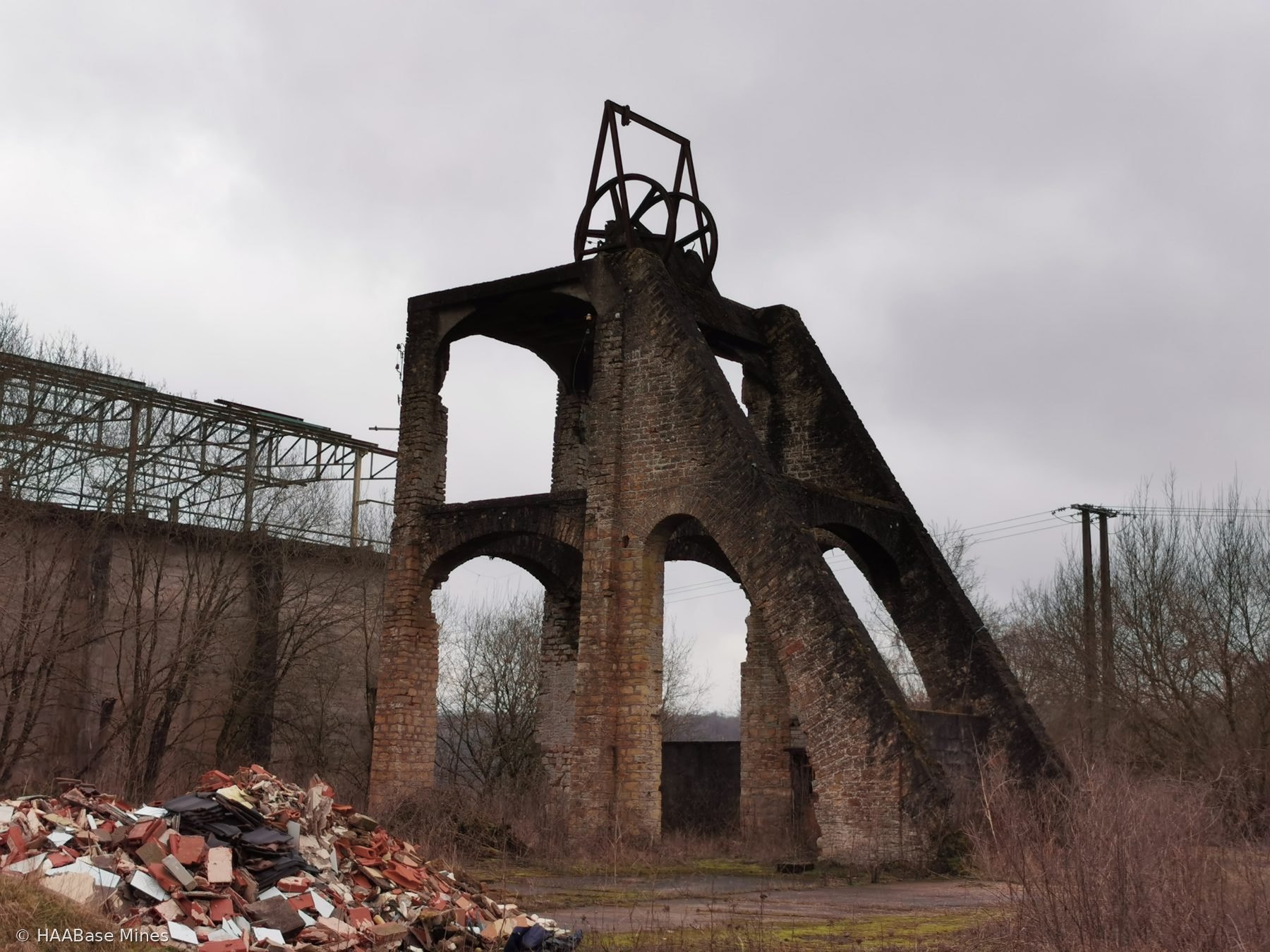
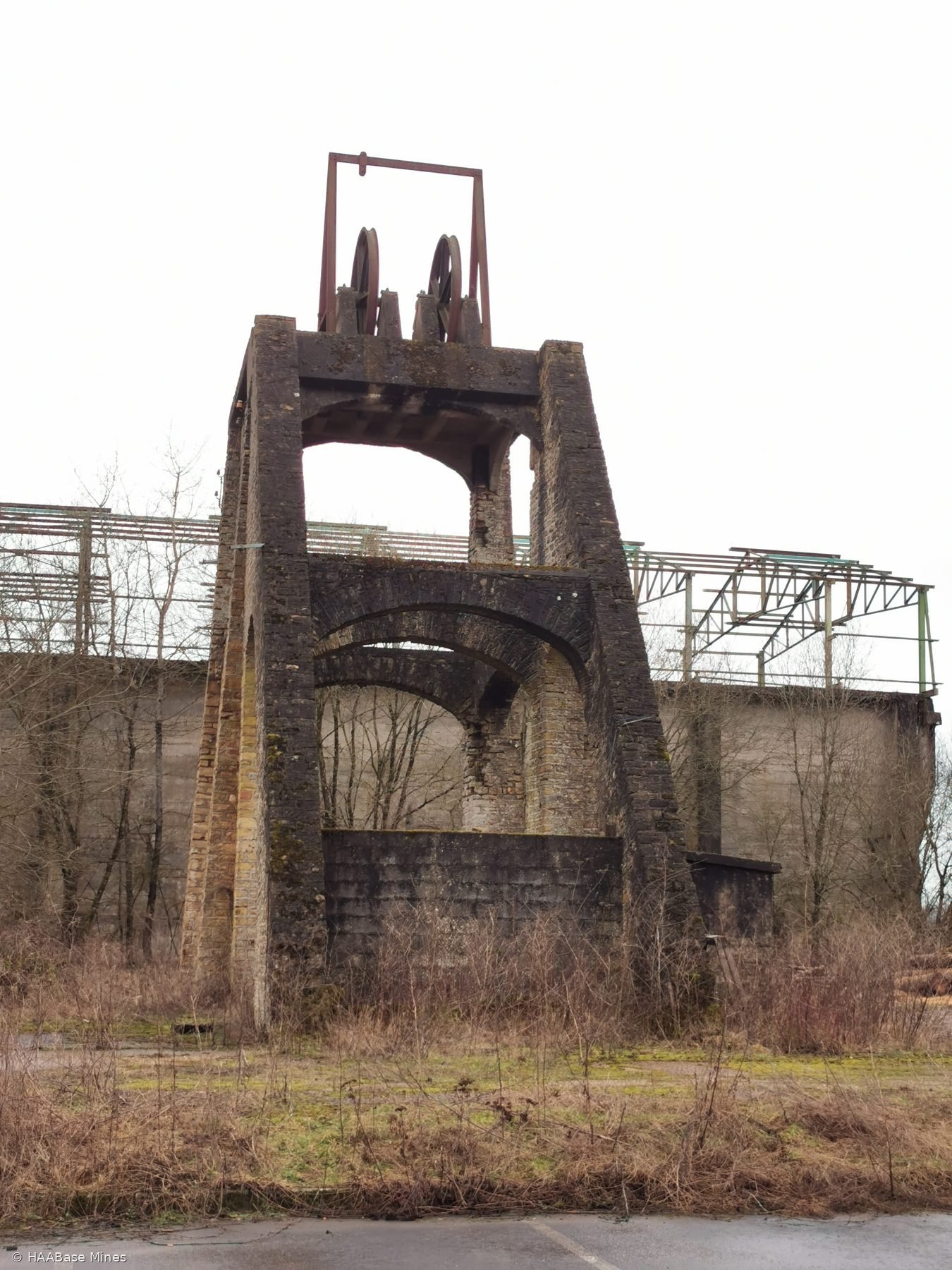
Site overview

The Mine d'Errouville was a shaft-sunk iron-ore mine of the northern Lorraine minette basin, located at Crusnes in the Meurthe-et-Moselle. The concession of Errouville was granted on 18 November 1895 to the Société Lorraine Industrielle and passed on 21 September 1903 to the Société des Mines d'Errouville, held two-thirds by the Société des Aciéries Réunies de Burbach-Eich-Dudelange (ARBED) and one-third by the de Wendel interests. Three shafts were sunk between 1909 and 1912, two at Crusnes and one at Errouville; production began in 1912.

After the First World War the mine expanded rapidly, employing around 900 workers by the 1920s, when electrification of the underground haulage was introduced. In 1940 the surface headframes of puits 1 and 2 were dynamited to impede German access, and the workings flooded. The mine was rebuilt after liberation and continued in production.

In 1970 ARBED acquired full ownership. Extraction ceased in July 1973. Of the surface infrastructure, only the masonry structure of puits no 2 — the oldest of the shafts and used for personnel and materials — survives intact; puits 1 and its metal headframe were demolished.

The stone headframe of puits 2 is the sole surviving masonry headframe in the Lorraine iron-ore field.

Set in open country on the northern Lorraine plateau, the surviving masonry headframe reads as an isolated but visually strong remnant within a sparse former mining landscape.

Map & photo

Mine d’Errouville — Puits n° 2 mine headframe or winding tower site
Photograph taken: 20 February 2026
Map markers and directions links are provided for location reference only and do not indicate public access or permission to enter a site.

History

The concession of Errouville was granted by decree on 18 November 1895 to the Société Lorraine Industrielle, covering the territory of what would become the iron-ore mine at Crusnes in the Meurthe-et-Moselle. On 21 September 1903 the property was transferred to the Société des Mines d'Errouville, a company held two-thirds by the Société des Aciéries Réunies de Burbach-Eich-Dudelange (ARBED) and one-third by the de Wendel industrial interests.

Three shafts were sunk between 1909 and 1912: puits II was sunk and equipped between 1910 and 1912, puits I was sunk and equipped for extraction between 1912 and 1913, and puits III was sunk between 1951 and 1952 at Errouville (serving only for ventilation, drainage, and electrical supply). The first ore berline was raised in 1912. The two puits at Crusnes were surmounted by headframes supporting hoisting machinery; puits I was devoted to ore extraction and puits II to the transport of personnel and materials.

After the First World War, the restitution of Lorraine to France opened new markets and the Société des Mines d'Errouville expanded its operations. From 1926 a programme of modernisation was undertaken, leading to the progressive electrification of underground haulage. By this period around 900 miners were employed in the workings. An underground connection was made with the iron-ore handling network of the Société des Terres Rouges, providing a link to the steelworks at Esch-Belval in Luxembourg.

In 1940, at the outbreak of the Second World War, the mine's management decided to dynamite the headframes of puits 1 and 2 and the electrical sub-station to prevent the German forces from using the underground galleries to advance on Crusnes. The destruction of these structures also caused the flooding of the workings. The miners still present when hostilities broke out were transferred to the mines of Aumetz, Boulange, Rochonvillers and Bazailles.

After liberation, the mine was rebuilt and extraction resumed progressively. In 1950 the mine underwent modernisation and full mechanisation. Between 1951 and 1952 puits III was sunk at Errouville for ventilation and service purposes. In 1972 the ore reception at puits I was automated. On 4 August 1970 ARBED acquired full ownership of the Société des Mines d'Errouville, having previously held two-thirds.

Extraction at the Mine d'Errouville ceased in July 1973. The mine was formally closed. At the time of closure the mine employed approximately 1,100 workers, of whom the majority were Polish and Italian by origin.

Following closure, puits I with its metal headframe was demolished entirely. The masonry structure of puits II has survived intact. It is the only surviving stone headframe in the Lorraine iron-ore field. On the former carreau de fosse, the reinforced-concrete mineral accumulator structures (silos in which extracted ore was stored before despatch) remained visible for some years; a building on the site was occupied by the industrial firm Welsch. The former mining housing estate (Crusnes-Cités) and its landmark prefabricated iron église Sainte-Barbe (opened 1939) remain. The classified monuments historiques notice for the mine records a concession instituted in 1897, two shafts sunk in 1909, and cessation in July 1974.
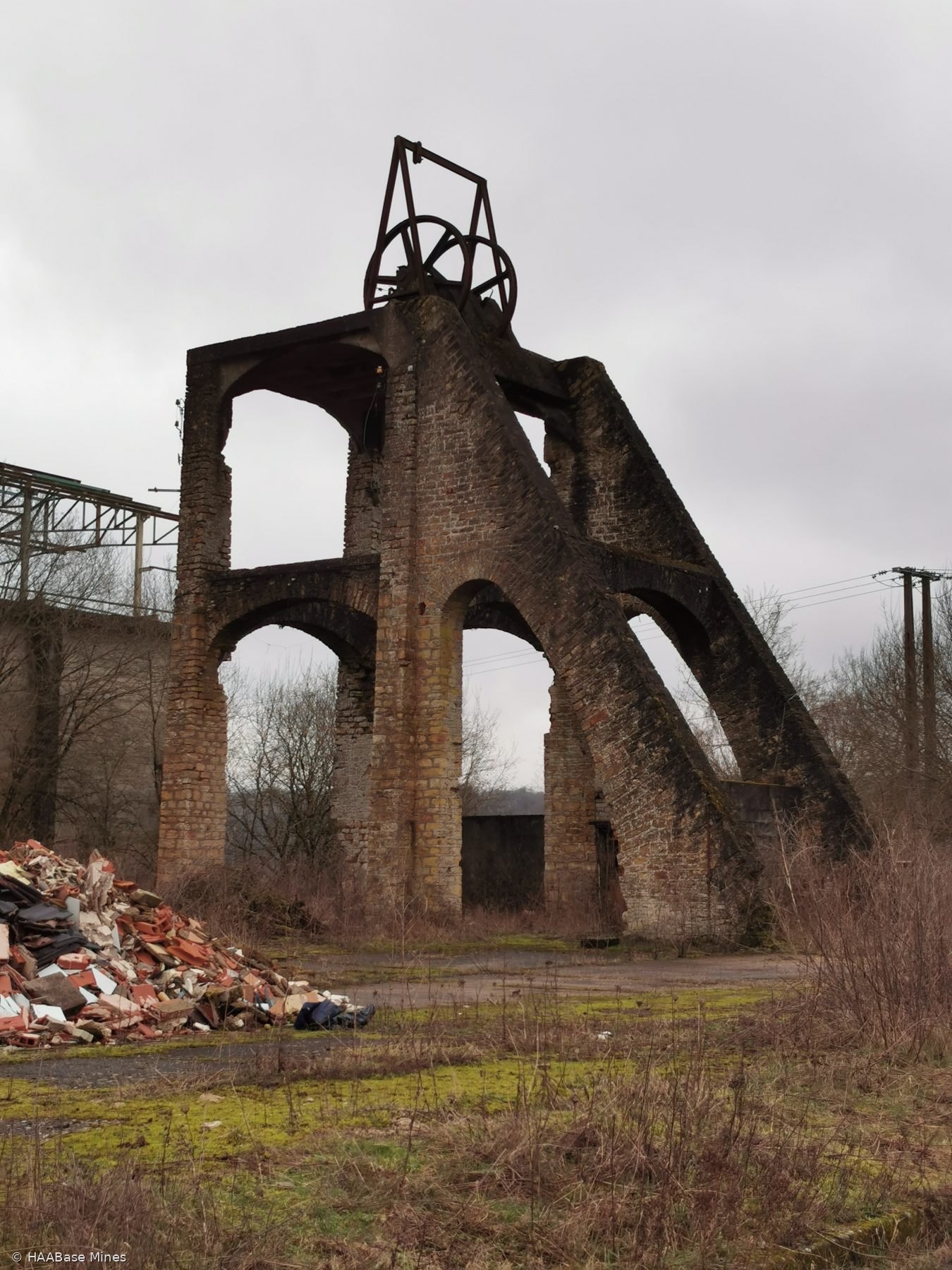
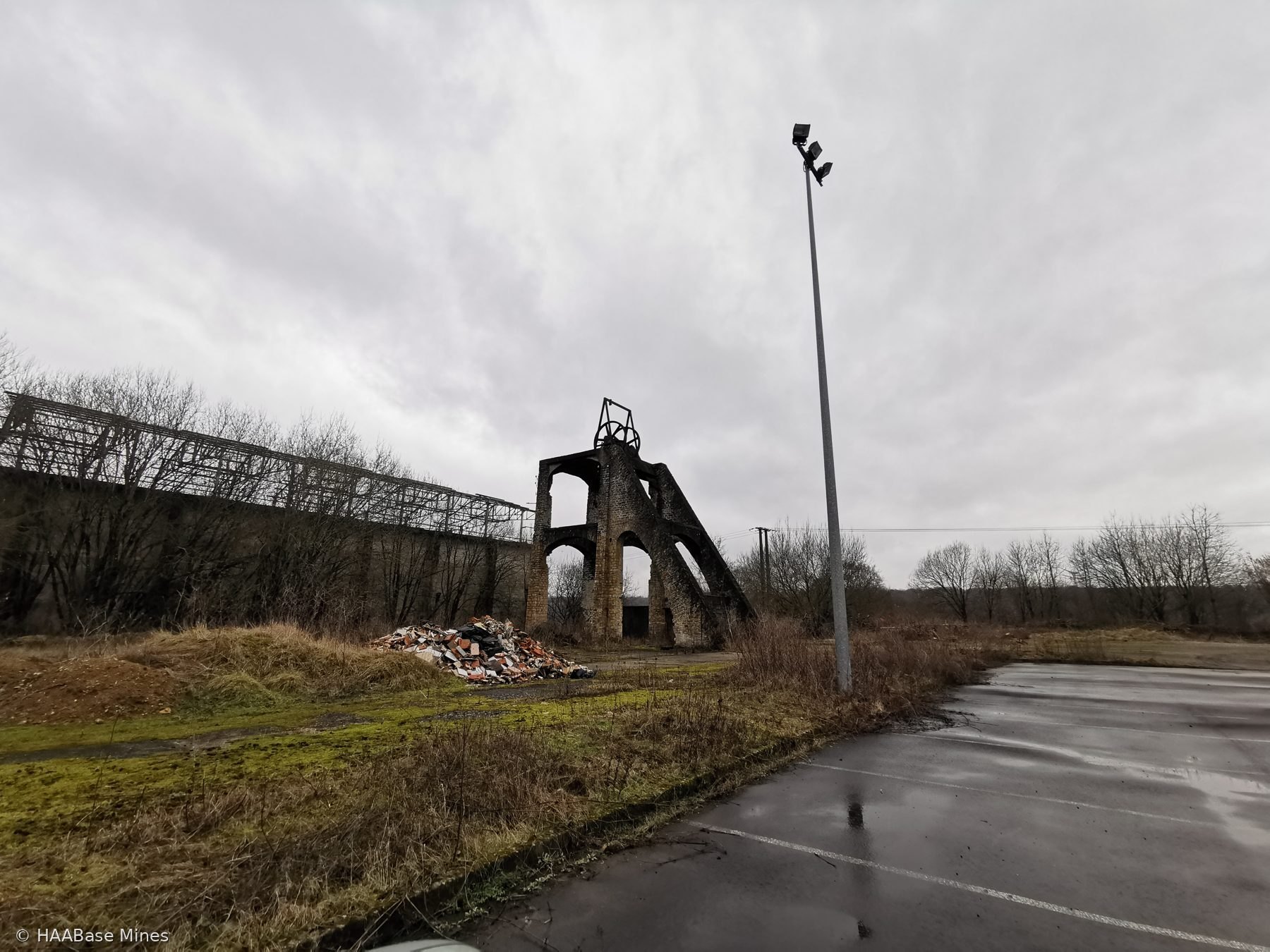
Timeline

1895
Legislation

Concession of Errouville granted to Société Lorraine Industrielle

The concession of Errouville was granted by decree on 18 November 1895 to the Société Lorraine Industrielle.
1903
Legislation

Concession transferred to Société des Mines d'Errouville (ARBED two-thirds, de Wendel one-third)

On 21 September 1903 the concession was transferred to the Société des Mines d'Errouville, held two-thirds by ARBED and one-third by the de Wendel interests.
1910–1913
Construction

Sinking of puits II (1910–1912) and puits I (1912–1913)

Puits II was sunk and equipped between 1910 and 1912. Puits I was sunk and equipped for ore extraction between 1912 and 1913.
1912
Operation

Production begins; first ore berline raised

In 1912 the first ore berline was raised from the mine, marking the start of production.
1926
Construction

Electrification of underground haulage begins

From 1926 a modernisation programme was undertaken, leading to the progressive electrification of the underground haulage galleries. Around 900 miners were employed by this period.
1940
Closure

Headframes of puits 1 and 2 dynamited; workings flooded

In 1940 the mine's management dynamited the headframes of puits 1 and 2 and the electrical sub-station to prevent the German forces from using the underground galleries. The destruction caused the flooding of the workings.
1945–1950
Construction

Mine rebuilt and extraction resumed after liberation

After liberation in 1944, the mine was rebuilt and extraction resumed progressively. By 1950 modernisation and full mechanisation of the workings had been completed.
1951–1952
Construction

Sinking of puits III at Errouville

Between 1951 and 1952 a third shaft, puits III, was sunk at Errouville for ventilation, drainage, and electrical supply only.
1970
Legislation

ARBED acquires 100 per cent ownership

On 4 August 1970 ARBED acquired full ownership of the Société des Mines d'Errouville, having previously held two-thirds of the shares.
1972
Operation

Ore reception at puits I automated

In 1972 the ore reception at puits I was automated.
1973
Closure

Extraction ceases; mine closed

In July 1973 extraction at the Mine d'Errouville ceased and the mine was formally closed.
1973
Closure

Metal headframe of puits 1 demolished; masonry structure of puits 2 survives

Following closure, puits I and its metal headframe were demolished entirely. The masonry structure of puits II remained standing and is the sole surviving stone headframe in the Lorraine iron-ore field.

Sources and records

Patrimoine-minier.fr: chronological record of Lorraine iron-ore mines, Mine d'Errouville entry
Nicau.be: historical summary of the Société Anonyme des Mines d'Errouville
Exxplore.fr: dossier on Lorraine iron-ore mines, Errouville entry
INA / Fresques Esch-sur-Alzette: documentary report on mining heritage at Crusnes (1994), Les héritages miniers en attente à Crusnes
Monuments historiques / POP database notice IA00054779: Mine de fer, Crusnes
Mines et Patrimoine survey of surviving French mine headframes
Auxpaysdemesancetres.com: Crusnes commune history
Wikipedia article (French): Mine en France — Lorraine iron-ore mines list
This researched site record is part of the HAABase Mines database. Normal personal research and browsing is welcome. Automated bulk extraction, republication, or harvesting of site text and images is not permitted without written consent.