History
The Siège Sainte-Fontaine has its origins in the recognition of the coal-bearing Sainte-Fontaine field from underground exploration. In 1903, a cross-measure drift was begun from the 490-metre level of puits no 2 de l'Hôpital, directed westward towards the flambant inférieur seam group. By 1906, after 1,900 metres of advance, this drift reached the fatty coals of the Sainte-Fontaine sector. A second cross-measure drift had meanwhile been begun from the 335-metre level of Merlebach in 1905, also directed towards Sainte-Fontaine; the two drifts together created an underground connection linking the entire chain of pits from Freyming to Carling.
From the beginning of 1908, exploitation of Sainte-Fontaine commenced using these underground connections, without any dedicated extraction, service, or ventilation shaft of its own. Air entry was provided by puits no 2 de l'Hôpital, which also handled coal extraction from the new field by means of a rope haulage system in the connecting gallery. The conditions of exploitation were difficult and the site was considered dangerous owing to its firedamp emissions and coal-dust hazards; engineer Emile Huchet subsequently reformed the working methods and introduced the general use of coal-cutting machines.
In January 1908, the Compagnie Sarre et Moselle began sinking the puits Waldemar-Müller (later renamed puits Sainte-Fontaine) by the congélation method. In 1909, the same technique was applied to the sinking of puits Auguste Thyssen (later renamed puits Peyerimhoff), which was intended to serve as the ventilation return shaft. By 1911, ventilation of the underground workings was passing through the puits Sainte-Fontaine; in 1912 the puits Peyerimhoff reached the 377-metre level and became the return-air shaft for the siège. Personnel began descending via the puits Sainte-Fontaine from May 1913. It was not until August 1918 that extraction of fatty coals genuinely commenced from this siège, the output of which fed the cokerie de Carling.
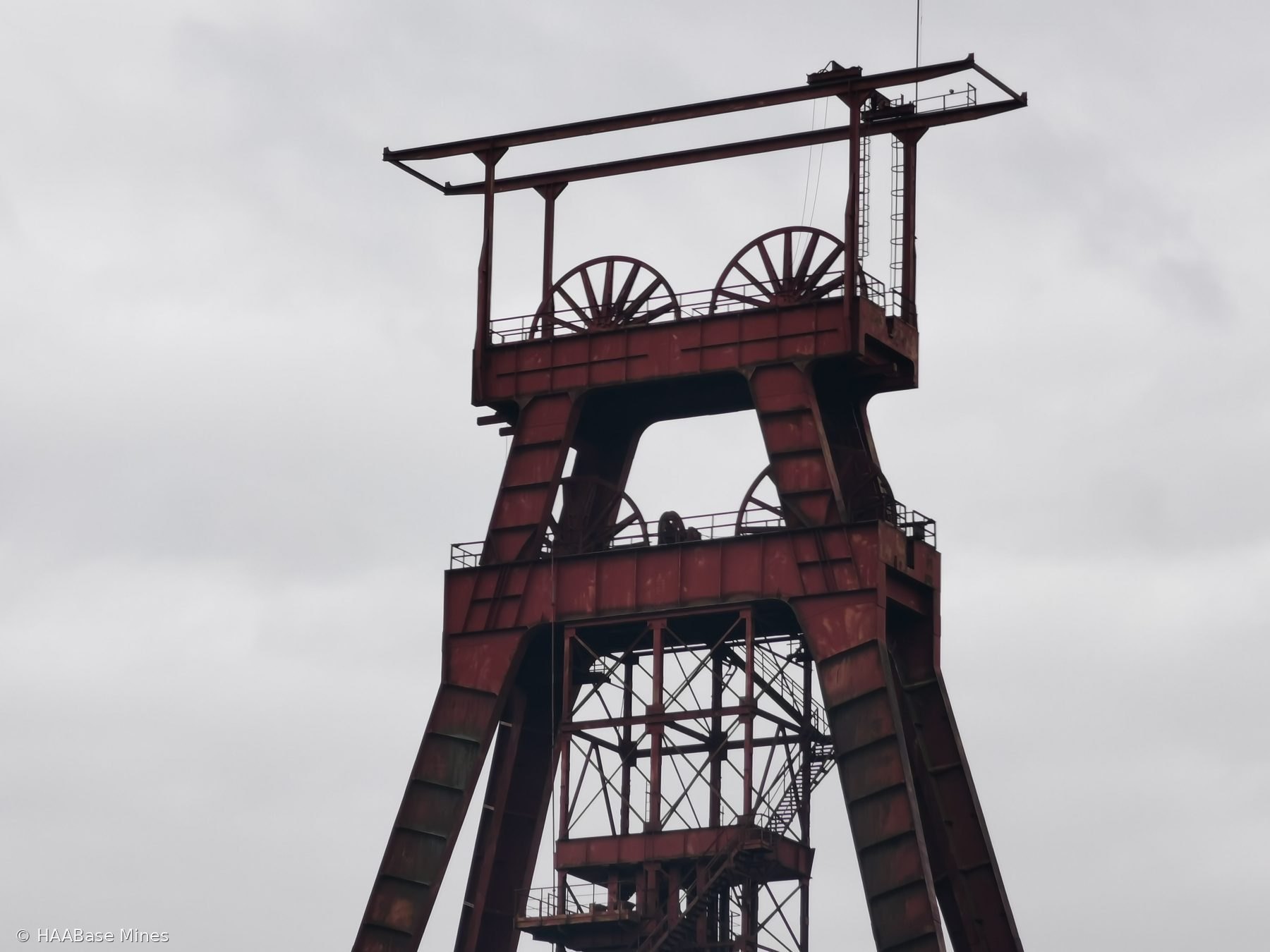
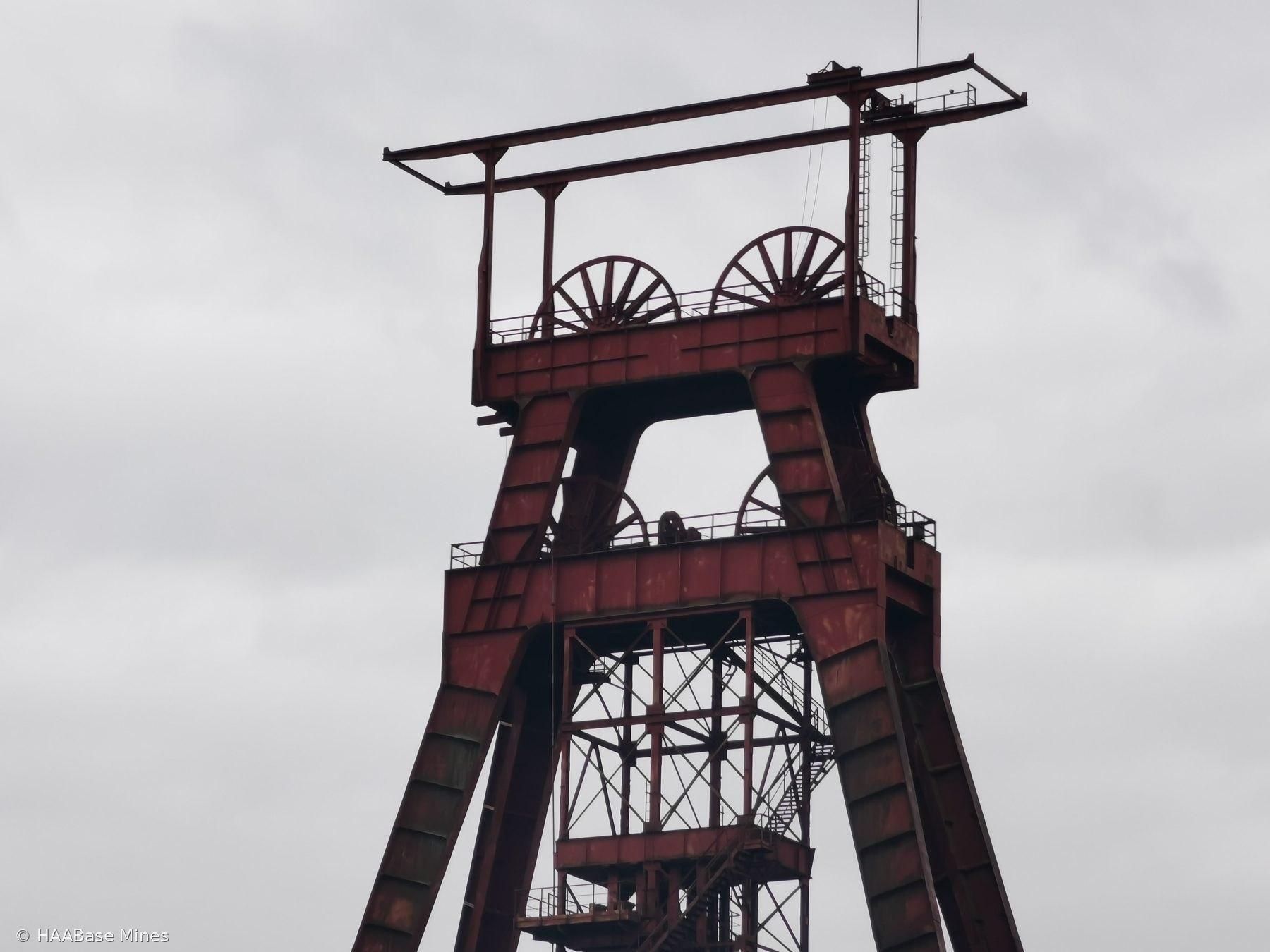
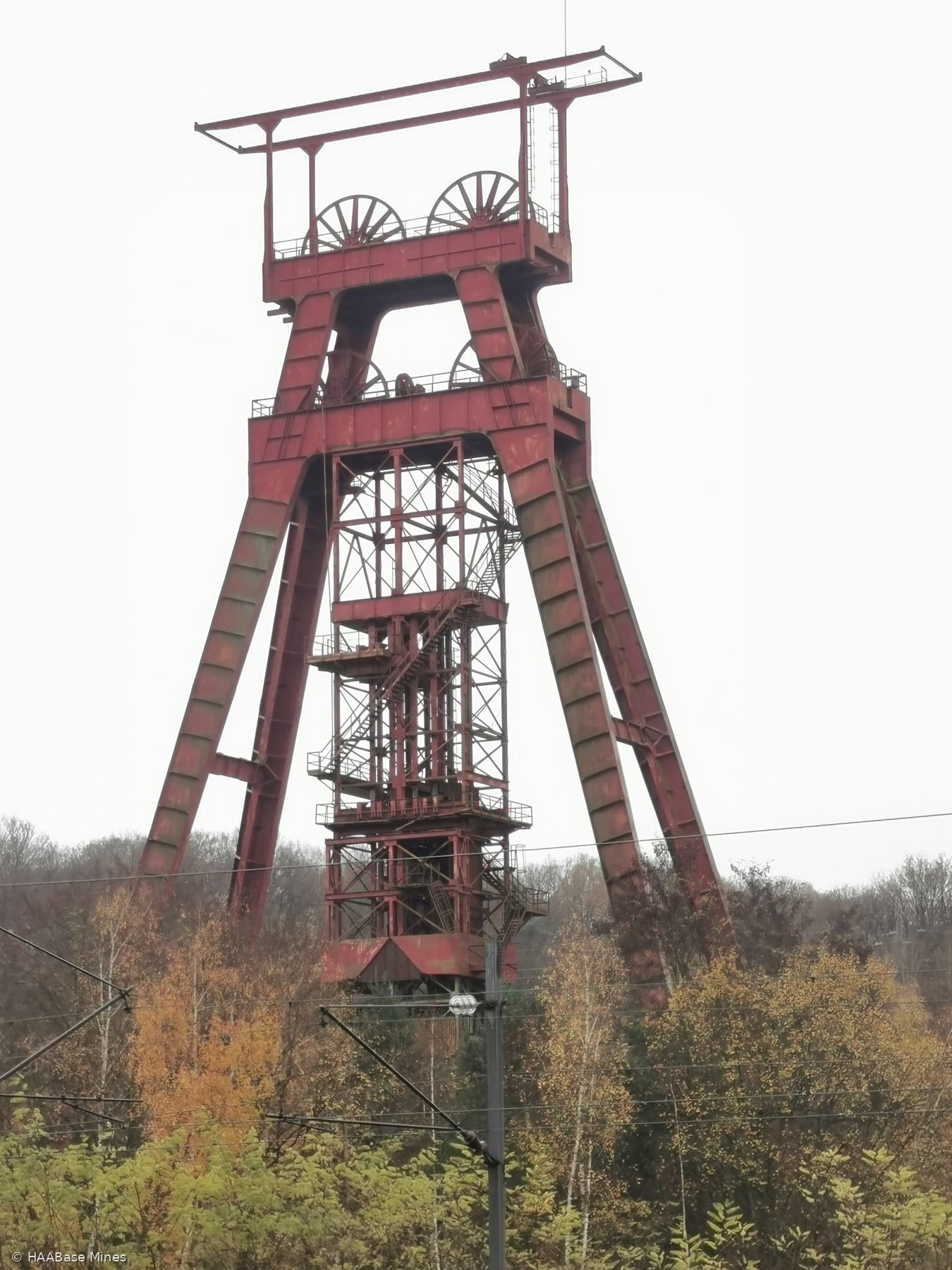
By 1938, production had reached 1,700 tonnes per day, with a productivity of 1,640 kilograms per man per shift. Following nationalisation in 1946, the Houillères du Bassin de Lorraine (HBL) modernised the site. Both shaft installations were replaced: the puits Sainte-Fontaine received a new double-compartment gantry headframe (portique à double compartiment) and electric winding engines of 3,200 horsepower. The new headframe was constructed in 1954 and serves a shaft with two hoisting compartments; it is composed of two pairs of struts on each side of an independent avant-carré. This headframe design is unique in the Lorraine coalfield; only three examples of the same type are known in the Nord-Pas-de-Calais. The puits Peyerimhoff received a corresponding replacement installation. With these new facilities, production reached 4,600 tonnes per day in April 1956, with productivity exceeding 2,500 kilograms per man per shift.
A connection gallery linking the siège Sainte-Fontaine to the puits de Saint-Avold was completed in 1965; the latter shaft had been sunk from July 1960 and reached 676 metres by August 1963, and was intended to serve for ventilation and stowing. However, with the planned closure of Sainte-Fontaine, the puits de Saint-Avold was closed on 26 May 1971 before it had entered service. In 1964, the siège achieved its best-ever annual production of 1,985,997 tonnes. In December 1968, the Minister of Industry André Bettencourt announced, within the framework of the sixth national plan, the continuation of the programme of reduction of French coal production.
On 8 July 1972, extraction ceased at the siège Sainte-Fontaine. However, following the oil shocks of 1973 and the need to find replacement coking coals as the Wendel field declined, the siège was reopened in 1976. Sources vary slightly on whether this reopening occurred in 1976 or 1979; both the APPHIM historical account and French Wikipedia place it at 1976, while the monuments historiques record states 1979. Production continued until 1986, when the siège closed definitively. Technical services remained active on site into the early twenty-first century; the last of these, a drilling survey service, departed in August 2001.
The portal gantry headframe of the puits Sainte-Fontaine was inscribed as a monument historique by arrêté of 22 October 1992 (reference PA00107075). The site minier is recorded as maintained.