Site overview

The Fosse no 6 des mines de Lens, also known as the Fosse Saint-Alfred or Alfred Descamps, is a former colliery at Haisnes in the Pas-de-Calais. The shaft was originally sunk in March 1859 by the Compagnie des mines de Douvrin and began extracting coal in 1861. Output remained weak and the company entered liquidation; the Compagnie des mines de Lens purchased the fosse and its concession in October 1873 for 500,000 francs.

The site was entirely destroyed during the First World War and rebuilt from around 1920 in the standard architectural style of the Compagnie des mines de Lens, with a reinforced concrete headframe. Extraction ceased in 1936, after which the shaft was retained for ventilation service to the Fosse no 13 at Hulluch. Nationalisation in 1946 brought the site into the Groupe de Lens.

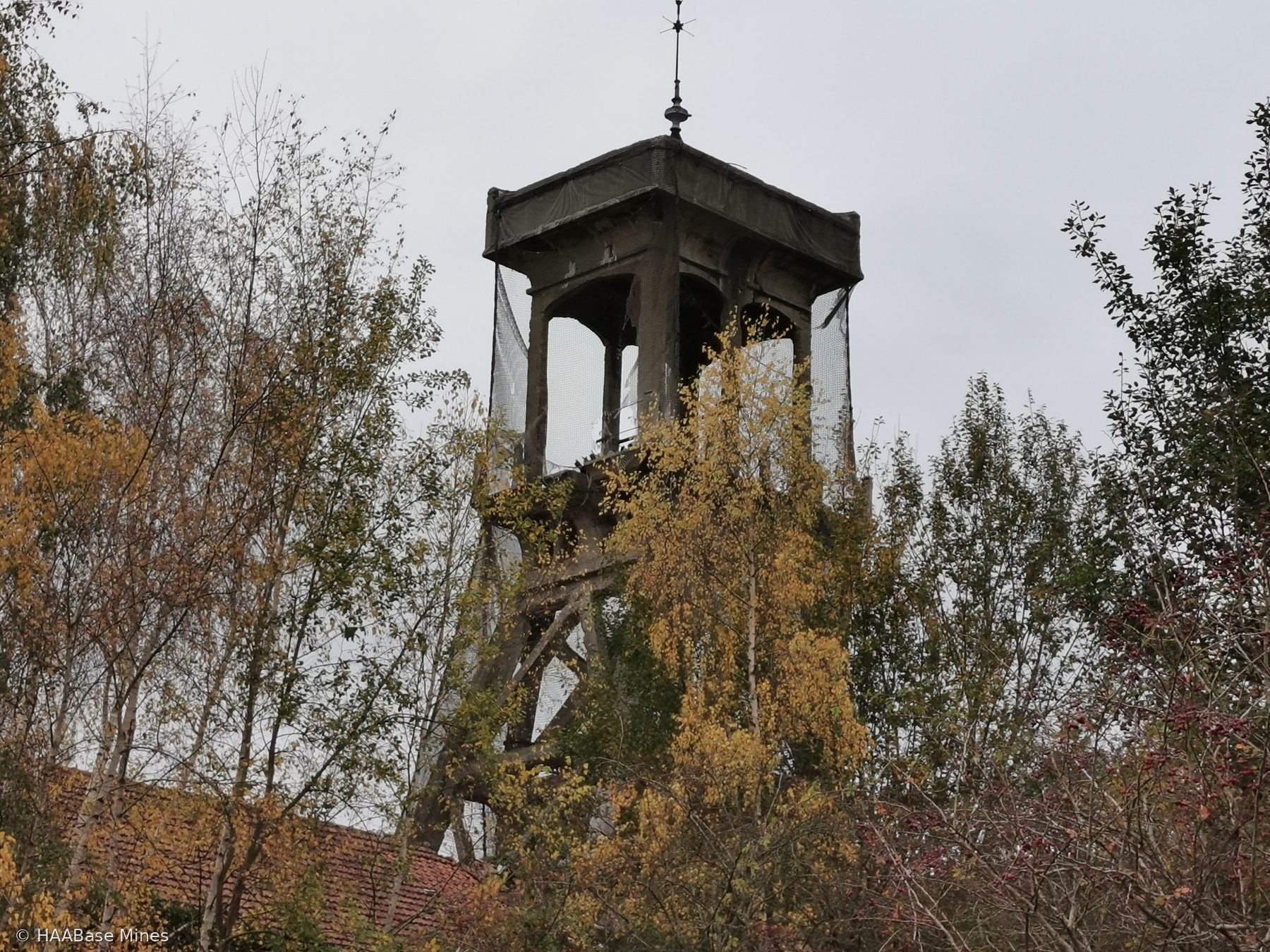
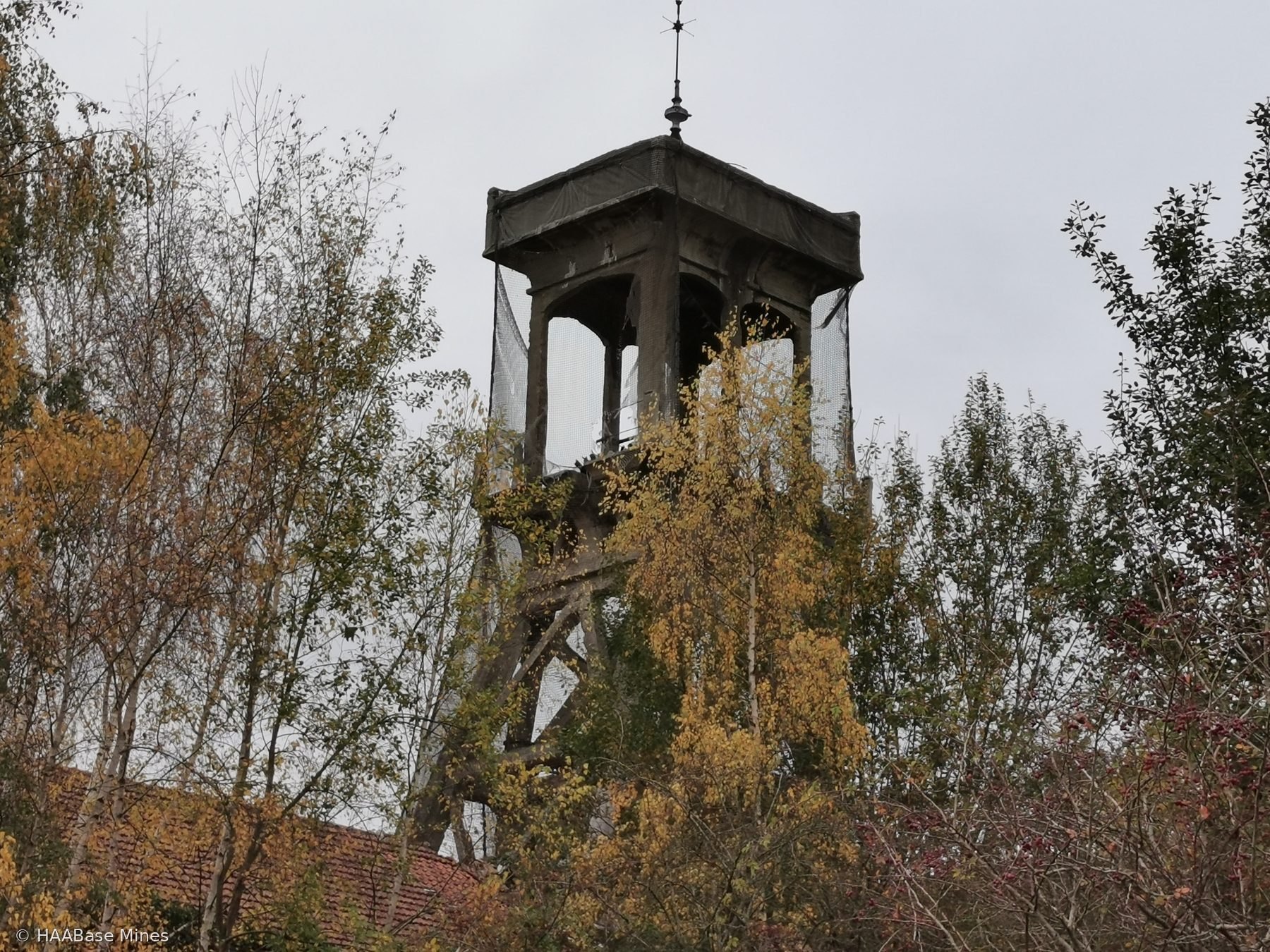
The shaft was filled in 1959 and the pit-head marker was materialised in the early twenty-first century. The concrete headframe and its adjacent buildings were inscribed as monuments historiques on 23 November 2004, and the site was included in the UNESCO World Heritage inscription of the Bassin minier Nord-Pas-de-Calais on 30 June 2012. The headframe is recorded as the last surviving example of the concrete headframe type used by the Mines de Lens.

The surviving headframe stands in a flat settled landscape at Haisnes, where the compact pit site remains legible as a distinct historic group.

Map & photo

Fosse n° 6 des mines de Lens mine headframe or winding tower site
Photograph taken: 16 November 2025
Map markers and directions links are provided for location reference only and do not indicate public access or permission to enter a site.

History

The Fosse no 6, known also as the Fosse Saint-Alfred or Alfred Descamps and previously as the fosse d'Haisnes, was the only colliery in the area not originally sunk by the Compagnie des mines de Lens. It originated with the Compagnie des mines de Douvrin, whose sole pit it was.

The Compagnie des mines de Douvrin commenced sinking the shaft in March 1859 on the territory of Haisnes, approximately 400 metres from the northern limit of the Lens concession, 200 metres west of the road from Lens to La Bassée, and 500 metres north of the church tower of Haisnes. The shaft had a useful diameter of 4.04 metres; the water-bearing horizon was passed using a 120-horsepower drainage engine. The shaft orifice was situated at an altitude of 26.18 metres. The coal measures were encountered and worked by means of bure workings; two levels were established at depths of 325 and 434 metres, with the main shaft deepened to a final depth of 240 metres. A concession of 700 hectares was granted to the Compagnie de Douvrin by decree on 18 March 1863.

Extraction began in 1861 but remained modest. Output recorded at 5,405 tonnes in 1865 rose to 23,575 tonnes in 1866 and 20,738 tonnes in 1867, then fell consistently in subsequent years. By 1873 the company had been placed in judicial liquidation; a court at Béthune had pronounced its dissolution at the end of 1869, and the liquidators maintained the fosse in limited operation while seeking a buyer. On 3 October 1873 the Compagnie des mines de Lens purchased the fosse and the Douvrin concession for 500,000 francs. A decree of 5 March 1875 authorised the formal union of the Douvrin concession with that of Lens, and the fosse was redesignated no 6. The Compagnie de Lens reorganised the site with new surface installations for wagon handling, coal sorting and screening, and installed a Corliss detente extraction engine. Underground workings were driven south into the Lens concession and nine coal seams of a dry, low-volatile character were identified and brought into production; extraction at the fosse appears in the Lens company's consolidated output figures from 1874 onwards. Output under the Compagnie de Lens reached 67,000 tonnes in 1879. However, exploratory boring at 50 metres from the shaft encountered Devonian schists at approximately 310 metres depth, indicating the approach of the basin limit in this area.

The site was entirely destroyed during the First World War. Reconstruction took place from around 1920, in the standardised architectural style adopted by the Compagnie des mines de Lens across its collieries, characterised by a desire for architectural uniformity that allowed its properties to be readily identified. The headframe erected during reconstruction was built in reinforced concrete; the structure incorporates a bell-shaped crown that houses a water tank. The reconstructed surface buildings date from the same period.

Extraction from the shaft ceased in 1936. The shaft was subsequently retained in service to provide ventilation for the Fosse no 13 at Hulluch, situated approximately 2,346 metres to the south-south-east, which also had the puits no 13 bis for its own ventilation. The total output of the fosse over its active life is recorded at 6.613 million tonnes.

The Compagnie des mines de Lens was nationalised in 1946 and incorporated into the Groupe de Lens. In 1952 the Groupe de Lens merged with the Groupe de Liévin to form the Groupe de Lens-Liévin. Workers' housing was constructed in the vicinity of the fosse. The shaft was filled in 1959. In the early twenty-first century, Charbonnages de France materialised the pit-head marker for puits no 6, and a decompression borehole S51 was undertaken to the north-east of the shaft at the end of 2004.

The concrete headframe and its attendant buildings were inscribed as monuments historiques on 23 November 2004, the arrêté noting the structure as the last surviving example of the concrete headframe type used by the Mines de Lens; identical models had previously equipped puits nos 2, 9 bis, 10, 11 bis, 12 bis, and 16 bis. The Fosse no 6 was subsequently included in the UNESCO World Heritage inscription of the Bassin minier Nord-Pas-de-Calais on 30 June 2012.
Timeline

1859
Construction

Sinking commenced by Compagnie des mines de Douvrin

The Compagnie des mines de Douvrin began sinking the shaft in March 1859 on the territory of Haisnes, about 400 metres from the northern limit of the Lens concession. The shaft had a useful diameter of 4.04 metres and was sunk to a final depth of 240 metres.
1861
Operation

Extraction begins under the Compagnie de Douvrin

Coal extraction commenced in 1861. Output was modest — 5,405 tonnes in 1865 — and declined through the late 1860s. The company was placed in judicial liquidation and a court at Béthune pronounced its dissolution at the end of 1869.
1863
Legislation

Concession of 700 hectares granted to Compagnie de Douvrin

A decree of 18 March 1863 granted the Compagnie de Douvrin a concession of 700 hectares. Additional levels were established underground at 325 and 434 metres.
1873
Legislation

Fosse purchased by Compagnie des mines de Lens

On 3 October 1873 the Compagnie des mines de Lens acquired the fosse and the Douvrin concession for 500,000 francs at judicial sale. A decree of 5 March 1875 authorised the formal union of the Douvrin concession with that of Lens, and the shaft was redesignated Fosse no 6.
1874
Construction

Reorganisation and production increase under Compagnie de Lens

The Compagnie de Lens reorganised the surface with new screening and sorting facilities and installed a Corliss detente extraction engine. Underground workings were driven south into the Lens concession, identifying nine seams. Output reached 67,000 tonnes in 1879.
1914–1918
Closure

Surface installations entirely destroyed during the First World War

The entire surface installation of the Fosse no 6 was destroyed during the First World War.
1920
Construction

Reconstruction in standardised Mines de Lens architectural style

The fosse was rebuilt from around 1920 in the standard architectural style of the Compagnie des mines de Lens, with a reinforced concrete headframe incorporating a bell-shaped crown housing a water tank. The same design was used across multiple other Lens pits.
1936
Closure

Extraction ceases; shaft retained for ventilation

Coal extraction from puits no 6 ceased in 1936. The shaft was retained in service to provide ventilation for the Fosse no 13 at Hulluch, approximately 2,346 metres to the south-south-east. Total recorded output over the fosse's active life was 6.613 million tonnes.
1946
Legislation

Nationalisation; transfer to Groupe de Lens

The Compagnie des mines de Lens was nationalised in 1946 and the Fosse no 6 passed into the Groupe de Lens. In 1952 the Groupe de Lens merged with the Groupe de Liévin to form the Groupe de Lens-Liévin.
1959
Closure

Shaft filled

The shaft of puits no 6 was filled in 1959, bringing its operational life as a ventilation shaft to an end.
2004
Heritage

Inscription as monument historique

The concrete headframe and its adjacent buildings were inscribed as monuments historiques on 23 November 2004. The arrêté identified the headframe as the last surviving example of the concrete headframe type used by the Compagnie des mines de Lens. A decompression borehole S51 was drilled to the north-east of the shaft in late 2004.
2012
Heritage

UNESCO World Heritage inscription

The Fosse no 6 was included in the UNESCO World Heritage inscription of the Bassin minier Nord-Pas-de-Calais on 30 June 2012.

Sources and records

Wikipedia article (French): Fosse no 6 des mines de Lens
Monumentum heritage listing record: Ancienne fosse 6 de Lens, PA62000058
Ministère de la Culture / POP Mérimée record: Ancienne fosse 6 de Lens, PA62000058
UNESCO heritage site record (gaillette.fr): Fosse no 6 dite Saint-Alfred, Haisnes
Wikimonde encyclopaedia article: Fosse no 6 des mines de Lens
Patrimoines Hauts-de-France record: Compagnie des Mines de Lens
Haisnes local heritage blog: Photos — Fosse 6 de Lens à Haisnes
Le Lensois Normand (regional history site): Les mines de Lens avant et après la première guerre
This researched site record is part of the HAABase Mines database. Normal personal research and browsing is welcome. Automated bulk extraction, republication, or harvesting of site text and images is not permitted without written consent.