Site overview

The Fosse Dutemple de la Compagnie des mines d'Anzin is a former coal colliery of the Compagnie des mines d'Anzin, situated at Valenciennes. Two puits were begun in 1764, but abandoned because of the Torrent d'Anzin underground water table; fonçage resumed only in 1826. The fosse extracted houille grasse and demi-grasse, becoming the third most productive fosse of the Établissement d'Anzin.

The puits n° 1 (north), 314 metres deep, was backfilled in 1911. The fosse was destroyed during the First World War and rebuilt with a reinforced-concrete headframe in 1920, constructed by the Société Coopérative Entreprises Charles Tournay of Liège. Extraction ceased on 18 May 1940 after a total production of 6,900,000 tonnes.

The puits n° 2 (south), 930 metres deep, was backfilled in 1949 after serving for ventilation — having remained open for 185 years, the longest-serving shaft in the coalfield. The pit-head site was converted to public green space in 1974. The headframe was inscribed as a monument historique on 6 May 1992 and listed as UNESCO World Heritage site n° 14 on 30 June 2012.

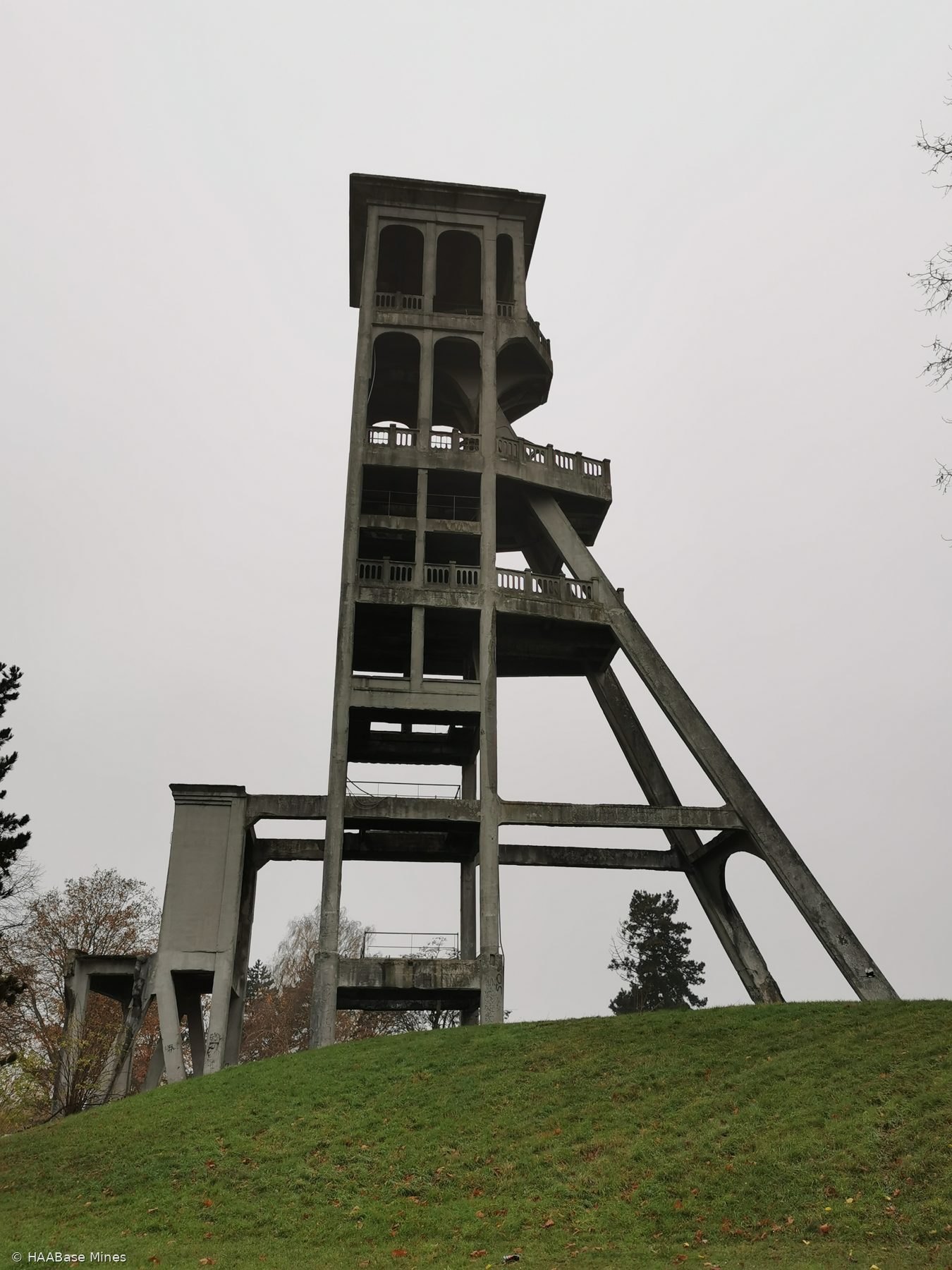
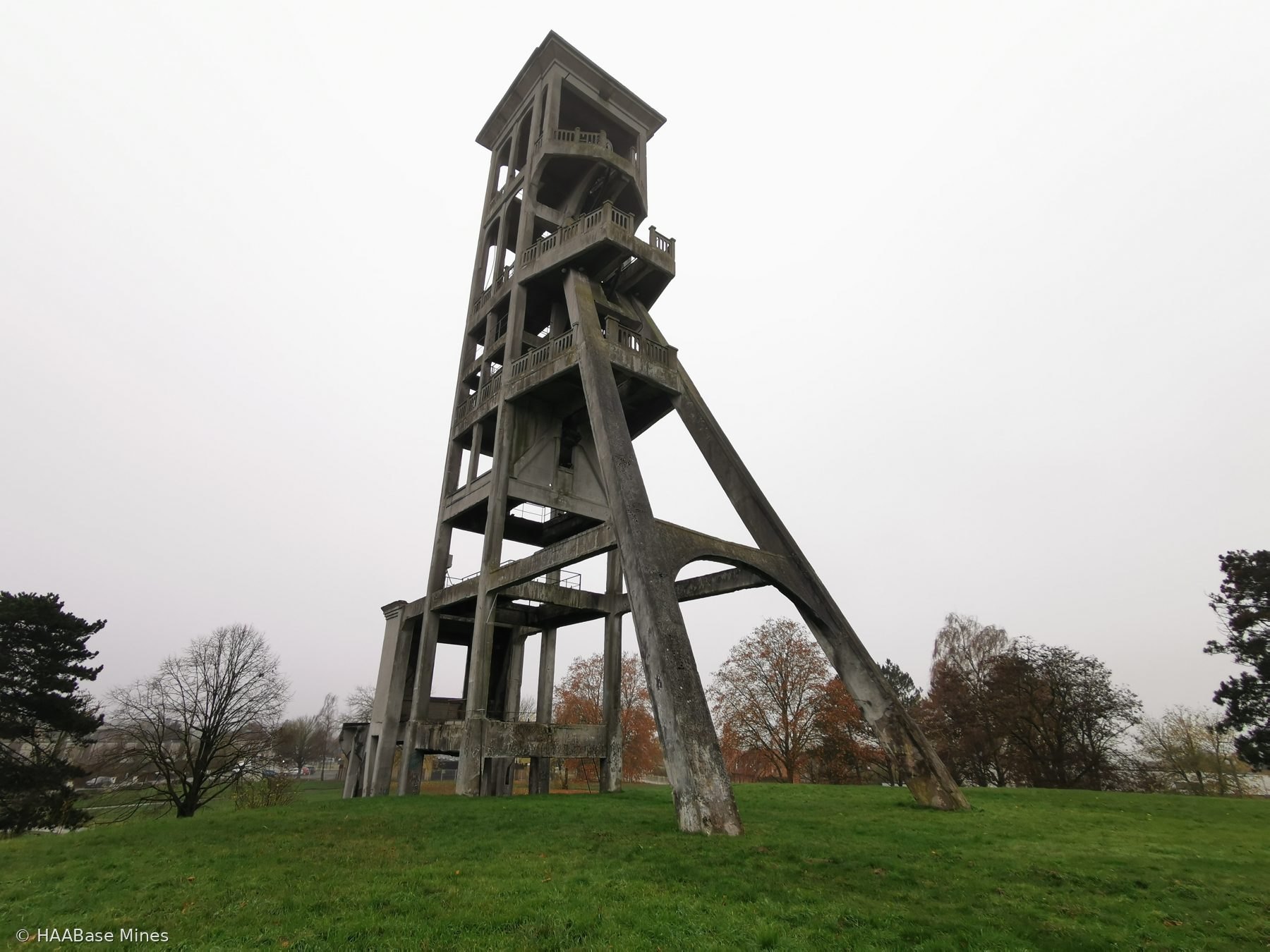
The headframe stands today in a public park of approximately 25,000 m², fitted with three platforms accessible by staircase.

The headframe stands in a public green space within the urban fabric of Valenciennes, where it reads as an isolated but prominent remnant of the former mine.

Map & photo

Fosse Dutemple mine headframe or winding tower site
Photograph taken: 16 November 2025
Map markers and directions links are provided for location reference only and do not indicate public access or permission to enter a site.

History

The Compagnie des mines d'Anzin began sinking the puits nos 1 and 2 of the fosse Dutemple — also known as the north and south puits — in 1764 at the west of Valenciennes. The shaft mouths were at an altitude of 53 metres. Coal was encountered at a depth of 76 or 79 metres (sources vary slightly), but the fosse encountered the Torrent d'Anzin, a major underground aquifer, whose water inflows were so great that fonçage was abandoned.

Resumption of fonçage was not undertaken until 1826, some 62 years later, at the same period as the sinking of the fosse Réussite. The fosse reached the demi-gras coal seam through the northern crosscuts of the 259- and 316-metre levels, after crossing a geological fault. The gisement was described as extremely disturbed by a series of crans between the faille de Bleuse Borne and the cran de retour.

In the 1880s it was planned to deepen the fosse to exploit the lower branches of the gras seam, which lay at great depth in this location. Cités were built near the fosse, forming the quartier Saint-Vaast. The puits n° 1 (north), 314 metres deep, was backfilled in 1911, before the construction of the new headframe.

The fosse was destroyed during the First World War. It was rebuilt after the war with a reinforced-concrete headframe erected in 1920, straddling both puits — though since the puits n° 1 had already been backfilled in 1911, the headframe served only the puits n° 2. This headframe was constructed by the Société Coopérative Entreprises Charles Tournay of Liège (Belgium).

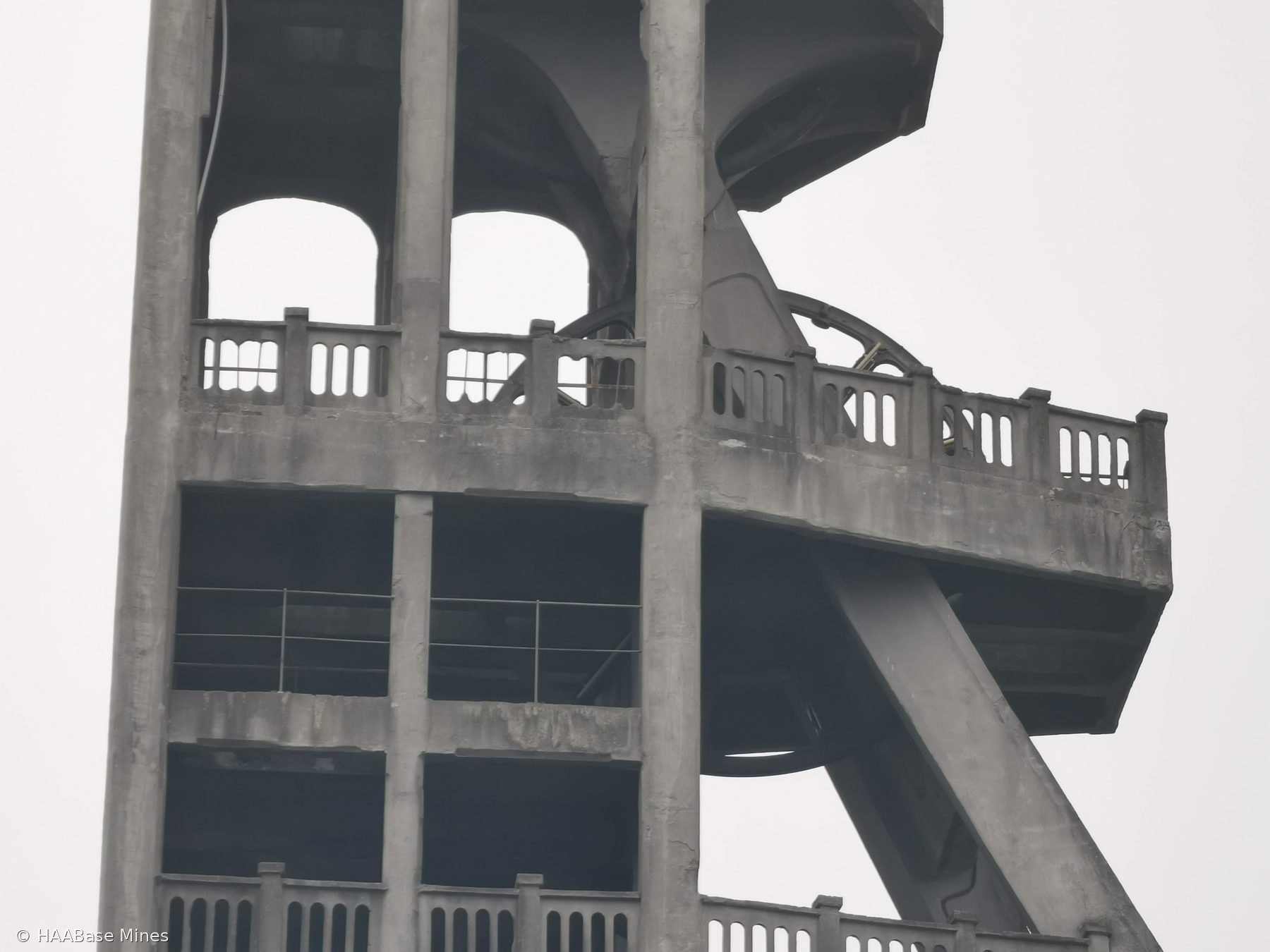
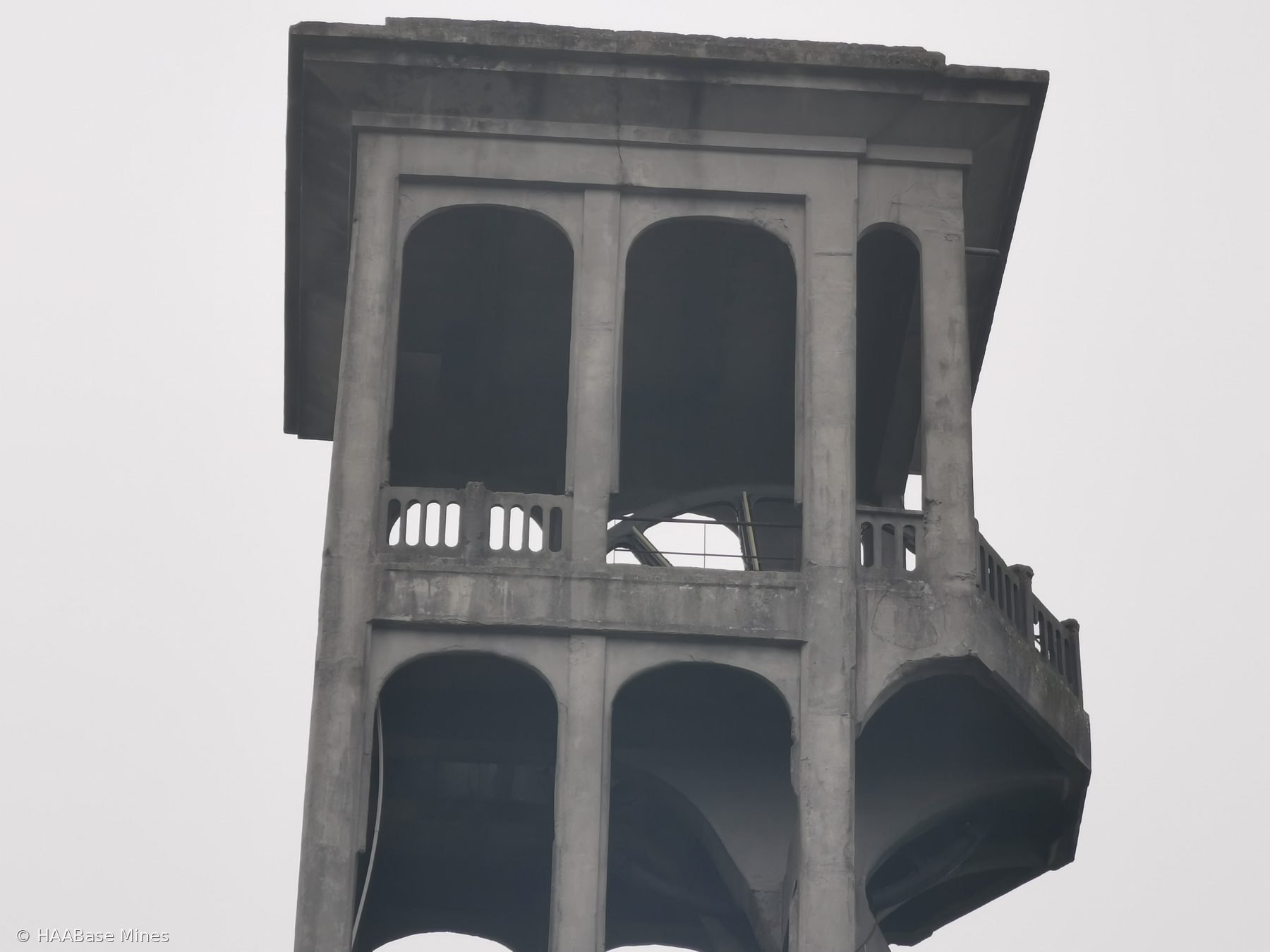
It is 42.50 metres in height from ground to roofline, weighs 1,000 tonnes, and carries three sheave wheels with diameters of 6 metres at heights of 27 and 34.50 metres respectively. The structure is built on the model of metallic headframes, with the faux-carré integral with the biga framework and vertical members. Its platforms are linked by internal staircases; guard-rails are in reinforced concrete; and a 35,000-litre water reservoir is incorporated in the roofline.

It was among the earliest reinforced-concrete headframes in the Nord-Pas-de-Calais region and has been noted as one of the last remaining concrete headframes of the former Compagnie des mines d'Anzin. The Compagnie constructed similar concrete headframes at its fosses Hérin, Renard, Saint-Mark and Haveluy after the First World War. Extraction at the fosse Dutemple ceased on 18 May 1940, after a total recorded production of 6,900,000 tonnes of houille grasse and demi-grasse, making it the third fosse in order of importance in the Établissement d'Anzin.

The Compagnie des mines d'Anzin was nationalised in 1946 and integrated into the Groupe de Valenciennes. The puits n° 2 continued to serve for ventilation of works until 1949, when, at a depth of 930 metres, it was backfilled. With this closure the shaft had remained open for 185 years, constituting the longest-serving shaft in the bassin minier.

In 1974 the municipality of Valenciennes decided to restore and develop the faubourg Dutemple. After acquiring the land and buildings of the former fosse, the municipality preserved the headframe and created a public green space and sports area on the former pit-head site. The resulting park covers approximately 25,000 m² and is partly wooded.

The headframe of the puits n° 2 was inscribed as a monument historique by arrêté of 6 May 1992. On 30 June 2012, the headframe was listed as part of the Bassin minier du Nord-Pas-de-Calais UNESCO World Heritage inscription, constituting site n° 14. The headframe stands today in the public park, accessible for viewing, fitted with three platforms accessible by internal staircase.

A decompression borehole S15 was drilled between 4 October and 26 November 1991 at Petite-Forêt, 1,790 metres north of the fosse Dutemple, reaching a depth of 151 metres with a diameter of 19.4 centimetres. Charbonnages de France materialised the pit-head marker in the early twenty-first century; the BRGM conducts annual inspections.
Timeline

1764
Exploration

Puits nos 1 and 2 begun; abandoned due to Torrent d'Anzin

The puits nos 1 and 2 of the fosse Dutemple were begun in 1764 by the Compagnie des mines d'Anzin at the west of Valenciennes. Coal was encountered at 76–79 metres depth, but the Torrent d'Anzin underground aquifer produced inflows so great that fonçage was abandoned.
1826
Construction

Fonçage resumed after 62-year interruption

Fonçage of the fosse Dutemple was resumed in 1826, 62 years after the initial abandonment, with more powerful means to overcome the water ingress.
1826–1940
Operation

Long operational phase; third most productive fosse of Établissement d'Anzin

Following resumption of fonçage in 1826, the fosse Dutemple operated for over a century, extracting houille grasse and demi-grasse. Total production over the fosse's life reached 6,900,000 tonnes, making it the third most productive fosse of the Établissement d'Anzin.
1911
Closure

Puits n° 1 (north) backfilled

The puits n° 1 (north), 314 metres deep, was backfilled in 1911.
1914–1918
Closure

Fosse destroyed during First World War

The fosse Dutemple was destroyed during the First World War.
1920
Construction

Reinforced-concrete headframe erected

A reinforced-concrete headframe was erected in 1920 over both puits, built by the Société Coopérative Entreprises Charles Tournay of Liège, Belgium. It is 42.50 metres in height, weighs 1,000 tonnes, and carries sheave wheels of 6 metres diameter. It was one of the earliest reinforced-concrete headframes in the region.
1940
Closure

Extraction ceases

Extraction at the fosse Dutemple ceased on 18 May 1940.
1946
Legislation

Compagnie des mines d'Anzin nationalised; integration into Groupe de Valenciennes

The Compagnie des mines d'Anzin was nationalised in 1946 and integrated into the Groupe de Valenciennes. The puits n° 2 continued in ventilation use.
1949
Closure

Puits n° 2 backfilled after 185 years in service

The puits n° 2 (south), 930 metres deep, was backfilled in 1949, having served since 1826 for extraction and thereafter for ventilation. With 185 years as an open shaft, it held the record for the longest-serving shaft in the bassin minier.
1974
Redevelopment

Pit-head site converted to public park; headframe preserved

The municipality of Valenciennes decided in 1974 to restore and develop the faubourg Dutemple. After acquiring the land, it preserved the headframe and created a public park and sports area of approximately 25,000 m² on the former pit-head site.
1992
Heritage

Headframe inscribed as monument historique

The headframe of the puits n° 2 of the fosse Dutemple was inscribed as a monument historique by arrêté of 6 May 1992.
2012
Heritage

Listed as UNESCO World Heritage site (site n° 14)

On 30 June 2012, the headframe of the puits n° 2 of the fosse Dutemple was listed as part of the Bassin minier du Nord-Pas-de-Calais UNESCO World Heritage inscription, constituting site n° 14.

Sources and records

Wikipedia article (French): Fosse Dutemple
Plateforme ouverte du patrimoine / Mérimée database: PA00107922
Monumentum heritage database: PA00107922
CAUE du Nord: observatoire entry, chevalement de la fosse Dutemple
Office de Tourisme Valenciennes Tourisme et Congrès: chevalement Dutemple
mineur62.free.fr: survey of reinforced-concrete headframes in the Nord-Pas-de-Calais
patrimoine-minier.fr: industrial heritage survey of Nord-Pas-de-Calais
Gaillette.fr: UNESCO Valenciennes heritage summary
Wikipedia article (French): Liste des puits de mine situés à Valenciennes
This researched site record is part of the HAABase Mines database. Normal personal research and browsing is welcome. Automated bulk extraction, republication, or harvesting of site text and images is not permitted without written consent.