History
At the beginning of the twentieth century, a series of exploratory soundings carried out around Folschviller identified coal seams that geologists recognised as the continuation of the Lorraine coalfield. In 1903 the first installations appeared at the foot of the Château de Fürst; further soundings in 1906 at Kalkofen and Letschberg, and in 1907 at depth, confirmed more important deposits. From 14 July 1908 work began on erecting a mine carreau and its tower. A Franco-German company began fonçage of two shafts near the old village centre in 1909, but massive water inflows flooded both puits in 1911 at approximately 220 metres depth, ending the project and causing the company's failure. The two abandoned shafts are listed in the Wikipedia article on the puits des houillères de Lorraine.
In 1928 the Société Anonyme Internationale des Houillères acquired the domains of Fürst and Vieux-Berfang; in 1929 it became the Compagnie des Mines de Saint-Avold. In 1931 the company began fonçage of two new shafts — Folschviller 1 and 2 — at the Fürst site on the heights above the village, using cimentation to overcome the aquiferous strata. The fonçage was entrusted to the German firm Karl Alexander of Aix-la-Chapelle under war-damage reparations provisions. In 1933 a massive water inflow flooded the workings at 310 metres, compounding the difficulties already created by the economic depression of the early 1930s. Before 1939 the surface installations were largely complete, including the chevalement, workshops, and electricity generating station, but the shaft-sinking was far from finished. The German occupation and annexation of Alsace-Moselle interrupted the works further.
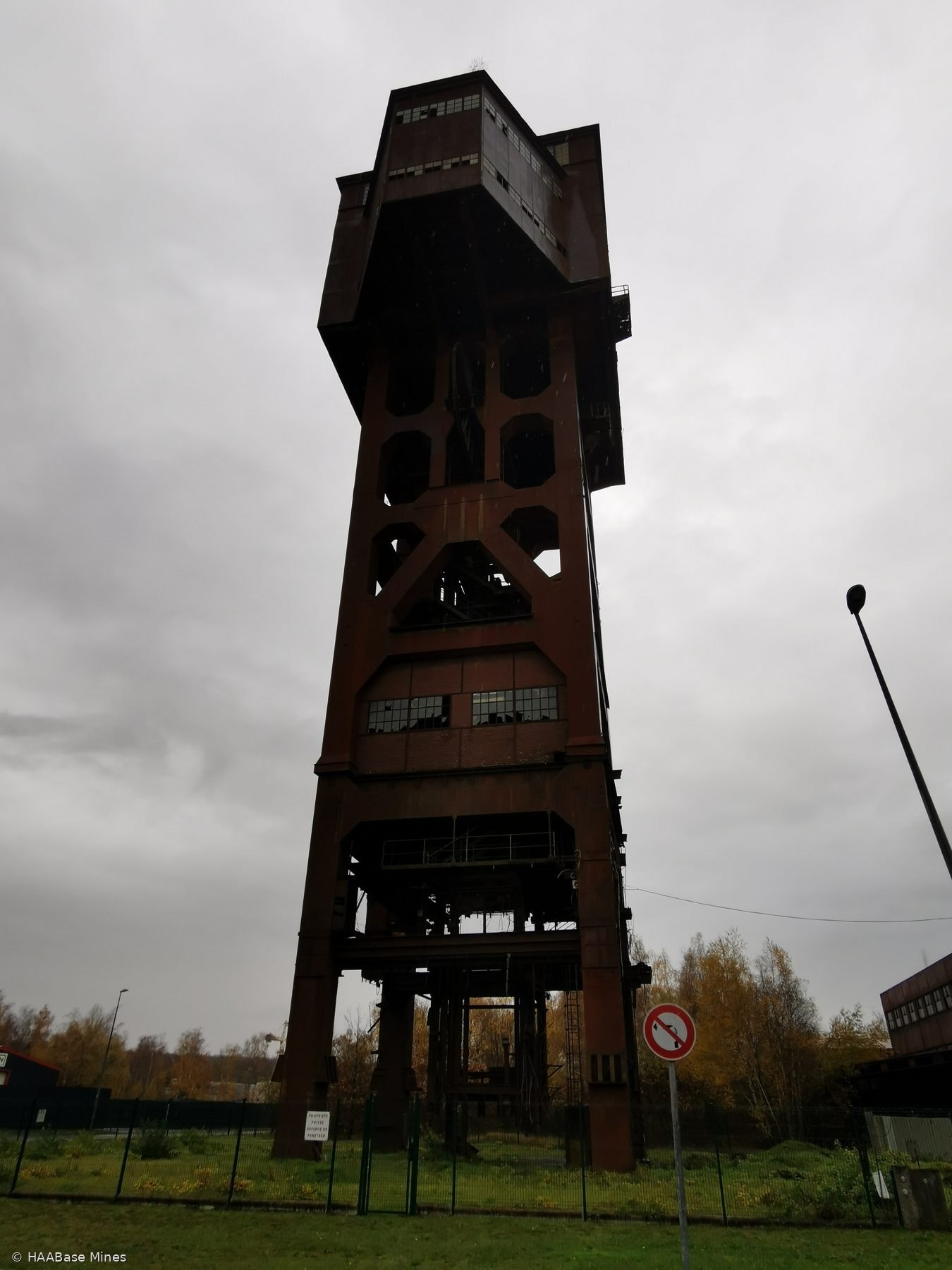
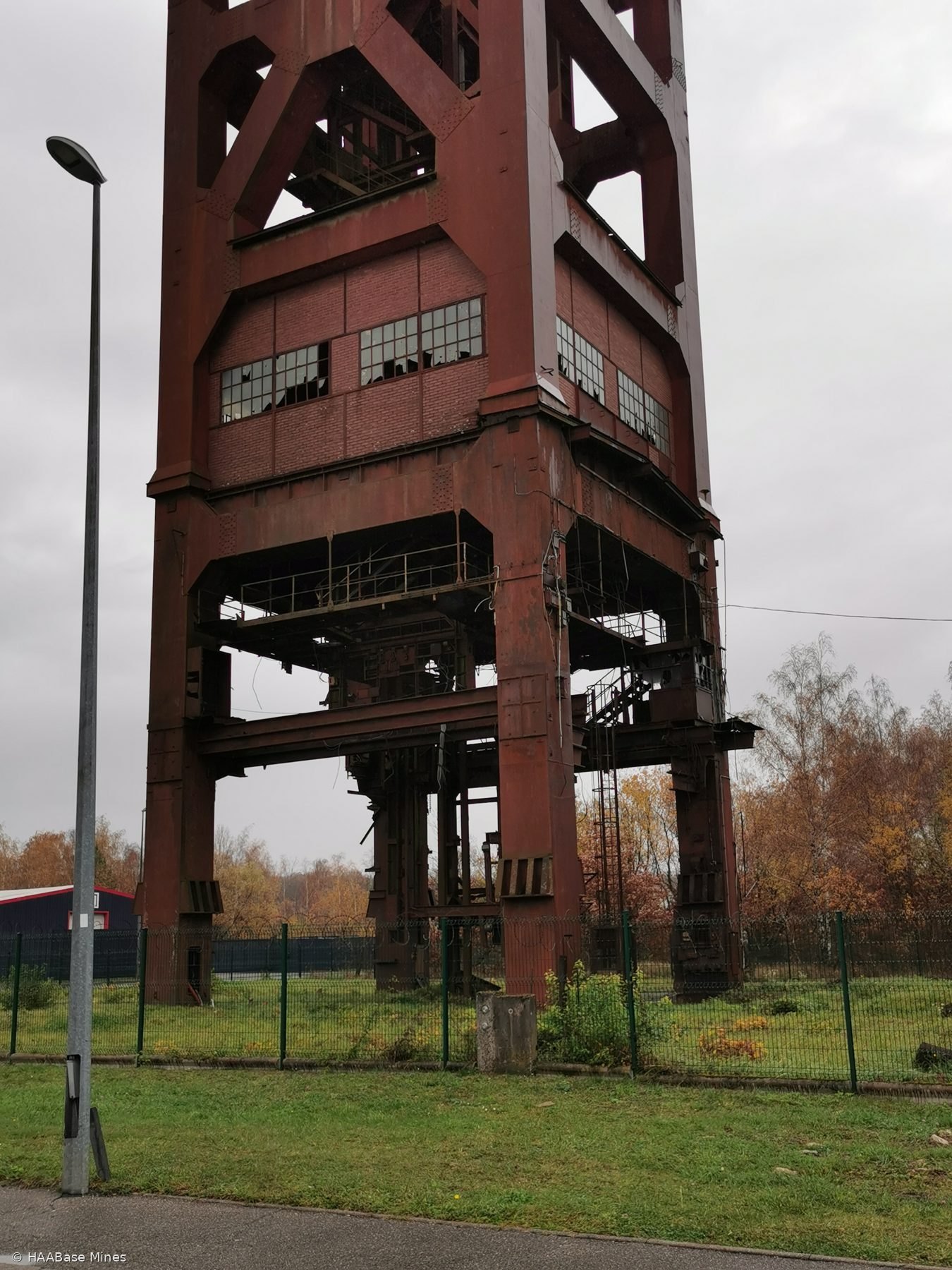
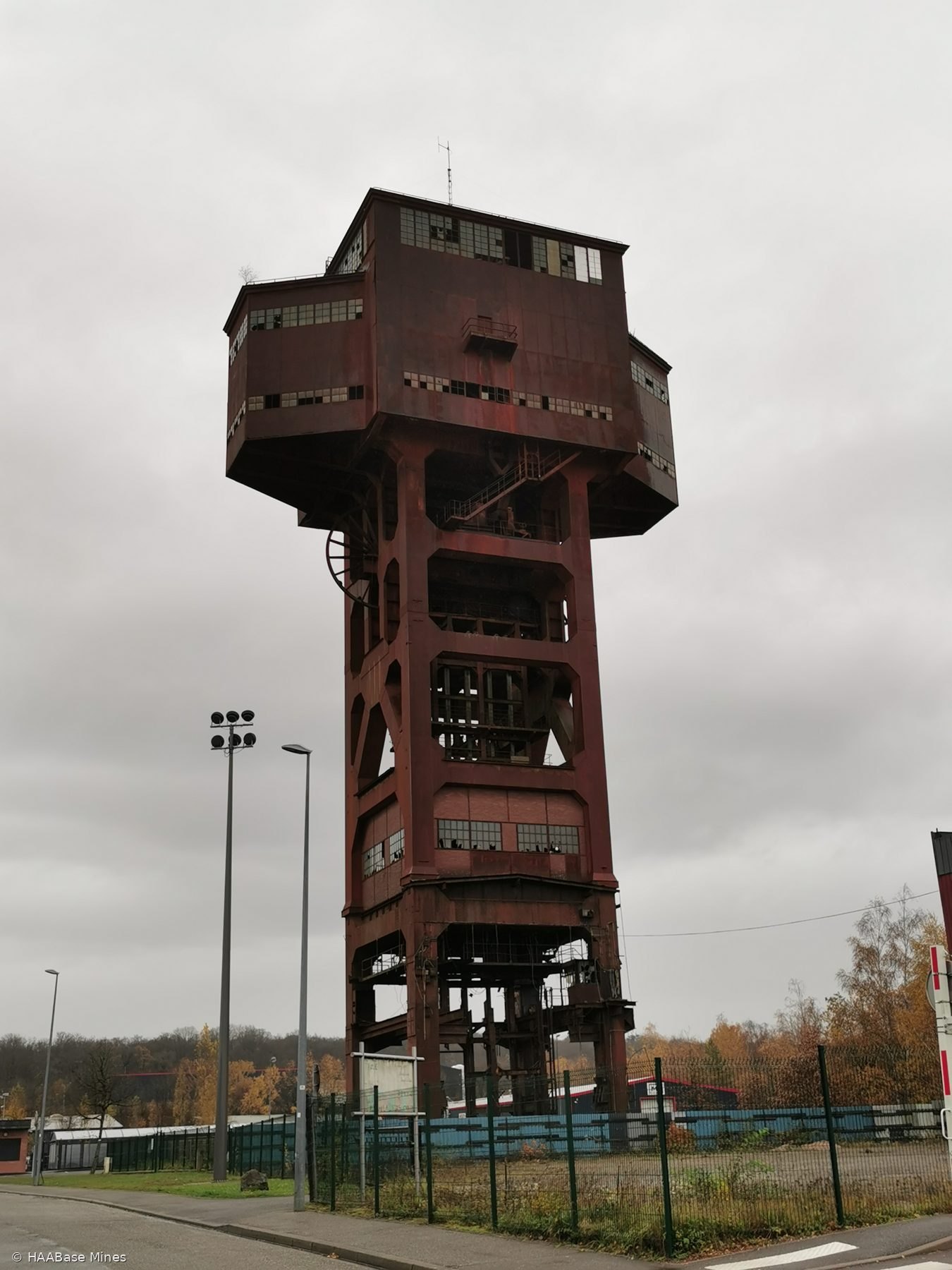
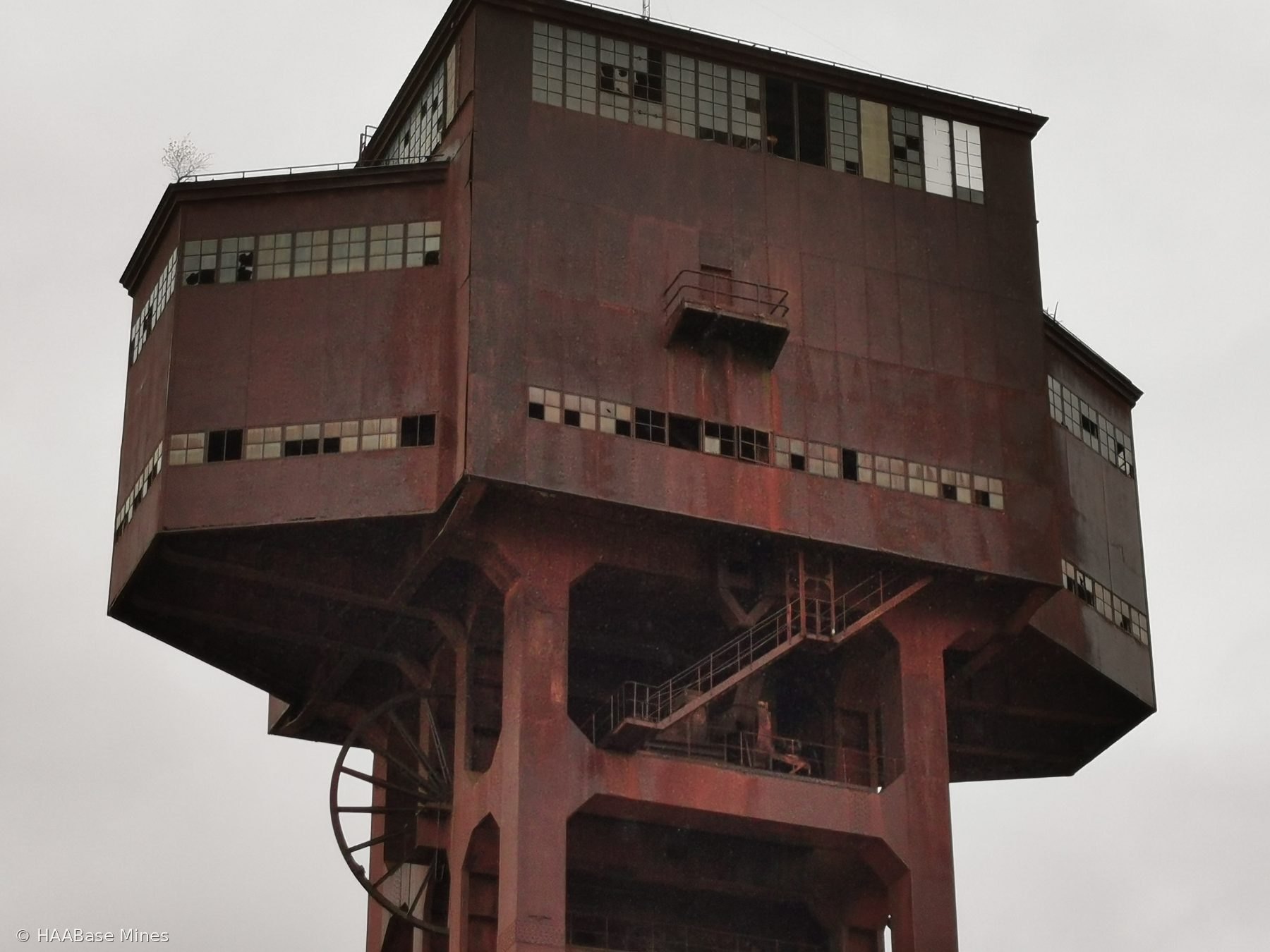
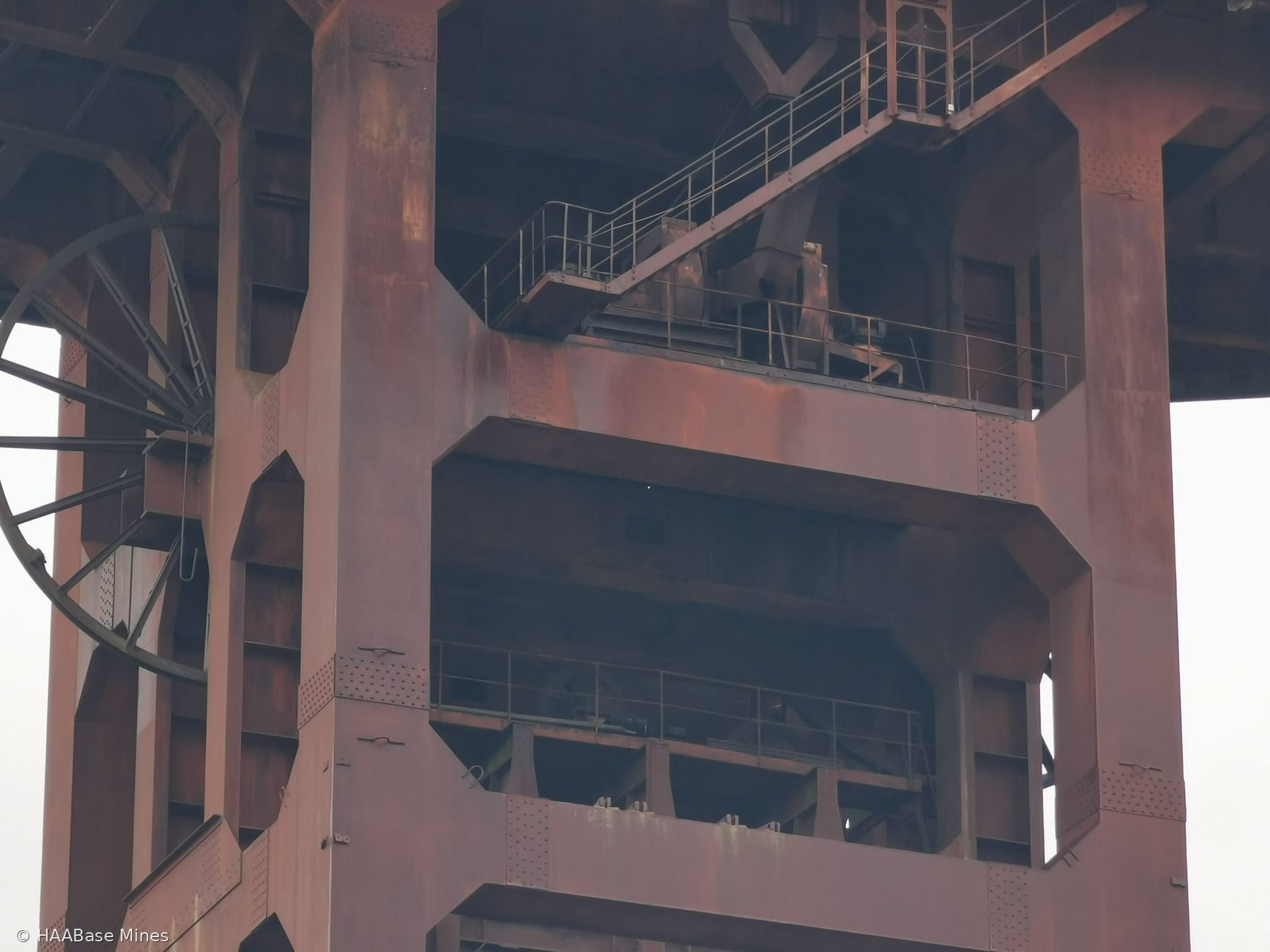
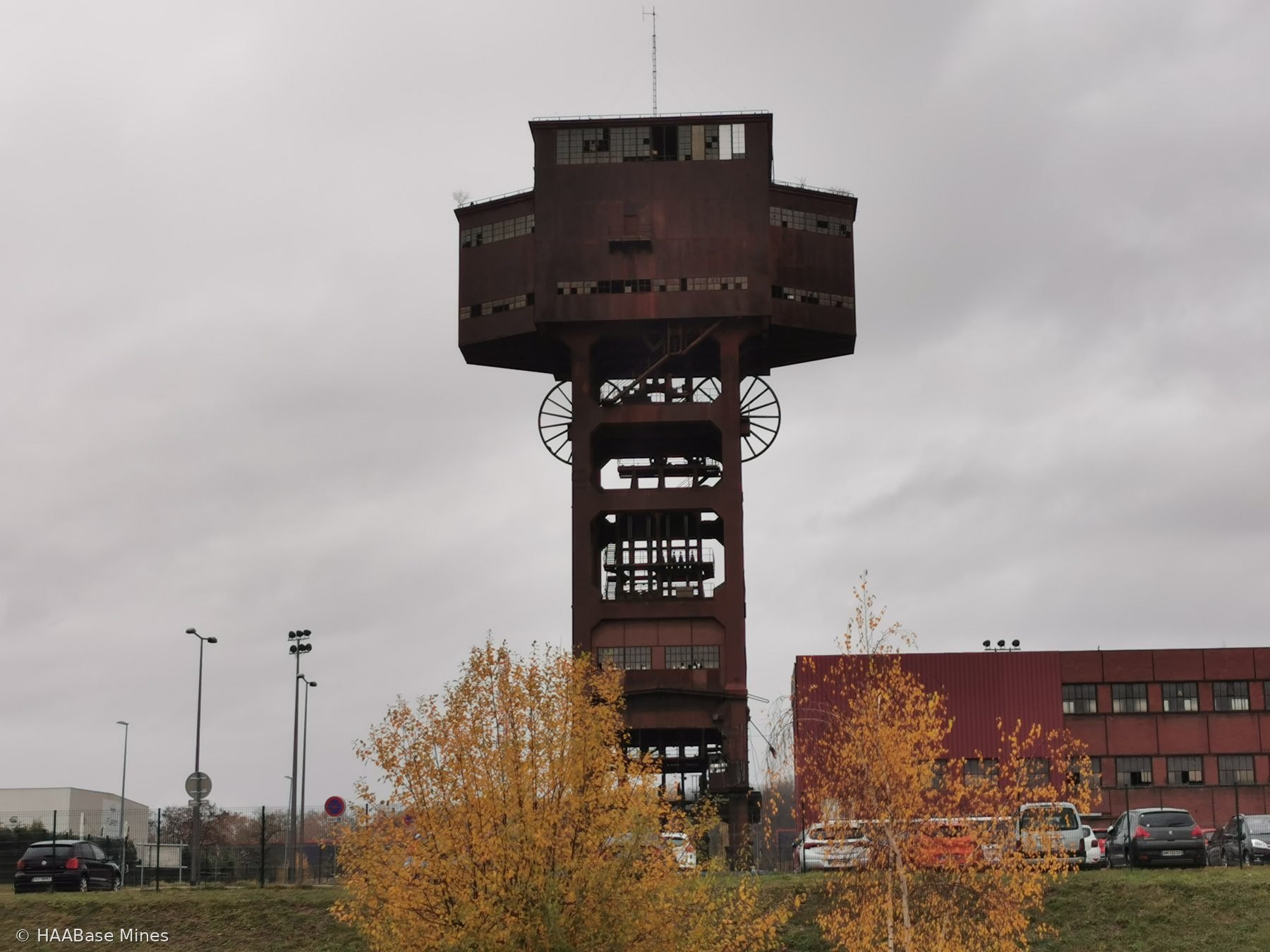
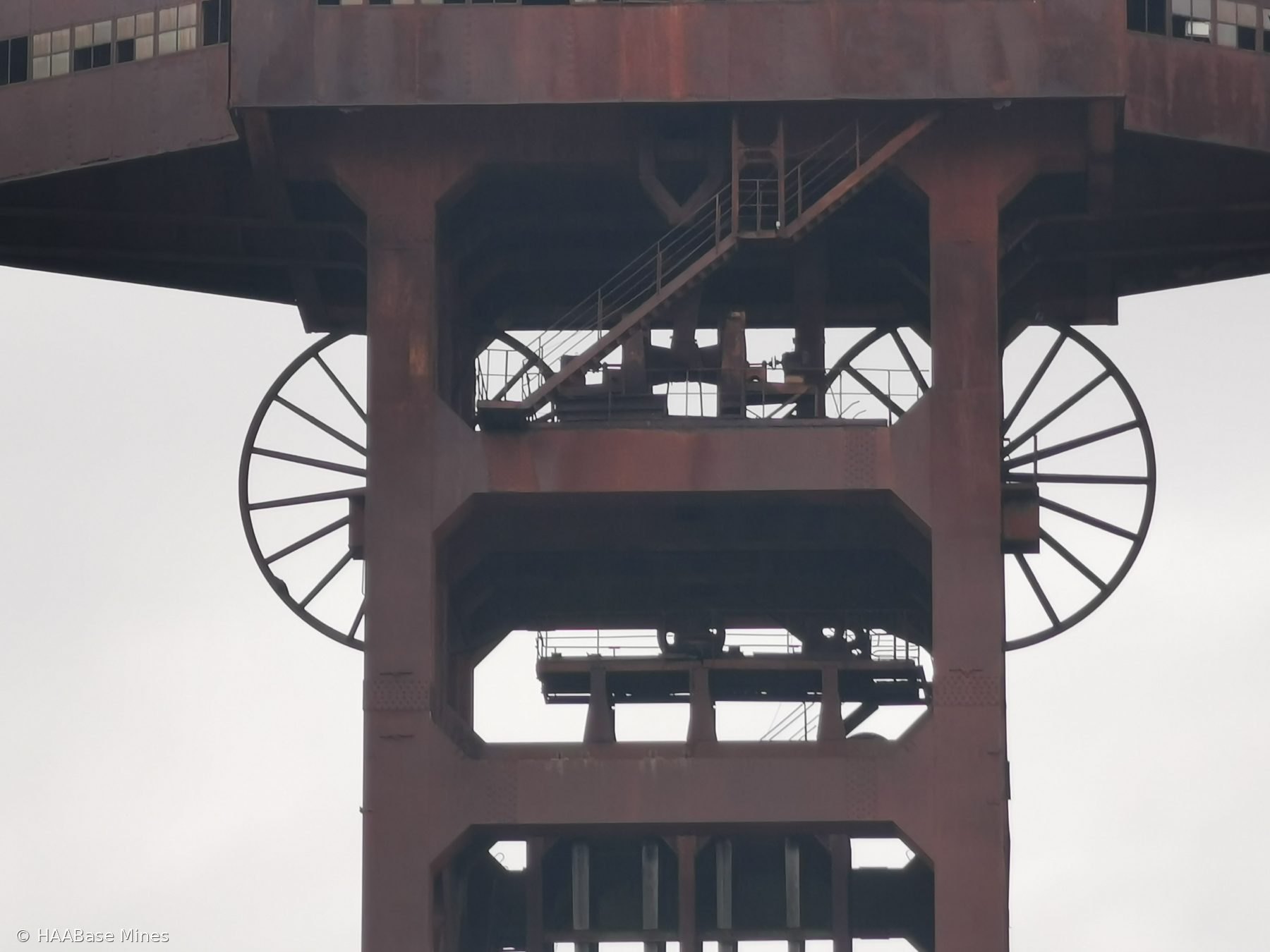
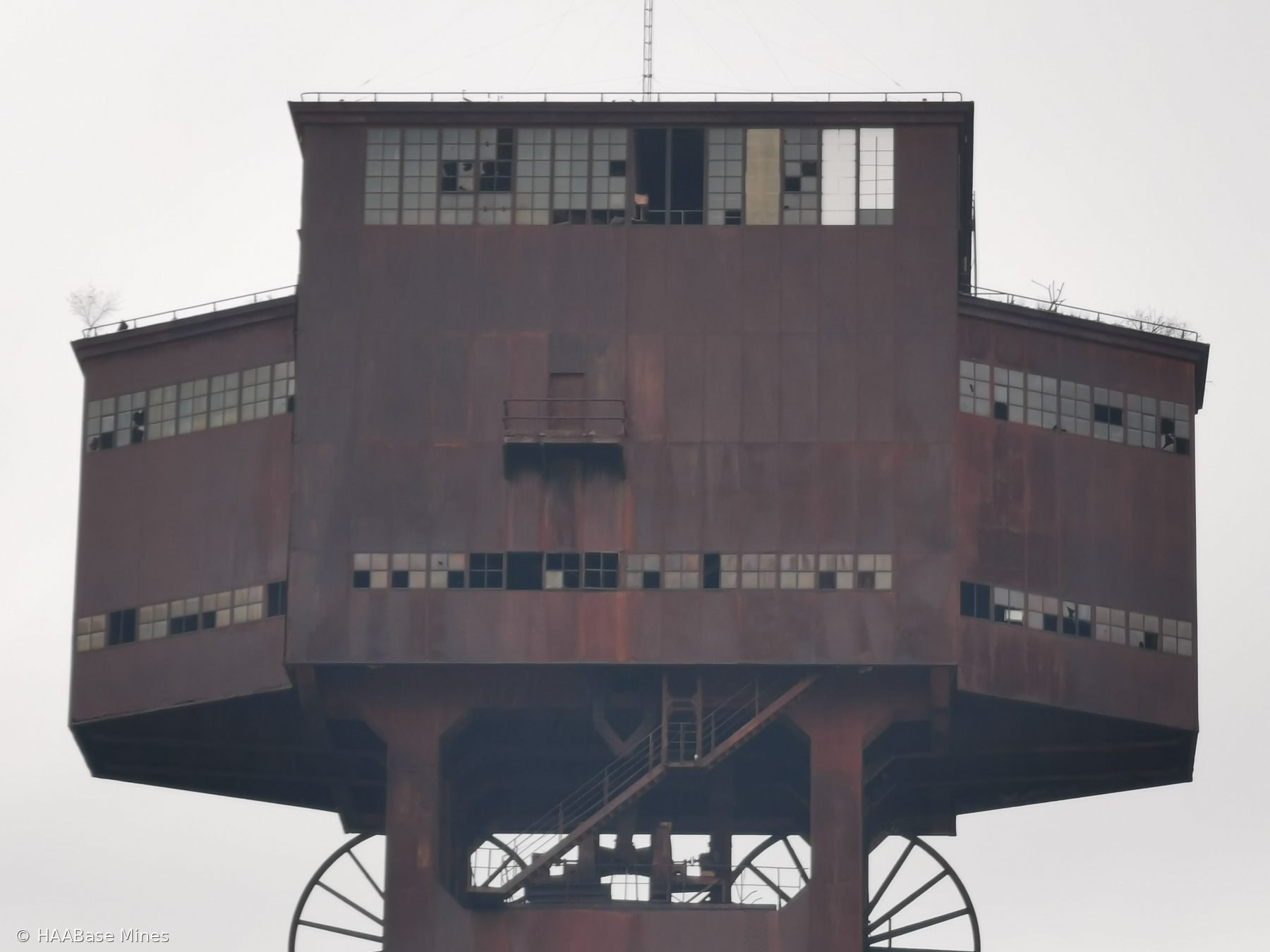
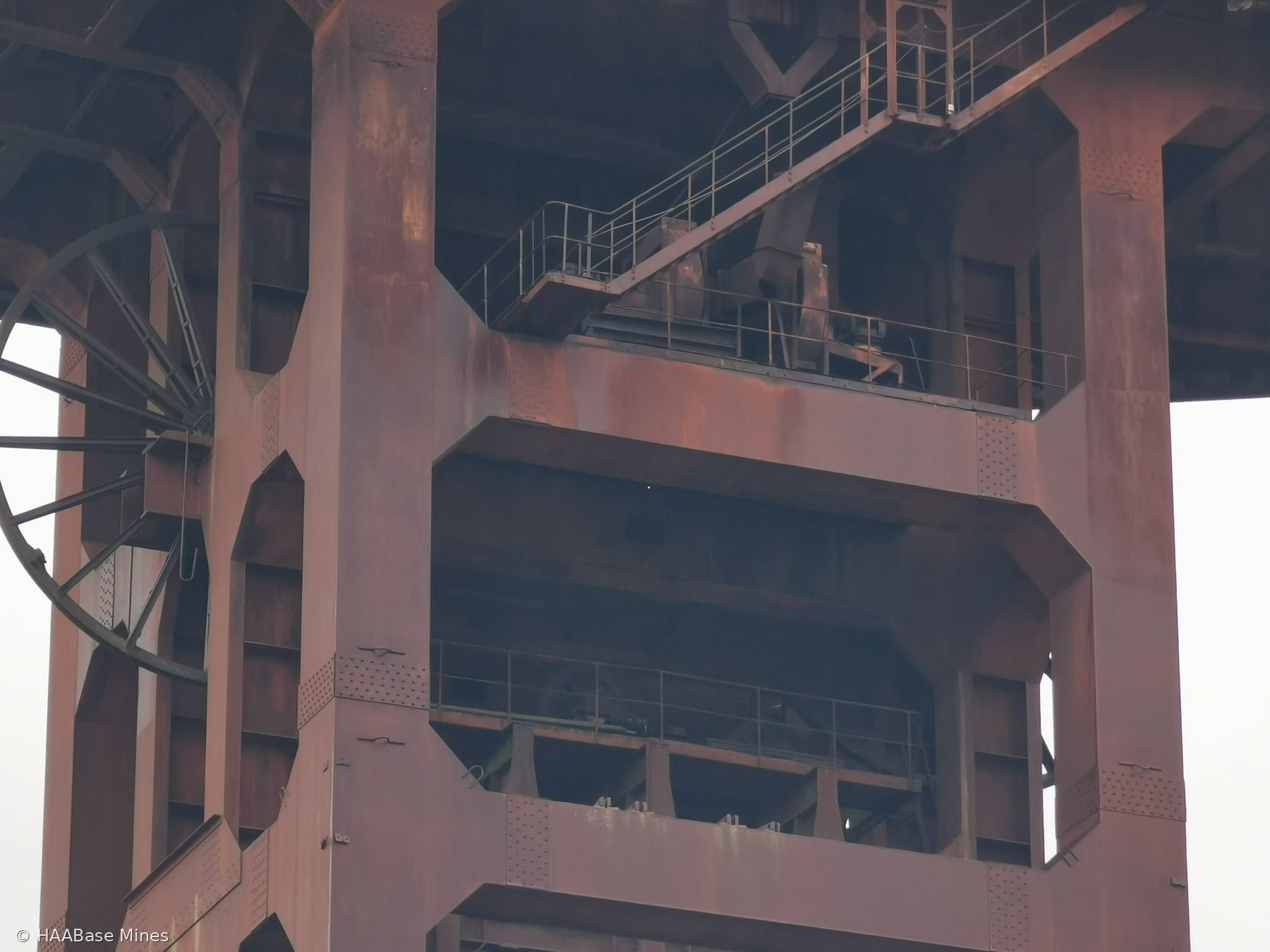
Following nationalisation in 1946, the Houillères du Bassin de Lorraine (HBL) resumed fonçage. The shafts were completed in 1948. The extraction tower of puits no. 1 — the tour-marteau — was erected in 1948 by the firm Barbier, Bernard et Turenne of Quiévrechain (Nord) for the HBL. It stands 58 metres high and is of the hammer (marteau) type, in which the winding engine rooms are integrated symmetrically into the upper portion of the tower rather than positioned alongside it at ground level, giving the structure its characteristic silhouette. The tower has two extraction compartments with two machines at its summit. Puits no. 1 reached a depth of 907 metres. The construction of the tour-marteau followed a line of technical necessity: the hillside site at Fürst favoured a compact footprint, and the hammer form eliminated the need for a separate engine house beside the shaft.
Extraction began in 1949 with 52,000 tonnes. In 1950 production rose to 190,000 tonnes. On 25 January 1951 a serious grisou fire halted extraction for five months; the Nied river was diverted to extinguish the underground fire by flooding the level. After recovery and re-establishment of underground workings, extraction resumed. On 16 April 1955 a water inflow of 28 cubic metres per minute halted the mine for nearly a month. From 1949 the siège merged with the Groupe de Faulquemont to form the Groupe de Faulquemont-Folschviller. The extraction workforce at the siège peaked at 2,160 in 1958. In 1968, at the height of production, 956,000 tonnes of coal were extracted. The minister of industry André Bettencourt's announcement of closures in 1968 was followed by the Accords de Forbach, which sealed the fate of the siège de Faulquemont (closed 27 September 1974), while Folschviller continued. The gisement at Folschviller diminished progressively and the siège closed on 2 March 1979 with the ascent of a symbolic last berline from the veine Maurice. Total production 1949–1979: 20,041,979 tonnes.
After closure the Houillères du Bassin de Lorraine announced plans to demolish the tower. The inhabitants mobilised and the Amis de la mine de Folschviller secured its preservation; in 1982 the HBL agreed to cede it to the commune for 30,000 francs. Alfred Neuhauser, founder of the Neuhauser industrial bakery, acquired the tower in 1991 with a project to convert it into a panoramic restaurant; this project was never realised and the structure deteriorated. The tower was inscribed to the Inventaire supplémentaire des Monuments Historiques by arrêté of 22 October 1992 as a rare and representative example of the industrial architecture of the mining era. In 2022 the commune of Folschviller reacquired the tour-marteau from the Neuhauser family for the symbolic sum of 100 euros. Today the tower stands within the zone industrielle de Fürst on the site of the former carreau; of the original installation, the tower and part of the recette building have been conserved. The portal entrance with its guardian lodges also survives.