Site overview

The Fosse 8 de Dourges, officially known as fosse no. 8 – 8 bis dite Émile Cornuault of the Compagnie des mines de Dourges, is a former colliery situated at Évin-Malmaison in the Pas-de-Calais. Works on puits no. 8 began on 6 October 1919 in the north-east of the concession, following interruption by the First World War. Puits no. 8 bis was begun in 1923.

The fosse entered production in 1924. After nationalisation in 1946 it was integrated into the Groupe d'Oignies. Extraction ceased in 1961 when the fosse no. 10 of the Groupe d'Oignies came into service; the fosse was then used for personnel and materials circulation.

The current headframe, a post-nationalisation steel structure originally erected in 1947 on the puits no. 3 ter of the fosse no. 3 – 3 bis – 3 ter des mines de Marles at Auchel, was transferred and rebuilt on puits no. 8 in 1961. Service ceased in 1973 and the fosse served only for winding of schist and water management until 1991. The puits were then backfilled and the headframe of puits no. 8 bis demolished.

The puits no. 8 headframe survived, was saved from demolition by a local association, acquired by the commune in 1995, restored in 2004, and inaugurated in its current painted form in December 2005. It was inscribed as a monument historique in November 2009 and, together with the cité-jardin Cornuault, inscribed on the UNESCO World Heritage List as site no. 43 on 30 June 2012.

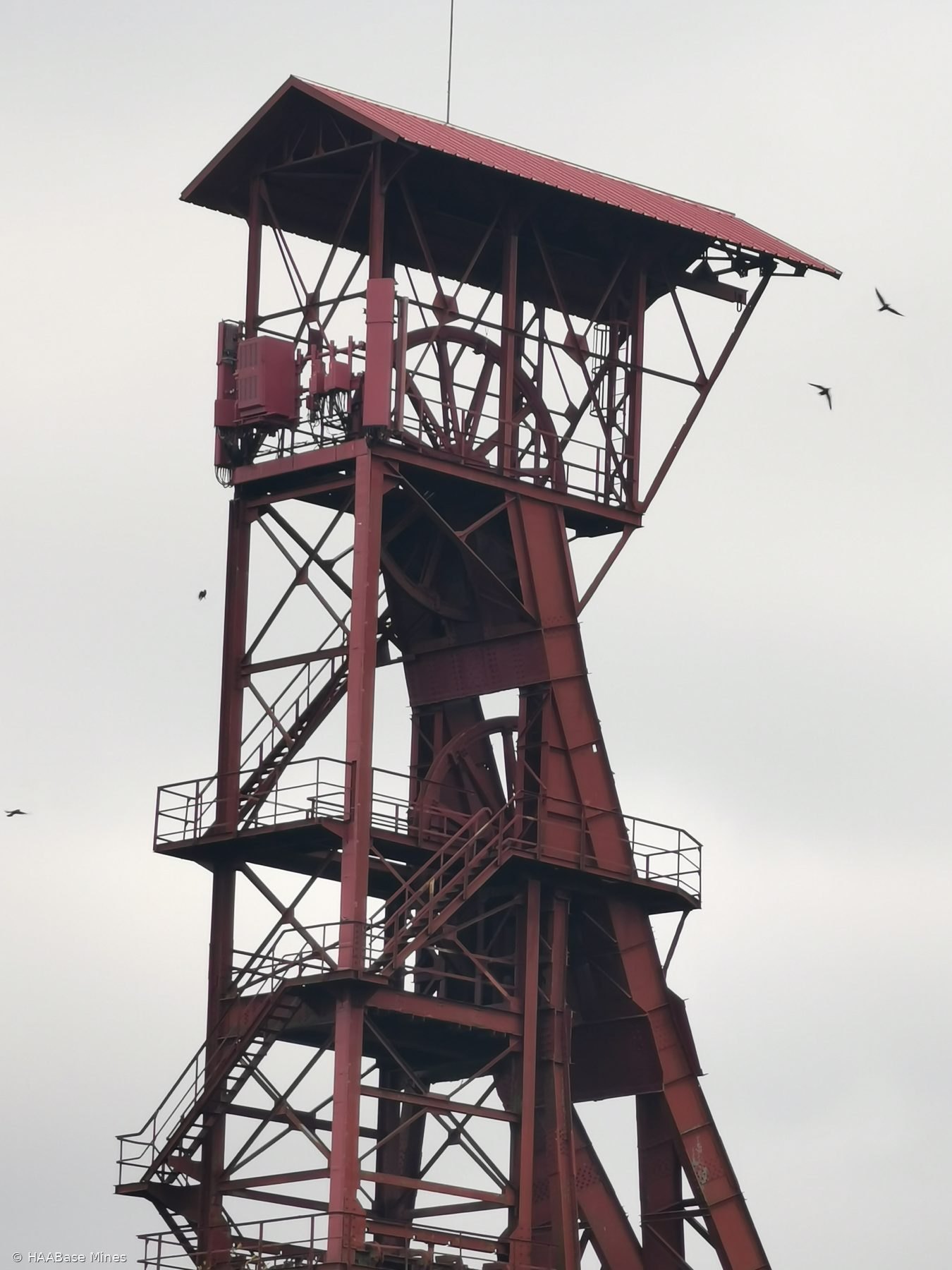
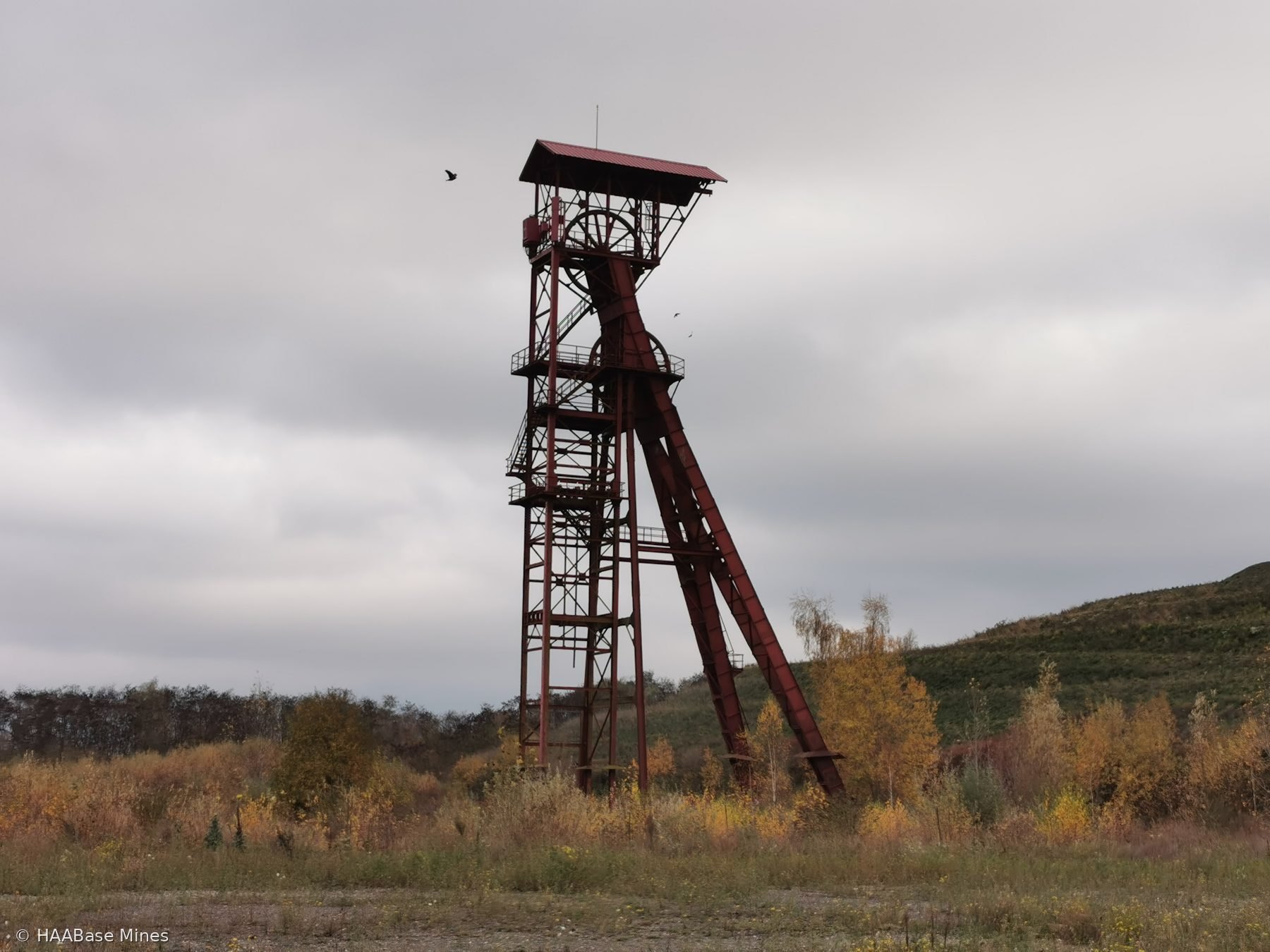
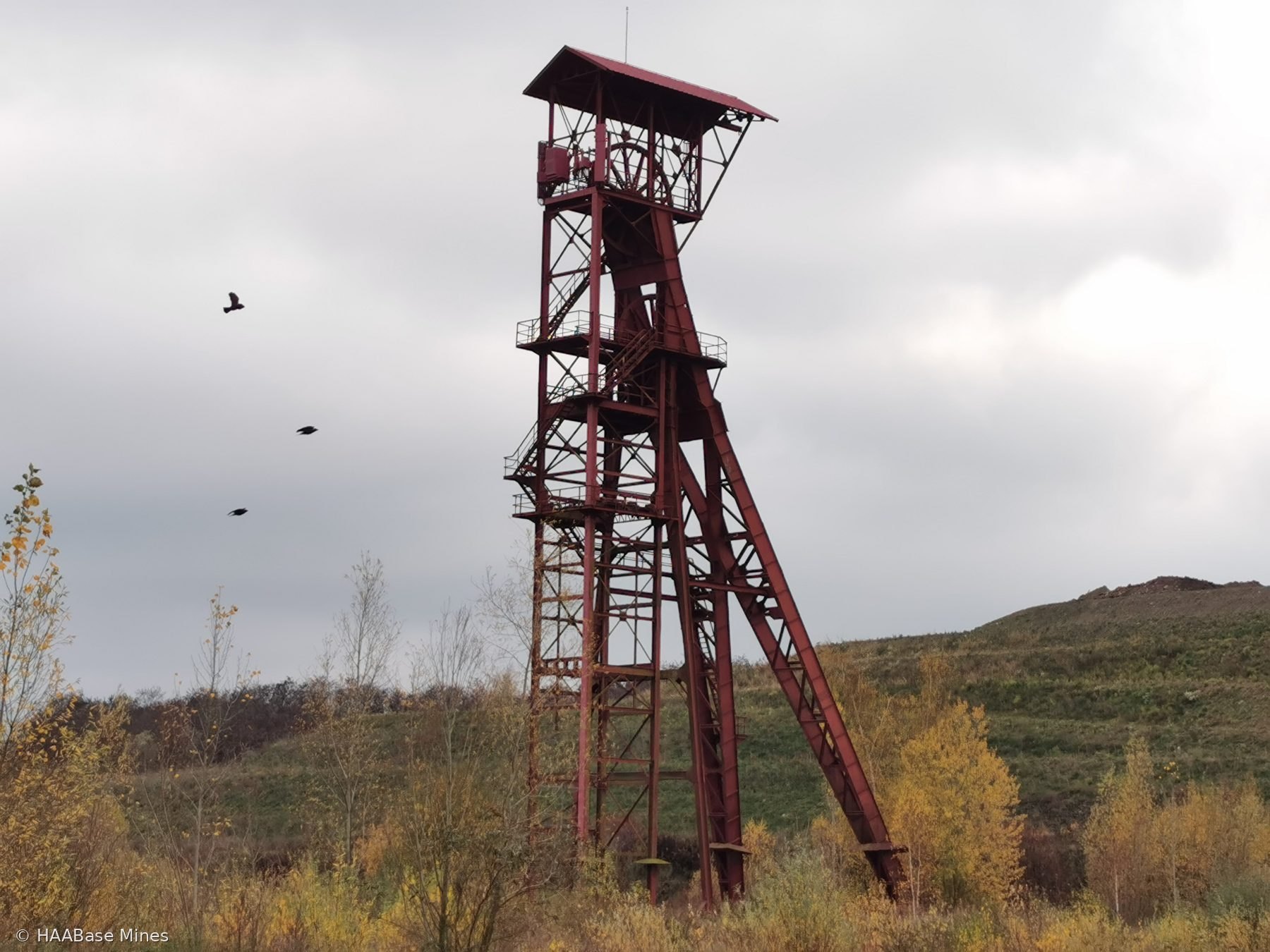
Set in flat ground on the edge of settlement, the surviving headframe stands as a clear and isolated marker within a largely cleared former colliery site.

Map & photo

Fosse n° 8–8 bis de Dourges mine headframe or winding tower site
Photograph taken: 16 November 2025
Map markers and directions links are provided for location reference only and do not indicate public access or permission to enter a site.

History

The Compagnie des mines de Dourges operated in the eastern Pas-de-Calais, with its concession centred at Dourges and reaching north-east to Évin-Malmaison. Évin-Malmaison had long been a village sustained by its position on the banks of the Deûle; the arrival of mining transformed it from a settlement of 708 inhabitants in 1793 to a town of over 4,500 by the early twenty-first century.

Works on fosse no. 8 began on 6 October 1919, after the conclusion of the First World War. The original sinking had been planned in 1913 but the war halted operations; pits were sabotaged and flooded and required extensive dénoyage before activity could resume. The surface buildings were reconstructed in the 1920s. Puits no. 8 bis, 60 metres to the north-north-west, was begun in 1923. In 1923 provisional installations for the resumption of work at puits no. 8 and for the sinking of puits no. 8 bis, intended as a return-air shaft, were completed. In 1926 and 1927 the assembly of the extraction machine for puits no. 8, with its headframe and extraction building, was completed. The fosse entered extraction in 1924, and large workers' cités were established to the north in Évin-Malmaison and Ostricourt. Three terrils were created to the south and east of the fosse: terril no. 109 (a conical terril of 60 metres, later exploited down to its base), terril no. 113 (a plateau terril of 24 metres, partially exploited), and terril no. 113A.

The Compagnie des mines de Dourges was nationalised in 1946 and the fosse integrated into the Groupe d'Oignies within the Houillères du Bassin du Nord-Pas-de-Calais. After nationalisation fosse no. 8 was connected underground to fosse no. 7. In 1956 puits no. 8 bis was deepened. In 1961, when the fosse no. 10 of the Groupe d'Oignies came into service, extraction at fosse no. 8 – 8 bis was stopped. The fosse was then assigned to personnel and materials circulation via new cages installed in puits no. 8, and the extraction machine was replaced by a 1,800 CV Koepe pulley machine. The building of puits no. 8 bis was converted to house a ventilation installation. In 1968 fosse no. 8 was connected to fosses no. 9 and no. 10 at Oignies via the level 630, and took on the personnel of fosse no. 7, which had closed shortly before. Service ceased in 1973.

The current headframe standing on puits no. 8 has a distinct provenance. It is a steel headframe of the avant-carré porteur type, with welded solid-web sections contreventées in riveted lattice, equipped with two superimposed molettes of 6.50 metres diameter and reinforced by two secondary legs. The crown structure comprises four main posts supporting a two-pitch roof topped by a lightning rod. Originally built in 1947 on the puits no. 3 ter of the fosse no. 3 – 3 bis – 3 ter des mines de Marles at Auchel, it served there for approximately fifteen years. When exploitation at puits no. 3 ter ended in 1961 or 1962, the Houillères du Bassin du Nord-Pas-de-Calais dismantled it and rebuilt it on puits no. 8 at Évin-Malmaison, where it replaced the earlier headframe.

Following the definitive cessation of activity in 1991 — when the site was declared hors service, cables were dismantled, puits no. 8 was backfilled, and the headframe of puits no. 8 bis was demolished — the puits no. 8 headframe was left abandoned and narrowly escaped demolition. The local association Le 8 d'Evin, presided by Alain Rambeaux, and the municipality of Évin-Malmaison campaigned for its preservation; the commune acquired the headframe in 1995. Restoration and security works were carried out in 2004, financed under the Contrat Plan-État-Région-Nord-Pas-de-Calais 2000/2006 with FEDER co-financing at a total cost of 641,934 euros. Repainted in vermilion red, the headframe was inaugurated on 4 December 2005 in the presence of local and regional elected officials. The cité-jardin Cornuault, built in 1925 and named after the civil engineer Émile Cornuault, was likewise preserved and renovated. The chevalement was inscribed to the Inventaire supplémentaire des Monuments Historiques by arrêté of 25 November 2009. On 30 June 2012 the chevalement of puits no. 8 and the cité-jardin Cornuault were inscribed on the UNESCO World Heritage List as site no. 43 within the 353-element inscription of the Bassin minier du Nord-Pas-de-Calais. At the beginning of the twenty-first century, Charbonnages de France materialised the heads of both puits no. 8 and no. 8 bis. Surviving structures also include the bains-douches, the salle de paye, the maison du garde, part of the administrative offices, and sections of the enclosure wall.
Timeline

1913
Construction

Fosse no. 8 sinking planned; works begin before war interruption

Exploitation of fosse no. 8 was planned and preliminary works began in 1913 in the north-east of the Dourges concession. The First World War halted the sinking; pits were sabotaged and flooded, requiring dénoyage before operations could resume.
1919
Construction

Fosse no. 8 works formally resume after the war

Works on puits no. 8 were formally resumed on 6 October 1919, following the end of the First World War and post-war dénoyage of the flooded pits.
1923
Construction

Puits no. 8 bis sunk; provisional installations completed

Puits no. 8 bis was begun in 1923, 60 metres to the north-north-west of puits no. 8, intended as a return-air shaft. Provisional installations for the resumption of works at puits no. 8 and the sinking of puits no. 8 bis were completed in 1923.
1924
Operation

Fosse enters extraction; cités built to north

The fosse entered coal extraction in 1924. Large workers' cités were established to the north in Évin-Malmaison and Ostricourt.
1926–1927
Construction

Extraction machine, headframe, and extraction building completed

In 1926 and 1927 the assembly of the extraction machine for puits no. 8, together with its headframe and extraction building, was completed.
1946
Legislation

Nationalisation: fosse integrated into Groupe d'Oignies

The Compagnie des mines de Dourges was nationalised in 1946. Fosse no. 8 – 8 bis was integrated into the Groupe d'Oignies within the Houillères du Bassin du Nord-Pas-de-Calais. Underground connection to fosse no. 7 was established after nationalisation.
1947
Construction

Current headframe originally erected at Auchel

The headframe now standing on puits no. 8 was originally erected in 1947 on puits no. 3 ter of the fosse no. 3 – 3 bis – 3 ter des mines de Marles at Auchel, as part of the post-nationalisation Groupe d'Auchel. It is a steel avant-carré porteur structure with two superimposed molettes of 6.50 metres diameter.
1956
Construction

Puits no. 8 bis deepened

Puits no. 8 bis was deepened in 1956.
1961
Closure

Extraction ceases; fosse reassigned to personnel circulation

Extraction at fosse no. 8 – 8 bis was stopped in 1961 following the commissioning of fosse no. 10 of the Groupe d'Oignies. The post-nationalisation headframe from Auchel was transferred and rebuilt on puits no. 8. A 1,800 CV Koepe pulley machine replaced the former extraction machine. Puits no. 8 bis building was converted to house ventilation equipment.
1968
Operation

Fosse connected to fosses 9 and 10 at Oignies via level 630

In 1968 fosse no. 8 was connected to fosses no. 9 and no. 10 at Oignies by the level 630, and took on the personnel of fosse no. 7, which had recently closed.
1973
Closure

Service ceases; fosse used only for schist winding and water management

The fosse ceased operational service in 1973 and was thereafter used only for the remonte des schistes and exhaure until 1991.
1991
Closure

Site declared hors service; puits backfilled; headframe 8 bis demolished

In 1991 the site was declared hors service. Cables were dismantled, puits no. 8 was backfilled, and the headframe of puits no. 8 bis was demolished. The puits no. 8 headframe survived but was left abandoned.
1995
Heritage

Commune acquires puits no. 8 headframe

The municipality of Évin-Malmaison acquired the puits no. 8 headframe in 1995, saving it from demolition following a campaign by the local association Le 8 d'Evin under president Alain Rambeaux.
2004–2005
Heritage

Headframe restored; inaugurated 4 December 2005

Restoration and safety works were carried out in 2004 under the Contrat Plan-État-Région-Nord-Pas-de-Calais 2000/2006 with FEDER co-financing, totalling 641,934 euros. Repainted in vermilion red, the headframe was inaugurated on 4 December 2005.
2009
Heritage

Headframe inscribed as monument historique

The chevalement of fosse no. 8 was inscribed to the Inventaire supplémentaire des Monuments Historiques by arrêté of 25 November 2009.
2012
Heritage

UNESCO World Heritage inscription: site no. 43

The chevalement of puits no. 8 and the cité-jardin Cornuault were inscribed on the UNESCO World Heritage List on 30 June 2012 as site no. 43 within the 353-element inscription of the Bassin minier du Nord-Pas-de-Calais.

Sources and records

Wikipedia article (French): Fosse no 8 - 8 bis des mines de Dourges
Wikipedia article (French): Chevalement du puits no 8 de la fosse no 8 - 8 bis des mines de Dourges
Gaillette.fr — UNESCO Patrimoine Mondial: Fosse no 8-8 bis, Mines de Dourges, Évin-Malmaison
Monumentum heritage record PA62000082 — Chevalement de la fosse no 8 de Dourges dite Cornuault
POP Ministère de la Culture — Mérimée notice PA62000082
Mineur62.free.fr — chevalements métalliques, fosse 8 d'Évin-Malmaison
INA Mémoires de mines — Paysage minier autour de Douai
Action Solidarité Logement CGL — Évin-Malmaison cité Cornuault
This researched site record is part of the HAABase Mines database. Normal personal research and browsing is welcome. Automated bulk extraction, republication, or harvesting of site text and images is not permitted without written consent.