Site overview

The Fosse 2 de Marles, known as Saint-Émile or Émile Rainbeaux, is a former colliery of the Compagnie des mines de Marles at Marles-les-Mines in the Pas-de-Calais, at the western edge of the Bassin minier du Nord-Pas-de-Calais. Prospecting began in 1852 and the concession was granted in 1855. After a first shaft collapsed in 1854, puits no. 2 was sunk and entered production in 1858.

A catastrophic collapse of the pit in May 1866 left it abandoned for over forty years; the Compagnie resumed deblayage in 1907 and the fosse was functional again in 1908. From 1917 puits no. 2 served as the ventilation shaft for the new fosse no. 2 bis and 2 ter. After nationalisation in 1946 and a period as a service and aeration shaft, puits no. 2 was returned to extraction during the 1950s modernisation of fosse 2 bis-2 ter.

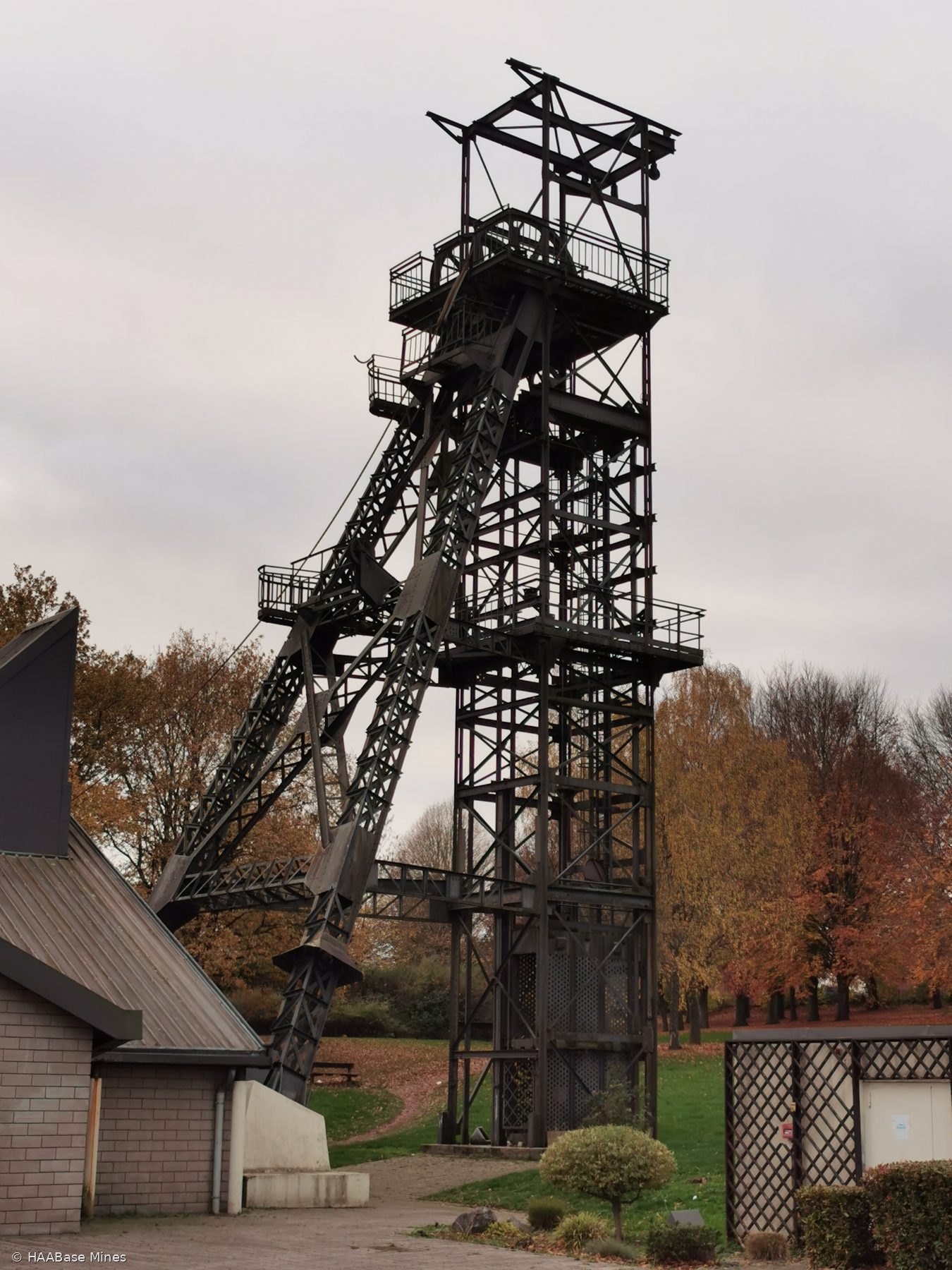
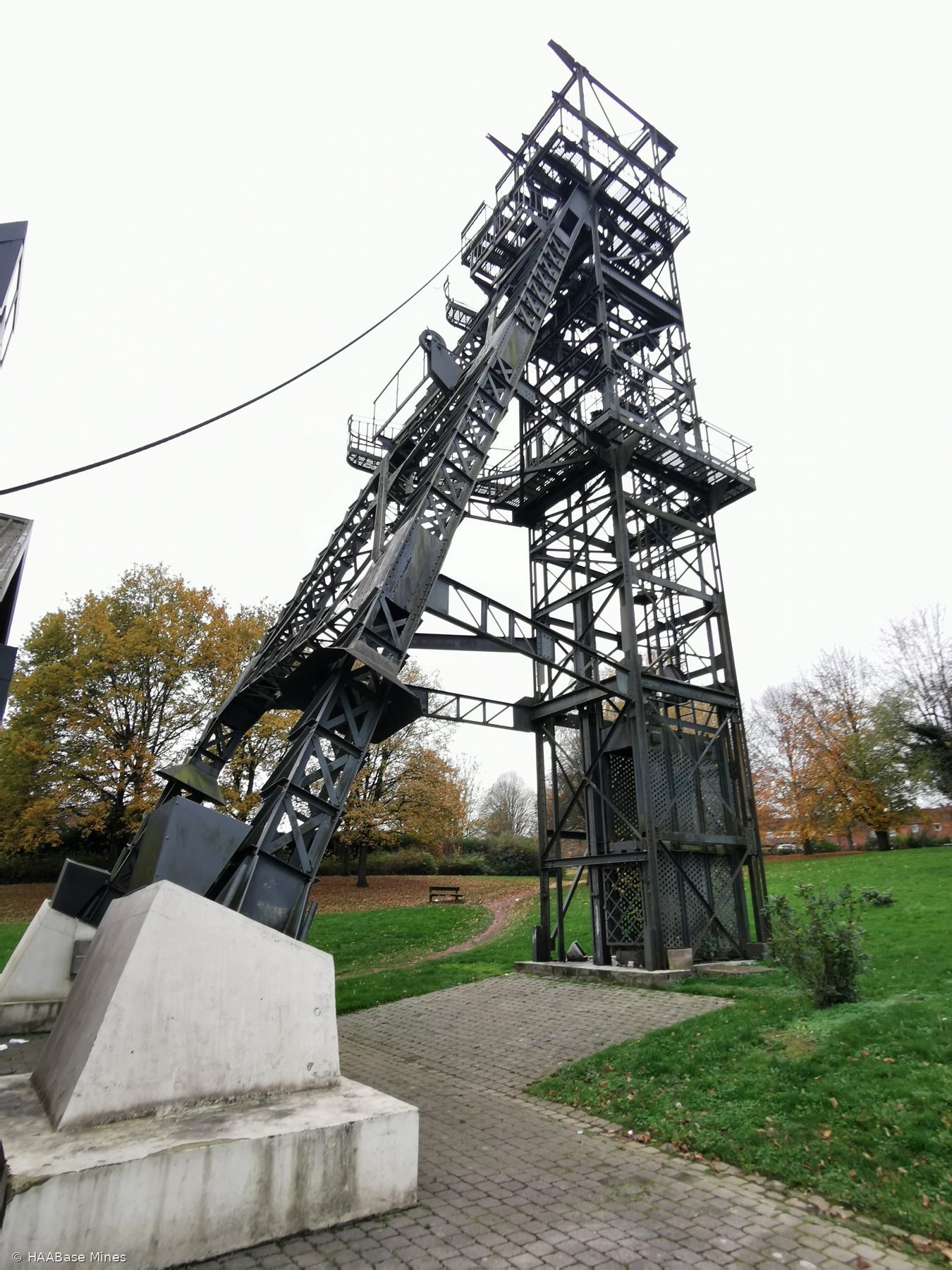
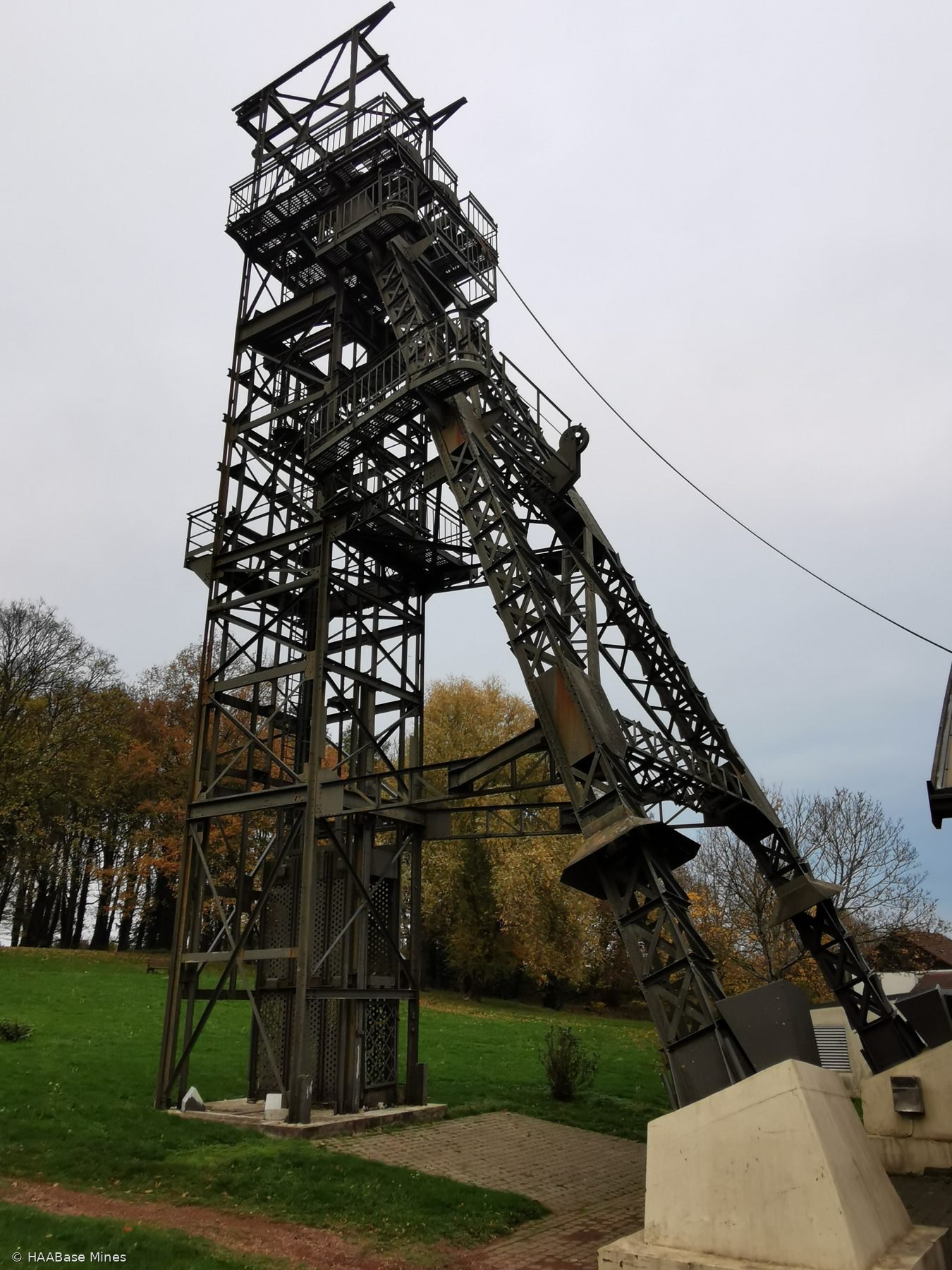
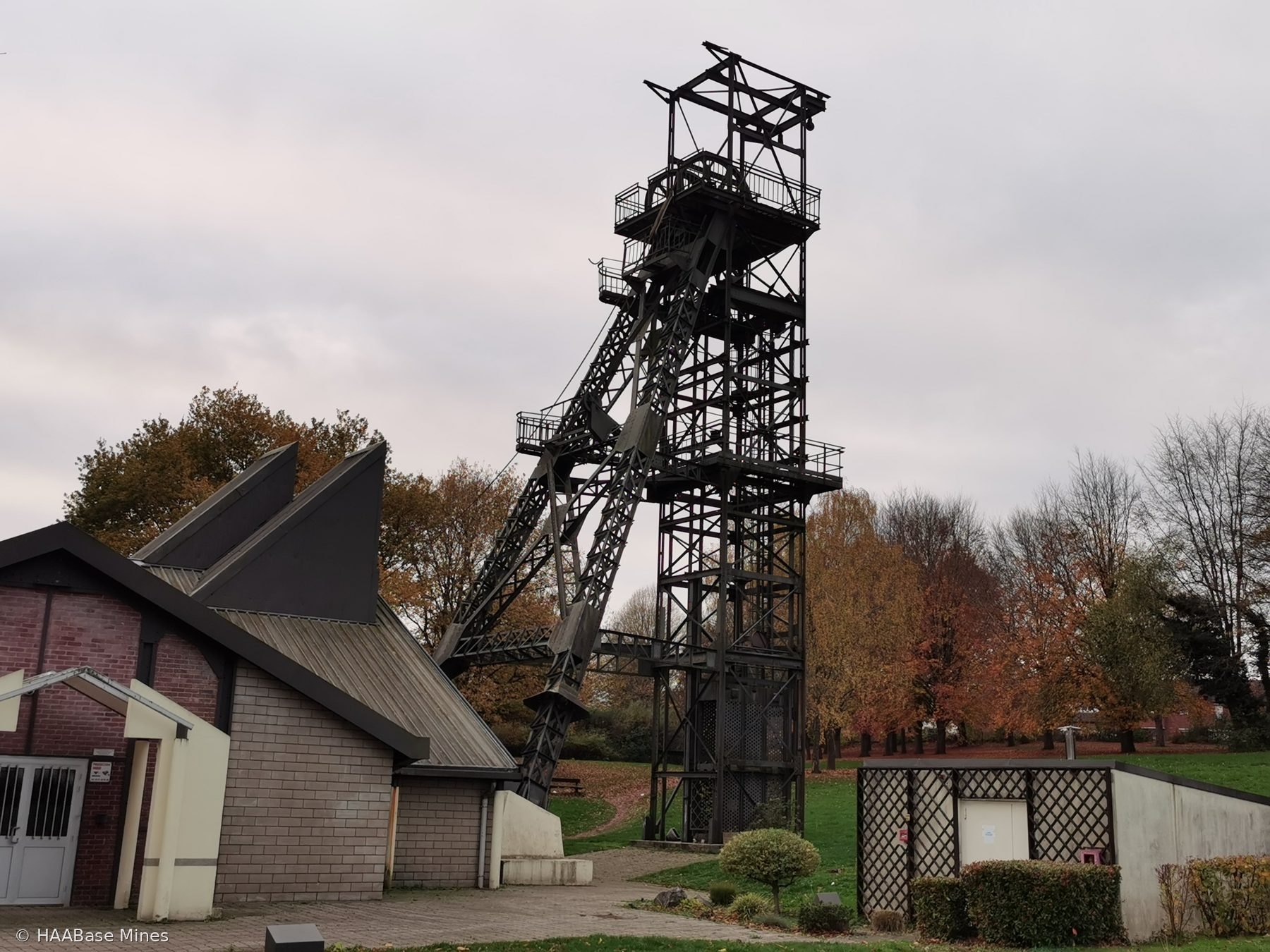
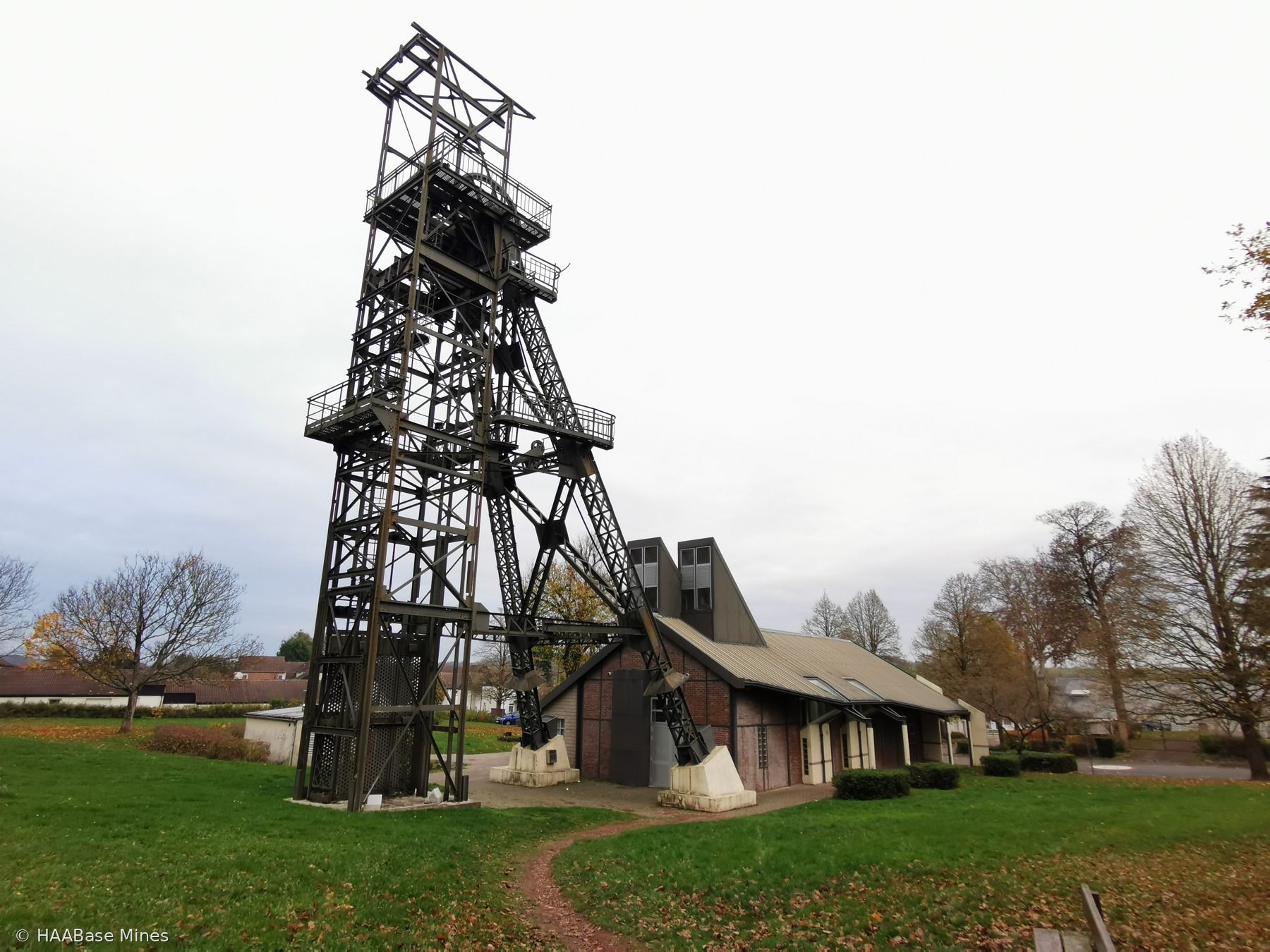
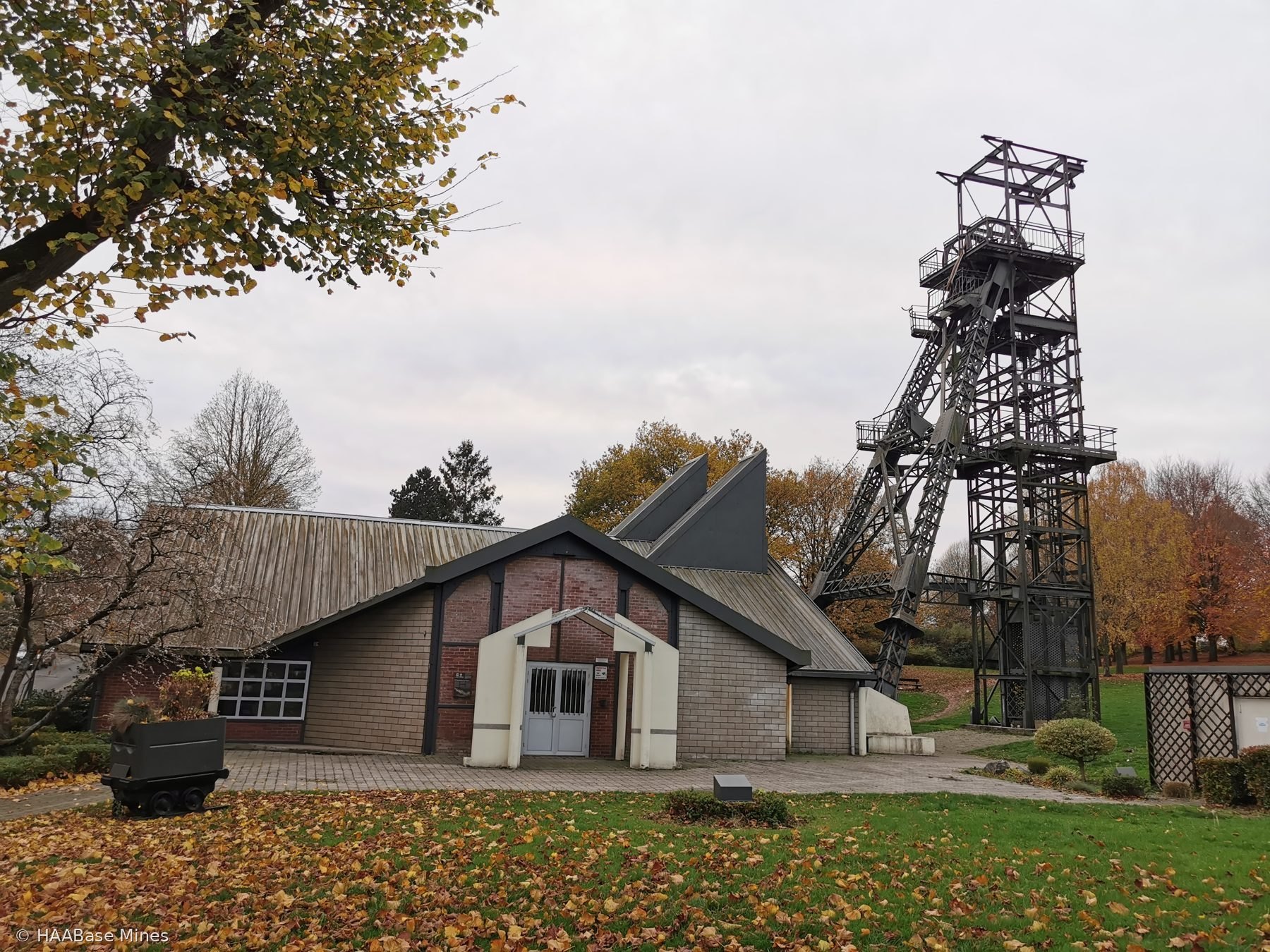
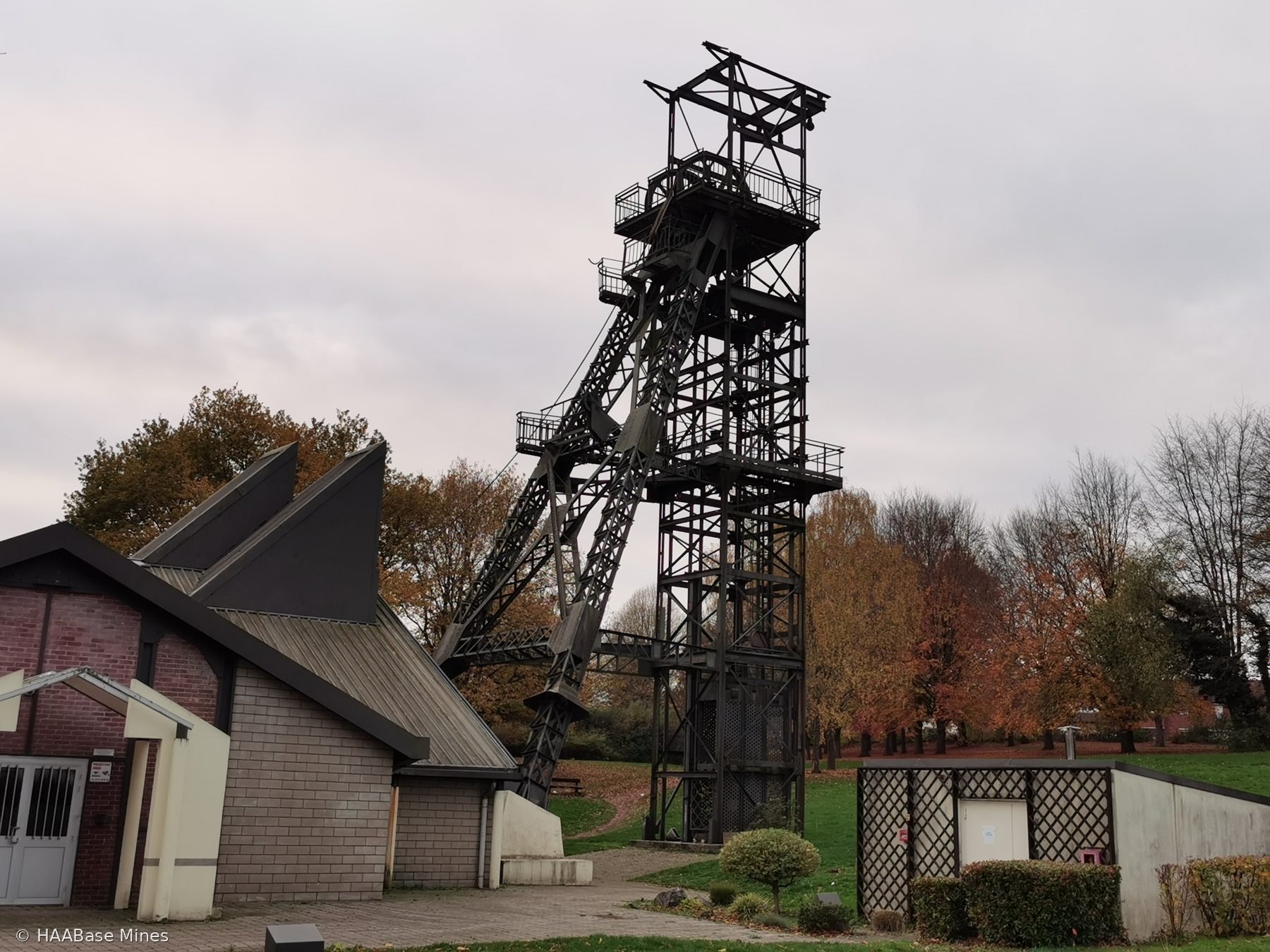
The last berline was raised on 29 March 1974; all three puits were backfilled the same year. The headframes of puits 2 bis and 2 ter were demolished in 1977 and 1978. The 1921 headframe of puits no. 2 — the sole surviving headframe in the Béthune-Bruay region — and the 1920 winding engine were purchased by the commune in 1979, renovated in 1989, and are now open as a mining museum.

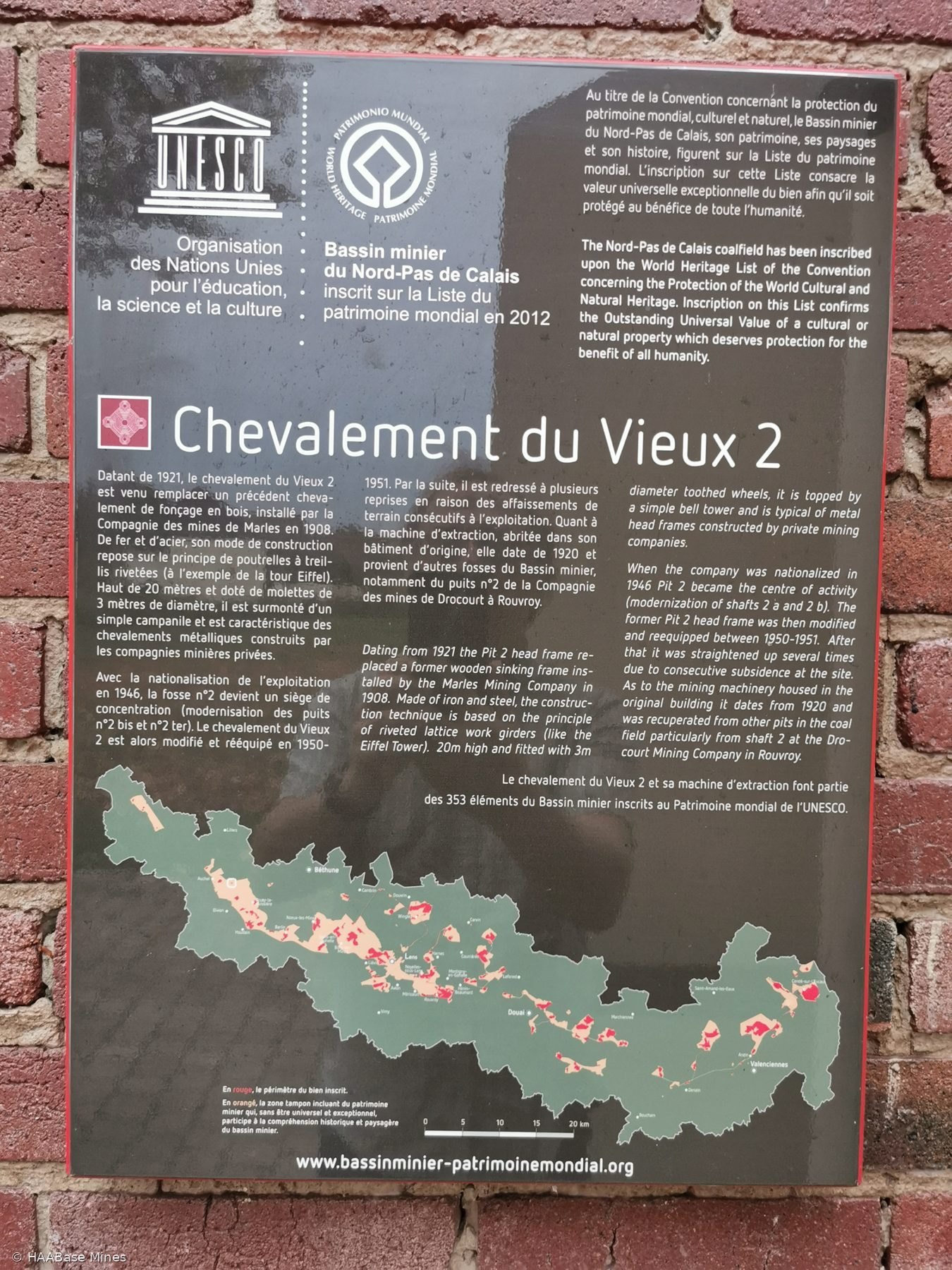
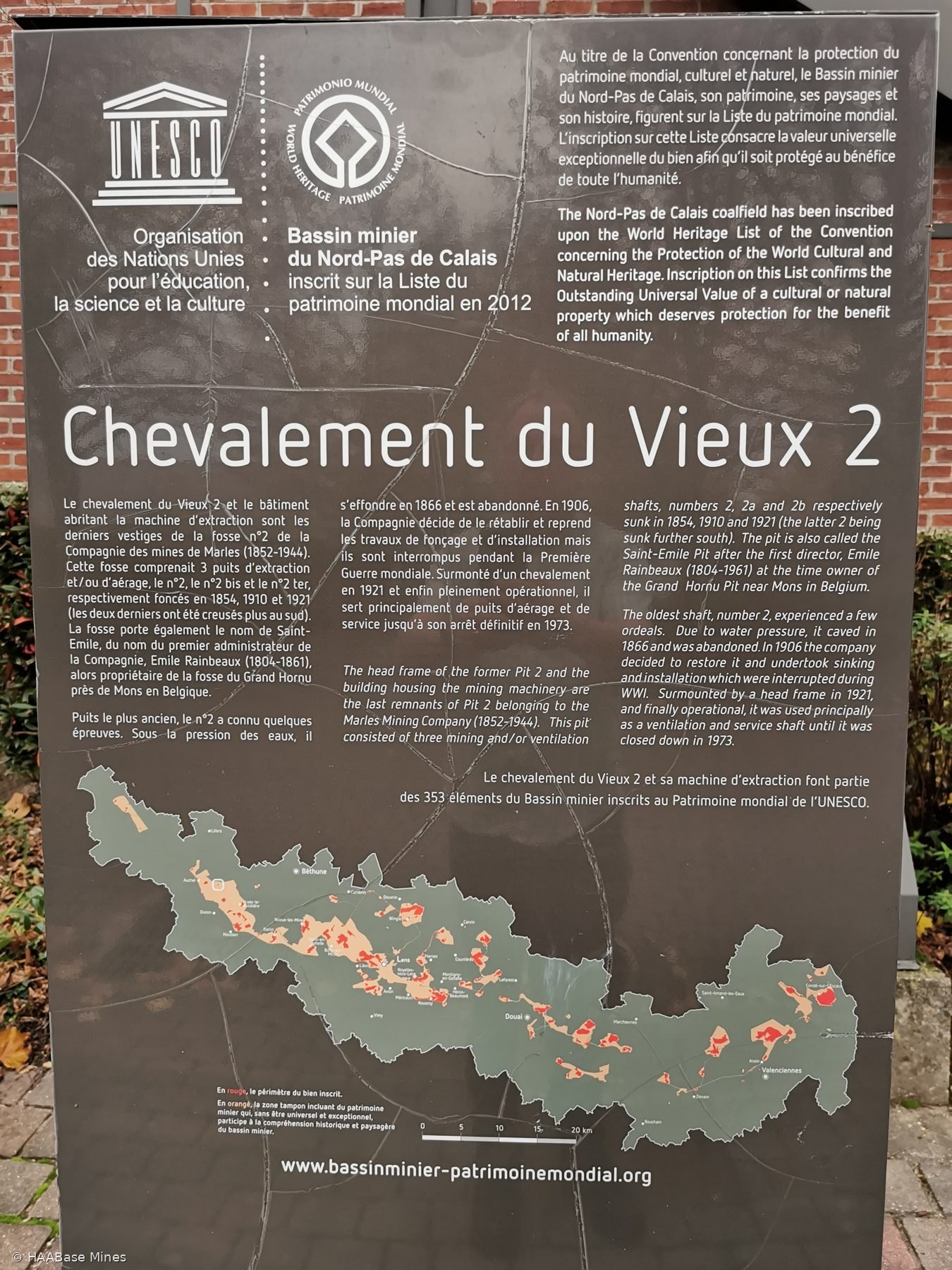
The site was inscribed as a monument historique in 1992 and as UNESCO World Heritage site no. 101 in 2012.

Set within a flat urban and post-industrial landscape, the surviving headframe reads as an isolated but clearly legible remnant of the former colliery.

Map & photo

Fosse n° 2 de Marles mine headframe or winding tower site
Photograph taken: 16 November 2025
Map markers and directions links are provided for location reference only and do not indicate public access or permission to enter a site.

History

In 1852 Pierre Boucher and Claude Etienne Lacretelle, civil mining engineers, carried out borings in the area of Lillers, discovering the presence of coal. They engaged Émile Rainbeaux, a principal owner of the Grand-Hornu colliery in Belgium, to finance the venture. On 15 November 1852 a partnership was formed between the engineers and Rainbeaux. A concession request in Rainbeaux's name followed, and the concession of the Mines de Marles was definitively established by decree of 29 December 1855, simultaneously with the concessions of Bruay and Ferfay, covering 2,990 hectares.

Fonçage of puits no. 1, at 4.50 metres diameter, began in 1853 at Marles-les-Mines. When the shaft had descended 55 metres the watery ground destroyed the tubbing and work was abandoned. A second shaft, puits no. 2 — named Saint-Émile in honour of Émile Rainbeaux, the company director — was begun 50 metres to the south-east in September 1854. Cuvelage commenced in December 1854. The passage of the water level presented enormous difficulties; the maximum water inflow reached 8,600 hectolitres per hour. The base of the tubbing was established in the coal-bearing terrain at 83 metres depth on 15 October 1856. The first coal was extracted in 1857 or 1858, with initial production from levels at -175 and -225 metres. Between 1862 and 1864, average annual extraction was 64,738 tonnes and average annual profit 201,776 francs.

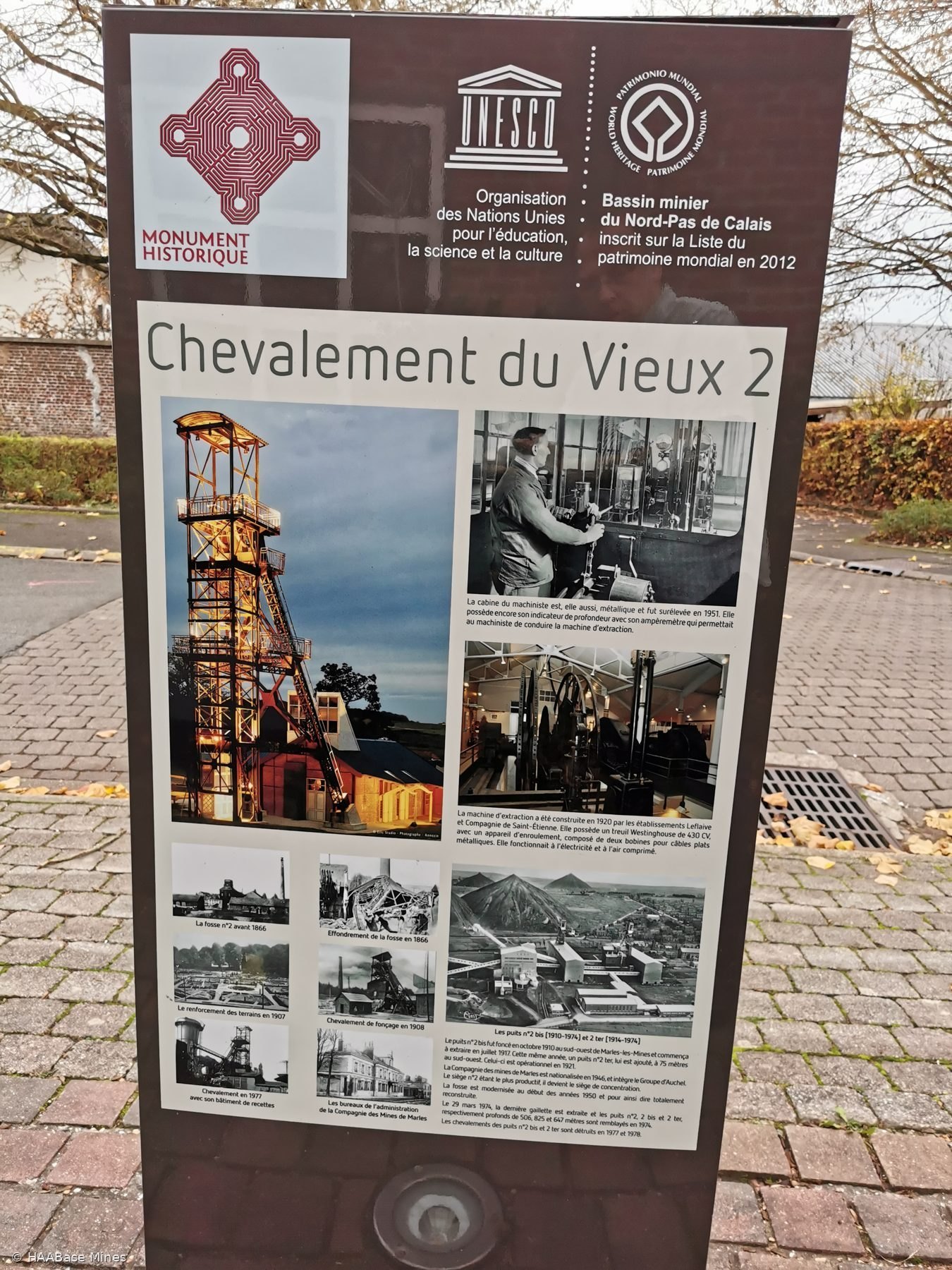
On 28 April 1866, at eight in the morning, a strong movement was observed in the tubbing at approximately 56 metres depth; two sections of tubbing were pushed noticeably inward over a height of five metres. The ingénieur had the winding stopped and the workers raised, and attempted repairs. At half past nine, three pieces of tubbing broke away, releasing a torrent of water. By 3 May the fosse had completely collapsed, leaving a crater approximately 30 metres in diameter. The collapse destroyed the headframe, the dewatering machine, and part of the winding building. No casualties were reported but the financial loss was catastrophic. The collapse of the Marles pit is considered by contemporaries as a precedent, and Émile Zola is thought to have drawn on it for the destruction of the Voreux in Germinal. With 840 of the concession's 2,990 hectares subsequently abandoned for fear of water in neighbouring workings, production continued at fosse no. 3 (Saint-Firmin), sunk at Auchel from 1862 and productive from 1865, to which all workers from puits no. 2 were transferred.

Following the catastrophe the concession was reorganised. By 1890 the company produced 600,000 tonnes from three sièges d'exploitation, each comprising two puits. The million-tonne threshold was reached in 1897. In 1904 the workforce stood at 5,360, of whom 4,209 worked underground. On the eve of the First World War the company possessed four sièges d'exploitation and employed 6,238 workers. In 1907 the Compagnie de Marles resumed déblayage of the collapsed fosse no. 2, and using new technical methods the shaft was made operational in 1908. It was then held in dormant service until 1917, during which time it provided aeration for the newly created fosse no. 2 bis, sunk 830 metres to the south-south-west. A puits no. 2 ter was added from 1917. Fosse no. 2 thereafter served as a service and ventilation shaft. During the First World War Marles played an important production role as the eastern basin was in enemy hands; by end of 1917 the workforce had exceeded 15,000 and that year's production reached 2,882,000 tonnes. Polish workers arrived in large numbers: in 1924, of a total workforce of 16,013, some 6,517 were Polish. In 1927 the company employed 19,051 workers of whom 6,296 were Polish, and production reached 3,300,000 tonnes. The concession held 7,000 housing units, 4,500 built after 1918.

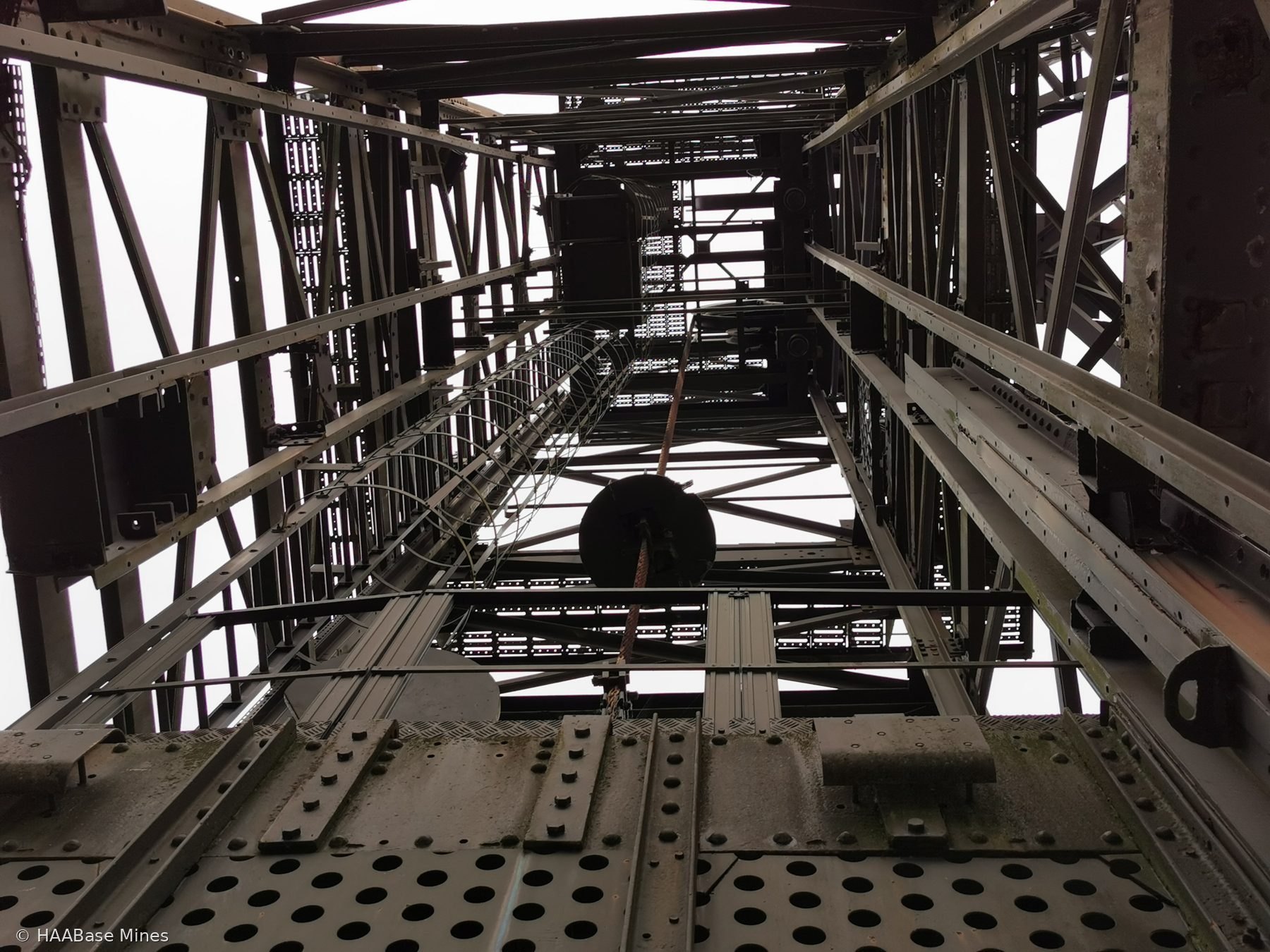
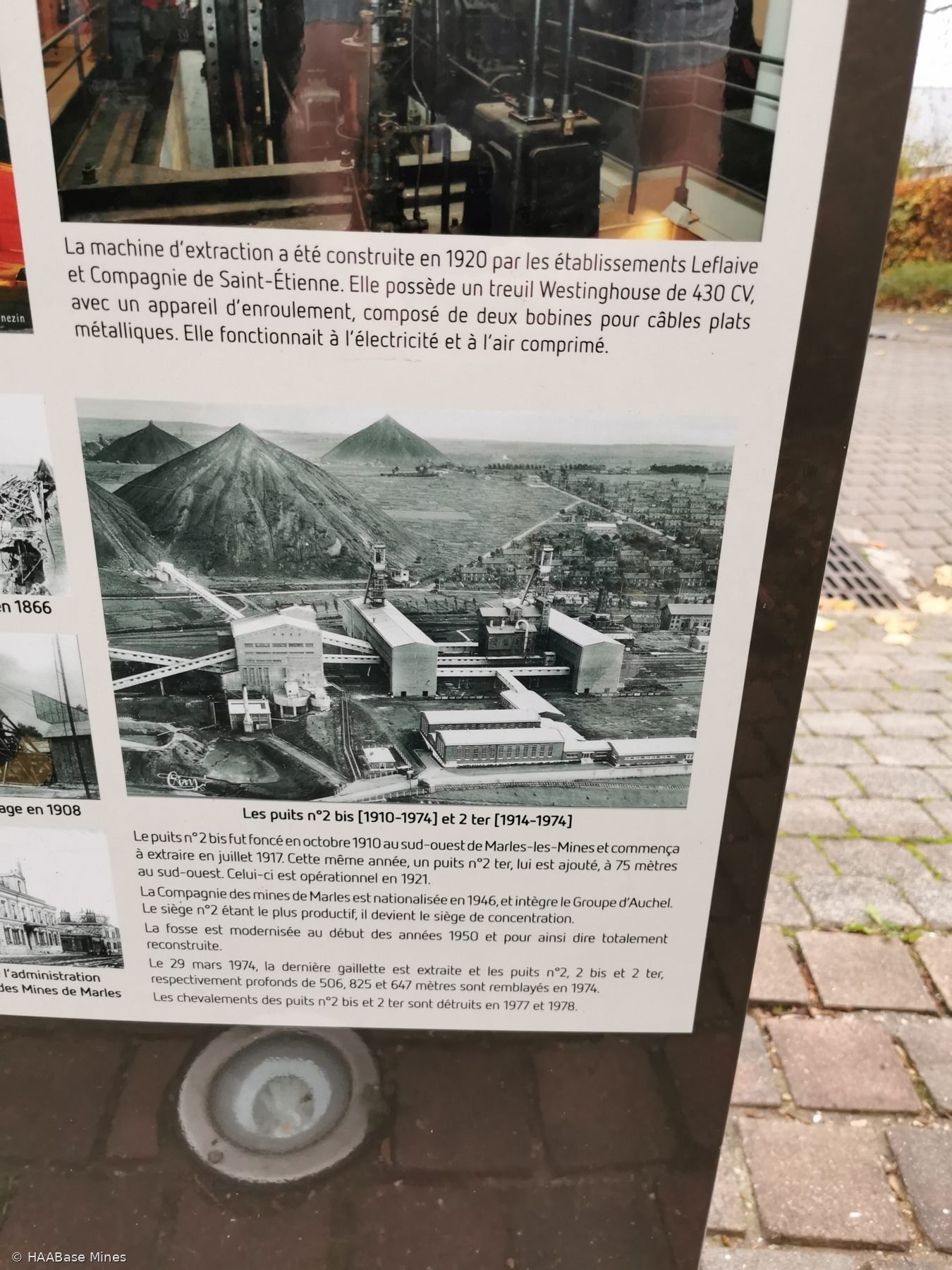
The current headframe of puits no. 2, constructed in riveted lattice-work steel beams with a single campanile, dates from 1921 and reaches 19.70 metres in height. The winding engine, built by Leflaive et Compagnie of Saint-Étienne, dates from 1920 and originated from the mines du Boulonnais; it is equipped with a 430-horsepower flat-cable drum winding system and a Westinghouse electric motor.

The Compagnie des mines de Marles was nationalised in 1946 and integrated into the Groupe d'Auchel within the Houillères du Bassin du Nord-Pas-de-Calais (HBNPC). From 1949 the siège 2 was selected to be the grande concentration for the western extreme of the basin, and in 1951 modernisation of fosse 2 bis-2 ter began; during this period fosse no. 2 was returned to extraction service. In 1962 puits no. 2 bis was deepened to 800 metres with a new accrochage at 790 metres, but the gisement proved less rich than expected. At 1 June 1963, 3,139 underground miners and over 300 surface workers were employed. Between September 1970 and October 1971, in 263 working days, 394,313 net tonnes were extracted. From total depths of puits 2 at 506 metres, puits 2 bis at 825 metres, and puits 2 ter at 647 metres, all three were backfilled in 1974. The last berline ascended on 29 March 1974. From 1858 to 1974 the siège 2 had produced a total of 45.74 million tonnes. The headframes of puits 2 bis and 2 ter were demolished in 1977 and 1978. The commune of Marles-les-Mines purchased the puits no. 2 headframe and winding engine in April 1979. The building was renovated in 1989 and inaugurated on 9 June 1991 with a pyrotechnic display. The Houillères du Bassin du Nord-Pas-de-Calais were dissolved in 1993. The chevalement and the ancient parts of the winding engine building were inscribed to the Inventaire Supplémentaire des Monuments Historiques on 6 May 1992. The chevalement was inscribed on the UNESCO World Heritage List on 30 June 2012 as site no. 101 within the 353-element inscription of the Bassin minier du Nord-Pas-de-Calais.
Timeline

1852
Exploration

Prospecting reveals coal; Rainbeaux partnership formed

Engineers Boucher and Lacretelle carried out borings around Lillers in 1852, discovering coal. On 15 November 1852 they formed a partnership with Belgian financier Émile Rainbeaux, owner of the Grand-Hornu colliery, to develop the concession.
1853–1854
Construction

Puits no. 1 sunk and abandoned

Fonçage of puits no. 1 at 4.50 metres diameter began in 1853. At 55 metres depth the watery ground destroyed the tubbing and the shaft was abandoned in 1854.
1854–1858
Construction

Puits no. 2 (Saint-Émile) sunk and enters production

Fonçage of puits no. 2 began in September 1854, 50 metres from puits no. 1. The concession was granted by decree of 29 December 1855 on 2,990 hectares. The base of the tubbing was established at 83 metres on 15 October 1856. First coal was raised in 1857 or 1858 from levels at -175 and -225 metres.
1866
Closure

Catastrophic collapse of puits no. 2

On 28 April 1866 the tubbing gave way at 56 metres depth under water pressure. By 3 May the entire fosse had collapsed leaving a crater approximately 30 metres in diameter, destroying the headframe, dewatering machine, and part of the winding building. The fosse was abandoned. 840 hectares of the 2,990-hectare concession were subsequently left unexploited.
1897
Operation

Production reaches one million tonnes

The Compagnie des mines de Marles reached the milestone of one million tonnes of annual production in 1897, with a workforce of 4,223.
1907–1908
Construction

Puits no. 2 deblayage resumed; fosse operational

The Compagnie de Marles resumed déblayage of the collapsed puits no. 2 in 1907. Using new technical methods the shaft was restored and made operational in 1908. It was subsequently held in dormant service while providing aeration for fosse no. 2 bis to the south-south-west.
1917
Operation

Puits no. 2 ter added; fosse serves ventilation

A puits no. 2 ter was added to the siège from 1917. Fosse no. 2 thereafter served principally as a service and ventilation shaft for fosse 2 bis and 2 ter.
1920–1921
Construction

New headframe and winding engine installed

The current riveted lattice-steel headframe, 19.70 metres high with a single campanile, was built in 1921. The winding engine, made by Leflaive et Compagnie of Saint-Étienne with a Westinghouse electric motor and 430-horsepower drum winding system, dates from 1920 and originated from the mines du Boulonnais.
1927
Operation

Peak production: 3,300,000 tonnes; workforce 19,051

In 1927 the Compagnie des mines de Marles employed 19,051 workers, of whom 6,296 were Polish, and annual production reached 3,300,000 tonnes. The concession held 7,000 housing units, 4,500 built after 1918.
1946
Legislation

Nationalisation: Groupe d'Auchel

The Compagnie des mines de Marles was nationalised in 1946 and integrated into the Groupe d'Auchel within the Houillères du Bassin du Nord-Pas-de-Calais (HBNPC). Fosse no. 2 continued to serve ventilation and service functions.
1951–1955
Operation

Modernisation of fosse 2 bis-2 ter; fosse no. 2 resumes extraction

Modernisation of fosse no. 2 bis-2 ter began in 1951. During this period fosse no. 2 was returned to extraction service. Fosse 2 bis-2 ter was fully operational by 1955.
1974
Closure

Final extraction; all three puits backfilled

The last berline ascended on 29 March 1974. Puits no. 2 (506 m), 2 bis (825 m), and 2 ter (647 m) were all backfilled in 1974. From 1858 to 1974 the siège had produced a total of 45.74 million tonnes.
1977–1978
Closure

Headframes of puits 2 bis and 2 ter demolished

The headframes of puits no. 2 bis and puits no. 2 ter were demolished in 1977 and 1978 respectively. The puits no. 2 headframe was the only one retained.
1979
Heritage

Commune purchases headframe and winding engine

The commune of Marles-les-Mines purchased the puits no. 2 headframe and winding engine in April 1979.
1989–1991
Heritage

Site renovated; inaugurated as mining museum

The site was renovated in 1989. Its inauguration on 9 June 1991 was marked with a pyrotechnic display. The former winding engine building now houses mining equipment and a permanent exhibition on the Compagnie des mines de Marles.
1992
Heritage

Inscribed as monument historique

The chevalement of puits no. 2 and the ancient parts of the winding engine building were inscribed to the Inventaire Supplémentaire des Monuments Historiques by arrêté of 6 May 1992.
2012
Heritage

UNESCO World Heritage inscription: site no. 101

The chevalement of the fosse no. 2 des mines de Marles was inscribed on the UNESCO World Heritage List on 30 June 2012 as site no. 101 within the 353-element inscription of the Bassin minier du Nord-Pas-de-Calais.
Sources and records

Wikipedia article (French): Fosse no 2 des mines de Marles
Wikipedia article (French): Fosse no 2 bis - 2 ter des mines de Marles
Wikipedia article (French): Compagnie des mines de Marles
Wikipedia article (French): Liste des biens du bassin minier du Nord-Pas-de-Calais inscrits sur la liste du patrimoine mondial
Monumentum heritage record PA00108470 — ancienne fosse Saint-Emile
APPHIM article: Fosse 2/2bis/2ter, Mines de Marles
Office de Tourisme de Béthune-Bruay — Chevalement du Vieux 2 description
Gaillette.fr — UNESCO Patrimoine Mondial Fosse no 2, Marles
Journées du Patrimoine event descriptions (journees-du-patrimoine.com) 2019 and 2021
Archives nationales du monde du travail — Compagnie des mines de Marles finding aid
This researched site record is part of the HAABase Mines database. Normal personal research and browsing is welcome. Automated bulk extraction, republication, or harvesting of site text and images is not permitted without written consent.