History
The coal deposit of Ronchamp was discovered around 1750 and exploited in an artisanal manner at surface outcroppings. A concession was granted by arrêt du Conseil d'État of 21 April 1757 to the seigneurs du lieu — the sieurs de Reinach and d'Andlau — and to the chapter of the abbey of Lure. Extraction through galleries began in 1759. From 1765 a brick-lined drainage gallery of 1,400 metres was constructed underground to manage the chronic problem of underground water. By 1810 to 1900, twenty-six shafts of increasing depth were sunk.
In 1824 the first recorded coup de grisou at the puits Saint-Louis killed twenty workers and wounded sixteen, one of the first firedamp explosions in France and among the most lethal in the early history of the basin. Lampes de sûreté Davy were generalised from 1825 following this catastrophe. Between 1845 and 1854 the puits Saint-Charles, Saint-Joseph, Sainte-Barbe, and Sainte-Pauline were respectively brought into service. In 1854 the Société civile des Houillères de Ronchamp was founded, uniting Alsatian and Haute-Saônois industrialists. A second concession was granted on 2 June 1862 to the Société d'Éboulet, also composed of Haute-Saônois industrialists, which exploited the puits d'Éboulet sunk between 1852 and 1859. The two societies merged in 1867. Coke ovens were established at the puits Saint-Joseph in 1863; this puits became the most productive of the basin during the second half of the nineteenth century. In 1866 production reached 223,127 tonnes. On 10 August 1859, a coup de grisou at puits Saint-Joseph killed twenty-nine miners; another explosion on 8 May 1860 caused further deaths and structural damage.
In 1873 the sinking of two new puits began: the puits du Magny, completed at 694 metres in 1878, and the puits du Chanois, completed at 588 metres in 1895 after prolonged delays from water inflows. These became the last three puits in active exploitation together with puits Arthur-de-Buyer. Fonçage of the puits Sainte-Marie began on 1 April 1864 at 3.5 metres diameter; the coal-bearing terrain was encountered at 239 metres but the seam reached only 60 centimetres in thickness. The puits was deepened to 359 metres and in 1869 connected by gallery to puits Saint-Charles, serving thereafter as a ventilation shaft. It was abandoned in 1895 following the closure of puits Saint-Charles. On 1 September 1879, the first coup de grisou at puits du Magny killed 16 miners. On 24 June 1886, twenty-three miners died in a coup de grisou at puits Saint-Charles.
In 1892 the sinking of puits no. 11 began; completed in 1900 at 1,010 metres, it was baptised puits Arthur-de-Buyer and was at that time the deepest shaft in France. In 1900 the first metal headframe was constructed on it. In 1901 the three active puits employed 1,437 workers in total, of whom 373 were coal-cutters. The central thermique was constructed between 1906 and 1907. Production reached its maximum of 246,797 tonnes in 1904, after which decline was continuous. In 1912, a fire started by a cigarette in the stables of puits Arthur-de-Buyer killed four miners asphyxiated by smoke carried through the ventilation system. In 1916 the puits du Magny ceased extraction to become a service shaft for puits Arthur-de-Buyer and puits du Chanois, resuming extraction in 1927 with the restoration of its buildings.
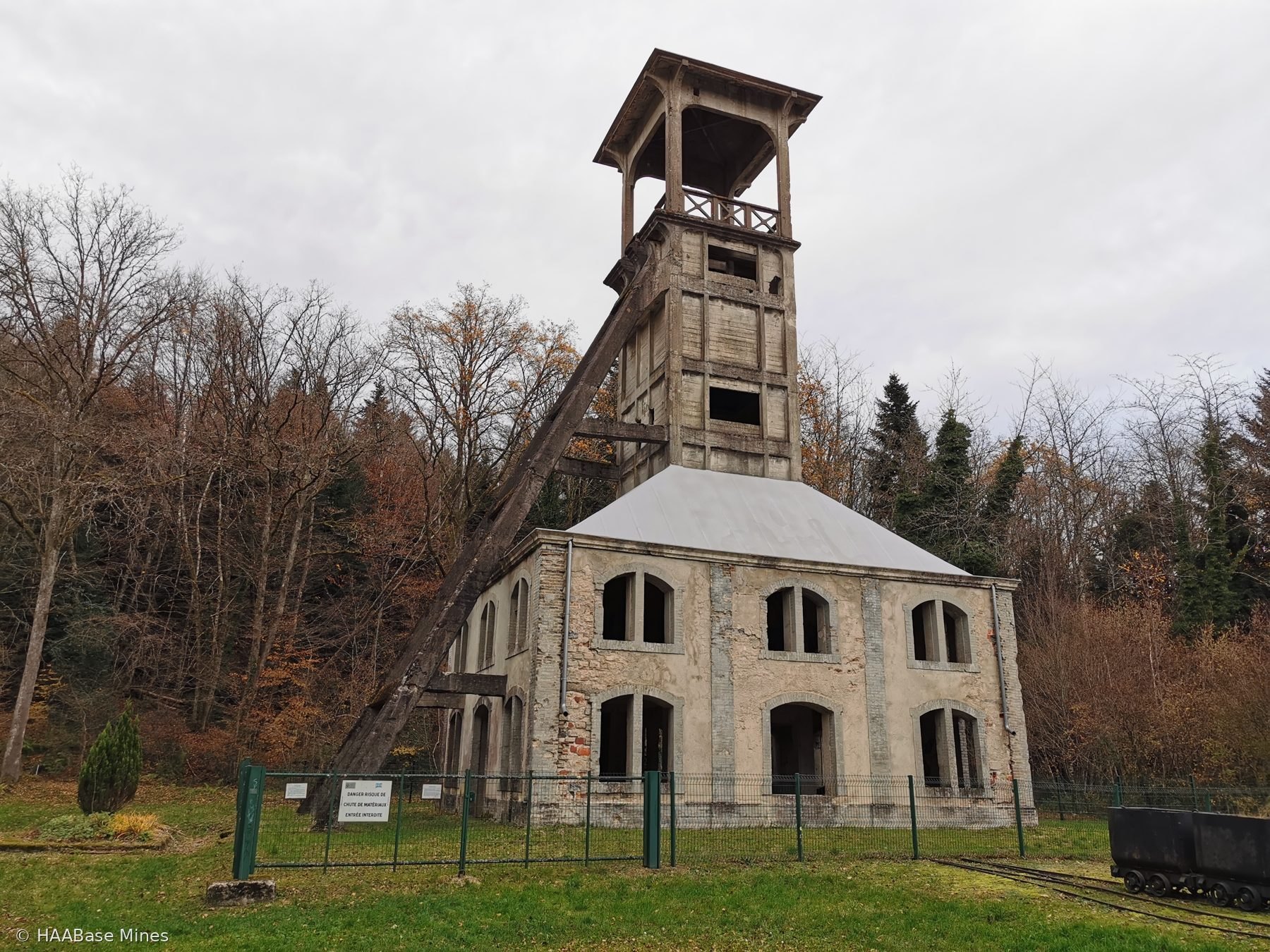
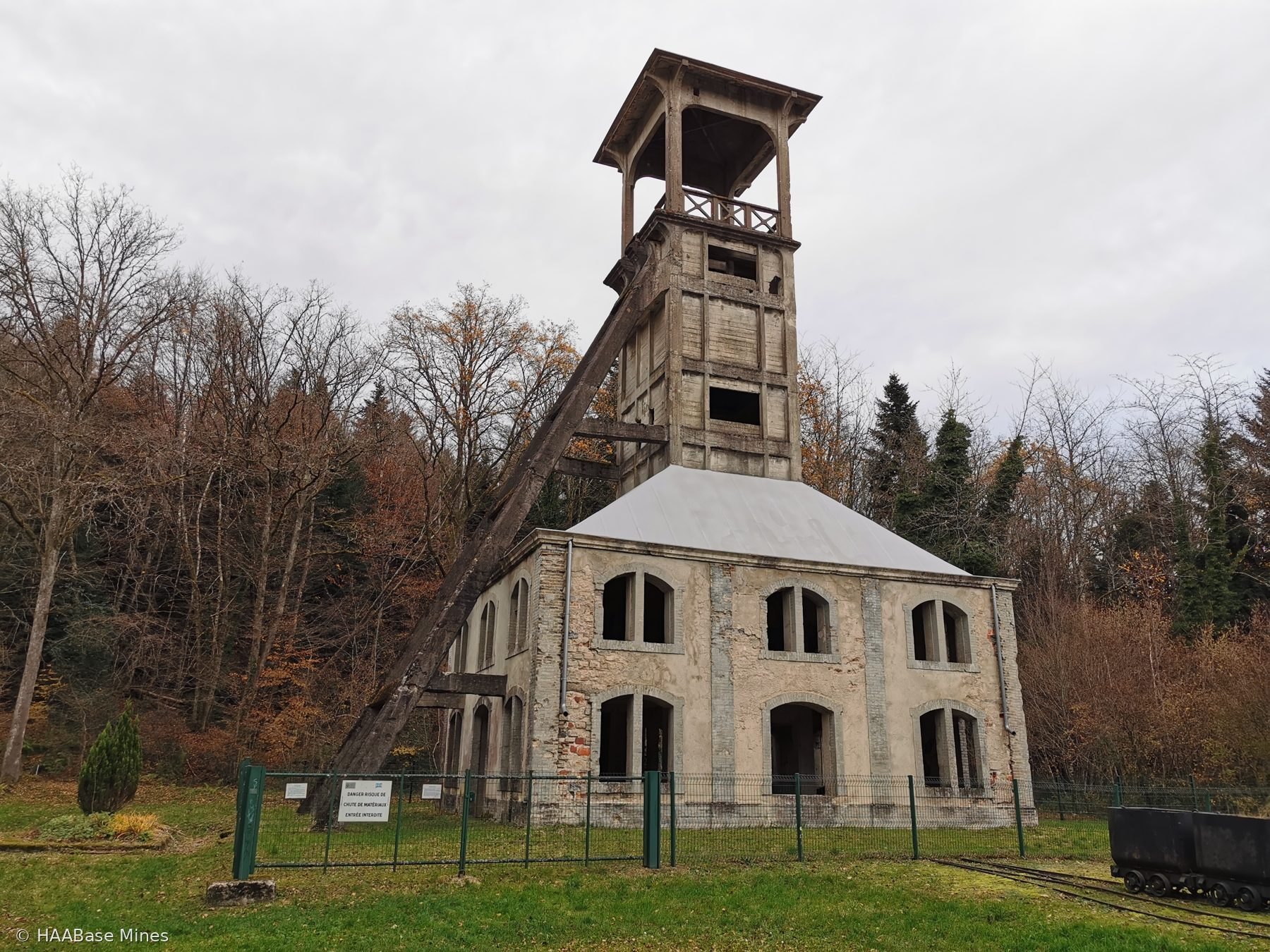
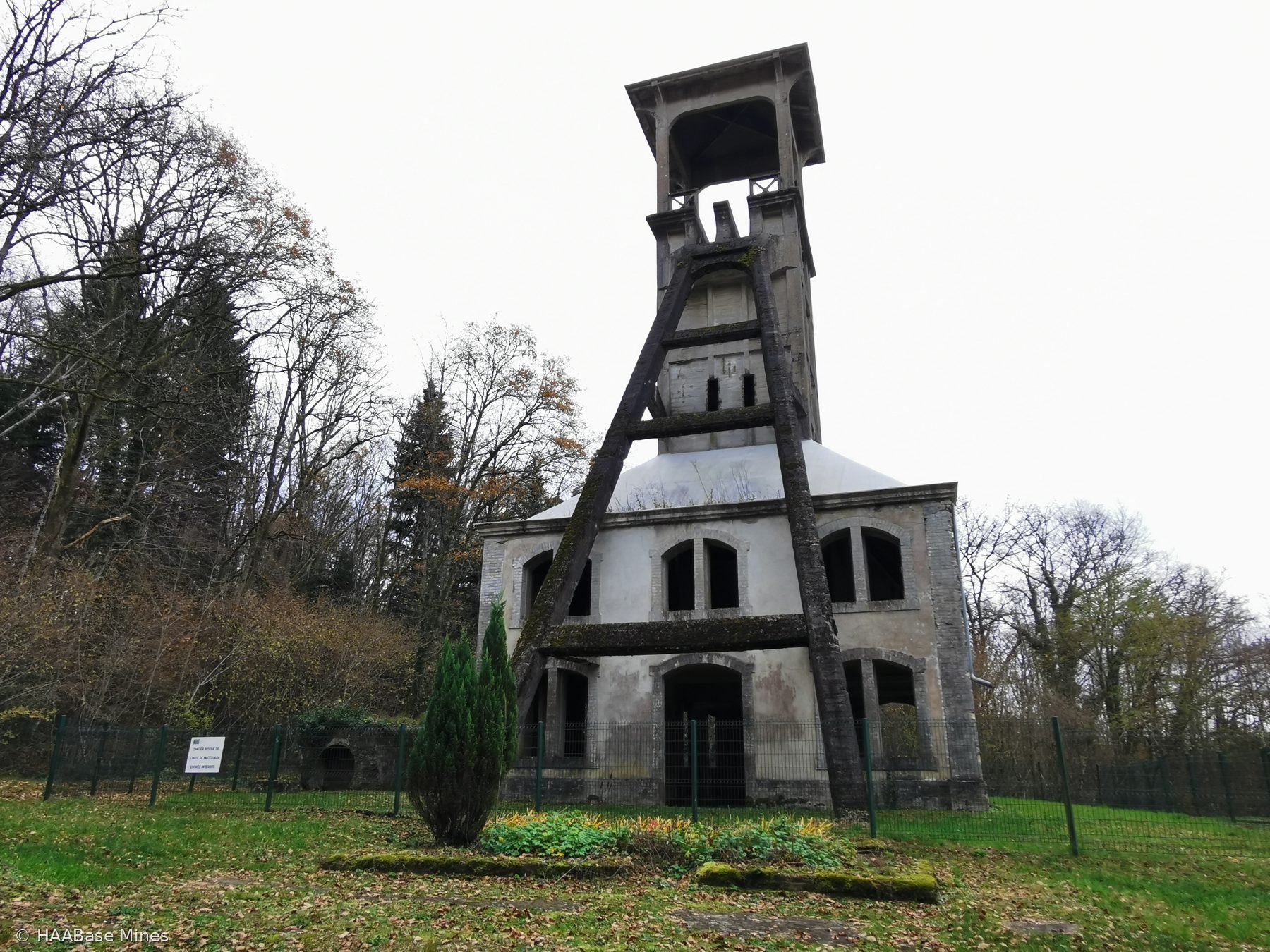
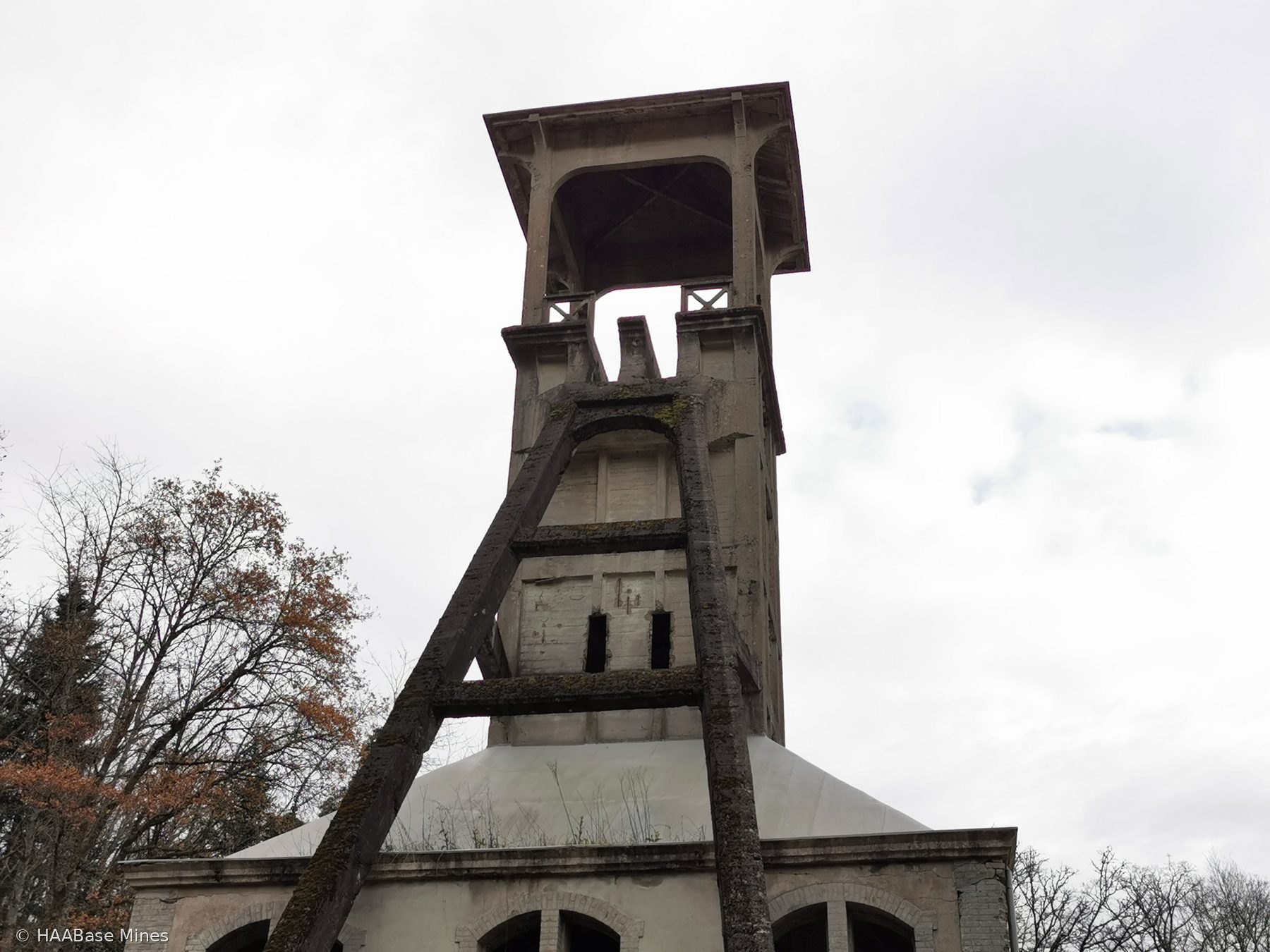
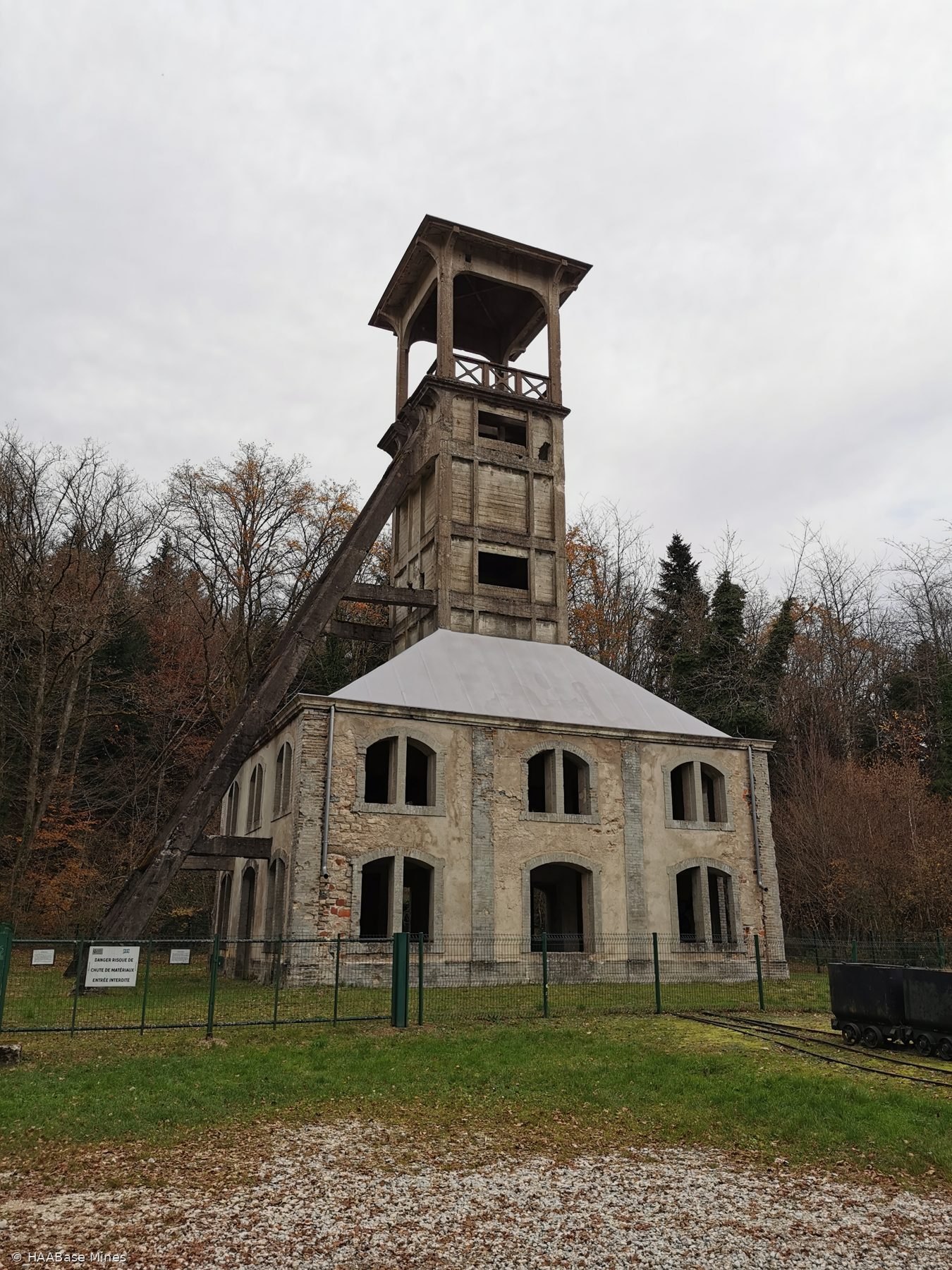
The Société civile des Houillères de Ronchamp (SCHR) rehabilitated the puits Sainte-Marie from around 1920. Its new reinforced-concrete headframe of approximately 20 metres, designed by Belgian engineer Charles Tournay, was constructed in 1924, together with a new electric winding engine and two ventilators. However, puits du Chanois, being closer to the sorting and washing facilities, was designated the principal extraction shaft; puits Sainte-Marie served primarily for ventilation and as a service shaft. In 1928 the puits Arthur-de-Buyer was modernised: the 43-metre headframe was extended symmetrically and a new electric winding machine by ALSTHOM (bicylindroconical drum, 1,650 CV motor) was installed in a new engine building. In 1950 the molettes and winding machine were dismantled from puits Sainte-Marie and transferred to the puits de l'Étançon. The puits Sainte-Marie ceased all activity in 1950.
At the liberation in 1944, the majority of surface installations were destroyed and the mines were flooded. Nationalisation in 1946 placed the bassin minier de Ronchamp under Électricité de France, in preference to Charbonnages de France, because of the presence of the important central thermique. EDF judged the coal basin too small in comparison with other national basins. A new puits, the puits de l'Étançon, was sunk in the forêt de l'Étançon between 1949 and 1950, reaching 44 metres. On 16 December 1950 a catastrophe occurred when the accidental piercing of a water-filled old gallery drowned four miners whose bodies were recovered only on 22 December. The final closures followed: puits du Chanois in 1951, puits Arthur-de-Buyer in 1954, puits de l'Étançon in 1958, and finally puits du Magny on 3 May 1958, when the last berline ascended. The concession was renounced to EDF on 31 January 1961. The Société des Houillères de Ronchamp was liquidated in 1962. In 1958 and 1959 all technical installations were demolished except the headframe of puits Sainte-Marie and a few buildings at puits Arthur-de-Buyer and puits Saint-Joseph. All puits were backfilled with spoil and sealed with concrete plugs inscribed with the name, depth, and diameter of each shaft.
The puits Sainte-Marie headframe was saved from demolition through the efforts of Marcel Maulini, the mine physician from 1946 to 1958, who formed a committee to prevent its destruction. EDF ceded the headframe to the Conseil général de la Haute-Saône for a symbolic franc. The musée de la mine Marcel-Maulini was inaugurated on 26 September 1976. The carreau of puits Sainte-Marie was aménagé in 1994 with a locomotive and mine wagons. In 1994 the association des Amis du musée de la mine was created. The headframe was inscribed to the Inventaire supplémentaire des Monuments historiques on 29 March 2001 with the label Patrimoine du XXe siècle. A mémorial de la mine representing all the basin's shafts was installed and inaugurated on 24 September 2005. A stèle was installed in 2008 for the fiftieth anniversary of the puits de l'Étançon catastrophe.