Site overview

The Mines de Gardanne form the principal working site of the bassin minier de Provence, a lignite field exploited for close to three centuries in the Bouches-du-Rhône, principally around Gardanne between Aix-en-Provence and Marseille. Artisanal extraction is documented from the sixteenth century, with the first title minier dating from the eighteenth century. Industrial mining began in earnest after the foundation of the Société anonyme des Charbonnages des Bouches-du-Rhône in 1855.

The critical infrastructure problem of underground flooding was resolved by the construction of the Galerie de la Mer, a 15-kilometre drainage gallery running from the mines to the sea at Marseille, authorised in 1889 and completed in 1905. Nationalisation in 1946 created the Houillères du Bassin de Provence, which merged into the Houillères du Bassin du Centre et du Midi (HBCM) in 1969. A major expansion programme in the 1980s produced two new deep shafts at Gardanne — puits Z and puits Yvon Morandat — but extraction ceased entirely on 31 January 2003.

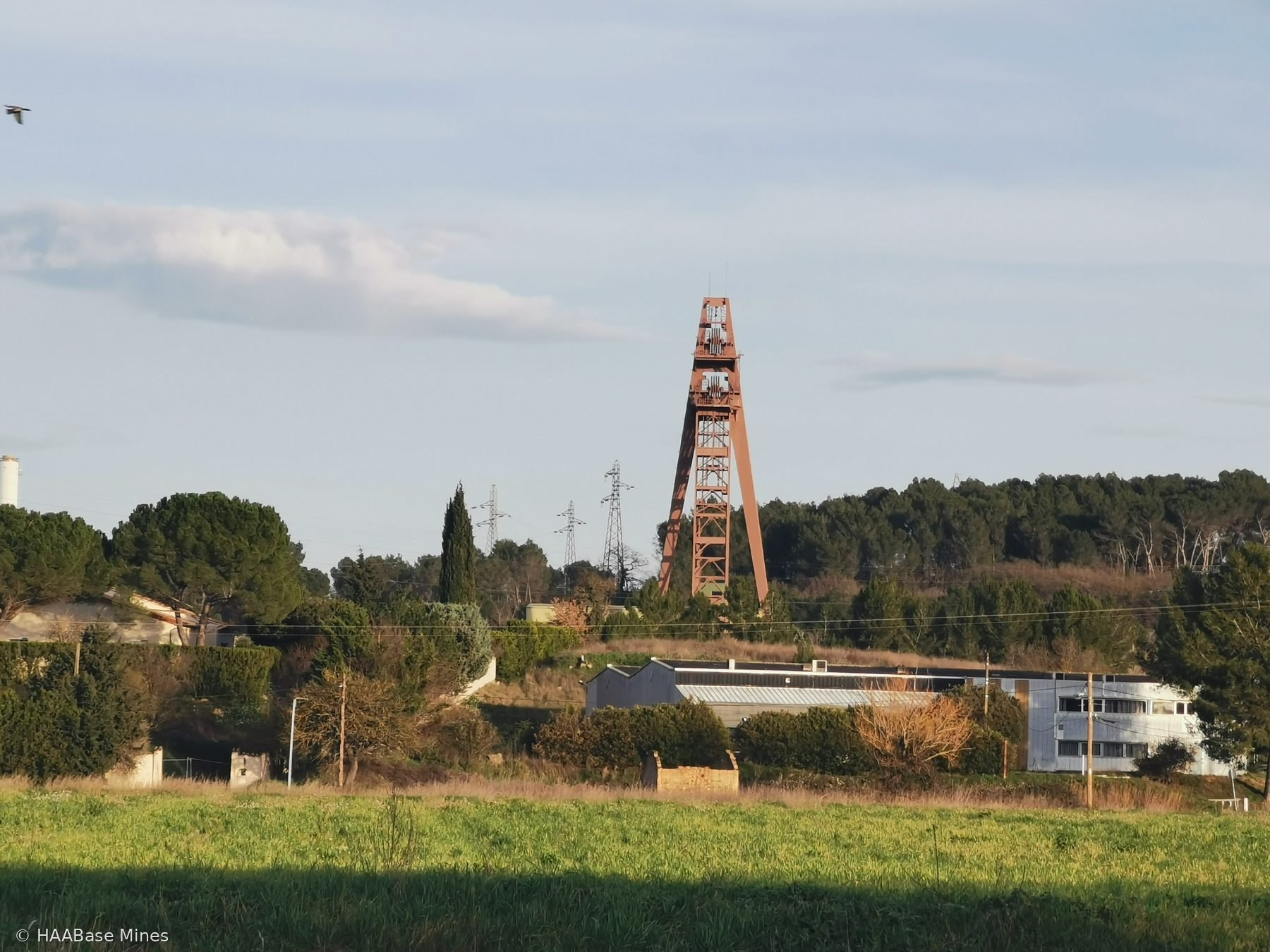
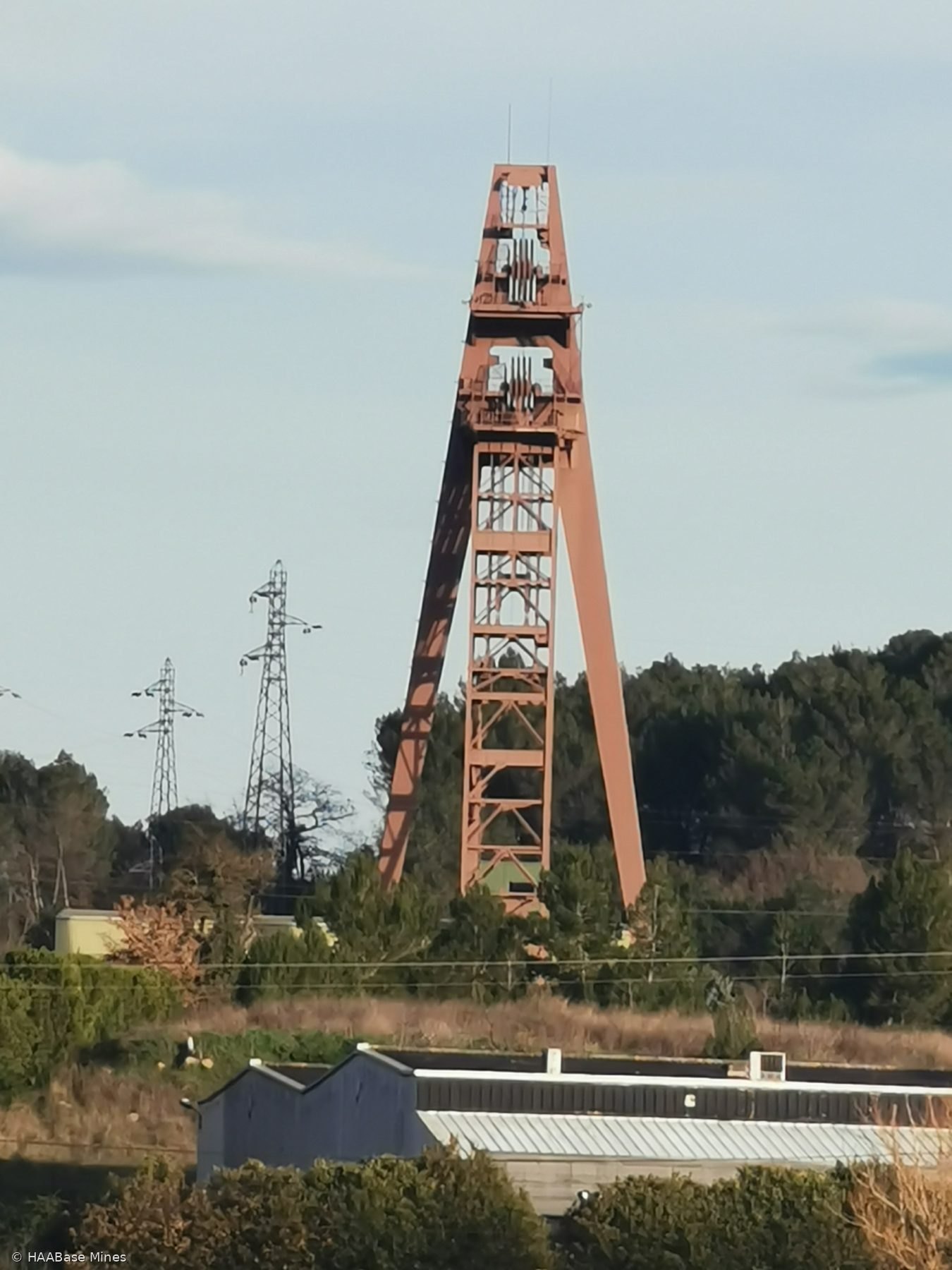
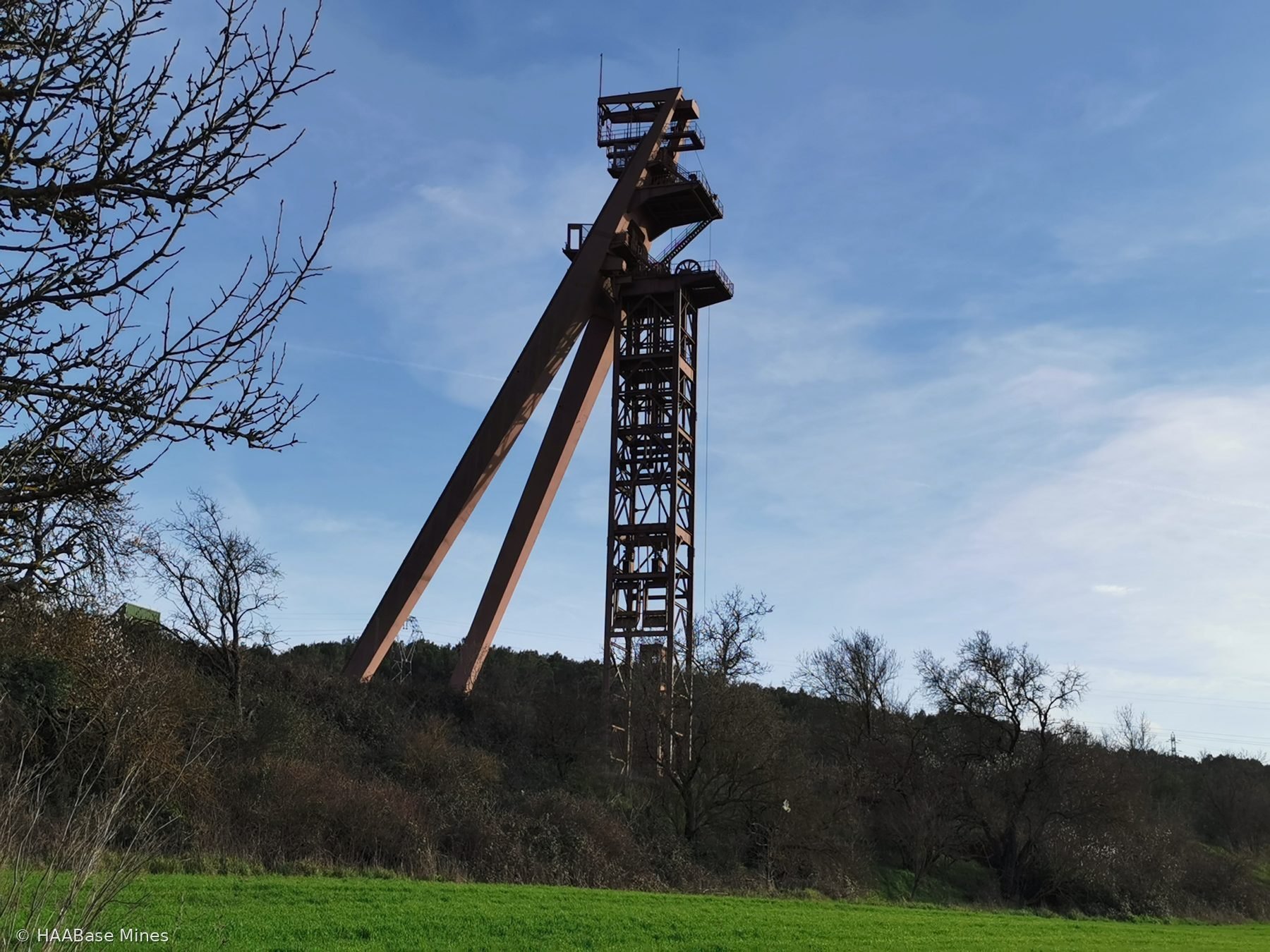
Most installations were demolished in 2004; the headframe of puits Z and the winding tower of puits Yvon Morandat were purchased by the city and preserved. The puits Yvon Morandat site has been redeveloped as a business incubator.

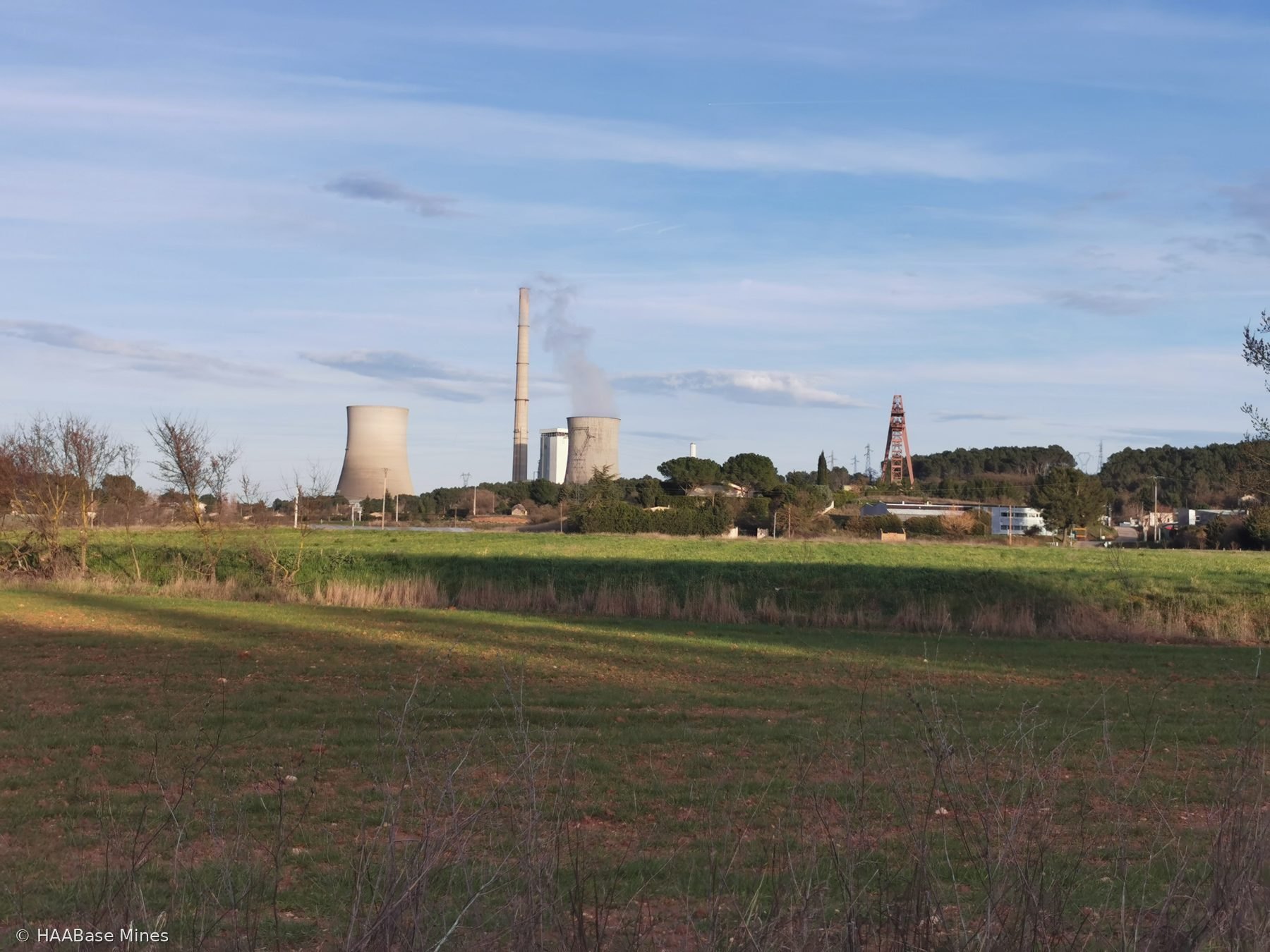
The surviving shaft structures stand in a mixed urban and industrial landscape on the edge of Gardanne, where they remain prominent markers within a site otherwise extensively redeveloped.

Map & photo

Mines de Gardanne — Puits Z mine headframe or winding tower site
Photograph taken: 18 February 2026
Map markers and directions links are provided for location reference only and do not indicate public access or permission to enter a site.

History

Lignite extraction in the area around Gardanne is documented from the sixteenth century, with the commodity initially supplying local dyeworks, sugar refineries, glassworks, and soap factories. In 1805, 51 active descenderies were recorded in the vicinity, worked by 92 miners and approximately a hundred children. The first title minier dates from the eighteenth century, and by 1811 many early workings had been exhausted, flooded, or destroyed by fire. The first vertical shaft in the basin, sunk to 70 metres, dates from 1820. Thirty-five shafts were sunk between 1839 and 1945, accompanied by numerous inclined galleries. The persistent problem of underground water was central to the development of the basin. In 1855 the Société anonyme des Charbonnages des Bouches-du-Rhône was founded, bringing the previously anarchic extraction under organised management. The company received authorisation on 21 March 1889 for the construction of the Galerie de la Mer, a drainage gallery of 15 kilometres linking the mines to the sea at La Madrague near Marseille, conceived originally in 1859 by Ernest Biver. Excavation began at the Marseille end in 1889 and a second attack was opened from the puits Biver in 1894; the gallery was completed in 1905. It was equipped in 1906 and 1907 with a narrow-gauge railway carrying lignite and spoil to a screen at La Madrague, its deposits progressively extending the shoreline by several tens of metres. The gallery also served as a drainage conduit for the mines throughout their operational life.

By the end of the nineteenth century the company had evolved into the Société nouvelle de Charbonnages des Bouches-du-Rhône. Production at the basin grew from 45,000 tonnes in 1856 to 402,000 tonnes in 1892 and 694,000 tonnes in 1913. The puits Hély d'Oissel was sunk from 1912 to 1916, reaching 456 metres; its 25.5-metre metal headframe was built by Dérobert. Accidental flooding prevented it from entering service until 1923, when it became the principal extraction shaft of the Grande Concession until 1961. During the Second World War the Compagnie d'Hydrocarbures et de Synthèse acquired 20 hectares for a projected synthetic fuel plant using local coal, but the project was abandoned at the liberation. Production in 1940 reached 1 million tonnes. The puits Gérard was sunk between 1942 and 1945 by the Société nouvelle de Charbonnages des Bouches-du-Rhône, reaching 615 metres; its metal headframe was supplied by the manufacturer Vénot. It entered full exploitation in 1950.

Nationalisation in 1946 created the Houillères du Bassin de Provence (HBP), unifying the four remaining private mining companies. In 1946 the workforce stood at 6,142. Under the HBP, the coal supplied a new thermal power station constructed at Meyreuil under the Marshall Plan. In 1957 a second 50-megawatt unit was added; in 1958 a third; and in 1967 a fourth unit of 250 megawatts was commissioned. From 1960, puits Courau at Meyreuil became the principal extraction shaft, with all coal destined for the power station passing through it from 1970. In 1969 the seven central and southern French coalfields were unified as the Houillères du Bassin du Centre et du Midi (HBCM). The workforce was cut sharply through mechanisation: from 6,142 in 1946 it fell to approximately 1,900 by the 1970s, while output per underground worker rose fourfold. The basin won national and European productivity awards in 1952, 1963, 1971, and 1974. A reconversion programme began in 1961, establishing the Zone industrielle de Rousset for workers seeking professional retraining.

In the mid-1970s research campaigns revealed approximately 60 million tonnes of lignite reserves in the area of Gardanne and Meyreuil. In 1980 the HBCM launched the Grand Ensemble de Provence programme, which required the sinking of two new deep shafts. Puits Z was sunk between 1982 and 1984 to a depth of 878.80 metres and a diameter of 6.50 metres; it was designed for extraction and return air, and entered service in January 1986. Its headframe, at 66 metres height, was built by the Société F.C.B. Puits Yvon Morandat (puits Y) was sunk from 1981 to 1983 by the German firm Deilmann-Haniel using explosives, reaching 1,109 metres depth and 10 metres diameter; it entered service on 16 January 1989, serving for personnel and materials transport, exhaure, and supply of compressed air, water, and electricity to the underground workings. At the same time new embauches accelerated from the end of 1981. The sole outlet for the lignite was the central thermique de Provence at Gardanne. The annual output reached approximately 1.5 million tonnes and records of productivity were set regularly.

From the late 1980s production declined. The Pacte charbonnier was signed in October 1994 by all trade unions except the CGT, providing for the cessation of all French coal extraction by 2005 and incentivising retirement at 45 years for miners with 25 years of underground service. In December 1986 the Plan Gandois had announced the closure of the La Barasse site, which closed in 1988. In 2003 the Raffarin government advanced the closure date by two years. The last extraction at puits Yvon Morandat took place on 31 January 2003, the entire operation ceasing at that date, approximately two years earlier than planned, due to technical difficulties linked to depth and the cost of underground support, as well as a workforce of fewer than 340. A total of approximately 130 million tonnes of lignite had been extracted from the basin over its operational life, representing 2 to 3 per cent of total French national production. The DREAL records 17 titres miniers granted across the basin, the first in the eighteenth century and the last on 28 January 1981.

Demolition of most surface installations followed in 2004. The two concrete headframes of puits Courau and Boyer at Meyreuil were demolished on 5 February 2004. The city of Gardanne purchased the puits Z carreau, retaining the 66-metre headframe and the winding engine building, though the winding engine was subsequently heavily vandalised. At the puits Yvon Morandat site, the winding tower was purchased by the city; the remaining installations were demolished in 2004 and the site was redeveloped as a business incubator housing approximately twelve start-up companies by 2014. The Galerie de la Mer continues to drain water from the flooded former underground workings; since 2003 the abandoned galleries have gradually filled, creating one of the largest underground water reserves in the Provençal subsoil.
Timeline

1500–1700
Operation

Artisanal lignite extraction begins

Lignite extraction around Gardanne is documented from the sixteenth century, using descenderies following the inclination of surface outcrops. In 1805, 51 active descenderies were recorded with 92 miners and approximately a hundred child workers.
1820
Construction

First vertical shaft sunk

The first vertical shaft in the Provence basin was sunk to a depth of 70 metres in 1820, marking the beginning of the transition from artisanal to industrial extraction methods.
1839–1945
Construction

Thirty-five shafts sunk across the basin

Between 1839 and 1945, thirty-five charbonnages were sunk across the Provence basin, accompanied by numerous inclined galleries, constituting the full shaft infrastructure of the industrial field.
1855
Legislation

Foundation of Société anonyme des Charbonnages des Bouches-du-Rhône

The Société anonyme des Charbonnages des Bouches-du-Rhône was founded in 1855, bringing organised management to the previously anarchic exploitation of the basin. It subsequently evolved into the Société nouvelle de Charbonnages des Bouches-du-Rhône.
1889–1905
Legislation

Galerie de la Mer authorised and constructed

On 21 March 1889 the Société anonyme des Charbonnages des Bouches-du-Rhône received the décret d'utilité publique for the Galerie de la Mer, a 15-kilometre drainage and transport gallery from the mines to La Madrague, Marseille. Excavation began in 1889 and the gallery was completed in 1905.
1892
Operation

Production reaches 402,000 tonnes

Basin output reached 402,000 tonnes in 1892, having grown from 45,000 tonnes in 1856 — a tenfold increase in 45 years. Production continued to grow, reaching 694,000 tonnes in 1913.
1912–1923
Construction

Puits Hély d'Oissel sunk

The puits Hély d'Oissel was sunk from 1912 to 1916, reaching 456 metres. Its 25.5-metre metal headframe was built by Dérobert. Accidental flooding delayed entry into service until 1923, when it became the principal extraction shaft of the Grande Concession.
1940
Operation

Production reaches 1 million tonnes

Annual output in 1940 reached 1 million tonnes. At the same time a wartime project to produce synthetic fuel from local coal was initiated but subsequently abandoned at the liberation.
1942–1950
Construction

Puits Gérard sunk and commissioned

The puits Gérard was sunk between 1942 and 1945 by the Société nouvelle des Charbonnages des Bouches-du-Rhône, reaching 615 metres. Its metal headframe was supplied by the manufacturer Vénot. The shaft entered full exploitation in 1950.
1946
Legislation

Nationalisation: Houillères du Bassin de Provence created

The nationalisation law of 17 May 1946 unified the four remaining private mining companies into the Houillères du Bassin de Provence (HBP). At nationalisation the workforce stood at 6,142.
1960
Operation

Puits Courau becomes principal extraction shaft

From 1960 puits Courau at Meyreuil became the principal extraction shaft. From 1970, all coal destined for the central thermique de Provence passed through it.
1967
Operation

Fourth power station unit commissioned

A fourth generating unit of 250 megawatts was commissioned at the central thermique de Gardanne in 1967, following earlier units of 50 megawatts in 1957 and 1958. Electricity came to represent 30 per cent of basin output in 1959, rising to 70 per cent by 1970 and 90 per cent by 1986.
1969
Legislation

Houillères du Bassin du Centre et du Midi (HBCM) formed

In 1969 the seven central and southern French coalfields were reorganised under the Houillères du Bassin du Centre et du Midi (HBCM), which took over management of the Gardanne operation.
1976–1979
Exploration

Discovery of new reserves: Grand Ensemble de Provence planned

Research campaigns in the mid-1970s revealed approximately 60 million tonnes of lignite reserves around Gardanne and Meyreuil. In 1980 the HBCM launched the Grand Ensemble de Provence programme, requiring two new deep shafts.
1981–1989
Construction

Puits Yvon Morandat sunk and commissioned

Puits Yvon Morandat was sunk between 1981 and 1983 by the German firm Deilmann-Haniel using explosives, reaching a depth of 1,109 metres and a diameter of 10 metres. It entered service on 16 January 1989, serving personnel and materials transport, exhaure, and underground supply.
1982–1986
Construction

Puits Z sunk and commissioned

Puits Z was sunk between 1982 and 1984 to a depth of 878.80 metres and a diameter of 6.50 metres. Its 66-metre headframe was built by Société F.C.B. The shaft entered service in January 1986, serving extraction and return air for the entire Provence operation.
1994
Legislation

Pacte charbonnier signed

The Pacte charbonnier was signed in October 1994 by all trade unions except the CGT, providing for the cessation of all French coal extraction by 2005 and incentivising early retirement at 45 years for underground workers with 25 years of service.
2003
Closure

Final cessation of extraction at puits Yvon Morandat

All extraction ceased on 31 January 2003 at puits Yvon Morandat, approximately two years earlier than planned, due to technical difficulties at depth, high support costs, and a workforce of fewer than 340. Total production from the Provence basin over its full operational life was approximately 130 million tonnes.
2004
Closure

Demolition of most surface installations

Most surface installations at the basin were demolished in 2004. The two concrete headframes of puits Courau and Boyer at Meyreuil were demolished on 5 February 2004. The underground galleries were progressively flooded following the cessation of pumping.
2004
Redevelopment

Puits Z and puits Yvon Morandat headframes purchased by city of Gardanne

The city of Gardanne purchased the puits Z carreau and the winding tower of puits Yvon Morandat, preserving both structures. The puits Yvon Morandat site was subsequently redeveloped as a business incubator, housing approximately twelve start-up companies by 2014.

Sources and records

Wikipedia article (French): Bassin minier de Provence
Wikipedia article (French): Puits Z
Wikipedia article (French): Puits Yvon Morandat
DREAL Provence-Alpes-Côte d'Azur — mine de lignite de Gardanne regulatory record
Ville de Gardanne official history: La mine, une histoire verticale
Musée de la Mine de Gréasque — historique des exploitations
Presses universitaires de Provence (books.openedition.org): La fin des mines de Provence: Gardanne et Brignoles
Patrimoine-minier.fr — Bassin Houiller de Provence survey
Exxplore.fr — Houillères du Bassin de Provence detailed shaft records
INA Mémoires de mines — reportage on the closure of the Gardanne mine
Galerie de la Mer — historical and reuse documentation (sitelec.org; tourisme-marseille.com)
Christian Apothéloz: La mine à Gardanne, objectif production zéro (apotheloz.com)
This researched site record is part of the HAABase Mines database. Normal personal research and browsing is welcome. Automated bulk extraction, republication, or harvesting of site text and images is not permitted without written consent.