History
The pitch coal deposits of the Upper Bavarian Oberland were known and exploited on a small scale from at least the sixteenth century in the broader area around Hausham, Miesbach and Au. The formal beginning of coal extraction at Hausham dates to 1860, working the southern wing of the local coal basin. The field lies in a synclinal structure approximately 2.5 kilometres wide and 15 kilometres long. In 1869 the Bahnlinie Miesbach-Hausham-Schliersee opened, providing the transport connection essential for effective coal marketing. The Oberbayerische Aktiengesellschaft für Kohlenbergbau took over the mining activities in 1870.
Shaft sinking for the first tiefbau shaft began in 1871, initially to the Leitzach-Sohle level and then deepened between 1877 and 1878 to 256 metres. In 1884 to 1888 the Schöller-Schacht was sunk to a depth of 525 metres. In 1889 the Auer Erbstollen (water drainage tunnel) was driven to completion after 14,695 metres of excavation, providing the drainage infrastructure for deeper working. In 1892 a Gebirgsschlag (sudden rock pressure event) buried twelve miners, but all were recovered alive. In 1896 the Rohr-Schacht was sunk to 250 metres. Between 1903 and 1907 the Klenzeschacht was sunk to 714 metres, named after the architect Max von Klenze; it was intended as the future principal winding shaft. Ventilation shafts including Loch, Drachental and Floigerhof were also sunk in this period.
By 1880 the total underground roadway network had already reached 14,563 metres, with horse haulage used underground. The Klenzeschacht reached a final operational depth of approximately 1,000 metres, allowing extraction to considerable depth in this structurally complex field.
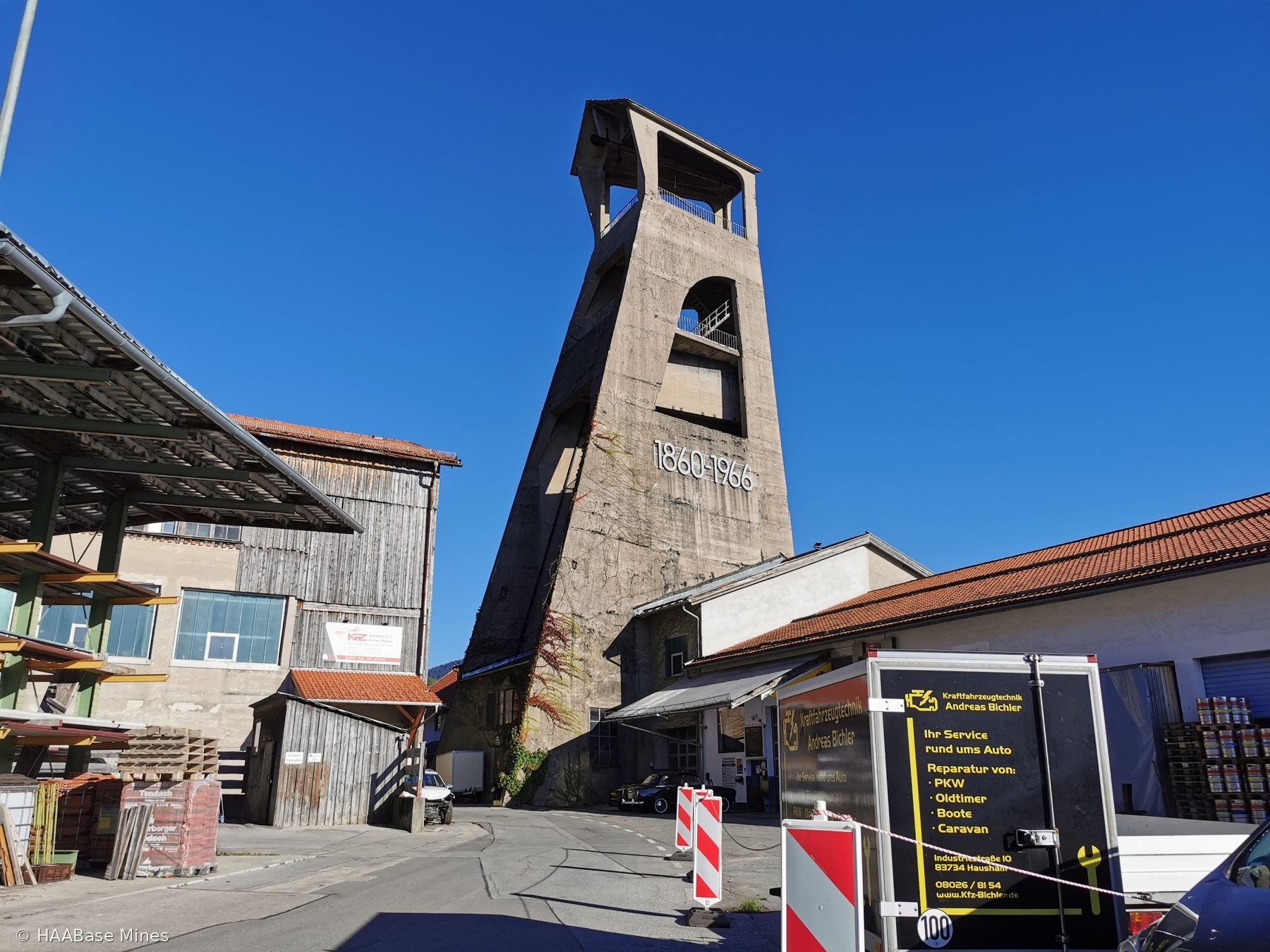
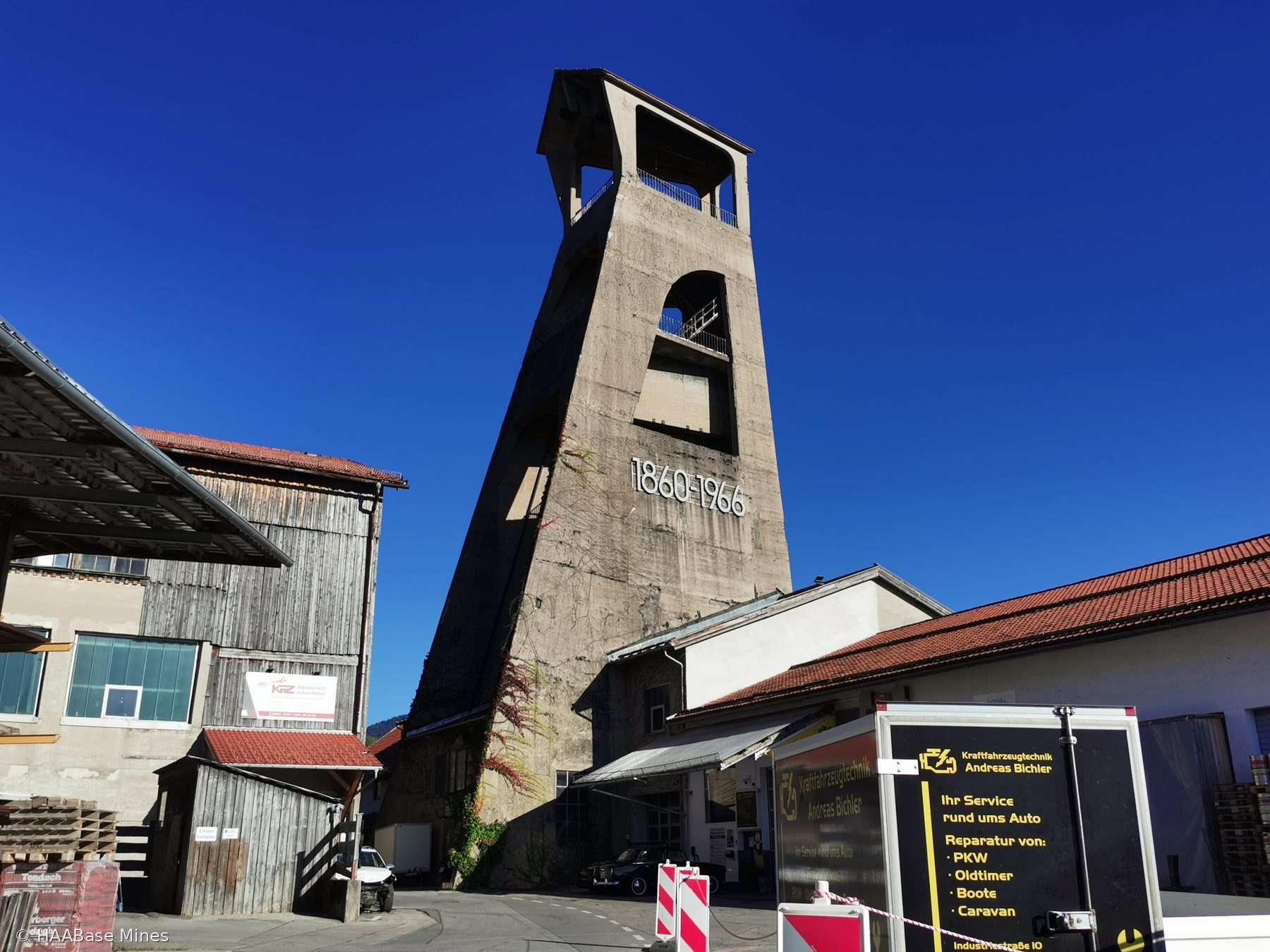
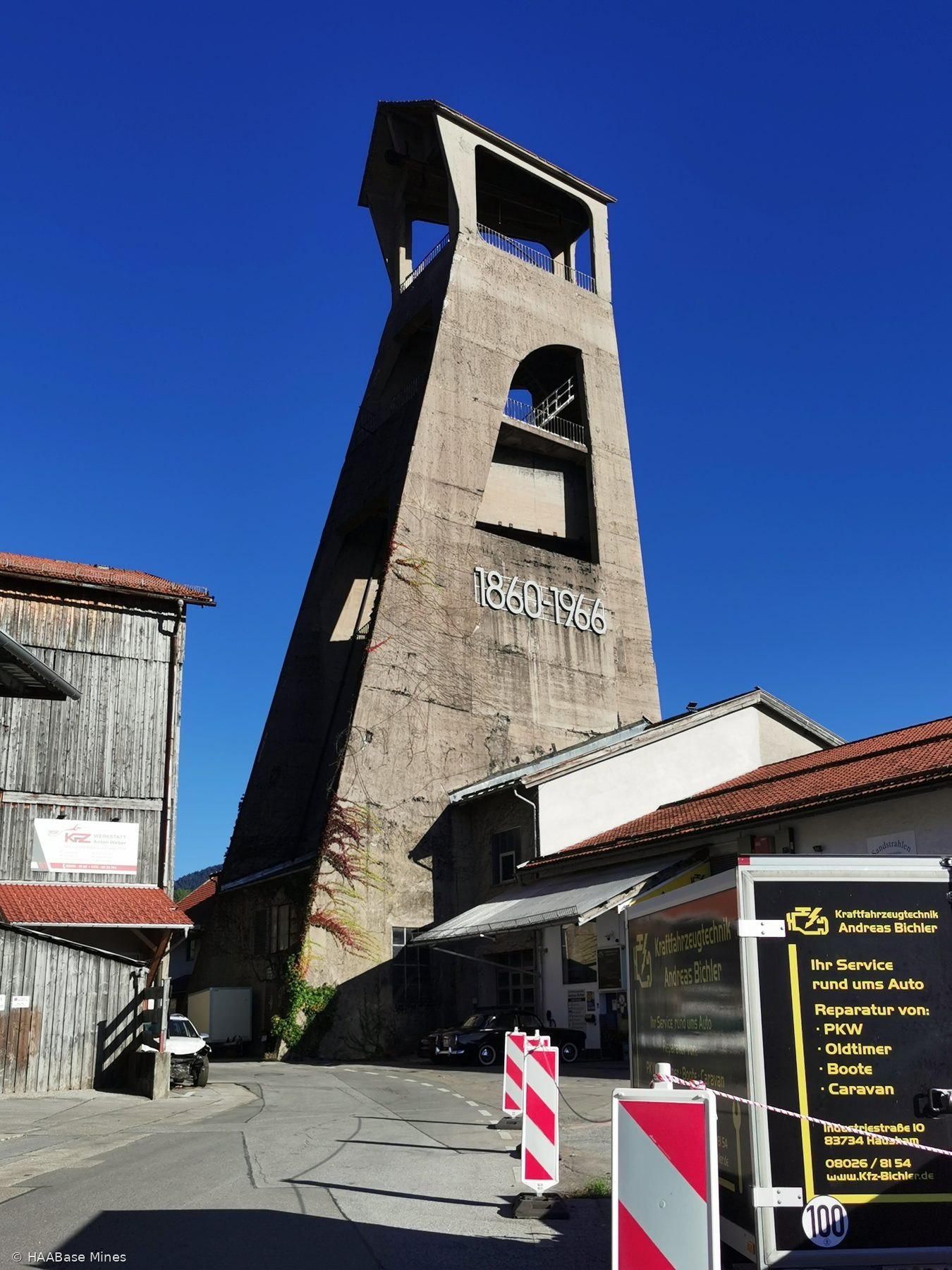
In 1934 Dr. Franz Langecker became mine director. Between 1934 and 1936 the entire surface installation was rebuilt and modernised, including the construction of a new winding tower over the Klenzeschacht in reinforced concrete. This tower was designed by the architect partnership of Fritz Schupp and Martin Kremmer, the leading industrial architects in Germany at the time, whose other major works included the Zeche Zollverein in Essen and the surface installations of the Erzbergwerk Rammelsberg at Goslar. The Bavarian Denkmalliste records the tower as built in 1934/1935 and the mine's own sources cite completion in 1936. The tower, approximately 40 metres tall, stands in reinforced concrete and served as the main hoisting shaft from that point. Underground modernisation followed, including the introduction of longwall face working and concentration of production points.
After the Second World War the net annual output was raised to approximately 450,000 tonnes. In 1953, following the death of Dr. Langecker, Dr. Ekhard Böhm became mine director and continued further modernisation. A briquette factory was built, and a 42-megawatt power station was completed in 1962 (demolished 1984/85). In 1958 the first ramming machine was successfully tested underground on 16 October. From 1959, in response to the European coal crisis, a ripping hook planer was also introduced. These mechanisation measures extended the mine's viability but could not halt the eventual decline. On 31 March 1966 the last production shift was worked after 106 years of operation, with a workforce at closure of approximately 1,600.
In 1977/78 an initiative by the then mayor Anton Weilmaier and the mine surveyor Rudolf Hackner led to the creation of an underground demonstration roadway in the basement of the Rathaus. A formal mining museum was opened in 1982, housed in the basement of the old Rathaus, containing tools, instruments, mining equipment, cartographic material, fossils and mineral collections, working models, and historical photographs and films. The museum served as the model for the Deutsches Museum in Munich, whose director Oskar von Miller had commissioned an authentic recreation of the filling station at the Klenzeschacht at 720 metres depth for the museum's mining section.
The Klenzeschacht winding tower is listed as a Baudenkmal in the Bayerische Denkmalliste and is the only surviving shaft headframe in Upper Bavaria. It is in private ownership. The Landesamt für Denkmalschutz designated the entire ensemble — not just the tower but the surrounding buildings — as worthy of protection. Plans for a conversion of the tower and adjacent buildings into a museum, exhibition space and visitor centre, with a design prepared by architect Johannes Wegmann, have been discussed and are supported in principle by the authorities. As of available information the museum was temporarily closed during a move to new premises.