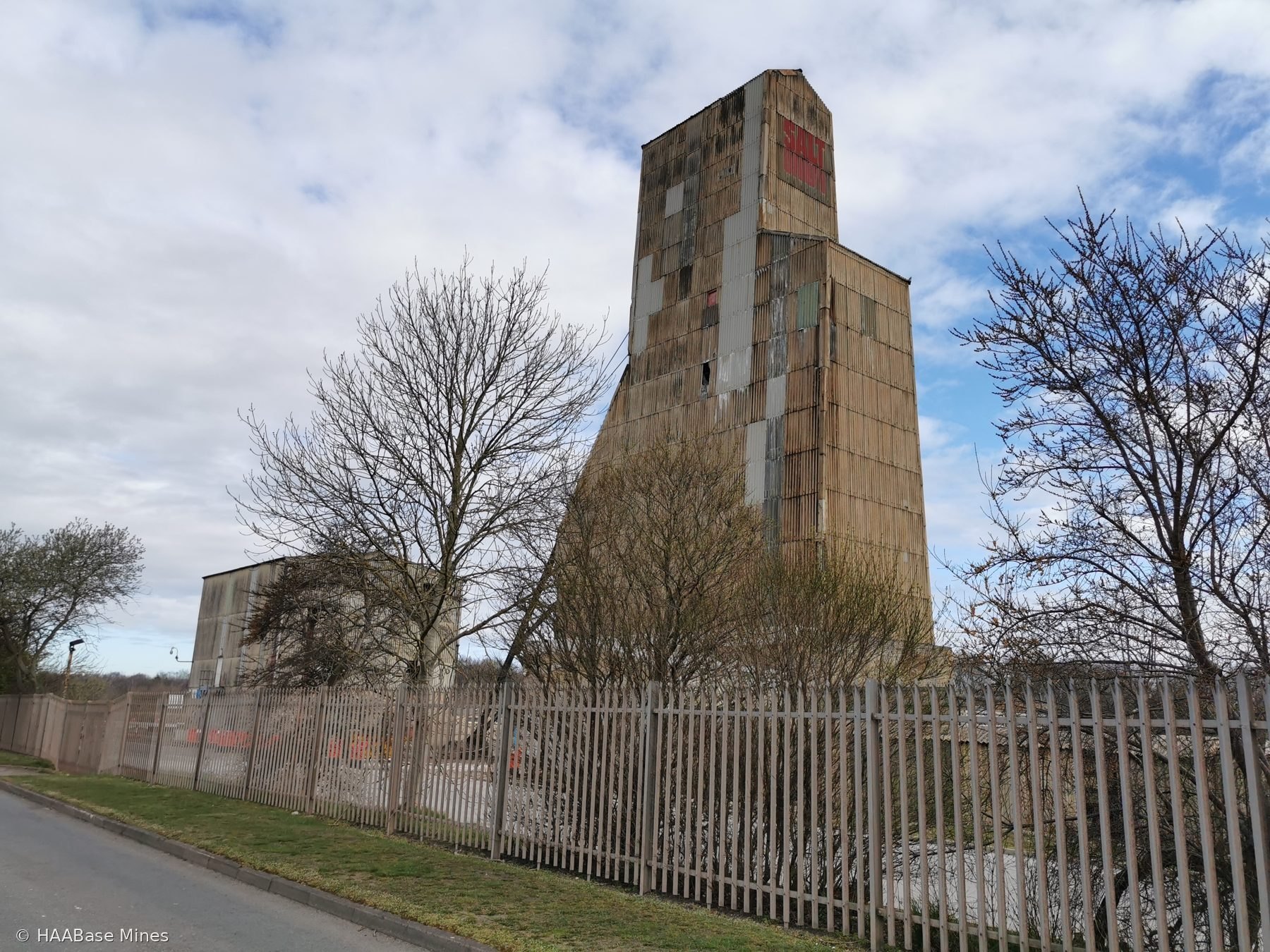
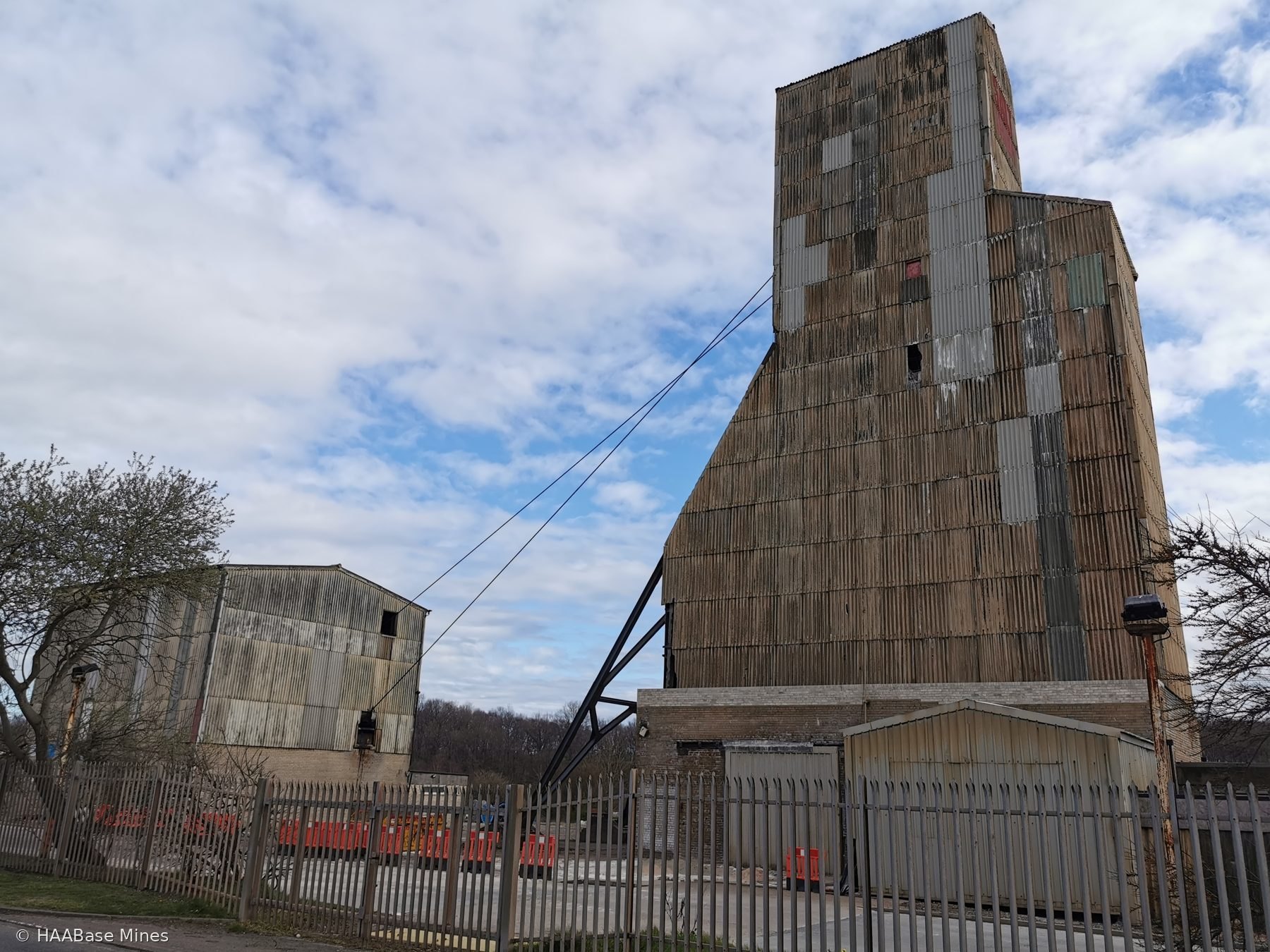
Rock salt was extracted in the Winsford area as early as the seventeenth century, initially for use as animal salt licks and to strengthen weak brine. The systematic underground mining of halite began in 1844, when prospectors searching for coal to heat saltpans accidentally discovered the rock salt deposits. The mine, then known as Meadow Bank Mine, officially opened in 1844 with the sinking of 1 Shaft and 2 Shaft. Both shafts were four feet square in cross-section and lined with timber and puddle clay. Men, materials, and excavated rock salt were all raised and lowered by bucket in the early period of operation. The original shafts were sunk first to 65 metres and later deepened to the current working depth of around 150 metres. The halite deposit was laid down during the Triassic period over 220 million years ago. The salt content of the mined rock is approximately 92 per cent.
From the outset, extraction followed the room and pillar method, in which large pillars of rock salt are left in place to support the roof. The original nineteeth-century workings formed one large cavity around the two original shafts. During the period 1844 to 1892 approximately one million tonnes of rock salt were extracted using black powder explosives, hand picks, and shovels, with the excavated material transported in wooden barrels. Tallow candles were used to light the working face until the introduction of electricity to the mine during the 1930s. Salt was exported by barge or boat via the River Weaver.
The operator from 1844 to 1888 was Falk Salt. During the late nineteenth century the salt market became severely over-supplied. In 1888 Salt Union was formed from 66 salt operators in the area in an attempt to regulate the market, and the mine passed to Salt Union's ownership. Despite this consolidation, with salt continuing to be produced from the Northwich mines the market remained over-supplied. The mine closed in 1892 due to competition from the Northwich workings. By 1897 Winsford had nonetheless been acknowledged as the largest producer of salt in England, a position the mine had reached before its closure.
The mine remained mothballed for thirty-six years. In 1928 the Marston Mine in Northwich — the last of the Northwich salt mines — was subjected to flooding after subsidence, ending production there. The Winsford mine was reopened that year to fill the resulting gap in supply. When the mine reopened a railway connection was laid, replacing the earlier reliance on the River Weaver for transport. In 1937 the mine became part of ICI, which held ownership from 1938 to 1992. Electricity had been introduced by the 1930s and drill-and-blast mechanised mining methods, which would continue as the principal extraction technique for approximately seventy years, were established during this period.
During the Second World War, in 1941, a new shaft — 3 Shaft — was sunk. This shaft was circular in cross-section, originally brick-lined and later reinforced with concrete, with a diameter of 3.05 metres and a total depth including the sump of 163 metres. The decking level is approximately 150 metres. The original lift in 3 Shaft comprised two double-deck cages operating in balance on steel rail guides, driven by a single-drum manually controlled winding engine. During the 1950s the decision was taken to regulate pillar size across the workings, with the current extraction rate set at between 68 and 75 per cent of available salt. From 1958 onwards the Mining Department at Newcastle University undertook investigations into rock mechanics for the design of the mine workings, including the development of instruments to measure rock creep and strata deformation.
No 4 Shaft was installed in 1963. Situated approximately one mile from 3 Shaft, it is the downcast ventilation shaft with a concrete lining and a diameter of 4.88 metres. The total depth of 4 Shaft is 189 metres, with the decking level at 183 metres. It serves as the principal service shaft for bringing underground equipment and materials into the mine. No 5 Shaft was sunk in 1973 and is used mainly for transporting rock salt. Production milestones recorded at Winsford include 100,000 tonnes in 1959, 300,000 tonnes in 1960, 900,000 tonnes in 1964, 1,300,000 tonnes in 1969, and 1,800,000 tonnes in 1971.
In the 1970s the original 1 Shaft and 2 Shaft, which had remained in use for nearly 130 years, were sealed and grouted. The lift in 3 Shaft was replaced with a fixed self-service lift. ICI undertook a management buyout in 1992, valued at £47.5 million, transferring ownership to Harris Chemical Group. Harris Chemical Group sold to IMC Global in 1998. IMC Global was acquired by Compass Minerals in 2003, under whose ownership the mine has since operated.
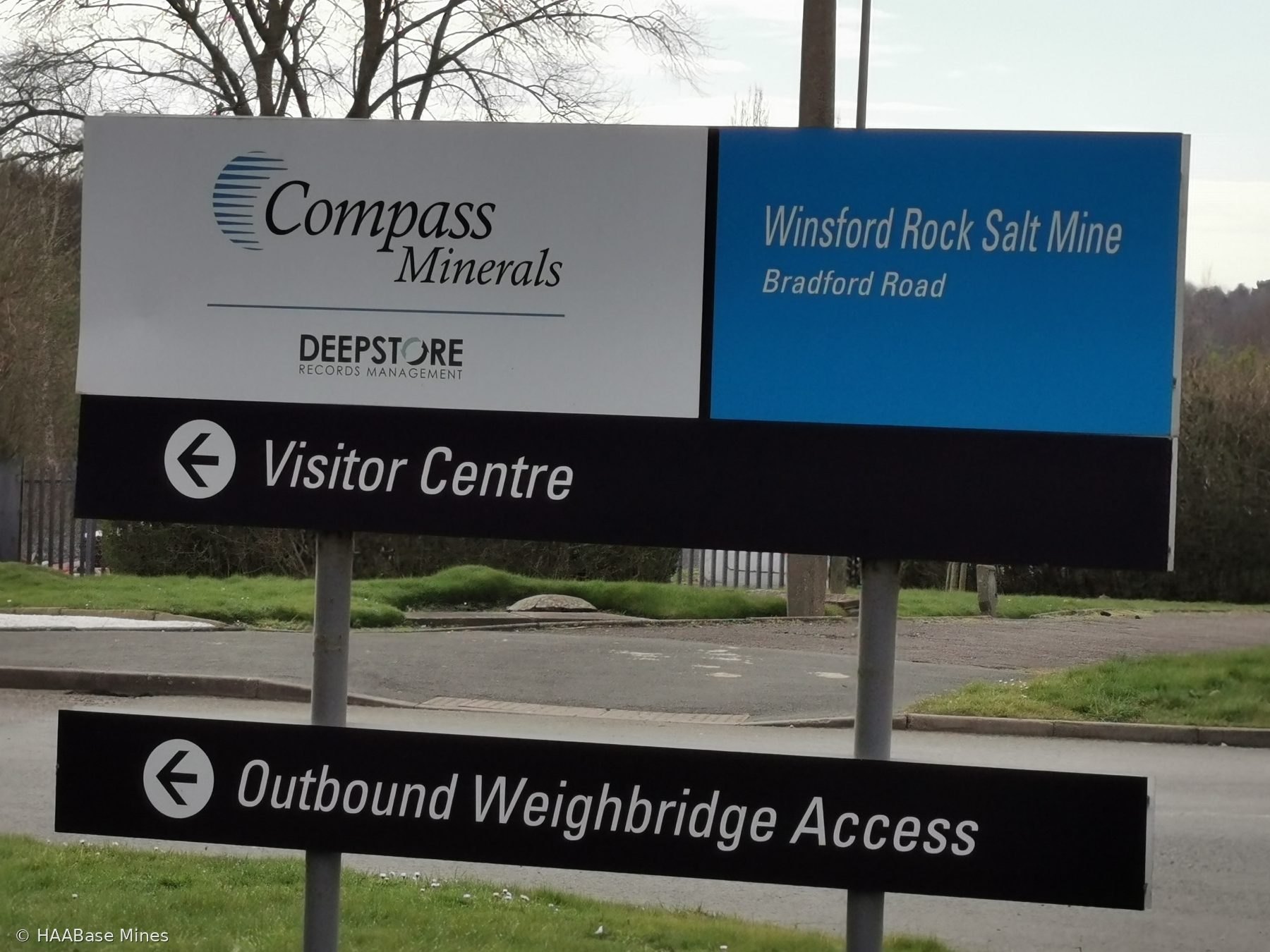
In 1998 DeepStore was established at the mine to exploit the stable underground conditions — constant temperature, dry humidity, absence of ultraviolet light, freedom from vermin and flooding, and gas-free atmosphere — for the secure storage of records and artefacts. The National Archives became one of the principal customers, with its shelf space at DeepStore eventually extending to over 32 kilometres of shelving. Other stored materials include paintings, architectural models, hospital patient records, and business data. In 2007 DeepStore expanded by acquiring a facility in the London metropolitan area. In 2006 the mine's free underground void space was estimated at over 26 million cubic metres. A mining licence extension was granted in 2012, authorising mining to continue to at least 2047. In 2022 the hazardous waste storage licence was extended by twenty years from its original 2025 expiry to 2045.
Winsford was the first Compass Minerals production facility to introduce a continuous mining machine as a replacement for drill-and-blast extraction. The first JOY continuous mining machine (a JOY 12HM36) was purchased, followed by a second in 2011 and a third in 2014. The continuous mining machine, weighing 130 tonnes with an installed power of 1,005 kilowatts, uses tungsten steel cutting picks on a rotating drum to claw away the rock face. The cut material is loaded directly onto a bridge belt conveyor attached to the rear of the machine and transferred to the main conveyor system. The mine currently extends approximately five kilometres east to west and three kilometres north to south, with over 260 kilometres of tunnels. Annual production in 2017 was 1,500,000 tonnes and in 2020 reached 2,200,000 tonnes.