Site overview

Zeche Osterfeld was a hard coal mine in Oberhausen-Osterfeld in the Ruhr coalfield, Germany, operated principally within the Gutehoffnungshütte (GHH) concern. Exploratory borings began in 1853 and the mine opened in 1879. It operated for over 120 years and was one of the largest and most technically productive collieries in the Ruhr at the turn of the twentieth century.

The field grew to encompass seven shaft workings, and at its peak the site employed over 3,400 workers. Closure came in stages from 1988 onwards; the coking plant was shut on 13 March 1988 and the final coal was drawn on 31 March 1992. Active underground operations in the detached northern field continued until 31 May 1998.

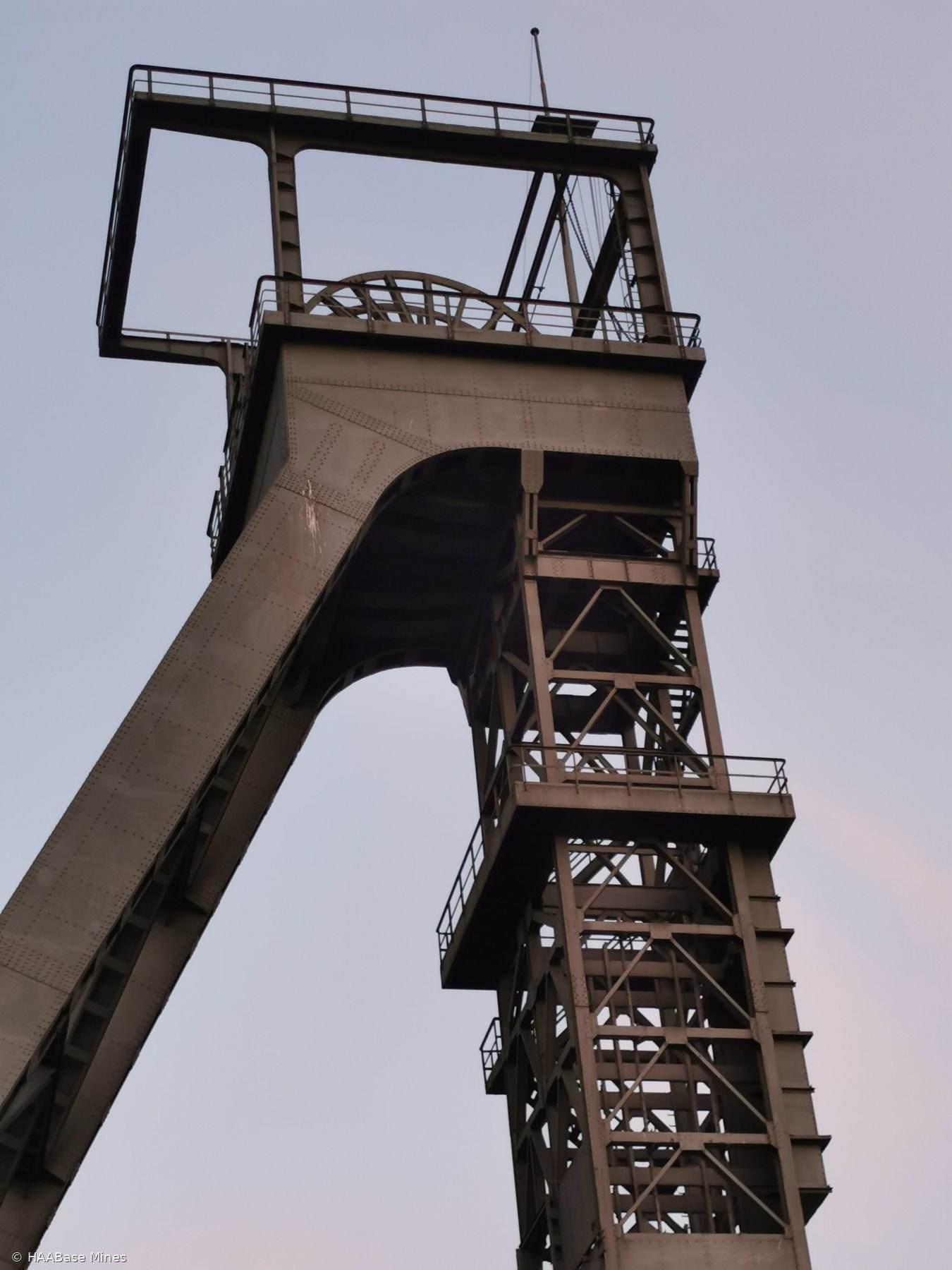
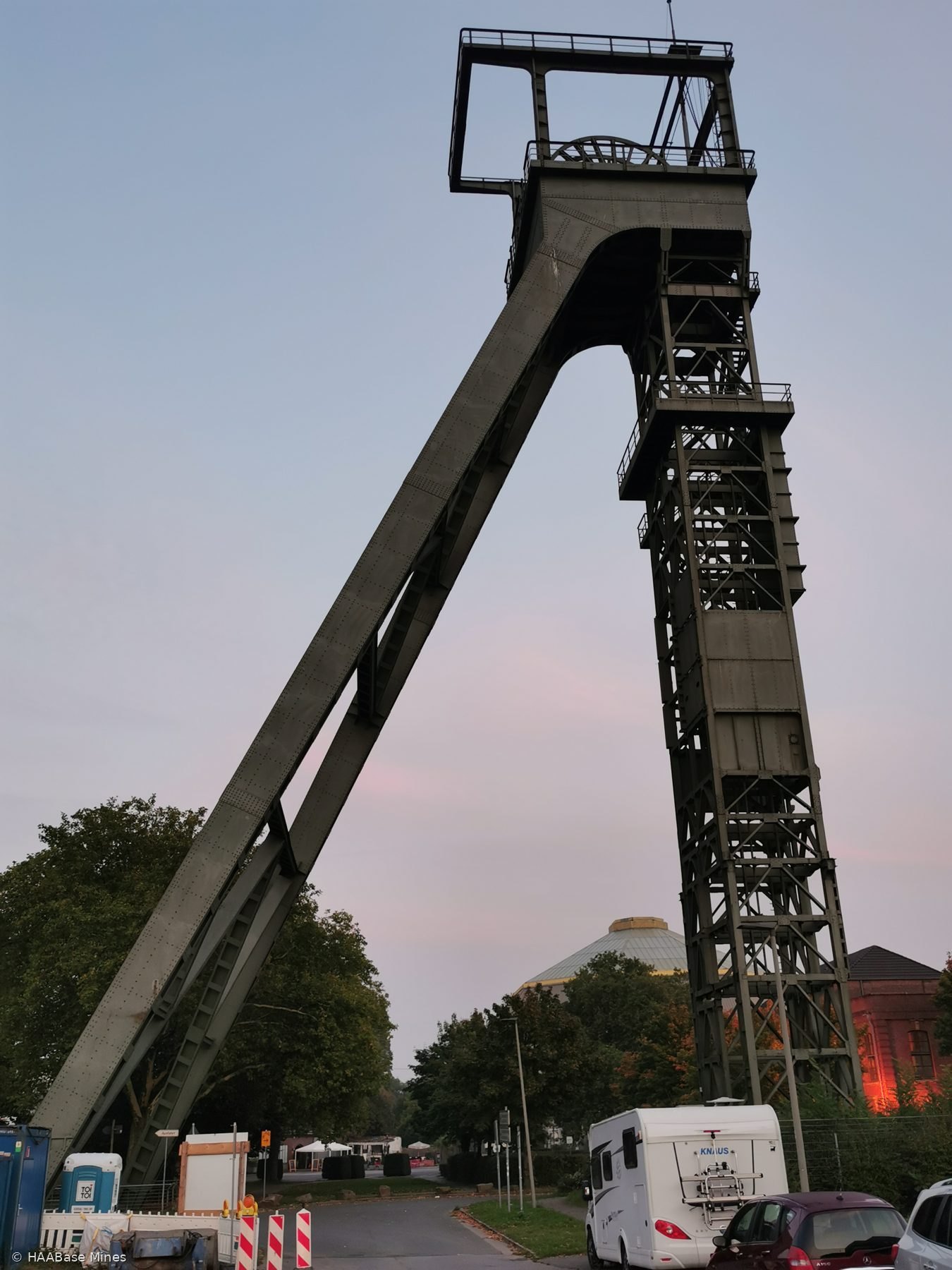
Several structures are protected as listed monuments: the Schacht 3 headframe (known as the Paul-Reusch-Schacht), the winding tower and bath-house of Schacht 4, and the Sterkrade 1 headframe with its shaft hall. The former Schacht 1/2/4/7 site was redeveloped and served as the venue for the Oberhausener Landesgartenschau (OLGA) in 1999.

The site lies in open parkland on the urban edge, where the surviving headframes and buildings read as scattered but still legible elements of a former large colliery.

Map & photo

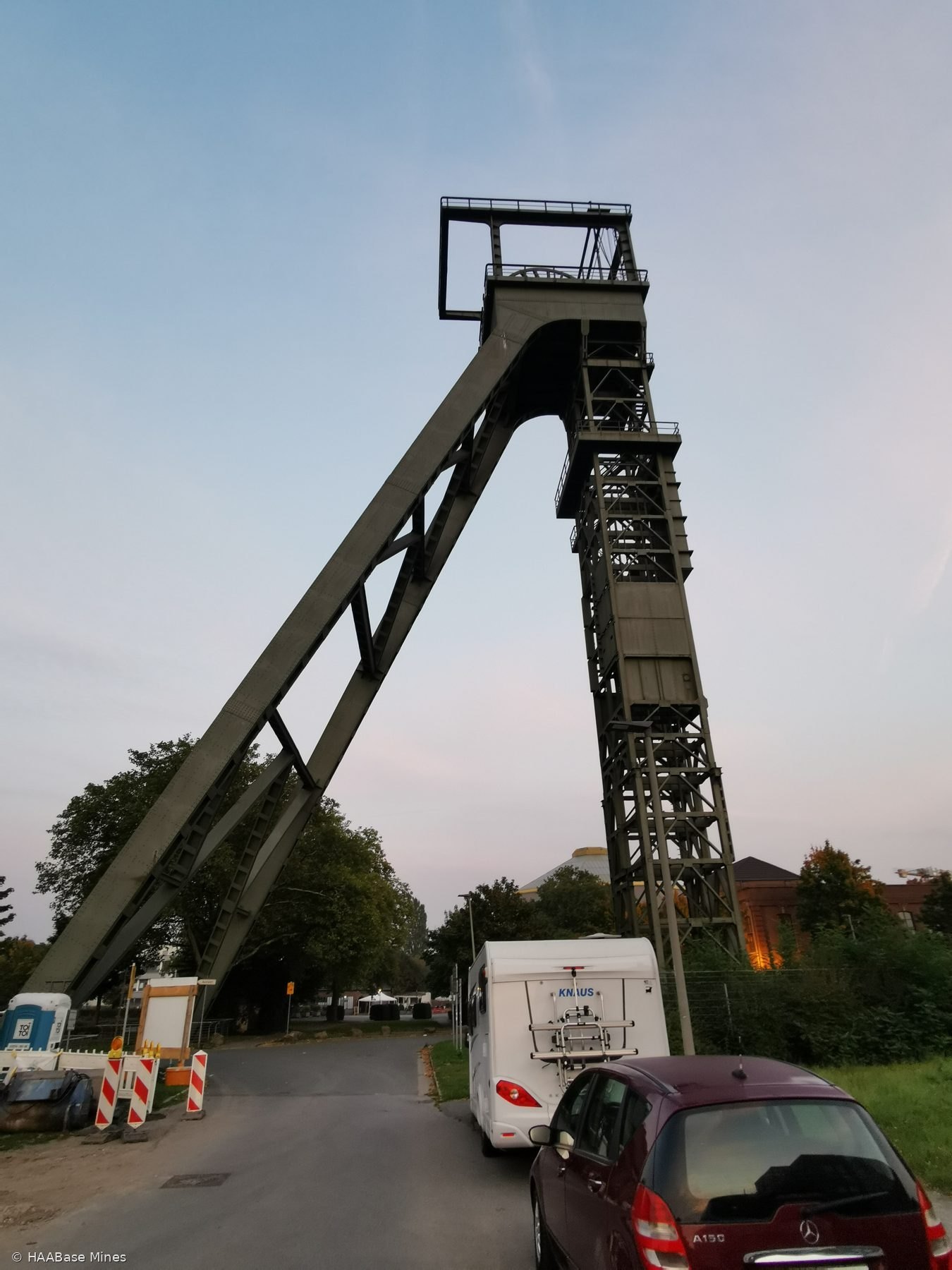
Zeche Osterfeld — Schacht 4 mine headframe or winding tower site
Photograph taken: 30 September 2025
Map markers and directions links are provided for location reference only and do not indicate public access or permission to enter a site.

History

The origins of Zeche Osterfeld lie in a prospecting letter from the Gutehoffnungshütte dated 15 August 1873, in which the company notified the mining authority of its intention to sink a new shaft at Osterfeld in the field of the Zeche Osterfeld, formerly Herzog von Arenberg. Exploratory borings had begun in 1853. Initial attempts to find coal were unsuccessful; one boring team suffered a fatal accident in the early prospecting phase. In 1855 and 1856 borings were conducted at fifteen locations. A new attempt 56 metres from the first failed location succeeded in 1877 when the new shaft, designated Kattendahl, reached the Carboniferous at 238 metres depth. In 1879 this shaft was renamed Osterfeld 1 and the independent Zeche Osterfeld was constituted, assisted by its proximity to the Köln-Mindener Eisenbahn railway.

As the mine expanded around the turn of the twentieth century, a new coking plant with a capacity for producing high-quality coke was commissioned in 1895. Schächte 2 and 3 were added in 1903 and 1904. By 1915 the workforce stood at 3,460. In 1912 the sinking of Schacht 4 began in the Klosterhardt district, approximately 1.7 kilometres north of Schächte 1–3. The shaft was originally intended as a ventilation shaft given the high firedamp risk in the workings. The sinking reached the Carboniferous at 314 metres in 1914. The shaft was subsequently deepened to reach the fourth working level in 1916 and received a clinker-faced 43-metre winding tower with an electric winding machine in its upper section. The surface installations around Schacht 4 were built between 1921 and 1924 to designs by Oberhausen architect Toni Schwingen. In 1922 the ventilation shaft 4 was brought into service as a winding and man-riding shaft. Horse haulage underground was abolished from 1922 onwards in favour of compressed-air and diesel locomotives. From 1928 to 1931 the coking plant was comprehensively renewed.

In the depression years of 1930 and 1931 the GHH faced serious sales problems and was forced to rationalise. In 1931 the company closed the adjacent Zeche Hugo and Zeche Oberhausen, as well as the Kokerei Sterkrade and Kokerei Jacobi. In 1932 a combined mine was formed from Zechen Vondern and Jacobi with production concentrated on Jacobi; on 1 February 1933 Zeche Sterkrade was also closed. The working fields of Sterkrade and Hugo were absorbed by Zeche Osterfeld. The site now had access to Schächte Osterfeld 1, 2 and 3 for production and Schächte Osterfeld 4, Sterkrade 1, Sterkrade 2 and Hugo for ventilation, man-riding and materials transport.

By 1950 the mine had recovered from war damage to regain pre-war output levels. In September 1957, in response to the coal sales crisis, the new operating company Hüttenwerke Oberhausen AG (HOAG) undertook major modernisation. Schacht 1 was equipped in 1957 with a new four-rope skip hoist system, and a closed 72-metre winding tower clad in anodised aluminium sheeting was erected over it. A 4.4-megawatt electric tower winding machine was installed. In 1967 the Nordschacht was completed in Oberhausen-Schmachtendorf, and by 1968 Schacht 1 was being deepened further and the Nordschacht entered service. The target daily output was set at 10,500 tonnes of coking coal, primarily to supply the associated coking plant. A decision was taken to concentrate all extraction in the northern field. By mid-1973 the southern field had been submitted for partial closure.

In 1968 Zeche Osterfeld was incorporated into the newly formed Ruhrkohle AG as part of the Bergbau AG Oberhausen. In November 1974 a mine fire broke out in Flöz Gustav following the completion of a working panel. The mine rescue brigade sealed the adjacent roadways and introduced nitrogen into the fire zone, extinguishing the fire. This was the first successful suppression of a coal mine fire by nitrogen inertisation in western European hard coal mining. In 1979 the Nordschacht reached 1,252 metres depth. In 1988 the Osterfeld field was merged with the Lohberg field (Dinslaken) to form a combined mine, using the Nordschacht as the connection point for underground access to the Lohberg shafts.

The coking plant at Osterfeld was closed on 13 March 1988. Final coal production at Zeche Osterfeld ceased on 31 March 1992. Underground operations in a residual working area continued from the Nordschacht, with workers bussed from Lohberg; these final workings reached their extraction boundary on 31 May 1998, ending 145 years of coal extraction under the Oberhausen urban area.

Following closure, the shafts were filled, most by full concrete filling. In October 1993 Schächte Osterfeld 4 and Hugo Haniel were fully filled with concrete. Schächte Osterfeld 1 and 3 were partially filled the same month. The ore preparation building was demolished by explosive on 10 November 1993 and the Osterfeld 1 winding tower on 12 January 1994. By the end of the first quarter of 1995 all remaining surface buildings at the Osterfeld 1/3 site had been demolished except for the Paul-Reusch-Schacht (Schacht 3) headframe and some entrance buildings. The Sterkrade 2 shaft and ventilators remained in service until December 1995, then the shaft was partially filled and the buildings demolished. The bath-house operations closed on 31 March 1998.

The former Osterfeld 1/2/4/7 site was redeveloped and served as the main venue for the Oberhausener Landesgartenschau OLGA in 1999. The following structures are under heritage protection: the entrance gatehouse, the mixing hall, the headframe of Schacht 3 (Paul-Reusch-Schacht), the administrative building, the winding tower of Schacht 4, and the three-strut headframe of Schacht Sterkrade 1 with its associated shaft hall. The Schacht 4 site was in 2013 designated for residential redevelopment incorporating the surviving headframe and bath-house buildings.
Timeline

1853–1856
Exploration

Exploratory borings in Osterfeld; initial failures

Exploratory borings for coal began in 1853 in the Osterfeld area. Early attempts failed; one boring team suffered a fatal accident. By 1855–56 borings had been conducted at fifteen locations.
1873
Legislation

GHH notifies mining authority of intention to sink new shaft

The Gutehoffnungshütte formally notified the mining authority on 15 August 1873 of its intention to sink a new shaft in the Osterfeld field, formerly known as Herzog von Arenberg.
1877–1879
Construction

Kattendahl shaft reaches Carboniferous; renamed Osterfeld 1; production begins

A new shaft (Kattendahl) reached the Carboniferous at 238 metres in 1877. In 1879 it was renamed Osterfeld 1 and the independent Zeche Osterfeld was constituted.
1895
Construction

Coking plant commissioned

A new coking plant capable of producing high-quality coke was commissioned in 1895.
1903–1904
Construction

Schächte 2 and 3 added

Schacht 2 and Schacht 3 were added to the mine in 1903 and 1904 respectively.
1912–1924
Construction

Schacht 4 sunk at Klosterhardt; surface installations built 1921–1924

Sinking of Schacht 4 began in 1912 in the Klosterhardt district, 1.7 km north of the main shafts. It reached the Carboniferous at 314 metres in 1914, was deepened to the fourth level in 1916, and received a 43-metre clinker-faced winding tower. Surface buildings were designed by architect Toni Schwingen and built 1921–1924.
1928–1931
Construction

Coking plant comprehensively renewed

The coking plant was fully rebuilt and equipped with new coke oven batteries between 1928 and 1931.
1931–1933
Operation

Neighbouring GHH collieries closed; fields absorbed by Osterfeld

In 1931 the GHH closed Zechen Hugo and Oberhausen and Kokereien Sterkrade and Jacobi. In 1933 Zeche Sterkrade was also closed. The working fields of Sterkrade and Hugo were transferred to Zeche Osterfeld.
1957–1959
Construction

Major modernisation: 72-metre winding tower erected over Schacht 1

From September 1957 HOAG undertook major modernisation. Schacht 1 received a new four-rope skip hoist and a 72-metre closed winding tower clad in anodised aluminium, with a 4.4-megawatt electric tower winding machine.
1967
Construction

Nordschacht completed

The Nordschacht was completed in 1967 in Oberhausen-Schmachtendorf, giving access to the northern working field.
1968
Legislation

Zeche Osterfeld incorporated into Ruhrkohle AG

In 1968 the mine was incorporated into the newly formed Ruhrkohle AG and assigned to the Bergbau AG Oberhausen.
1974
Operation

First successful coal mine fire suppression by nitrogen inertisation in western Europe

In November 1974 a mine fire in Flöz Gustav was extinguished by the introduction of nitrogen into the sealed fire zone. This was the first successful use of nitrogen inertisation to combat a coal mine fire in western European hard coal mining.
1988
Closure

Coking plant closed

The Osterfeld coking plant was permanently closed on 13 March 1988.
1988
Operation

Bergwerk Osterfeld and Bergwerk Lohberg merged

In 1988 Zeche Osterfeld and the Lohberg colliery in Dinslaken were merged into a combined mine, with the Nordschacht as the underground connection point.
1992
Closure

Final coal production at Zeche Osterfeld

The final coal draw at the Osterfeld site took place on 31 March 1992.
1993–1995
Closure

Shafts filled; winding tower and ore preparation building demolished

In October–November 1993, Schächte Osterfeld 4, Hugo Haniel, 1 and 3 were filled and the ore preparation building demolished. The Osterfeld 1 winding tower was demolished on 12 January 1994. By early 1995 all remaining structures at the Osterfeld 1/3 site except the Paul-Reusch-Schacht headframe were demolished.
1994
Heritage

Schacht 4 complex designated listed monument

Schacht 4 with its winding tower was placed under heritage protection (Denkmalschutz) in 1994.
1998
Closure

Final coal extraction ends; 145 years of mining under Oberhausen concludes

On 31 May 1998 the last working area in the former Osterfeld field reached its extraction boundary, ending 145 years of coal mining under the Oberhausen urban area.
1999
Redevelopment

Former Osterfeld site hosts Oberhausener Landesgartenschau OLGA

The redeveloped former Zeche Osterfeld 1/2/4/7 site served as the principal venue for the Oberhausener Landesgartenschau (OLGA) in 1999.

Sources and records

Wikipedia article (German): Zeche Osterfeld
Osterfeld-Westfalen.de: Zeche Osterfeld – detailed operational history
Rheinische Industriekultur: Zeche Osterfeld 1-2-3 (Buschmann text)
Rheinruhronline.de: Zeche Osterfeld and Zeche Osterfeld Schacht 4
Oberhausen-Osterfeld.de: Zeche Osterfeld III (detailed closure account)
LVR-Industriemuseum: Letzte Schicht Zeche Osterfeld
J-Kortz.de: Zeche Osterfeld operational summary
This researched site record is part of the HAABase Mines database. Normal personal research and browsing is welcome. Automated bulk extraction, republication, or harvesting of site text and images is not permitted without written consent.