1870
First coal exploration borings at Brambauer
Test borings for coal were carried out in the Brambauer area in 1870.
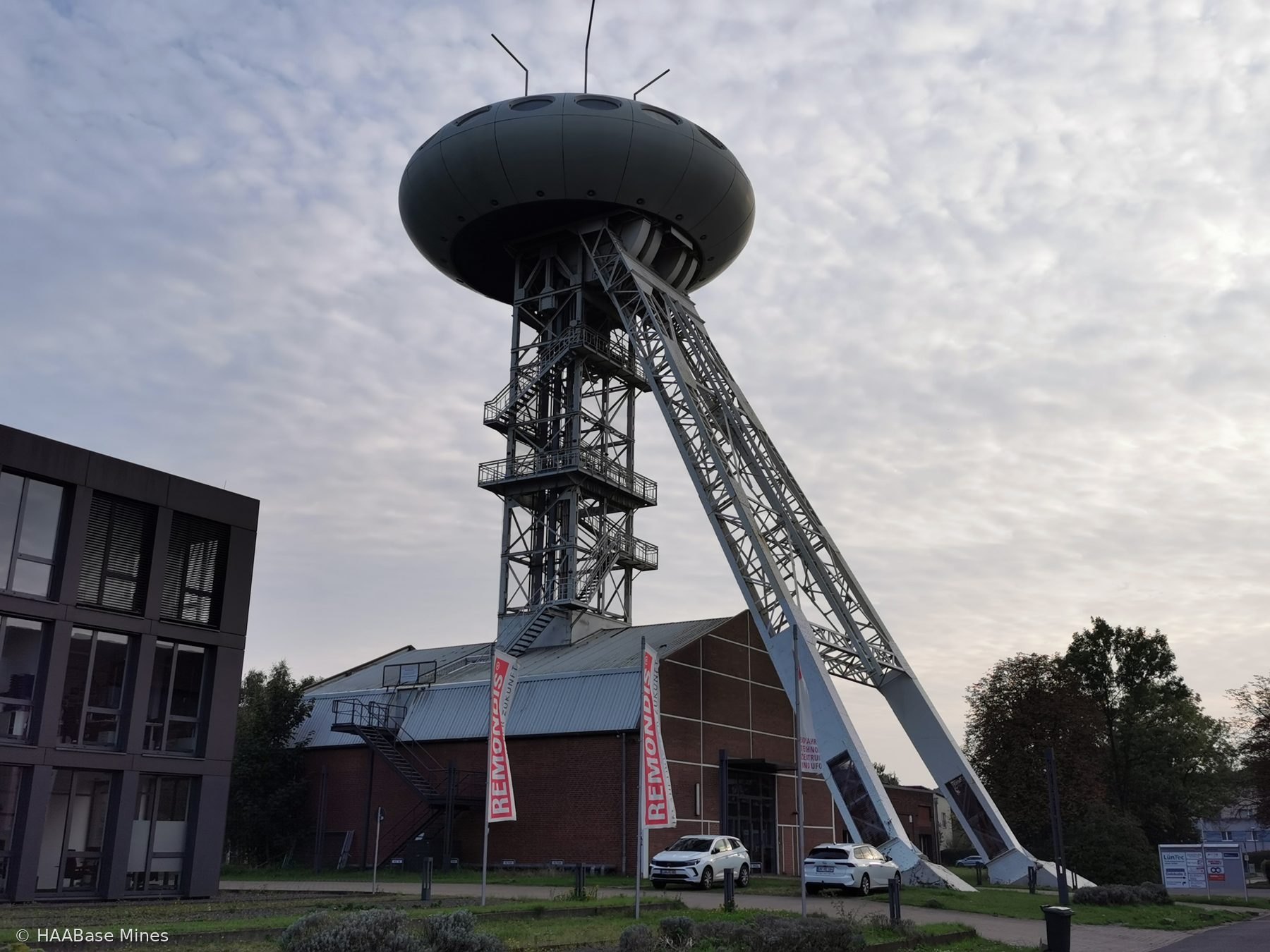
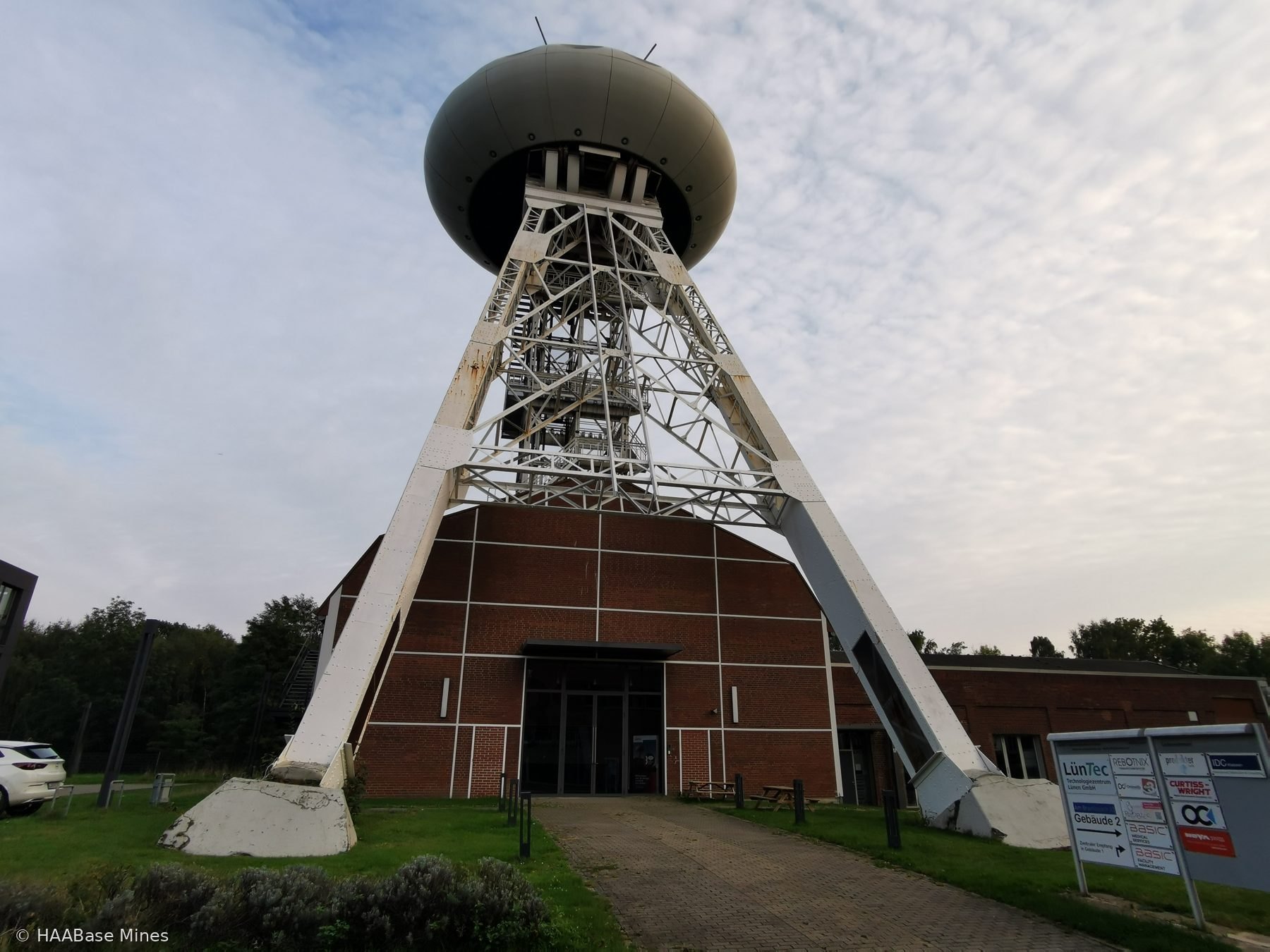
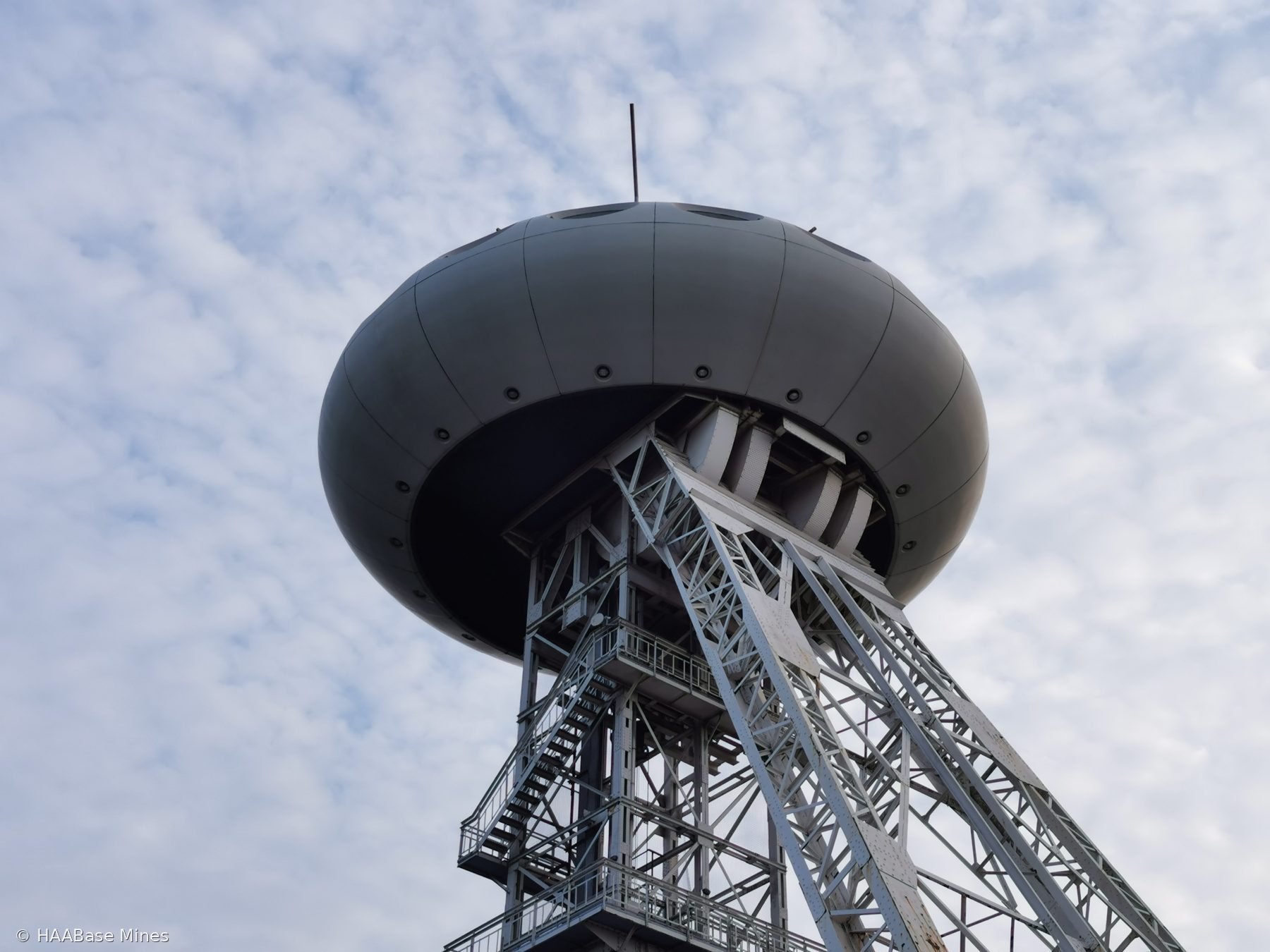
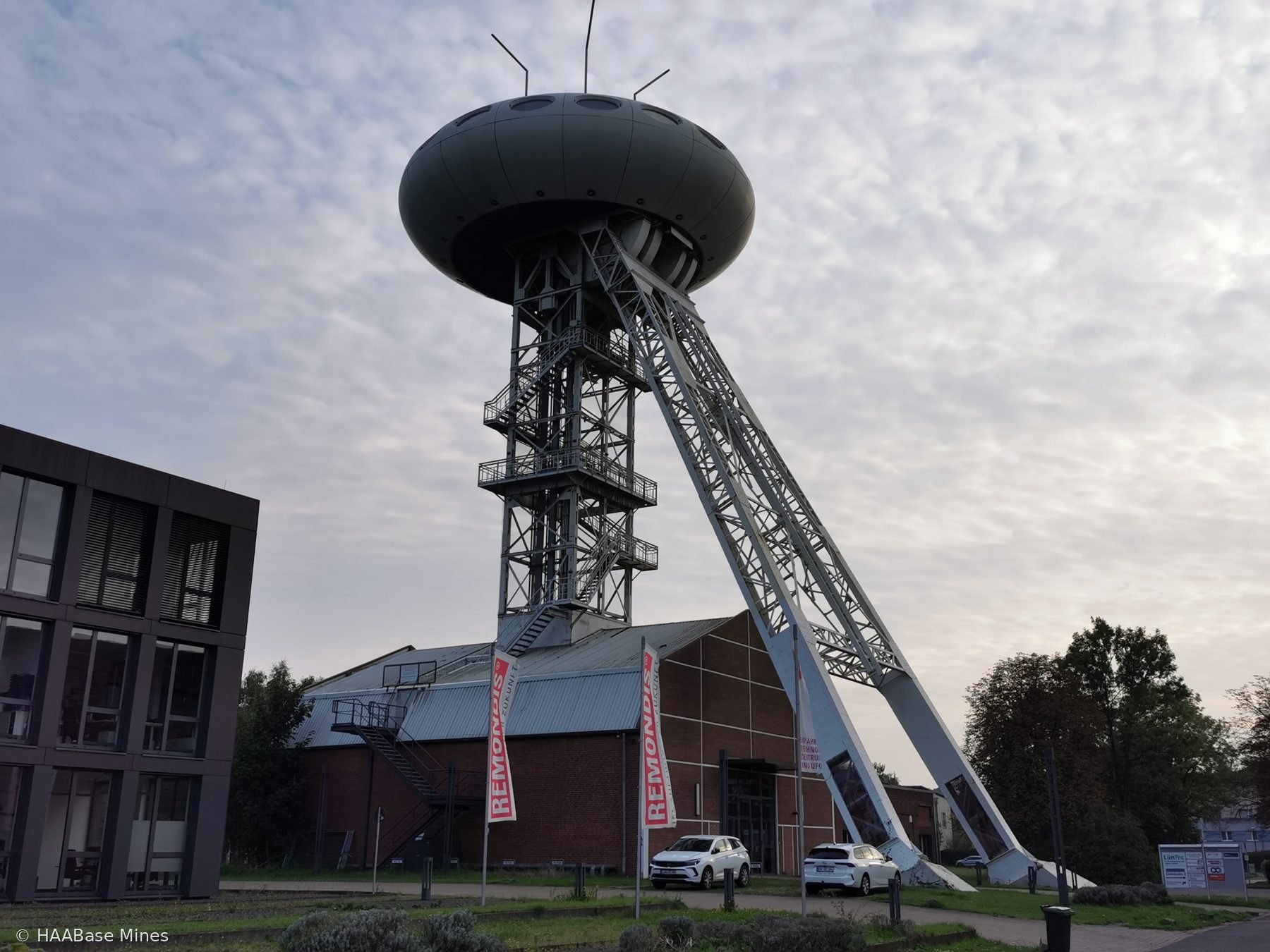
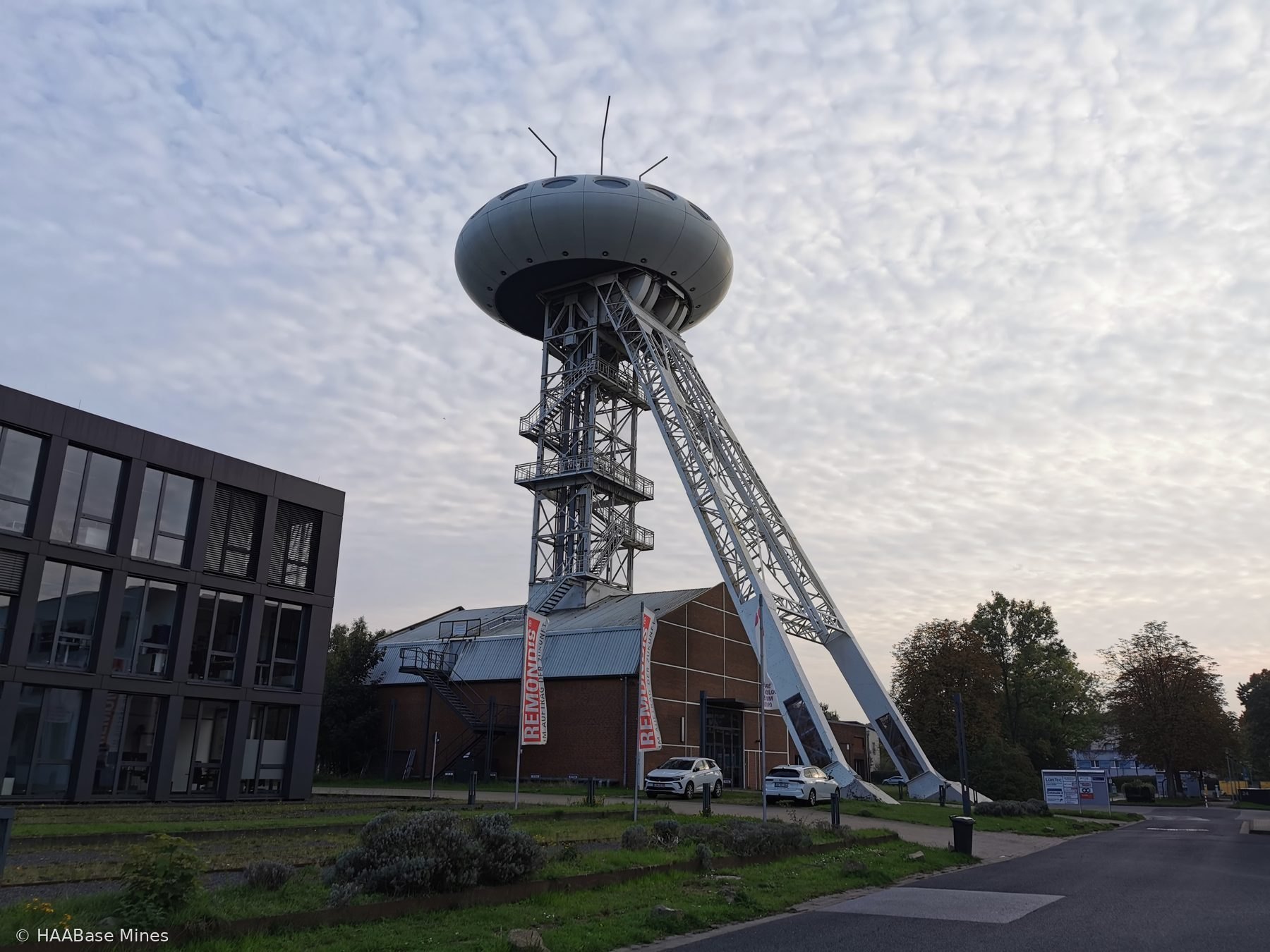
Former Ruhr hard coal colliery at Lünen-Brambauer, with a surviving headframe at Schacht 4 bearing the Colani-Ei and converted to the LÜNTEC technology centre.
Zeche Minister Achenbach was a major hard coal colliery in the Brambauer district of Lünen in the Ruhr coalfield, Germany. The mine took its name from the Prussian trade minister Heinrich von Achenbach. The first shaft was sunk from 1897 and coal production began in 1900.
Over more than ninety years of active operation the mine produced approximately 126.5 million tonnes of hard coal, including gas coal, cooking coal and fat coal. At its peak, in 1960, over 6,000 miners were employed and the highest annual output of 2,745,029 tonnes was achieved in 1982. The mine incorporated a coking plant from 1902 to 1971 and grew to a total of nine shaft workings.
The final shift was on 30 June 1992. Most surface buildings were demolished in 1993. The former Schacht 4 site at Brambauer was converted from 1995 into the LÜNTEC technology centre, with the surviving headframe re-marked by the elliptical Colani-Ei structure created by designer Luigi Colani.
Coal exploration at Brambauer began in 1870 with the first test borings in the area. In 1873 a claim was lodged for a coal deposit at Brambauer. Between 8 January and 3 February 1875 several mining fields — Gretchen, Olga, Paula, Max and Martha — were consolidated under the name Friede, forming a unified field of 10.9 square kilometres. Separately, by 1877, various Brambauer fields had been brought together under the name Minister Achenbach, after the Prussian trade minister Heinrich Karl Julius von Achenbach.
Schacht 1 was sunk from 1897 and reached the Carboniferous strata at a depth of 370 metres two years later. Production from Schacht 1 began in 1900 with 781 workers, who raised 30,557 tonnes in the first known operating year. Schacht 2 was sunk from 1899 and brought into operation in 1903. A coking plant was established at the Schachtanlage 1/2 and operated from 1902 until 1971. The first canal harbour, serving the Rhein-Herne-Kanal, was built in 1899–1900, though it did not enter commercial operation until 1912. The mine's output grew rapidly; by 1905 the workforce numbered 1,868 and production had reached 445,962 tonnes, and by 1913 the workforce stood at 2,660 and output at 913,000 tonnes.
Schacht 3, located 1.5 kilometres east of the Schachtanlage 1/2, was sunk from 1909. It reached the Carboniferous at 356 metres in 1910 and came into production in 1914. Schacht 4, 1.8 kilometres north-east of Schachtanlage 1/2, was sunk from 1918 and reached the Carboniferous at 333 metres in 1920. It was brought into production in 1924, and in the same year a connecting aerial ropeway between Schachtanlage 1/2 and Schacht 4 was commissioned.
In November 1920 the Gewerkschaft Minister Achenbach concluded an operating and interest-sharing agreement with the Essener Bergwerks-Verein König Wilhelm AG, effective from 1 January 1921. On 16 May 1922, on the demand of the Rheinisch-Westfälisches Kohlen-Syndikat, this agreement was modified to record the Gebrüder Stumm GmbH as the contracting party instead of the Gewerkschaft. In March 1923 a mine fire killed five miners. By 1925 annual production had passed one million tonnes, reaching 1,238,055 tonnes with 4,389 workers. Schächte 3 and 4 were renamed Carl-Haarmann-Schächte in 1935, in honour of the long-serving works director Carl Haarmann. In the mid-1930s investment was concentrated on expanding the Schachtanlage 1/2 workings. Between 1936 and 1937 the mining interests were integrated into the Gebrüder Stumm GmbH, for which a branch office was established in Essen. A new boiler house was erected at the Betriebsbereich 1/2 in 1940–41.
Serious firedamp explosions occurred throughout the mine's history, causing major loss of life: 48 miners were killed in 1912, 24 in 1914, 17 in 1917, nine in 1947, and 17 in 1968. In 1964 a fifth working level was established in Schacht 1 at a depth of 999 metres. Schacht 5 in Lünen-Alstedde had been sunk from 1942; work was halted by water ingress in 1946, resumed in 1948, and the shaft reached the Carboniferous at 538 metres in 1950, entering service in 1954. It was closed in 1966. Schacht 6, sunk from 1957 and commissioned in 1961, was redesignated Friedrich-Müller-Schacht; it supplied coal directly to the adjacent Kraftwerk Kellermann without processing. Schacht 7, sunk from 1960, entered service as a ventilation shaft at 354 metres depth in 1962. During the 1960s rationalisation measures were carried out; Schächte 3, 4, 5 and 6 lost their functions as production shafts. By 1967 Schacht 2 had been deepened to the fifth working level and a connection between the Baufelder 1/2 and 4 was completed underground. Schacht 2 became the central production shaft.
In 1968 Zeche Minister Achenbach was incorporated into the newly formed Ruhrkohle AG. In the same year a second canal harbour was established at the Datteln-Hamm-Kanal for Schachtanlage 4, operational from 1958, while Schacht 7, 1 kilometre west of Schachtanlage 1/2, entered service as a ventilation shaft in 1962. In 1973 Minister Achenbach took over the Baufeld Ickern, including the shafts Ickern 3 and Ickern 4, following the closure of the neighbouring Zeche Victor-Ickern. In 1979 Schacht 3 of the closed Zeche Waltrop was also added, though due to the developing retreat from coal it was never brought into underground connection and was abandoned along with Schächte 4, 5 and 6 in 1987, with all these shafts subsequently filled. Schacht Ickern 4 was filled in 1990. By the late 1950s the working field had grown to over 40 square kilometres and the deepest shafts reached 1,000 metres.
The highest single-year output, 2,745,029 tonnes, was achieved in 1982 by 4,772 workers. In 1990 output had fallen to 1,869,163 tonnes and the workforce to 3,103. The final shift entered Minister Achenbach on 30 June 1992. After closure, shafts Achenbach 1, 2, and 7 and Ickern 3 were filled. Almost all surface buildings at Schachtanlage 1/2 were demolished in 1993; a methane extraction scheme and combined heat and power plant operated at Schacht 2 from 2000 until approximately 2005–2009. The former Schachtanlage 4 site was developed from 1993 for a technology and business park, and from 1995 the former Kauen and administrative buildings of 1922 were incorporated into the LÜNTEC technology centre. A 300 square metre elliptical plastic office structure, the Colani-Ei, was installed on the surviving headframe at Schacht 4 by designer Luigi Colani, becoming the landmark of the LÜNTEC complex.