Site overview

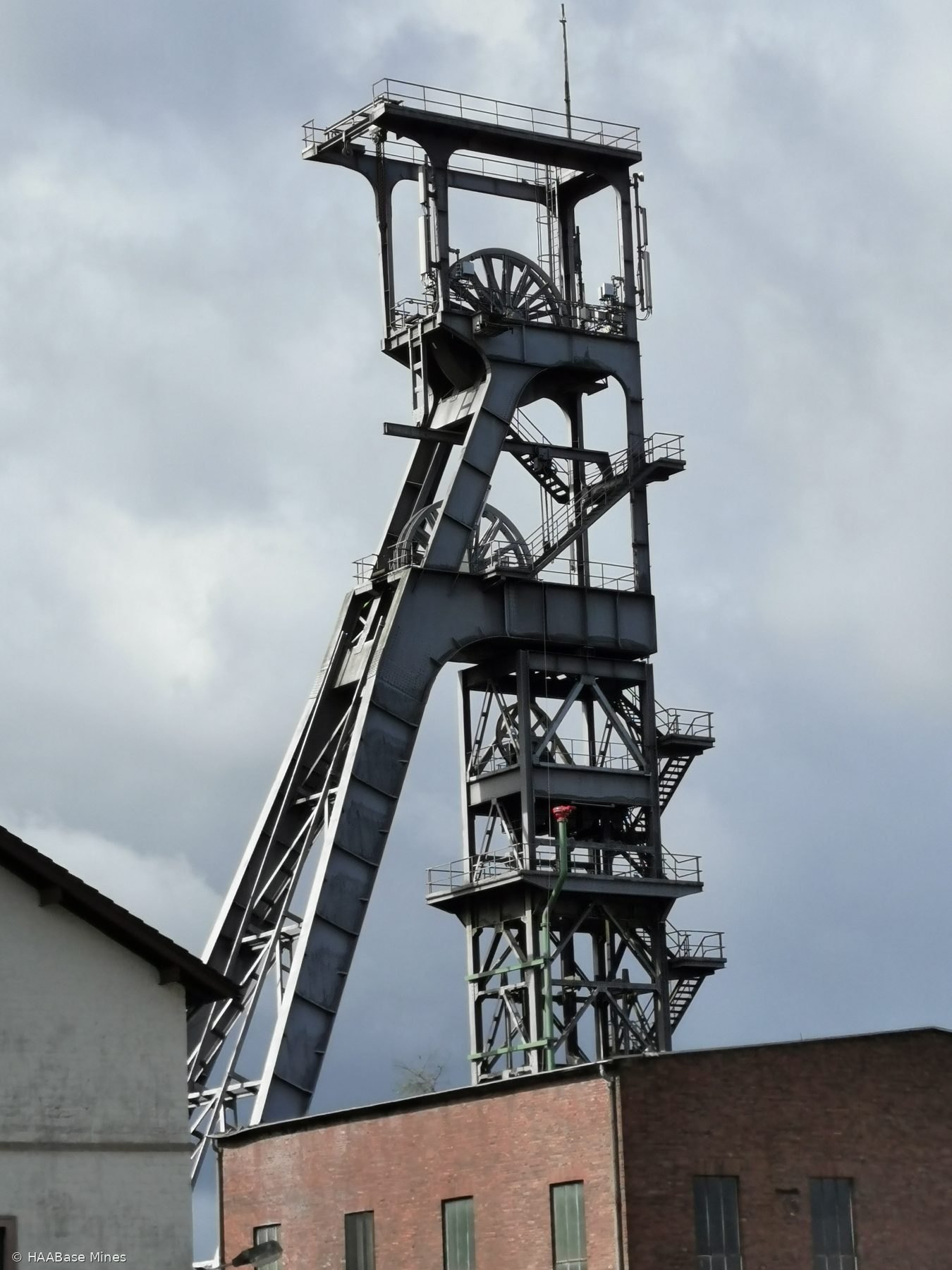
Grube Camphausen is a former hard coal mine in the Fischbach-Camphausen district of Quierschied in the Saarland, Germany. Shaft sinking in the Fischbachtal began in 1871 and the mine was named in 1874 after the Prussian finance minister Otto von Camphausen following his visit. Regular coal extraction commenced in October 1877 and was greatly aided by the opening of the Fischbachtalbahn in 1879.

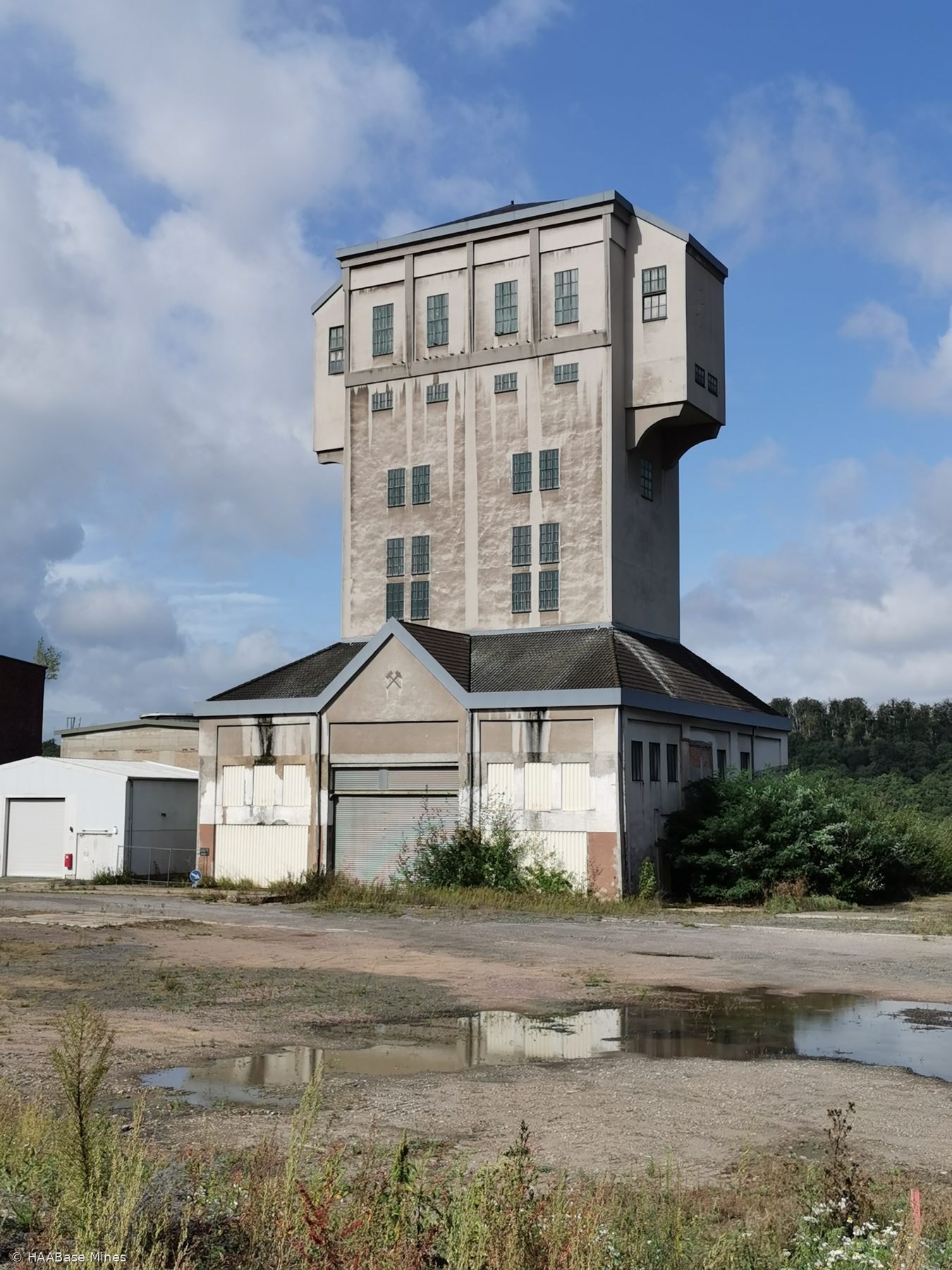
In 1885 a firedamp and coal dust explosion killed 180 miners. Schacht IV, sunk in 1908, was equipped with the world's first reinforced-concrete hammerkopf winding tower, completed in 1912 to the design of Oberingenieur Karl Walter Mautner and built by the Saarbrücken branch of Carl Brandt Eisenbetonbau. Coal production ceased on 12 November 1990.

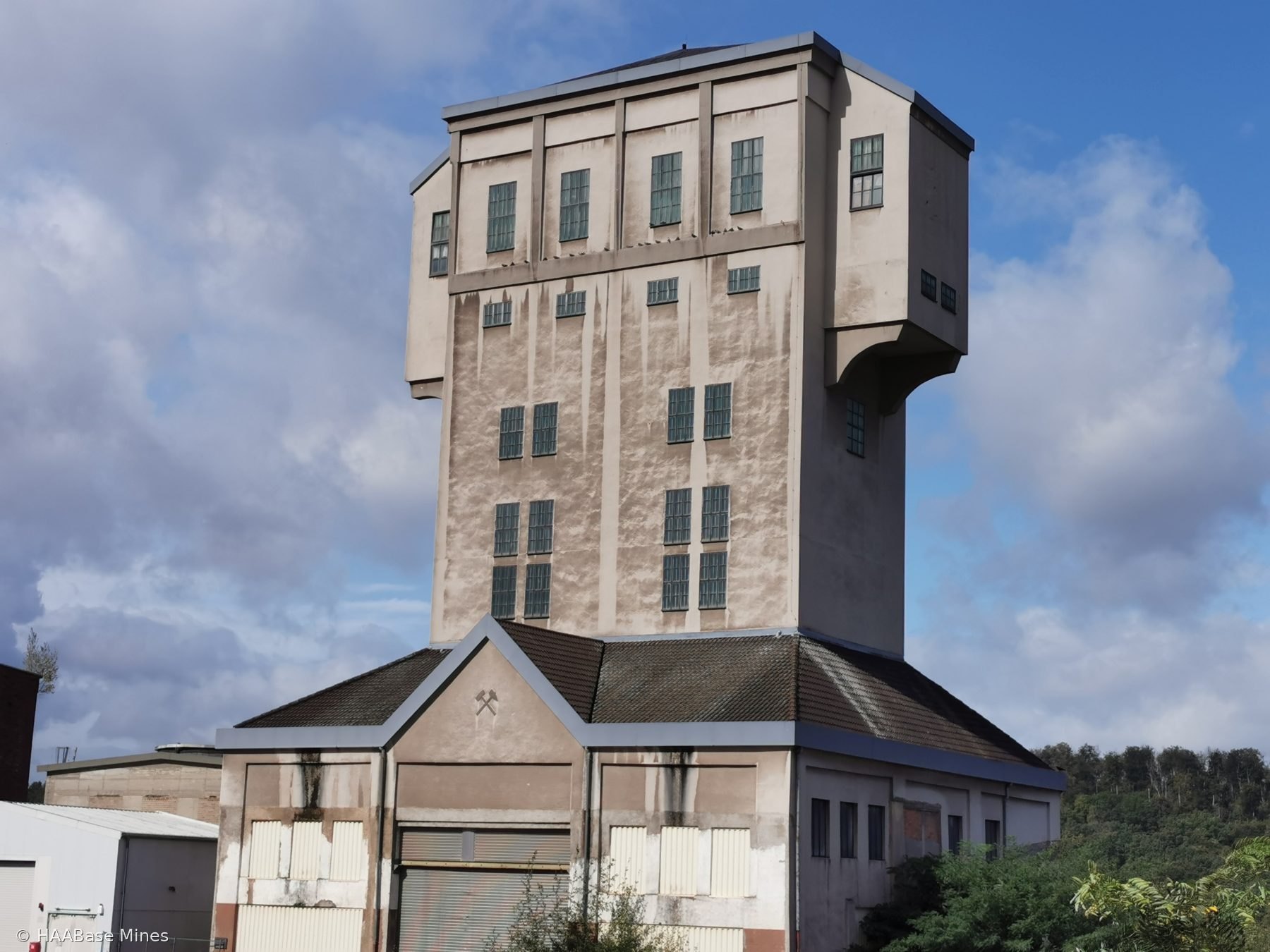
The tower, 38.70 metres tall with two AEG winding machines, survives as a listed monument and was designated a Historisches Wahrzeichen der Ingenieurbaukunst in Deutschland by the Bundesingenieurkammer in 2016.

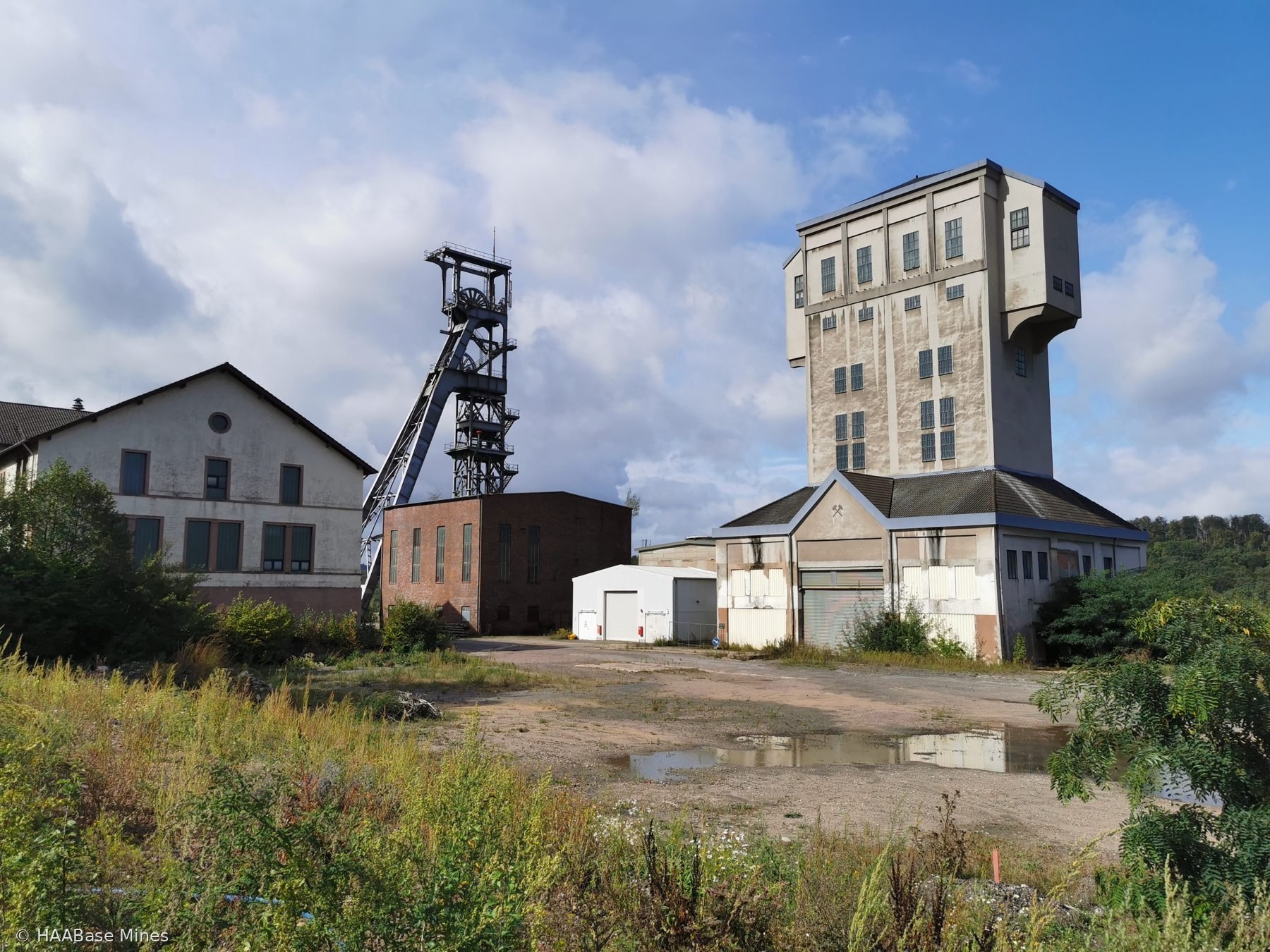
The headframe stands in a wooded valley setting on the settlement edge, where it reads as an isolated and highly distinctive remnant of the former colliery.

Map & photo

Grube Camphausen mine headframe or winding tower site
Photograph taken: 16 September 2025
Map markers and directions links are provided for location reference only and do not indicate public access or permission to enter a site.

History

The history of Grube Camphausen begins with the sinking of the first two deep shafts — known as Fischbachschächte I and II — in the Fischbachtal in 1871. During the sinking of these shafts, broken pottery, bones and ash were found, identified as the remains of a Celtic ritual site. A third shaft was added in 1874. That same year, the Prussian finance minister Otto von Camphausen (1812–1896) visited the mine, and the colliery was named after him on that occasion. The entire mine site was made available on lease from the forestry administration.

Regular coal production was established from October 1877, supported by the construction of a colliery railway. The opening of the Fischbachtalbahn in 1879 substantially improved the mine's marketing possibilities. On 17 and 18 March 1885, during the sinking of a further shaft, a severe firedamp and coal dust explosion occurred, killing 180 miners and injuring a further 30. After a fire in the winding engine house in September 1895, the entire operation was temporarily shut down and the workforce was distributed to neighbouring collieries. In 1886 Westschacht II had been driven; it later received the name Franziska I in 1920.

In 1908 Schacht IV was sunk. The confined conditions of the colliery site made a conventional steel headframe impracticable, and the decision was taken to construct a reinforced-concrete hammerkopf winding tower. The tower was designed by Oberingenieur Karl Walter Mautner (1881–1949) and built by the Saarbrücken branch of Carl Brandt Eisenbetonbau between July 1910 and September 1912. It stands 38.70 metres above ground level on four reinforced-concrete support piers, each extending eleven metres below the surface. The structure has five storeys with a pyramidal base and a rectangular upper tower section with two projecting bays on the narrow sides housing the electrical equipment, giving it the characteristic hammerkopf form. The top storey houses two AEG electric winding machines with Koepe driving wheels, each rated at 1,740 kilowatts. The shaft reached a depth of 640 metres and had a daily output capacity of over 2,200 tonnes. It was the world's first reinforced-concrete winding tower and remains the oldest surviving example of its type in Germany. From 1919, following the Treaty of Versailles, the mine passed without compensation into public ownership.

In 1964 and 1965 a Ludwigsstollen, 5,595 metres in length, was built to transport coal from Camphausen to Luisenthal. A further accident on 16 February 1986 killed seven miners. In 1988 the decision was taken to close the mine by 1990. On 1 January 1990 Grube Camphausen lost its independence and became part of the new Verbundbergwerk Reden-Camphausen together with Grube Reden. The final coal draw took place on 12 November 1990. After closure, all shafts except one ventilation shaft were filled. Part of the site was converted to a commercial and business area. The spoil heap Lydia, which had begun as a conical heap and been reshaped into a plateau between 1979 and 1982, was comprehensively recontouring between 2003 and 2006 due to the risk of it slipping onto adjacent railway lines and due to fires in its interior. The Halde Lydia was opened to the public in 2006 following restoration and recultivation. In 2015 an ideas competition was launched for the future use of the tower and adjacent area.

The surviving structures at the site include the Förderturm Schacht IV with its original winding machines, the headframe of Schacht II alongside it, the former electrical workshop (originally the machine house of 1876), the Schacht II machine house of 1960, and the transformer building and switching house from the 1930s. The Schacht IV tower was designated a Historisches Wahrzeichen der Ingenieurbaukunst in Deutschland by the Bundesingenieurkammer on 4 March 2016, becoming the first structure in the Saarland to receive this distinction.
Timeline

1871
Construction

Sinking of Fischbachschächte I and II

The first two deep shafts were sunk in the Fischbachtal. During the sinking, broken pottery, bones and ash were found, identified as remains of a Celtic ritual site.
1874
Legislation

Third shaft added; mine named Grube Camphausen

Schacht III was driven. In the same year, Prussian finance minister Otto von Camphausen (1812–1896) visited the mine, which was named after him on that occasion.
1877
Operation

Regular coal production established

Regular coal extraction commenced in October 1877, with a colliery railway constructed to support output.
1879
Operation

Fischbachtalbahn opened

The Fischbachtalbahn was opened in 1879, substantially improving the mine's transport and marketing possibilities.
1885
Operation

Firedamp and coal dust explosion kills 180 miners

On 17 and 18 March 1885, during the sinking of a further shaft, a severe firedamp and coal dust explosion occurred, killing 180 miners and injuring a further 30.
1886
Construction

Westschacht II driven

Westschacht II was driven. It later received the name Franziska I in 1920.
1895
Operation

Fire in winding engine house; temporary full shutdown

After a fire in the winding engine house in September 1895, the entire operation was temporarily shut down and the workforce was distributed to neighbouring collieries.
1908
Construction

Schacht IV sunk

Schacht IV was sunk to a depth of 640 metres. Due to confined site conditions, a conventional steel headframe was rejected in favour of a reinforced-concrete winding tower.
1910–1912
Construction

World's first reinforced-concrete hammerkopf winding tower built

The Förderturm over Schacht IV was constructed between July 1910 and September 1912 to the design of Oberingenieur Karl Walter Mautner and built by the Saarbrücken branch of Carl Brandt Eisenbetonbau. Standing 38.70 metres tall, it was the world's first reinforced-concrete winding tower, housing two AEG electric winding machines at the top.
1919
Legislation

Mine transferred to public ownership under Treaty of Versailles

Following the Treaty of Versailles, the mine passed without compensation into public ownership.
1964–1965
Construction

Ludwigsstollen constructed

A Ludwigsstollen, 5,595 metres long, was built between 1964 and 1966 to transport coal from Camphausen to Luisenthal.
1986
Operation

Underground accident kills seven miners

A further accident on 16 February 1986 killed seven miners underground.
1988
Closure

Decision taken to close mine by 1990

In 1988 the decision was taken to close Grube Camphausen by 1990 as part of the Drei-Standorte-Konzept rationalisation programme.
1990
Closure

Grube Camphausen loses independence; becomes part of Verbundbergwerk Reden-Camphausen

On 1 January 1990 Grube Camphausen became part of the new Verbundbergwerk Reden-Camphausen together with Grube Reden, ending its existence as an independent colliery.
1990
Closure

Final coal draw

The last coal was drawn on 12 November 1990. Following closure, all shafts except one ventilation shaft were filled.
2003–2006
Redevelopment

Halde Lydia recontoured and opened to public

The spoil heap Halde Lydia was recontoured between 2003 and 2006 due to instability risks and internal fires, and opened to the public in 2006 after restoration and recultivation.
2015
Redevelopment

Ideenwettbewerb Camphausen competition launched

An ideas competition for the future sustainable use of the Förderturm Schacht IV and adjacent site area was launched in August 2015.
2016
Heritage

Förderturm Camphausen IV designated Historisches Wahrzeichen der Ingenieurbaukunst

On 4 March 2016 the Bundesingenieurkammer formally designated the Förderturm Camphausen IV as the first Historisches Wahrzeichen der Ingenieurbaukunst in Deutschland from the Saarland.

Sources and records

Wikipedia article (German): Grube Camphausen
Wikipedia article (German): Fischbach-Camphausen
Saarland state industrial heritage portal: Prioritärer Bergbau-Denkmalstandort Camphausen
Bundesingenieurkammer Historische Wahrzeichen der Ingenieurbaukunst: Der Förderturm Camphausen IV
Bingk.de news report: Förderturm Camphausen IV ist Historisches Wahrzeichen der Ingenieurbaukunst
Revierkohle.de: Zeche Camphausen – Grubenwasseraufbereitung
Der Landgraph: Zechen im Saarland survey
This researched site record is part of the HAABase Mines database. Normal personal research and browsing is welcome. Automated bulk extraction, republication, or harvesting of site text and images is not permitted without written consent.