View fact-check assessment and classification
The history, timeline and surviving-site classification shown here reflect the reviewed account.
The record identifies the Centre Historique Minier at Lewarde as the former Fosse Delloye of the Compagnie des mines d’Aniche, with two distinct shafts and a substantial surviving surface complex. The Ministry of Culture’s legal heritage record establishes the shaft-development chronology, closure on 15 July 1971, museum opening on 3 May 1984 and monument classification on 21 September 2010. The museum’s own institutional history supports the 1931 and 1963 production figures, the 1973 decision to conserve the pit and the development of regional mining collections.
The official heritage inventory also establishes the extent of the protected buildings. The mining-basin heritage organisation documents the site’s place in the UNESCO-listed landscape. The overall history and principal timeline are strongly supported.
More granular particulars of certain accidents, subsidiary transport arrangements and some pre-war machinery figures derive chiefly from specialist or secondary accounts and are treated with proportionate qualification. The visitor galleries are reconstructions and must not be confused with surviving original underground workings.
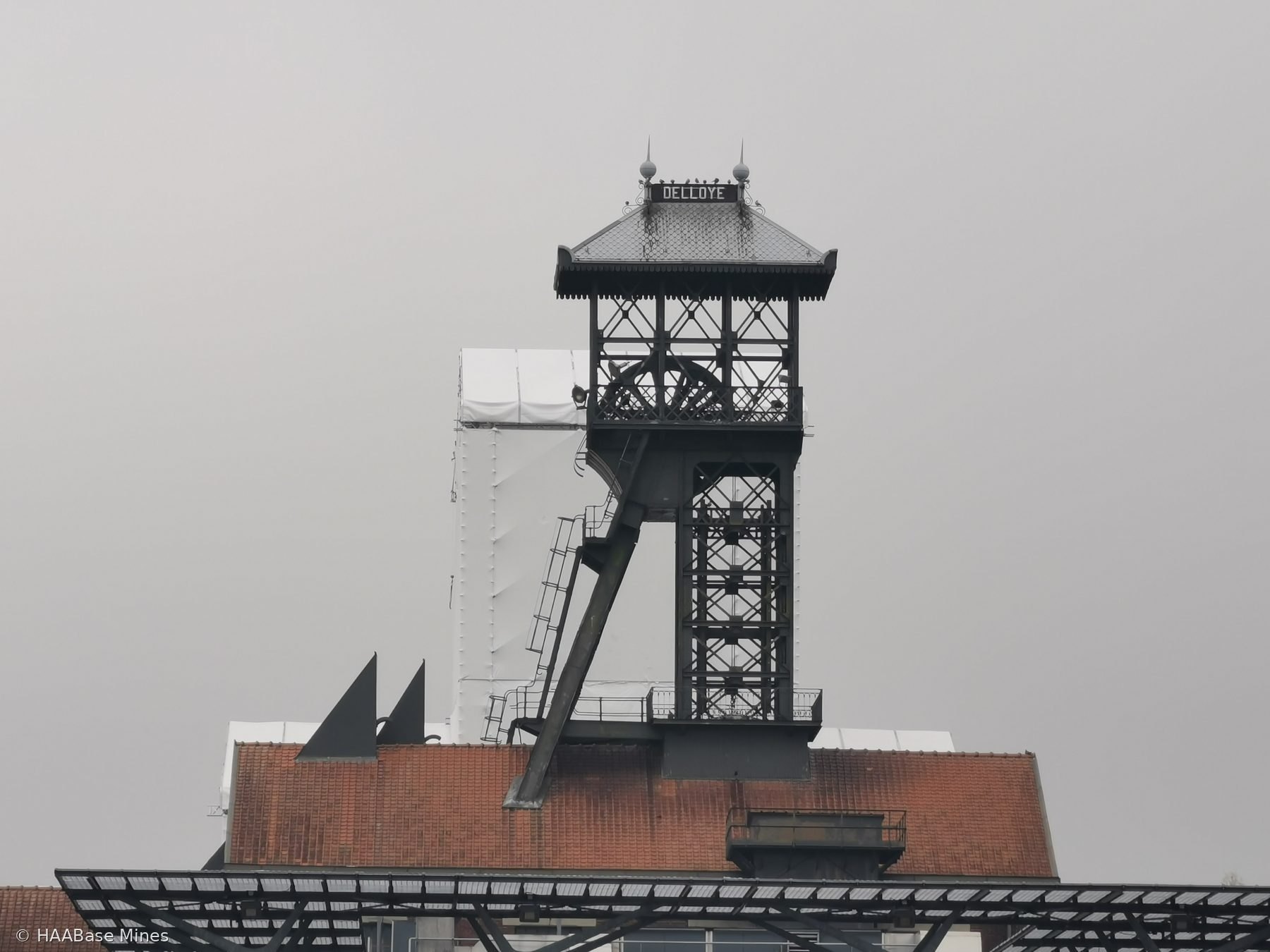
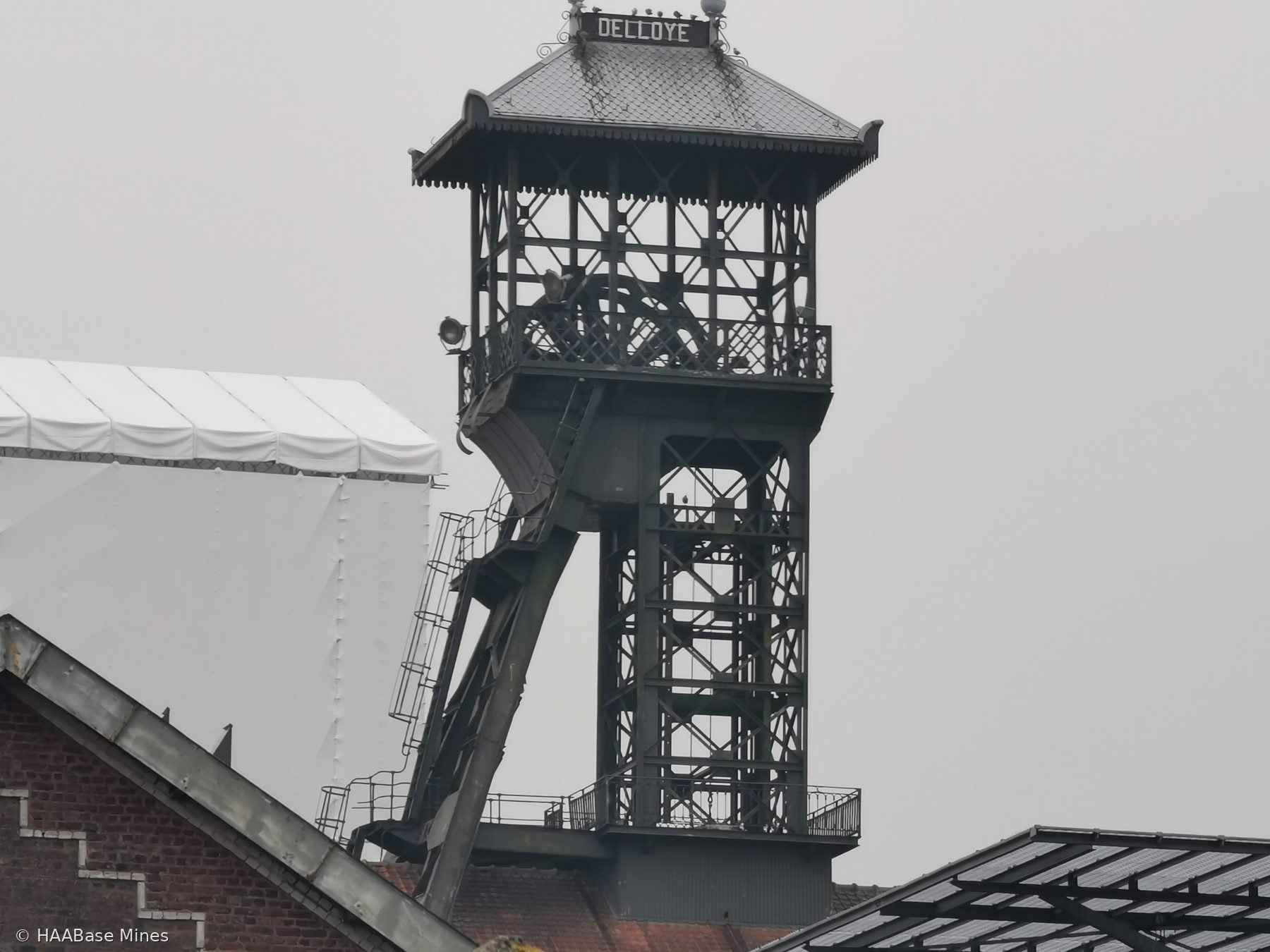
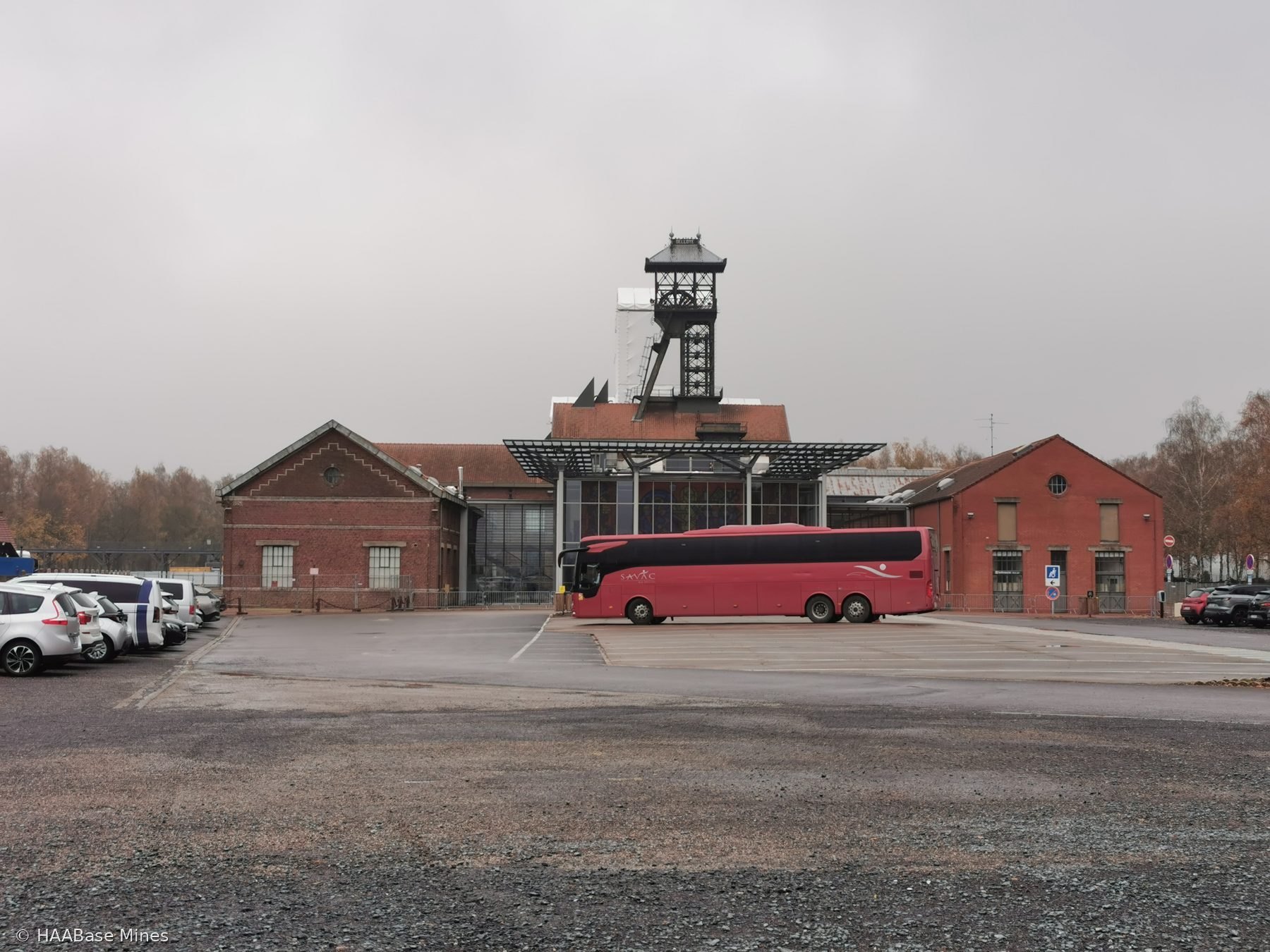
The surviving Delloye site consists of both historic headframes, their winding and receiving buildings, and an unusually extensive group of former coal-pit surface buildings, workshops and service structures. The descriptor shafts_buildings reflects the recognisable two-shaft pithead complex, although the shafts themselves are closed and secured, not accessible original workings. The label identifies the two preserved headframes and extensive pithead buildings.
Authenticity is mixed because most of the protected built ensemble is original and remains in place, while museum adaptations and reconstructed galleries are modern interpretative elements. The site character Museum site - headframes and extensive buildings describes its current use and surviving physical extent; coal describes its historic output. These distinctions are documented in the Ministry of Culture monument record PA59000171 and the museum’s detailed accounts of its buildings and displays.
Site overview
Fosse Delloye at Lewarde was an inter-war coal mine of the Compagnie des mines d’Aniche, later operated by the nationalised Houillères du Bassin du Nord et du Pas-de-Calais. Development began in 1911, the two shafts entered operation in 1927 and 1931, and extraction ended in 1971 after output had peaked above 440,000 tonnes in 1963. Selected in 1973 to become the Centre Historique Minier, the pit retains both steel headframes, winding and receiving buildings, and a substantial collection of original surface structures.
The museum opened in May 1984 and contains collections from the whole coalfield, as well as reconstructed galleries for visitors. The former pit complex was classified as a monument historique in September 2010 and forms part of the UNESCO-listed Nord–Pas-de-Calais Mining Basin.
Map & photo
History
The Compagnie des mines d’Aniche established the fosse Delloye at Lewarde, near Douai, to work the coal seams of the Nord–Pas-de-Calais basin. The pit was named after Joseph Delloye, an administrator of the company. Sinking of puits n° 1, about four metres in diameter, began in 1911 but was interrupted by the First World War and did not resume until 1921. The first shaft entered service in 1927, working seams of fat and semi-fat coal, including the veine Joseph. Construction of the second shaft, about five metres in diameter, also began in 1927. Puits n° 2 entered service in 1931, when the pit raised 18,634 tonnes of coal. The two shafts were equipped to operate autonomously, with extraction and ventilation functions. Their distinctive roofed steel headframes and the adjoining winding and receiving buildings remain among the most recognisable features of Delloye.
Coal was sorted at the pit before being sent by rail for washing at the Gayant pit at Waziers. The separate fosse Sébastopol at Erchin formed part of the associated ventilation arrangements. In 1946 the Compagnie des mines d’Aniche was nationalised, and Delloye passed into the Groupe de Douai of the Houillères du Bassin du Nord et du Pas-de-Calais. The fosse Vuillemin was concentrated on Delloye in 1955, bringing a neighbouring operation into its production organisation without making Vuillemin or Sébastopol part of the Lewarde surface complex.
At its busiest the pit employed around a thousand people and could raise some 1,500 tonnes of coal a day. Annual production reached a record of more than 440,000 tonnes in 1963. Underground work nevertheless remained difficult. The seams were generally narrow, seldom approaching one metre in thickness, and the pit experienced serious industrial accidents, including a collapse in the Grand Moulin seam on 25 March 1966 in which two miners died and another was injured. From 1967 investigations showed that the remaining workable reserves were approaching exhaustion and that continued extraction at greater depth would not be economic. Delloye closed on 15 July 1971.
The survival of the site arose from a decision by the coalfield authorities to preserve a representative pit rather than dismantle it completely. Alexis Destruys, secretary-general of the Houillères, was closely associated with the proposal for a mining history centre. The project was approved in 1973 and Delloye was chosen for its characteristic inter-war buildings, its central location within the coalfield and its accessibility. As other pits closed, mining machinery, tools, documents and archives were brought to Lewarde. These collections record the industrial and social history of the wider mining basin and are not necessarily equipment originally used at Delloye.
The Association du Centre Historique Minier was created in 1982 with the involvement of the State, regional and departmental authorities and the Houillères. The museum opened on 3 May 1984. Its development retained a substantial group of pithead structures, including the two headframes, winding and receiving buildings, compressor and ventilation rooms, screening installations, workshops, administrative offices, baths, lamp room, infirmary and other service buildings. The surviving complex covers approximately eight hectares and contains about 8,000 square metres of industrial buildings. The underground experience presented to visitors consists of reconstructed galleries; the original deep shafts have been secured and are not used for public descent. The collections include extensive mining archives, photographs, books, machinery and audiovisual material from across the Nord–Pas-de-Calais coalfield. In 2016 the centre became an établissement public de coopération culturelle, reflecting its continuing role as a museum, archive and centre for the history of energy.
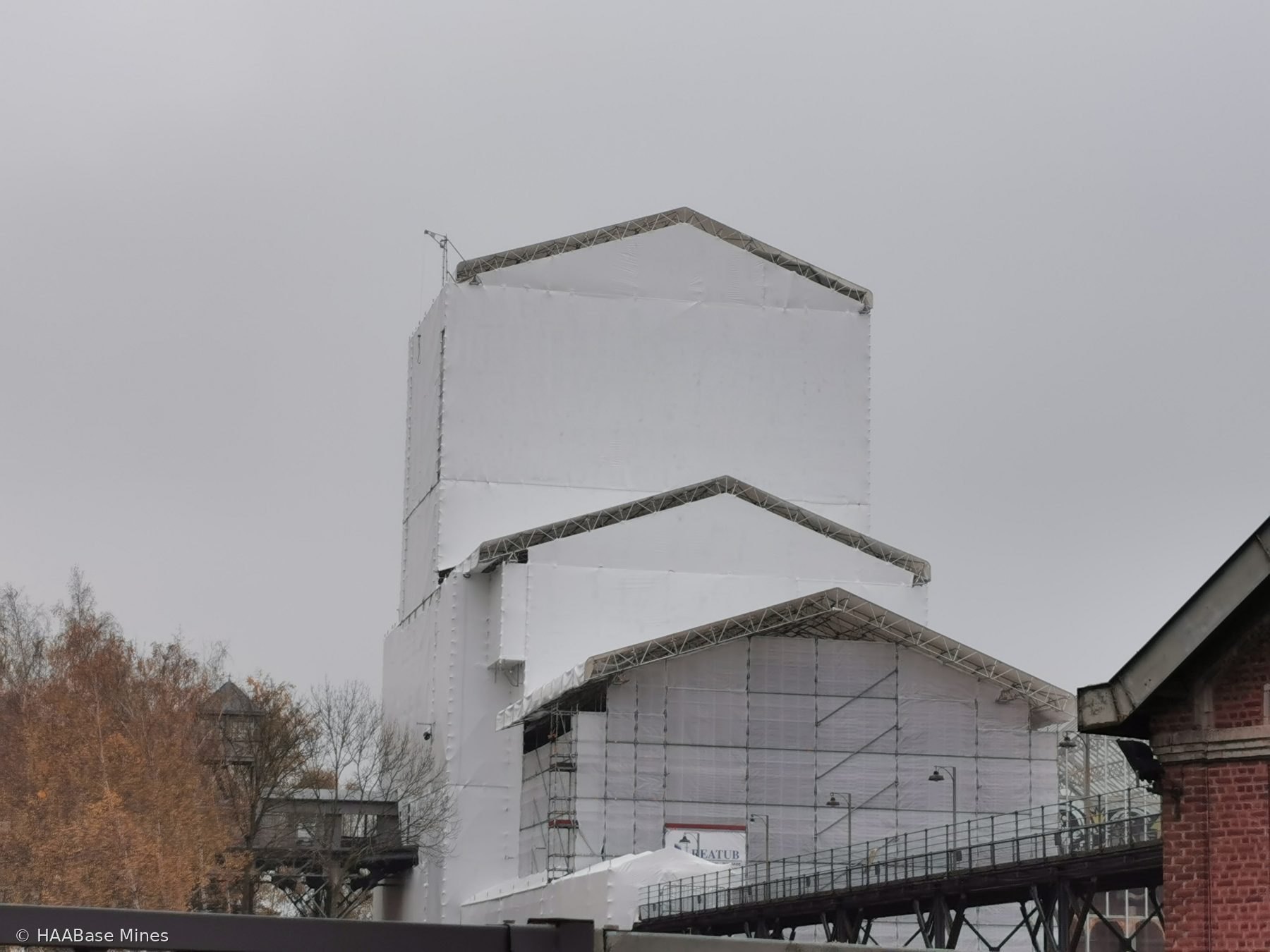
The entire former pit complex, including the ground, headframes, buildings and their surviving technical fittings, was classified as a monument historique by an order of 21 September 2010. In 2012 Delloye became part of the Nord–Pas-de-Calais Mining Basin UNESCO World Heritage property. Its preservation is particularly significant because so much of the region’s original pithead equipment disappeared when mines closed. The two headframes and extensive surface buildings allow the former industrial organisation to be understood in its original setting, while the museum’s reconstructed galleries and collections explain work that took place far below ground. Since summer 2025 the Région Hauts-de-France has undertaken further conservation work, notably on the buildings and headframe of puits n° 2, to protect the surviving fabric of this exceptional colliery complex.
Timeline
Fonçage of puits n°1 resumes; fosse enters production 1927
Shaft no. 2 enters service; Delloye outputs 18,634 tonnes
Nationalisation; integrated into the Groupe de Douai
Fosse Vuillemin concentrated on Delloye
Peak production: more than 440,000 tonnes
Mine collapse at 377 m depth kills two miners
Fosse closes 15 July 1971
Decision taken to create the Centre historique minier on the Delloye site
Centre historique minier association created
Centre Historique Minier opens on 3 May 1984
Delloye complex classified as monument historique (2010)
Inscribed on UNESCO World Heritage List as site n°23
Photographic record
Sources and records
This list includes live sources already held for the record and any additional sources added or confirmed during the published fact-check review.
Official heritage records
Further sources
- Centre Historique Minier: De la fosse Delloye au Centre Historique Minier
- Centre Historique Minier: Présentation et missions
- Centre Historique Minier: Le musée
- Centre Historique Minier: Cure de jouvence pour la fosse Delloye
- Mission Bassin Minier: Fosses d’extraction
- Mission Bassin Minier: Reconversion des grands sites
- Ministère de la Culture: Centre Historique Minier (Muséofile M0628)
- Centre Historique Minier: Les archives
Research bibliography
Centre historique minier de Lewarde official website: history page
Mérimée heritage database (pop.culture.gouv.fr): PA59000171
Bassin-minier-regis.jimdofree.com: fosse Delloye Lewarde
Hauts-de-France Tourisme website: Centre historique minier
Cœur d'Ostrevent Agglo website: Centre historique minier
Centre historique minier website: La fosse Delloye bénéficie d'une cure de jouvence