History
Saint-Jean-du-Pin lies in the arrondissement north of Alès, within the broader Cévennes coalfield, a basin that produced coal from at least the thirteenth century and reached peak production in 1958 before declining to closure in the 1980s. The commune's principal mining feature is the puits Saint-Germain, sunk in 1867 by the Société de Saint-Germain-les-Alès. The shaft reached a depth of 140 metres with a diameter of 3.7 metres.
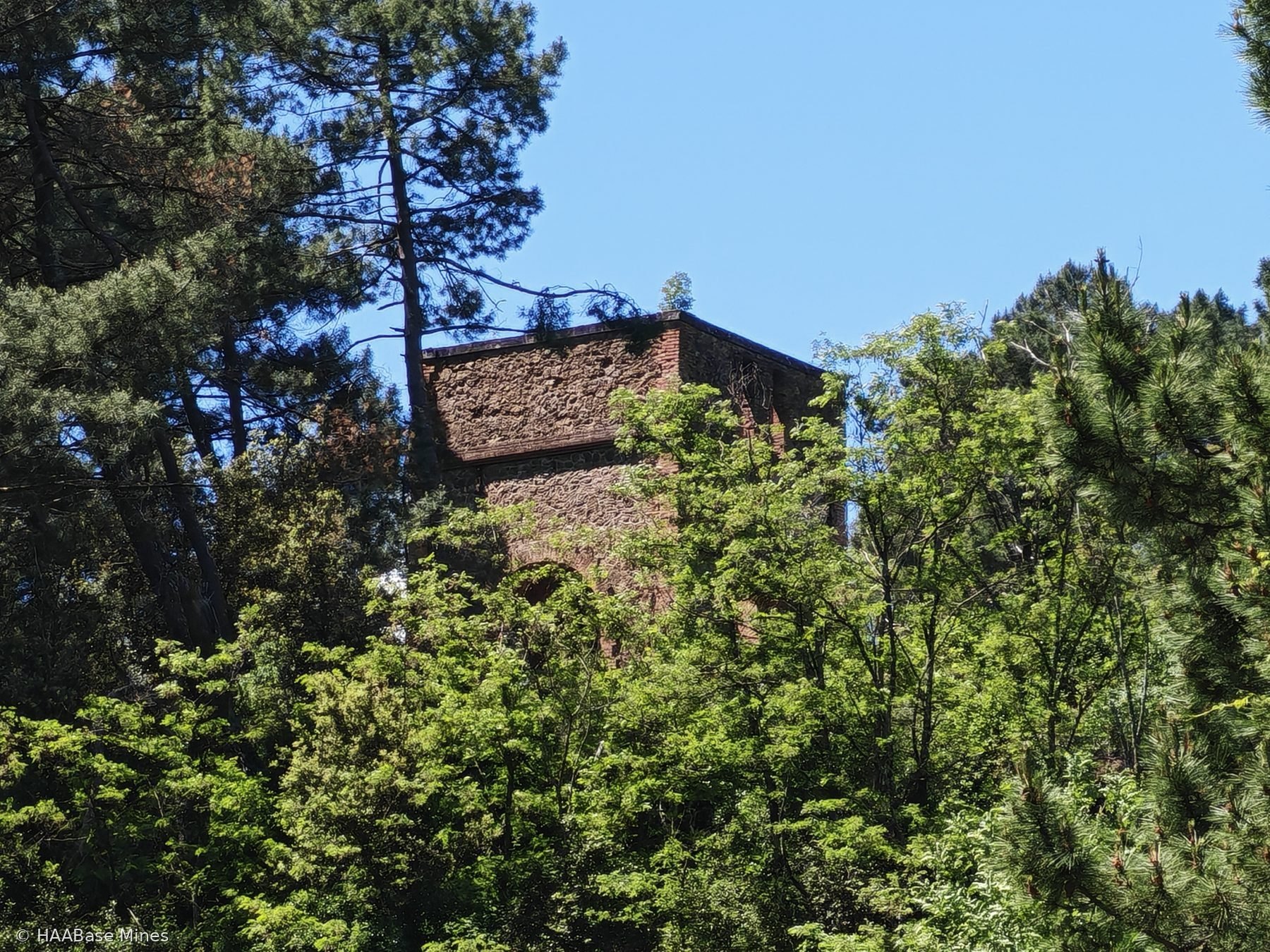
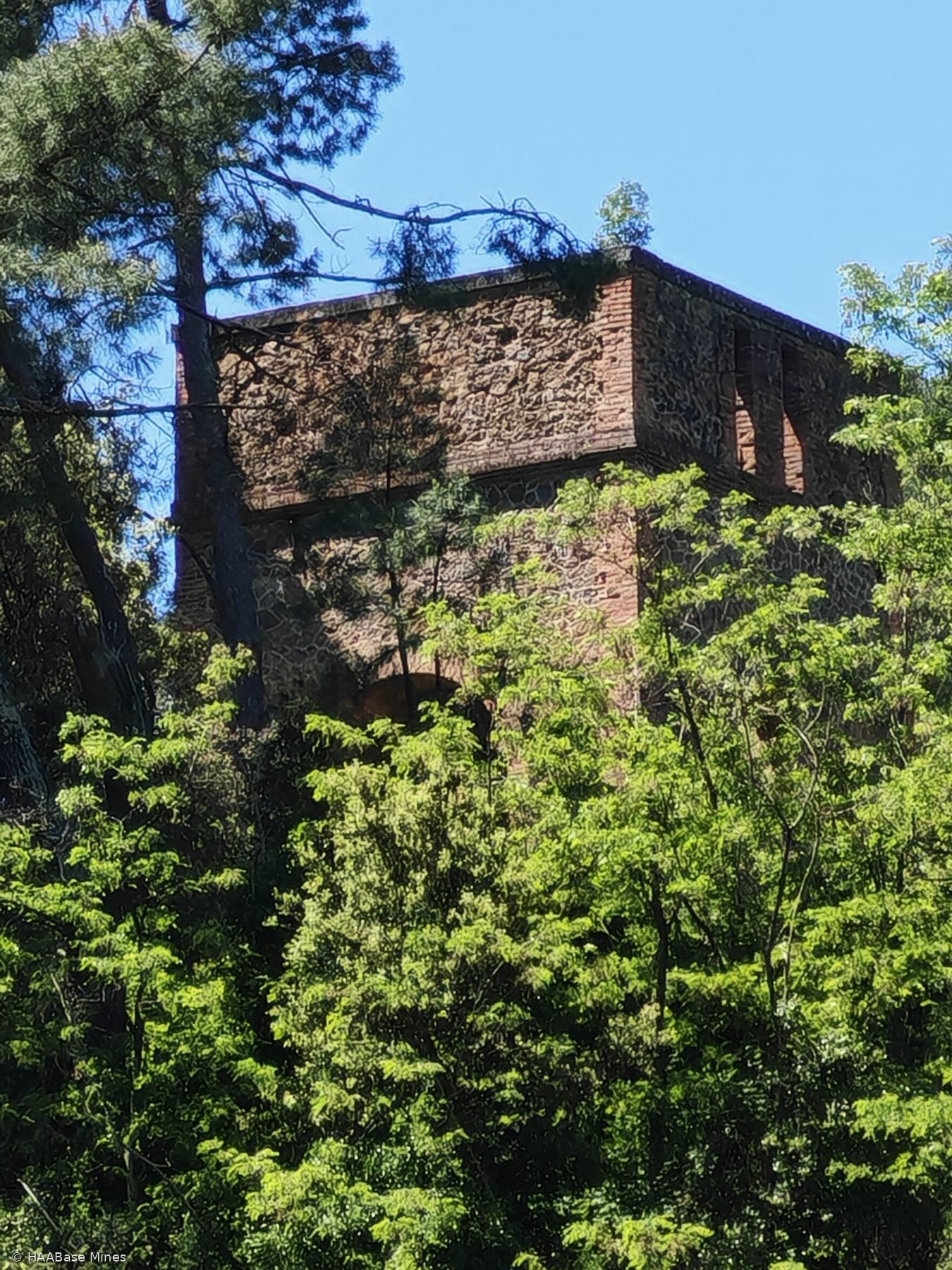
Structurally, the pit was given a headframe typical of the Cévennes tradition: a square masonry tower approximately 14 metres high, built in stone and brick and pierced by four large round-arched openings on each face. The winding wheels were not mounted directly on the masonry but were supported on internal timber beams without any enclosing shelter. The winding engine, which drove two cages, was housed in a separate annexe building rather than within the tower itself.
This arrangement, with a freestanding masonry headframe tower and an adjacent engine house, was characteristic of many shafts sunk in the Cévennes during the second half of the nineteenth century. Coal extraction at the puits Saint-Germain continued until around 1920, when activity ceased. The site then lay dormant until 1941, when the Compagnie Houillère de Rochebelle took over the concession as part of the consolidation of mining interests in the southern sector of the basin.
In 1973, the shaft was backfilled. All ancillary installations were subsequently cleared and demolished. The masonry headframe tower, however, was spared and has been retained as a standing industrial monument.
It is recognised today, alongside the puits de la Trouche at La Levade (dating from around 1850), as one of only two surviving masonry headframe towers remaining in the Cévennes coalfield. The wider Cévennes coalfield was nationalised under the decree of 28 June 1946, which created the Houillères de Bassin des Cévennes, later integrated in 1968 into the Houillères de Bassin du Centre-Midi as the Unité d'Exploitation du Gard. Extraction in the basin as a whole finally ended in 1985 with the closure of the puits des Oules, and open-cast operations ceased in 2001.