Fact-checked Research reviewed and published About research status
View fact-check assessment and classification

The history, timeline and surviving-site classification shown here reflect the reviewed account.

Assessment

The record identifies the Champgontier pit yard and Puits Armand at Prades as a surviving historic coal-mining complex in the Prades-et-Nieigles concession. The official Mérimée monument record establishes the identity, original masonry headframe, associated buildings and partial protection dated 7 December 2010. BRGM’s study of the mining-service archives establishes a modern concession beginning in 1805, a 1930 purchase subsequently authorised in 1931, the sequence of limited successor workings and final cessation in 1965.

Specialist mining history and the municipal heritage report add the technical setting, the 1900-dated headframe and accounts of the 1963 Salyndre flood. Strong evidence supports the site identification, protected structures and later legal chronology. Greater uncertainty attaches to reports of medieval mining, workforce totals and the precise operational effects of the 1963 flood: this episode should not be treated as proof that all extraction ceased in that year.

The timeline differentiates the Armand shaft from later Armand-sector inclined workings and nearby shafts.

Surviving-site classification

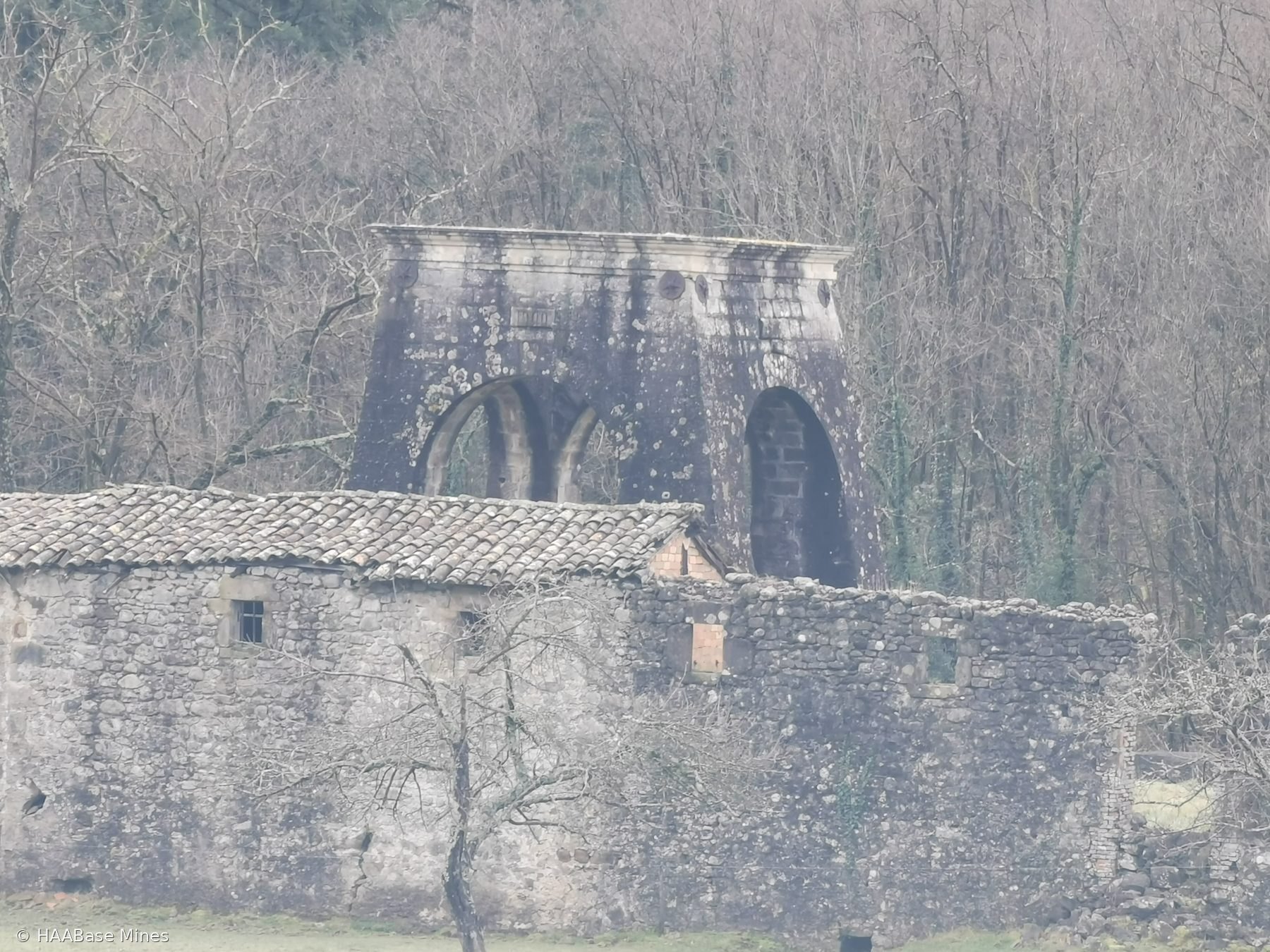
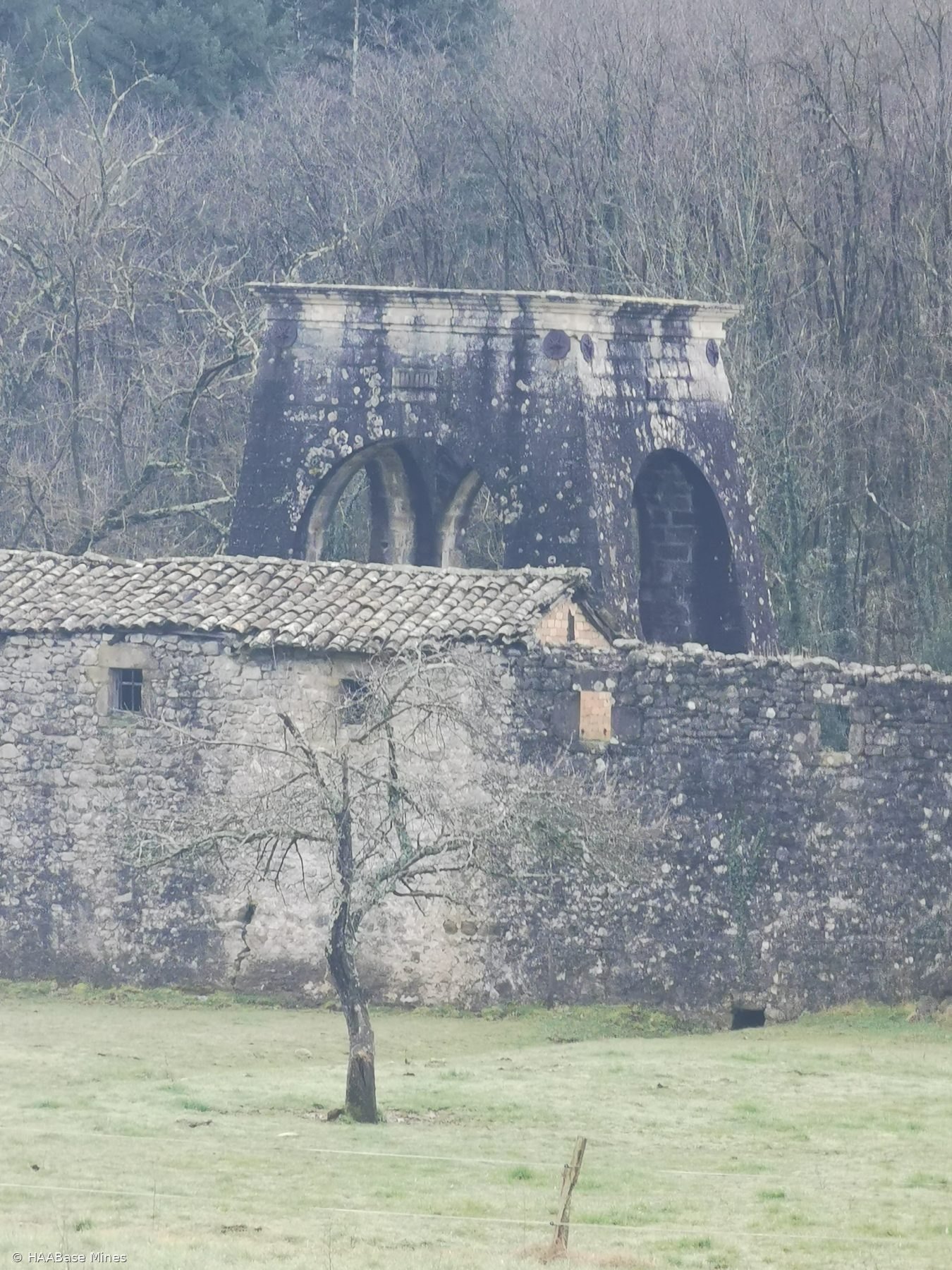
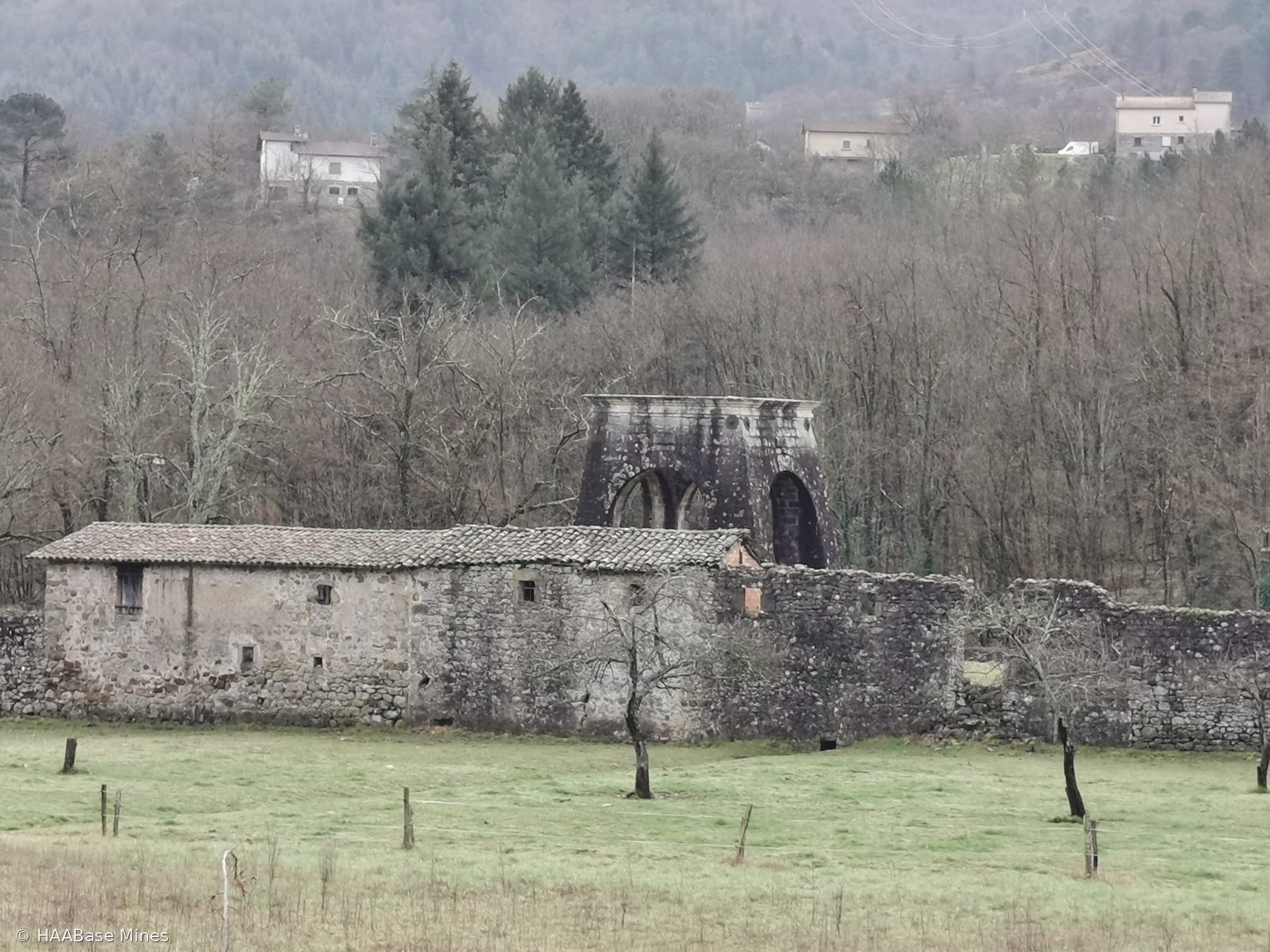
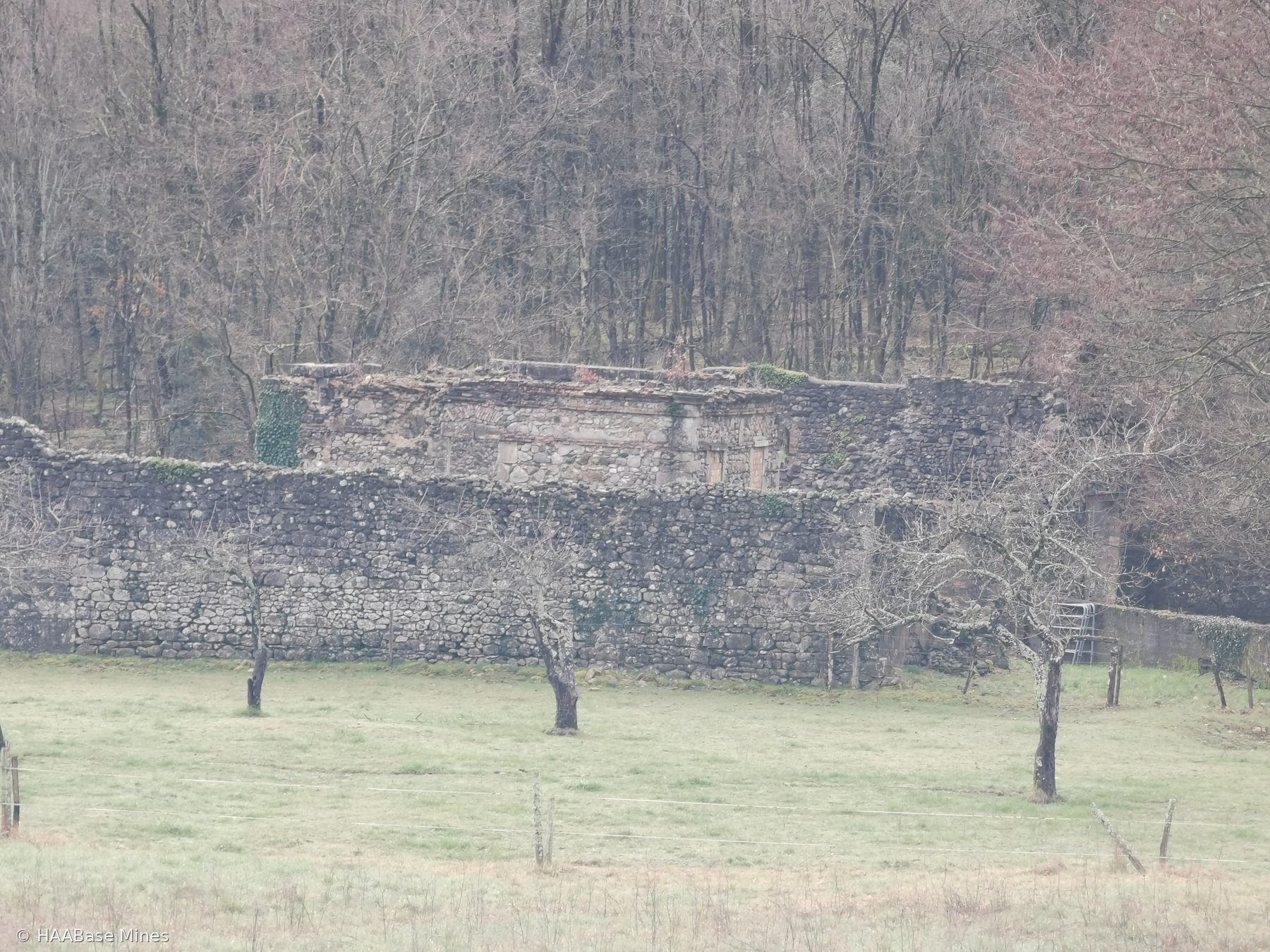
The surviving site comprises the historic stone winding headframe of Puits Armand, its raised terrace, engine house, forge and lamp room, former offices and dwelling, incomplete workshop buildings and the associated pit yard beside the Salyndre. The descriptor shafts_buildings refers to the identifiable shaft-head site and associated buildings, not an open or operational shaft. The surviving label describes this historic group.

The original authenticity status reflects the substantial nineteenth- and early-twentieth-century masonry and building fabric, although the complex is incomplete and later additions are present. The site character Partial mine site - headframe and associated buildings is warranted because significant pithead features survive without the entire original operation. The output is anthracite, a low-volatile type of coal recorded in the technical mining literature.

These classifications are grounded in the national Mérimée register PA07000018, the physical site description and the BRGM concession history; the detailed condition of every individual building has not been established by a contemporary measured survey.

Published 21 November 2026 · Classification confidence High
Sources added or confirmed during the review are included in Sources and records where available.

Site overview

Champgontier, at Prades in the Ardèche, is the surviving Puits Armand surface complex of the Prades-et-Nieigles coalfield. Mining in this valley has eighteenth-century documented rights and a concession formally established in 1805; the surviving pit yard developed during the nineteenth century. Its distinctive masonry headframe, dated 1900, is joined by an engine house, forge and lamp room, former administrative and domestic buildings and workshop remains along the Salyndre.

Although the Armand shaft itself ceased to be the means of extraction well before the final years, other inclines continued to serve limited workings. Flooding occurred in 1963, and archive records document the end of mining in 1965. The complex was partially inscribed as a monument historique on 7 December 2010.

The site occupies a narrow valley setting beside the Salyndre, where the surviving buildings form a substantial and coherent former pit yard within a wooded and settled landscape.

Map & photo

Mine de Champgontier — Puits Armand mine headframe or winding tower site
Photograph taken: 19 February 2026
Map markers and directions links are provided for location reference only and do not indicate public access or permission to enter a site.

History

Coal mining around Prades and Lalevade-d’Ardèche has a history extending back well before the nineteenth-century buildings that survive at Champgontier. The Prades-et-Nieigles deposit belongs to the small coal basin between Lalevade and Jaujac, an elongated, steeply folded body of coal-bearing strata enclosed by crystalline rocks. Its seams were irregular and yielded a high-grade, anthracite-like coal with relatively little volatile matter. Early workings developed in several distinct sectors; the Chalmeton shaft at Lalevade, Taillade near the Prades bridge, Charbonnière on the right bank of the Salyndre and the higher Armand sector were not a single shaft or pithead. A separate concession covered the Jaujac side of the basin.

Mining rights in the area can be traced to eighteenth-century grants, including one made in 1774, but the Prades-et-Nieigles concession in its modern form was established by imperial decree on 1 November 1805. It originally covered approximately 6,061 hectares, a territory much larger than the surviving Champgontier pit yard. During the first half of the nineteenth century the exploitation shifted between workings as access, drainage and ground conditions dictated. An underground fire in 1856 and earlier water problems contributed to further reorganisation. The Armand shaft was sunk in the mid-1850s, first reaching about 100 metres and later approximately 205 metres, and was developed within the wider system of workings.

A further period of development followed the reorganisation associated with the Compagnie houillère de Prades et Nieigles around 1872. The concession was reduced to 1,836 hectares by decree of 6 August 1883. Rivalry and boundary questions with the Jaujac concession had previously led to a Conseil d’État decision in 1876. At the end of the nineteenth century coal from the basin went to regional consumers including the lime industry at Le Teil, while the arrival of railway transport at Lalevade assisted distribution. The workings and ancillary businesses supported the population and employment of the valley.

At Champgontier, the surviving masonry headframe of the Puits Armand bears the date 1900. Built of locally dressed stone on a raised terrace, it is an unusual survivor among French mining headframes. The shaft served an extensive system of underground workings, although the headframe was in use only until about 1920. The other shafts and inclines continued to serve different parts of the deposit. The site’s rectangular pit yard was arranged broadly east–west beside the Salyndre, with the winding-engine house behind the headframe, the forge and lamp room to one side, and administrative and domestic buildings near its entrance.

The principal company ceased working in January 1930. The banker Marze acquired its concession and installations by a deed dated 23 January 1930, with the transfer authorised by decree on 20 June 1931. Subsequent activity was confined chiefly to the Armand sector, but this did not mean the old vertical shaft itself remained in use: work proceeded through inclined entrances and galleries nearby. The Société des Mines de Champgontier operated from July 1930 until May 1932; Monteil then continued the undertaking and purchased the concession in 1933, with the transfer subsequently authorised in 1934. His limited operations continued until 1956. The succeeding Société Nouvelle des Mines de Champgontier, associated with his son-in-law Guy Laure, took over working the concession.

The Salyndre flooded the mine in August 1963, an event widely remembered locally as the end of Champgontier’s mining era. The mining-archive record nevertheless shows that the successor company continued limited exploitation until late 1965, when operations were finally stopped. An engineer’s report of November 1965 recorded a remaining workforce of seven and arrangements to secure the entrances. The distinction is between a severe flooding episode and the documented final cessation of the undertaking.

Much of the historic pit yard remains beside the river. The stone headframe and its terrace, engine house, forge and lamp room, former offices and infirmary, the proprietor’s dwelling, ruined workshops and coal-preparation buildings, enclosure and retaining walls survive to varying degrees. Parts of an old river footbridge and the former explosives store also contribute to the site’s setting; later concrete additions are not among the protected historic elements. The site is privately owned. On 7 December 2010 the French state inscribed much of the Champgontier complex as a monument historique, recognising the rare survival of a nineteenth-century mining group whose layout, masonry machinery structures and relationship with the valley remain legible.
Timeline

1774
Legislation

Earlier mining rights granted in Prades area

Records refer to mining rights granted in October 1774. The modern Prades-et-Nieigles concession was established separately in 1805.
1805–1850
Construction

Prades-et-Nieigles concession and development of pit yard

A decree of 1 November 1805 established the Prades-et-Nieigles concession. The Champgontier pit yard developed through the nineteenth century.
1856
Operation

Underground fire prompts reorganisation

A fire disrupted the Prades mining operations in 1856 and was followed by further reorganisation of workings.
1872
Legislation

Reorganisation under Compagnie houillère de Prades et Nieigles

The mining undertaking was reorganised around 1872. The 1805 concession was later reduced in extent by decree in 1883; 1872 is not established as a wholly new original concession.
1873–1930
Operation

Puits Armand sector in operation

The Armand sector was identified and developed in the later nineteenth century. The stone headframe was used until about 1920; later extraction in the sector relied on inclines rather than the old vertical shaft.
1900
Construction

Stone headframe of Puits Armand constructed

The masonry winding headframe at Puits Armand is dated 1900 and stands on a raised terrace; it survives alongside its engine house.
1930–1931
Legislation

Marze purchases concession; transfer subsequently authorised

Marze purchased the concession and installations by deed on 23 January 1930; the transfer was approved by decree on 20 June 1931. A small company worked the Armand sector in 1930–1932.
1933–1956
Legislation

Monteil acquires concession and continues limited working

Monteil bought the concession in 1933, with transfer approval in 1934, and continued restricted extraction until 1956. His successors operated through the Société Nouvelle des Mines de Champgontier.
1963
Closure

Salyndre flood affects mine workings

A major Salyndre flood in August 1963 inundated workings at Champgontier. Mining-archive records nevertheless show limited activity continuing until late 1965.
1965
Closure

Final cessation of extraction

The Société Nouvelle des Mines de Champgontier stopped mining at the end of 1965. An engineer’s report dated 22 November recorded arrangements for seven remaining workers and the closure of entrances.
2010
Heritage

Champgontier pit yard partially inscribed as monument historique

The headframe and terrace, engine house, forge and lamp room, office and dwelling elements, ruined workshops, yard and walls were protected in whole or in part by the inscription of 7 December 2010, subject to the order’s precise parcel and fabric exclusions.

Sources and records

This list includes live sources already held for the record and any additional sources added or confirmed during the published fact-check review.

Official heritage records

Further sources

Research bibliography

Wikipedia article (French): Mine de Champgontier
Ministère de la Culture heritage database (Mérimée): notice PA07000018
Monumentum heritage register entry: PA07000018
Patrimoine-minier.fr: Mines de l'Ardèche (Champgontier section)
Exxplore.fr: Les mines d'Ardèche (Champgontier section)
Commune de Prades website: Les Journées du Patrimoine, visite commentée de la mine
Sources Volcans: Le bassin houiller de Prades
Les News Entre Aubenas et ses Alentours: Lalevade d'Ardèche, histoire du bassin houillier
Ardeche-evasion.com: commune description of Prades
This researched site record is part of the HAABase Mines database. Normal personal research and browsing is welcome. Automated bulk extraction, republication, or harvesting of site text and images is not permitted without written consent.